2027 Best Online Bachelor's Degrees With 8-Week Courses

Co-Founder and Chief Data Scientist
Choosing an online bachelor's degree with 8-week courses is often a trade-off between speed, flexibility, cost, and workload. The format matters because College Board reported 2024-25 average published tuition and fees of $11,610 at public four-year in-state colleges and $43,350 at private nonprofit colleges, making time-to-completion and transfer credit policies financially important.
This guide is for working adults, transfer students, military learners, parents, and career changers comparing accelerated options. You'll learn which majors fit the format, what to verify before enrolling, and how to judge value beyond advertised speed.
Key Things You Should Know
- 8-week online bachelor's programs usually compress the same credit requirements into shorter terms, so students often take 1 to 2 courses per session instead of 4 to 5 semester-long courses.
- Cost varies more by institution type, residency, fees, transfer credits, and financial aid than by course length; College Board's 2024-25 tuition data shows why comparing total degree cost matters.
- Accreditation and licensure alignment are the biggest quality checks, especially for nursing, teaching, engineering, cybersecurity, psychology, and criminal justice pathways.
Top 10 Best Online Bachelor's Degrees With 8-Week Courses
Business Degrees
Business is one of the strongest fits for 8-week online courses because many classes use projects, case studies, accounting exercises, and discussion-based management work. Common majors include business administration, accounting, finance, marketing, human resources, and supply chain management. This path works well for students seeking supervisory, analyst, operations, or entrepreneurial roles. Before enrolling, check whether accounting coursework meets CPA education rules in your state if licensure is your goal. Students who want highly quantitative finance or economics training should compare course depth, faculty support, and internship access carefully.
Healthcare Degrees
Healthcare bachelor's degrees with 8-week courses often focus on administration, public health, health informatics, or healthcare management rather than direct clinical licensure. They can fit medical assistants, billing specialists, paramedics, and allied health workers moving toward management. Coursework may cover healthcare law, quality improvement, epidemiology, finance, and patient data systems. Students should confirm whether the program includes field experiences, capstones, or certifications valued by employers. If the career goal is clinical practice, verify separately whether the degree meets state licensing, practicum, or graduate admission requirements.
Information Technology Degrees
Information technology programs in 8-week formats are practical for students who want applied computing roles without the heavier theory of computer science. Courses often cover networking, databases, cloud computing, systems administration, project management, and user support. The best programs align assignments with industry tools and may prepare students for certifications such as CompTIA, Cisco, AWS, or Microsoft credentials. This degree fits learners who enjoy troubleshooting and business technology. Ask whether labs are virtual, browser-based, or require specific hardware before enrolling.
Computer Science Degrees
Computer science can work in an 8-week online format, but it is more demanding than many majors because programming, algorithms, math, and software design require steady practice. Look for programs with strong tutoring, code review, project portfolios, and clear prerequisites. Students aiming for software engineering, data engineering, or graduate study should verify that the curriculum includes calculus or discrete math if needed. The format is best for disciplined learners who can code several days per week, not students hoping to cram technical work near deadlines.
Cybersecurity Degrees
Cybersecurity bachelor's degrees with 8-week courses often include networking, ethical hacking, digital forensics, risk management, security policy, and incident response. The format works well when programs include virtual labs and hands-on scenarios instead of only theory. Students should check for alignment with certifications such as Security+, CySA+, CISSP preparation, or cloud security credentials. Cybersecurity is also affected by employer trust, so accreditation, lab quality, and internship or apprenticeship access matter. Avoid programs that promise quick access to senior security jobs without foundational IT experience.
Psychology Degrees
Online psychology degrees in 8-week sessions usually prepare students for human services, research support, case management, HR, sales, or graduate study rather than independent clinical practice. Typical coursework includes developmental psychology, abnormal psychology, statistics, research methods, and social psychology. The degree fits students interested in behavior, mental health systems, and people-centered work. Students planning to become licensed counselors, psychologists, or therapists should confirm graduate school prerequisites early. A bachelor's alone is rarely enough for licensed clinical roles.
Nursing Degrees
Most 8-week online nursing bachelor's options are RN-to-BSN programs for licensed registered nurses, not pre-licensure BSN programs. They typically cover evidence-based practice, leadership, community health, informatics, and population health. The format is useful for working nurses because clinical learning may be community-based or completed near the student's location. Students should verify state authorization, nursing accreditation, practicum expectations, and employer tuition assistance. If you are not already an RN, confirm whether the program actually leads to initial licensure before applying.
Education Degrees
Education degrees with 8-week online courses may focus on elementary education, special education, early childhood, instructional design, or non-licensure educational studies. Licensure-track programs require careful review because student teaching, background checks, testing, and state approval vary. The accelerated format can be convenient for paraprofessionals or childcare workers who already have classroom exposure. Ask whether field placements are arranged by the school or the student. If you plan to teach in public schools, confirm that the program is approved for your state before enrolling.
Criminal Justice Degrees
Criminal justice degrees in 8-week formats cover courts, policing, corrections, criminology, ethics, research, and public policy. They can support roles in law enforcement, probation, investigations, security management, victim advocacy, or public administration. Applicants with records should review school admission rules, internship restrictions, and employer background-check policies; guides to online degrees for felons can help frame those questions. This degree is strongest when paired with communication skills, report writing, legal knowledge, and realistic expectations about agency hiring standards.
Engineering Degrees
Engineering bachelor's degrees are less common in fully online 8-week formats because labs, design projects, and accreditation requirements can be intensive. Available options may include engineering technology, industrial technology, electrical engineering technology, or completion programs for students with prior technical credits. Students should check ABET accreditation if professional engineering licensure is a goal. The format can work for technicians moving into supervision, quality, manufacturing, or systems roles. It may not be ideal for students who need extensive in-person lab training or traditional engineering licensure pathways.
What are accelerated 8-week online bachelor's programs and how do they work?
Accelerated 8-week online bachelor's programs divide the academic year into shorter sessions instead of traditional 15- or 16-week semesters. The degree usually still requires about 120 semester credits, but each course moves faster. A student may complete readings, discussions, quizzes, projects, labs, and exams over 8 weeks, then begin a new set of courses in the next session.
The format is not automatically easier or cheaper. It mainly changes pacing and scheduling. Students who do best are organized, comfortable learning online, and able to protect weekly study time. A common mistake is assuming "8-week" means "half the work"; in reality, the same learning outcomes are usually concentrated into a shorter calendar.
The table below summarizes how common pacing models differ. Use it to decide whether acceleration supports your schedule or simply increases pressure.
| Format | Typical course length | Common student load | Best fit | Main trade-off |
| 8-week online terms | About half a semester | 1 to 2 courses per session | Working adults, transfer students, motivated part-time learners | Faster deadlines and less recovery time |
| Traditional semester | 15 to 16 weeks | 4 to 5 courses for full-time study | Students who prefer slower pacing and campus routines | Longer calendar to finish sequential courses |
| Self-paced competency model | Varies by student progress | Based on completed competencies | Experienced learners with strong prior knowledge | Requires high self-direction and careful employer recognition checks |
Before choosing an accelerated program, estimate the hours you can realistically study each week. Many students underestimate the time needed for writing, labs, group projects, and exams. If your job schedule changes frequently, ask whether the program offers asynchronous coursework, flexible deadlines, or multiple start dates.
How do online 8-week bachelor's degrees compare to traditional campus programs?
Online 8-week bachelor's degrees and traditional campus programs can lead to the same credential when offered by an accredited institution, but the experience is different. The best option depends on your need for flexibility, hands-on learning, campus services, peer interaction, and career support.
The comparison below focuses on decision factors rather than ranking one format as universally better. Review each row against your career goal and learning habits.
| Decision factor | 8-week online bachelor's degree | Traditional campus bachelor's degree |
| Schedule | Flexible access, frequent starts, compressed deadlines | Fixed class times and semester calendar |
| Workload rhythm | Fewer courses at once but faster weekly pace | More courses at once but more time per course |
| Networking | Often virtual through discussions, group work, alumni platforms, and career services | Often stronger for in-person clubs, labs, events, and local recruiting |
| Hands-on learning | Strong when supported by virtual labs, local placements, or simulations | Often easier for lab-heavy, studio, clinical, or field-based majors |
| Cost control | Can reduce commuting and housing costs; total tuition still varies widely | May include campus fees, housing, transportation, and in-person costs |
Choose online 8-week study if you need flexible scheduling and can manage fast deadlines. Choose campus study if you need in-person labs, close faculty access, a residential experience, or a local recruiting network. Hybrid programs can be a strong middle option for nursing, education, engineering technology, and other applied fields.
How can students verify accreditation and quality for 8-week online bachelor's degrees?
Accreditation is the first quality check for any 8-week online bachelor's degree. It affects transfer credits, employer acceptance, graduate school eligibility, and access to federal financial aid. A legitimate program should clearly identify its institutional accreditor and, when relevant, programmatic accreditation.
Use a step-by-step verification process before submitting an application. This helps you avoid programs that market speed aggressively but lack the recognition needed for your goals.
- Confirm the college is listed by an accreditor recognized by the U.S. Department of Education or the Council for Higher Education Accreditation.
- Check whether the specific program needs programmatic accreditation, such as CCNE or ACEN for nursing, CAEP for educator preparation, ABET for engineering, or AACSB, ACBSP, or IACBE for some business programs.
- Ask whether credits transfer to public universities or graduate programs you may consider later.
- Review state authorization if you live outside the school's home state, especially for licensure-linked degrees.
- Read the program handbook for academic policies, placement requirements, technology rules, and withdrawal deadlines.
Some students also compare nationally accredited online colleges, but the key question is not the label alone. The better question is whether the accreditor, program approval, and credit-transfer outcomes fit your intended career or graduate school plan.
Red flags include vague accreditation language, pressure to enroll immediately, unclear tuition totals, no faculty information, and promises of guaranteed jobs or salaries. If admissions staff cannot explain licensure alignment or transfer policies in writing, keep looking.
What admission requirements and prior credits are needed for 8-week online programs?
Admission requirements for 8-week online bachelor's programs vary by school, but most require a high school diploma or equivalent, transcripts, an application, and sometimes a minimum GPA. Transfer-friendly programs may also request college transcripts, military training records, professional certifications, or prior learning portfolios.
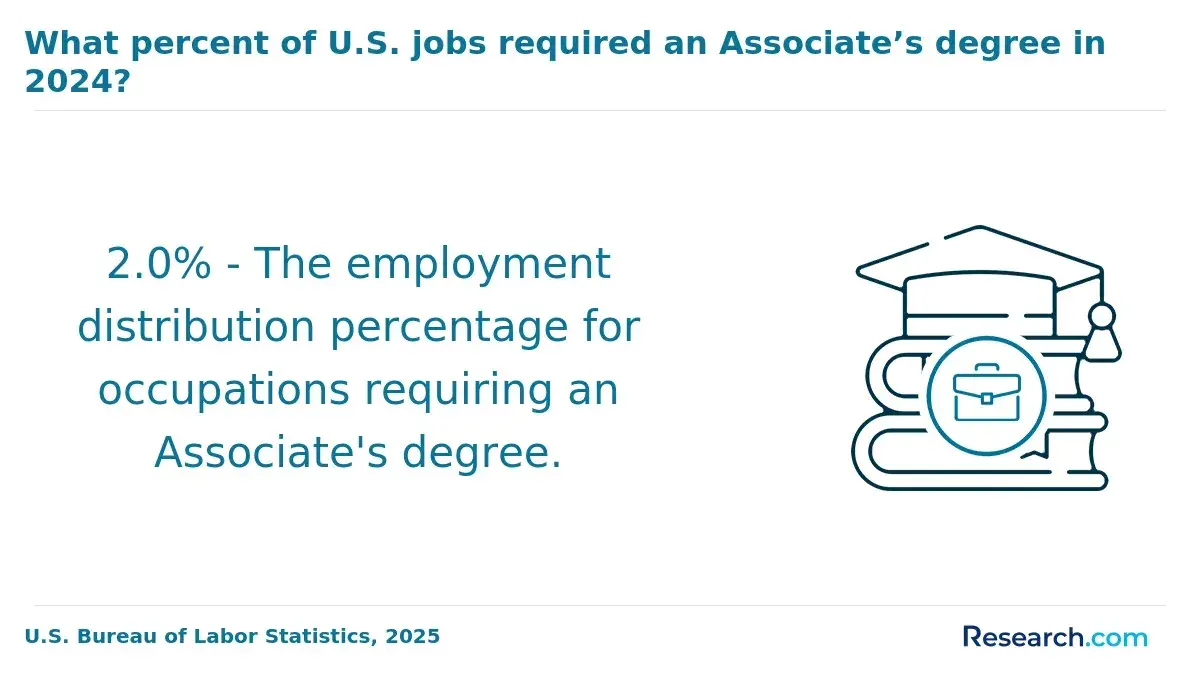
Prior credits can be the biggest factor in how quickly you finish. A student entering with an associate degree or many general education credits may complete much faster than a first-time student. However, not all credits apply to the major, and some schools limit how many transfer credits they accept.
Before enrolling, ask admissions and advising teams these questions and request written answers. They directly affect cost, timeline, and graduation risk.
- How many credits will transfer into the degree, and which requirements will they satisfy?
- Is there a maximum number of transfer, military, exam, or prior-learning credits?
- Are upper-division major courses available every 8-week term or only on rotation?
- What GPA is required for admission, continuation, scholarships, or major progression?
- Are there background checks, clinical requirements, field placements, or state-specific restrictions?
- What happens financially and academically if I withdraw after an 8-week session begins?
A common mistake is enrolling before receiving an official transfer evaluation. Unofficial estimates can be useful, but they are not enough for a cost or completion plan. If speed is your main reason for choosing an 8-week program, the transfer audit is one of the most important documents you will receive.
How long do accelerated 8-week online bachelor's degrees take and what do they cost?
An 8-week format can shorten the calendar, but the degree length still depends on credits completed, course availability, enrollment intensity, and transfer policy. First-time bachelor's students commonly need about 120 credits. Transfer students may need far fewer remaining credits if prior coursework applies cleanly.
Cost should be evaluated as total degree cost, not just tuition per credit. College Board's 2024 Trends in College Pricing reported 2024-25 average published tuition and fees of $11,610 for public four-year in-state students and $43,350 for private nonprofit four-year students. Those figures show why online learners should compare net price, not just advertised sticker price.
The table below outlines cost factors that often change the final bill. Use it to compare schools on the same basis.
| Cost factor | Why it matters | What to ask |
| Tuition model | Per-credit, per-term, and flat-rate tuition can favor different pacing strategies | Is tuition charged per credit or by subscription term? |
| Transfer credits | Accepted credits can reduce both cost and completion time | Which transferred credits apply to the major and general education? |
| Fees | Online, technology, graduation, lab, and proctoring fees can add up | What is the full estimated cost to graduate? |
| Books and software | Technical and healthcare programs may require specialized platforms | Are materials included in tuition? |
| Financial aid | Federal aid, grants, employer benefits, and military benefits can change net cost | What aid applies to 8-week enrollment patterns? |
Students planning graduate study should also think beyond the bachelor's degree. If a master's is likely, comparing most affordable masters degrees online early can help you avoid overborrowing during the undergraduate stage.
To reduce cost, prioritize official transfer evaluation, in-state online tuition if available, employer tuition assistance, credit for military or professional learning, and schools with transparent fee schedules. Avoid borrowing based on the assumption that acceleration will automatically raise earnings immediately after graduation.
What majors and typical coursework are offered in 8-week online bachelor's programs?
Online bachelor's degrees with 8-week courses are available in many career-focused majors, but the format is more common in fields that can be taught through readings, projects, simulations, discussion, analytics, and virtual labs. Lab-heavy or licensure-heavy majors may require hybrid elements, local placements, or longer clinical timelines.
The table below connects common majors with typical coursework and the students who may benefit most. It is designed to help you shortlist programs that match your career goal.
| Major area | Typical coursework | Best fit |
| Business | Accounting, management, marketing, business law, finance, analytics | Students seeking management, operations, finance, HR, or entrepreneurship paths |
| Healthcare administration | Healthcare policy, quality improvement, ethics, informatics, finance | Allied health workers and administrative staff moving toward leadership |
| Information technology | Networking, systems, databases, cloud platforms, cybersecurity basics | Learners seeking applied technology and support roles |
| Computer science | Programming, algorithms, software engineering, data structures, math | Students targeting software, data, or technical graduate study |
| Psychology | Research methods, statistics, lifespan development, abnormal psychology | Students interested in human behavior, services, HR, or graduate school |
| Criminal justice | Courts, policing, corrections, criminology, ethics, public policy | Students considering public safety, investigations, corrections, or advocacy roles |
Course quality matters more than course length. Look for programs that include capstones, portfolios, applied projects, internships, practicums, or labs when those experiences are important in the field. In technology and business majors, projects can help demonstrate skills to employers. In education, nursing, and counseling-adjacent fields, supervised practice requirements may matter more than speed.
What career paths and job roles can 8-week online bachelor's degrees support?
8-week online bachelor's degrees can support many career paths, but the role you can pursue depends on the major, prior experience, location, licensure rules, and employer expectations. A degree may help qualify you for advancement, but it does not replace experience, certifications, portfolios, exams, or background checks when those are required.
The table below pairs common degree areas with realistic career directions. Use it to test whether a program's curriculum matches the job you actually want.
| Degree area | Possible career paths | Skills employers may look for |
| Business | Operations coordinator, management trainee, HR specialist, analyst, account manager | Communication, budgeting, Excel, analytics, leadership, project coordination |
| Healthcare administration | Clinic supervisor, patient services manager, health information coordinator | Compliance, scheduling, quality improvement, data systems, healthcare finance |
| Information technology | Systems administrator, network support specialist, cloud support associate | Troubleshooting, networking, scripting, ticketing systems, security basics |
| Computer science | Software developer, QA analyst, junior data engineer, application support analyst | Programming, version control, testing, databases, problem-solving |
| Cybersecurity | SOC analyst, security technician, compliance analyst, digital forensics assistant | Networking, risk assessment, log analysis, incident response, documentation |
| Education | Teacher, paraprofessional advancement, instructional coordinator assistant, training specialist | Lesson planning, classroom management, assessment, communication, state compliance |
Students who want a faster route into a new field should compare bachelor's degrees with certificates, bootcamps, apprenticeships, and associate degrees. Some short degrees that pay well may be more efficient for learners who need a near-term credential rather than a full bachelor's program.
The strongest career strategy is to connect coursework with evidence of skill. Build a portfolio, complete internships when possible, earn relevant certifications, ask faculty for project feedback, and use career services before the final term. Do not wait until graduation to start translating the degree into job applications.
What salary expectations and job outlook are tied to common 8-week online degrees?
Salary expectations should be based on occupation, location, experience, industry, and credentials, not the course length of the degree. The 8-week format may help some students finish sooner, but employers usually evaluate the accredited degree, skills, experience, certifications, and interview performance.
The table below uses U.S. Bureau of Labor Statistics May 2024 median annual wage data for selected roles connected to common online bachelor's degrees. These figures are national medians, so local pay can be higher or lower.
| Career area | Example role | May 2024 median annual wage | How to interpret it |
| Business | Accountants and auditors | $81,680 | Accounting careers may require additional credits or CPA eligibility for advancement. |
| Management | Management analysts | $101,190 | Analyst roles often reward industry experience and strong data skills. |
| Cybersecurity | Information security analysts | $124,910 | Employers may expect IT experience, security labs, and certifications in addition to a degree. |
| Software | Software developers | $133,080 | Portfolios, internships, and coding skill can strongly affect entry-level competitiveness. |
| Nursing | Registered nurses | $93,600 | RN-to-BSN students are already licensed; pay depends on setting, shift, region, and role. |
| Criminal justice | Police and detectives | $77,270 | Hiring may require academy training, physical standards, background checks, and civil service rules. |
Use salary data as a planning tool, not a promise. A bachelor's degree can improve eligibility for certain roles, but outcomes vary widely. For ROI, compare your remaining tuition after transfer credits and aid against the occupations you are realistically pursuing in your region.
Current labor-market trends also matter. AI and automation are changing entry-level tasks in business, IT, software, and analytics, which makes applied projects and tool fluency more important. Healthcare, education, and public safety remain tied to regulation, staffing needs, and local budgets, so state-specific research is essential.
How do 8-week online bachelor's degrees meet licensing or certification requirements?
Some 8-week online bachelor's degrees are career-enhancing but not licensure-granting. Others can support licensure only if they meet state, accreditor, exam, clinical, or field-placement rules. Never assume an online accelerated program qualifies you for a regulated profession simply because the major name sounds aligned.
Licensure checks are especially important in these fields. Review them before applying, not after completing courses.
- Nursing: Confirm whether the program is pre-licensure or RN-to-BSN, whether it has nursing accreditation, and whether your state board accepts it.
- Education: Verify state-approved teacher preparation status, student teaching requirements, testing rules, and reciprocity limits if you may move.
- Engineering: Check ABET accreditation and state professional engineer requirements if PE licensure is part of your long-term plan.
- Psychology and counseling: Understand that licensed clinical roles usually require graduate education, supervised hours, and state exams after the bachelor's degree.
- Accounting: If CPA eligibility is the goal, confirm required accounting credits, business credits, total credits, and state board rules.
- Cybersecurity: Licensure is uncommon, but certifications and security clearance eligibility may affect employment in some roles.
The safest approach is to contact the relevant state board or licensing agency and ask the school for written confirmation of how the program aligns with requirements. If the answer is "students are responsible for checking," treat that as a signal to do deeper verification before enrolling.
Also consider background checks. Nursing, education, criminal justice, social services, and some government technology roles may screen for criminal history, substance-related offenses, financial issues, or professional discipline. A school's admission decision does not guarantee placement approval, licensure, or employment eligibility.
Other Things You Should Know About
They can be respected when the college is properly accredited and the program matches the role. Employers usually care more about accreditation, skills, experience, portfolio quality, certifications, and interview performance than whether courses were 8 weeks or 16 weeks.
Yes, but only if courses are offered frequently, you take enough credits each year, and your transfer credits apply to the degree. The format can shorten calendar time, but it does not remove the total credit requirement.
They can feel harder because deadlines arrive faster. Students often take fewer courses at once, but each course requires consistent weekly attention. The format works best for organized learners who can study several times per week.
The biggest mistake is enrolling before verifying accreditation, transfer credits, total cost, and licensure fit. Ask for written evaluations and program requirements before committing, especially for nursing, teaching, engineering, accounting, and psychology-related goals.
References
- Best Online Colleges for Working Adults [2026] https://www.straighterline.com/blog/degree-completion-best-online-colleges-for-working-adults
- Best Online Computer Science Bachelor's Degrees of 2025 https://www.computerscience.org/degrees/bachelors/online/
- Community colleges discuss moving to eight-week course format - EdNC https://www.ednc.org/this-community-college-shifted-to-eight-week-courses-heres-what-they-learned/
- How much does it cost to get a bachelor's degree? | edX https://www.edx.org/resources/how-much-does-it-cost-to-get-a-bachelors-degree
- Jessup Playbooks: Transitioning to a 7-Week Course Schedule: Why 7-Week Courses? https://libguides.pvcc.edu/7-week-course-schedule/why-7-week-courses
- 2025 Most Affordable Online Bachelor's Degrees https://www.onlineu.com/most-affordable-colleges/bachelors-degrees
- How Online College Costs Vary in the US and Europe https://orlandomom.com/how-online-college-costs-vary-in-the-us-and-europe/
- Average Cost of College [2025]: Yearly Tuition + Expenses https://educationdata.org/average-cost-of-college