2027 Best Bachelor's Degrees for Work-Life Balance

Co-Founder and Chief Data Scientist
Choosing a bachelor's degree is also choosing a future schedule, stress level, and earning path. BLS May 2024 data places the median annual wage for all U. S. occupations at $49,500, while several bachelor's-level fields exceed that benchmark and offer remote, hybrid, or predictable work options.
This guide is for students, working adults, parents, and career changers comparing degrees by flexibility, salary potential, licensing requirements, and long-term stability. You will learn which majors tend to support better work-life balance and how to choose a program that fits your life.
Key Things You Should Know
- Business, information technology, computer science, cybersecurity, and some engineering paths often combine strong pay with flexible work settings; BLS May 2024 data lists the median wage for computer and information technology occupations at $105,990.
- Program cost can change the work-life balance equation: College Board's 2024-25 figures show average published tuition and fees of $11,610 for in-state public four-year colleges and $43,350 for private nonprofit four-year colleges.
- Nursing, education, healthcare, and criminal justice can offer meaningful, stable careers, but balance depends heavily on shifts, state licensing rules, fieldwork, clinical hours, school calendars, or public-sector staffing demands.
Top 10 2026 Best Bachelor's Degrees for Work-Life Balance
Business Degrees
A bachelor's in business can fit students who want broad career options without committing to one licensed profession. Common concentrations include accounting, finance, marketing, human resources, operations, and management. Many roles use standard weekday schedules, and marketing, analytics, HR, and project coordination may support hybrid work. The trade-off is competition: general business majors should build measurable skills in data analysis, budgeting, CRM tools, Excel, communication, and internships. For balance, choose programs with career services, applied projects, and flexible course pacing.
Healthcare Degrees
Healthcare bachelor's degrees outside nursing, such as health administration, public health, health informatics, and healthcare management, can offer more predictable schedules than bedside clinical roles. These programs suit students who want mission-driven work but prefer operations, compliance, data, or community health. BLS May 2024 data reports a $93,600 median wage for healthcare practitioners and technical occupations, but administrative roles vary widely. Check whether the curriculum includes internships, healthcare law, quality improvement, and electronic health record systems.
Information Technology Degrees
Information technology degrees are among the strongest balance-friendly options because many IT support, systems, cloud, database, and network roles can be done remotely or on hybrid schedules. The best fit is a student who enjoys practical troubleshooting more than theory-heavy programming. Coursework usually covers networking, operating systems, scripting, databases, cybersecurity basics, and cloud platforms. To improve ROI, look for programs that embed certifications, labs, and portfolio projects rather than relying only on lectures.
Computer Science Degrees
A bachelor's in computer science can lead to software development, data, systems, and AI-adjacent roles with strong salary potential and remote work access. It is best for students who can handle math, abstraction, algorithms, and sustained problem-solving. Balance can be excellent in mature companies but less predictable in startups or deadline-heavy product teams. A strong program should include data structures, software engineering, databases, operating systems, security, and collaborative projects that become portfolio evidence.
Cybersecurity Degrees
Cybersecurity degrees can support flexible careers in security analysis, governance, risk, compliance, cloud security, and incident response. The balance depends on role type: compliance and security awareness jobs often have steadier hours, while incident response and security operations may include nights or on-call rotations. Students should seek hands-on labs, ethical hacking practice, networking fundamentals, and preparation for respected certifications. This degree fits detail-oriented learners who can document risks clearly and keep learning as threats change.
Psychology Degrees
A psychology bachelor's degree can support balance-friendly work in human services, HR, research assistance, case coordination, market research, and user experience support. It is not usually enough to become a licensed psychologist or therapist, so students should be clear about whether graduate school is part of the plan. For immediate employability, combine psychology with statistics, research methods, writing, data tools, and internships. Balance is strongest in administrative, research, corporate, or nonprofit roles with regular schedules.
Nursing Degrees
A BSN can lead to stable employment and strong mobility, but work-life balance varies more than many students expect. Hospital bedside nursing often involves long shifts, weekends, holidays, and physical demands. Better balance may come later through outpatient clinics, school nursing, case management, informatics, utilization review, or public health roles. Before enrolling, confirm state board approval, NCLEX preparation, clinical placement support, and whether schedules are realistic for work and family responsibilities.
Education Degrees
Education degrees can appeal to students who value school-year rhythms, community impact, and predictable daily structure. However, teachers often work beyond classroom hours on planning, grading, communication, and professional development. Balance improves when graduates find supportive districts, manageable class sizes, strong mentoring, or roles in curriculum design, instructional technology, tutoring, or corporate training. Students should verify state licensure alignment, student-teaching requirements, background checks, and whether the program prepares them for the grade level they want.
Criminal Justice Degrees
Criminal justice degrees can lead to roles in law enforcement, corrections, courts, probation, homeland security, compliance, and investigations. Balance depends heavily on employer and role. Sworn law enforcement and corrections may involve shift work, overtime, and high stress, while court administration, compliance, victim advocacy, and policy roles may offer more regular schedules. Students should check physical requirements, background standards, internship options, and whether the degree aligns with public-sector hiring rules in their state.
Engineering Degrees
Engineering degrees can offer strong pay and structured professional work, especially in civil, industrial, environmental, mechanical, and electrical engineering. Balance is often better in established firms, government agencies, utilities, and regulated industries than in high-pressure product or construction environments. BLS May 2024 data lists the median wage for architecture and engineering occupations at $97,310. Students should prioritize ABET-accredited programs when available, co-op opportunities, design projects, and math readiness before choosing this demanding path.
What makes a bachelor's degree supportive of work-life balance for students and professionals?
A balance-friendly bachelor's degree supports both the student experience and the career that follows. That means flexible course delivery, reasonable weekly workload, transferable credits, clear advising, predictable internship or clinical expectations, and career outcomes that do not routinely require extreme hours. For professionals, work-life balance usually depends on schedule control, remote or hybrid eligibility, workload predictability, stress level, physical demands, and whether advancement requires constant overtime.
The best choice is not always the easiest major. A difficult degree can still be balance-friendly if it leads to stable, well-paid work with flexible employers. A lighter academic program may be a poor fit if it produces limited career options or requires graduate school the student cannot realistically complete.
Use these criteria to compare programs before applying:
- Schedule fit: Confirm whether courses are asynchronous, evening-based, hybrid, or tied to daytime labs, practicums, or clinical placements.
- Career fit: Match the major to specific roles, not just broad interests, and check whether those roles commonly allow remote work, predictable hours, or part-time advancement.
- Support fit: Look for transfer credit review, academic coaching, career services, internship help, mental health resources, and responsive faculty communication.
Which careers from these degrees offer the most flexible schedules and remote options?
The most flexible careers from these degrees are usually knowledge-work roles where performance is measured by projects, systems, analysis, advising, or documentation rather than physical presence. Remote options are strongest in technology, business operations, analytics, and some administrative healthcare roles.
The table below compares common career directions by flexibility pattern so you can separate "good major" from "good schedule."
| Degree area | Balance-friendly roles to explore | Typical flexibility pattern | Main caution |
| Business | HR specialist, marketing analyst, project coordinator, operations analyst | Often weekday, hybrid, or remote depending on employer | General degrees need internships and job-ready software skills |
| Information technology | Systems analyst, cloud support, database administrator, IT project specialist | Strong hybrid and remote potential | Some support roles require after-hours coverage |
| Computer science | Software developer, QA engineer, data analyst, DevOps associate | Strong remote potential in many industries | Product deadlines can create crunch periods |
| Cybersecurity | GRC analyst, security awareness specialist, vulnerability analyst | Hybrid and remote options are common in non-emergency roles | Incident response and SOC work may include shifts or on-call duty |
| Healthcare administration | Health informatics specialist, clinic manager, quality coordinator | More predictable than many direct-care roles | Healthcare operations can still involve urgent staffing issues |
| Education | Instructional designer, curriculum specialist, tutor, training coordinator | Predictable calendars or remote corporate options | Classroom teaching often extends beyond school hours |
If flexibility is your top priority, ask schools where recent graduates work, not only what jobs the degree "can" lead to. A major with many theoretical options may still disappoint if the school has weak employer connections or limited internship pipelines.
How do online bachelor's programs compare with campus programs for work-life balance?
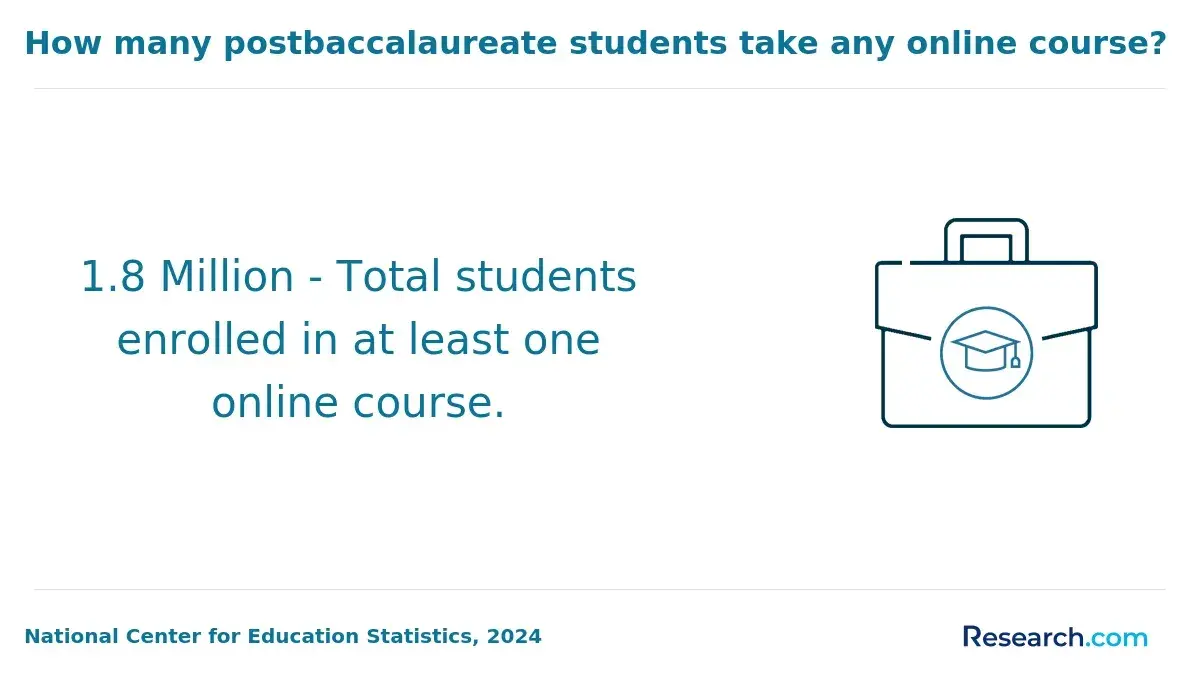
Online bachelor's programs can improve work-life balance because they reduce commuting, allow more control over study time, and often support part-time enrollment. Campus programs may be better for students who need structure, labs, studio work, in-person networking, or supervised clinical placements.
The comparison below shows the practical trade-offs that matter most for students balancing school with jobs or caregiving.
| Factor | Online bachelor's programs | Campus bachelor's programs | Best fit |
| Schedule | Often asynchronous or evening-friendly | Usually fixed class times | Online for working adults; campus for students who need routine |
| Commuting | Little or none | Can add weekly time and cost | Online for students far from campus |
| Networking | Requires intentional effort through virtual events and internships | More natural peer and faculty interaction | Campus for students who value face-to-face networks |
| Hands-on requirements | May require local placements, intensives, or proctored labs | Easier access to campus labs and clinical sites | Campus or hybrid for lab-heavy majors |
| Self-management | Requires strong time management | External structure is built in | Online for independent learners |
For students prioritizing price as well as flexibility, comparing a cheapest online bachelor's degree list can be useful, but affordability should be weighed against accreditation, transfer policies, student support, and graduation pathways.
What admission, time, and cost factors should you consider for balance-friendly degrees?
Admissions, time, and cost determine whether a degree is truly manageable. A program that looks flexible can still strain your schedule if it has limited course availability, expensive fees, mandatory daytime placements, or poor transfer credit policies.
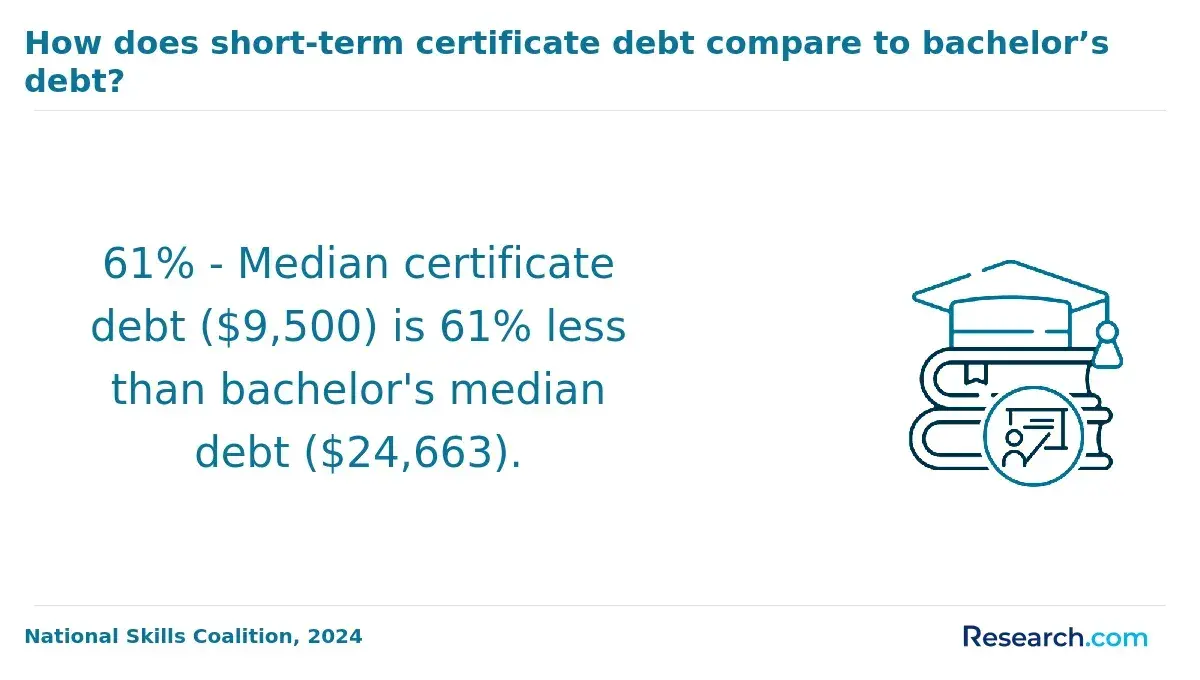
Cost should be evaluated beyond the advertised tuition rate. College Board's 2024-25 data shows average published tuition and fees of $11,610 at in-state public four-year institutions and $43,350 at private nonprofit four-year institutions, before housing, books, transportation, and aid. That gap matters because lower debt can give graduates more freedom to choose balanced jobs instead of taking the highest-pressure option immediately.
Before applying, ask each school for details in writing:
- Total program cost, including technology fees, books, lab fees, clinical fees, graduation fees, and required software or equipment.
- Transfer credit limits, residency requirements, credit for prior learning, and whether old credits expire in your major.
- Expected weekly workload for full-time and part-time students, especially in accelerated courses.
- Availability of required courses each term, because limited scheduling can delay graduation.
- Internship, practicum, student-teaching, or clinical placement rules, including whether daytime availability is required.
If application costs are a barrier while comparing options, an online college no application fee option may reduce upfront friction, but you should still verify accreditation, program outcomes, and total cost before enrolling.
Which bachelor's majors combine strong salary potential with reasonable working hours?
The strongest salary-and-balance combinations are often found in fields where work is project-based, analytical, technical, or administrative. Pay still varies by region, experience, employer, and industry, so salary data should be treated as a benchmark rather than a promise.
The table below uses broad BLS May 2024 occupational groups to show where bachelor's-level pathways often connect to stronger pay potential. It does not mean every graduate in a related major will enter that group immediately.
| Degree direction | Related BLS occupational group | May 2024 median annual wage | Balance outlook |
| Computer science, IT, cybersecurity | Computer and information technology occupations | $105,990 | Strong remote and hybrid potential, with some deadline or on-call risk |
| Engineering | Architecture and engineering occupations | $97,310 | Often structured, especially in government, utilities, and established firms |
| Healthcare administration and clinical healthcare | Healthcare practitioners and technical occupations | $93,600 | High stability, but schedules vary widely by role and setting |
| Business, accounting, finance, analytics | Business and financial operations occupations | $82,130 | Often predictable weekdays, with busy seasons in finance and accounting |
| Education | Educational instruction and library occupations | $61,320 | Predictable calendars, but workload can extend beyond visible hours |
Students who want future graduate options should also consider whether the bachelor's degree builds prerequisites, GPA strength, and faculty relationships. If a flexible bachelor's is a stepping stone, reviewing easiest masters programs to get into can help you understand how admissions expectations differ, but graduate school should only be pursued when it supports a clear career goal.
How do accreditation and program quality affect work-life balance and career stability?
Accreditation affects work-life balance because it influences credit transfer, financial aid eligibility, licensure access, employer recognition, and graduate school options. A low-quality or unaccredited program can create the worst kind of imbalance: spending time and money on credits that do not move you toward the job you want.
Start with institutional accreditation from an agency recognized for U.S. higher education quality review. Then check programmatic accreditation when it matters for your field. Engineering students should pay close attention to ABET accreditation. Nursing students should confirm state board approval and may also look for CCNE or ACEN accreditation. Education students need programs aligned with state teacher licensure requirements. Business accreditation, such as AACSB, ACBSP, or IACBE, can be useful, although employer expectations vary by role.
Common red flags include unclear accreditation language, pressure-heavy admissions calls, missing graduation or licensure disclosures, vague transfer policies, and promises about salaries or job placement. A trustworthy school should be able to explain how its program connects to specific careers and what requirements vary by state.
What are the typical courses and skills in balance-friendly bachelor's degree programs?
Balance-friendly bachelor's programs tend to teach portable skills: analysis, communication, project management, technology use, ethical judgment, and problem-solving. The major determines the technical layer, but the most employable students usually combine degree knowledge with internships, projects, and evidence of real work.
The table below summarizes common coursework and skills across the degree areas in this guide.
| Degree area | Typical courses | Workplace skills to build |
| Business | Accounting, finance, marketing, management, business analytics | Budgeting, presentations, Excel, negotiation, project coordination |
| Healthcare administration | Healthcare systems, policy, quality improvement, informatics | Compliance, data interpretation, process improvement, patient-centered communication |
| Information technology | Networking, systems administration, databases, scripting, cloud fundamentals | Troubleshooting, documentation, security awareness, service management |
| Computer science | Programming, algorithms, data structures, databases, software engineering | Code review, testing, version control, product thinking |
| Cybersecurity | Network security, risk management, digital forensics, ethical hacking | Threat analysis, reporting, policy writing, incident documentation |
| Psychology | Research methods, statistics, cognition, development, social psychology | Interviewing, survey design, behavioral analysis, writing |
| Nursing | Anatomy, pharmacology, assessment, community health, clinical practice | Patient care, triage, teamwork, clinical judgment |
| Education | Learning theory, classroom management, assessment, instructional design | Lesson planning, coaching, communication, curriculum adaptation |
| Criminal justice | Criminology, courts, corrections, ethics, criminal law | Report writing, interviewing, conflict management, policy interpretation |
| Engineering | Calculus, physics, design, mechanics, circuits, systems modeling | Technical design, testing, documentation, teamwork |
A common mistake is choosing a major based only on course titles. Instead, review assignments, capstone projects, internship access, software tools, and employer partnerships to see whether the program builds usable skills.
How do licensing or certification requirements influence schedules in these career paths?
Licensing and certification can improve career stability, but they can also add exams, supervised hours, continuing education, and schedule constraints. Requirements vary by state, so students should verify rules with the relevant licensing board before enrolling.
The table below shows how credentials can affect schedules in several bachelor's-level pathways.
| Field | Common requirement or credential issue | How it can affect work-life balance |
| Nursing | State board approval and NCLEX-RN eligibility | Clinical placements and early-career shifts may be demanding, but later roles can become more predictable |
| Education | State teacher licensure, student teaching, exams, background checks | Student teaching may require daytime availability; licensed roles follow school calendars but include after-hours work |
| Engineering | ABET relevance, FE exam, and possible PE licensure path | Licensure can support advancement, especially in civil and public-facing engineering, but requires time and experience |
| Accounting | CPA eligibility often requires additional credits beyond the bachelor's degree | Busy seasons may be intense; the credential can expand options later |
| Cybersecurity | Industry certifications such as Security+ or CISSP may be requested by employers | Certifications can improve mobility, but exam preparation adds workload outside school |
| Psychology | Independent clinical practice usually requires graduate education and licensure | A bachelor's alone may lead to support roles; clinical goals require a longer training timeline |
The key decision is whether the credential burden is worth the career control it may create. If you cannot complete required field hours, exams, or continuing education, choose a related path with fewer licensing barriers.
How can working adults choose a bachelor's program that fits jobs, family, and life goals?
Working adults should choose a bachelor's program by starting with life constraints, not brochures. The right program is one you can complete consistently without sacrificing health, income, caregiving responsibilities, or career momentum.
Use this step-by-step process before you enroll:
- Define your target roles first, including schedule preferences, remote-work needs, salary range, and whether licensure is required.
- Map your weekly availability honestly, including work, commuting, caregiving, sleep, and one recovery block.
- Request a transfer credit evaluation before committing, because accepted credits can reduce both cost and time.
- Compare full-time, part-time, and accelerated pacing by weekly workload, not just graduation date.
- Ask about tutoring, advising response times, career coaching, disability services, and emergency leave policies.
- Calculate total cost after grants, employer tuition assistance, fees, and expected borrowing.
- Talk to current students or alumni about workload, instructor responsiveness, and whether courses are truly flexible.
Parents and caregivers may need programs with asynchronous courses, predictable deadlines, and mobile-friendly learning systems. Resources focused on online courses for moms can help identify features that matter for students balancing school with family care.
Avoid common mistakes such as choosing the fastest program without checking workload, assuming online means easy, ignoring state licensure rules, borrowing based on best-case salary assumptions, or enrolling before confirming that required courses are offered when you need them.
Other Things You Should Know About
The best overall options are often information technology, computer science, business, cybersecurity, healthcare administration, and some engineering fields because they can lead to professional roles with hybrid schedules, project-based work, and stronger salary potential. The best personal choice depends on your skills, location, and tolerance for math, technical work, or licensing requirements.
They can be, especially when courses are asynchronous and the school accepts transfer credits. However, online programs still require steady weekly study time, and some majors include in-person labs, clinicals, practicums, or student teaching.
Be cautious with paths that commonly require rotating shifts, emergency response, mandatory field hours, or unpredictable overtime. Nursing, law enforcement, corrections, and some cybersecurity operations roles can be excellent careers, but the early schedules may not fit everyone.
Compare total cost, accreditation, transfer credits, graduation requirements, career outcomes, licensure alignment, and the kinds of employers that recruit graduates. A program is more likely to be worth it when it connects clearly to roles you want and can realistically complete.
References
- For Today’s B-School Grads, Work-Life Balance Is A Must, Poll Finds https://poetsandquantsforundergrads.com/news/for-todays-workforce-work-life-balance-is-a-must-poll/
- Top Work-Life Balance Statistics in the US and Worldwide (2025) https://lifehackmethod.com/blog/work-life-balance-statistics/
- 12 Best Work Life Balance Jobs in 2026 - Skills & Salary Range https://internshala.com/blog/best-work-life-balance-jobs/
- Error https://www.creditkarma.com/income/i/most-flexible-jobs
- How does a college degree improve graduates’ employment and earnings potential? - APLU https://www.aplu.org/our-work/4-policy-and-advocacy/publicuvalues/employment-earnings/