2027 Best Undergraduate Degrees With Competency-Based Programs

Co-Founder and Chief Data Scientist
Choosing a bachelor's degree is harder when tuition, work schedules, and career timelines all matter. Competency-based undergraduate programs let students progress by proving skills rather than waiting for a semester to end. That matters because the College Board reported average public four-year in-state tuition and fees of $11,610 for 2024-25, before housing and other costs.
This guide is for working adults, transfer students, military learners, and career changers who want to compare degree fields, understand risks, and choose a program that fits their budget, timeline, and career goal.
Key Things You Should Know
- Competency-based bachelor's degrees are strongest for self-directed students with work experience, transfer credits, or prior training because they can move faster after proving required skills.
- Cost savings depend on pace: national published tuition averages reached $11,610 for in-state public four-year colleges and $43,350 for private nonprofit four-year colleges in 2024-25, but many competency-based programs charge by term instead of by credit.
- Accreditation and licensing fit matter more than speed; nursing, education, cybersecurity, engineering, and counseling-related paths may require programmatic approval, supervised practice, exams, or state-specific authorization.
Top 10 Best Undergraduate Degrees With Competency-Based Programs
Business Degrees
Business is one of the best fits for competency-based learning because many students already use workplace skills in budgeting, operations, sales, leadership, or project management. Common majors include business administration, accounting, human resources, marketing, and supply chain management.
Choose this route if you want a flexible degree that can support entry-level management or analyst roles. Be cautious with accounting if your goal is CPA eligibility; state boards may require specific credit hours, upper-level accounting courses, and transcripts that clearly document coursework.
Healthcare Degrees
Healthcare administration, health information management, and public health are practical competency-based options for students who want healthcare careers without becoming clinicians. These programs often emphasize compliance, data privacy, billing, quality improvement, and healthcare operations.
They fit medical office workers, military medics moving into civilian roles, and students interested in leadership. Check whether the curriculum supports credentials such as RHIA, RHIT, or healthcare management certifications, because employers may value both the degree and a recognized professional credential.
Information Technology Degrees
Information technology programs work well in a competency-based format because skills can be demonstrated through labs, projects, certifications, and applied assessments. Students may study networking, cloud systems, databases, scripting, help desk operations, and systems administration.
This path is best for learners who like hands-on troubleshooting more than heavy theory. A strong program should align coursework with current tools and may include preparation for certifications from vendors such as CompTIA, Cisco, Microsoft, AWS, or Google Cloud.
Computer Science Degrees
Computer science degrees are more theoretical than general IT programs and usually include programming, data structures, algorithms, software engineering, databases, and discrete math. Competency-based computer science can be a good fit for experienced coders who want a formal credential, but beginners should confirm that the program offers enough instructor support.
Look for substantial portfolio projects, code reviews, and math readiness resources. If you want software engineering jobs, the degree should help you build demonstrable projects, not just pass exams.
Cybersecurity Degrees
Cybersecurity competency-based degrees often combine networking, risk management, incident response, governance, cloud security, and ethical hacking. They are useful for IT workers who want to specialize or military learners with security experience.
The best programs align with recognized frameworks and may prepare students for certifications such as Security+, CySA+, SSCP, or CISSP after experience requirements are met. Avoid programs that promise quick entry into high-level security roles without a foundation in networking, systems, and hands-on practice.
Psychology Degrees
A competency-based psychology bachelor's degree can help students prepare for human services, case management, behavioral health support, market research, or graduate school. It usually covers development, abnormal psychology, research methods, statistics, ethics, and social behavior. It is not, by itself, a license to work as a psychologist or therapist.
Choose this major if you understand that many clinical roles require a master's or doctoral degree, supervised hours, exams, and state licensure after graduation.
Nursing Degrees
Competency-based nursing is most common in RN-to-BSN programs for licensed registered nurses, not pre-licensure nursing. These programs can fit working nurses because they emphasize leadership, evidence-based practice, community health, care coordination, and informatics.
Before enrolling, confirm the program holds appropriate nursing accreditation, such as CCNE or ACEN, and that your state board accepts the format. If you are not already an RN, you will likely need a state-approved pre-licensure pathway with clinical placements.
Education Degrees
Education degrees can be competency-based, especially in elementary education, special education, or educational studies. Licensure-track programs must align with state teacher certification rules, student teaching requirements, background checks, and required exams.
This degree is best for students who already know where they want to teach because approval can vary by state. If you want classroom licensure, ask whether the school places student teachers in your area and whether graduates meet your state's teacher preparation requirements.
Criminal Justice Degrees
Criminal justice programs usually cover courts, policing, corrections, criminology, ethics, evidence, and public policy. A competency-based format may suit law enforcement officers, corrections staff, military personnel, or security professionals seeking advancement.
The degree can support administrative, investigative, probation, compliance, or public safety roles, but it does not replace academy training, background checks, civil service exams, or agency-specific hiring standards. Compare programs by internship options, writing requirements, and coverage of data, policy, and community relations.
Engineering Degrees
Engineering is less common in competency-based bachelor's programs because labs, calculus sequences, design studios, and accreditation requirements can be difficult to accelerate. Some programs in engineering technology, industrial technology, or applied engineering may use competency-based elements.
If your goal is professional engineering licensure, prioritize ABET accreditation and state board acceptance over speed. Students who want hands-on technical roles may find engineering technology more accessible, while future licensed engineers should be careful about program recognition.
What is a competency-based undergraduate degree?
A competency-based undergraduate degree is a bachelor's or associate-level program organized around measurable skills, called competencies, instead of only seat time. Students advance when they show mastery through projects, exams, papers, simulations, portfolios, labs, or performance assessments. Many competency based programs still award credits for transcript purposes, but the learning model is built around outcomes rather than weekly attendance alone.
The model works best when the student can study independently, document prior learning, and maintain momentum. It is less ideal for learners who need frequent live lectures, fixed weekly deadlines, or a highly social campus environment. The biggest advantage is flexibility; the biggest risk is underestimating the discipline needed to complete work without a traditional semester rhythm.
Which schools offer accredited competency-based bachelor's degrees?
Accredited competency-based bachelor's degrees are offered by a mix of public universities, private nonprofit institutions, and private universities. The key is not the ownership type; it is whether the institution is recognized by an accreditor accepted by the U.S. Department of Education and whether the specific program meets any required professional standards.
The table below summarizes well-known U.S. institutions associated with competency-based or direct-assessment-style undergraduate options. Program availability changes, so use this as a starting point and verify the exact major, state authorization, and accreditation before applying:
| School | Common competency-based areas | Accreditation check to make |
| Western Governors University | Business, IT, cybersecurity, nursing, education | Institutional accreditation plus programmatic approval for nursing or teacher licensure |
| Southern New Hampshire University | Business and select online undergraduate pathways | Institutional accreditation and current program format |
| University of Maine at Presque Isle | Business, liberal studies, criminal justice, education-related options | Institutional accreditation and state-specific teacher preparation rules if applicable |
| University of Wisconsin Flexible Option | Business, health information, diagnostic imaging, nursing completion options | Institutional accreditation and healthcare credential alignment |
| Purdue Global ExcelTrack | Business, IT, nursing completion, criminal justice | Institutional accreditation and any programmatic accreditation for regulated fields |
| Capella University FlexPath | Business, psychology, IT, healthcare administration | Institutional accreditation and graduate-school transfer or admission policies |
| Northern Arizona University Personalized Learning | Management, computer information technology, liberal arts | Institutional accreditation and current program availability |
| Texas A&M University-Commerce | Organizational leadership and related applied programs | Institutional accreditation and transfer-credit rules |
Before trusting any "best" list, confirm the program in the school catalog. A common mistake is checking only the university's accreditation but ignoring whether the major itself satisfies licensure, certification, or employer requirements.
Are competency-based degrees available online or on campus?
Most competency-based undergraduate degrees are online because asynchronous assessments make it easier for students to work at their own pace. Some programs include campus labs, clinical placements, student teaching, proctored exams, or field experiences, especially in nursing, education, healthcare, and technical fields.
The comparison below shows when online, hybrid, and campus formats make the most sense. Use it to match the delivery model to your learning style and career requirements:
| Format | Best fit | Main trade-off |
| Fully online | Working adults, military students, parents, and learners with transfer credits | Requires strong self-management and may offer fewer in-person networking opportunities |
| Hybrid | Students in healthcare, education, engineering technology, or lab-based programs | More structure and hands-on support, but less geographic flexibility |
| On campus | Students who need frequent faculty contact, labs, studios, or a traditional college experience | Often less flexible and may take longer if courses are locked to semesters |
Online is better when flexibility is the top priority. Campus or hybrid learning is better when the degree depends on supervised practice, physical labs, or local professional connections.
What admission requirements do competency-based programs use?
Admission requirements vary by school and major, but competency-based programs often review whether the applicant is ready for independent learning. Many bachelor's completion programs are built for adults who already have college credits, workplace experience, military training, or an associate degree.
Expect schools to ask for materials that show both academic readiness and fit for the program format. The most common requirements include the following:
- High school diploma, GED, or prior college transcript showing completed coursework.
- Transfer-credit evaluation from regionally accredited colleges or approved alternative-credit providers.
- Minimum GPA or placement requirements, especially for math-heavy, nursing, education, or technology majors.
- Proof of professional licensure for RN-to-BSN or other completion programs that require an existing credential.
- State residency, background check, or field-placement eligibility for programs tied to licensure.
- Technology access, proctored testing readiness, and comfort with online learning platforms.
If you are not ready for a bachelor's program, starting with easy associate degrees may be a lower-risk way to earn transferable credits and build academic momentum before committing to a four-year path.
How long do competency-based bachelor's degrees take?
Competency-based bachelor's degrees can be faster than traditional programs, but only for students who complete assessments consistently. A first-time student with few credits may still need several years. A transfer student with an associate degree, professional experience, or military training may finish sooner if the program accepts those credits and the student can pass assessments quickly.
Use this sequence to estimate your realistic timeline before enrolling:
- Request an official transfer evaluation before you commit to the school.
- Ask how many competencies remain after transfer credits are applied.
- Confirm whether the program uses fixed terms, subscription terms, or self-paced monthly starts.
- Estimate weekly study time based on work, family, and field-placement obligations.
- Ask whether failed assessments delay progress or can be revised within the same term.
Short-term options such as 6 week courses with certificates can help you test your readiness for accelerated online learning before you start a full bachelor's degree.
How much do competency-based undergraduate programs cost?
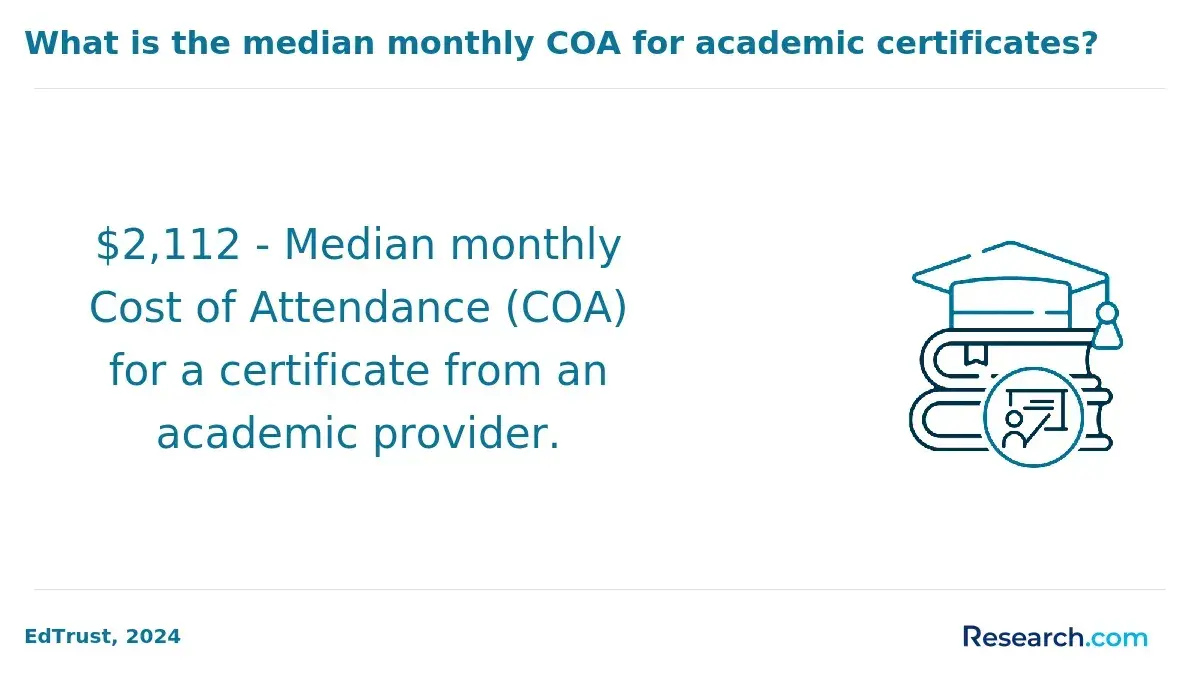
Competency-based undergraduate programs can lower total cost when students complete more coursework in fewer paid terms. However, they are not automatically cheaper. The real cost depends on tuition model, transfer credits, pace, books, fees, financial aid eligibility, and whether the program requires travel, exams, background checks, or clinical placements.
These current cost benchmarks help put advertised tuition in context:
- $11,610 average published in-state tuition and fees at public four-year colleges for 2024-25, according to the College Board.
- $30,780 average published out-of-state tuition and fees at public four-year colleges for 2024-25, according to the College Board.
- $43,350 average published tuition and fees at private nonprofit four-year colleges for 2024-25, according to the College Board.
Term-based pricing can be attractive if you can finish many competencies per term. It can become expensive if you slow down, pause frequently, or need repeated attempts. Before enrolling, calculate total program cost using your transfer-credit estimate, expected number of terms, technology fees, books, exam fees, and any required in-person components.
Which careers match competency-based undergraduate degrees?
The best career match depends on the major, not just the competency-based format. Employers generally care that the school is accredited, the degree aligns with the role, and the applicant can demonstrate relevant skills through experience, projects, certifications, internships, or licensure.
The table below connects common competency-based undergraduate degrees with realistic career directions. Use it to identify whether the degree supports entry-level work, advancement, or preparation for graduate study:
| Degree area | Career directions | Best for |
| Business | Operations coordinator, account manager, human resources assistant, business analyst, project coordinator | Students seeking broad advancement options in private, nonprofit, or public organizations |
| Healthcare administration | Medical office manager, patient services coordinator, health information supervisor, compliance associate | Healthcare workers moving into administration or quality improvement |
| Information technology | Help desk analyst, systems administrator, network technician, cloud support associate | Hands-on learners who want technical support and infrastructure roles |
| Computer science | Junior developer, software tester, data analyst, web developer | Students who can build a portfolio and handle programming and math requirements |
| Cybersecurity | Security analyst, risk analyst, security operations center technician, compliance analyst | IT workers adding a security specialization |
| Psychology | Case aide, behavioral health technician, research assistant, human services coordinator | Students considering graduate school or people-focused support roles |
| Nursing completion | BSN-prepared registered nurse, nurse supervisor, care coordinator, public health nurse | Licensed RNs seeking advancement or employer-preferred credentials |
| Education | Teacher, instructional aide, education coordinator, training specialist | Students who confirm state licensure alignment before enrolling |
| Criminal justice | Probation support, corrections supervisor, public safety analyst, compliance investigator | Current public safety workers or students interested in justice systems |
| Engineering technology | Manufacturing technician, quality technician, process improvement associate, technical supervisor | Students seeking applied technical roles rather than traditional engineering licensure |
Some fields become more valuable with graduate study. If you finish a bachelor's degree and want a faster advanced credential, compare online 1 year masters programs only after confirming that the master's degree matches your licensing, promotion, or specialization goal.
What salaries do graduates with these degrees earn?
Salary outcomes vary by employer, location, experience, certifications, and whether the role requires licensure. A competency-based degree does not create a separate salary track; it is the major, skills, and job market that shape earnings potential.
The table below uses U.S. Bureau of Labor Statistics May 2024 median annual wage data for roles that commonly align with these degree areas. Treat the numbers as labor-market context, not a promise of individual earnings:
| Degree area | Related role or occupation | May 2024 median annual wage |
| Business | Management analysts | $101,190 |
| Accounting or business | Accountants and auditors | $81,680 |
| Healthcare administration | Medical and health services managers | $117,960 |
| Health information | Medical records specialists | $50,250 |
| Information technology | Computer support specialists | $61,550 |
| Computer science | Software developers | $133,080 |
| Cybersecurity | Information security analysts | $124,910 |
| Nursing | Registered nurses | $93,600 |
| Education | High school teachers | $65,220 |
| Criminal justice | Police and detectives | $77,270 |
| Engineering technology or engineering | Industrial engineers | $101,140 |
The strongest return usually comes when the degree removes a specific barrier: eligibility for promotion, access to a licensed profession, preparation for a certification, or transition into a higher-demand technical role. The weakest return often comes from choosing a fast degree without a target job.
Do competency-based degrees meet licensing or certification rules?
Competency-based degrees can meet licensing or certification rules, but only when the institution, program, curriculum, supervised experience, and transcript format satisfy the relevant authority. This is especially important for nursing, teaching, accounting, counseling-adjacent pathways, cybersecurity government roles, and engineering.
Before enrolling in a regulated field, take these steps:
- Identify the exact license, certification, or exam you want after graduation.
- Check the state board or certifying body requirements directly, not only the school's marketing page.
- Ask the school whether graduates in your state have been eligible for the exam or license.
- Confirm required clinical, student teaching, practicum, lab, or supervised-hour components.
- Request written confirmation of programmatic accreditation when the profession requires it.
- Ask how the transcript records competencies, credits, grades, pass marks, and course equivalents.
Red flags include vague accreditation language, no clear state authorization information, refusal to provide a degree plan, unclear transfer-credit policies, and promises that sound like guaranteed employment or guaranteed licensure. A good program should be transparent about what it can and cannot do for your career goal.
Other Things You Should Know About
They can be, especially when the school is accredited and the degree matches the job. Employers usually focus on skills, experience, certifications, portfolio quality, and whether the credential comes from a legitimate institution.
Many accredited programs participate in federal financial aid, but eligibility depends on the school and program structure. Ask the financial aid office whether the program is Title IV eligible and how satisfactory academic progress is measured.
Not necessarily. It may be faster for experienced, disciplined students, but it can be harder for learners who need frequent live instruction, fixed weekly deadlines, or extensive faculty prompting.
The biggest mistake is choosing speed before fit. Verify accreditation, transfer credits, total cost, licensure alignment, assessment format, faculty support, and career outcomes before committing.
References
- Competency Based Education Promising for Quick Completion and Improved Earnings https://www.mathematica.org/news/competency-based-education-promising-for-quick-completion-and-improved-earnings
- Competency-Based Education (CBE) https://lakeshore.edu/future-students/flexible-learning-options/competency-based-education
- What is Competency-Based Education? CBE Programs https://www.onlineeducation.com/features/what-is-competency-based-education
- Examples of Competency-Based Education (CBE) Adoption https://envision.everspringpartners.com/plan/examples-of-cbe-adoption
- Measuring Real Learning Student competency - Collegiate Consulting https://collegiateconsulting.com/measuring-real-learning/
- How to Choose a Competency-Based Degree Program https://www.straighterline.com/blog/10-questions-to-choose-a-competency-based-degree-program
- Competency-Based Education: Adding Value in the Liberal Arts https://www.americanprogress.org/article/competency-based-education-adding-value-in-the-liberal-arts/
- "Competency-Based Education: Designing and Launching CBE Programs for Working Adults" https://resources.rework.com/libraries/higher-education-growth/competency-based-education
- How to Identify Your School’s “Flavor” of Competency-Based Education https://www.wgulabs.org/posts/how-to-identify-your-schools-flavor-of-competency-based-education
- How do Competency-Based Education Programs Structure their Tuition Models? - C-BEN https://www.c-ben.org/how-do-competency-based-education-programs-structure-tuition-models/