2027 Accredited Online Health Administration Degree Programs That Accept the Most Transfer Credits

Co-Founder and Chief Data Scientist
Choosing an online health administration degree is often a transfer-credit decision first and a school-brand decision second. The stakes are high: the U.S. Bureau of Labor Statistics reports a May 2024 median pay of $117,960 for medical and health services managers, with projected employment growth of 29% from 2023 to 2033.
This guide is for students with prior college, an associate degree, military training, or healthcare experience. You will learn which accredited programs advertise the highest transfer limits, how credits are evaluated, and how to estimate real time and tuition savings before enrolling.
Key Things You Should Know
- The most transfer-friendly accredited online health administration bachelor's programs commonly accept up to 90 transfer credits, while a small number of degree-completion institutions advertise limits above 100 credits toward a 120-credit degree.
- A high maximum transfer limit does not mean all credits will apply; credits must usually meet grade, accreditation, level, course-equivalency, residency, and major-requirement rules.
- For a 120-credit bachelor's degree, transferring 60 credits may cut the remaining academic load roughly in half, while transferring 90 credits can leave about 30 credits if those credits apply directly to the degree plan.
Which Accredited Online Health Administration Degree Programs Accept the Most Transfer Credits?
The accredited online health administration programs that accept the most transfer credits are usually bachelor's degree-completion programs, adult-learner universities, and online divisions of regionally accredited institutions. The best option is not automatically the school with the largest advertised number; it is the school that applies the most of your prior credits to general education, major, elective, and residency requirements.
The table below compares widely available accredited online health administration or healthcare management bachelor's options with notably generous transfer policies. Policies can change, so students should treat these figures as decision-screening data and request an official evaluation before enrolling.
| Institution | Online degree | Institutional accreditation | Advertised maximum transfer credit | Best fit | Key limitation to verify |
| Thomas Edison State University | BSBA in Healthcare Management or related healthcare management pathway | Middle States Commission on Higher Education | Up to 114 credits toward many bachelor's degrees, subject to source and degree rules | Students with extensive prior college, military, exams, or evaluated learning | Required institutional courses, upper-level business requirements, and major fit |
| Excelsior University | BS in Health Care Management | Middle States Commission on Higher Education | Up to 113 credits toward a 120-credit bachelor's degree | Adult learners with large credit banks from multiple institutions | Capstone, information literacy, major requirements, and credit source limits |
| Franklin University | BS in Healthcare Management | Higher Learning Commission | Up to 94 credits toward a 124-credit degree | Students with an associate degree plus additional coursework | Minimum credits in residence and required healthcare management courses |
| University of Maryland Global Campus | BS in Health Services Management | Middle States Commission on Higher Education | Up to 90 credits toward a 120-credit degree | Community college transfer students, military learners, and working adults | Upper-level coursework, general education mapping, and major requirements |
| Colorado State University Global | BS in Healthcare Administration and Management | Higher Learning Commission | Up to 90 credits toward a 120-credit degree | Students seeking structured online terms and transfer-friendly completion | Core course alignment and residency requirements |
| Southern New Hampshire University | BS in Healthcare Administration | New England Commission of Higher Education | Up to 90 credits toward a 120-credit degree | Students with prior college credits who want broad online support services | How transferred credits apply to major, elective, and general education categories |
| Liberty University | BS in Healthcare Administration | Southern Association of Colleges and Schools Commission on Colleges | Up to 75% of the degree, commonly equivalent to 90 credits in a 120-credit program | Students seeking a faith-based online university with generous transfer capacity | Course equivalency, minimum grade rules, and institutional credit requirements |
| Purdue Global | BS in Health Care Administration | Higher Learning Commission | Up to 75% of the degree; programs may use quarter-credit structures | Students comfortable comparing semester and quarter-credit conversions | Quarter-credit conversion, major requirements, and experiential credit policies |
For most students, the practical shortlist starts with three questions: how many credits the school may accept, how many will count toward the degree instead of free electives, and how many credits must still be completed at the institution. A 90-credit transfer award that leaves only 30 required credits is far more valuable than a 100-credit award that still leaves unmet prerequisites or upper-division major courses.
How Do Online Health Administration Degree Programs Evaluate Transfer Credits?
Online health administration programs evaluate transfer credits by matching prior learning to the receiving school's curriculum. Evaluators usually look at the institution where the credit was earned, the course level, grade, content, credit hours, age of the course, and whether the course satisfies a specific requirement in the health administration degree plan.
Students coming from healthcare or clinical programs should pay close attention to how administrative, science, and professional courses are classified. For example, students comparing health administration with online nursing degrees will find that nursing programs often have stricter clinical and licensure-related transfer rules, while health administration programs may offer more flexibility for business, communication, policy, finance, and management coursework.
Most evaluations follow a predictable sequence. Use these steps to avoid relying on rough admissions estimates:
- Request official transcripts from every college, university, military education provider, and exam-credit source you have used.
- Ask whether the school provides an unofficial pre-evaluation before application or only an official evaluation after admission.
- Submit syllabi or course descriptions for older, specialized, or health-related courses that do not have obvious equivalents.
- Ask the evaluator to show where each accepted course applies: general education, major, concentration, prerequisite, upper-level requirement, or elective.
- Confirm the minimum grade required for transfer, because many programs accept only courses completed with a C or better, while some major courses may require higher grades.
- Check whether science, technology, compliance, coding, or healthcare law courses expire after a certain number of years.
- Ask for a written remaining-degree plan that lists the exact courses and credits still required.
The biggest red flag is an evaluation that lists total accepted credits without showing how those credits apply. Elective credit may help you reach the total credit requirement, but it will not shorten the degree if you still need most of the healthcare administration core.
How Can Transfer Credits Shorten an Online Health Administration Degree?
Transfer credits shorten an online health administration degree only when they replace required credits in the curriculum. Most bachelor's degrees require about 120 semester credits, typically divided among general education, major courses, electives, and sometimes a capstone or internship-like project. If the school requires 30 credits in residence, even a very large transfer award may not reduce the remaining load below that threshold.
The table below shows how different transfer-credit levels can affect a standard 120-credit online bachelor's degree. These are planning estimates, not guarantees, because course sequencing, term length, part-time enrollment, and prerequisite rules can change the actual timeline.
| Credits that apply to the degree | Approximate credits remaining | What it may mean for completion | Common student profile |
| 0 credits | 120 credits | Full bachelor's pathway | First-time college student |
| 30 credits | 90 credits | Roughly one academic year of prior work applied | Student with a year of general education courses |
| 60 credits | 60 credits | Degree-completion pathway may be possible | Associate degree holder |
| 90 credits | 30 credits | Completion may focus on upper-level major and residency courses | Student with extensive prior college coursework |
| 113 or 114 credits | Usually at least 6 to 7 credits, depending on policy | Very short completion path only if remaining requirements are satisfied | Adult learner with highly transferable credits and required capstone still remaining |
Speed also depends on format. Some schools use 8-week terms, monthly starts, competency-based pacing, or year-round calendars, which may help working adults move faster than traditional semesters. Students focused mainly on speed should compare transfer-friendly programs with accelerated degree programs, but they should still verify whether acceleration comes from shorter terms, heavier course loads, accepted credits, or all three.
A common mistake is assuming that an associate degree automatically leaves only 60 credits. That is often true when the associate degree is covered by a strong articulation agreement, but it may be false if credits do not meet general education categories, are too vocational, duplicate courses, or fail to satisfy upper-level requirements.
How Much Can Transfer Credits Reduce the Cost of an Online Health Administration Degree?
Transfer credits can reduce the cost of an online health administration degree by lowering the number of credits you must pay for at the new school. The savings are most meaningful when the accepted credits replace required courses, because elective-only credits may not reduce tuition if required courses remain.
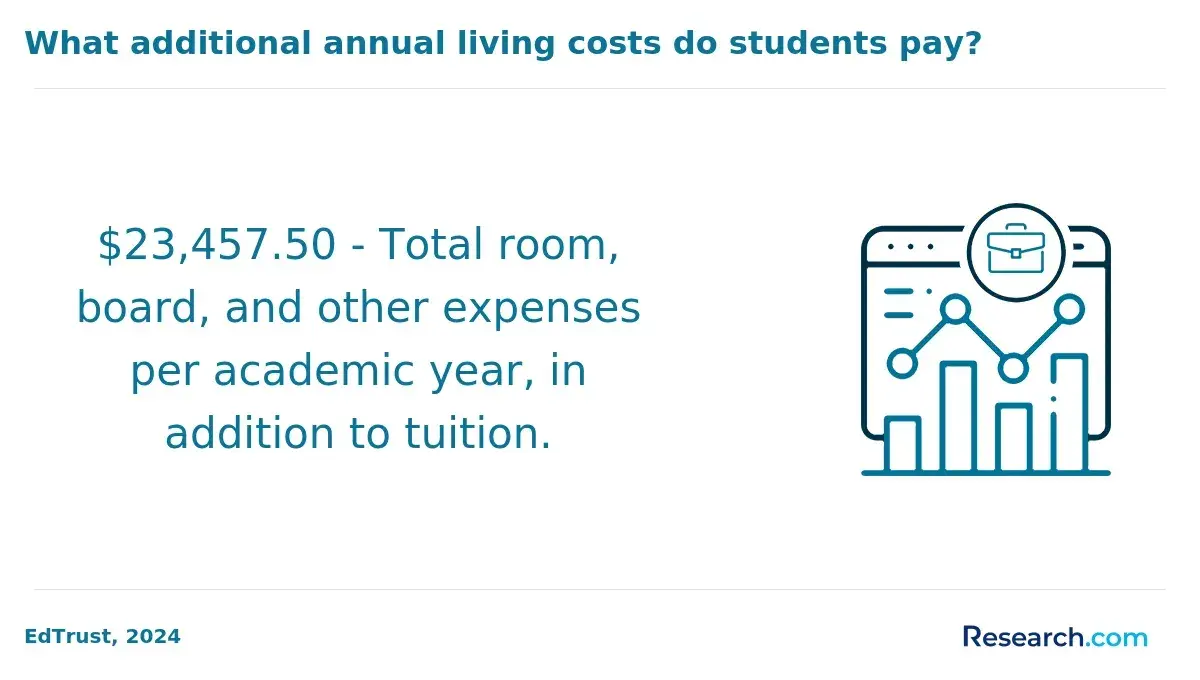
Rising tuition makes transfer efficiency especially important. The College Board's 2024 Trends in College Pricing and Student Aid reported average published tuition and fees of $11,610 for in-state students at public four-year institutions and $43,350 at private nonprofit four-year institutions for the 2024-25 academic year. That does not tell you what any one online program will cost, but it shows why avoiding unnecessary credits can materially affect ROI.
The table below uses a simple per-credit example to show how transfer credits can change tuition exposure. Replace the example price with the actual per-credit tuition and fees from each school you are considering.
| Credits applied to degree | Credits left to complete | Example tuition at $400 per credit | What to watch |
| 0 | 120 | $48,000 | Full tuition exposure before fees, books, and aid |
| 60 | 60 | $24,000 | Common associate-degree completion scenario |
| 90 | 30 | $12,000 | Strong savings if credits satisfy degree requirements |
| 113 | 7 | $2,800 | Rarely this simple because capstone, residency, and major rules still apply |
Students already working in healthcare should compare administrative degrees with clinical advancement routes before committing. For licensed nurses, RN to BSN online programs may provide a more direct credential upgrade, while health administration may fit better for those targeting operations, compliance, revenue cycle, patient services management, or healthcare leadership roles.
To calculate realistic savings, do not multiply the advertised maximum transfer credits by tuition. Instead, ask for the remaining degree plan, multiply only the required remaining credits by tuition and mandatory fees, then factor in books, technology fees, portfolio-assessment fees, graduation fees, and the opportunity cost of extra terms.
Can Military, Professional, or Prior Learning Credits Transfer to an Online Health Administration Degree?
Yes, many online health administration programs can accept military, professional, exam-based, or prior learning credits, but the rules vary widely. These credits may come from ACE-evaluated military training, CLEP or DSST exams, Advanced Placement, International Baccalaureate, professional certifications, employer training, portfolio assessment, or standardized prior-learning assessment.
Healthcare students should be especially careful when transferring clinical or technical learning into an administrative degree. Coursework from clinical pathways, including prerequisite sciences or professional healthcare training, may transfer as electives unless it clearly matches management, policy, ethics, finance, law, quality improvement, or healthcare systems requirements; students comparing leadership paths with clinical credentials such as online pharmacist programs should expect different accreditation, licensure, and experiential-learning rules.
Before counting on nontraditional credit, ask the school how each source is handled. These questions help prevent surprises after admission:
- Does the program accept ACE or NCCRS credit recommendations, and is there a separate cap on those credits?
- Are CLEP, DSST, AP, or IB credits accepted for general education only, or can any apply to major requirements?
- Can professional certifications in coding, billing, project management, human resources, compliance, or health information management receive credit?
- Is portfolio credit available, and what are the assessment fees, documentation standards, and maximum credits?
- Will military credits count as electives only, or can they satisfy leadership, management, communication, or technical requirements?
- Are there limits on how much non-collegiate credit can be combined with community college and university transfer credit?
The safest assumption is that prior learning may help, but it must still fit the degree. A generous prior-learning policy is most valuable when the evaluator can map your experience to named requirements instead of simply adding elective credits to your transcript.
Which Types of Previous College Credits Transfer Best to Online Health Administration Degrees?
The previous credits that transfer best into online health administration degrees are usually lower-division general education courses, introductory business courses, healthcare terminology, statistics, communication, economics, accounting, ethics, and courses from accredited associate degree programs. Upper-level healthcare administration credits can also transfer well, but only when the receiving school accepts the course level and content as equivalent.
The table below summarizes how common credit types usually perform in transfer evaluations. Use it to predict which credits are likely to reduce your remaining requirements and which may need extra documentation.
| Previous credit type | Typical transfer strength | Why it may apply well | Main risk |
| Associate of Arts or Associate of Science general education courses | High | Often aligns with writing, math, social science, humanities, and natural science requirements | Some schools require specific general education categories not covered by the associate degree |
| Associate of Applied Science healthcare coursework | Moderate to high | May bring useful healthcare, terminology, ethics, and technical credits | Applied or occupational credits may become electives if they do not match bachelor's requirements |
| Business administration courses | High | Healthcare administration degrees often include management, finance, accounting, HR, and organizational behavior | Upper-level business requirements may not be satisfied by lower-level courses |
| Clinical healthcare courses | Moderate | Can support healthcare context and elective requirements | May not replace administration, policy, finance, or leadership courses |
| Older technology or coding courses | Variable | May still count as electives or health information coursework | Currency rules may limit use if content has changed substantially |
| Remedial or developmental courses | Low | Usually prepares students for college-level work | Often does not count toward bachelor's degree credits |
Students with an online ASN or another healthcare associate degree should ask whether their clinical and science credits can satisfy specific health administration requirements or only elective space. This distinction can determine whether the bachelor's degree feels like a true completion program or a longer academic reset.
The best-transfer scenario is usually a completed associate degree from a regionally accredited institution plus courses that match the bachelor's general education and healthcare management core. The weakest scenario is a large number of unrelated electives with no clear connection to the new degree plan.
How Do Transfer Agreements Affect Online Health Administration Degree Completion?
Transfer agreements can make online health administration degree completion faster, cheaper, and more predictable. An articulation agreement is a formal arrangement between institutions that explains how courses or entire associate degrees transfer into a bachelor's program. A strong agreement can reduce uncertainty because the receiving school has already reviewed the sending school's curriculum.
There are several transfer-agreement models students may encounter. Understanding the difference helps you know how much protection the agreement actually gives you:
- Course-by-course equivalency: Specific courses at one school are matched to specific courses at another school.
- Block transfer: A completed associate degree or approved group of credits satisfies a bundle of general education or lower-division requirements.
- 2+2 pathway: Students complete roughly two years at a community college and two years at the bachelor's institution.
- Degree-completion partnership: The bachelor's program is designed specifically for students who already hold an associate degree or substantial prior credit.
- Statewide transfer framework: Public institutions within a state follow shared rules for general education or associate-degree transfer.
The advantage of a transfer agreement is predictability. Instead of hoping that 60 credits will apply, a student may be able to see in advance which bachelor's requirements remain. The limitation is that agreements may apply only to specific majors, catalog years, partner schools, grades, or completed credentials.
Before relying on an agreement, confirm that it covers the exact online health administration degree you plan to enter. A general business transfer agreement may not automatically satisfy healthcare law, healthcare finance, quality management, health information systems, or capstone prerequisites.
What Transfer Policies Should Students Compare Before Choosing an Online Health Administration Degree?
Students should compare transfer policies before choosing an online health administration degree because the same 60 prior credits can produce very different outcomes at different schools. One program may apply those credits cleanly and leave only major coursework; another may accept the credits but still require many additional general education or upper-level courses.
Use the following checklist when speaking with admissions, advising, or the registrar. These questions focus on the policies that most directly affect completion time, total cost, and academic fit:
- What is the maximum number of transfer credits accepted toward this specific degree?
- What is the minimum number of credits I must complete at your institution?
- Is there a separate residency requirement for upper-level courses or major courses?
- What minimum grade is required for transfer credit, and are major courses treated differently?
- Do credits from nationally accredited, regionally accredited, foreign, or non-collegiate providers follow different rules?
- Are there age limits for science, technology, health information, compliance, or statistics courses?
- Will my associate degree satisfy general education as a block, or will each course be evaluated separately?
- Can accepted credits fulfill healthcare administration major requirements, or will they count only as electives?
- Do you accept credit by exam, military credit, professional certification credit, or portfolio credit?
- Will I receive a written degree audit showing every remaining course before I commit?
The most common mistake is choosing a program solely because it advertises a high transfer limit. Other red flags include refusing to provide a clear degree audit, counting many credits as electives while leaving major requirements unmet, vague answers about residency rules, and pressure to enroll before the transfer evaluation is complete.
Accreditation is also nonnegotiable. At minimum, verify institutional accreditation recognized by the U.S. Department of Education or the Council for Higher Education Accreditation. Programmatic accreditation is less universal at the bachelor's level in health administration than in fields such as nursing or pharmacy, but employer preferences, graduate-school goals, and professional certifications may still make program reputation and curriculum quality important.
Which Students Benefit Most From Transfer-Friendly Online Health Administration Degree Programs?
Transfer-friendly online health administration programs benefit students who already have college credits and want to move into healthcare operations, administration, patient services, compliance, quality improvement, human resources, revenue cycle, or practice management. They are especially useful for adult learners who need to finish a bachelor's degree without repeating courses they have already completed.
The strongest candidates usually fall into a few groups. These students can often convert prior learning into meaningful progress if the credits align with the curriculum:
- Associate degree holders from community colleges or healthcare-related programs.
- Students who stopped out of a bachelor's program and now want a structured completion path.
- Military learners with ACE-evaluated training, leadership experience, or healthcare support coursework.
- Healthcare workers in billing, coding, scheduling, patient access, medical office management, or clinical support roles who want administrative advancement.
- Business students who want to redirect management, accounting, economics, or HR credits toward healthcare.
- Students with multiple transcripts who need a school experienced in evaluating complex credit histories.
Career goals matter. The BLS projects 29% employment growth for medical and health services managers from 2023 to 2033, which is much faster than the average for all occupations. That projection suggests strong demand for healthcare leadership roles, but it does not mean every bachelor's graduate will enter management immediately; experience, local labor markets, employer requirements, and graduate education can all influence outcomes.
Some students should avoid choosing primarily by transfer-credit maximum. If you plan to pursue a competitive master's degree, need a highly structured internship experience, want a specific employer pipeline, or lack recent healthcare or business coursework, a program with slightly stricter transfer rules but stronger advising, curriculum fit, and career support may be the better investment.
How Should Students Choose an Online Health Administration Degree Based on Transfer Efficiency?
Students should choose an online health administration degree based on transfer efficiency, not just transfer quantity. Transfer efficiency means the percentage of your previous credits that actually reduce the remaining required credits, tuition, and time to graduation while still supporting your career goal.
A practical comparison process can keep the decision grounded. Follow these steps before paying an enrollment deposit:
- Create a transcript inventory that lists every prior institution, course, grade, credit value, and completion date.
- Shortlist only accredited online health administration or healthcare management programs that publish clear transfer and residency policies.
- Request transfer evaluations from at least two or three programs, especially if you have more than 60 prior credits.
- Compare remaining required credits, not total accepted credits.
- Calculate total remaining tuition and mandatory fees using each school's actual per-credit rate.
- Check whether remaining courses are offered frequently enough to avoid scheduling delays.
- Evaluate career fit by reviewing curriculum depth in healthcare finance, law, policy, informatics, quality, leadership, and operations.
- Ask whether academic advising, career services, and employer partnerships support adult online learners.
- Choose the program that offers the best combination of accepted applicable credits, manageable cost, credible accreditation, curriculum relevance, and realistic completion timeline.
A simple decision rule is to favor the program that leaves you with the fewest required credits at an acceptable total cost, as long as it remains accredited, academically coherent, and aligned with your target role. A more expensive program can be worthwhile if it accepts significantly more applicable credits and shortens your time in school, but only after you compare total remaining cost rather than sticker price.
The best next step is to request a written degree audit before applying broadly or borrowing money. That document should show exactly how your transfer credits apply and what remains, giving you a clearer basis for choosing an online health administration degree with the strongest real-world return.
Other Things You Should Know About Health Administration
Usually, no. Many accredited universities issue the same diploma for online and campus students, though transcript formats and institutional practices vary. Ask the registrar directly if diploma wording matters to you.
Most healthcare administration roles do not require a general license. However, nursing home administrator roles and some long-term care leadership positions may require state licensure, exams, supervised experience, or specific coursework.
A bachelor's degree can support entry-level or mid-level administrative roles, especially when paired with healthcare experience. Senior leadership roles may prefer or require a master's degree, certifications, or substantial management experience.
Sometimes. Schools may allow additional transfer credit after enrollment, but deadlines, residency rules, and approval processes vary. Submit all transcripts as early as possible so your degree plan is accurate from the start.
References
- The Importance of Understanding Transfer Credit Policies https://www.sophia.org/blog/higher-education/understanding-transfer-credit-policies/
- Top Online Schools That Accept Transfer Credits https://www.edvisorly.com/student-guides/online-schools-that-accept-transfer-credits
- New Pathways to a College Degree: How Transfer Credits Save Time https://www.uagrantham.edu/blog/transfer-college-credits-online-pathways-degree/
- 3 Degrees of Healthcare Management: MSHCM vs. MBA vs. MHA https://www.michiganstateuniversityonline.com/resources/healthcare-management/degrees-in-healthcare-management-mba-vs-mha-mshcm/
- Master of Health Administration Degree | University of Phoenix https://www.phoenix.edu/online-healthcare-degrees/health-administration-masters-degree.html