2027 Best Accredited Online Health Administration Degree Programs: Compare Tuition, Admissions, and Career Outcomes

Co-Founder and Chief Data Scientist
Choosing an online health administration degree is a cost, time, and career decision-not just a school search. The field is growing quickly: the U. S. Bureau of Labor Statistics projects medical and health services manager employment to grow 29% from 2023 to 2033, much faster than average. This guide is for working adults, transfer students, and first-time college students comparing accredited online programs. You'll learn how to judge tuition, admissions, accreditation, flexibility, support, financial aid, and career value so you can choose a program that fits your goals and budget.
Key Things You Should Know
- The best-value accredited online health administration programs usually combine recognized institutional accreditation, transparent total cost, strong transfer-credit policies, and career services tied to healthcare employers.
- Cost comparisons should go beyond tuition: College Board's 2024 data shows published tuition and fees average $11,610 for in-state public four-year colleges and $43,350 for private nonprofit four-year colleges, before aid.
- Career demand is strong but not automatic: BLS reports a May 2024 median pay of $117,960 for medical and health services managers, while entry-level administrative roles may require experience before management advancement.
Which Accredited Online Health Administration Degree Programs Offer the Best Overall Value?
The best overall value is usually not the cheapest program or the most selective one. For most students, value means an accredited degree that is affordable after aid, accepts prior credits, fits a working schedule, and supports movement into healthcare administration roles such as clinic operations, revenue cycle, compliance, quality improvement, or long-term care administration.
Health administration is different from clinical healthcare degrees because it focuses on managing people, budgets, systems, regulations, and patient-service operations. Students who want direct patient care may be better served by programs such as online nursing degrees, while students who want to run departments, analyze operations, or move into leadership may find health administration a better fit.
The table below summarizes common high-value program profiles. Use it to compare the kind of program that matches your situation before narrowing your list to individual schools.
| Program profile | Best fit | Value strengths | Trade-offs to check |
| Public nonprofit online bachelor's in health administration | First-time bachelor's students and transfer students seeking broad recognition | Often strong institutional reputation, access to federal aid, and established advising systems | Out-of-state pricing, course availability, and general education requirements can affect total time |
| Adult-completion bachelor's program | Students with prior college credits or an associate degree | Can reduce time to graduation by accepting transfer credits and prior coursework | Some schools cap transfer credits or require upper-division credits in residence |
| Competency-based online program | Self-directed adults with work experience and consistent study time | May lower cost if students complete courses quickly within a subscription term | Not ideal for students who need frequent deadlines, live discussion, or structured pacing |
| Online master's in health administration or healthcare management | Professionals seeking advancement into management or executive roles | Can build leadership, finance, strategy, and population health skills for higher-responsibility roles | Programmatic accreditation, practicum expectations, and employer recognition matter more at this level |
For bachelor's students, a strong value program usually has generous transfer policies, predictable online course rotations, and required healthcare-focused coursework in finance, law, quality, ethics, data, and operations. For graduate students, value depends more heavily on leadership preparation, capstone or practicum quality, alumni networks, and whether the curriculum aligns with the healthcare sector you want to enter.
A common mistake is choosing a program because it appears first in a ranking. A better approach is to compare three numbers: estimated total cost after transfer credits, expected time to completion, and the kinds of roles the program is built to support.
What Accreditation Should Students Look for in an Online Health Administration Degree Program?
Accreditation is the first quality filter. At minimum, students should choose a school with institutional accreditation recognized by the U.S. Department of Education. This matters because federal financial aid, credit transfer, graduate school admission, and employer acceptance often depend on recognized accreditation.
Programmatic accreditation is more nuanced. At the bachelor's level, health administration programs are not always required to hold a specialized accreditation, but they should still show a curriculum aligned with healthcare management competencies. At the master's level, the Commission on Accreditation of Healthcare Management Education, or CAHME, is a major programmatic accreditation signal for many MHA and healthcare management programs.
Students comparing healthcare pathways should understand that accreditation expectations vary by profession. For example, online pharmacist programs face different professional accreditation and licensure requirements than health administration programs, because pharmacy leads to a regulated clinical credential.
Use the following checklist before applying. It helps separate legitimate online programs from options that may create transfer, aid, or employer-recognition problems later.
- Confirm the institution appears in the U.S. Department of Education's accreditation database or the Council for Higher Education Accreditation database.
- Check whether the program has CAHME accreditation if you are considering a graduate health administration degree and want a management-focused credential with broad recognition.
- Review whether the school is authorized to enroll online students in your state, especially if the program includes an internship, practicum, or field experience.
- Ask whether credits will transfer to graduate programs or professional pathways you may pursue later.
- For long-term care or nursing home administration goals, verify your state's licensing board requirements before enrolling.
Red flags include vague accreditation language, pressure to enroll before aid details are clear, unclear state authorization, and programs that cannot explain how their curriculum maps to healthcare administration competencies.
How Do Tuition Costs Compare Across Accredited Online Health Administration Degree Programs?
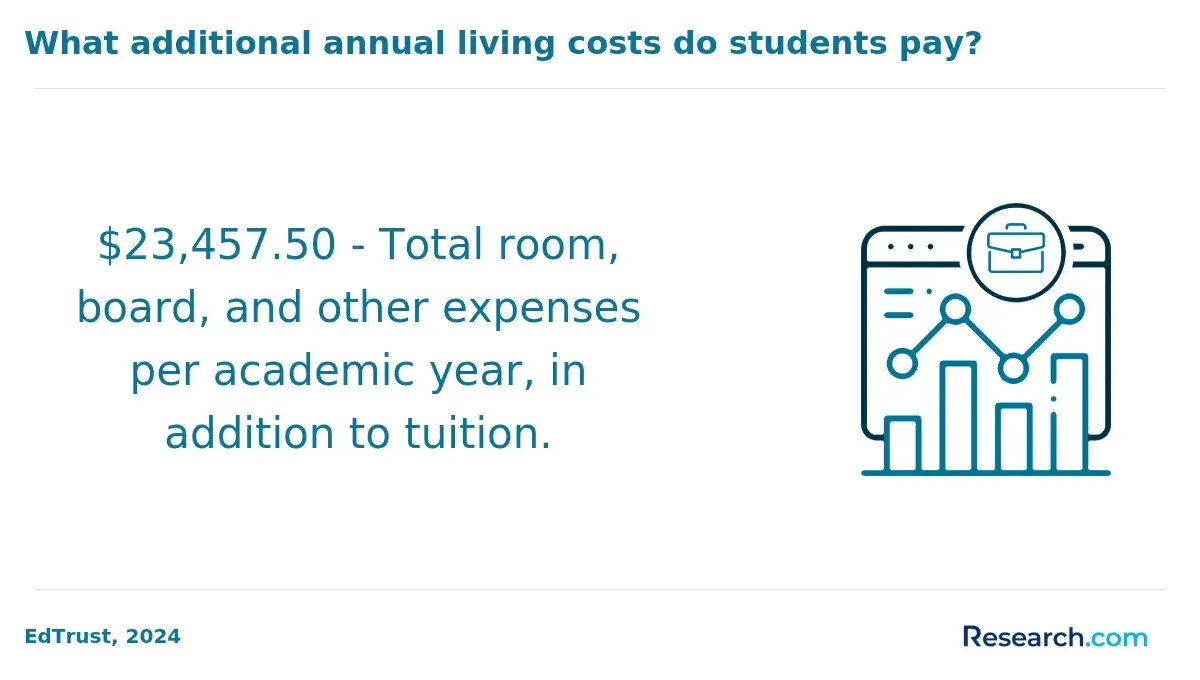
Tuition can vary widely across accredited online health administration programs, and the advertised per-credit price rarely tells the whole story. The most useful comparison is total net cost: tuition plus mandatory fees, books, technology fees, residency or practicum expenses, minus grants, scholarships, employer assistance, and transfer-credit savings.
College Board's 2024 Trends in College Pricing reported average published tuition and fees of $11,610 for in-state students at public four-year institutions and $43,350 at private nonprofit four-year institutions. These figures are not specific to health administration, but they provide a useful benchmark: if an online program's sticker price is far above the national average, it should offer clear advantages in flexibility, completion speed, employer connections, or graduate outcomes.
The table below shows how major cost drivers differ by program type. It is meant to help you ask the right price questions, not to replace a school-specific financial aid estimate.
| Cost factor | Why it matters | What to ask the school |
| Per-credit tuition | Determines the base cost, but may differ for in-state, out-of-state, online, military, or employer-partner students | Is online tuition flat-rate, residency-based, or program-specific? |
| Transfer credits | Accepted credits can reduce both cost and time to graduation | How many credits can I transfer, and how many must be completed at your institution? |
| Mandatory fees | Technology, online learning, graduation, assessment, and course fees can raise total cost | Can you provide a full program cost estimate including fees? |
| Course materials | Textbooks, software, exam proctoring, and subscriptions may not be included in tuition | Are books included, open-access, or separately billed? |
| Field experience costs | Internships or practicums may involve background checks, travel, immunization records, or site fees | Are field placements required, and can they be completed near my home? |
Lower tuition is important, but the cheapest program is not always the best investment. A low-cost program that accepts few credits, offers limited course availability, or lacks career support can become more expensive if it delays graduation. Conversely, a higher-priced program may be reasonable if it shortens completion time, aligns with employer tuition benefits, or has stronger support for internships and advancement.
The most practical way to compare cost is to request a written degree plan from each school. That plan should show remaining credits, estimated completion date, tuition, fees, financial aid eligibility, and whether any courses must be taken in a fixed sequence.
How Competitive Is Admission to Accredited Online Health Administration Degree Programs?
Admissions competitiveness depends on degree level. Many online bachelor's programs are designed for access and may admit students with a high school diploma, GED, or prior college credit. Graduate programs can be more selective, especially if they require a minimum GPA, professional resume, essays, recommendations, or healthcare experience.
Admissions flexibility should not automatically be interpreted as low quality. Many accredited online programs serve adult learners and transfer students, so they may evaluate readiness through prior coursework, work history, or completion of prerequisite classes rather than traditional campus selectivity measures.
The table below compares common admissions expectations by program level. Use it to identify where you are likely to qualify now and where you may need to strengthen your application.
| Degree level | Common admissions requirements | Who it fits best | Competitiveness considerations |
| Associate degree or pathway program | High school diploma or GED, placement requirements, basic college readiness steps | Students starting college or planning to transfer into a bachelor's program | Often accessible, but transfer planning is essential |
| Bachelor's in health administration | High school diploma or transfer credits, transcripts, minimum GPA in some programs | First-time students, transfer students, and healthcare workers moving into administration | Programs may be open-access or moderately selective depending on the institution |
| Bachelor's completion program | Prior college credits, associate degree preferred or required, minimum GPA | Adults with unfinished college coursework | Credit evaluation can matter more than acceptance itself |
| Master's in health administration or healthcare management | Bachelor's degree, transcripts, resume, statement of purpose, recommendations, possible work experience | Professionals seeking management advancement | Selective programs may weigh leadership potential and healthcare exposure heavily |
Applicants can improve their odds by aligning their materials with the program's purpose. For a bachelor's program, emphasize readiness, transfer history, and interest in healthcare systems. For a master's program, connect your experience to leadership, operations, finance, quality improvement, compliance, or patient access.
A common mistake is applying before confirming whether prerequisites or transfer-credit rules will add extra semesters. Before submitting an application, ask for an unofficial transcript review and a realistic completion timeline.
Which Learning Formats Offer the Greatest Flexibility in Online Health Administration Degree Programs?
The most flexible online health administration programs are usually asynchronous, transfer-friendly, and available in multiple start dates throughout the year. However, flexibility should be measured against your learning style. Some students thrive with self-paced work, while others need live sessions, cohort accountability, or weekly deadlines.
Students trying to graduate faster may also compare health administration options with broader accelerated degree programs. The key is to confirm that a faster calendar does not reduce advising access, internship quality, or time for difficult courses such as healthcare finance, statistics, and law.
The table below explains how major online formats differ. It can help you choose a structure that matches your schedule before you commit to a program.
| Format | How it works | Best for | Potential drawback |
| Asynchronous courses | Students complete weekly work without required live class meetings | Working adults, caregivers, military students, and students in different time zones | Requires strong self-management and consistent study habits |
| Synchronous online courses | Students attend live virtual sessions at scheduled times | Learners who want real-time discussion and instructor interaction | Less flexible for shift workers or students with unpredictable schedules |
| Hybrid or low-residency programs | Most coursework is online, with limited campus or site-based requirements | Students near campus or those who value in-person networking | Travel and scheduling can increase cost and complexity |
| Competency-based programs | Students progress by demonstrating mastery, often at a self-directed pace | Experienced adults who can move quickly through familiar material | Less structure may be difficult for students new to college-level online learning |
| Cohort-based programs | Students move through courses with the same peer group | Learners who want community, networking, and predictable sequencing | Less room to pause, accelerate, or change course load |
For maximum flexibility, ask whether courses are offered every term, whether part-time enrollment is allowed, and whether internships can be completed locally. A program is not truly flexible if required courses are offered only once a year or if field placements are limited to certain regions.
What Student Support Services Improve Success in Online Health Administration Degree Programs?
Online support services can strongly affect whether students finish on time. Health administration students often balance work, family, and school, so the best programs make advising, tutoring, career planning, and technical help available remotely and outside standard business hours.
The most useful support services are the ones that reduce common barriers to completion. Look for evidence that the program helps students plan courses, solve academic problems early, and connect classroom work to healthcare career goals.
- Dedicated academic advising that helps students map every required course through graduation.
- Transfer-credit counseling before enrollment, not after the student has already committed.
- Online tutoring and writing support for statistics, finance, research, and policy-heavy assignments.
- Career services with healthcare-specific resume help, interview preparation, internship guidance, and employer connections.
- Technical support available during evenings or weekends, especially for students taking asynchronous courses.
- Library access, healthcare databases, and research support for evidence-based management projects.
- Field experience coordination for internships, practicums, capstones, or administrative projects.
A red flag is a program that offers general university services but cannot explain what support looks like for online health administration students specifically. Strong programs should be able to describe how online learners reach advisors, how quickly they receive help, and what happens if they fall behind.
Students who are returning to college after a long break should prioritize advising and tutoring over speed. Finishing quickly is valuable, but only if the program provides enough structure to keep you progressing successfully.
Which Financial Aid Options Are Available for Accredited Online Health Administration Degree Students?
Students in accredited online health administration programs may qualify for many of the same aid options as campus students, including federal grants, federal loans, institutional scholarships, state aid, military education benefits, employer tuition assistance, and payment plans. Eligibility depends on the school, degree level, enrollment intensity, financial need, and academic progress.
For undergraduate students, the federal Pell Grant remains an important benchmark: the maximum award for the 2024-25 award year is $7,395. Not every student qualifies for the maximum, but this figure shows why completing the FAFSA is often the first step in understanding net cost rather than relying on sticker price.
The table below summarizes common financial aid sources and the main question students should ask about each one.
| Aid option | Who may qualify | Question to ask |
| Federal Pell Grant | Eligible undergraduate students with financial need | How much grant aid is included in my aid offer? |
| Federal student loans | Eligible undergraduate and graduate students | What will my estimated monthly payment look like after graduation? |
| Institutional scholarships | Students meeting school-specific academic, need-based, transfer, or program criteria | Are scholarships renewable, and what GPA is required? |
| Employer tuition assistance | Employees whose organizations support education benefits | Does my employer require repayment if I leave my job? |
| Military and veteran benefits | Eligible service members, veterans, and dependents | Does the school have a military benefits office for online students? |
| Payment plans | Students paying some costs out of pocket | Are there enrollment fees, late fees, or term-based deadlines? |
When comparing aid offers, focus on net price and debt, not just the amount of aid. A package with a large loan amount may look generous but can increase long-term repayment pressure. Grants, scholarships, and employer assistance usually have stronger ROI because they reduce the amount you borrow.
Before enrolling, ask each school for a written cost estimate based on your exact transfer credits and enrollment plan. This helps prevent the common mistake of choosing a program based on the first term's bill rather than the full degree cost.
Which Career Outcomes Are Associated With Accredited Online Health Administration Degree Programs?
An accredited online health administration degree can support roles in healthcare operations, medical office management, revenue cycle, health information, compliance, quality improvement, patient access, managed care, public health administration, and long-term care. The degree is especially relevant for students who want to work in healthcare without becoming licensed clinicians.
The strongest labor-market signal comes from management roles. BLS reported a May 2024 median annual wage of $117,960 for medical and health services managers. That figure represents an occupation-level median, not a starting salary promise; many graduates begin in coordinator, analyst, or assistant manager roles and move upward with experience.
Clinical professionals sometimes use administrative degrees to move into leadership. For example, nurses comparing advancement routes may weigh health administration against RN to BSN online programs, depending on whether they want broader clinical leadership preparation or a more operations-focused management path.
The table below connects common roles to degree level and skill emphasis. Use it to judge whether a program's curriculum fits the jobs you actually want.
| Career direction | Common preparation level | Relevant skills | What to verify in a program |
| Medical office or clinic manager | Bachelor's degree plus healthcare experience often helps | Scheduling, budgeting, staff supervision, patient service, compliance | Courses in healthcare operations, law, finance, and human resources |
| Revenue cycle or patient access supervisor | Associate or bachelor's degree may support entry and advancement | Billing workflows, insurance, data accuracy, process improvement | Exposure to healthcare reimbursement and information systems |
| Quality improvement coordinator | Bachelor's degree; master's may help for leadership roles | Performance metrics, patient safety, reporting, analytics | Courses in quality management, statistics, and population health |
| Compliance or risk management analyst | Bachelor's or master's depending on employer and scope | Regulation, privacy, documentation, ethics, auditing | Healthcare law, HIPAA-related content, ethics, and policy coursework |
| Health services manager or department administrator | Bachelor's plus experience; master's may be preferred for senior roles | Leadership, finance, strategy, operations, workforce planning | Capstone, practicum, leadership coursework, and employer-facing projects |
Current trends are increasing the value of data and technology skills. Healthcare organizations are using analytics, automation, electronic health records, and AI-enabled workflow tools to manage staffing, billing, quality reporting, and patient access. Students should look for programs that include healthcare data, information systems, ethics, and process improvement rather than a curriculum limited to general business topics.
The degree may not be the right investment for students who want direct clinical practice, state-licensed patient care, or a fast route into a highly regulated clinical profession. In those cases, a clinical degree or licensure-focused program may be more appropriate.
How Do Online and Campus-Based Health Administration Degree Programs Compare?
Online and campus-based health administration programs can lead to similar academic credentials when they are offered by accredited institutions, but the student experience can differ significantly. The right format depends on your schedule, need for local networking, learning preferences, and whether you want access to campus-based internships or activities.
Unlike clinical pathways such as an online ASN, health administration programs usually do not require extensive hands-on patient-care labs. That makes the field a strong fit for online learning, although internships, practicums, and capstones may still require coordination with healthcare organizations.
The table below compares the practical differences that most affect completion and value.
| Factor | Online health administration degree | Campus-based health administration degree |
| Schedule | Often better for working adults, caregivers, and students outside commuting distance | May provide more structure through fixed class times |
| Networking | Depends on virtual events, employer partnerships, alumni access, and practicum support | May offer easier access to campus events, local employers, and faculty interaction |
| Cost | May reduce commuting and relocation costs, but online fees can apply | May include commuting, housing, parking, or campus fees |
| Learning style | Works best for independent students who can manage deadlines | Works best for students who prefer face-to-face accountability |
| Career preparation | Can be strong if the program includes healthcare-specific career services and local field options | Can be strong if the campus has established healthcare employer relationships |
Online is usually the better choice for students who need flexibility, already work in healthcare, or plan to complete field experiences near home. Campus may be better for students who want daily face-to-face interaction, are early in their college journey, or depend on campus organizations and local employer events to build confidence and connections.
A mistake to avoid is assuming the delivery format determines quality. Accreditation, curriculum, faculty access, support services, and career alignment matter more than whether classes meet online or in person.
How Should Students Choose the Best Accredited Online Health Administration Degree Program?
Choosing the best accredited online health administration program requires balancing cost, academic quality, flexibility, and career fit. The right program is the one that helps you finish without unnecessary debt while preparing you for the healthcare roles you actually want.
Use this decision process to compare programs consistently. It keeps you from overvaluing one factor, such as tuition or rankings, while ignoring issues that affect completion and ROI.
- Define your target outcome first, such as clinic management, revenue cycle, compliance, quality improvement, long-term care administration, or graduate study.
- Verify institutional accreditation and, for graduate programs, check whether specialized accreditation such as CAHME matters for your goals.
- Request a transfer-credit evaluation before enrolling so you know the true number of credits remaining.
- Compare total net cost, including fees, books, technology, field placement expenses, and expected aid.
- Review the curriculum for healthcare finance, law, ethics, quality, data, operations, leadership, and information systems.
- Ask how online students access advising, tutoring, faculty, career services, internships, and alumni networks.
- Check whether the schedule fits your life, including course length, start dates, synchronous requirements, and part-time options.
- Compare outcomes carefully, including graduation support, employer relationships, internship access, and typical career paths, without treating salary data as a guarantee.
Students should prioritize affordability if two programs are similar in accreditation, curriculum, and support. They should prioritize reputation or programmatic accreditation when pursuing competitive graduate-level leadership roles, fellowships, or employers that prefer specific credentials. They should prioritize flexibility if work and family obligations are the biggest risk to completion.
Before committing, ask admissions counselors direct questions: What is my full estimated cost? How many credits will transfer? How long will the degree take at my planned pace? Are any live sessions required? What career support is available to online students? What happens if I need to stop out for a term?
The best program is not simply the one with the lowest tuition, fastest schedule, or highest ranking. It is the accredited option that gives you a realistic path to completion, manageable debt, and credible preparation for healthcare administration work.
Other Things You Should Know About Health Administration
They overlap, but they are not always identical. Health administration often emphasizes systems, policy, finance, compliance, and organizational operations, while healthcare management may focus more directly on supervising teams, departments, or facilities. Many programs use the terms similarly, so compare course requirements rather than relying only on the title.
Not always. Bachelor's programs often accept students without healthcare experience, while some master's programs prefer or require professional experience. If you are new to healthcare, choose a program with internships, applied projects, and strong career services.
In many cases, diplomas from accredited universities do not state the delivery format, but policies vary by school. Ask the registrar or admissions office directly if this matters to you.
Helpful skills include professional writing, spreadsheet use, basic statistics, communication, time management, and comfort with healthcare terminology. Strengthening these areas before enrollment can make courses in finance, data, law, and operations easier to manage.
References
- How Long is an MHA Program? MHA Programs One Year to 18 Months https://www.onlineeducation.com/healthcare/faqs/length-of-online-mha-programs
- Healthcare Administrator Salary https://www.publichealthdegrees.org/careers/healthcare-administrator/salary/
- 2025 Most Affordable Online Master's in Healthcare Administration https://www.onlineu.com/most-affordable-colleges/healthcare-administration-masters-degrees
- Online Health Administration Degree Program | University of Phoenix https://www.phoenix.edu/online-healthcare-degrees/health-administration-bachelors-degree.html
- Online MHA Programs Ranked by Affordability (2025) https://www.mhaonline.com/blog/affordable-online-mha-programs-ranked
- New Data on Completion Rates | HESA https://higheredstrategy.com/new-data-on-completion-rates/
- CAHME-Accredited Healthcare Administration Programs by State https://www.healthcareadministrationedu.org/accredited-healthcare-administration-programs/
- Career Options and Salaries https://www.stonehill.edu/programs/healthcare-management/career-options-and-salaries-vont/
- What Are the Differences in Salary Level for Different Degrees in Healthcare Management? | MHA Salary https://www.healthcare-management-degree.net/faq/what-are-the-differences-in-salary-level-for-different-degrees-in-healthcare-management/