2027 Online Health Administration Degree Programs With No Application Fee and Rolling Admissions

Co-Founder and Chief Data Scientist
Choosing an online health administration degree is easier when you can apply without paying a fee and start on a flexible schedule, but those perks do not automatically make a program affordable or high quality. The stakes are real: BLS data shows medical and health services managers had a May 2024 median wage of $117,960, and employment is projected to grow 29% through 2033.
This guide helps working adults, transfer students, and career changers compare no-fee, rolling-admission programs by cost, accreditation, admissions requirements, flexibility, and career value.
Key Things You Should Know
- No-application-fee programs can reduce upfront costs to $0 at the application stage, but the larger decision is total tuition, required fees, transfer-credit value, and financial aid eligibility.
- Rolling admissions usually means applications are reviewed continuously until a term fills; it does not mean admission is guaranteed or that financial aid, scholarship, or course-registration deadlines disappear.
- Health administration can lead toward management, operations, compliance, revenue cycle, and healthcare quality roles; BLS reports a $117,960 May 2024 median wage for medical and health services managers, but outcomes vary by experience, location, employer, and degree level.
Which Online Health Administration Degree Programs Have No Application Fee and Rolling Admissions?
Several online universities advertise a $0 application fee and flexible or rolling admissions for healthcare administration, healthcare management, or closely related degrees. Because fee waivers, start dates, and program names can change, students should treat the table below as a comparison starting point and verify the current admissions policy directly with each school before applying.
| School | Example online health administration degree options | Application-fee status to verify | Admissions and start-date pattern | Best fit |
| Southern New Hampshire University | BS in Healthcare Administration; MS in Healthcare Administration | Advertises no application fee for many online programs | Rolling admission with multiple online term starts | Students who want a broad, career-focused online format with frequent starts |
| Purdue Global | BS in Health Care Administration; MS in Health Care Administration | Typically offers a $0 application fee for online applicants | Multiple start dates and continuous admissions review | Adults seeking career-oriented coursework and transfer-credit review |
| Colorado State University Global | BS in Healthcare Administration and Management | Advertises no application fee | Monthly starts with flexible admissions timelines | Transfer students who want predictable online terms |
| American Public University | BS in Healthcare Administration; Master of Healthcare Administration | Advertises no application fee | Monthly course starts and ongoing admissions | Military-affiliated students, working adults, and applicants comparing multiple start dates |
| National University | Healthcare administration and healthcare management-related online options | Often promotes no-cost online application policies | Year-round enrollment with frequent starts | Students who prefer shorter course formats and rapid scheduling options |
| Bellevue University | BS in Healthcare Management and related pathways | Often lists no application fee for undergraduate applicants | Rolling or multiple-start admissions model | Students with transfer credits or professional experience in healthcare settings |
A "health administration" degree may appear under slightly different names, such as healthcare management, health services administration, healthcare leadership, or health care administration. Before ruling a program in or out, compare the curriculum: a strong program should cover healthcare finance, law and ethics, quality improvement, data-informed decision-making, human resources, reimbursement, and operations.
Degree level also matters. A bachelor's degree may fit entry-level administrative and supervisory goals, while a master's degree may be more appropriate for students aiming at department leadership, healthcare consulting, or advanced operations roles. Certificate programs can be useful for targeted skill-building but may not carry the same hiring value as a full degree for management tracks.
How Does Rolling Admission Work for Online Health Administration Degree Programs?
Rolling admission means a school reviews applications as they arrive instead of waiting for one fixed deadline. For online health administration programs, this often pairs with multiple start dates, short academic terms, and faster admissions decisions than traditional semester-based programs.
The table below explains how rolling admissions differs from fixed-deadline admissions and why the distinction matters when comparing flexible online programs.
| Admissions model | How applications are reviewed | Common start-date pattern | Main advantage | Risk to watch |
| Rolling admission | Reviewed continuously as files become complete | Monthly, every 5 to 10 weeks, or several times per year | Students can apply when ready and may not need to wait for an annual deadline | Popular terms, financial aid processing, or course sections may still close |
| Priority-deadline admission | Reviewed by preferred dates for scholarships, aid, or early registration | Several starts, but benefits tied to earlier dates | Applicants may receive better access to advising, aid review, or course planning | Applying after the priority date can reduce options even if admission remains open |
| Fixed-deadline admission | Reviewed after a set deadline or in admission rounds | Fall, spring, and sometimes summer | Useful for cohort-based programs with structured sequencing | Missing the deadline can delay enrollment by a full term or year |
Rolling admissions is especially helpful for working adults because it lets applicants build a realistic timeline around transcript collection, employer tuition-benefit deadlines, family obligations, and financial aid processing. However, applying early still matters. A completed file is usually required before an admissions decision, transfer-credit evaluation, financial aid package, and course schedule can be finalized.
A common mistake is assuming "rolling" means "whenever I feel ready." In practice, students should ask for the final application date for their preferred start term, the transcript deadline, the financial aid deadline, and the date by which they must register for first-term courses.
How Much Can Students Save by Choosing an Online Health Administration Degree With No Application Fee?
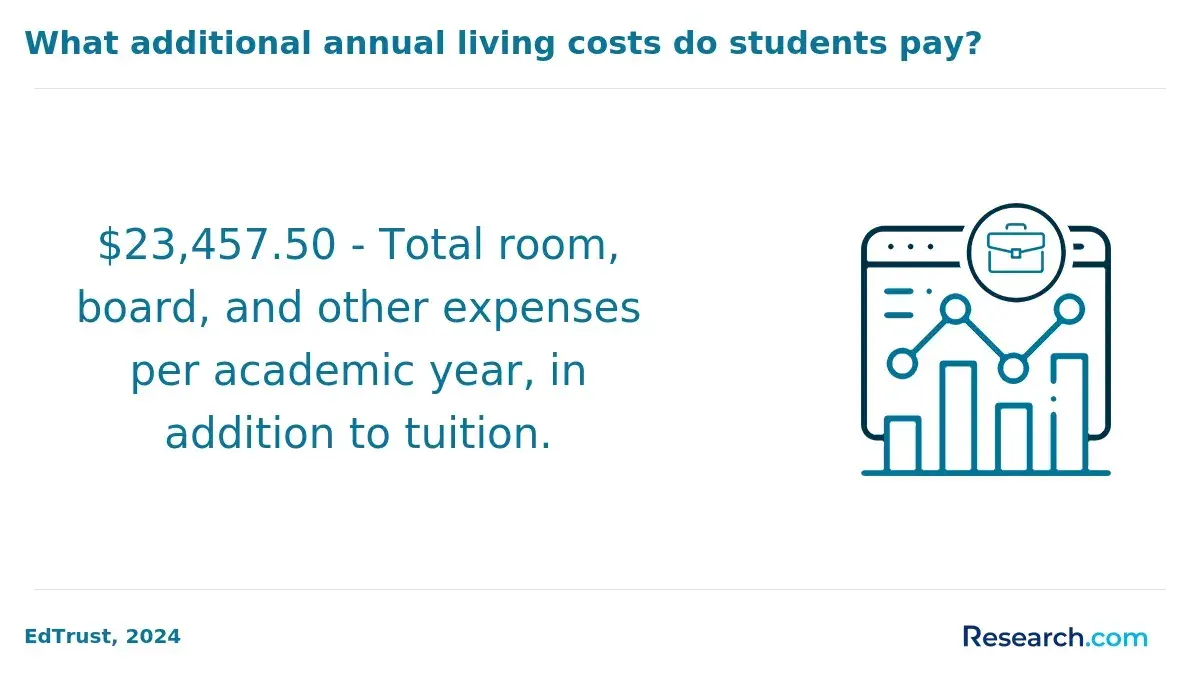
A no-application-fee policy can help students compare more programs without paying upfront, but the savings are usually small compared with tuition. The real value is strategic: students can apply to several legitimate programs, compare transfer-credit awards and financial aid packages, and choose the strongest overall value.
The table below shows how application-fee savings work in practical terms. These are comparison scenarios, not national averages, because actual application fees vary by institution and may change.
| Application strategy | Example application fee per school | Number of schools | Upfront application cost | What the student should compare next |
| Apply to one no-fee program | $0 | 1 | $0 | Tuition, fees, accreditation, course format, and career fit |
| Apply to four no-fee programs | $0 | 4 | $0 | Transfer-credit decisions and net cost after aid |
| Apply to four programs with a fee | $50 | 4 | $200 | Whether the fee-paying options have stronger outcomes or lower total cost |
| Mix no-fee and fee-based programs | Varies | 3 to 5 | Varies | Whether paying one fee is justified by better accreditation, curriculum, or employer alignment |
The biggest mistake is treating a waived application fee as proof that a degree is inexpensive. A program with a $0 application fee can still have higher tuition, technology fees, course materials costs, graduation fees, or limited transfer-credit acceptance. Conversely, a school that charges an application fee may offer lower tuition or better transfer-credit value.
Students should use no-fee applications to create leverage. Apply to a small group of accredited programs, request official cost estimates, and compare net price rather than the advertised application cost. If one program accepts 60 transfer credits and another accepts 30, the transfer-credit difference can matter far more than a waived application fee.
What Are the Admission Requirements for No-Fee Online Health Administration Degree Programs?
Admission requirements vary by degree level, school selectivity, and whether the program is designed for first-time college students, transfer students, or graduate applicants. No application fee does not mean no standards; it only means the school does not charge a fee to submit the application.
The table below summarizes common requirements so applicants can prepare a complete file before choosing a start date.
| Degree level | Common admission requirements | Healthcare experience usually required? | Documents to prepare early |
| Associate or lower-division pathway | High school diploma, GED, or equivalent; placement or advising requirements may apply | Usually no | High school transcript, prior college transcripts if any, government-issued ID |
| Bachelor's in health administration | High school completion or transfer credits; minimum GPA rules may apply | Usually no, though experience can strengthen career readiness | All college transcripts, resume if requested, transfer-credit documents |
| Bachelor's completion program | Prior college credit, associate degree, or minimum transferable credits | Sometimes preferred for healthcare management tracks | Official transcripts, course descriptions for transfer review, employer tuition-benefit forms |
| Master of Health Administration or related master's | Bachelor's degree, minimum GPA, resume, statement of purpose, and sometimes recommendations | Often preferred but not always required | Undergraduate transcripts, resume, personal statement, recommendation contacts |
Applicants comparing administrative degrees with clinical pathways should be especially careful about prerequisites. Programs such as online ASN degrees may involve clinical requirements and licensure preparation, while health administration programs are usually non-licensure management degrees focused on operations, policy, finance, and leadership.
Before submitting an application, students should confirm whether the program requires prerequisite coursework in statistics, accounting, anatomy, healthcare terminology, or management. Graduate applicants should also ask whether professional experience can offset a lower GPA or whether bridge courses are required for students without a business or healthcare background.
When Should Students Apply to Online Health Administration Degree Programs With Rolling Admissions?
Students should apply as early as they can submit a complete and accurate file, ideally several weeks before their preferred start date. Rolling admissions can shorten the wait, but admissions review, transcript evaluation, financial aid processing, and course registration still take time.
A practical timeline helps students avoid the most common rolling-admission mistake: waiting until the last advertised date and then discovering that transcripts, aid, or first-term course seats are not ready. Use the sequence below to plan backward from the term you want to enter.
- Eight to twelve weeks before the desired start date, shortlist accredited programs and confirm that the application fee is currently $0.
- Six to eight weeks before the start date, request official transcripts from every college previously attended.
- Five to six weeks before the start date, submit applications and ask when transfer credits will be evaluated.
- Four to five weeks before the start date, complete the FAFSA and any school-specific financial aid or scholarship forms.
- Two to four weeks before the start date, review your admission decision, degree plan, tuition estimate, and course schedule before enrolling.
Students who want faster completion should compare term length and credit-transfer rules as closely as admissions flexibility. Some accelerated degree programs offer shorter terms or heavier course loads, but speed only helps when the schedule is realistic and the credits apply directly to the degree.
Applying early can also improve decision quality. It gives students time to compare aid packages, ask for a transfer-credit appeal, clarify employer reimbursement rules, and avoid enrolling in a term before they understand the full cost.
How Can Students Strengthen an Online Health Administration Degree Application?
Even when admission is flexible, a strong application can help the school place you correctly, evaluate transfer credits efficiently, and understand your readiness for healthcare management coursework. This matters most for graduate programs, bachelor's completion programs, and applicants with uneven academic records.
Applicants can strengthen their file by focusing on evidence of readiness, professionalism, and fit with healthcare administration. The steps below are especially useful for working adults and transfer students.
- Write a focused goal statement that connects the degree to healthcare operations, compliance, patient access, revenue cycle, quality improvement, or leadership goals.
- Update your resume to highlight healthcare, customer service, supervision, data reporting, scheduling, billing, insurance, or process-improvement experience.
- Collect transcripts early and check them for missing institutions, incomplete grades, or credits that may need course descriptions for transfer review.
- Choose recommenders who can speak to reliability, communication, analytical ability, and leadership potential rather than personal familiarity alone.
- Address academic weaknesses directly if the application allows an optional statement, explaining what has changed and how you will manage online coursework.
Licensed nurses moving toward administration may have different strengths than nonclinical applicants. For example, students comparing management-focused programs with RN to BSN online programs should consider whether their next step is clinical advancement, administrative leadership, or a pathway that eventually combines both.
Avoid submitting a rushed application just because the school accepts applications continuously. Incomplete transcripts, vague goals, and missing recommendations can slow a rolling-admission decision and may push enrollment to a later start date.
Are Online Health Administration Degree Programs With No Application Fees Accredited and Legitimate?
Yes, many legitimate accredited universities offer online health administration degrees with no application fee and rolling admissions. However, those features are admissions policies, not quality indicators. Accreditation, curriculum, faculty qualifications, student support, and employer recognition are much more important when judging legitimacy.
Students should verify accreditation at two levels. Institutional accreditation confirms that the college or university meets recognized academic and administrative standards. Programmatic accreditation may also matter, especially at the graduate level; for example, CAHME accreditation is a recognized marker for some graduate healthcare management programs, though not every legitimate health administration program is CAHME-accredited or required to be.
Use this checklist before enrolling in any online health administration program:
- Confirm the institution is accredited by an agency recognized by the U.S. Department of Education or the Council for Higher Education Accreditation.
- Check whether the specific degree name on the school website matches the degree that will appear on the transcript.
- Ask whether the program is fully online, hybrid, or requires any campus visits, synchronous sessions, internships, or local fieldwork.
- Review faculty backgrounds for healthcare administration, health policy, finance, law, analytics, or executive leadership experience.
- Look for transparent tuition, fees, academic calendar details, refund rules, transfer-credit policies, and graduation requirements.
Red flags include unclear accreditation language, pressure to enroll immediately, refusal to provide total cost information, vague degree titles, unrealistic job promises, and admissions claims that suggest everyone is accepted. Rolling admission should make the process more convenient, not less transparent.
How Do Financial Aid and Total Costs Compare Among Online Health Administration Degree Programs?
Total cost is the best affordability measure, not the application fee. Students should compare tuition per credit, number of credits required, transfer-credit acceptance, program fees, course materials, technology fees, residency costs, and the amount of aid that does not need to be repaid.
The table below highlights cost categories that can change the real price of an online health administration degree even when the application fee is waived.
| Cost factor | Why it matters | Question to ask the school |
| Tuition per credit | This is usually the largest cost driver and varies by residency status, degree level, and institution type | What is the current tuition per credit for this specific online program? |
| Required credits | A 120-credit bachelor's program and a 30-credit master's program have very different total-cost structures | How many credits will I personally need after transfer evaluation? |
| Transfer-credit policy | Accepted credits can reduce both time and tuition | Which of my prior credits apply to major, general education, and elective requirements? |
| Program and technology fees | Fees can add cost beyond advertised tuition | Are there per-term, per-course, graduation, proctoring, or technology fees? |
| Books and materials | Some programs include digital materials while others bill separately | Are course materials included in tuition or charged separately? |
| Financial aid timing | Rolling admission may not align perfectly with aid and scholarship deadlines | What aid forms must be completed before my intended start date? |
Federal loan costs also affect the total amount repaid. For the 2024-2025 federal aid year, Direct Subsidized and Unsubsidized Loans carried a 1.057% origination fee, while Direct PLUS Loans carried a 4.228% fee. That means borrowed funds can cost more than the tuition line alone suggests, especially for graduate students using PLUS loans.
Students should ask each school for a personalized degree plan and estimated net cost before enrolling. The best-value program is often the one that combines accreditation, manageable tuition, strong transfer-credit acceptance, relevant curriculum, and realistic scheduling-not simply the one with the lowest upfront application cost.
Which Students Benefit Most From No-Fee, Rolling-Admission Online Health Administration Degrees?
No-fee, rolling-admission programs are most useful for students who need flexibility and want to compare multiple options before committing. They are especially valuable when the student uses the admissions process to gather better information, not when the student enrolls quickly without reviewing total cost and fit.
The students below often benefit most from this model because flexibility can reduce friction at the application stage and make enrollment easier to coordinate with work, family, or transfer timing.
- Working adults who need to start in a term that fits their job schedule rather than waiting for a traditional fall or spring deadline.
- Transfer students who want several schools to evaluate prior credits before choosing the lowest total path to graduation.
- Military-affiliated students who must coordinate benefits, deployment schedules, transfer credits, or monthly start dates.
- Career changers who want to compare undergraduate, graduate, and certificate options without paying multiple application fees.
- Healthcare workers in billing, patient access, scheduling, operations, or support roles who want a management credential without leaving employment.
Students comparing administrative and clinical healthcare paths should think carefully about long-term role fit. A health administration degree prepares students for nonclinical management and operations, while online nursing degrees are built around clinical preparation, licensure, and direct patient care requirements.
This model may be a poor fit for students who need a highly selective cohort, a specialized internship placement, a specific campus-based network, or a program with fixed sequencing tied to licensure, residency, or executive practicum requirements. In those cases, a traditional-deadline program may offer stronger structure even if it is less flexible.
How Should Students Choose Among No-Fee Online Health Administration Degree Programs?
Students should choose the program that offers the best combination of accreditation, total cost, transfer-credit value, curriculum relevance, student support, scheduling fit, and career alignment. The absence of an application fee should make comparison easier, not become the main reason for enrolling.
Use the following decision process to compare programs in a way that protects both your budget and your career goals.
- Confirm that the school is institutionally accredited and that the degree name matches your intended career path.
- Verify that the application fee is currently $0 and ask whether any enrollment, transcript, or evaluation fees apply later.
- Confirm that admissions are truly rolling and identify the final deadline for your preferred start date.
- Request a transfer-credit evaluation before comparing total cost, especially if you have prior college credits.
- Ask for a written estimate of tuition, mandatory fees, materials, and expected time to completion.
- Review the curriculum for healthcare finance, law, ethics, quality improvement, analytics, human resources, and operations.
- Compare student support services, including academic advising, online tutoring, career services, internship guidance, and technical support.
- Check whether courses are asynchronous, synchronous, hybrid, or self-paced, and decide whether the format fits your work schedule.
- Compare career outcomes carefully, but avoid schools that promise specific jobs, salaries, promotions, or admissions results.
- Choose the program that offers the strongest overall fit after aid and transfer credits, even if another option is easier to apply to.
Students considering other healthcare careers should also compare the credential needed for the role. For example, online pharmacist programs serve a very different professional pathway than health administration degrees and may involve clinical, licensure, and residency considerations that management programs do not.
The strongest applicants treat rolling admissions as a planning advantage. They apply early, compare written offers, ask detailed questions, and avoid enrolling until they understand how the program's cost, format, and curriculum support their specific career goal.
Other Things You Should Know About Health Administration
A health administration degree can support roles in healthcare operations, practice management, patient services, compliance, quality improvement, revenue cycle, human resources, and healthcare project coordination. Management-level roles often require relevant experience in addition to the degree.
The terms overlap, but they are not always identical. Health administration often emphasizes systems, policy, finance, compliance, and organizational operations, while healthcare management may focus more directly on supervising people, departments, or services. Program curricula are more important than the title alone.
Most health administration degrees do not lead to clinical licensure. Some specialized roles, such as nursing home administrator positions, may have state-specific licensing requirements, so students should check the rules in the state where they plan to work.
An MHA is usually more specialized in healthcare systems, policy, finance, and operations. An MBA may be broader and useful for students who want business flexibility across industries. The better option depends on the student's experience, target role, and preferred curriculum.
References
- Online Bachelor's Degree in Healthcare Administration | CSU Global | Accredited https://csuglobal.edu/academic-programs/undergraduate-degrees/bachelors-degree-healthcare-administration-management
- 2025 Most Affordable Healthcare Administration Degrees Online https://www.onlineu.com/most-affordable-colleges/healthcare-administration-degrees
- Online Resources & Scholarships for Healthcare Administration Students https://www.edumed.org/financial-aid/scholarships/healthcare-administration-degrees/
- How Long is an MHA Program? MHA Programs One Year to 18 Months https://www.onlineeducation.com/healthcare/faqs/length-of-online-mha-programs
- Best Online Healthcare Administration Degrees (2026) https://www.collegetransitions.com/blog/best-online-healthcare-administration-degrees/
- Careers https://www.publichealthdegrees.org/careers/
- Top 10 MBA Programs in Healthcare Management - MBA & Beyond https://www.mbaandbeyond.com/blog/top-10-mba-programs-in-healthcare-management