2027 A Second BS in Business Administration After a Bachelor's in Computer Science: Credits, Cost, and Alternatives
Audited and Verified:
Our Editorial and Data Verification Process
Research.com uses government datasets, official education statistics and primary institutional information to support its career and degree guides. Our review process checks factual accuracy, occupational definitions, source dates and the requirements associated with the credentials discussed.
How This Article Was Fact-Checked
Our editorial team verifies salary estimates, employment projections, education requirements and program information against original data providers and official organizations. Salary figures are checked against the relevant occupational definitions and reporting periods. Information about licensure, accreditation and required in-person training is reviewed separately.
Fact-checked and verified on:

Co-Founder and Chief Data Scientist
A computer science bachelor's can open doors in technology, but it may not cover the accounting, marketing, or operations knowledge needed for your next role. A second BS in Business Administration could fill those gaps - at the cost of another undergraduate program.
If you're weighing a move into product, operations, consulting, or business leadership, this guide shows how to assess remaining credits, total cost, career value, and alternatives. The goal is to help you choose the smallest credible educational step that supports your actual career move.
Key Things You Should Know
- A second business bachelor's is not a restart: your computer science credits may satisfy general education and electives, but an official degree audit determines which business requirements remain.
- Compare costs using required credits multiplied by the school's tuition rate, then add fees, materials, and lost work time; FAFSA eligibility does not mean you will receive a grant.
- For many CS graduates, targeted business courses, relevant projects, or a suitable graduate program are more direct than another bachelor's; the second degree is strongest when you need a substantial undergraduate business curriculum.
What is a second bachelor's in business administration after computer science?
It is a separate undergraduate degree awarded after you have completed your computer science bachelor's. Rather than replacing your first credential, a BS in Business Administration adds a broad business curriculum. Your prior coursework may count toward the new degree, but the awarding school sets its own second-degree, major, and residency rules.
Degree names matter less than the approved curriculum: a BS in Business Administration, BBA, or BS in Management may have different quantitative requirements and business cores. A specialized bachelor's concentrates more heavily on one function. For example, someone committed to logistics should compare a general business curriculum with economical study options for supply chain careers rather than assume either degree covers the same skills.
Your CS background is an advantage in data, systems, and technical communication. The question is whether you need a second credential or a smaller amount of business instruction plus evidence that you can apply it.
How many credits are required for a second business administration degree?
There is no universal second-degree credit requirement. Many US bachelor's programs use a total near 120 semester credits, but having already earned that many credits does not mean you can graduate from a second program immediately. Schools may require a minimum number of new credits, upper-division business courses, courses completed at their institution, and a capstone. Quarter-credit coursework may also need conversion.
The table separates accepted credits from requirements fulfilled - the distinction that controls your remaining workload. Ask each school for an evaluation against its second-degree business curriculum, not merely a transfer-credit total.
| Credit category | Possible treatment of prior CS study | What to confirm |
| General education and electives | Often satisfied in whole or part by the first degree | Second-degree waivers and any remaining institution-specific requirements |
| Math, statistics, and information systems | May meet business requirements if content and course level match | Written equivalencies, recency rules, and substitution approvals |
| Accounting, economics, and business core | Usually require separate review; technical electives rarely substitute automatically | Required sequence and availability of each course |
| Concentration, capstone, and residency | May require new coursework at the awarding institution | Minimum in-residence and upper-division credits |
After receiving an audit, map prerequisites to actual course offerings. An accelerated business college program guide can help you identify formats to investigate, but shorter terms do not waive required courses or guarantee a quicker finish.
How much does a second business administration bachelor's degree cost?
Your useful price is the cost of finishing your audited requirements, not the advertised price of an entire bachelor's degree. Request a written estimate based on courses you must take at that institution, including whether tuition is charged per credit, course, or term.
These components belong in a like-for-like comparison of schools. An inexpensive credit rate can lose its advantage if the school requires more new courses.
| Cost component | What can change the total |
| Tuition | Remaining required credits, enrollment status, residency classification, and rate increases |
| Fees and materials | Technology, proctoring, books, software, and graduation charges |
| Time and travel | Campus visits, commuting, required live sessions, and reduced work hours |
| Financing | Loan eligibility and interest, employer reimbursement timing, and payment-plan terms |
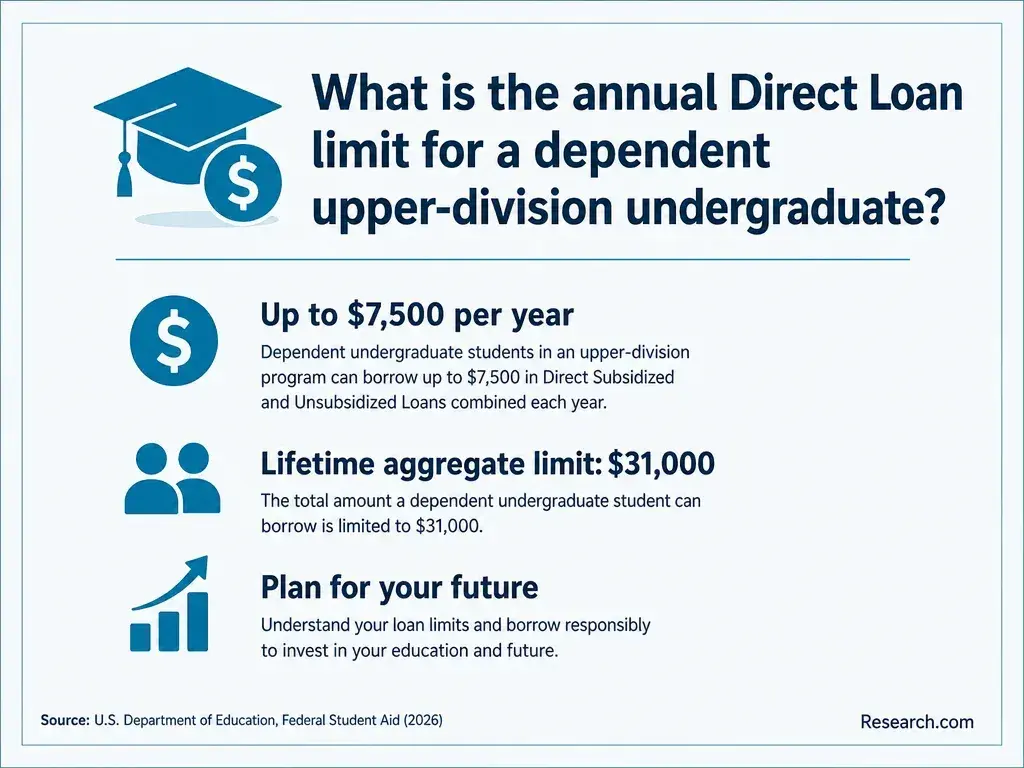
Compare remaining required credits × applicable tuition rate + fees and materials, then account separately for earnings you would give up. Completing a prior bachelor's generally rules out a federal Pell Grant for a second bachelor's, although other aid, including federal undergraduate loans, may be available subject to eligibility and borrowing limits. FAFSA-based aid is therefore worth checking, not assuming. Compare school-specific awards and restrictions when exploring cheaper business administration study with FAFSA-based aid.
It can be worth it if your target jobs require a business bachelor's or substantial business-core preparation, you have little relevant business experience, and the audited program leaves a manageable amount of coursework. It is less compelling when your CS degree already meets employers' degree requirements and your principal gap is a specific skill, such as financial analysis or customer research.
For a realistic return-on-investment decision, compare the second degree with a cheaper route to the same target role. Identify postings you could pursue now, note their required experience and skills, and ask whether the proposed courses provide something you cannot gain through projects, work assignments, or focused study. Include borrowing costs and delayed earnings; do not assume a salary increase. A discussion of business administration degree cost versus career outlook can inform that comparison, but national occupation wages cannot predict your personal return.
The recommendation changes if your employer pays much of the cost, your preferred recruiting pipeline is open only to enrolled business students, or an official audit shows you are close to completion. Confirm each condition before committing.
First confirm that the institution accepts applicants who already hold a bachelor's degree; some programs limit second-degree enrollment or admit students to the university before admitting them to the business major. Expect to submit official college transcripts. A program may also review your previous GPA, require particular business prerequisites, or set a separate standard for upper-division business coursework.
Ask admissions whether your calculus, statistics, and computing courses meet specific prerequisites, rather than assuming a CS major automatically satisfies them. The registrar or transfer office decides equivalencies; the business department may decide substitutions. If application expenses are a concern, online college application fee savings can help narrow schools to investigate, but a waived fee says nothing about admission or credit applicability.
Choose the format that lets you complete the remaining required courses while gaining the access you need to instructors, projects, and employers. Online study may preserve work hours, but asynchronous lectures can still come with fixed deadlines, group meetings, proctored exams, or an in-person capstone. Campus study may offer easier access to recruiting and team-based work, but commuting and daytime courses can extend the timeline.
Request a sample schedule for the next several terms, including upper-division course rotation and any campus visits. If cost favors online study, compare online business degrees with lower tuition against your audited credits and required course schedule - not tuition alone.
Expect a business core that may cover financial and managerial accounting, economics, finance, marketing, management, operations, business law, and strategy. Some programs also require statistics, analytics, a concentration, an internship, or a capstone. Your CS training may overlap with quantitative or information-systems material, but it will not necessarily replace accounting or business decision-making courses.
Plan courses around the function you want to enter. Product-oriented work may benefit from marketing research, finance, and operations; technical consulting may call for accounting, organizational behavior, and client communication. If supply chain is the goal, compare the depth and sequencing of a general-business concentration with fast-track online supply chain bachelor's options. A handful of electives is not necessarily a formal concentration, and a classroom project is not automatically an approved internship or workplace capstone.
Check the institution's accreditation status with its recognized accreditor and confirm that it applies to the school awarding your degree. Then check separately whether a claimed AACSB, ACBSP, or IACBE business accreditation covers the relevant school or program. Institutional accreditation and business accreditation answer different questions; neither guarantees that another school or employer will accept a particular course.
Before paying a deposit, obtain the current catalog requirements and an official or clearly identified preliminary degree audit. Ask the transfer office which CS credits were accepted, the business adviser where they apply, and the registrar which residency and graduation rules remain. Get any exception in writing and ask when the evaluation becomes final. Lists of lower-priced accredited business administration study options are useful starting points, not substitutes for checking accreditation scope and your individual audit.
For a CS graduate, plausible transitions include technical project coordination, business or operations analysis, product-support work, and market or customer research involving technology products. Match the role to its actual tasks: analyzing customer evidence differs from supervising staff, and coordinating a project differs from managing a budget and team. Your technical experience may be more valuable to employers when paired with a demonstrated business project than with another degree alone.
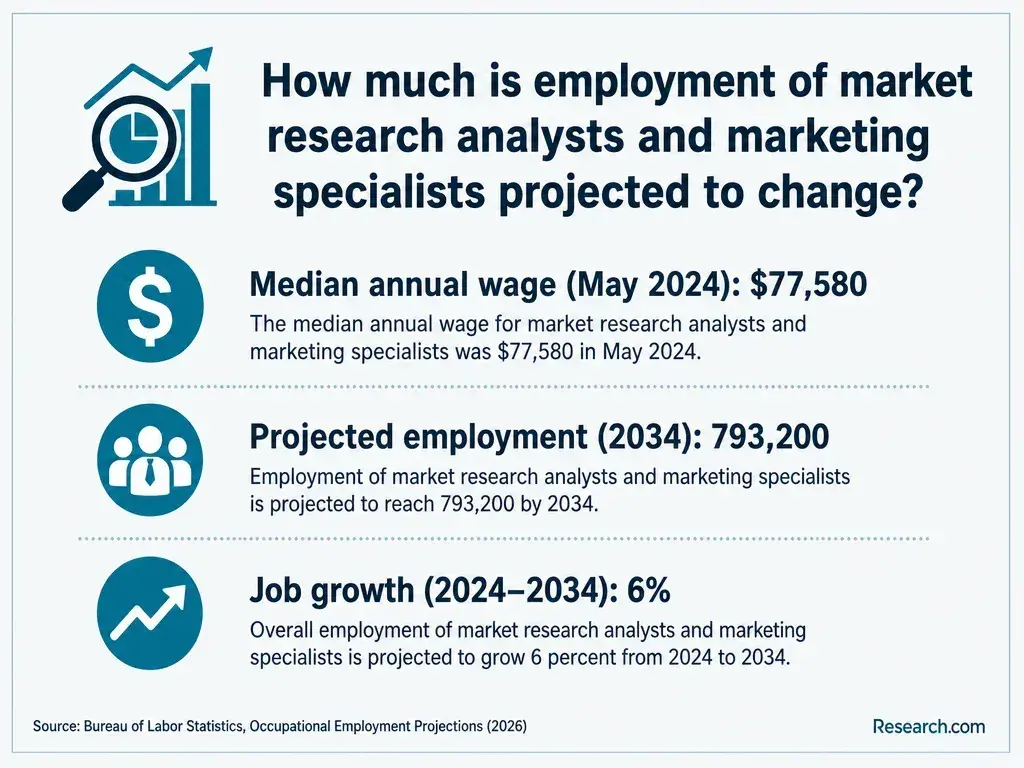
The following US Bureau of Labor Statistics figures describe occupations, not expected pay for new business graduates. They provide context for two potential directions; hiring depends on the role, experience, location, and employer.
| Occupation | Relevant work | May 2025 median annual pay | Projected US employment growth, 2025-2035 |
| Market research analyst | Study customers, markets, and campaign evidence | $78,760 | 7% |
| Human resources specialist | Support recruiting and other HR processes | $75,940 | 6% |
Neither occupation requires a second business bachelor's from every applicant. For HR in particular, compare job requirements and relevant coursework with an HR degree requirements and job opportunities guide before choosing a broad business program. Management roles generally call for evidence of responsibility and results beyond undergraduate coursework.
What alternatives to a second business degree fit computer science graduates?
Choose an alternative according to the gap your target job reveals. The options below differ in depth, cost, admissions requirements, and the kind of evidence they give an employer.
- Targeted undergraduate courses or a certificate: Useful for defined gaps such as accounting, marketing, or operations when another degree is not required; verify whether the certificate is separately awarded.
- An approved workplace project or relevant job move: Useful when you need evidence of cross-functional work, such as a documented process analysis; obtain permission before using company or customer data.
- A specialized graduate program or MBA: Worth investigating when you have the required preparation and the curriculum fits your goal; compare admissions, experience expectations, and full cost.
- A specialized second bachelor's: Potentially better than general business when the intended function requires deeper undergraduate study in a defined field.
If project coordination is the target, compare shorter training and supervised project experience with a full project-management bachelor's; FAFSA-based aid for online project management undergraduates is relevant only if that separate degree genuinely fits your plan. Start by collecting representative job postings, your first-degree transcript, and written second-degree audits. The best choice is the one that closes a documented skill or qualification gap without paying to repeat preparation you already have.
Other Things You Should Know About Business Administration
No. Schools generally retain the academic record for your first degree and calculate the new program's GPA under their own policies. Ask how both transcripts will appear and how graduation honors are determined.
Possibly. Check whether the benefit covers a second undergraduate degree, which courses qualify, when reimbursement occurs, and whether you must repay assistance if you leave.
Some schools assess documented prior learning, but experience alone does not automatically become credit. Ask whether an assessment is available to second-degree students and which requirements any award could satisfy.
Usually, yes, if both are relevant. Put the credential most pertinent to the job first, and use project or work examples to show how you combine technical and business skills.
- Student Eligibility for Pell Grants | ed.gov https://fsapartners.ed.gov/knowledge-center/fsa-handbook/2024-2025/vol7/ch1-student-eligibility-pell-grants
- How Many Credits Do You Need for a Bachelor's Degree? | Notre Dame de Namur University https://www.ndnu.edu/articles/guides-tips/how-many-credits-for-a-bachelors-degree.html
- What are some impactful alternatives to an MBA? | MIT Management Executive Education https://executive.mit.edu/what-are-some-impactful-alternatives-to-an-mba-MC7XSMXWW2TZFEBETESAJHU33GFQ.html
- BA in Business Administration | fullerton.edu https://business.fullerton.edu/programs/undergraduate/advising/ba_businessadministration
- Bachelor of Science in Business Administration Online | SDSU Global Campus https://globalcampus.sdsu.edu/program/business/bachelor-science-business-administration-online-degree-completion-program/
- What kind of aid am I eligible for as a second-degree student? | unc.edu https://studentaid.unc.edu/faq/what-kind-of-aid-am-i-eligible-for-as-a-second-degree-student/
- How Many Credits Do You Need to Graduate College? | snhu.edu https://www.snhu.edu/about-us/newsroom/education/how-many-credits-to-graduate-college
- Getting a Second Bachelor's Degree: Why & How to Get It | Franklin University https://www.franklin.edu/blog/second-bachelors-degree
- Second Bachelor's - UF Online - University of Florida https://ufonline.ufl.edu/apply/admissions-requirements/second-bachelors/
- Is a second bachelor's degree worth it? | Strayer University https://www.strayer.edu/buzz/why-get-a-second-bachelors-degree/