2027 Paying for an Online BS in Business Administration: A Balance at a Previous College That Blocks a Transcript
Audited and Verified:
Our Editorial and Data Verification Process
Research.com uses government datasets, official education statistics and primary institutional information to support its career and degree guides. Our review process checks factual accuracy, occupational definitions, source dates and the requirements associated with the credentials discussed.
How This Article Was Fact-Checked
Our editorial team verifies salary estimates, employment projections, education requirements and program information against original data providers and official organizations. Salary figures are checked against the relevant occupational definitions and reporting periods. Information about licensure, accreditation and required in-person training is reviewed separately.
Fact-checked and verified on:

Co-Founder and Chief Data Scientist
An unpaid balance at a previous college can interrupt an online business degree before you know which credits will count. Paying immediately may not be necessary - or affordable - but enrolling without a reliable transfer evaluation can create a second costly mistake. This guide is for returning students who need to resolve a transcript hold and finance a BS in Business Administration. It explains when you may be entitled to a transcript, what to ask both schools, how to approach the old balance, and how to compare the full cost of finishing.
Key Things You Should Know
- A participating college generally must release an official transcript covering Title IV-funded payment periods whose institutional charges were paid or included in a payment agreement; other periods and state-law protections require separate review.
- A new school may review an unofficial record or offer provisional admission, but it may still require an official transcript before awarding transfer credit, releasing aid, or allowing continued enrollment.
- Compare the old balance with the cost of credits you could otherwise have to repeat. Get the new school's transcript deadline and transfer evaluation before committing to tuition or a debt payment plan.
What Is an Online Bachelor's in Business Administration?
An online BS in Business Administration is an undergraduate degree covering functions such as accounting, finance, marketing, management, operations, and business analysis. "Online" describes how courses are delivered; it does not determine admissions rules, tuition, or how previous credits apply. A school may award a BS, BBA, or another business degree with different requirements.
For a returning student, the degree's value depends partly on the remaining requirements after an official credit evaluation. A program that admits you quickly but applies few previous courses to the degree may be more expensive than one with stricter documentation rules. Use national online business program rankings as a starting point, then request each school's policies and a personalized degree audit.
Can You Start an Online Business Degree Without an Official Transcript?
Possibly, but permission to start is not a promise that prior credits will count. Some schools accept an unofficial transcript for an initial review or allow provisional enrollment. They may require the official record by a firm deadline for final admission, transfer-credit posting, financial-aid processing, or later registration. Disclose every prior college when an application requires it, even if its transcript is difficult to obtain.
Ask the admissions and transfer offices whether they can review an unofficial copy now, what decision will remain provisional, and the last date they can receive the official record. Also ask the previous college's registrar for a written explanation of the hold. Under federal rules for institutions participating in Title IV aid programs, a school must provide an official transcript including credits from Title IV-funded payment periods when the institutional charges for those periods were paid or included in an agreement to pay. That protection may not release credits from every unpaid period; applicable state law may provide additional rights.
If you need time to resolve the hold, explore fee-free online university applications while confirming each school's transcript deadline. Avoid paying a deposit or taking courses based only on an informal estimate of transferable credits.
How Can You Pay an Old College Balance Blocking Your Transcript?
First, establish what is owed, to whom, and which academic periods the hold covers. Ask the former school's student accounts office for an itemized balance showing tuition, fees, aid adjustments, payments, and collection charges. Ask the registrar which credits can be released now. If a collection agency is involved, confirm in writing who can authorize transcript release and how a payment will be recorded by the college.
The sequence below helps you avoid paying a disputed amount or agreeing to terms that do not solve the transcript problem:
- Request the itemized account and written transcript-hold policy; identify any periods you believe were paid or covered by an agreement.
- Dispute errors with student accounts and ask about a review or appeal before accepting a repayment amount.
- Ask whether a payment plan, settlement, or school hardship process would release the needed transcript, and obtain the release terms in writing.
- Before paying, compare the amount and payment timing with your living-expense needs and the new school's enrollment deadline.
- After the agreed condition is met, request the official transcript and confirm its receipt with the new school.
Switching majors does not usually eliminate the need to document previous study: online undergraduate project management credit acceptance, for example, also depends on the receiving school's evaluation of an official academic record. If the balance or hold appears improper, ask the school for its appeal route and check applicable state higher-education or consumer-protection guidance before borrowing to pay it.
At an eligible school, the FAFSA can establish eligibility for federal grants and loans for your new enrollment. State grants, institutional scholarships, and employer education benefits may also help. Eligibility depends on the student, program, school, enrollment, and applicable aid rules. A past-due balance owed to a different college is not itself the same as a defaulted federal student loan; check your federal loan status separately.
Do not assume aid for a new program can be sent to the former college to clear its debt. Budget for the old balance as a separate cash-flow problem, and ask the new school's financial-aid office when aid can be disbursed and whether a provisional admission status affects it. If an employer offers assistance, check covered majors, grade rules, annual limits, and whether reimbursement arrives only after you pay tuition. When benefits differ by field, compare the actual aid offer for business with alternatives such as lower-cost colleges for project management majors only if that degree also fits your goal.
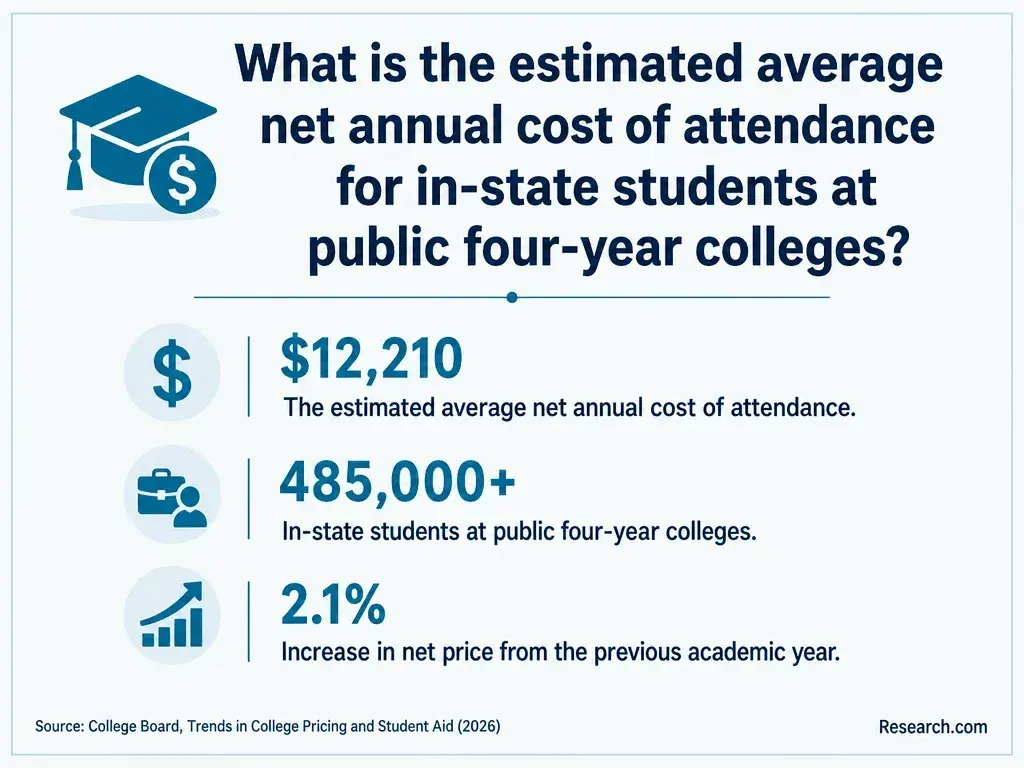
The useful comparison is total cost to finish, not advertised tuition alone. An unresolved transcript can change that total if courses are initially treated as electives, must be repeated, or cannot be evaluated before you enroll. The table separates costs that are easy to overlook; obtain school-specific figures rather than assuming an online program is cheaper.
| Cost component | What can change the amount |
| Old college balance | Verified charges, approved adjustments, and written payment or settlement terms |
| New program tuition | Price per credit or term and the number of credits that actually satisfy the degree |
| Fees and materials | Technology, books, software, proctoring, and any required travel |
| Financing and time | Loan interest, delayed reimbursement, repeated courses, and work hours reduced for study |
Request a written degree audit and a cost estimate based on its remaining requirements. Compare low-cost online business degree programs using the same expected credit load, fees, and aid assumptions. If the official transcript is still unavailable, label every estimate provisional.
Completion time depends on how many previous courses satisfy general education, business core, electives, and residency requirements - not just how many credits a school accepts. Missing accounting or quantitative prerequisites, limited course offerings, and a delayed transcript evaluation can extend the schedule. Working students should also distinguish a faster calendar from a manageable weekly workload.
Ask an adviser for two course plans: one based on the credits documented so far and another assuming the disputed credits cannot be used. Confirm when required courses are offered and whether the plan depends on summer study or full-time enrollment. Ranked online business bachelor's completion routes may identify formats worth investigating, but their advertised pace is not your graduation timeline until the school completes your audit.
Requirements commonly combine general education with introductory accounting, economics, finance, marketing, management, operations, and quantitative coursework. Programs differ in their prerequisites, concentrations, and capstones. A previous course may transfer as credit without replacing a required business course, so the degree audit matters more than a raw transfer-credit total.
While waiting for the official transcript, gather old course descriptions or syllabi for classes that appear comparable to required courses. Ask the transfer office whether these materials can support an equivalency review once the record arrives, and ask the business adviser which missing course would block later coursework. Review prerequisites for a business administration degree, then verify the requirements in your prospective school's current catalog.
Online study may remove a commute, but it does not remove deadlines, group assignments, scheduled presentations, or proctored assessments. Campus study may make in-person advising and networking easier. For someone managing an old balance, the more important difference may be how quickly either program can evaluate credits and whether it permits provisional enrollment without creating an unaffordable commitment.
Request a sample course schedule and ask about live attendance, exam windows, required visits, and part-time sequencing. Compare those obligations with your work schedule before choosing a format. Advertised accelerated programs in related fields, including shorter completion timelines for supply chain bachelor's students, illustrate why you must check the assumptions behind any timeline: your available credits and course load may differ.
A business administration degree can support applications for coordinator and specialist roles in operations, sales support, marketing, and human resources, depending on your experience and skills. It does not by itself qualify you to manage staff or enter a regulated profession. Returning students should connect prior work to specific job tasks - for example, scheduling, spreadsheet analysis, customer communication, or budget tracking - rather than relying on the degree title alone.
For context, the U.S. Bureau of Labor Statistics reports a May 2025 median annual wage of $75,940 for human resources specialists. That occupation-wide figure is not an expected starting salary for a business graduate; experience, location, and employer requirements matter. If HR is your clear target, compare the business curriculum with what to expect from an HR degree before paying to finish a broader major.
How Do You Choose an Accredited Online Business Administration Program?
Check the school's recognized institutional accreditation and whether the specific online degree is eligible for the aid you plan to use. If a school advertises AACSB, ACBSP, or IACBE accreditation, verify its actual scope; business-school accreditation is distinct from institutional accreditation and does not guarantee that your credits will apply.
For this situation, ask each finalist for written answers to three decision-making questions: Will it allow you to start before the official transcript arrives, and until when? How will the old courses apply to the degree once evaluated? What will you owe if that evaluation changes your plan? Compare the answers with advising access, required-course availability, and the school's refund policy. If you are considering a different major, using existing credits in a human resources degree is worth examining - but only a receiving school's evaluation can establish whether that route saves credits or money.
Other Things You Should Know About Business Administration
Ask your state higher-education agency or the closed school's designated records custodian where official transcripts are stored. Tell the new school about the closure and ask which records it can accept for evaluation.
Not necessarily. Transcript release and diploma issuance can be governed by different policies and state laws. Ask the registrar which document is affected and request the applicable policy in writing.
A school balance or transcript hold does not automatically appear on a credit report. A debt sent to collections may be reported; check your reports and dispute information you believe is inaccurate.
Yes, but get written preapproval from your intended degree program before enrolling. Otherwise, a course might transfer only as an elective - or not count toward graduation at all.
- Cost of Attendance (Budget) | 2025-2026 Federal Student Aid Handbook https://fsapartners.ed.gov/knowledge-center/fsa-handbook/2025-2026/vol3/ch2-cost-attendance-budget
- Transcripts from Closed Colleges | New York State Education Department https://www.nysed.gov/college-transcripts
- Types of Financial Aid: Grants, Work-Study, and Loans | studentaid.gov https://studentaid.gov/understand-aid/types
- Estimate your college cost | usa.gov https://www.usa.gov/estimate-college-cost
- Transcripts - Bureau for Private Postsecondary Education https://www.bppe.ca.gov/students/transcripts.shtml
- Transfer Credit Evaluation | Undergraduate Admissions | The Pennsylvania State University https://www.psu.edu/resources/credit/transfer-credit-evaluation
- CreditTransfer - KU Registrar's Office - The University of Kansas https://registrar.ku.edu/credittransfer
- Transfer credit policies - Office of Admissions https://admit.washington.edu/apply/transfer/policies/
- ED Releases New Rules on Institutional Accountability, Including Withholding Transcripts | acenet.edu https://www.acenet.edu/News-Room/Pages/New-ED-Rules-Institutional-Accountability.aspx
- Policy on Awarding Academic Credit, Transfers and Substitutions | uthscsa.edu https://catalog.uthscsa.edu/generalinformation/generalacademicpolicies/policyonawardingacademiccredittransfersandsubstitutions/