2027 Transfer Student FAQ: Most Common Questions Answered

Co-Founder and Chief Data Scientist
Transferring colleges can save money, shorten time to a degree, or help you switch into a better-fit program, but only if your credits, costs, and graduation plan line up. The National Student Clearinghouse Research Center reported that transfer enrollment rose 4.4% in fall 2024, showing that more students are using transfer as a strategic path.
This guide is for community college students, returning adults, online learners, and four-year students considering a change. You'll learn what transfers, what to ask schools, and how to avoid costly mistakes.
Key Things You Should Know
- Transfer success depends less on how many credits you have and more on how many credits apply to your new degree; general education and equivalent major courses usually transfer more smoothly than electives.
- Published 2024-25 tuition and fees averaged $4,050 at public two-year colleges and $11,610 for in-state students at public four-year colleges, so transferring can lower costs when credits are planned carefully.
- BLS 2024 data shows median weekly earnings of $1,099 for associate degree holders and $1,543 for bachelor's degree holders, making degree completion a key part of transfer ROI.
What is a transfer student in U.S. higher education?
A transfer student is someone who has completed college-level coursework at one institution and applies to continue a degree at another. In U.S. higher education, transfer students may move from a community college to a university, from one four-year school to another, from an online college to a campus program, or from a prior unfinished degree into a new program.
The most important thing to understand is that transferring credits and being admitted are two separate decisions. A college may admit you as a transfer student but still decide that only some of your previous credits count toward your new major. That is why transfer planning should start before you apply, not after you enroll.
Common transfer pathways include several different student situations. The right path depends on your current credits, target degree, budget, and whether you need flexibility for work or family responsibilities.
| Transfer pathway | Who it usually fits | Main advantage | Main caution |
| Community college to public university | Students seeking a lower-cost start before a bachelor's degree | Often supported by articulation agreements and state transfer pathways | Credits may not all apply to competitive majors |
| Four-year to four-year transfer | Students changing location, major, campus culture, or academic fit | Can improve program match or access to a stronger major | Scholarships, housing, and graduation timelines may change |
| Online to online or online to campus | Working adults, military students, parents, or students needing schedule flexibility | May allow continuous enrollment while working | Requires careful accreditation and credit evaluation checks |
| Returning student transfer | Adults with prior credits who stopped out before finishing | Can turn old credits into progress toward a credential | Older credits in technical fields may expire or require review |
Students who are not ready for a bachelor's program may also compare associate degree options first, especially if they want a credential that can lead to work while keeping transfer open. For that route, reviewing easy associate degrees that pay well can help you think about both near-term employment and future transfer value.
What credits usually transfer to a new college?
Credits most often transfer when they are college-level, completed at an accredited institution, passed with the minimum required grade, and clearly equivalent to courses in the receiving school's curriculum. However, "accepted credit" is not always the same as "useful credit." A course may transfer as elective credit but still not satisfy a general education requirement or major requirement.
Most colleges evaluate credits using transcripts, course descriptions, syllabi, credit hours, grades, and how closely a course matches the new program. The table below summarizes how transfer offices commonly treat different credit types so you can predict where problems may appear.
| Credit type | Transfer likelihood | How it may apply | What to verify |
| General education courses | Often high | English composition, college math, humanities, social science, natural science | Whether the school accepts a full gen-ed block or course-by-course review |
| Major prerequisite courses | Moderate to high | Introductory business, psychology, biology, accounting, programming, or statistics | Whether the course matches the target major's sequence and grade requirement |
| Technical or career courses | Variable | Applied credits, workforce courses, lab courses, or occupational training | Whether they count toward the major, electives, or not at all |
| Developmental or remedial courses | Usually low | Typically do not count toward graduation | Whether they affect placement rather than degree credit |
| AP, IB, CLEP, military, or prior learning credits | School-specific | May satisfy gen-ed, elective, or prerequisite requirements | Score thresholds, documentation rules, and maximum credit limits |
Before you apply, ask each target school for a preliminary credit review or use its transfer equivalency database if available. A smart transfer plan should answer three questions: how many credits will be accepted, how many will apply to your degree, and how many credits you still need after transfer.
Use this step-by-step approach to reduce lost credits and avoid surprises after admission.
- Request official transcripts from every college you have attended, even if you completed only one course.
- Match your completed courses against the degree map for your intended major, not just the college's general transfer policy.
- Save syllabi for courses in science, technology, health, education, business, or other sequenced majors because departments may request them.
- Ask whether your associate degree satisfies a block of general education requirements under a transfer agreement.
- Get the final credit evaluation in writing before you commit, especially if cost or graduation time depends on it.
What are the admission requirements for transfer students?
Transfer admission requirements vary by school, major, and the number of credits you have completed. In general, colleges place more weight on your college transcript than your high school record once you have earned enough college credits. Competitive majors may require higher GPAs, prerequisite courses, portfolios, auditions, background checks, or separate departmental admission.
The requirements below are common, but you should confirm each one with the specific college and program. A student applying to a general studies major may face a very different review process than a student applying to nursing, engineering, computer science, architecture, education, or social work.
| Requirement | What colleges usually look for | Why it matters |
| College GPA | A minimum cumulative GPA, often with higher expectations for selective majors | Shows whether you are likely to handle upper-division coursework |
| Completed credits | A minimum number of transferable credits for transfer classification | Determines whether you apply as a transfer or first-year applicant |
| Prerequisite courses | Required lower-division courses for the intended major | Missing prerequisites can delay graduation even if you are admitted |
| Official transcripts | Records from all colleges previously attended | Schools need a full academic history for admission and credit evaluation |
| Good academic and conduct standing | Disclosure of suspensions, dismissals, or disciplinary issues when required | Some colleges will not admit students who are not eligible to return to their prior school |
| Program-specific materials | Essays, portfolios, interviews, test scores, licenses, or background checks | Selective or regulated fields may review more than grades |
Students with a weaker GPA should not assume transfer is impossible. Some colleges offer conditional admission, academic renewal, probationary pathways, or open admission for certain adult and online programs. The better question is whether the school offers enough academic support and whether the remaining degree plan is realistic.
Transfer applicants should avoid three common mistakes: applying before completing required prerequisites, assuming a minimum GPA makes admission likely for a selective major, and sending unofficial records when official transcripts are required. These errors can slow the review process or lead to admission into a less useful major.
How do transfer applications differ from first-year applications?
Transfer applications differ from first-year applications because colleges are evaluating your college performance, degree progress, and fit for a specific academic program. High school grades, standardized test scores, and extracurriculars may still matter for students with few credits, but they usually become less central after substantial college coursework.
The table below highlights the practical differences. Understanding these differences helps you prepare the right materials and avoid spending time on parts of the application that carry less weight for transfer review.
| Application factor | First-year applicants | Transfer applicants |
| Primary academic record | High school transcript | College transcript from every institution attended |
| Credit evaluation | Usually limited to AP, IB, dual enrollment, or placement | Central to cost, timeline, and degree planning |
| Major readiness | Potential and preparation for college-level work | Completion of prerequisites and performance in related courses |
| Essays | Often focus on identity, interests, and campus fit | Often explain academic goals, reasons for transfer, and readiness for the major |
| Deadlines | Common fall entry cycles | May include fall, spring, summer, rolling, or cohort-based deadlines |
| Financial aid | First-year scholarships may be more available | Transfer scholarships may exist but can have separate deadlines |
Your transfer essay should be direct and practical. Explain why you are moving, what you want to study, how your prior coursework prepared you, and why the new school is a better academic match. Avoid criticizing your current college; focus instead on goals, growth, and fit.
If your goal is to finish quickly, compare whether the new school accepts a large block of prior credits and offers flexible course scheduling. Students with substantial prior credit may want to compare an accelerated bachelor's degree with a traditional transfer pathway to see which option better protects credit value and total cost.
How does accreditation affect credit transfer?
Accreditation is one of the biggest factors in credit transfer. In the U.S., accreditation is a quality review process conducted by recognized accrediting agencies. Colleges usually prefer credits from institutions accredited by agencies recognized by the U.S. Department of Education or the Council for Higher Education Accreditation.
Accreditation does not force a school to accept your credits, but it strongly affects whether your coursework is considered comparable. A receiving college can still reject credits because of grade minimums, course content, age of credits, credit-hour differences, lab requirements, or major restrictions.
There are two accreditation levels transfer students should understand. Institutional accreditation applies to the college or university as a whole. Programmatic accreditation applies to specific fields such as nursing, business, education, engineering technology, social work, counseling, or allied health.
The distinction matters most in licensed or professionally regulated fields. For example, a nursing or education program may require specific accredited coursework for licensure eligibility. If you transfer into one of these fields, ask the department, not only the admissions office, whether your prior credits meet program standards.
Use this checklist before enrolling in any transfer destination, especially an online or out-of-state school.
- Confirm the institution's accreditation status through the U.S. Department of Education's accreditation database or the accreditor's official directory.
- Ask whether your intended major has programmatic accreditation if the field requires licensure, certification, or employer-recognized standards.
- Request a written explanation of any credits that are denied, downgraded to electives, or excluded from the major.
- Check whether old credits expire in fast-changing subjects such as information technology, cybersecurity, health sciences, accounting, or laboratory science.
- Verify licensure alignment in the state where you plan to work, because transfer credit and professional eligibility are not always the same issue.
A major red flag is a school that promises all credits will transfer before reviewing your transcript. Reputable institutions usually need official records and department review before making a final decision.
Is it better to transfer online or on campus?
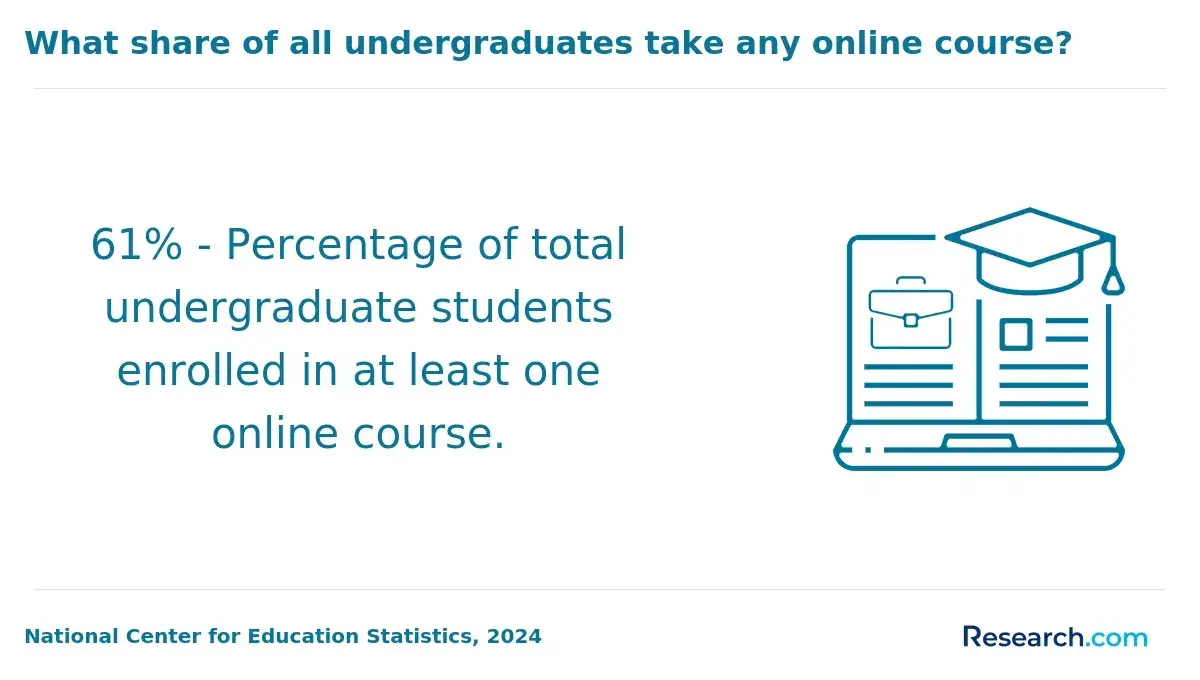
Transferring online or on campus depends on your learning style, schedule, major, and need for hands-on experiences. Online transfer programs can be excellent for working adults, parents, military students, and learners who cannot relocate. Campus programs may be better for students who need labs, studios, clinical placements, athletic participation, in-person networking, or a residential college experience.
Online education is now a mainstream transfer option, but it is not automatically cheaper or faster. The better comparison is total cost, accepted credits, course availability, support services, and whether the program format fits your career goal.
| Factor | Online transfer | On-campus transfer |
| Schedule | Often more flexible, with asynchronous or evening options | More fixed class times and campus-based commitments |
| Costs | May reduce commuting, housing, and relocation expenses | May include housing, transportation, parking, and campus fees |
| Support | Depends heavily on online advising, tutoring, and tech support | Often easier to access in-person advising, labs, offices, and peer groups |
| Best fit | Business, IT, psychology, communication, criminal justice, general studies, many completion programs | Lab sciences, fine arts, health programs, engineering labs, teacher preparation with local placements |
| Main risk | Isolation, weak advising, or poor course sequencing if support is limited | Higher living costs or reduced schedule flexibility |
Choose online if you are self-directed, need flexibility, and can confirm that the program has strong transfer advising. Choose campus if your major depends on physical facilities, structured peer interaction, or local professional placements.
Cost-sensitive students should compare tuition with the full cost of attendance, including housing, fees, technology, and transportation. If affordability is the main reason for transferring, reviewing the cheapest online college list can be a useful starting point, but you should still verify accreditation, credit acceptance, and degree fit.
How long does it take transfer students to graduate?
How long it takes transfer students to graduate depends on how many credits apply to the new degree, whether prerequisites are complete, whether the major has sequenced courses, and whether the student enrolls full time or part time. A student who transfers with 60 applicable credits into a 120-credit bachelor's program may finish in about two years of full-time study, but only if required courses are available in the right order.
The biggest timeline problem is excess credit. Excess credits are courses that count as college credit but do not move you closer to the degree you now want. They may still appear on your transcript, but they can cost time, money, and financial aid eligibility.
The table below shows common graduation timeline scenarios. Use it to estimate risk, not as a promise, because program structure and course availability vary by college.
| Transfer situation | Likely remaining work | Timeline risk | What to ask |
| Associate degree completed with a matching transfer agreement | Upper-division major courses and remaining electives | Lower if the agreement is current and major-aligned | Does the associate degree satisfy lower-division requirements as a block? |
| Many credits but a new major | Prerequisites, major sequence, and possibly general education gaps | Moderate to high | Which credits apply directly to the new major? |
| STEM, nursing, education, or health transfer | Sequenced prerequisites, labs, clinicals, or field placements | High if prerequisites are missing | Can I enter the major immediately, or am I pre-major? |
| Adult learner with older credits | Credit review, updated requirements, and possible retakes | Variable | Do older credits expire or require department approval? |
| Part-time online transfer | Fewer credits per term with flexible pacing | Depends on course rotation | Are required courses offered every term or only once per year? |
To graduate faster, ask for a term-by-term degree plan before enrolling. The plan should show exactly which courses you need each term, whether summer courses are available, and whether any prerequisites block later courses.
Students who need speed should also compare accelerated and degree-completion formats carefully. A bachelor degree online in 2 years may work well for students with substantial transferable credit, but it may not be realistic for students who still need lower-division prerequisites or clinical experiences.
How much does transferring to a new school cost?
The cost of transferring includes more than tuition. Students should consider application fees, transcript fees, orientation fees, housing changes, transportation, technology, books, lost credits, delayed graduation, and potential changes in financial aid. A school with lower tuition may become more expensive if it accepts fewer credits or forces you to repeat courses.
College Board's 2024 Trends in College Pricing reported average published 2024-25 tuition and fees of $4,050 at public two-year colleges, $11,610 for in-state students at public four-year institutions, $30,780 for out-of-state students at public four-year institutions, and $43,350 at private nonprofit four-year institutions. These are published prices, not necessarily the net price after grants and scholarships, but they show why transfer planning can have a major financial impact.
- Public two-year college published tuition and fees: $4,050
- Public four-year in-state published tuition and fees: $11,610
- Public four-year out-of-state published tuition and fees: $30,780
- Private nonprofit four-year published tuition and fees: $43,350
The most important transfer cost is the cost per completed degree, not the cost per credit. If two schools charge different tuition rates, the cheaper option is not always the better deal. A higher-tuition school that accepts more applicable credits may cost less overall than a lower-tuition school that makes you retake a semester or more.
Use this practical cost-check process before committing to a transfer school.
- Request your estimated net price after grants, scholarships, employer benefits, military benefits, and loans.
- Compare how many credits each school accepts and how many apply directly to your degree.
- Ask how many total credits you must still complete, not just how many credits transfer.
- Check whether transfer scholarships require full-time enrollment, a minimum GPA, or specific deadlines.
- Confirm whether online, lab, clinical, technology, or program fees are charged separately.
- Estimate living costs based on your actual situation, including rent, food, transportation, childcare, and reduced work hours.
A common mistake is using sticker tuition alone to choose a college. A better approach is to calculate total remaining cost through graduation and compare it with the degree's career value, flexibility, and risk of delayed completion.
What jobs can transfer students pursue after graduating?
Transfer students can pursue the same career paths as other graduates once they complete the required credential, but outcomes depend on the degree, major, experience, location, licensing rules, and labor market demand. Employers usually care more about the completed degree, skills, internships, portfolio, certifications, and work experience than the fact that a student transferred.
BLS May 2024 wage data can help you compare broad career directions, but it should not be treated as a personal salary prediction. The table below uses national median pay for selected roles that commonly align with popular transfer majors.
| Career direction | Example roles | Common degree path | May 2024 national median pay |
| Business and accounting | Accountant, auditor, operations analyst, financial specialist | Bachelor's in accounting, finance, business, or analytics | Accountants and auditors: $81,680 |
| Technology | Software developer, web developer, data analyst, cybersecurity analyst | Bachelor's in computer science, IT, cybersecurity, or data analytics | Software developers: $133,080 |
| Healthcare | Registered nurse, health services manager, health information specialist | Associate or bachelor's in nursing, health administration, or health information | Registered nurses: $93,600 |
| Education and human services | Teacher, case manager, community service manager, social services coordinator | Bachelor's in education, psychology, social work, or human services | Community and social service occupations: $58,380 |
| Marketing and communication | Market research analyst, content strategist, public relations specialist | Bachelor's in marketing, communication, journalism, or analytics | Market research analysts: $76,950 |
Current hiring trends make skills evidence especially important. AI tools, analytics platforms, remote collaboration software, and automation are changing how entry-level work is screened and performed. Transfer students can strengthen their job prospects by building a portfolio, completing internships, earning industry certifications when relevant, and using class projects to demonstrate practical skills.
If flexibility after graduation is a priority, choose a major that aligns with remote-friendly work and measurable digital skills. Comparing the best degrees for work from home jobs can help transfer students connect degree choice with realistic work settings, not just job titles.
Transfer students should also check whether their field requires licensure. Nursing, teaching, counseling, social work, and some allied health roles may have state-specific rules. In those fields, ask whether the transfer program meets requirements in the state where you plan to work.
How do you choose a reputable transfer-friendly college?
A reputable transfer-friendly college is not simply the school that accepts the most credits. It is the school that applies your credits efficiently, offers the major you need, provides strong advising, is properly accredited, fits your budget, and gives you a clear route to graduation.
The strongest transfer schools make policies transparent. They publish transfer equivalencies, maintain articulation agreements, offer transfer scholarships, provide degree audits before enrollment, and assign advisors who understand transfer students' needs. They also avoid vague promises about speed, cost, or career outcomes.
Use the following questions when comparing schools. These questions help reveal whether a college is truly transfer-friendly or only transfer-accepting.
- How many of my credits will be accepted, and how many will apply to my specific degree?
- Will I enter directly into my major, or do I need separate departmental admission later?
- Can you provide a written degree plan showing my remaining courses by term?
- Are required courses available online, in person, during evenings, or in summer if I need them?
- Does the program meet licensure or certification requirements in the state where I plan to work?
- What is the estimated net price through graduation after grants, scholarships, and fees?
- What advising, tutoring, career services, and internship support are available specifically for transfer students?
- Are there limits on the number of transfer credits, age of credits, or credits from prior learning?
Watch for red flags. Be cautious if a school pressures you to enroll before reviewing transcripts, refuses to explain how credits apply, lacks recognized accreditation, cannot provide a degree plan, advertises unrealistic completion timelines, or gives career claims without context.
The best decision is usually the one that balances credit acceptance, academic fit, total remaining cost, completion timeline, and career alignment. Rankings and brand names can be useful starting points, but they should not replace a personalized credit and degree evaluation.
Other Things You Should Know About
Not necessarily. Some colleges admit many transfer students, while selective schools and competitive majors may have limited space. Your chances depend on college GPA, completed prerequisites, credit quality, major capacity, and application strength.
Yes, but your options may be narrower. Look for colleges with conditional admission, academic renewal, adult learner pathways, or open admission programs. You may also improve your record by completing transferable courses with strong grades before applying.
Your FAFSA information can be sent to a new school, but aid packages do not automatically transfer. The new college will calculate your eligibility based on its cost of attendance, deadlines, available funds, enrollment status, and satisfactory academic progress rules.
It often helps if your associate degree is part of a formal transfer agreement, especially for general education requirements. However, it may not be best if your target major has strict prerequisites that you should complete at the four-year school. Ask both institutions before deciding.
References
- Credit Transfer & Accreditation of Prior Learning https://www.wittenborg.eu/credit-transfer.htm
- Transfer Students https://www.ualberta.ca/en/admissions/how-to-apply/transfer-students/index.html
- 7 Reasons Why Transfer Credits Are Rejected (and Tips To Help With Credit Transfer) https://www.sophia.org/blog/student-success/reasons-transfer-credits-rejected/
- [2025] Best Colleges To Transfer To | Ivy Coach https://www.ivycoach.com/the-ivy-coach-blog/transfer-students/best-transfer-colleges/
- The Transfer Student Application: Key Differences from First-Year Apps - Cirkled In https://www.cirkledin.com/library/college-applications-and-admissions/transfer-application-tips-college-differences/
- The Transfer Process Defined - National Association for College Admission Counseling (NACAC) https://www.nacacnet.org/the-transfer-process-defined/
- Transfer Admission Rates for Top Schools | Command Education https://www.commandeducation.com/resource/college-transfer-admission-rates/
- How to Transfer Credits from One College to Another: A Comprehensive Guide - NEIT https://www.neit.edu/blog/how-to-transfer-credits-from-one-college-to-another
- How College Credit Transfer Really Works: A Practical Guide https://www.straighterline.com/blog/transfer-how-college-credit-transfer-really-works-a-practical-guide
- The Best Schools for Transferring - Top Tier Admissions https://toptieradmissions.com/the-best-schools-for-transferring/