2027 Financial Aid Checklist for Transfer Students

Co-Founder and Chief Data Scientist
Transfer students often lose money when credits, deadlines, and aid rules do not line up. The stakes are real: College Board's 2024 data lists average published tuition and fees at $11,610 for in-state public four-year colleges and $43,350 at private nonprofit four-year colleges. This guide is for community college, online, military, adult, and four-year transfer students who need a clear aid plan. You will learn how to file the FAFSA, compare offers, protect eligibility, avoid loan mistakes, and choose the school that gives you the best financial path to graduation.
Key Things You Should Know
- Transfer students should file the FAFSA early, add every serious prospective college, and confirm each school's priority deadline because institutional grants may run out before the federal deadline.
- The maximum Federal Pell Grant for the 2025-26 award year is $7,395, but your actual amount depends on enrollment intensity, Student Aid Index, cost of attendance, and remaining lifetime eligibility.
- Cost comparisons should include net price, accepted transfer credits, time to graduation, loan rates, housing, fees, and whether online or campus enrollment changes aid eligibility.
What financial aid steps should transfer students take before applying to new colleges?
Before applying to new colleges, transfer students should treat financial aid as part of the school-selection process, not something to handle after admission. The goal is to identify which colleges are affordable after transfer credit evaluation, not merely which ones have the lowest tuition.
A strong pre-application checklist helps you avoid paying application fees for schools that are unlikely to fit your budget or graduation timeline.
- Request unofficial transfer credit reviews from each college before you commit, especially for major prerequisites and general education requirements.
- Check whether each college participates in federal student aid programs and whether your intended program is aid-eligible.
- Compare published tuition, mandatory fees, online course fees, housing, books, transportation, and technology costs.
- Ask whether transfer scholarships require a minimum GPA, associate degree completion, Phi Theta Kappa membership, residency status, or full-time enrollment.
- Confirm whether the school has a separate financial aid deadline for transfer students.
- Estimate remaining time to graduation because a cheaper tuition rate can become more expensive if too few credits transfer.
If you are considering distance learning, start with whether the school is an online college that accepts FAFSA, then verify that your specific degree program is eligible for federal aid.
Common mistake: applying only to colleges with attractive sticker prices. A school that accepts more of your credits, offers a stronger transfer grant, or lets you stay employed while studying may have a lower total cost even if the tuition rate looks higher.
How do transfer students complete the FAFSA and list multiple prospective schools?
Transfer students complete the FAFSA the same way other undergraduates do, but they need to be more strategic about school selection and timing. The FAFSA sends your financial information to the colleges you list, and each college uses it to build a financial aid package based on its own cost of attendance, deadlines, and aid policies.
The online FAFSA allows students to list up to 20 colleges. Use those slots for every school you are seriously considering, even if you have not yet been admitted, because waiting until after admission can delay your award letter.
- Create or confirm your StudentAid.gov account before starting the FAFSA.
- Invite required contributors, such as a parent or spouse, if the FAFSA determines that their information is needed.
- Use the IRS data transfer process when available to reduce errors and verification requests.
- Add all prospective transfer colleges, including online, public, private nonprofit, and out-of-state options you are still considering.
- Submit the FAFSA before the earliest priority deadline among your target schools.
- Monitor each college portal because schools may request additional documents after receiving your FAFSA.
- Update your school list if you add or remove transfer options before making a final enrollment decision.
If you already filed the FAFSA for your current college, you usually do not need to start over. Instead, log in, add the transfer school to your existing FAFSA, and follow up with that school's financial aid office to confirm receipt.
What documents and information do transfer students need for financial aid applications?
Financial aid applications move faster when transfer students have academic, identity, income, and residency documents ready before portals start asking for them. Missing one document can delay grant eligibility, scholarship review, or billing clearance.
Gather the following materials before you submit final enrollment forms or accept an aid offer.
- StudentAid.gov username and password for the student and any required contributor.
- Social Security number or eligible noncitizen documentation, if applicable.
- Federal tax information and W-2 records if manual entry or verification is required.
- Current college transcripts and transcripts from every prior institution attended.
- Transfer credit evaluation, degree audit, or program plan showing how prior credits apply.
- Proof of state residency if you are seeking in-state tuition or state grants.
- Selective Service, dependency, marital, household size, or income documentation if requested by the school.
- Scholarship letters, employer tuition assistance forms, veterans education benefit documents, or outside grant confirmations.
Military-connected students should also ask how GI Bill benefits, Tuition Assistance, Yellow Ribbon participation, and federal student aid interact; comparing the best online college for military learners can help identify schools with stronger veteran support and transfer-credit practices.
Red flag: a school that pressures you to enroll before giving you a clear transfer credit evaluation and written cost estimate. You should know how many credits count toward the degree before you borrow or pay a deposit.
How does transferring affect eligibility for federal, state, and institutional aid programs?
Transferring can affect federal, state, and institutional aid because each program has its own eligibility rules. Federal aid usually follows the student, but institutional scholarships and state grants may not transfer automatically from one school to another.
The table below summarizes major aid types and the transfer-specific issue students should examine before committing to a new college.
| Aid type | What may change after transfer | Why it matters |
| Federal Pell Grant | Award amount may change with cost of attendance, enrollment intensity, Student Aid Index, and lifetime eligibility used | A student who drops below full-time status or has used many prior terms may receive less than expected |
| Federal Direct Loans | Annual limits depend on year in school and dependency status, while aggregate limits include prior borrowing | Transfer students with many credits or previous loans need to check remaining borrowing capacity |
| State grants | Eligibility may depend on residency, institution type, program approval, deadlines, or credit load | Moving across state lines or switching to an ineligible online program can reduce aid |
| Institutional scholarships | Prior college awards usually do not transfer, and new scholarships may require a separate application | The new school's merit and transfer awards can be decisive in net price |
| Work-study | Availability depends on the new college's funding and job openings | Work-study is not guaranteed even if you had it at your previous school |
| Satisfactory Academic Progress | Transferred and attempted credits may affect pace, maximum timeframe, and GPA review | Too many attempted credits can trigger warnings or appeals even when your GPA is solid |
The maximum Federal Pell Grant is $7,395 for the 2025-26 award year, but transfer students should not assume they will receive the maximum. The practical question is how much aid remains after the new school recalculates your enrollment level, cost of attendance, and remaining eligibility.
If too few credits apply to your intended major, reassessing the academic path may be financially wise; some students compare completion-friendly options such as the easiest online degrees, while still checking whether the major supports their career goals.
How do transfer students compare financial aid offers between online and campus programs?
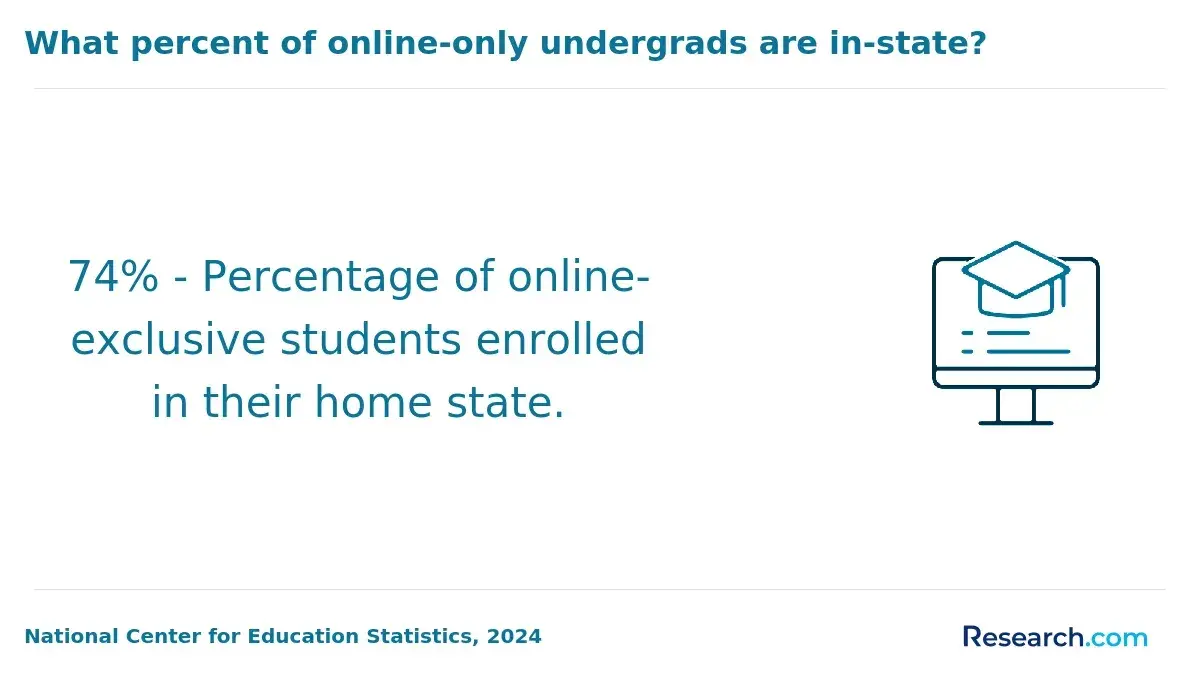
Transfer students comparing online and campus programs should focus on total net cost and completion risk, not only convenience. Online programs can reduce commuting and housing costs, while campus programs may offer more labs, networking, work-study jobs, or major-specific facilities.
The table below compares the cost and decision factors that most often differ between online and campus transfer options.
| Comparison factor | Online program | Campus program | Best fit |
| Tuition and fees | May charge flat online tuition, technology fees, or no out-of-state premium | May charge in-state, out-of-state, campus, lab, and activity fees | Online can fit working adults; campus can fit students who need facilities or local scholarships |
| Housing and transportation | Often lower if you can remain at home | Higher if relocation, parking, or residence halls are required | Online may reduce living-cost pressure; campus may support immersion and access |
| Transfer credit use | Some programs are built for degree completion | Major departments may have strict course equivalency rules | Choose the format that accepts more credits into the major, not just electives |
| Student support | Depends on virtual advising, tutoring, career services, and response time | May offer in-person advising, labs, clubs, and faculty access | Online works best for self-directed students; campus helps students who need structured support |
| Aid packaging | Federal aid may apply if the institution and program are eligible | Federal, state, and institutional aid may vary by enrollment pattern | Ask for a net price estimate for the exact format you will attend |
College Board's 2024 figures show a wide tuition gap between public in-state and private nonprofit four-year colleges, so transfer students should compare net price after grants rather than assuming one format or institution type is automatically cheaper.
A good online program is not just flexible; it is transparent about accreditation, transfer credits, student support, placement outcomes, and aid eligibility. A good campus program is not just traditional; it should justify any added housing or commuting cost through better completion support, facilities, or career access.
What deadlines and priority dates matter most for transfer student financial aid?
The most important financial aid deadline is usually not the federal FAFSA deadline. For transfer students, the priority dates set by states, colleges, scholarship offices, and academic departments often determine whether limited grant money is still available.
Use the following deadline sequence to avoid missing aid that is awarded on a first-come or priority-review basis.
- List every prospective college's FAFSA priority date, transfer admission deadline, scholarship deadline, and deposit deadline on one calendar.
- Submit the FAFSA before the earliest school or state deadline, even if another college gives you more time.
- Apply for transfer scholarships as soon as the application opens because some require admission, transcripts, or a separate essay.
- Send transcripts early enough for both admission and transfer credit review.
- Check whether your state grant requires a separate application in addition to the FAFSA.
- Respond quickly to verification requests because aid cannot be finalized until required documents are reviewed.
- Ask for an extension in writing if a transcript, tax document, or dependency issue delays your file.
The federal FAFSA generally remains available until June 30 after the end of the award year, but waiting that long can leave you with fewer institutional grant options. For transfer students, early filing is a strategy for preserving choices.
Common mistake: treating admission and financial aid as separate timelines. A college may admit you after its best scholarship funds have already been committed, which can make a late "yes" financially weaker than an earlier offer from another school.
How do transfer students use award letters, portals, and billing to cover tuition costs?
After admission, transfer students should use award letters, student portals, and billing statements together. An award letter shows aid eligibility, but the bill shows what you actually owe after tuition, fees, housing, deposits, and accepted aid are applied.
Follow this review process before accepting loans or paying a balance.
- Compare the award letter with the school's cost of attendance and identify which costs are direct charges and which are estimates.
- Separate grants and scholarships from loans, work-study, payment plans, and outside funding.
- Check whether scholarships are renewable and whether they require a GPA, credit load, major, or campus participation.
- Confirm that accepted transfer credits appear in the degree audit before calculating remaining semesters.
- Review the billing portal after registration because aid may adjust when credits, course fees, or housing choices change.
- Ask the financial aid office to explain any gap between accepted aid and the balance due.
- Accept only the loan amount you need after grants, scholarships, savings, employer aid, and payment plans are considered.
Award letters are not standardized, so one school may make loans look like aid while another separates them clearly. To compare fairly, calculate net price as total cost minus grants and scholarships, then evaluate how much cash, work, or borrowing is needed to cover the remaining balance.
Red flag: an offer that looks generous because it includes a large loan amount. Loans can help close a gap, but they are not discounts; they are future repayment obligations.
What should transfer students know about loans, entrance counseling, and repayment terms?
Loans can be useful for transfer students who need to finish a degree, but borrowing should be tied to a realistic graduation plan and career goal. The key is to borrow the least amount necessary to complete the credential that improves your earning potential.
For the 2025-26 award year, the federal undergraduate Direct Loan interest rate is 6.39%. That rate matters because transfer students who borrow for one extra year due to lost credits may pay more than expected over time.
Before federal loan funds disburse, first-time borrowers at a new school may need to complete entrance counseling and sign a Master Promissory Note. Entrance counseling explains interest, repayment, deferment, delinquency, default, and borrower responsibilities.
Use this loan decision checklist before accepting any amount.
- Confirm your remaining semesters after transfer credits are applied to the degree.
- Review how much you have already borrowed at previous colleges.
- Compare subsidized loans, unsubsidized loans, parent PLUS loans, private loans, and payment plans.
- Estimate monthly payments using federal loan tools before borrowing.
- Ask whether dropping below half-time enrollment would affect loan deferment or disbursement.
- Avoid private loans unless you have compared interest rates, cosigner rules, repayment protections, and federal loan eligibility.
- Keep emergency borrowing separate from lifestyle spending so loan debt stays tied to education costs.
Students who are close to federal aggregate limits should speak with the financial aid office before enrolling. Running out of loan eligibility before the final semester can create a more serious problem than choosing a slightly slower but more affordable pathway.
How can transfer students maximize scholarships and grants when changing schools?
Scholarships and grants are the best aid to maximize because they usually do not require repayment. Transfer students should search beyond first-year merit awards, since many colleges reserve separate funding for community college graduates, adult learners, veterans, honors students, and students entering high-demand majors.
Use this scholarship strategy to increase your chances without wasting effort on poor-fit awards.
- Ask each transfer admissions office for scholarships specifically for transfer students, not just general undergraduate awards.
- Check department scholarships tied to your major, especially in education, nursing, business, engineering technology, cybersecurity, accounting, and social services.
- Look for state grants that support degree completion or workforce shortage fields.
- Ask your current college whether it has transfer partnerships, articulation scholarships, or alumni-funded awards.
- Search local foundations, employers, professional associations, unions, and community organizations.
- Prepare a short explanation of your transfer story, career goal, GPA trend, leadership, work history, or military service.
- Reapply each year because some scholarships are not automatically renewable.
If your long-term plan includes graduate school, avoid exhausting all resources on the final undergraduate year; comparing affordable master's degrees online can help you think ahead about total education cost, especially in fields where advanced credentials affect advancement.
Common mistake: assuming scholarships are only for students with perfect grades. Many transfer awards consider persistence, financial need, leadership, major, residency, community college completion, or service background.
How do financial aid decisions influence transfer students' majors, careers, and earnings?
Financial aid decisions should support your academic and career direction, not push you into the cheapest program regardless of fit. A low-cost degree that does not meet licensing, graduate school, or employer expectations can be a poor investment, while a higher-cost program may be reasonable if it saves time, accepts more credits, and connects to a viable career path.
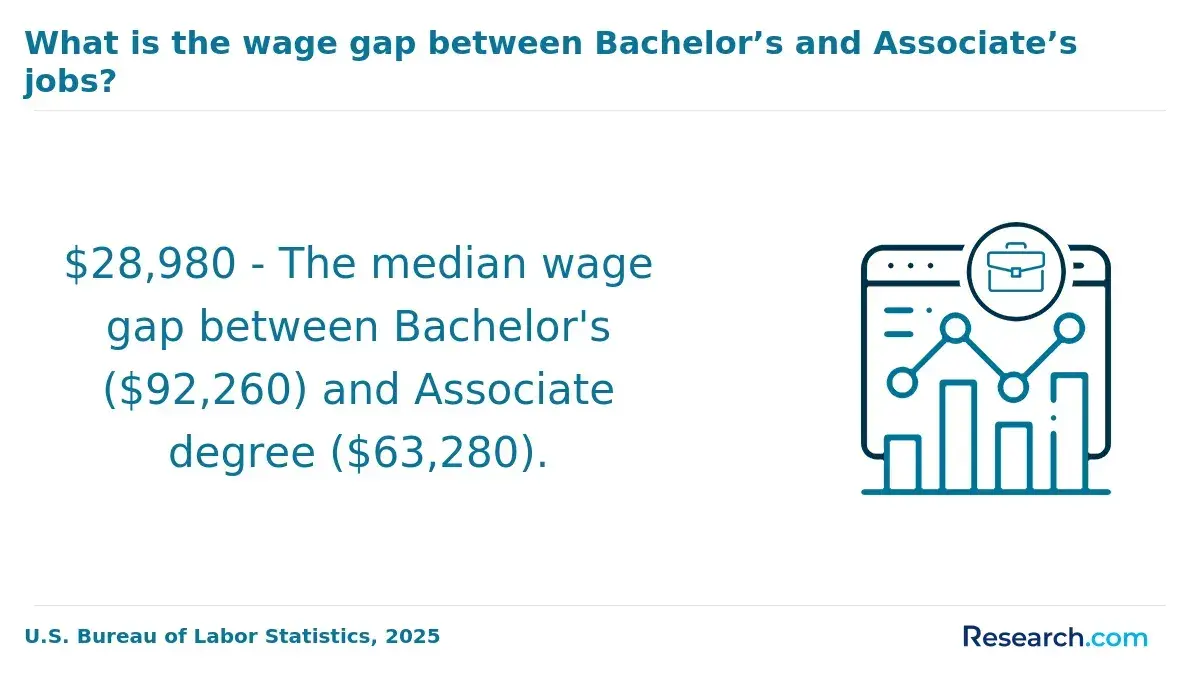
BLS 2024 education data shows median weekly earnings of $1,543 for workers with a bachelor's degree and $1,099 for workers with an associate degree. This does not mean every bachelor's program pays off equally, but it shows why finishing the right credential can matter when the cost and timeline are manageable.
Use financial aid as a decision filter for your major and career path.
- Identify the job titles your major commonly leads to and whether employers require a bachelor's degree, licensure, certification, portfolio, internship, or graduate degree.
- Compare remaining cost against remaining credits, not the full degree price listed on the college website.
- Ask whether required clinicals, labs, student teaching, internships, or practicums create unpaid time or travel costs.
- Check whether online coursework is accepted for licensure or certification in your state when relevant.
- Review career services, employer partnerships, internship access, and graduate outcomes with caution because results vary by student and market.
- Choose part-time study if maintaining income and avoiding debt is more important than finishing quickly.
- Choose full-time study if aid eligibility, scholarship renewal, and faster completion make the total cost lower.
Career fit also matters for sustainability; students who prefer focused, independent work can explore options such as high paying jobs for introverts and then choose a major that aligns with both earning goals and work style.
The smartest transfer decision balances four factors: lowest realistic net price, highest usable transfer credit, strongest path to graduation, and a career outcome that justifies the remaining investment.
Other Things You Should Know About
If you already submitted the FAFSA for the same award year, you can usually add the transfer college to your existing form. If you are applying for a new award year, submit that year's FAFSA and list every school you are considering.
Yes, eligible transfer students can receive Pell Grants if the new school and program qualify for federal aid. The amount depends on your Student Aid Index, enrollment intensity, cost of attendance, and remaining lifetime Pell eligibility.
No. Federal eligibility may follow you, but each college creates its own aid package. State grants, institutional scholarships, work-study, and tuition discounts may change or require separate applications.
Not automatically. Accept grants and scholarships first, then calculate the remaining bill. Borrow only what you need after checking transfer credits, graduation timeline, work options, payment plans, and total prior debt.
References
- How Do I Transfer Financial Aid from One College to Another? https://www.fastweb.com/financial-aid/articles/how-do-i-transfer-financial-aid-from-one-college-to-another
- How to Apply for Scholarships for Transfer Students https://www.honorsociety.org/articles/how-apply-scholarships-transfer-students
- Financial Aid for Transfer Students: Q&A | Coalition for College https://www.coalitionforcollegeaccess.org/mycoalition-counselor-all/navigating-financial-aid-as-a-transfer-student
- Completing your Loan Entrance Counseling (EC) Guide https://helpcenter.ccac.edu/154492-loans/completing-your-loan-entrance-counseling-(ec)-guide
- Top Questions About Transfer Aid, Answered https://www.collegexpress.com/interests/transfer/articles/transfer-financial-aid/paying-your-transfer/
- Federal Loan Entrance and Exit Counseling Guide https://collegefinance.com/student-loans/federal-loan-entrance-and-exit-counseling-guide
- Transfer Students https://www.transy.edu/financial-aid/basics-of-financial-aid/fafsa/transfer-students/
- Difference in a chance of receiving financial aid between a transfer student and freshman https://talk.collegeconfidential.com/t/difference-in-a-chance-of-receiving-financial-aid-between-a-transfer-student-and-freshman/2103900
- Make it Make Sense: Understanding Financial Award Letters https://www.onegoal.org/about/blog/make-it-make-sense-understanding-financial-award-letters/
- What Is a Priority Deadline for College? Is It Important? · PrepScholar https://blog.prepscholar.com/priority-deadline