2027 How to Explain Why You Want to Transfer

Co-Founder and Chief Data Scientist
Explaining why you want to transfer is not just about sounding positive; it is about proving that your next school is a better academic, financial, and career fit. The need is timely: the National Student Clearinghouse Research Center reported that U. S. transfer enrollment rose 4.4% in fall 2024, showing that more students are rethinking their path.
This guide is for students writing transfer essays, preparing interviews, or comparing programs. You will learn how to frame your reasons clearly, avoid red flags, protect credits, and choose a school that supports your long-term goals.
Key Things You Should Know
- A strong transfer explanation connects three things: what is missing or limited at your current school, what the new school offers, and how the move supports a specific academic or career plan.
- Cost and credit loss matter: College Board's 2024-25 figures show average published tuition and fees of $4,050 at public two-year colleges and $11,610 for in-state students at public four-year colleges, so transferring without a credit plan can make a degree more expensive.
- Career outcomes should be part of the explanation, but not a promise: BLS 2024 data shows median weekly earnings of $1,543 for bachelor's degree holders and $1,099 for associate degree holders, which makes degree completion and program fit important ROI factors.
How should you explain your reasons for transferring to another college or university?
The best way to explain your reasons for transferring is to be honest, specific, and forward-looking. Admissions readers are not looking for a dramatic story; they want evidence that you understand your goals and that the new institution is the right place to achieve them.
A strong explanation usually follows a simple sequence. It acknowledges your current experience respectfully, identifies the academic or personal limitation that affects your progress, and explains why the new school is a better fit.
- Start with what you have learned at your current school, even if the experience has not been ideal.
- Explain the specific academic, career, financial, family, or environment-related reason you need to transfer.
- Connect that reason to concrete features of the new school, such as a major, faculty expertise, clinical placement, internship access, online format, research opportunity, advising model, or transfer pathway.
For example, instead of writing, "My current school is not good enough," a stronger version would be: "My current college helped me build a foundation in biology, but I now need access to upper-division coursework in public health, undergraduate research, and internship partnerships that align with my goal of working in community health."
Admissions committees generally respond better to mature self-assessment than to criticism. Avoid blaming professors, classmates, campus culture, or your prior institution. If your reason involves a difficult personal situation, keep the focus on what changed, how you responded, and why the transfer is the practical next step.
What are strong, acceptable academic and personal reasons to cite for transferring?
Strong transfer reasons are specific, verifiable, and tied to your ability to complete a degree successfully. Weak reasons are vague, overly negative, or based only on reputation without explaining fit.
The table below shows common transfer reasons and how to present them in a way that sounds thoughtful rather than reactive.
| Transfer reason | Strong framing | What to avoid |
| Major not available | You need a program, concentration, lab, studio, practicum, or upper-division sequence your current school does not offer. | Saying the new school is simply "better" without naming the academic gap. |
| Career alignment | The new school has internships, employer partnerships, clinical sites, licensure preparation, or industry-relevant coursework. | Claiming the transfer will automatically lead to a high-paying job. |
| Academic challenge | You are ready for a curriculum that better matches your preparation, interests, or research goals. | Sounding dismissive of your current coursework or faculty. |
| Financial or family needs | A location, schedule, online format, or lower total cost makes degree completion more realistic. | Providing private details that do not help explain your academic plan. |
| Campus or learning environment | You learn better in a smaller, larger, more structured, more hands-on, or more flexible environment. | Describing social dissatisfaction as the main reason without academic context. |
When choosing what to include, prioritize reasons that help the admissions committee evaluate your readiness. The most acceptable reasons usually fall into a few categories.
- Academic fit, such as changing to a major, specialization, honors track, research area, or professional sequence that is not available where you are now.
- Career preparation, such as needing field placements, labs, portfolios, internships, co-ops, industry software, or faculty expertise connected to your target profession.
- Degree completion practicality, such as needing a more affordable path, a better transfer-credit agreement, part-time study, online courses, or a location closer to family responsibilities.
- Personal growth, such as recognizing that a different learning environment, advising structure, or campus size will help you persist and perform better.
The key is not to list every possible reason. Choose one or two central reasons and support them with evidence from your academic record, course plan, and research on the new school.

How can you connect your transfer reasons to your long-term career and salary goals?
You can connect transfer reasons to career and salary goals by explaining how the new program improves preparation, not by implying that admission guarantees a specific income. Salary data is useful when it helps you compare paths realistically.
According to BLS 2024 education-pay data, bachelor's degree holders had median weekly earnings of $1,543, compared with $1,099 for associate degree holders; this gap shows why completing the right credential can matter, but outcomes still vary by field, location, experience, and employer.
If salary potential is part of your decision, research fields carefully and compare degree options with labor-market evidence. A useful starting point is reviewing high paying degrees, then checking whether the transfer school offers the coursework, accreditation, and experiential learning those careers often require.
The table below summarizes how to make career goals sound credible in a transfer explanation.
| Career goal | What admissions readers need to see | Evidence you can mention |
| Licensed profession | You understand prerequisites, accreditation, exams, or supervised experience requirements. | Required major, clinical placement, fieldwork, exam preparation, or state eligibility. |
| Business or technology role | You are seeking applied skills and employer-facing experiences. | Analytics tools, capstone projects, internships, career fairs, or co-op options. |
| Graduate school pathway | You need advanced coursework, research, faculty mentoring, or stronger preparation. | Research labs, thesis options, prerequisite sequences, or advising for graduate applications. |
| Creative or portfolio-based career | You need a curriculum that helps you build demonstrable work. | Studios, production courses, critique structure, portfolio reviews, or industry showcases. |
To write this part well, move from broad ambition to specific preparation. A clear approach is to explain the role you are exploring, identify the skills or credentials it requires, and show how the transfer school fills the gap.
- Name the career direction without overstating certainty if you are still exploring.
- Identify the academic preparation you need, such as statistics, clinical hours, programming, lab methods, writing, design, or fieldwork.
- Explain which features of the new school help you build those skills.
- Show that you understand outcomes depend on performance, experience, networking, and labor-market conditions.
How do transfer-friendly degree pathways differ between community colleges and four-year universities?
Community colleges and four-year universities can both be strong transfer options, but they serve different purposes. A community college pathway often makes sense when affordability, smaller classes, local access, or completing general education credits is the priority. A direct four-year transfer may make more sense when you need upper-division major courses, research opportunities, campus recruiting, or specialized facilities right away.
Cost is a major reason students compare these pathways. College Board's 2024-25 data lists average published tuition and fees of $4,050 at public two-year colleges and $11,610 for in-state students at public four-year colleges, so starting or continuing at a lower-cost institution can reduce direct tuition costs if credits transfer cleanly.
The comparison below can help you decide which pathway best supports your explanation and your degree-completion plan.
| Pathway | Best fit | Important trade-off |
| Community college to four-year university | Students who want lower-cost general education credits, an associate degree milestone, or a structured articulation agreement. | You must confirm that credits apply to the major, not just elective totals. |
| Four-year university to another four-year university | Students who need a different major, stronger specialization, campus resources, or better career alignment. | Upper-division credit transfer can be more restrictive. |
| Online bachelor's completion program | Working adults, caregivers, military-affiliated students, and students who need geographic flexibility. | You need to verify accreditation, residency requirements, interaction level, and support services. |
| Accelerated or competency-based pathway | Students with many completed credits, prior learning, or a need to finish faster. | Pacing can be demanding, and not all formats fit licensure or graduate-school plans. |
If affordability is the main reason for transferring, connect it to persistence rather than simply saying the new school is cheaper. You might also compare affordable online bachelor degree programs if you need a lower-cost option with more scheduling flexibility.
Before committing, ask for a written transfer-credit evaluation, a degree map, and confirmation of how many remaining credits are required. A school can be transfer-friendly in marketing but still apply your credits in a way that delays graduation.
What role do accreditation and program quality play in choosing a new transfer school?
Accreditation and program quality should be central to your transfer decision because they affect financial aid eligibility, credit transfer, graduate-school admission, employer recognition, and licensure preparation. Institutional accreditation applies to the college or university as a whole, while programmatic accreditation applies to specific fields such as nursing, education, engineering, business, counseling, social work, or allied health.
A strong "why transfer" explanation can mention quality, but it should be precise. Instead of writing that the new school has a better reputation, explain that its accredited program, supervised fieldwork, lab sequence, faculty expertise, or board-exam preparation aligns with your goal.
Use the following checks before naming accreditation or quality in an essay or interview. These steps help you avoid choosing a school that looks appealing but does not support your intended outcome.
- Confirm institutional accreditation through recognized accreditation information, not only the school's marketing language.
- Check whether your specific major needs programmatic accreditation for licensure, certification, graduate admission, or employer preference.
- Ask whether transfer credits will satisfy major requirements, prerequisites, clinical eligibility, or only general electives.
- Review retention, graduation, licensure-exam, internship, and career-services information when available.
- Look for transparent curriculum maps that show when required courses are offered and whether they are available online, evenings, summers, or only on campus.
Red flags include pressure to enroll before receiving a credit evaluation, unclear accreditation claims, programs that avoid discussing licensure eligibility, and advisors who cannot explain how your prior courses apply to your degree plan. If a program is related to a regulated profession, never assume that a degree title alone is enough.
How should you tailor a "why transfer" essay for online versus campus-based programs?
For an online program, your transfer explanation should emphasize flexibility, self-direction, access, and your plan for staying engaged. For a campus-based program, it should emphasize in-person resources, community, facilities, labs, clinical placements, studios, research, or campus recruiting. The core question is the same in both cases: why does this format help you complete the degree better than your current situation?
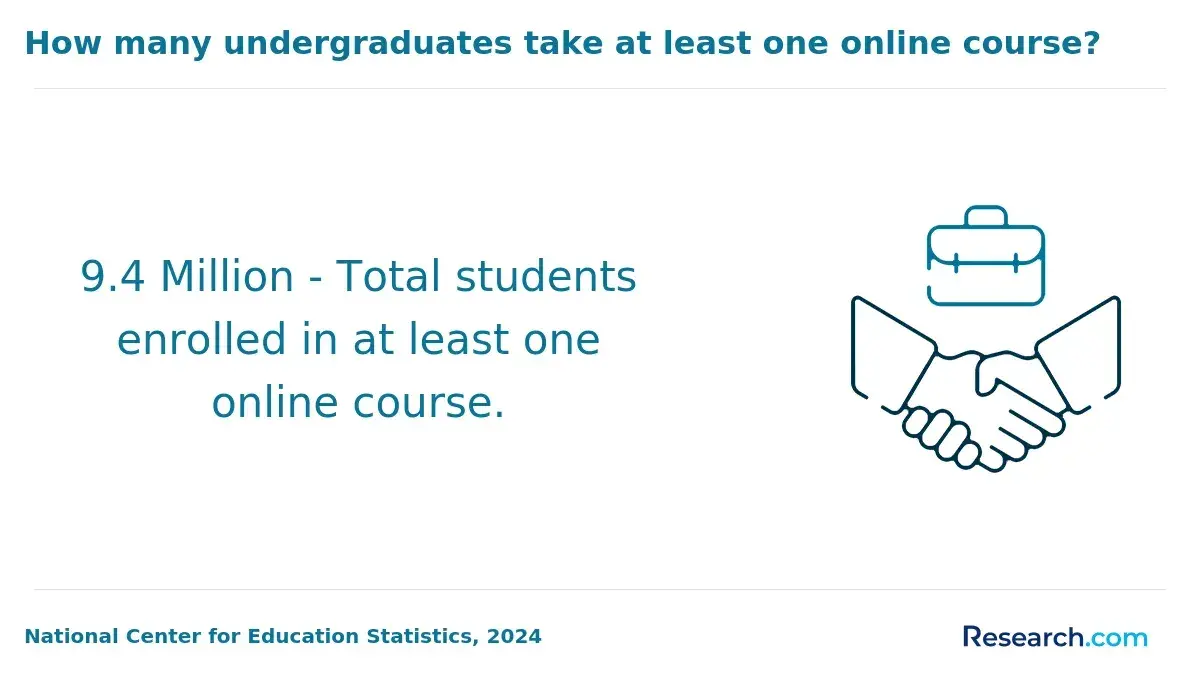
Online learning is now a mainstream transfer consideration, especially for students balancing work and family responsibilities. Still, you should avoid making flexibility sound like you want an easier program. If speed is part of your plan, compare the workload and credit rules for a fast-track bachelor degree before using acceleration as a major reason in your essay.
The table below shows how the focus of your explanation should change based on delivery format.
| Program format | What to emphasize | What admissions readers may question |
| Fully online | Your time-management plan, need for flexibility, access to asynchronous or evening courses, and use of virtual support. | Whether you can stay engaged, complete group work, and use remote advising effectively. |
| Hybrid | Your need for flexibility plus access to in-person labs, intensives, networking, or clinical components. | Whether you can meet travel, schedule, or on-campus attendance requirements. |
| Campus-based | Your need for facilities, faculty access, residential or commuter community, research, studios, labs, or campus recruiting. | Whether the new environment solves the issue that made you transfer. |
For online essays, include evidence that you understand the format: mention advising, tutoring, library access, technology support, discussion expectations, and how you will manage deadlines. For campus essays, show that you have researched specific resources rather than writing broadly about wanting a traditional college experience.
What admission requirements and credit policies affect how you explain your transfer plans?
Admission requirements and credit policies shape both your transfer strategy and your explanation. If you say you want to transfer for a specific major, but you have not completed prerequisites or do not meet the minimum GPA for that program, your explanation may sound underprepared. This is why your essay should align with the school's actual policies.
The table below summarizes common policies that can affect what you should say and what you should verify before applying.
| Policy or requirement | Why it matters | What to verify |
| Minimum transfer GPA | Some universities admit transfer students to the institution but apply higher standards for competitive majors. | Overall GPA, major-specific GPA, and prerequisite-grade requirements. |
| Prerequisite courses | Missing prerequisites can delay graduation or make you ineligible for direct major admission. | Course equivalencies and whether prerequisites must be completed before transfer. |
| Credit limits | Schools may cap the number of credits accepted from two-year or four-year institutions. | Maximum transferable credits and how many count toward the major. |
| Residency requirement | Most schools require students to complete a minimum number of credits at the new institution. | How many credits must be taken after transfer to earn the degree. |
| General education rules | Completed courses may satisfy electives but not the new school's core curriculum. | Whether an associate degree, transfer block, or articulation agreement applies. |
Before writing your transfer explanation, gather the documents that admissions and advisors use to evaluate your readiness. This will help you avoid making claims that are inconsistent with your record.
- Unofficial transcripts from every college attended.
- Current course syllabi for classes that may need manual review.
- A degree audit or program map from your current institution.
- The new school's transfer equivalency guide, if available.
- Major admission requirements, not just general university admission requirements.
- Financial aid and satisfactory academic progress rules if you have attempted many credits.
A common mistake is assuming that "accepted credits" and "useful credits" mean the same thing. In a good transfer plan, credits should move you closer to graduation requirements, not merely appear on your transcript.
How can you frame a transfer decision when changing majors or professional fields?
When changing majors or professional fields, frame the transfer as an informed academic pivot rather than a sudden escape. Admissions committees understand that students discover new interests. What matters is whether you can explain what changed, what you learned from prior coursework, and how the new program creates a realistic path forward.
If you are far along in your degree, compare whether transferring for a new bachelor's path, finishing your current degree and changing direction later, or pursuing a certificate or graduate program makes more sense. In some cases, students who already have a bachelor's degree may look for a cheapest easiest master's degree, but "easy" should never be the only criterion; accreditation, curriculum fit, employer value, and total cost still matter.
The table below shows how different major-change situations can affect your transfer explanation.
| Situation | Best framing | Main risk to address |
| Early major change | You explored a field, identified a better fit, and want to transfer before accumulating too many unrelated credits. | Showing that the new choice is based on research, not impulse. |
| Late major change | You have transferable skills from your original major and need a school that can apply credits efficiently. | Extending time to graduation and increasing cost. |
| Career-field change | You need a curriculum tied to new professional requirements, applied experience, or licensure preparation. | Underestimating prerequisites or supervised experience requirements. |
| Undecided but narrowing options | You need stronger advising, exploratory pathways, or interdisciplinary options. | Sounding unfocused without a plan for choosing a major. |
To make a major change credible, identify the transferable skills from your previous path. For example, a student moving from psychology to human resources can discuss research, communication, and behavior-focused coursework. A student moving from biology to data analytics can discuss quantitative reasoning and lab-data experience.
Then explain the new school's role. Strong details include bridge courses, advising for major changers, prerequisite sequencing, experiential learning, and career services that help students enter the new field.
How do licensing or certification requirements influence where and why you transfer?
Licensing and certification requirements can strongly influence where you transfer because some careers require specific coursework, accredited programs, supervised hours, exams, or state approval. This is especially important in fields such as nursing, teaching, social work, counseling, accounting, engineering, allied health, and some public safety roles.
Your transfer explanation should show that you understand these requirements at a general level and that the new school helps you meet them. However, requirements vary by state, licensing board, employer, and credential, so avoid making broad claims unless you have verified them.
Before transferring into a licensure-oriented program, work through these steps. They reduce the risk of enrolling in a program that does not qualify you for your intended credential.
- Identify the exact license, certification, or exam connected to your target role.
- Check whether your state requires graduation from an approved or programmatically accredited program.
- Ask whether transfer students can enter the professional sequence immediately or must complete prerequisites first.
- Confirm whether clinicals, student teaching, practicums, internships, or supervised hours are available in your location.
- Ask how the program discloses licensure eligibility for students who live outside the school's state.
- Request written confirmation when an advisor says your transfer credits satisfy professional prerequisites.
A practical essay sentence might be: "Because my goal is to pursue teacher certification, I am seeking a program with a state-approved education sequence, early field experiences, and advising that helps transfer students complete prerequisite and student-teaching requirements on time."
The mistake to avoid is transferring based only on a major name. Two programs with the same title can differ in approval status, fieldwork access, exam preparation, and eligibility for professional credentials.
How can you demonstrate fit with a new school's curriculum, support services, and outcomes?
You demonstrate fit by showing that you have researched the school beyond its homepage. Admissions readers should see a clear match between your needs and the school's curriculum, support services, transfer policies, and student outcomes. This is where your essay can move from personal explanation to evidence-based decision-making.
Fit is not only about prestige. A school may be a better fit because it offers structured advising, smaller classes, stronger disability services, better online support, a more compatible schedule, career coaching, or a pathway into work that suits your personality and strengths. If you are comparing career directions, resources on good jobs for introverts can help you think about whether your academic path matches your preferred work style.
Use the following evidence to make your transfer explanation more convincing. Choose only the details that genuinely relate to your situation.
- Specific courses, concentrations, labs, studios, or field experiences that match your goals.
- Faculty research, advising models, mentorship programs, or undergraduate research opportunities.
- Transfer-student orientation, credit evaluation support, tutoring, writing centers, and academic coaching.
- Career services such as internship support, employer partnerships, portfolio reviews, mock interviews, or alumni networks.
- Outcome indicators such as graduation information, licensure-exam disclosures, placement data, or graduate-school preparation when the school publishes them.
The table below summarizes common mistakes students make when explaining fit and better alternatives to use instead.
| Common mistake | Why it weakens the explanation | Better approach |
| Focusing only on rankings | Rankings do not prove the program fits your major, credits, schedule, or career goal. | Name specific academic and support features that solve your transfer need. |
| Writing mostly about leaving | It can sound negative or incomplete. | Spend more space explaining why the new school is the right destination. |
| Ignoring credit transfer | It raises concerns about time to graduation and planning. | Reference a realistic path to degree completion if appropriate. |
| Using generic praise | Statements like "excellent faculty" or "great opportunities" could apply anywhere. | Use program-specific details that show research. |
A strong final paragraph in a transfer essay often brings the pieces together: your current preparation, the reason for change, the new school's fit, and the outcome you are working toward. Keep the tone confident but not entitled, and make clear that you are ready to contribute to the new academic community.
Other Things You Should Know About
Avoid insulting your current school, blaming others for academic problems, focusing only on prestige, or saying you just want an easier path. Instead, explain the academic, personal, financial, or career reason for the transfer and show why the new school is a better fit.
Yes. Financial fit is a valid reason if you frame it around degree completion and responsible planning. Explain how the new school's cost, location, schedule, or aid options make it more realistic for you to finish your degree.
It can be personal, but it should not become unfocused. Share enough context to explain your decision, then connect the situation to your academic plan, readiness, and reasons for choosing the new school.
No. Changing majors is a common and acceptable reason when you explain what led to the change, what preparation you already have, and why the new program is the right place to pursue the new field.
References
- The Importance of Understanding Transfer Credit Policies https://www.sophia.org/blog/higher-education/understanding-transfer-credit-policies/
- How To Stand Out as a Transfer Student | University of Bridgeport https://www.bridgeport.edu/news/how-to-stand-out-as-a-transfer-student/
- Real Estate License Reciprocity: 2026 Guide https://www.speichergroup.com/insights/real-estate-license-reciprocity
- Will Your Real Estate License Transfer to Other States? https://realtyna.com/blog/will-your-real-estate-license-transfer-other-states/
- Accreditation Guide - Quality Online Schools | Sora Schools https://soraschools.com/blog/accreditation-a-parents-guide-to-quality-online-schools
- Will I be able to transfer my foreign professional license? | Schwartz Posel Immigration Law Group https://www.immlawfirm.com/blog/2021/09/will-i-be-able-to-transfer-my-foreign-professional-license/
- The Significance of Accreditation for Universities - ELQN https://elqn.org/the-significance-of-accreditation-for-universities/
- How To Answer "What Are Your Long-Term Career Goals?" With Examples https://www.live-recruitment.co.uk/blog/2022/04/how-to-answer-what-are-your-long-term-career-goals-with-examples
- Good Reasons To Transfer Colleges With Transfer Advice - NEIT https://www.neit.edu/blog/reasons-to-transfer-colleges
- Understanding the Role of Accrediting Agencies in Ensuring Quality Education - Swiss School of Business Research https://ssbr-edu.ch/accreditation/