2027 Online Social Emotional Learning Master's Programs With No Application Fee
Audited and Verified:
Our Editorial and Data Verification Process
Research.com uses government datasets, official education statistics and primary institutional information to support its career and degree guides. Our review process checks factual accuracy, occupational definitions, source dates and the requirements associated with the credentials discussed.
How This Article Was Fact-Checked
Our editorial team verifies salary estimates, employment projections, education requirements and program information against original data providers and official organizations. Salary figures are checked against the relevant occupational definitions and reporting periods. Information about licensure, accreditation and required in-person training is reviewed separately.
Fact-checked and verified on:

Co-Founder and Chief Data Scientist
Application fees can make it expensive to compare several online social emotional learning master's programs before knowing whether admission is likely. No-fee options and school-specific waivers can reduce that upfront risk, particularly for military-connected students, alumni, and applicants with documented financial need. The National Center for Education Statistics reported that graduate tuition and fees averaged $20,513 at U.S. institutions in the 2022-23 academic year, making careful program comparison important.
This guide explains how to find no-fee options, request waivers, identify remaining costs, and prioritize program quality over a small initial savings.
Key Things to Know About Social Emotional Learning Master's Programs with No Application Fee
- Dedicated online master's degrees titled "social emotional learning" are uncommon; applicants should also search education, curriculum and instruction, school counseling, and educational leadership programs with SEL coursework or concentrations.
- A waived application fee commonly saves about $40 to $100 per application, but applicants should confirm the policy before submitting because some waivers must be approved in advance.
- No-fee admission does not indicate lower quality or easier acceptance; accreditation, curriculum, fieldwork, licensure alignment, total tuition, and student-support services matter far more.
How much do application fees typically cost for Social Emotional Learning master's programs?
There is no national dataset that isolates application fees for social emotional learning master's programs. Because SEL is often a specialization within education or counseling, applicants generally encounter the same graduate-school fees charged for related master's programs: commonly about $40 to $100 per application. Some private universities charge more, while institutions using centralized graduate admissions systems may charge less or offer periodic fee-free application events.
The practical savings depend on how broadly a student applies. An applicant submitting six applications with a $75 fee would spend $450 before sending transcripts, completing background checks, or making enrollment deposits. A no-fee program is therefore especially useful for applicants building a realistic comparison list rather than applying to only one school.
| Application approach | Illustrative fee exposure | When it may make sense |
| One paid application | About $40 to $100 | The program is an exceptional fit and has a strong record of serving the applicant's goal. |
| Four paid applications | About $160 to $400 | The applicant needs several program, cost, or admissions options. |
| Mixed no-fee and paid list | Varies | The applicant wants to limit risk without excluding a higher-value paid-fee program. |
| Approved fee waiver | $0 application fee at that school | The applicant clearly meets the school's published eligibility rules. |
Use these figures as a planning range, not a quote. Fees and waiver policies can differ by campus, program, application term, and applicant category. A program's admissions page and the payment screen are the final sources for the amount due.
What does the application fee typically cover for Social Emotional Learning master's programs?
An application fee generally supports administrative processing rather than instruction or future tuition. Schools may use it to maintain application systems, verify records, coordinate faculty review, communicate decisions, and support admissions staff. It is normally nonrefundable even if an applicant withdraws or is denied admission.
Applicants should not assume that a fee pays every pre-enrollment expense. The following costs may remain even when a university advertises a no-fee application.
| Possible cost | Why it may apply | What to verify |
| Official transcripts | Prior colleges may charge to send records. | Whether unofficial transcripts are accepted for initial review. |
| Background check or fingerprinting | Fieldwork, school placements, and licensure-track courses may require clearance. | Whether the program has required practica and who pays. |
| Technology and course materials | Online learning can require software, books, webcam equipment, or subscriptions. | Mandatory per-course fees and minimum technology specifications. |
| Travel or residency expenses | Some "online" degrees include orientation, internship, or in-person intensives. | Whether travel is required and whether alternatives exist. |
| Enrollment deposit | A school may require a deposit after admission to hold a seat. | Deposit amount, refundability, and deadline. |
Request an itemized estimate before accepting admission. Students comparing other health-related pathways should similarly look beyond an advertised admissions convenience, such as when reviewing RN to BSN online programs without clinicals, because program requirements can affect total cost and scheduling.
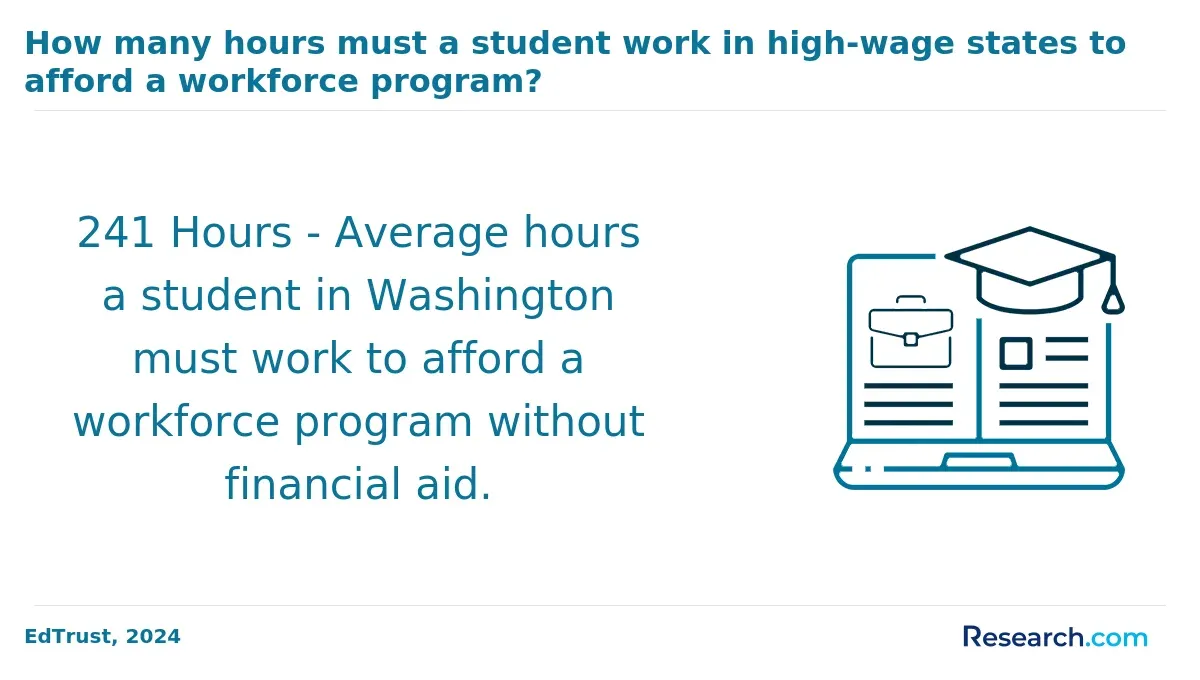
Which online Social Emotional Learning master's programs have no application fees?
Fully online programs explicitly named "Master's in Social Emotional Learning" are limited in the U.S. More often, SEL preparation appears in a master's in education, curriculum and instruction, learning sciences, school counseling, special education, or educational leadership. As a result, applicants should treat "no application fee" as an institutional or admissions-cycle policy to verify, not as a permanent characteristic of every SEL-related program.
The table shows the most productive places to look. It distinguishes program types from a promise that every institution in that category is fee-free.
| Program type to search | How SEL may appear | No-fee availability | Key verification question |
| Online M. Ed. in curriculum and instruction | SEL, classroom climate, trauma-informed teaching, or whole-child electives | Available at some institutions and during promotional periods | Is the application fee permanently waived for this online program and term? |
| Online master's in learning sciences or educational psychology | Child development, motivation, relationships, and learning environments | Varies by graduate school | Does the curriculum include applied SEL implementation, not only theory? |
| Online school counseling master's | Student well-being, prevention, and social-emotional development | Often waiver-based rather than universally free | Does the degree meet counseling licensure requirements in my state? |
| Online educational leadership master's | School climate, restorative practices, and district SEL leadership | Varies | Is SEL a meaningful curricular focus or only one course topic? |
| Online special education master's | Behavior support, relationship skills, and inclusive learning environments | Varies | Are practicum requirements compatible with my work location? |
To find an actual no-fee option, search a school's graduate admissions page for "application fee," "waiver," and "online graduate application," then open the policy for the exact degree. Contact admissions in writing if the program page and the central graduate-school page conflict. Save the response and submit before the stated deadline.
Do not broaden a search so far that the degree stops fitting your objective. For example, applicants exploring related behavioral-health preparation may compare an online substance abuse counseling degree, but that is a different professional pathway with distinct curriculum and possible credentialing expectations.
An application fee is an administrative charge, not an admissions-quality measure. A no-fee online SEL-related master's program may still evaluate academic preparation, professional experience, written statements, recommendations, interviews, prerequisite coursework, and cohort capacity. Conversely, a program with a fee is not automatically more selective, better accredited, or more useful for career advancement.
Use academic and professional indicators to assess competitiveness and fit instead of treating the fee as a signal. The comparison below separates meaningful evidence from misleading shortcuts.
| Stronger indicator to review | Why it matters | Weak shortcut to avoid |
| Institutional and programmatic accreditation | Accreditation can affect employer recognition, transfer options, financial aid, and licensure pathways. | Assuming no-fee status means a program lacks accreditation. |
| Published admissions requirements | They show the level of preparation and documentation expected. | Equating an easy application portal with easy admission. |
| Curriculum and faculty expertise | They reveal whether SEL is a sustained area of study. | Choosing a program because "SEL" appears once in a course description. |
| Fieldwork and licensure disclosures | They show whether the degree supports the intended role and state. | Assuming every education master's leads to teacher or counselor licensure. |
| Total price and completion structure | They affect affordability and likelihood of finishing while employed. | Choosing solely because the initial application costs $0. |
Paying an application fee can still be sensible when a program uniquely matches your state licensure goal, has the curriculum and format you need, and is within your total budget. A fee-free list should widen options, not cause you to skip a stronger-fit program automatically.
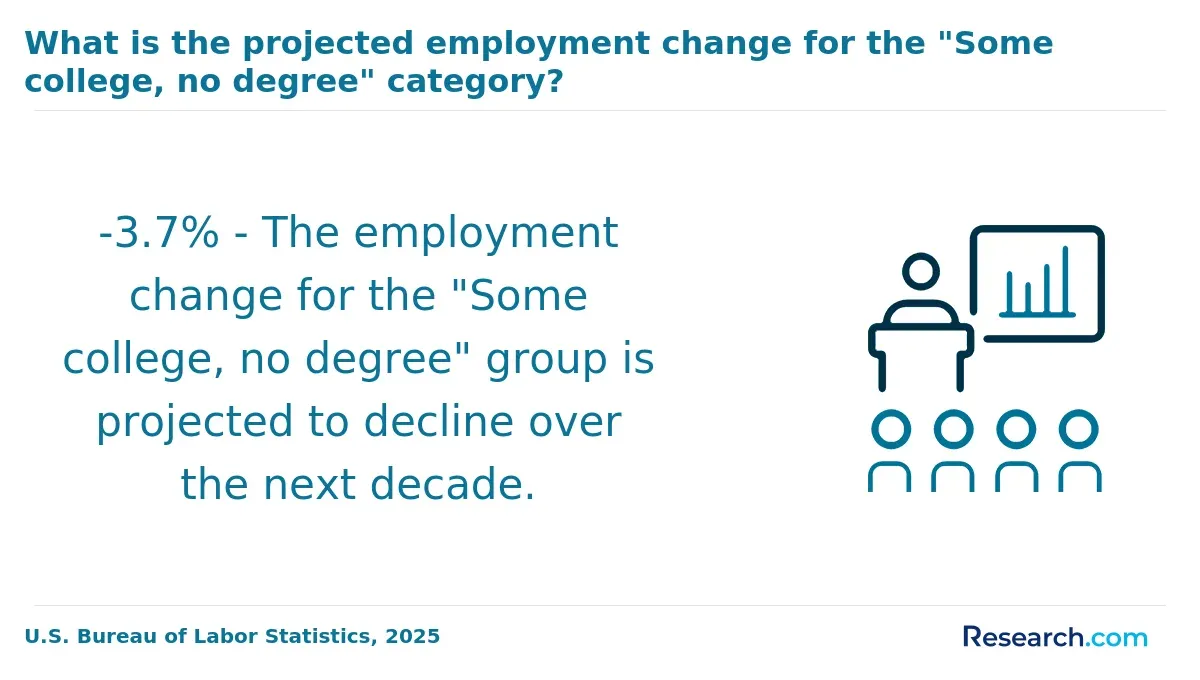
What should applicants consider when choosing Social Emotional Learning master's programs with no application fee?
The best no-fee program is one that advances a specific goal: improving classroom practice, leading schoolwide SEL initiatives, moving into student-support work, earning an education credential, or preparing for doctoral study. Because "social emotional learning" can describe a focus rather than a regulated degree title, start by defining the role you want after graduation. Then compare programs on the factors that affect value over the full degree, not just the application stage.
Use this checklist when comparing a no-fee offer against a program that charges an application fee.
- Accreditation: Confirm institutional accreditation and any programmatic accreditation relevant to your intended credential.
- SEL depth: Review required courses for evidence-based SEL, child and adolescent development, culturally responsive practice, school climate, assessment, and implementation.
- Licensure alignment: If you seek teacher, school counselor, or administrator licensure, confirm state-specific eligibility with the program and your state licensing authority.
- Online design: Ask whether classes are asynchronous, whether live sessions are required, and how group work and faculty access function.
- Practicum obligations: Identify placement hours, clearance requirements, supervisor qualifications, and whether the school helps secure a site.
- Total cost: Compare tuition, mandatory fees, credits required, course materials, travel, and likely employer reimbursement - not only the waived fee.
- Career fit: Ask what roles the curriculum is designed to support and whether it offers an internship, portfolio, or applied implementation project.
A no-fee program deserves priority when several options meet your academic and career requirements and you need to conserve application funds. A paid-fee program may deserve the investment when it provides clearer licensure alignment, a more rigorous SEL curriculum, better scheduling, or substantially lower total tuition. Avoid treating fee-free admissions as a tuition discount; the savings are real, but usually small compared with the full cost of a graduate degree.
Before submitting, contact each admissions office with a concise written request for confirmation. Ask whether the fee is $0 for your program and term, whether any practicum is required, whether the degree leads to licensure or only professional development, and what charges appear beyond tuition. Students comparing accelerated clinical pathways can apply the same total-cost discipline when investigating accelerated pharmacist programs, where admissions costs are only one part of the financial decision.
Other Things You Should Know About Social Emotional Learning
Possibly. Many graduate education programs have test-optional or no-test policies, but requirements differ by institution and may change by term. Review the exact program requirements rather than assuming that a waived application fee also means test scores are waived.
Usually not unless the degree is specifically a school counseling program designed for licensure and meets your state's requirements. An M. Ed. with SEL coursework can support school-based work, but it does not automatically qualify a graduate for counselor licensure.
Completion time depends on credit requirements, transfer credits, course sequencing, practicum obligations, and whether you study full or part time. Ask for a sample plan of study and confirm whether required field experiences can delay graduation.
Many do. Programs often require a supervised practicum or internship of 100 to 600 hours, especially when the degree includes teacher, counselor, or student-support preparation. Some schools let current educators complete fieldwork at their workplace, but the placement must still be approved and documented.
- Apply - Bachelor's, Master's, Ph.D.s, Certificates | CIIS https://www.ciis.edu/apply
- Online Master's Degree in Teaching and Learning | CSU Global | Accredited https://csuglobal.edu/academic-programs/graduate-degrees/online-masters-teaching-learning
- 2025 Most Affordable Online Master's Degrees in Education https://www.onlineu.com/most-affordable-colleges/education-masters-degrees
- What Does the Research Say? - CASEL https://casel.org/fundamentals-of-sel/what-does-the-research-say/
- Best Affordable Master's Degree In Social Work https://www.psychology.org/social-work/best-affordable-masters-programs/
- Do Online Graduate Programs Require Field-Based Experiences? - Graduate Programs for Educators https://www.graduateprogram.org/blog/do-online-graduate-programs-require-field-based-experiences/
- Is Social-Emotional Learning Effective? New Meta-Analysis Adds to Evidence, But Debate Persists | KQED https://www.kqed.org/mindshift/62194/is-social-emotional-learning-effective-new-meta-analysis-adds-to-evidence-but-debate-persists