2027 DNP Adult-Gerontology Acute Care NP Programs for Nurses in Idaho: BSN and MSN Entry Routes and Clinical Training
Audited and Verified:
Our Editorial and Data Verification Process
Research.com uses government datasets, official education statistics and primary institutional information to support its career and degree guides. Our review process checks factual accuracy, occupational definitions, source dates and the requirements associated with the credentials discussed.
How This Article Was Fact-Checked
Our editorial team verifies salary estimates, employment projections, education requirements and program information against original data providers and official organizations. Salary figures are checked against the relevant occupational definitions and reporting periods. Information about licensure, accreditation and required in-person training is reviewed separately.
Fact-checked and verified on:

Co-Founder and Chief Data Scientist
For an Idaho nurse pursuing adult-gerontology acute care practice, the first decision is not simply which DNP is shortest. It is whether a program accepts the nurse's current credentials, provides the required acute care population-focus preparation, and can support supervised clinical training in Idaho.
This guide compares BSN and MSN entry routes, explains what to verify about online programs and placements, and separates graduation from certification and Idaho APRN authorization. It is designed to help experienced RNs and APRNs identify a viable route before committing time or tuition.
Key Things You Should Know
- A BSN-prepared RN generally needs an AGACNP specialty curriculum; an MSN-prepared nurse may need the same preparation unless prior graduate work satisfies a program's documented gap analysis.
- Compare at least three separate requirements: DNP degree completion, supervised AGACNP clinical preparation, and eligibility for national certification and Idaho APRN licensure.
- Before enrolling from Idaho, obtain written confirmation of state enrollment eligibility, Idaho clinical-placement arrangements, and the exact campus-visit schedule - even for an online program.
What Are DNP Adult-Gerontology Acute Care NP Programs in Idaho?
A Doctor of Nursing Practice (DNP) adult-gerontology acute care nurse practitioner (AGACNP) program combines doctoral-level practice scholarship with preparation to assess and manage acutely ill adult and older adult patients. The population focus and acute care role matter: a general DNP in leadership, or a DNP with another NP specialty, is not automatically an AGACNP qualification.
"In Idaho" can mean either an Idaho-based program or an out-of-state program that enrolls Idaho residents and permits Idaho clinical placements. Neither description alone establishes that a particular AGACNP track is currently admitting students. Ask for the track's current catalog page, degree plan, enrollment authorization, and certification-eligibility statement before treating it as an option.
Choose the specialty for the intended patients and role, not the doctoral title. Nurses primarily seeking psychiatric care should compare that population focus separately, including PMHNP education costs and program choices; psychiatric and acute care NP preparation are not interchangeable.
What Are the BSN and MSN Entry Routes for Idaho AGACNP DNP Programs?
The right entry route depends on what the nurse has already completed - not merely whether the transcript says "MSN." The comparison below identifies what each route still needs to establish.
| Entry route | Typical starting point | Critical question |
| BSN-to-DNP AGACNP | Licensed RN with a BSN | Does the curriculum include the complete AGACNP specialty sequence, supervised clinical training, and DNP requirements? |
| MSN-to-DNP with AGACNP preparation | MSN graduate without AGACNP preparation | Which prior courses and documented practice hours will the school accept, and what specialty gaps remain? |
| Post-master's DNP for an established AGACNP | Already prepared and certified in AGACNP practice | Is the goal a DNP credential rather than preparation for a new NP role? |
An MSN in education, leadership, or a different NP population focus does not remove the need for AGACNP coursework and approved clinical experiences. If an MSN-level NP qualification - not a DNP - is sufficient for the intended role, compare lower-cost master's nursing pathways after a BSN, checking that any specific program actually offers the desired AGACNP focus.
What Are the Admission Requirements for Idaho AGACNP DNP Programs?
Programs commonly review an active RN license, accredited prior nursing education, academic performance, references, a professional statement, and relevant nursing experience. Acute or critical care experience may strengthen readiness or be required by a particular track, but there is no universal Idaho AGACNP DNP admissions checklist. Schools can also impose clinical-site requirements after academic admission, including background checks, immunizations, and site-specific onboarding.
MSN-prepared applicants should submit syllabi for advanced assessment, pharmacology, and pathophysiology; records of supervised clinical hours; and documentation of any existing APRN certification. Request a written gap analysis showing which credits and experiences apply to the AGACNP track. Prior ICU employment is valuable experience, but it is not automatically transferable academic clinical credit.
An APRN changing specialties should also check whether a post-graduate certificate is a more direct route than another full degree. For example, psychiatric NP certificate length options address a different population focus; they do not substitute for AGACNP preparation.
Online delivery changes where coursework occurs, not whether supervised patient care, skills evaluation, or in-person attendance is required. This comparison highlights the scheduling issues most likely to affect a working Idaho RN.
| Format | Potential advantage | Constraint to verify |
| Online or hybrid | Less routine travel for lectures | Live class times, campus intensives, clinical-site approval, and who secures preceptors |
| Primarily campus-based | More scheduled face-to-face instruction | Commute, relocation, class frequency, and whether clinical sites are near home |
Ask for a term-by-term calendar rather than relying on "flexible" marketing language. Clinical shifts may follow a preceptor's schedule, including weekdays or nights, regardless of when online assignments are due. Placement assistance also varies by school; online FNP programs with preceptor support illustrate why the precise meaning of "support" needs scrutiny, although FNP and AGACNP placements require different patient experiences.
An AGACNP curriculum typically integrates advanced assessment, pathophysiology, pharmacology, diagnostic reasoning, management of acute and complex illness, and specialty clinical practica. DNP study adds evidence appraisal, quality improvement, systems leadership, and an applied practice project. The school's curriculum - not the degree label - determines how these components are sequenced and assessed.
Clinical training must provide school-approved, supervised experiences aligned with AGACNP competencies and patient populations. Ask for the required direct-care hours, permitted settings, preceptor qualifications, faculty oversight, and rules for counting simulation or prior graduate hours. For comparison, post-master's family NP clinical training requirements concern a different focus; FNP hours should not be assumed to satisfy AGACNP requirements.
A DNP project may use an approved practice setting to evaluate an improvement, but access to patient records and project data requires institutional permission and appropriate privacy and oversight review. Project hours, employment hours, and AGACNP direct-care hours should be documented separately unless the program explicitly approves how they count.
BSN-to-DNP study generally takes longer than a post-master's route because it must include graduate specialty preparation as well as doctoral requirements. An MSN does not guarantee a short path: an MSN-prepared nurse entering a new NP focus may need substantial additional coursework and clinical training. Compare each school's individualized degree plan, course rotation, maximum time to completion, and the effect of part-time enrollment. Online DNP timelines for working nurses offer a broader point of comparison, but the advertised shortest timeline may not apply to an AGACNP specialty sequence.
Without a verified, track-specific tuition schedule, no single Idaho AGACNP DNP price is dependable. Request an itemized estimate for tuition by credit and residency status, mandatory fees, clinical compliance, travel and lodging for intensives, and any extra terms required to finish clinical hours or the project. Include reduced RN work hours in the household budget. A cheaper per-credit rate can cost more overall if the program accepts fewer prior credits or requires repeated travel.
Check institutional accreditation and the accreditation of the applicable graduate nursing program, commonly through CCNE or ACEN. Then confirm that the specific AGACNP track supplies education acceptable to the intended national certifier and the Idaho Board of Nursing. Accreditation of a university or its general DNP degree, by itself, does not verify every specialty track or Idaho enrollment arrangement.
Ask the school and accreditor which program and degree levels are covered, and ask the school for its written Idaho authorization and clinical-placement policy. Do not apply the approval logic for an entry-level nursing pathway - such as those in online and hybrid LPN program comparisons - to a postlicensure AGACNP track; the credentials and regulatory decisions differ.
Graduation is one step, not permission to practice as an AGACNP. A graduate must meet the current eligibility rules of an appropriate national certifier - such as ANCC or AACN Certification Corporation - pass the applicable examination, and satisfy Idaho Board of Nursing requirements for APRN licensure and the intended role. The board, not the university, determines state practice authorization; employers separately assess privileges and job-specific competence.
Before choosing a program, compare its published certification-eligibility statement against the certifier's current requirements and confirm how graduates apply for Idaho APRN licensure. A different NP pathway does not create AGACNP eligibility: even one-year family nurse practitioner pathways prepare for a different population focus and role.
AGACNPs may work in hospital-based services and other settings caring for adults with acute, complex, or critical conditions. Actual duties depend on Idaho practice law, employer privileges, the patient population, and demonstrated competence; an ICU RN background can help but does not replace NP preparation or onboarding.
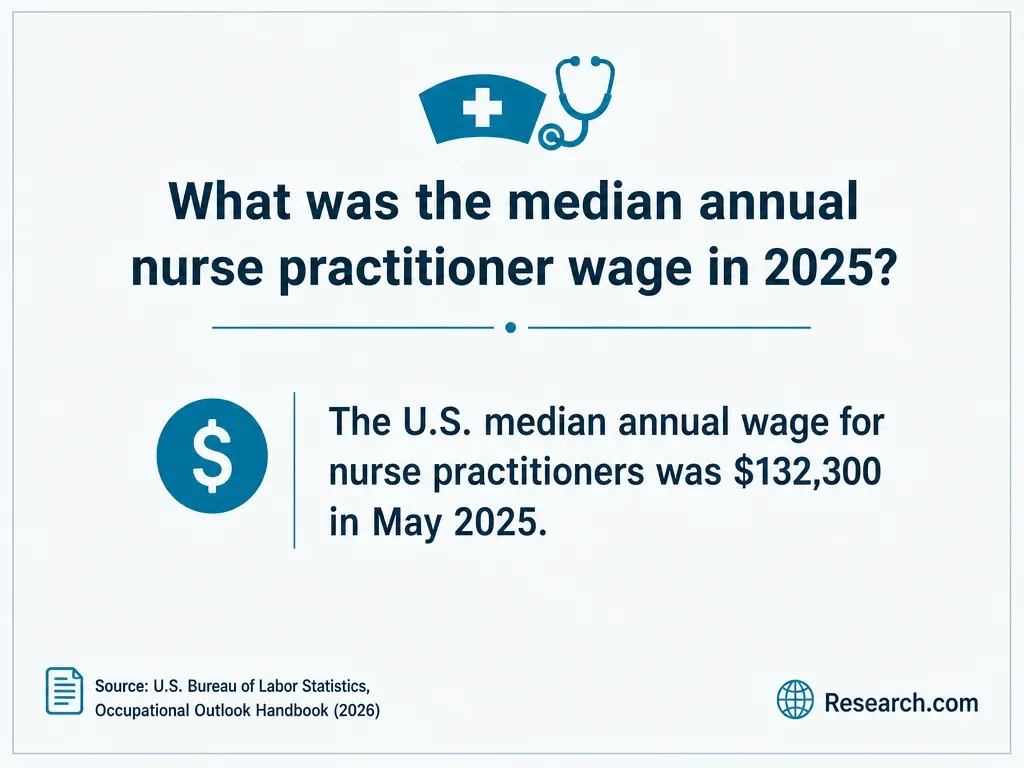
The U.S. Bureau of Labor Statistics reports wages and employment projections for nurse practitioners, not separately for Idaho AGACNP DNP graduates. Its occupation-wide figures are useful for broad labor-market context, not as a promised starting salary or a measure of the DNP's return on investment. Compare local job postings and offers by clinical service, schedule, call expectations, experience requirements, and benefits.
Specialty choice should follow the work itself. If the desired role is primarily psychiatric care rather than management of acute adult illness, fast-track mental health nursing graduate study may be more relevant than an AGACNP DNP, subject to the same careful checks on preparation and clinical access.
How Can Nurses Choose a Reputable Idaho AGACNP DNP Program?
Build a shortlist only after a school confirms that its exact AGACNP route accepts the applicant's credentials and can support Idaho enrollment and clinical training. Then request written answers to the following questions before paying a deposit:
- What degree and AGACNP specialty credential will I earn, and which national certification examination does the curriculum prepare me to pursue?
- Which of my MSN courses and supervised hours count, and what will my individual degree plan require?
- Who identifies, approves, and replaces Idaho clinical sites and preceptors if a placement falls through?
- How many campus visits, scheduled live sessions, and clinical hours are required, and what is the full estimated cost through graduation?
Compare the answers alongside accreditation scope, student support, and any clearly labeled track-specific completion or certification results. If an MSN-level route meets the career objective, compare lower-tuition advanced practice nursing programs as well - but verify that the particular option offers AGACNP preparation and Idaho-eligible clinical training. The best choice is the shortest financially workable verified route to the intended role, not simply the shortest advertised DNP.
Other Things You Should Know About Nursing
Often, yes, but clinical shifts and required intensives may conflict with full-time employment. Ask for the actual term schedule before committing to work hours.
Not universally. A program may value or require relevant experience or credentials, so check its current AGACNP admissions policy rather than assuming a certification is mandatory.
Notify the program promptly. A replacement must meet school and site requirements, and missed experiences may delay progression; ask about the school's contingency process in advance.
Not automatically. The school and practice site determine the required review or determination based on the project's purpose, methods, data use, and institutional policies.
- Board of Nursing - DOPL (idaho.gov) https://dopl.idaho.gov/bon/
- Online BSN to DNP-AGACNP Program | Acute Care NP | Maryville Nursing https://nursing.maryville.edu/pathways/bsn-to-dnp-agacnp
- Adult Gerontology Acute Care Nurse Practitioner (AGACNP) | Regis College Online https://online.regiscollege.edu/online-masters-degrees/online-master-science-nursing/adult-gerontology-acute-care-nurse-practitioner
- DNP: Adult-Gerontology Acute Care Nurse Practitioner | University of Maryland School of Nursing https://www.nursing.umaryland.edu/academics/doctoral/dnp/dnp-adult-gerontology-acute-care-nurse-practitioner/
- Adult-Gerontology Acute Care Nurse Practitioner (AGACNP) | Goldfarb https://www.barnesjewishcollege.edu/doctoral-degree/adult-gerontology-acute-care-nurse-practitioner-agacnp
- Doctor of Nursing Practice (BSN to DNP) - USI Bulletin https://bulletin.usi.edu/preview_program.php
- Adult-Gerontology Acute Care Nurse Practitioner | University of Illinois Chicago https://nursing.uic.edu/programs/doctor-nursing-practice/dnp-focus-areas/adult-gero-acute-care-np/
- Adult-Gerontology Acute Care Nurse Practitioner, D.N.P. | utulsa.edu https://bulletin.utulsa.edu/preview_program.php
- Adult Gerontology Acute Care Nurse Practitioner | UW School of Nursing https://nursing.uw.edu/academics/dnp/agnp-ac/
- Adult-Gerontology Acute Care Nurse Practitioner (AGACNP) Doctor of Nursing Practice | jsu.edu https://www.jsu.edu/nursing/DNP/AGACNP-DNP.html