2027 DNP Psychiatric-Mental Health NP Programs for Nurses in Minnesota: BSN and MSN Entry Routes and Clinical Training
Audited and Verified:
Our Editorial and Data Verification Process
Research.com uses government datasets, official education statistics and primary institutional information to support its career and degree guides. Our review process checks factual accuracy, occupational definitions, source dates and the requirements associated with the credentials discussed.
How This Article Was Fact-Checked
Our editorial team verifies salary estimates, employment projections, education requirements and program information against original data providers and official organizations. Salary figures are checked against the relevant occupational definitions and reporting periods. Information about licensure, accreditation and required in-person training is reviewed separately.
Fact-checked and verified on:

Co-Founder and Chief Data Scientist
A Minnesota RN considering psychiatric-mental health nurse practitioner practice needs more than a doctorate with a mental health course or two. The program must provide the right PMHNP population-focus preparation, supervised clinical experiences, and a viable route to certification and state licensure. This guide compares BSN- and MSN-entry DNP routes, identifies a Minnesota program to investigate, and explains the questions to ask about placements, scheduling, cost, and prior graduate work. It is designed to help experienced nurses choose a route that fits both their current credentials and intended practice.
Key Things You Should Know
- BSN-entry PMHNP DNP study prepares an RN for a new advanced practice role; MSN-entry study may require a full PMHNP specialty sequence, a shorter completion plan, or neither, depending on prior certification and the school's gap analysis.
- A DNP generally incorporates at least 1,000 post-baccalaureate practice hours under AACN expectations, but those hours are not all interchangeable with supervised PMHNP direct-care hours.
- Start with the University of Minnesota's PMHNP DNP track, then verify the entry route, current nursing accreditation, Minnesota eligibility, clinical-placement support, and total cost for your intended start term.
What Are DNP Psychiatric-Mental Health NP Programs in Minnesota?
A psychiatric-mental health nurse practitioner (PMHNP) DNP program combines graduate preparation for psychiatric advanced practice with practice-focused doctoral study. PMHNP education addresses mental health assessment and diagnosis, psychotherapy, medication management, and care across the lifespan. DNP coursework adds evidence appraisal, systems leadership, and an applied practice project. The degree is not itself a license or national certification.
These are postlicensure routes for nurses, not programs that award an initial RN license. An RN considering a different undergraduate completion step can review comparing RN-to-BSN practice expectations; RN-to-BSN requirements are distinct from the supervised PMHNP experiences required for advanced practice preparation.
What Are the BSN and MSN Entry Routes for Minnesota PMHNP DNP Programs?
BSN entry fits a licensed RN with a nursing bachelor's degree who has not completed graduate PMHNP preparation. The curriculum must cover the advanced practice core, PMHNP specialty courses, supervised clinical care, and DNP requirements. MSN entry is not one uniform shortcut: an MSN-prepared nurse without NP preparation may need substantial new specialty coursework and clinical training, while an already-certified PMHNP may seek doctoral completion without repeating the entire specialty sequence.
The key comparison is what the receiving school will recognize from transcripts, syllabi, and documented supervised hours - not the letters after an applicant's name. An RN whose highest nursing credential is an associate degree can investigate master's nursing study after an ADN, but should confirm how that route would lead to eligible PMHNP preparation and whether a later DNP would still be necessary for their goal.
Which Minnesota Schools Offer Accredited PMHNP DNP Programs?
The University of Minnesota is a Minnesota-based option to investigate for a DNP with a psychiatric-mental health nurse practitioner specialty. A school-level accreditation statement is not enough to establish the status of a particular track or its eligibility for every applicant. Program offerings, entry points, and accreditation status can change; this is an example for comparison, not a verified exhaustive list of Minnesota programs.
The following checks matter more than a school's general reputation. Request answers for your intended admission term and keep them alongside the published curriculum.
| What to verify | Why it changes the decision |
| Exact PMHNP DNP track and permitted BSN or MSN entry | A DNP in another specialty or a general doctoral track may not prepare graduates for PMHNP certification. |
| Institutional and nursing program accreditation status and scope | Accreditation applies to defined institutions or programs; it should not be inferred from the degree name. |
| Clinical-site eligibility and placement responsibilities | Travel distance, available preceptors, and school approval can determine whether a workable plan exists. |
| Certification eligibility and Minnesota regulatory fit | The program, certifying body, and state nursing board make different eligibility decisions. |
Ask whether the school finds and approves PMHNP preceptors or expects students to propose sites. Resources about online FNP programs with preceptor support illustrate a useful question to ask, but FNP placement policies do not establish what a PMHNP program provides.
PMHNP DNP applicants generally need an active RN license, qualifying nursing education, graduate academic readiness, and the ability to meet clinical-site requirements. Schools may also request transcripts, references, a statement of purpose, an interview, and relevant practice experience. An MSN applicant should expect an individualized review of prior advanced assessment, pathophysiology, pharmacology, population-focus coursework, and supervised clinical hours.
Admission is separate from clearance to enter clinical sites, which may involve background screening, health documentation, and site-specific onboarding. A person with a non-nursing bachelor's degree needs an initial RN education and licensure route before applying as an RN; accelerated BSN options beyond highly selective schools may be worth evaluating for that earlier step, but are not direct-entry PMHNP DNP programs.
BSN-entry study usually takes longer because it includes both initial PMHNP graduate preparation and doctoral work. MSN-entry timing depends heavily on the prior degree: an already-certified PMHNP may have a substantially different plan from an MSN-prepared nurse entering a new population focus. Published completion times should be checked against course sequencing, full- or part-time enrollment, placement availability, and the DNP project's approval process.
Short timelines advertised for another specialty are not reliable estimates for psychiatric preparation. For example, 12-month FNP program options concern family practice, not PMHNP competencies. Ask each Minnesota program for a term-by-term plan based on your transcript and whether a delayed clinical placement postpones graduation.
PMHNP coursework typically develops advanced assessment, pathophysiology, and pharmacology alongside psychiatric diagnosis, psychopharmacology, psychotherapy, and care for patients at different life stages. Supervised experiences should give students opportunities to assess patients, formulate and revise plans, communicate with patients and care teams, and document care within the student's authorized role. Faculty and approved preceptors evaluate performance; RN employment or classroom simulation does not automatically replace required PMHNP clinical hours.
DNP practice hours and the applied project add a different layer: implementing or evaluating an evidence-based improvement in a practice setting. Students should confirm site permission, privacy safeguards, faculty oversight, and any required organizational or ethics review before using clinical data. A nurse considering another NP population focus should not assume its coursework transfers into PMHNP preparation; even accelerated FNP certificate admissions and requirements concern a distinct specialty.
Online instruction can reduce routine travel without removing live classes, campus visits, simulation, examinations, or in-person clinical work. Campus-based study may make face-to-face learning easier, but proximity to a campus does not guarantee a nearby psychiatric preceptor. Either format can become impractical if required clinical shifts conflict with RN work or caregiving.
Compare the actual weekly schedule, not just the delivery label. An online short DNP completion pathway may suit an already-prepared APRN, but a brief doctoral curriculum should not be mistaken for missing PMHNP specialty education. Before depositing, ask where clinical hours can occur, who secures preceptors, how often students must attend in person, and whether placements outside Minnesota are permitted.
There is no reliable single price for a Minnesota PMHNP DNP: total charges depend on the school, credits required after transcript review, enrollment pace, and whether tuition or fees differ by residency and delivery format. Obtain a written estimate for your specific route rather than multiplying a headline per-credit price by an assumed number of credits.
A useful budget separates the following charges and opportunity costs so that a cheaper-looking program does not conceal a more expensive clinical schedule.
- Tuition, mandatory university and program fees, and any charges for continued doctoral or project enrollment.
- Books, technology, clinical clearance, travel, lodging for required visits, and certification and licensure expenses.
- Reduced RN work hours, childcare or other household support, and costs from a placement or graduation delay.
Use nurse practitioner program tuition comparisons as a starting point, then request a Minnesota school's current itemized estimate and confirm any employer reimbursement conditions or aid eligibility before borrowing.
Minnesota PMHNP practice requires more than graduation. A nurse needs an appropriate RN license, qualifying graduate PMHNP preparation, national certification in the specialty, and the applicable Minnesota advanced practice authorization through the Minnesota Board of Nursing. The American Nurses Credentialing Center awards the PMHNP-BC credential; applicants should check its current educational and supervised-clinical eligibility rules rather than assuming every DNP track qualifies.
An MSN PMHNP route may also support certification eligibility when it meets the certifier's requirements; a DNP is not automatically required simply to become a PMHNP. Nurses comparing that option can examine accelerated PMHNP master's admissions and requirements. Before enrolling, obtain the program's written statement about certification preparation and confirm current Minnesota licensing requirements directly with the responsible authorities.
What Salary and Career Outlook Can Minnesota PMHNP Graduates Expect?
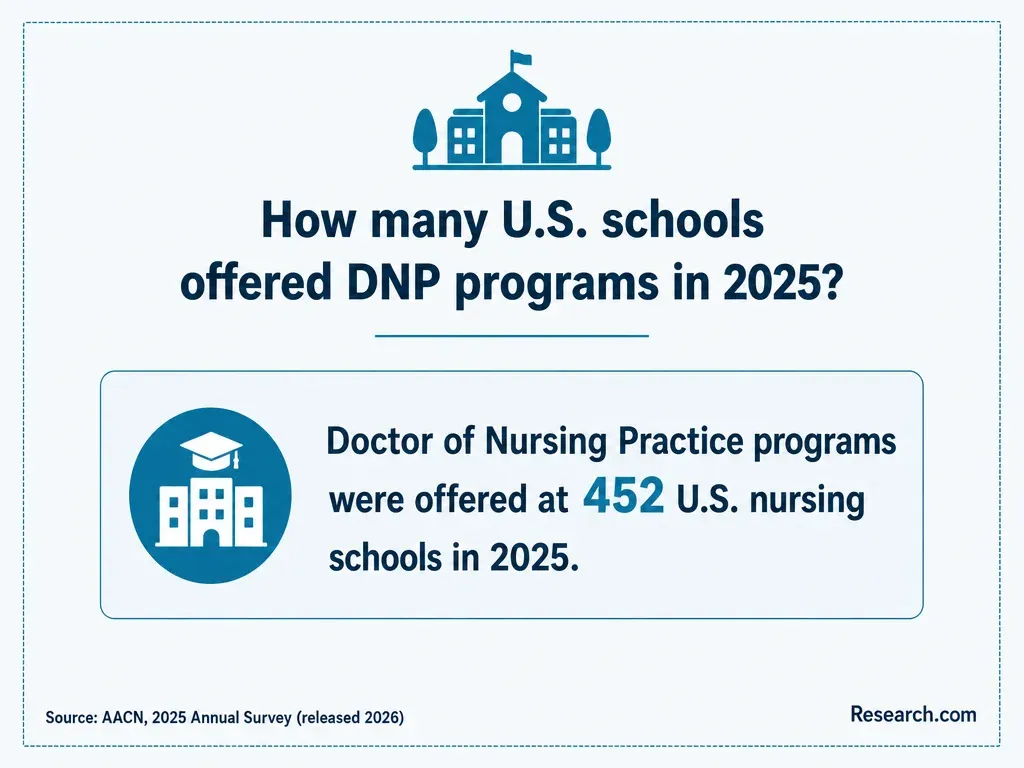
PMHNP graduates may work in outpatient psychiatry, integrated primary care, hospitals, community mental health, or other settings that hire psychiatric advanced practice clinicians. Pay depends on experience, employer, location, schedule, and responsibilities. The U.S. Bureau of Labor Statistics reports wages and projected growth for the broader nurse practitioner occupation, not a Minnesota PMHNP DNP graduate cohort; an occupation-wide median should not be treated as a likely offer or a return on doctoral tuition.
For a financial comparison, request local PMHNP job postings or offers with clear compensation and benefit terms, then weigh them against each route's borrowing and time away from work. BSN-to-MSN bridge cost comparisons can help frame the shorter-degree alternative, but only a qualifying PMHNP curriculum - not a generic MSN bridge - addresses the intended advanced practice role.
Other Things You Should Know About Nursing
Possibly, if the program approves the site, preceptor, learning objectives, and separation of student activities from paid RN duties. Employment hours alone do not count automatically.
Ask the program before applying. Enrollment authorization, site approval, preceptor availability, and eligibility to practice in the clinical location all matter.
The receiving program must review documented hours and competencies. Previously completed hours may inform a plan, but they do not automatically replace PMHNP-specific experiences.
No. A DNP project generally applies evidence to a practice problem; a PhD dissertation is typically designed to produce original research. Confirm the chosen program's actual project requirements.
- Cost of Attendance (Budget) | 2025-2026 Federal Student Aid Handbook https://fsapartners.ed.gov/knowledge-center/fsa-handbook/2025-2026/vol3/ch2-cost-attendance-budget
- Advanced Practice and Public Health Nurse Certification | ca.gov https://www.rn.ca.gov/applicants/ad-pract.shtml
- Advanced Practice Registered Nurse (APRN) License General Information / Minnesota Board of Nursing | mn.gov https://mn.gov/boards/nursing/advanced-practice/advanced-practice-registered-nurse-%28aprn%29-licensure-general-information/index.jsp
- Cost of Attendance | Office of Admissions https://admissions.tc.umn.edu/cost-aid/cost-aid-scholarships/cost-attendance
- Post-MSN Psychiatric Mental Health Nurse Practitioner Certification | Mary Baldwin University https://catalog.marybaldwin.edu/nursing/postmsn-psychiatric-mental-health-nurse-practitioner-certification
- MSN to PMHNP Certificate | Goodwin University https://www.goodwin.edu/glossary/msn-to-pmhnp-certificate
- Psychiatric/Mental Health Nurse Practitioner DNP | umn.edu https://online.umn.edu/psychiatricmental-health-nurse-practitioner-dnp
- MSN to DNP - Psychiatric Mental Health Nurse Practitioner | Herzing University https://www.herzing.edu/nursing/dnp/msn-to-dnp/pmhnp