# 1 position

Audited and Verified:
Our Editorial and Data Verification Process
Research.com uses government datasets, official education statistics and primary institutional information to support its career and degree guides. Our review process checks factual accuracy, occupational definitions, source dates and the requirements associated with the credentials discussed.
How This Article Was Fact-Checked
Our editorial team verifies salary estimates, employment projections, education requirements and program information against original data providers and official organizations. Salary figures are checked against the relevant occupational definitions and reporting periods. Information about licensure, accreditation and required in-person training is reviewed separately.
Fact-checked and verified on:

Co-Founder and Chief Data Scientist

Reviewed by Karolina Broda
Fact-Checker and Data Verification
The cheapest welding program is not necessarily the cheapest route to a job: shop access, protective gear, travel, and time away from work all affect the bill. The Research.com team of data scientists created the Most Affordable Welder Trade Schools in Sierra Vista for 2027 ranking to help students identify training worth considering. Welding remains a viable career path: the U.S. Bureau of Labor Statistics projects 2.4% national employment growth for welders, cutters, solderers, and brazers from 2025 to 2035. This guide helps you compare costs, credentials, practical training, and local job prospects.
Expect a shop-centered training program, not just instruction about welding. Students typically practice preparing metal, setting equipment, making and inspecting welds, reading fabrication drawings, and following fire, ventilation, and personal-protective-equipment procedures. The processes taught matter: shielded metal arc welding, gas metal arc welding, and gas tungsten arc welding prepare students for different kinds of work. The U.S. Bureau of Labor Statistics describes hands-on practice and blueprint reading as central to welder preparation.
Cochise County Community College District is a local institution to investigate, but confirm its current welding offerings, campus location, schedule, and credential before making plans. In a geographically spread county, travel to the actual shop - not merely to an admissions office - can determine whether a low-priced program is workable. If your goal is rapid entry, compare the shop practice and employer connections behind a short certificate rather than treating all 6 month online certificate programs high paying jobs as comparable to hands-on welding training.
Welding skills can support fabrication and repair work for construction contractors, equipment-repair businesses, maintenance operations, and manufacturers. The U.S. Bureau of Labor Statistics identifies manufacturing and specialty trade contractors among employers of welders nationally. Around Sierra Vista, ask employers which processes, materials, drawings, and weld tests their actual openings require; a general certificate may be sufficient for some entry roles but not for specialized pipe or structural work.
Do not equate the Sierra Vista job market with all of Arizona. Cochise County's distance between communities can make commuting or relocation relevant, especially for a specialized position. Before enrolling, review recent openings you would realistically accept and check whether the training shop practices the processes those employers request.
A dependable Sierra Vista-specific wage should come from an occupational estimate with a clearly stated geography and reference year; a national figure is not a local offer. The May 2025 U.S. median annual wage was $53,750 for welders, cutters, solderers, and brazers (U.S. Bureau of Labor Statistics, Occupational Outlook Handbook). The median includes experienced workers and several related occupations, so it is not a realistic guaranteed starting salary for a new certificate holder.
For a local investment decision, compare current entry-level postings and, where available, Arizona labor-market or U.S. Bureau of Labor Statistics estimates for the Sierra Vista-Douglas area. Check whether advertised pay assumes overtime, travel, a particular weld qualification, or prior experience. A higher-paying distant job may be less attractive once commuting and relocation costs are included.
There is no single required program length for entry-level welders in Arizona. A focused certificate may take substantially less time than a broader college credential, while an apprenticeship combines work and related instruction over a longer period. Actual completion depends on the provider's calendar, required courses, shop access, and whether you attend full time. Ask for total clock or contact hours and supervised shop hours, not just the number of weeks advertised.
Finishing quickly has value if it reduces lost wages, but an accelerated schedule is a poor bargain if it leaves too little practice to pass an employer's weld test. Even when comparing quickest masters degree search results with faster training options, keep the welding decision separate: the relevant measure is time until you can perform the required welds safely and consistently.
Online instruction can cover safety concepts, drawings, welding theory, and some preparation for written assessments. Welding itself requires supervised access to equipment, materials, ventilation, and an appropriate shop or worksite. A wholly online course should not be treated as equivalent to a program that lets students practice and have their welds evaluated in person.
For Sierra Vista residents, a hybrid format may reduce classroom trips but will not eliminate travel to required labs. This distinction is particularly important when broad searches for best programs for seniors online surface flexible study options: ask specifically where welding practice occurs, how often you must attend, and who assesses your work. Choose the format around access to the shop, not around the convenience of remote lectures.
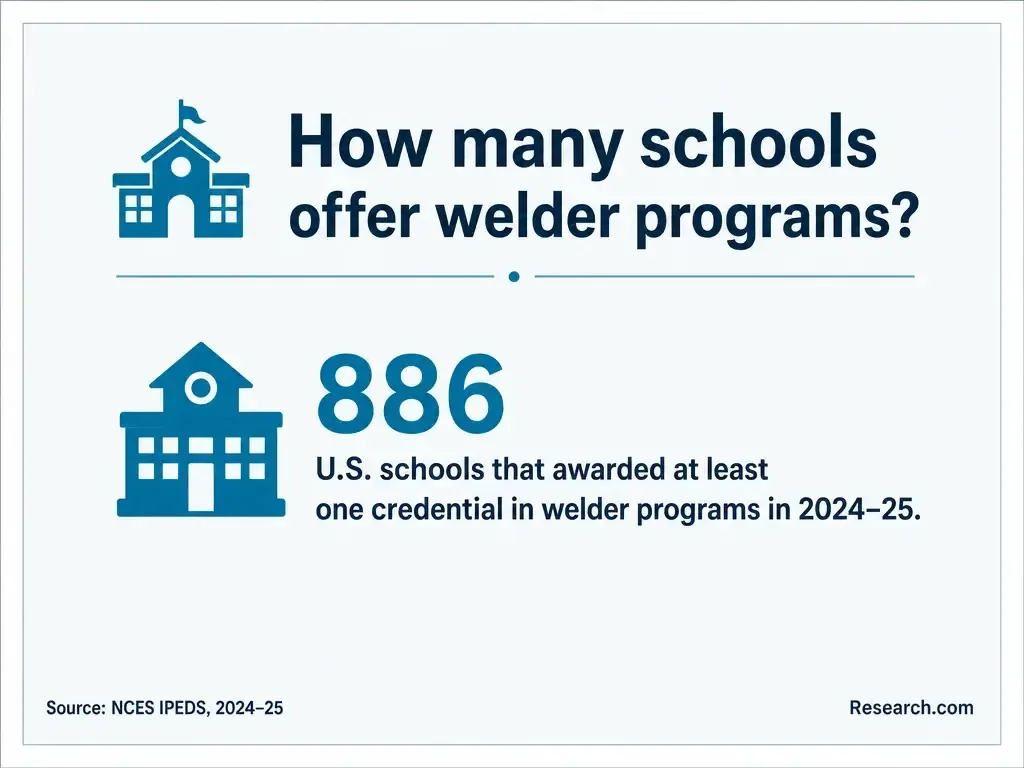
There is no defensible single Sierra Vista average without comparable, current prices for the available programs. Published tuition is only one part of the cost of becoming job-ready. Request a written estimate for your residency status and intended schedule, including mandatory fees, books, welding consumables, tools, helmet and other PPE, any testing charges, and trips to the training site.
For comparison, use each provider's total out-of-pocket cost after confirmed aid and add wages you expect to forgo while attending. Public-college residency rates, federal aid eligibility, scholarships, and workforce funding can change the result; verify eligibility rather than assuming aid will apply. Paid employer training or an apprenticeship may improve cash flow, although available positions and training content vary. A list of best affordable accredited online colleges cannot establish the cost of welding shop access.
The award depends on the pathway: a school may issue a certificate or another occupational credential; an apprenticeship may result in a completion credential; and an employer may document work-based training or a passed weld test. Confirm the exact award with the provider. A school certificate records completion of its curriculum - it does not, by itself, prove that you hold an American Welding Society (AWS) certification or have passed a prospective employer's procedure-specific test.
AWS Certified Welder testing evaluates performance against specified welding procedures and standards, rather than conferring a blanket qualification for every job (American Welding Society). If a school advertises certification preparation, ask which test is included, who pays the test fee, and whether you receive a separately verifiable result. Lists of certifications programs that pay well should not substitute for checking the credential named in local job postings.
Entry requirements vary by provider and pathway. A school may specify an application, prior educational documentation, placement steps, minimum age, and the ability to follow shop-safety rules. An employer or apprenticeship sponsor may instead use interviews, aptitude assessments, work-eligibility checks, or a skills demonstration. Request the current written requirements from Cochise County Community College District or the specific training sponsor; do not assume admission to a school also secures an apprenticeship position.
Before applying, ask whether evening or part-time attendance is available, whether PPE is required on the first day, and whether prior welding experience can count toward placement or advanced standing. Recognition of prior learning is provider-specific, so obtain any credit decision in writing before shortening your planned schedule.
A useful entry-level curriculum connects safety and measurement to repeated weld practice. Look for instruction in joint preparation, equipment settings, common welding processes, blueprint and welding-symbol interpretation, cutting, inspection, and identifying defects. The U.S. Bureau of Labor Statistics identifies these practical and technical skills as relevant to welding work.
Ask for a process-by-process outline and the amount of supervised booth time. A program emphasizing fabrication on flat plate may not be the best fit for someone targeting pipe work or a particular structural weld test. Shops also differ in equipment availability and how much material students can use for practice; those differences can matter more than similarly worded certificate titles.
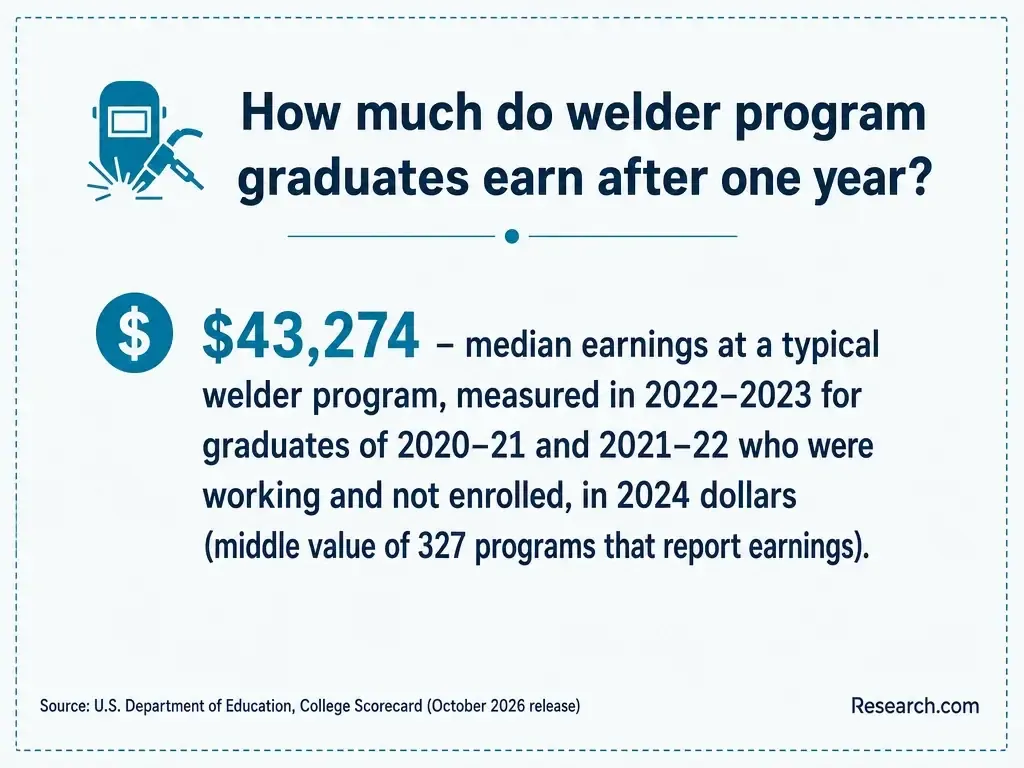
Arizona does not have a general occupational license that every employee must obtain simply to work as a welder. Employers can still require a weld test or qualifications for a particular process, position, material, or code. AWS certification is a separate, voluntary credential unless a specific employer or contract requires it; completion of a school program does not automatically award it (American Welding Society).
Working independently as a contractor is a different question. Arizona's Registrar of Contractors licenses qualifying construction-contracting businesses and sets requirements tied to the work performed; a welding certificate is not a substitute for a required contractor license (Arizona Registrar of Contractors). If self-employment is your goal, check the proposed work against the Registrar's license classifications before paying for training or taking jobs.
Start with the job you want, then work backward to the processes and tests it requires. The least expensive listed program is worth choosing only if you can attend its shop sessions, afford its full cost, and gain enough practice for the work you intend to pursue. Accreditation concerns an institution's recognized status; state school authorization, an industry credential, and an employer's weld qualification answer different questions. None should be assumed from the others.
Use these questions when speaking with a provider or apprenticeship sponsor:
A red flag is a provider promising a particular salary or implying that online lessons alone qualify you for welding work. Another is presenting institutional accreditation as proof that an employer will accept your welds. Searches for a quickest masters degree serve a different decision; for welding, prioritize demonstrable shop competence and realistic time to employment.
An entry-level welder may begin with shop fabrication, assembly, or repair, then build experience with additional processes, materials, positions, or code-based work. Some workers move toward pipe or structural welding, inspection, supervision, or contracting. These are progression options, not automatic outcomes of an introductory certificate. The U.S. Bureau of Labor Statistics notes that welders may train on the job and improve their skills through experience.
Match the pathway to the target role: a short school program can establish fundamentals for an entry test; an apprenticeship or employer training adds sustained worksite practice and may provide wages during training. Advanced inspection credentials and independent contracting have separate experience or regulatory considerations. In a smaller local market, flexibility to work across repair and fabrication tasks - or willingness to travel - may be more useful than specializing before confirming demand.
The U.S. Bureau of Labor Statistics projects 2.4% national employment growth from 2025 to 2035 for welders, cutters, solderers, and brazers. That indicates modest growth nationally, not a forecast for Sierra Vista or a guarantee of a vacancy when you finish training. Replacement needs and the mix of nearby employers can matter more to an individual job seeker than the national growth rate.
Before committing, inspect recent openings within your practical commuting area and note recurring process, shift, travel, and experience requirements. If few suitable entry-level roles appear, ask training providers about employer relationships and consider whether you are willing to seek work elsewhere in Arizona. That check helps distinguish a training program that is affordable on paper from one that fits your actual route into employment.
Investing in welding training is a consequential decision. Research.com designed this most-affordable ranking to compare programs with other reported programs in the same occupation and location, using consistent cost and debt measures rather than a school's advertised tuition alone. The team reviews data quality and comparability to make the ranking a useful starting point for an informed choice.
Most-affordable rankings evaluate tuition, cost of attendance, median student debt, and federal loan default rate. Indicator weights are assigned through an entropy-based method, which gives more weight to measures that differ more across programs. Accreditation, shop quality, and other quality indicators are not part of the affordability score. Only programs with completions reported to IPEDS are eligible; an apprenticeship, employer program, or other training provider absent from the ranking should not be assumed unavailable or inferior.
The ranking methodology draws on the following data sources. Some are relevant across Research.com's trade-program rankings but are not welding-specific endorsements or scoring factors in this most-affordable ranking:
Use the ranking to narrow your cost comparison, then confirm current prices, available welding processes, shop hours, and outcomes directly with each provider. Research.com explains its broader approach on its methodology page.
# 1 position
# 2 position
Compare the full price of a school program with available paid employer training or apprenticeships. Include PPE, materials, travel, and earnings lost during class; the lowest tuition may not produce the lowest total cost.
No online course can replace practicing and having welds assessed on appropriate equipment. Theory may be remote, but plan for in-person shop or worksite training.
A certificate documents program completion. An employer may also require a practical weld test, experience, or a qualification for its particular procedures.
There is no general statewide certification requirement for every employee welder. Particular employers and contracts may require documented qualifications or AWS certification.
It can be if its processes and shop hours match jobs you can pursue and its total cost fits your budget. Ask what practice and testing are included before choosing speed over depth.