2027 Well-Baby Nursery Nurse Workday: Patient Mix, Responsibilities, and Teamwork
Audited and Verified:
Our Editorial and Data Verification Process
Research.com uses government datasets, official education statistics and primary institutional information to support its career and degree guides. Our review process checks factual accuracy, occupational definitions, source dates and the requirements associated with the credentials discussed.
How This Article Was Fact-Checked
Our editorial team verifies salary estimates, employment projections, education requirements and program information against original data providers and official organizations. Salary figures are checked against the relevant occupational definitions and reporting periods. Information about licensure, accreditation and required in-person training is reviewed separately.
Fact-checked and verified on:

Co-Founder and Chief Data Scientist
Well-baby nursery nursing is easy to mistake for routine infant care. In practice, nurses must recognize when a newborn's condition is changing, coordinate time-sensitive screening and treatment, and help families prepare to care for their baby at home. For nursing students, new graduates, and RNs considering a move into newborn care, the workday matters as much as the job title.
This guide explains who these nurses care for, how shifts and teamwork work, and which education and onboarding choices can prepare you for the role.
Key Things You Should Know
- Well-baby nursery nurses care primarily for stable newborns, but a baby who appears well can still need prompt assessment and escalation.
- The usual pathway is an approved prelicensure nursing program, RN licensure, and employer-supervised newborn orientation—not an advanced nursing degree.
- For pay comparisons, the U.S. Bureau of Labor Statistics reported a $93,600 median annual wage for all registered nurses in May 2024; it does not publish a separate well-baby nursery median.
What does a well-baby nursery nurse do during a typical workday?
A well-baby nursery nurse is an RN who cares for newborns receiving routine hospital care after birth. Depending on the hospital, babies may spend much of their time in their parents' rooms, receive care in a centralized nursery, or move between the two. Some nurses have a newborn-only assignment; others work on a mother-baby unit and care for both the postpartum patient and infant. The assignment, staffing model, and newborn acuity determine what a shift actually feels like.
A shift typically begins with handoff: birth history, gestational age, feeding progress, screening status, medications or treatments already given, and any risks that require closer observation. Throughout the shift, the nurse assesses newborns, documents findings, supports feeding, follows ordered or protocol-based care, and teaches parents what to watch for at home. Before discharge, the nurse helps reconcile outstanding screenings, follow-up plans, and family questions. A birth, an unexpected assessment finding, or several discharges can quickly reorder those priorities.
The central skill is distinguishing an expected transition after birth from a change that needs evaluation. A nurse may notice a feeding concern, temperature instability, jaundice, or signs of breathing difficulty and promptly communicate findings through the hospital's escalation process. Newborn identification, medication safety, infection prevention, and clear documentation matter even when a shift seems quiet.
Job titles do not always describe the same scope. Some hospitals include LPNs/LVNs or nursing assistants on the newborn-care team under applicable state rules and employer policy; their responsibilities are not interchangeable with an RN's assessment and clinical judgment. Readers considering fast-track practical nursing application planning should first check whether local nursery openings accept LPN/LVN applicants or specifically require RNs.
What types of patients do well-baby nursery nurses care for?
The typical patient is a medically stable newborn during the birth hospitalization. "Well-baby" describes the care setting, not a promise that every infant will remain low risk. The table distinguishes common assignments from situations that may require more intensive evaluation or transfer:
| Newborn situation | Likely nursing focus | What determines placement? |
| Stable term newborn | Transition assessment, feeding support, routine screenings, family teaching, and discharge preparation | Hospital newborn-care criteria and the infant's ongoing condition |
| Stable infant with an identified risk | Additional observation or protocol-based monitoring, such as for feeding difficulties or a glucose risk factor | Local policy, orders, staffing, and whether the infant remains appropriate for well-baby care |
| Infant with concerning findings or higher-acuity needs | Prompt assessment, communication, and preparation for evaluation or transfer | Clinical decisions by the responsible team and the hospital's available level of care |
Late-preterm infants and babies with particular risk factors may remain with their families at some hospitals but receive care in a higher-acuity setting at others. A well-baby nurse therefore needs to know both what the unit can safely manage and how to escalate concerns. The nurse also works closely with parents or caregivers, although an infant-only assignment is not the same as being the parent's postpartum nurse.
This patient mix is distinct from psychiatric advanced practice. Someone whose main goal is diagnosing and treating mental health conditions would be considering a different role and preparation, such as fast-track mental health nursing graduate study, rather than a well-baby nursery position.
What education and nursing degree are required for well-baby nursery work?
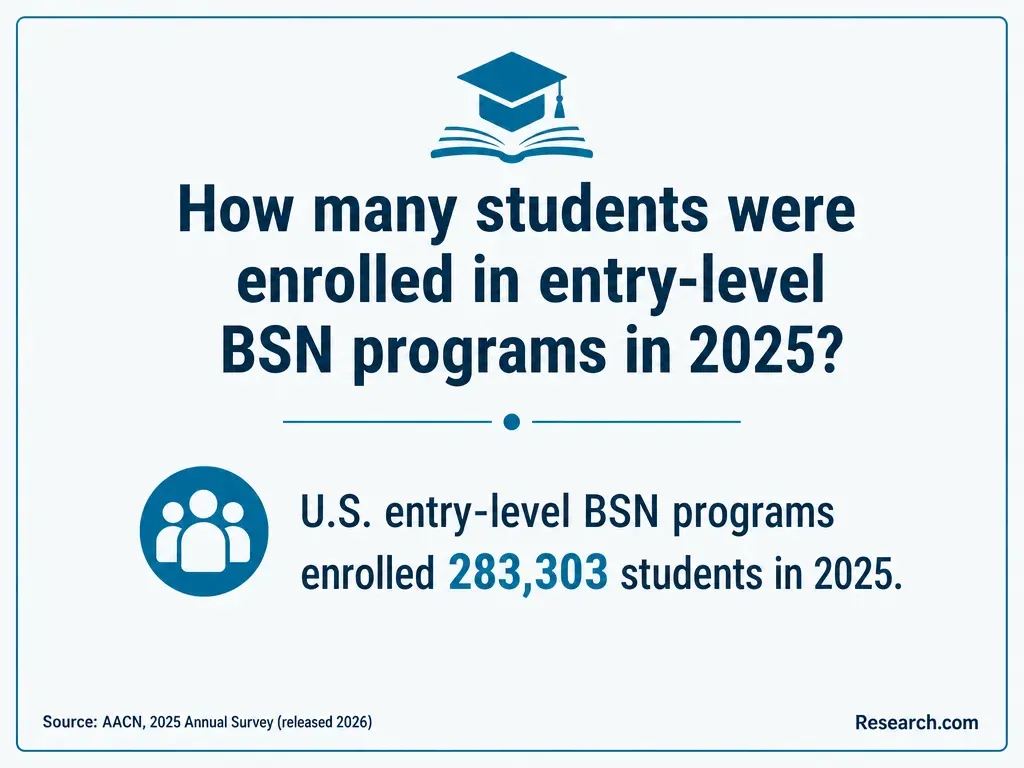
Well-baby nursery RN positions generally require graduation from an RN-qualifying nursing program and an active RN license. An associate degree in nursing or a prelicensure BSN can provide the educational route to initial RN licensure; individual employers may prefer or require a BSN. An RN-to-BSN program is for someone already licensed as an RN—it does not replace initial nursing preparation.
For a new graduate, the stronger job-fit question is whether the employer offers a structured transition into newborn care. Ask about the length and content of orientation, supervised patient assignments, competency checks, and access to an experienced nurse when an infant's condition changes. Prior postpartum, pediatric, or neonatal experience may help, but a degree alone does not establish independent nursery competence.
If you already hold a non-nursing bachelor's degree, an accelerated prelicensure BSN may be one route. Before comparing accelerated BSN applicant criteria, confirm that each program prepares graduates for initial RN licensure in your intended state and that you meet its actual science, lab, and other prerequisites. The fastest-looking program is not necessarily the best fit if its clinical schedule or costs are unworkable.
For an RN position, the sequence is to complete an eligible prelicensure nursing program, meet the intended state board of nursing's application requirements, pass the NCLEX-RN, and receive an RN license. Graduation and NCLEX passage are distinct from the board's decision to issue a license. The employer then verifies the license and determines whether the nurse has met its newborn-care onboarding requirements.
Check the state board's requirements and the nursing program's approval and licensure disclosures before enrolling, particularly if you plan to study or work across state lines. A nursing program's institutional or specialty accreditation is not itself permission to practice in a state. An RN license also does not authorize an RN to act as a nurse practitioner.
A licensed ADN-prepared RN can pursue further education later if a future role calls for it. ADN-to-MSN bridge programs are an academic advancement option, not a required licensing step for well-baby nursery nursing.
Prelicensure study in maternal-newborn nursing, pediatrics, health assessment, pharmacology, and clinical judgment provides a foundation. Relevant supervised experiences may include observing newborn transition, performing assessments under supervision, learning safe medication and screening workflows, supporting feeding, and practicing family education. Simulation can help students rehearse recognition and escalation, but it is not proof of independent bedside competence.
Clinical exposure varies by school and placement site. If newborn nursing is your goal, ask a program what maternal-newborn experiences students actually receive—not just whether the course appears in the catalog. After licensure, employer orientation should translate general nursing preparation into the hospital's newborn policies, equipment, documentation, and escalation pathways.
Do not confuse prelicensure clinical placement with arranging graduate advanced-practice preceptors. Resources about preceptor assistance in online family NP programs address a different educational stage and role; they do not tell you whether an RN program provides sufficient supervised newborn exposure.
The deciding factor is not whether lectures are online. It is whether a program offers an eligible route to RN licensure, accessible supervised clinical placements, required hands-on learning, and a schedule you can complete. Prelicensure programs advertised as online still require in-person clinical care and may require on-site labs or simulation. Campus-based programs also depend on clinical-site availability; neither format guarantees a nursery placement.
Compare the programs you can realistically attend at clinical locations, who arranges placements, travel and attendance requirements, program approval for your state, and the total cost of participation. For working students or caregivers, an asynchronous lecture does not make a fixed early-morning clinical shift flexible. Ask for a sample term schedule and written placement policies before making a deposit.
Post-licensure online study serves a different decision. For example, FNP completion timelines and entry requirements concern preparation for an advanced-practice role, not a quicker way to gain the hands-on RN preparation needed for a nursery job.
Employers may require newborn resuscitation training, commonly through the Neonatal Resuscitation Program, and may assign other training related to infant feeding, screening, or the unit's patient mix. Check the posting and ask when credentials must be held: before application, by the start date, or during orientation. Course completion and employer competency validation are not the same as an RN license or a specialty board certification.
Experienced newborn nurses may consider a specialty credential such as the National Certification Corporation's Low Risk Neonatal Nursing certification if they meet its current eligibility requirements. It may demonstrate focused knowledge, but it does not replace orientation or expand legal scope. Verify the certifying organization's current practice, examination, and renewal rules before paying to apply.
Choose credentials for the role you want. Time-efficient PMHNP certificate pathways prepare eligible nurses for a different advanced practice population focus; they are not nursery specialty certifications.
Newborn care depends on timely exchanges among the bedside RN, postpartum nurses, obstetric and pediatric clinicians, lactation staff, laboratory and screening personnel, and, when needed, a neonatal or higher acuity team. The nursery nurse contributes the infant's assessment findings, feeding and elimination history, screening status, and the family's concerns. The responsible clinicians determine medical evaluation and treatment; nurses carry out care within their scope, orders, and hospital protocols.
Coordination is especially important at discharge. A completed screening is not enough if a result needs follow-up, a feeding plan is unclear, or the family has not understood when to seek help. On a mother-baby unit, nurses also need a clear handoff about which clinician or nurse is responsible for each member of the parent-infant pair.
Families may later receive care from primary care clinicians, including family nurse practitioners. Planning a shorter post-master's FNP pathway is relevant to an eligible nurse seeking that separate provider role, not to the RN-to-RN teamwork skills that make nursery handoffs safe.
The U.S. Bureau of Labor Statistics does not report a separate wage for well-baby nursery nurses. Its May 2024 median annual wage of $93,600 covers registered nurses across specialties, experience levels, regions, and settings. Use it as broad occupational context, not as a predicted nursery offer. When comparing actual jobs, examine base pay alongside shift differentials, weekend requirements, benefits, orientation support, and whether the assignment includes postpartum patients.
Experienced nurses may grow into precepting, staff education, quality improvement, charge responsibilities, or leadership, subject to employer requirements. Some move into higher-acuity neonatal care, which calls for additional orientation and competency development; others pursue graduate study for a distinctly different role. If management is the goal, leadership DNP education after a nursing master's is one possible later academic option, not a prerequisite for caring for newborns or an automatic promotion.
What is the job outlook for nurses specializing in newborn care?
BLS projects employment of registered nurses to grow 5% from 2024 to 2034. That projection covers the entire RN occupation; it does not forecast the number of well-baby nursery openings. Local birth volume, hospital service lines, staffing models, and internal hiring can make nursery opportunities more limited—or more available—than the national RN trend suggests.
For a practical job search, compare recent postings at hospitals where you could work. Note whether openings are newborn-only or mother-baby, accept new graduates, require prior experience, and offer a residency or structured orientation. These details are more useful for judging your near-term chances than a national growth percentage alone.
Additional education should follow a specific career goal rather than an assumption that the job market requires it. Exploring attainable DNP entry requirements may make sense for an RN planning a qualifying advanced role or doctoral leadership education; a DNP is not needed to enter well-baby nursery nursing.
Other Things You Should Know About Nursing
It can be. Nurses support families who may be exhausted or worried, and they must respond calmly when a newborn needs urgent evaluation. Ask prospective employers what support is available after difficult events.
Some hospitals permit an approved observation experience, while others restrict it for privacy or safety reasons. Ask a recruiter or unit manager about formal shadowing rather than arranging an informal visit.
Ask what a typical assignment includes, how often nurses care for both parent and infant, how new hires progress through orientation, and who helps when an infant's condition changes.
They may be, but availability is employer-specific. Hospitals need newborn coverage around the clock, and a new hire's orientation schedule may differ from the eventual position. Confirm both schedules before accepting an offer.
- Routine Newborn Care - StatPearls - NCBI Bookshelf https://www.ncbi.nlm.nih.gov/books/NBK539900/
- Scoping Review of Postpartum Discharge Education Provided by Nurses - PMC https://pmc.ncbi.nlm.nih.gov/articles/PMC9257451/
- Strategy 3: Nurse Bedside Shift Report | Agency for Healthcare Research and Quality https://www.ahrq.gov/patient-safety/patients-families/engagingfamilies/strategy3/index.html
- Roles and Responsibilities | Newborn Nursery https://med.stanford.edu/newborns/clinical-rotations/students/students-roles-and-responsibilities.html
- Care of the Baby in the Delivery Room | chop.edu https://www.chop.edu/conditions-diseases/care-baby-delivery-room
- Types of Nurses That Work with Babies | cui.edu https://www.cui.edu/types-of-nurses-that-work-with-babies/
- Staffing Standards Executive Summary | awhonn.org https://awhonn.org/resources-and-information/published-resources/staffing-exec-summary/
- Levels of medical care for your newborn | March of Dimes https://www.marchofdimes.org/find-support/topics/parenthood/levels-medical-care-your-newborn
- Updates on an At-Risk Population: Late-Preterm and Early-Term Infants | Pediatrics | American Academy of Pediatrics https://publications.aap.org/pediatrics/article/144/5/e20192760/38233/Updates-on-an-At-Risk-Population-Late-Preterm-and