
Most Affordable Veterinary Assistant Schools & Training - Budget-Friendly Veterinary Assistant Trade Programs in California for 2026

Co-Founder and Chief Data Scientist
Choosing the right veterinary assistant trade school in California can feel overwhelming. That’s why this article offers a helpful ranking of veterinary assistant trade school programs, carefully developed by the Research.com team of data scientists.
By exploring these top programs, you’ll gain clear insights to make an informed decision about your education. Earning a diploma or certification in this field opens doors to a rewarding career working with animals and supporting veterinarians.
Whether you’re just starting out or changing paths, this guide makes it easier to find affordable, quality programs that match your goals.
Key benefits of finishing veterinary assistant trade school in California
- Graduates from veterinary assistant trade schools in California can expect an average hourly wage between $17 and $24, with annual salaries typically ranging from $30,000 to $50,000, offering a rewarding start in the field.
- Career paths for graduates often include roles in animal hospitals, clinics, or shelters, with many finding success and growth by gaining hands-on experience right after completing their program.
- Completing a veterinary assistant trade school online provides flexibility and convenience, allowing students to balance studies with personal commitments while still gaining practical skills, as shared by many successful online graduates.
What can I expect from veterinary assistant trade schools in California?
Enrolling in a veterinary assistant trade school program in California means diving into a dynamic blend of classroom learning and hands-on experience. Graduates from schools like Cosumnes River College often share how their schedules balanced in-person labs with online coursework, allowing them to manage family or work commitments smoothly. Expect to study animal anatomy, clinical lab techniques, and veterinary office procedures, gaining practical skills that feel immediately relevant.
Many programs include a crucial externship, typically around 180 hours at a local veterinary clinic or hospital. Students recall the excitement of real-world practice, from assisting with small and large animals to mastering pharmacy tasks, which builds confidence for future roles. The flexible formats, including accelerated online options from institutions such as SDSU Global Campus, appeal to those eager to enter the workforce quickly without sacrificing quality.
Certification opportunities through the California Veterinary Medical Association add another layer of achievement, enhancing job prospects and professional growth. Overall, students appreciate the supportive environment and the chance to develop both technical skills and client communication in settings that feel practical and rewarding.
Where can I work after finishing veterinary assistant trade schools in California?
After finishing a veterinary assistant trade school program in California, graduates often find themselves working in lively animal hospitals, busy private veterinary clinics, or welcoming pet hospitals. Many graduates from well-known California trade schools share how they quickly adapted to hands-on roles supporting veterinarians by preparing treatment areas, caring for animals, and managing patient records. Large chains like Banfield Pet Hospital and VCA Animal Hospitals offer steady opportunities, especially for those eager to grow their skills in fast-paced environments.
Others discover rewarding roles in animal shelters or spay/neuter clinics, where they assist with surgeries and provide essential post-operative care. Graduates commonly describe the satisfaction of helping shelter animals heal and find new homes. Some even pursue work in specialty hospitals' critical care units, gaining experience in emergency patient support.
Many graduates emphasize that completing a NAVTA-approved program from a California trade school boosts their confidence and employability, opening doors to diverse positions, including front office roles that blend administrative work with animal care.
How much can I make after finishing veterinary assistant trade schools in California?
After completing a veterinary assistant trade school program in California, graduates often find themselves earning between $36,310 and $37,944 annually, with hourly wages typically around $17 to $18. Some graduates report earning as much as $23.15 per hour, especially in more competitive urban areas. For example, those who trained at popular California trade schools frequently share experiences of quickly landing positions in Los Angeles clinics, where hourly rates can range from $22 to $30 depending on experience and clinic size.
Many graduates feel encouraged by starting salaries around $29,520, which tend to increase steadily with on-the-job experience. The sense of accomplishment from applying hands-on skills learned during their training-whether in private practices, animal hospitals, or shelters-often motivates them to advance faster.
California's higher wage landscape for veterinary assistants compared to other states adds to the excitement of entering this field, providing a hopeful outlook for those eager to combine passion with a stable income right after trade school.
Most Affordable Veterinary Assistant Schools & Training - Budget-Friendly Veterinary Assistant Trade Programs in California for 2026
# 1 position
San Diego Mesa College - Veterinary/Animal Health Technology/Technician and Veterinary Assistant.
associateSan Diego Mesa College offers a Veterinary/Animal Health Technology/Technician and Veterinary Assistant program that prepares students to assist veterinarians and animal health professionals with patient care, clinical procedures, and owner communication. The curriculum covers animal nursing, health, nutrition, clinical pathology, radiology, anesthesiology, surgical assisting, and office administration. The program’s in-state tuition is $1,150 annually and is accredited by the Western Association of Schools and Colleges Accrediting Commission for Community and Junior Colleges.
# 2 position
Ventura College - Veterinary/Animal Health Technology/Technician and Veterinary Assistant.
associateVentura College offers a program in Veterinary/Animal Health Technology/Technician and Veterinary Assistant that trains students to assist veterinarians and animal specialists with patient care, clinical procedures, and owner communication. The curriculum covers animal nursing, health, nutrition, clinical pathology, radiology, anesthesiology, surgical assisting, and office administration. The program is accredited by the Western Association of Schools and Colleges Accrediting Commission for Community and Junior Colleges. Annual in-state tuition is $1,416.
# 3 position
Ventura College - Veterinary/Animal Health Technology/Technician and Veterinary Assistant.
certificate or diplomaVentura College offers a program in Veterinary/Animal Health Technology/Technician and Veterinary Assistant that prepares individuals to assist veterinarians and other animal care professionals. The curriculum covers animal nursing care, clinical procedures, radiology, anesthesiology, surgical assisting, and office administration. The program is accredited by the Western Association of Schools and Colleges Accrediting Commission for Community and Junior Colleges. Annual in-state tuition is $1,416.
# 4 position
Yuba College - Veterinary/Animal Health Technology/Technician and Veterinary Assistant.
associateYuba College offers a program in Veterinary/Animal Health Technology/Technician and Veterinary Assistant that prepares students to assist veterinarians and animal specialists in patient care and clinical procedures. The curriculum includes animal nursing, health, nutrition, clinical pathology, radiology, anesthesiology, dental prophylaxis, surgical assisting, and office administration. The program is accredited by the Western Association of Schools and Colleges Accrediting Commission for Community and Junior Colleges. Annual in-state tuition is $1,128.
# 5 position
Yuba College - Veterinary/Animal Health Technology/Technician and Veterinary Assistant.
certificate or diplomaYuba College offers a program in Veterinary/Animal Health Technology/Technician and Veterinary Assistant, preparing students to assist veterinarians and animal specialists in patient care and clinical procedures. The curriculum covers animal nursing, health, nutrition, handling, clinical pathology, radiology, anesthesiology, dental prophylaxis, surgical assistance, laboratory procedures, office skills, and regulatory standards. The program is accredited by the Western Association of Schools and Colleges Accrediting Commission for Community and Junior Colleges. Annual in-state tuition is $1,128.
# 6 position
Modesto Junior College - Veterinary/Animal Health Technology/Technician and Veterinary Assistant.
associateModesto Junior College offers a program in Veterinary/Animal Health Technology/Technician and Veterinary Assistant that prepares students to assist veterinarians and animal health professionals in patient care and clinical procedures. The curriculum covers animal nursing, clinical pathology, radiology, anesthesiology, dental prophylaxis, surgical assisting, and office administration. The program is accredited by the Western Association of Schools and Colleges Accrediting Commission for Community and Junior Colleges. Annual in-state tuition is $1,270.
# 7 position
Modesto Junior College - Veterinary/Animal Health Technology/Technician and Veterinary Assistant.
certificate or diplomaModesto Junior College offers a program in Veterinary/Animal Health Technology/Technician and Veterinary Assistant that prepares students to assist veterinarians and animal health professionals with patient care, clinical procedures, and owner communication. The curriculum includes animal nursing, clinical pathology, radiology, anesthesiology, surgical assisting, and office administration. The program is accredited by the Western Association of Schools and Colleges Accrediting Commission for Community and Junior Colleges. Annual in-state tuition is $1,270.
# 8 position
Stellar Career College - Veterinary/Animal Health Technology/Technician and Veterinary Assistant.
certificate or diplomaStellar Career College offers a program in Veterinary/Animal Health Technology/Technician and Veterinary Assistant that trains students to assist veterinarians and animal health professionals in patient care, clinical procedures, and owner communication. The curriculum covers animal nursing, health, nutrition, clinical pathology, radiology, anesthesiology, and office administration. The program is accredited by the Accrediting Commission of Career Schools and Colleges.
# 9 position
Mt San Antonio College - Veterinary/Animal Health Technology/Technician and Veterinary Assistant.
associateMt San Antonio College offers a Veterinary/Animal Health Technology/Technician and Veterinary Assistant program that trains students to assist veterinarians and animal health professionals in patient care and clinical procedures. The curriculum covers animal nursing, health, nutrition, handling, clinical pathology, radiology, anesthesiology, dental prophylaxis, surgical assistance, laboratory procedures, and office administration. The program is accredited by the Western Association of Schools and Colleges Accrediting Commission for Community and Junior Colleges. Annual in-state tuition is $1,364.
# 10 position
Central Coast College - Veterinary/Animal Health Technology/Technician and Veterinary Assistant.
associateCentral Coast College offers a Veterinary/Animal Health Technology/Technician and Veterinary Assistant program that trains students in patient management, clinical procedures assistance, and owner communication under professional supervision. The curriculum covers animal nursing, health, nutrition, handling, clinical pathology, radiology, anesthesiology, dental prophylaxis, surgical assisting, laboratory procedures, office administration, and relevant regulations. The program is accredited by the Accrediting Council for Continuing Education & Training.
Key Findings
- Most veterinary assistant programs in California require a high school diploma or GED as a minimum educational prerequisite.
- Programs typically last 9 to 12 months and include both classroom instruction and hands-on externships in veterinary clinics.
- Tuition costs range from $2,000 to $10,000, varying by institution and program length.
- Voluntary certifications like the Certified Veterinary Assistant (CVA) and Approved Veterinary Assistant (AVA) are available to improve job prospects.
- Starting salaries for veterinary assistants in California range from $37,000 to $40,000 per year, with experienced workers earning $44,000 or more.
How long does it take to complete veterinary assistant trade schools in California?
Completing a veterinary assistant trade school program in California typically takes about 6 to 12 months, depending on the school and whether you attend full-time or part-time. Many graduates from well-known California trade schools share how this timeframe felt just right to balance hands-on learning with their personal lives. One common experience involves diving quickly into real-world scenarios like assisting with animal exams or learning proper handling techniques, which builds confidence early on.
Students often describe the fast-paced schedule as energizing, fueling their passion for animal care while preparing them efficiently for the workforce. For example, attending a program in Southern California means you might spend weekends at local clinics or shelters, gaining vital experience that feels immediately rewarding.
The compact length of these programs allows you to start your career sooner without sacrificing the quality of education. Many graduates highlight feeling well-prepared and excited to enter the veterinary field, appreciating how California trade schools focus on practical skills within this manageable timeframe.
What's the difference between online and on-campus veterinary assistant trade school programs?
The main difference between online and on-campus veterinary assistant trade school programs in California lies in how and where students engage with their studies. Graduates from online programs like those offered by SDSU Global Campus often appreciate the freedom to learn at their own pace, fitting coursework around busy schedules without the stress of daily commuting. One graduate described completing anatomy modules late at night after work, highlighting the flexibility that helped balance family and career goals.
Conversely, students attending on-campus programs experience hands-on learning firsthand, with immediate access to instructors and real animals during labs. A recent graduate from a California State University campus shared how in-person clinical rotations fostered confidence and practical skills through direct mentorship and peer collaboration. This immersive environment suits those who thrive on structured guidance and active engagement.
Despite differing formats, both online and on-campus routes often require local externships, ensuring students gain real-world experience necessary for certification and employment in California's veterinary field.
What is the average cost of veterinary assistant trade schools in California?
The average cost of veterinary assistant programs in California varies significantly depending on the institution and format, but prospective students often find the investment worthwhile. Trade schools like California Healing Arts College in Carson charge roughly $16,910 per academic year for an 8-month certificate program, reflecting a comprehensive, hands-on approach that many graduates praise for its career readiness. Others who attend Central Coast College in Salinas report tuition fees around $12,800 for a 9-month certificate, highlighting a balance between affordability and quality training.
Many students explore tuition fees for veterinary assistant schools in California at community colleges or online programs to manage costs while still gaining valuable skills. Yuba College, for example, offers a free online program to California residents, with fees for materials and other expenses ranging from $1,128 to $7,488, making it an exciting, budget-friendly option for those seeking flexibility. Similarly, online programs like Penn Foster College provide affordable tuition between $799 and $1,089 for a 12-month timeline, allowing students to study at their own pace without sacrificing quality.
Graduates often reflect on additional expenses such as books, uniforms, and certification fees, which can add a few hundred dollars but are seen as reasonable investments in their professional futures. Those aiming for certification like the AVA find this credential enhances job prospects, despite California not requiring certification to work. For students serious about both affordability and accreditation, exploring low cost online veterinary technician programs may provide a forward-thinking route to entering the field without overwhelming financial burdens.

What financial aid is available for veterinary assistant trade schools in California?
Veterinary assistant students in California often find relief through a variety of financial aid options that make their education feel more attainable. Graduates from schools like Central Coast College and Platt College frequently share how federal aid, such as Pell Grants and Federal Work-Study programs, helped ease their tuition burden. These grants don't require repayment, which brings a sense of security to those juggling work and study.
California's state aid programs add another layer of support. For instance, many students have benefited from the Cal Grant, which is tailored to residents attending trade schools, and the California Chafee Grant, offering up to $5,000 annually to foster youth pursuing technical education. This kind of targeted assistance often makes a real difference in students' ability to stay enrolled and focused.
Institutional scholarships and payment plans also play a key role. Graduates from veterinary assistant programs report that scholarships like the $1,000 award from Golden Meadows provide both financial help and motivation. Meanwhile, financial aid offices at these schools guide students through complex applications, often turning what feels like a daunting process into a manageable, hopeful journey.
What are the prerequisites for enrolling in veterinary assistant trade schools in California?
Enrolling in a veterinary assistant trade school program in California usually requires a few straightforward prerequisites, making the path accessible for many eager learners. Most schools expect applicants to have a high school diploma or equivalent, ensuring a basic academic foundation. Some programs may also ask for a minimum age, typically 18 years, aligning with hands-on training regulations.
Graduates often share that having a genuine passion for animals and some prior experience, such as volunteering at shelters or clinics, can really boost confidence and preparedness. Popular trade schools in California emphasize practical skills, so these experiences help students feel ready to dive into clinical settings.
Typical prerequisites in California veterinary assistant trade schools include:
- High school diploma or GED
- Minimum age of 18 years
- Proof of immunizations, including rabies and tetanus shots
- Basic background check for safety and compliance
- Some programs recommend prior animal care experience
One graduate from a well-known California trade school recalled how meeting these requirements was a motivating step, transforming their dream of working with animals into a concrete career plan. These prerequisites ensure students start with a solid base, ready to thrive in hands-on veterinary environments.
What are the typical courses in veterinary assistant trade schools in California?
Veterinary assistant trade school programs in California typically include a dynamic range of courses designed to build both knowledge and hands-on skills. Graduates often recall the excitement of mastering animal anatomy and physiology, where understanding the musculoskeletal and circulatory systems felt like unlocking the secrets of their furry patients' bodies.
Popular trade schools emphasize practical skills through courses such as:
- Veterinary medical terminology for clear communication in busy clinics
- Small-animal behavior and restraint techniques to safely handle pets during exams
- Laboratory procedures and diagnostic imaging, enabling students to assist with sample collection and operate imaging equipment
- Surgical assisting, hospital safety, and infection control to confidently support veterinarians during procedures
- Pharmacy procedures and inventory management to manage medications and supplies efficiently
- Veterinary dentistry, nursing procedures, and emergency first aid for comprehensive patient care
Many students appreciate the real-world learning through a 180-hour practical externship at local veterinary clinics, where classroom knowledge translates into rewarding experiences. Graduates describe feeling prepared and empowered, ready to thrive in California's veterinary care environments.
What are the available specializations in veterinary assistant trade schools in California?
Veterinary assistant trade school programs in California often provide specialized training to meet the demands of different veterinary fields. Graduates from popular trade schools share how choosing a focus like Small Animal Care allowed them to thrive working with household pets, while others specialized in Large Animal Care, gaining hands-on experience with livestock and farm animals. Those passionate about less common areas find fulfillment in Exotic Animal Care, working with reptiles, birds, or exotic mammals.
Some programs also emphasize Laboratory Animal Care, preparing students for roles that involve research and clinical testing environments. Meanwhile, a focus on Veterinary Office Administration supports those who excel in organization and client interaction, balancing clinical knowledge with administrative skills.
Many graduates appreciate how such focused training enhances their readiness for the veterinary field, making everyday tasks-from handling animals to managing records-feel purposeful and engaging. For students eager to explore these pathways in depth, there are accessible 2 year healthcare programs that can accelerate their journey toward becoming skilled veterinary assistants in California.
How do you choose the best veterinary assistant trade school program in California?
Choosing the best veterinary assistant trade schools in California often starts with considering accreditation and hands-on training. Graduates from programs like Central Coast College highlight the confidence gained from completing an AVMA-CVTEA accredited curriculum, which ensures industry-standard preparation. Many students appreciate programs such as those at Integrity College of Health, where flexible scheduling and externships help balance busy lives while gaining real-world veterinary experience.
Affordability plays a crucial role, too, as many look for affordable veterinary assistant programs in California without sacrificing quality. For example, California Healing Arts College offers financial aid options, making education more accessible for those pursuing their passion. Students sharing their journeys often mention how proximity, supportive facilities, and practical learning environments contribute significantly to their success.
While California does not require certification for veterinary assistants, pursuing credentials like the CVA can elevate job prospects. Understanding the pathways aligned with your goals is key, and exploring what fits your timeline and lifestyle is essential. For those considering a long-term veterinary career, investigating the veterinarian education needed can provide clarity on next steps beyond assistant training.
What career paths are available for veterinary assistant trade school graduates in California?
Graduates of veterinary assistant trade school programs in California often find rewarding opportunities in various entry-level roles, such as assisting veterinarians in private clinics, animal hospitals, and emergency care centers. These positions typically involve hands-on duties like helping with animal exams, administering medications, and supporting daily clinic operations. Many graduates from popular California trade schools share how their training empowered them to confidently contribute to animal care teams from day one.
Beyond direct care, career paths extend to laboratory animal caretaker roles at research institutions and universities, allowing graduates to help maintain animal welfare in scientific studies. Animal shelters and boarding facilities also seek skilled veterinary assistants to manage daily care like feeding, bathing, and monitoring animals' well-being. These roles offer real, meaningful ways to impact animal lives and develop practical skills.
For those eager to advance, exploring veterinary technician advancement paths California offers a clear route forward. Graduates often pursue Registered Veterinary Technician credentials, building on their foundation to achieve higher licenses and increased responsibilities. These career opportunities feel attainable and rewarding, especially as many programs complete in under a year.
The veterinary assistant role can also open doors in education and research sectors, providing chances to instruct new students or support clinical trials. Graduates frequently report excitement at finding their niche within California's vibrant animal care community. With median wages near $38,000 and a variety of workplaces, including clinics and shelters, prospects look promising for those seeking high-impact, high paying easy to learn trades.
What is the job market for veterinary assistant trade school graduates in California?
Veterinary assistant trade school graduates in California often find a steady but competitive job market. Many report that completing a hands-on program at popular trade schools equips them for roles in veterinary clinics, shelters, and research facilities across urban centers like Los Angeles and San Diego. The veterinary assistant job outlook California is influenced by regional demand and seasonal hiring patterns, which some graduates describe as a mix of rewarding challenges and opportunities to grow quickly in the field.
Graduates highlight key factors contributing to their success:
- Practical skills gained through internships and externships boosted confidence and employability.
- Employers' preference for candidates with formal certification programs helps graduates stand out.
- Exposure to diverse animal care environments in training programs aids adaptability.
While some express that the veterinary assistant employment opportunities California can feel limited during off-peak hiring times, many acknowledge the advantage of California's large pet-owning population and the concentration of animal care centers. For those weighing education options, understanding the difference between trade school and vocational programs can clarify which pathway aligns best with career goals in this evolving market.
Frequently Asked Questions about veterinary assistant
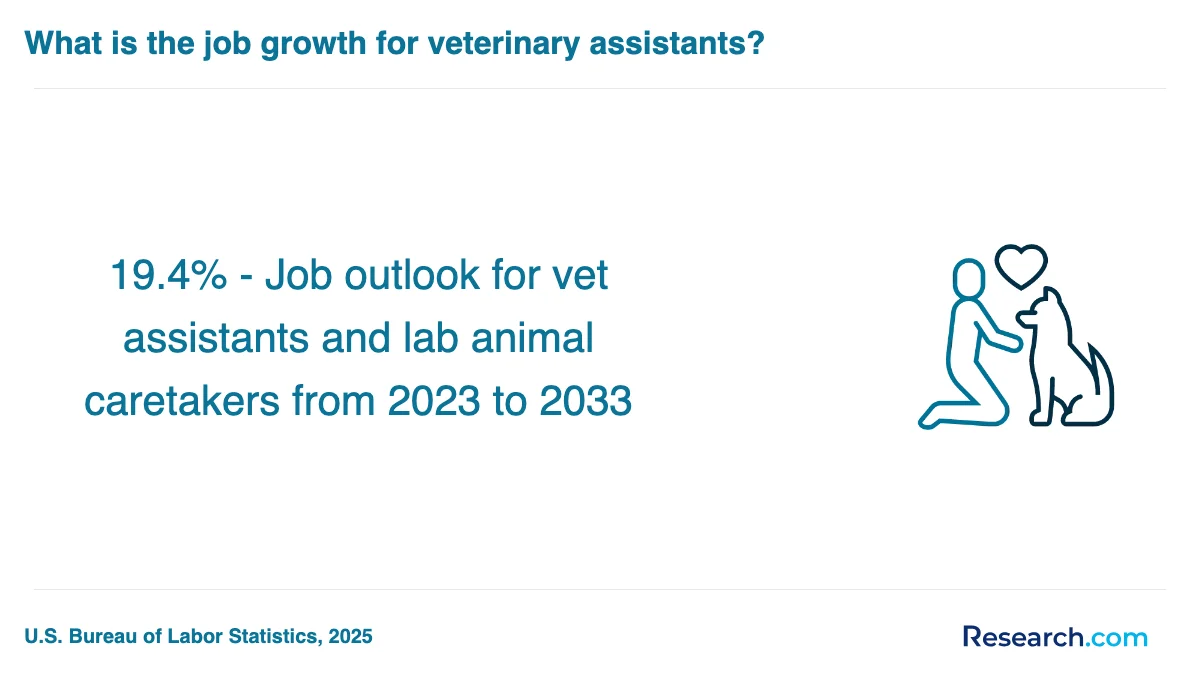
After completing a veterinary assistant trade school in California, graduates should focus on building practical experience and professional connections. Many employers prefer candidates who have completed externships or internships during their training, so gaining hands-on experience is crucial. According to the California Employment Development Department, the veterinary assistant field is expected to grow by 14% between 2022 and 2032, making timely job preparation important.
Graduates should also consider obtaining certification through organizations like the National Association of Veterinary Technicians in America, which can improve employability. Networking at local veterinary clinics and attending industry events can further increase job prospects.
Employers in California value veterinary assistant graduates who demonstrate strong animal handling skills combined with basic medical knowledge. According to the California Employment Development Department, proficiency in assisting with examinations, administering medications, and performing laboratory procedures ranks highly among sought-after skills.
Communication abilities are also critical, as veterinary assistants often interact with pet owners and veterinary staff. Being able to clearly explain instructions and show empathy improves client satisfaction and workplace efficiency.
Time management and organizational skills help graduates handle multiple tasks in busy clinics. Familiarity with electronic medical records systems is increasingly important, reflecting the digitization trend in veterinary practices.
Finally, employers look for graduates who understand California's animal welfare regulations to ensure compliance and safety. These combined skills prepare graduates to meet the practical demands of veterinary assistant roles effectively.
Finding internships in California relevant to veterinary assistant trade school programs involves a strategic approach. Start by contacting your trade school's career services, as many schools have partnerships with local veterinary clinics and animal hospitals that offer internships.
Additionally, the California Veterinary Medical Association (CVMA) provides resources and listings for internship opportunities statewide. According to CVMA data, over 70% of veterinary assistant internships in California are offered through private clinics in urban areas like Los Angeles and San Francisco.
Networking is also vital. Attend local veterinary job fairs and connect with professionals via platforms like LinkedIn to discover unadvertised internships.
Obtaining a veterinary assistant trade school diploma in California significantly enhances career mobility and advancement opportunities. The California Employment Development Department indicates that veterinary assistants with formal training generally earn higher starting wages compared to those without credentials. A diploma demonstrates practical skills and knowledge, making graduates more competitive for entry-level positions in veterinary clinics, animal hospitals, and shelters.
Additionally, many California employers prefer or require candidates with accredited diplomas, which can lead to faster promotions and access to specialized roles. The diploma also serves as a foundation for further education, such as veterinary technician programs, supporting long-term career growth.
According to the Bureau of Labor Statistics, veterinary assistant roles in California are projected to grow by 16% through 2030, reflecting strong demand and opportunities for diploma holders.
Part-time job opportunities in California can greatly enhance the education of students enrolled in veterinary assistant trade schools. Common roles include veterinary receptionist, kennel assistant, and animal care technician. These positions provide practical experience with animal handling, client communication, and clinic operations.
According to the U.S. Bureau of Labor Statistics (BLS), California employs over 20,000 veterinary assistants and animal care workers, with a median hourly wage around $14.50 as of 2023. Working part-time in clinics or animal shelters allows students to apply classroom knowledge in real-world settings while building professional networks.
Additionally, internships or volunteer roles at animal hospitals or rescue organizations are valuable for skill development and resume building. These experiences support both academic success and future job prospects in California's growing veterinary field.
Yes, there are affordable Veterinary Assistant degree programs available near you in California. Many community colleges and vocational schools provide programs that are typically shorter in duration and more cost-effective than traditional universities. To find a program near me, one can research options such as Foothill College in Los Altos Hills or Pierce College near California for a comprehensive and budget-friendly education in the field.
Related Veterinary Assistant Rankings for Nearby States
- Most Affordable Veterinary Assistant Schools & Training - Budget-Friendly Veterinary Assistant Trade Programs in Nevada for 2026
- Most Affordable Veterinary Assistant Schools & Training - Budget-Friendly Veterinary Assistant Trade Programs in Oregon for 2026
- Most Affordable Veterinary Assistant Schools & Training - Budget-Friendly Veterinary Assistant Trade Programs in Arizona for 2026
- Most Affordable Veterinary Assistant Schools & Training - Budget-Friendly Veterinary Assistant Trade Programs in Washington for 2026
- Most Affordable Veterinary Assistant Schools & Training - Budget-Friendly Veterinary Assistant Trade Programs in New Mexico for 2026
- Most Affordable Veterinary Assistant Schools & Training - Budget-Friendly Veterinary Assistant Trade Programs in Colorado for 2026
- Most Affordable Veterinary Assistant Schools & Training - Budget-Friendly Veterinary Assistant Trade Programs in Montana for 2026
- Most Affordable Veterinary Assistant Schools & Training - Budget-Friendly Veterinary Assistant Trade Programs in Wyoming for 2026
- Most Affordable Veterinary Assistant Schools & Training - Budget-Friendly Veterinary Assistant Trade Programs in Hawaii for 2026
- Most Affordable Veterinary Assistant Schools & Training - Budget-Friendly Veterinary Assistant Trade Programs in Minnesota for 2026
Top Trending Rankings
References
- Veterinary Assistant https://www.cpp.edu/cpge/professional-development/online-learning/career-training/vet-assistant.shtml
- Veterinary Assistant Program Benefits of Choosing This Path - San Joaquin Valley College https://www.sjvc.edu/program/veterinary-assistant/
- Veterinary Assistant Certificate - Blended Learning School https://chartercollege.edu/programs/veterinary/veterinary-assistant-training/
- Online Veterinary Assistant from California State University - San Bernardino https://careertraining.csusb.edu/training-programs/veterinary-assistant/
- Online Veterinary Assistant from California State University - Fullerton https://careertraining.fullerton.edu/training-programs/veterinary-assistant/
- Learn About Central Coast College’s Veterinary Assistant (VA) Program - Central Coast College https://centralcoastcollege.edu/2023/10/05/learn-about-central-coast-colleges-veterinary-assistant-va-program/
- How to Become an Vet Assistant in CA https://www.best-trade-schools.net/locations/california/vet-assistant-in-ca/
- Veterinary Assistant - California Healing Arts College https://www.chac.edu/veterinary-assistant-program/
- Best Veterinary Assistant Programs in California | How to Become https://vetcareerschools.com/near-you/veterinary-assistant/california/
- Veterinary Assistant Certificate Program | Carrington College https://carrington.edu/program/veterinary-assisting/


