
Most Affordable Trade School & Training Programs - Leading Certification Courses in Orlando for 2026

Co-Founder and Chief Data Scientist
Choosing a trade school in Orlando is mostly a value decision: which program can train you for a real job, at a cost you can manage, in a timeline that fits your life. This 2026 guide is designed for students comparing career-focused certificates, diplomas, and technical programs in the Orlando area, including options in skilled trades, transportation, healthcare support, construction, hospitality, and technology.
The Research.com team of data scientists developed the featured trade school programs ranking to help readers identify affordable options and compare them more confidently. Use this guide to understand expected costs, program length, admissions requirements, financial aid, online versus on-campus formats, and the career paths graduates commonly pursue.
Trade school can be a practical alternative to a traditional four-year route when you want focused training, hands-on experience, and a faster path into the workforce. The best choice is not simply the cheapest school. It is the program that is accredited or properly approved, prepares you for required credentials, offers strong student support, and connects to employers hiring in your field.
Key benefits of finishing trade school programs trade school in Orlando
- Trade school graduates in Orlando can pursue careers with competitive earning potential, with salaries ranging from $50,000 to over $125,000 annually in fields such as HVAC, construction management, and elevator installation.
- Career options are broad. Students can train for skilled trades such as plumbing, aircraft mechanics, electrical power-line installation, food service management, automotive technology, welding, healthcare support, and related technical roles.
- Many programs are built for faster completion than a traditional degree. Certificates often take about one year to complete with around 1,000 instructional hours, helping students enter the workforce sooner.
- Online trade school diplomas can make training more manageable for working adults, parents, and students who need flexible scheduling. However, hands-on fields may still require labs, clinical practice, shop time, or in-person testing.
- Orlando’s economy supports several trade-related pathways, including construction, healthcare, hospitality, transportation, and technology. That local employer demand can make job placement services, apprenticeships, and industry partnerships especially valuable.
What can I expect from trade school programs trade schools in Orlando?
Trade school programs in Orlando are usually designed around job readiness rather than broad general education. Students can expect a structured curriculum, technical labs or simulations, instructor-led skills practice, safety training, and preparation for industry credentials when a field requires or values certification.
Program costs vary by school, length, and specialization. A full trade school program in Orlando may cost roughly between $10,000 and $25,000, while some shorter or publicly supported options may cost less. Tuition often covers instruction, but students should also ask about tools, uniforms, books, equipment, background checks, drug screens, certification exams, and licensing-related fees.
Hands-on training is a major part of the value. At schools such as Universal Technical Institute, students may work in labs using industry-relevant equipment, including training connected to BMW engines or Harley-Davidson bikes. At Orange Technical College, students often find more flexible scheduling and generally more affordable options, which can help reduce financial pressure.
Students should also expect career services to matter. Before enrolling, ask whether the school provides resume support, interview preparation, employer events, apprenticeship referrals, externships, or job placement assistance. These services do not guarantee employment, but they can make the transition from training to work more organized and realistic.
Where can I work after finishing trade school programs trade schools in Orlando?
After completing a trade school program in Orlando, graduates can look for work in industries that rely on practical technical skills. Common destinations include construction companies, HVAC contractors, electrical firms, auto and diesel repair shops, healthcare offices, hospitals, dental practices, manufacturing employers, hospitality businesses, and technology-related organizations.
Examples of possible roles include HVAC technician, electrician, plumber, construction technician, medical assistant, dental assistant, automotive technician, diesel technician, welder, service writer, aircraft maintenance worker, and cybersecurity support professional after additional training. The right role depends on the program completed, required credentials, experience level, and whether the employer requires state or industry certification.
Orlando’s economy also creates opportunities beyond traditional trade shops. Graduates may find work supporting theme parks, resorts, logistics operations, healthcare facilities, construction projects, and technology employers. One graduate example noted an IT program leading to a cybersecurity position with a starting salary near $85,000, tied to Orlando’s projected 27% tech job growth by 2030.
Students should not assume every program leads directly to immediate employment. Stronger outcomes usually come from programs with employer relationships, externship or apprenticeship options, licensure preparation where applicable, and transparent job placement information.
How much can I make after finishing trade school programs trade schools in Orlando?
Earnings after trade school in Orlando depend on the occupation, credential, employer, overtime availability, licensing requirements, and prior experience. Many graduates begin with an average hourly wage of about $21.65, while electricians and plumbers may earn from $17.07 to $24.47 per hour depending on skill level and experience.
For many tradespeople in the area, annual salaries typically range between $37,700 and $60,900. Some workers who gain experience, specialize, earn licenses, or move into higher-responsibility roles report earnings close to $31 per hour. The top 10% can earn up to $74,729 a year.
Higher salaries are possible in certain technical, healthcare-adjacent, management, or specialized roles, but they may require additional training, credentials, work experience, or advancement beyond entry level. Some graduates in technology or healthcare support pathways may eventually reach salaries beyond $100,000 after additional training.
When comparing programs, look beyond the advertised salary. Ask for program-specific completion rates, credential pass rates, job placement outcomes, and typical entry-level wages for recent graduates in the Orlando area.
Most Affordable Trade School & Training Programs - Leading Certification Courses in Orlando for 2026
# 1 position
Valencia College - Diagnostic Medical Sonography/Sonographer and Ultrasound Technician.
associateValencia College offers a Diagnostic Medical Sonography/Sonographer and Ultrasound Technician program with a hybrid format, combining in-person and distance education. The program trains students to use ultrasound technology for diagnostic purposes under physician supervision, covering patient care, data collection, and sonography equipment operation. Annual in-state tuition is $2,474. Graduates earn a median income of $56,945 one year after completion. The program is accredited by the Southern Association of Colleges and Schools Commission on Colleges.
# 2 position
Valencia College - Accounting Technology/Technician and Bookkeeping.
associateValencia College offers a hybrid program in Accounting Technology/Technician and Bookkeeping that prepares students to support accountants and financial managers. The curriculum covers posting transactions, record-keeping systems, accounting software, and general accounting principles. Annual in-state tuition is $2,474. Graduates have median earnings of $37,209 one year after completion. The program is accredited by the Southern Association of Colleges and Schools Commission on Colleges.
# 3 position
Valencia College - Criminal Justice/Law Enforcement Administration.
associateValencia College offers a hybrid Criminal Justice/Law Enforcement Administration program designed to prepare students for leadership roles in public law enforcement agencies. The curriculum covers law enforcement history, operational command, labor relations, budgeting, and legal responsibilities. The program’s annual in-state tuition is $2,474. Graduates earn a median income of $33,246 one year after completion. It is accredited by the Southern Association of Colleges and Schools Commission on Colleges.
# 4 position
Valencia College - Legal Assistant/Paralegal.
associateThe Legal Assistant/Paralegal program at Valencia College is a hybrid course designed to prepare students for roles assisting attorneys through research, drafting, investigatory, and administrative tasks. It includes instruction in legal research, document drafting, courthouse procedures, and legal specializations. The program is accredited by the Southern Association of Colleges and Schools Commission on Colleges. Annual in-state tuition costs $2,474, and median earnings one year after completion are $32,210.
# 5 position
Valencia College - Medical Office Management/Administration.
associateValencia College offers a Medical Office Management/Administration program designed to prepare individuals for managing specialized business functions in medical or clinical offices. The hybrid program includes instruction in business operations, financial record-keeping, personnel supervision, healthcare policy administration, scheduling, public relations, and relevant laws. The annual in-state tuition is $2,474. The program is accredited by the Southern Association of Colleges and Schools Commission on Colleges.
# 6 position
Valencia College - Marketing/Marketing Management, General.
associateValencia College offers a hybrid Marketing/Marketing Management, General program that prepares students to manage consumer audience development and product distribution. The curriculum covers buyer behavior, marketing research principles, demand analysis, pricing theory, advertising, sales management, and consumer relations. Annual in-state tuition is $2,474. The program is accredited by the Southern Association of Colleges and Schools Commission on Colleges.
# 7 position
Valencia College - Information Technology.
associateValencia College offers a hybrid Information Technology program that covers the design of technological information systems to support business and research needs. The curriculum includes computer hardware and software principles, algorithms, databases, telecommunications, application testing, user tactics, and human interface design. The annual in-state tuition is $2,474. Median earnings for graduates one year after completion are $31,754. The program is accredited by the Southern Association of Colleges and Schools Commission on Colleges.
# 8 position
Valencia College - Business Administration and Management, General.
associateValencia College offers a hybrid Business Administration and Management, General program that prepares students to manage and direct firm functions, covering management theory, human resources, accounting, logistics, marketing, and decision-making. The annual in-state tuition is $2,474. Graduates typically earn a median income of $31,120 one year after completion. The program is accredited by the Southern Association of Colleges and Schools Commission on Colleges.
# 9 position
Valencia College - Office Management and Supervision.
associateThe Office Management and Supervision program at Valencia College is a hybrid course designed to train individuals in managing business office operations and personnel. It covers employee supervision, labor relations, budgeting, scheduling, office systems, records management, and public relations. The program is accredited by the Southern Association of Colleges and Schools Commission on Colleges. Annual in-state tuition is $2,474, and median earnings one year after completion are $31,120.
# 10 position
Valencia College - Baking and Pastry Arts/Baker/Pastry Chef.
associateValencia College offers a hybrid Baking and Pastry Arts/Baker/Pastry Chef program that prepares students for careers as professional bakers and pastry specialists. The curriculum covers bread and pastry making, handling, storage, decorating, and baking industry operations. Annual in-state tuition is $2,474. Graduates earn a median salary of $25,227 one year after completion. The program is accredited by the Southern Association of Colleges and Schools Commission on Colleges.
Key Findings
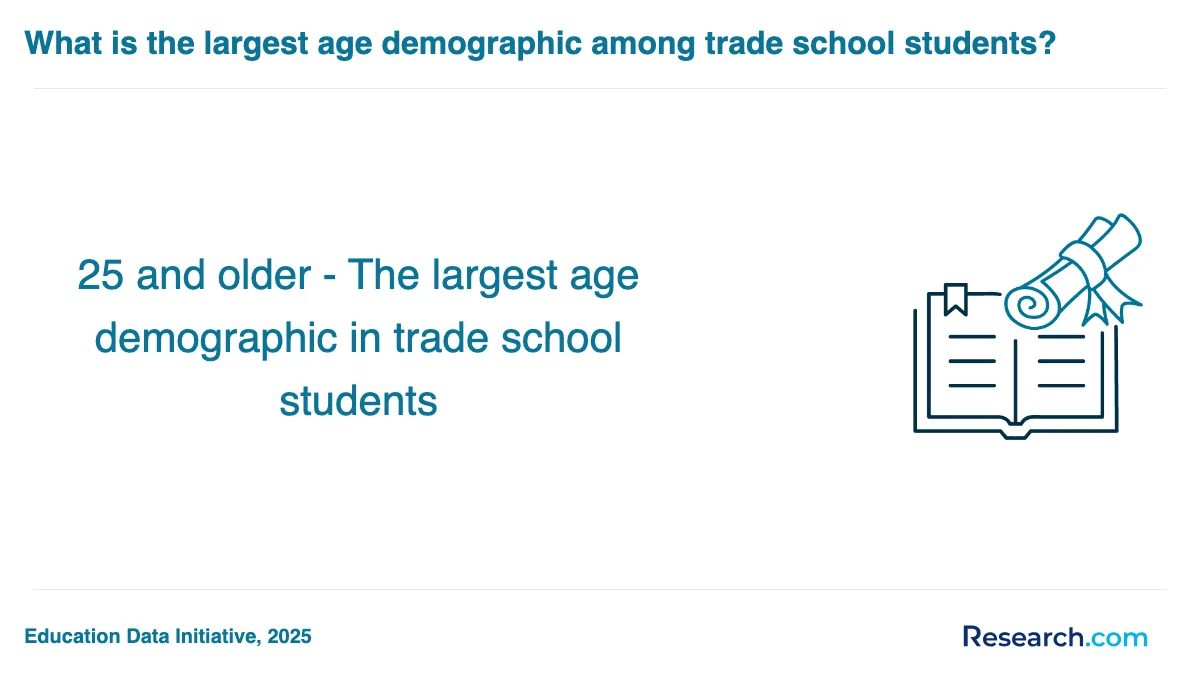
- The minimum admission requirement is usually a high school diploma or GED, with applicants typically aged 16 to 18 years old.
- Many programs require basic skills tests in reading and math, and some healthcare and technical fields also require health records, background checks, drug testing, or physical exams.
- Trade school certificates often take about one year to complete with around 1,000 instructional hours.
- The cost to complete a program ranges from $3,000 to $15,000, though longer or more equipment-intensive programs may cost more.
- Entry-level salaries for graduates typically range between $35,000 and $50,000 annually, with some experienced workers earning $55,000 or more.
- Many Orlando trade schools offer rolling admissions, multiple start dates, and job placement services to help graduates move from training into employment.
How long does it take to complete trade school programs trade schools in Orlando?
Most Orlando trade school programs are built for faster completion than a traditional college degree. Many career-focused programs can be completed in a year or less, while longer diploma or associate degree options may take more time depending on scheduling, clinical or lab requirements, and whether the student attends full time or part time.
Orange Technical College offers career-focused programs that may wrap up in a year or less. At Universal Technical Institute, the HVACR Technician program can be completed in 39 weeks, and the Diesel Technology program can be completed in 45 weeks. Automotive Technology is commonly described as a 51-week program.
Some short workforce programs move much faster. Dental assisting programs may take 10 to 12 weeks, and truck-driving training may take three to four weeks of hands-on instruction. These shorter options can be appealing, but students should verify exactly what credential is earned and whether it meets employer or licensing expectations.
Part-time study can make training more realistic for working adults, but it may extend the overall timeline. Before enrolling, ask whether classes are offered during the day, evening, weekend, or online, and whether missed lab hours must be made up before completion.
What's the difference between online and on-campus trade school programs trade school programs?
The main difference is how much of the training can be completed through digital coursework versus hands-on practice. Online trade school programs work best for fields where much of the learning involves reading, software, documentation, coding, billing, business processes, or exam preparation. On-campus programs are usually better for trades that require tools, equipment, labs, clinical practice, or supervised technical demonstrations.
Online options can be useful for students balancing full-time work, caregiving, transportation limits, or unpredictable schedules. Programs such as medical coding may allow students to complete lectures, assignments, and faculty communication through digital platforms. Valencia College is one example where many students use flexible learning formats.
On-campus training is often essential for fields such as electrical work, HVAC, welding, automotive technology, diesel technology, culinary arts, aviation maintenance, and healthcare support. At schools such as Florida Technical College, students in electrical or HVAC certification programs benefit from direct instructor feedback, real tools, peer collaboration, and structured lab practice.
A hybrid format can be the best fit when a program allows theory coursework online but requires in-person labs or externships. Before choosing an online program, confirm whether the credential is accepted by local employers, whether hands-on hours are required, and whether the school helps arrange any in-person components.
What is the average cost of trade school programs trade schools in Orlando?
The average trade school cost in Orlando typically falls between $7,500 and $12,000 in tuition alone. Total costs can be higher once students add books, tools, uniforms, lab fees, exam fees, transportation, and living expenses. Depending on the program, the cost to complete a program may range from $3,000 to $15,000, while a full trade school program may cost roughly between $10,000 and $25,000.
Cost differences usually come from program length, equipment needs, credential requirements, and school type. A short certificate is often less expensive than a diploma or associate degree. Programs with extensive shop time, specialized equipment, or certification preparation may be priced at the higher end. Program data also notes training of around 764 hours on average in some diploma or associate degree pathways.
One graduate from a well-known Orlando technical college noted that the net price after aid was closer to $22,792 annually. That example shows why students should compare both sticker price and net price after grants, scholarships, and other aid.
When evaluating affordability, ask the school for a full written cost of attendance. It should separate tuition from required supplies, fees, certification exams, licensing-related costs, and optional expenses. Students interested in shorter credentials can also review top paying 6 month certificate programs to compare streamlined training paths with strong career potential.

What financial aid is available for trade school programs trade schools in Orlando?
Financial aid for Orlando trade school students may include federal grants, state grants, institutional scholarships, local tuition programs, veterans benefits, employer sponsorships, payment plans, and loans. The exact options depend on the school’s eligibility, the program, the student’s residency, financial need, and enrollment status.
The FAFSA is usually the first step for students attending eligible schools. It can help determine access to Federal Pell Grants, Federal Supplemental Educational Opportunity Grants, and low-interest federal loans. Grants are especially valuable because they generally do not need to be repaid, while loans should be borrowed carefully.
Florida’s Open Door Grant can cover tuition, fees, and supplies 100% for eligible students in qualifying programs. Local programs can also make a major difference. The Osceola Prosper program can erase tuition and fees for Osceola County high school graduates who start by Spring 2026, giving eligible students a direct route into career training.
Schools such as Valencia College and Osceola Technical College may also offer institutional scholarships or financial aid guidance. Some awards target students with financial need, veterans, or students entering specific high-demand fields. Before enrolling, ask whether aid applies to the exact program you want, whether certification exam fees are covered, and what happens financially if you withdraw or change programs.
What are the prerequisites for enrolling in trade school programs trade schools in Orlando?
Most trade school programs in Orlando require proof of high school completion or a GED. Applicants may need official transcripts, a homeschool affidavit, or other documentation. Veterans may be able to use a DD 214 form to confirm education history when accepted by the school.
Applicants should also expect a standard admissions process: completing an application, paying any required fee, showing identification, and confirming residency if it affects tuition or eligibility. Marion Technical College, for example, lists an application fee of $20.
Some programs require more than basic admission. Healthcare, automotive, aviation, and other technical fields may require academic placement or aptitude tests, background checks, drug tests, immunization records, physical exams, or proof of minimum age. These requirements are not just paperwork. They may be tied to safety rules, clinical site access, employer expectations, or licensing requirements.
- Proof of high school completion or GED
- Completed application and fee payment
- Identification and residency confirmation
- Aptitude, academic, reading, or math assessments
- Possible background checks, drug tests, health records, or physical exams
- Minimum age requirements depending on the program
- Program-specific documents for healthcare, transportation, aviation, or technical training
Students should confirm prerequisites before paying deposits or buying supplies. Missing one requirement can delay enrollment, externship placement, testing eligibility, or graduation.
What are the typical courses in trade school programs trade schools in Orlando?
Typical Orlando trade school courses focus on applied skills, safety procedures, technical theory, equipment use, troubleshooting, and credential preparation. The exact course list depends on the field, but most programs combine classroom instruction with supervised hands-on practice.
In Automotive Technology, students may complete a 51-week program covering engine systems, diagnostics, service procedures, electrical systems, and preparation connected to ASE certifications. Graduates may pursue roles such as automotive technician or service writer.
In Diesel Technology, students may complete 45 weeks of training focused on diesel engines, truck systems, maintenance, diagnostics, and ASE-related preparation. HVACR programs may include refrigeration systems, electrical controls, heating systems, ventilation, safety, and troubleshooting.
- HVACR Technician: climate control systems, refrigeration, heating, ventilation, diagnostics, and safety.
- Automotive Technology: engine systems, electrical systems, diagnostics, repair procedures, and service operations.
- Diesel Technology: diesel engines, truck maintenance, powertrains, braking systems, and troubleshooting.
- Marine and Motorcycle Technology: specialized service and repair training, including pathways tied to brands such as BMW or Harley-Davidson.
- Welding Technology: welding processes, blueprint reading, fabrication, safety, and metalwork practice.
- Aviation Maintenance: aircraft systems, inspection, repair procedures, and preparation for FAA-certified technician pathways.
- Electrical Technology: circuits, wiring, electrical code concepts, safety, tools, and construction or maintenance applications.
Good programs should publish course sequences, required hours, lab expectations, and any certification exams students are prepared to take. If a school cannot clearly explain how courses connect to jobs, credentials, or licensure, compare other options before enrolling.
What are the available specializations in trade school programs trade schools in Orlando?
Orlando trade schools offer specializations across transportation, construction, manufacturing, healthcare, hospitality, and technical services. The best specialization is the one that matches your interests, physical work preferences, schedule, and long-term earnings goals.
Universal Technical Institute offers training connected to Automotive & EV Technology, diesel technology, HVACR, and manufacturer-specific pathways such as BMW FastTrack and Ford Accelerated Credential Training (FACT). These focused options can help students build skills aligned with specific vehicles, systems, and employer needs.
Lake Technical College expands the range with over 31 programs in areas such as industrial manufacturing, welding, maintenance, and health sciences. Students interested in construction-related fields may compare electrical, welding, HVAC, and facilities maintenance options, while healthcare-focused students may consider dental assisting, medical assisting, coding, or other support roles.
Specialization should be chosen carefully. A narrow manufacturer or equipment track can create an employment advantage with certain employers, but a broader program may offer more flexibility. Students can also explore trading school jobs to compare how different training paths connect to career outcomes.
How do you choose the best trade school programs trade school program in Orlando?
To choose the best trade school program in Orlando, start with fit, cost, credibility, and outcomes. A program should prepare you for the job you want, meet credential or licensing expectations, fit your schedule, and offer a realistic return on your investment.
- Check accreditation or approval. Confirm whether the school is nationally accredited or otherwise approved for the field. Accreditation can affect financial aid, employer confidence, and future education options.
- Match the program to the career. Automotive technology, culinary arts, healthcare, electrical training, HVAC, and construction programs lead to different work environments and advancement paths.
- Compare completion time. Many programs take 1 to 2 years, while some certificates are shorter. A faster program is not always better if it does not provide enough practice or credential preparation.
- Review total cost, not just tuition. Ask for the full cost of attendance, including tools, books, uniforms, fees, exams, transportation, and retake costs.
- Ask about outcomes. Request completion rates, job placement support, certification pass rates, employer partnerships, and typical entry-level wages.
- Visit the facilities when possible. Modern labs, safe equipment, and adequate instructor support can make a major difference in hands-on fields.
- Understand financial aid eligibility. Prioritize schools and programs that qualify for federal aid if affordability is a concern.
If you need flexibility, compare hybrid or online options carefully. Some fields can support online coursework, while others require in-person labs. Students considering construction-related pathways can also review online construction trade programs to understand which parts of training may be available remotely.
What career paths are available for trade school programs trade school graduates in Orlando?
Trade school graduates in Orlando can pursue career paths in skilled trades, transportation, healthcare support, hospitality, construction, manufacturing, and technology. These fields often reward practical ability, reliability, safety awareness, and continued credentialing.
- Automotive and transportation: automotive technician, diesel technician, motorcycle technician, marine service technician, service writer, or fleet maintenance worker.
- HVAC and building systems: HVACR technician, maintenance technician, refrigeration technician, or facilities support worker. Students comparing HVAC pathways may also review online hvac certificate programs.
- Construction and skilled trades: electrician, plumber, carpenter, welder, construction technician, flooring installer, or maintenance worker.
- Healthcare support: medical assistant, dental assistant, medical coder, patient care support worker, or related clinical office role.
- Hospitality and tourism: culinary arts, food service management, event support, resort operations, or facilities roles connected to Orlando’s theme parks and resorts.
- Technology and technical support: IT support, cybersecurity support after additional training, electronics support, or related entry-level technical roles.
Universal Technical Institute’s Orlando campus supports pathways in automotive technology, diesel mechanics, and HVACR, including training tied to brands such as BMW and Harley-Davidson. Orange Technical College and other local providers prepare students for fields such as electrical work, plumbing, carpentry, welding, dental assisting, and medical coding.
Licensure and certification requirements vary. Before choosing a career path, confirm whether you need a state license, apprenticeship hours, FAA certification, ASE certification, clinical clearance, or employer-specific training.
What is the job market for trade school programs trade school graduates in Orlando?
The job market for trade school graduates in Orlando is supported by growth in healthcare, technology, hospitality, construction, and skilled trades. These industries need workers who can maintain facilities, repair vehicles, install systems, support patients, build infrastructure, and keep large service operations running.
Orlando added 31,600 new jobs in the year ending June 2025, signaling a growing regional economy. The area also offers average tech salaries over $106,000 and continues creating thousands of new positions in healthcare and hospitality annually. These trends can benefit trade school graduates, especially those with credentials aligned to local employer needs.
Demand does not mean every graduate gets the same result. Job prospects depend on the specific trade, the quality of training, attendance, certifications, willingness to work entry-level shifts, transportation reliability, and whether the graduate builds experience through labs, externships, apprenticeships, or paid training.
Students should compare programs by their connection to Orlando employers. Ask which companies recruit graduates, whether apprenticeships are available, how job placement is measured, and whether the school reports outcomes by program rather than across the entire institution. For another example of targeted affordable training, review cheap flooring installer training courses and compare how focused programs fit local workforce demand.
Frequently Asked Questions about trade school programs
After completing a trade school program in Orlando, preparing for the job market involves several key steps. First, graduates should obtain all necessary industry certifications, as many employers in trades like HVAC, electrical, or plumbing require proof of licensure.
Next, building a professional network is crucial. Attending local job fairs, joining trade associations, and connecting with alumni can lead to job leads and mentorship opportunities.
According to the Florida Department of Economic Opportunity, Orlando's trade sectors are projected to grow by over 10% through 2028, especially in construction and manufacturing. This growth means students should also tailor their resumes to match local employer needs and consider apprenticeships for hands-on experience.
Job placement rates for Florida trade schools average around 75%, highlighting the importance of utilizing career services offered by these institutions.
In 2026, some of the most budget-friendly trade schools in Orlando include Valencia College, Orange Technical College, and Southern Technical College. These institutions offer a range of certification programs in fields like healthcare, technology, and automotive services, providing valuable skills for the job market.
In Orlando, a trade school diploma can significantly enhance career mobility and advancement. According to the Florida Department of Education, many local industries such as construction, healthcare, and information technology prioritize practical skills, often gained through trade programs. Graduates with these diplomas typically enter the workforce faster than those pursuing traditional four-year degrees, often benefiting from higher initial wages.
Trade credentials in Orlando are linked to above-average employment growth; for example, the Bureau of Labor Statistics projects a 10% increase in skilled trade jobs locally by 2028. This growth improves promotion opportunities and job security for diploma holders.
Furthermore, partnerships between trade schools and employers in Orlando often lead to direct job placements, fostering quicker career progression. Data from the National Center for Education Statistics reports that trade school graduates see higher rates of employment within a year compared to some college graduates, supporting career advancement prospects in this region.
In 2026, Orlando employers prioritize skills such as technical proficiency, problem-solving, adaptability, and effective communication. Graduates who possess hands-on experience and certifications specific to their trade are particularly attractive to local businesses seeking skilled workers ready to meet today’s industry demands.
Trade school students in Orlando often face challenges such as balancing work, life, and studies, limited financial resources, and access to hands-on training. Addressing these issues requires effective time management, seeking financial aid, and finding programs with strong industry partnerships that offer practical experience.
Related General Rankings for Nearby Cities
Top Trending Rankings
References
- Orange Technical College - OTC HOME https://www.orangetechcollege.net/
- Programs | Career Pathways | Valencia College https://valenciacollege.edu/students/career-pathways/programs/index.php
- Florida Technical College - FTC - Excellence in technical education https://ftccollege.edu/
- Trade Schools, What Are The Benefits - InterCoast Colleges https://intercoast.edu/articles/benefits-of-trade-schools/
- Orlando academy helps students turn to trade schools https://mynews13.com/fl/orlando/news/2024/08/12/some-disenchanted-with-a-college-degree-turn-to-trade-schools


