# 1 position
Western Dakota Technical College - Plumbing Technology/Plumber.
certificate or diploma

Audited and Verified:
Our Editorial and Data Verification Process
Research.com uses government datasets, official education statistics and primary institutional information to support its career and degree guides. Our review process checks factual accuracy, occupational definitions, source dates and the requirements associated with the credentials discussed.
How This Article Was Fact-Checked
Our editorial team verifies salary estimates, employment projections, education requirements and program information against original data providers and official organizations. Salary figures are checked against the relevant occupational definitions and reporting periods. Information about licensure, accreditation and required in-person training is reviewed separately.
Fact-checked and verified on:

Co-Founder and Chief Data Scientist

Reviewed by Karolina Broda
Fact-Checker and Data Verification
Choosing a plumbing program in South Dakota means deciding how to gain hands-on experience - not just where to take classes. The U.S. Bureau of Labor Statistics projects 6.8% national growth for plumbers, pipefitters, and steamfitters from 2025 to 2035, making training choices timely but not guaranteeing local jobs. This guide compares school, apprenticeship, and employer-sponsored routes, along with costs, licensing, and career prospects. It also features a Best Plumber Trade Schools in South Dakota for 2027 ranking created by the Research.com team of data scientists to help students identify programs worth considering.
Expect instruction in water supply, drainage, venting, pipe materials, fittings, fixtures, blueprint reading, safety, and code-based installation. Shop exercises should let you measure, cut, join, test, and troubleshoot systems before doing similar work under supervision at a jobsite. Ask for the actual lab schedule and equipment list: two programs with similarly named credentials may offer very different amounts of practice.
School and apprenticeship solve different parts of the entry problem. This comparison shows what each route contributes and what you still need to arrange.
| Pathway | Training and credential | Best fit and principal limitation |
| Technical-college certificate, diploma, or associate degree | Scheduled classes and shops; the school awards the named credential. | Fits learners who want structured practice before or alongside employment. Completion alone does not confer a plumbing license. |
| Registered apprenticeship | Paid, supervised work plus related instruction; completion documents apprenticeship training. | Fits learners ready to earn while training. Entry depends on sponsor openings and may take longer than a school-only credential. |
| Employer-sponsored entry | Supervised work and any instruction the employer arranges; a school credential is not necessarily awarded. | Fits someone with a qualifying job offer. Confirm that work and registration count toward the intended license. |
An employer may value school shop skills, but ask whether it offers placement or apprenticeship connections rather than assuming the credential shortens required experience. The South Dakota Plumbing Commission, not the school, determines licensing eligibility.
Plumbing contractors, construction firms, maintenance departments, and service businesses offer work involving new installations, repairs, and renovations. Residential service can emphasize diagnosis and customer communication; commercial construction can involve larger systems, coordinated crews, and reading complex plans. The U.S. Bureau of Labor Statistics describes both installation and repair as core work for plumbers.
Location affects the training decision. A student near Sioux Falls or Rapid City can compare nearby employers with available classes; someone in a rural area should check the commute to both the shop and the supervised worksite before committing. Ask a prospective employer where jobs are located and whether travel time or a vehicle is required.
For a national benchmark, the U.S. Bureau of Labor Statistics reports a $63,800 median annual wage in May 2025 for plumbers, pipefitters, and steamfitters combined. That is the midpoint for workers at different experience levels across the United States - not a promise to a new South Dakota apprentice and not a plumber-only figure.
Before estimating a return on training, look up current South Dakota wage estimates for that same occupational group from the U.S. Bureau of Labor Statistics or the South Dakota Department of Labor and Regulation. Then compare local apprentice offers with the pay you could earn without training, accounting for how wages may change as you gain experience. Related comparisons of trade school jobs salary are useful for exploring alternatives, but a national median cannot replace a local offer.
Length depends on the credential, course schedule, and whether you study while working. A school certificate or diploma can finish before the supervised experience needed for independent practice; an associate degree includes a broader course load. A registered apprenticeship combines related instruction with work over multiple years. The U.S. Bureau of Labor Statistics describes plumbing apprenticeships as typically lasting four or five years, but the South Dakota Plumbing Commission's current experience rules - not that national description - govern a state license.
Request each program's published calendar, required classroom and lab hours, and any employer-work component. Also ask the commission and apprenticeship sponsor how experience is documented and whether prior training receives credit. Do not subtract school time from a licensing timeline unless the responsible authority confirms it counts.
Online or hybrid delivery can make code study, calculations, and some blueprint instruction easier to fit around work. It cannot replace handling pipe and tools, testing installations, or demonstrating safe practices under supervision. For a rural student, a hybrid timetable may cut classroom trips while still requiring travel to shops and jobsites.
Ask where every practical assessment occurs and who supervises it. A fully online offer that advertises a direct route to licensure without documented hands-on experience is a red flag. Listings of affordable online colleges that accept financial aid may help with a financing search, but they do not establish that an online plumbing program provides required practical training or qualifies for aid.
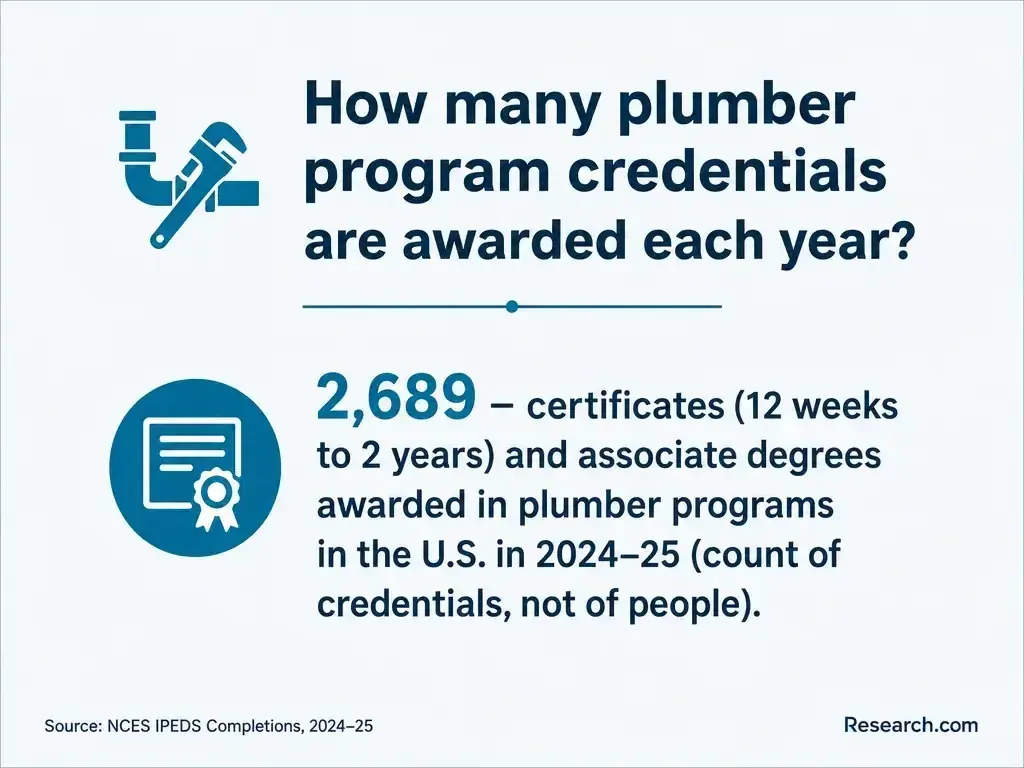
There is no single reliable price that represents every South Dakota plumbing route: schools publish different tuition and fees, while paid apprenticeships have a different cost and earnings pattern. Compare current written estimates rather than treating advertised tuition as the price of becoming job-ready.
Build a total-cost estimate for each offer from these items, asking which are supplied or reimbursed:
Check aid eligibility with the school and Federal Student Aid, and ask the South Dakota Department of Labor and Regulation about applicable workforce assistance. A lower tuition bill is not automatically the better investment: weigh completion likelihood, debt, time to paid work, expected earnings over a realistic period, and the value of earnings received sooner. General lists of highest paying certifications without degree cannot establish that a particular plumbing credential has employer recognition or licensing value.
Depending on the offering, a school may award a certificate, diploma, or associate degree; a registered apprenticeship documents completion of its work-and-instruction requirements. These are training credentials, not interchangeable occupational licenses. Industry credentials, such as those associated with the National Center for Construction Education and Research, may document specific skills, but their value depends on the employer and the role.
Read the exact credential name and curriculum before enrolling. If you later change providers, ask whether coursework or documented prior experience receives credit; never assume another school, sponsor, or the South Dakota Plumbing Commission will accept it. Searches for easiest doctorate programs address a different educational goal: for plumbing, the decisive question is whether the credential supports supervised entry and the state licensing route.
School admission and apprenticeship hiring are separate decisions. A school may require an application and evidence that you meet its academic entry requirements; an apprenticeship sponsor or employer may also assess work readiness, math skills, availability, and ability to reach jobsites. Requirements vary, so obtain the current checklist from each provider rather than assuming school admission secures a paid placement.
If you are comparing Western Dakota Technical College, Southeast Technical College, or Sinte Gleska University, confirm that the specific plumbing offering is currently available, where its labs meet, and whether it has an employer or apprenticeship arrangement. Ask an apprenticeship sponsor when it accepts applicants and what registration or screening steps apply. The U.S. Department of Labor's Apprenticeship.gov distinguishes registered apprenticeships from school programs; the South Dakota Plumbing Commission handles state plumbing registration and licensing questions.
Useful instruction connects calculations and plans to a working installation: sizing and laying out pipe, selecting materials, joining connections, setting fixtures, testing for leaks, and finding faults. Code use, jobsite safety, documentation, and communicating with customers and other trades matter just as much when work leaves the classroom. The U.S. Bureau of Labor Statistics identifies technical reading, troubleshooting, and physical work as important aspects of the occupation.
Judge a curriculum by the tasks you will actually perform, not its course titles. Ask to see the shop facilities, sample assessments, and the division between instructor-led practice and supervised employer work. If your aim is service plumbing, check for repair and diagnostic exercises; if it is new construction, look for plan-reading and installation practice.
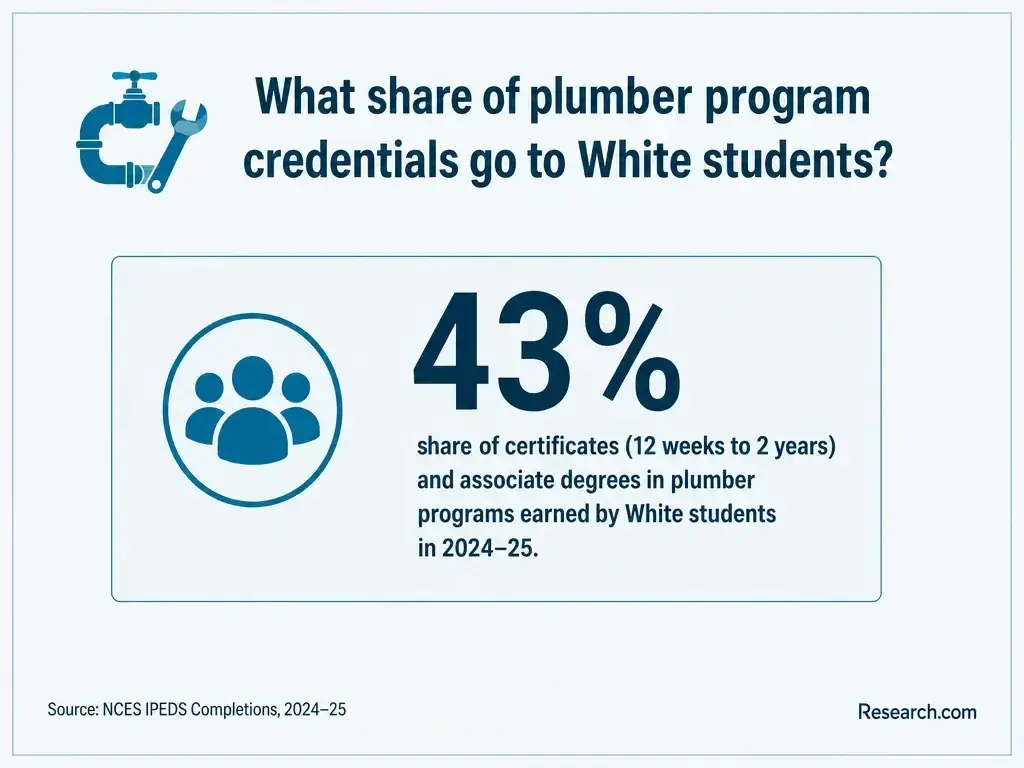
Yes, state plumbing rules matter from the start. The South Dakota Plumbing Commission regulates plumbing registration and licensing, including the progression from supervised apprentice work toward journeyman status. A school credential, institutional accreditation, industry certification, and apprenticeship registration each serve different purposes; none should be presented as a substitute for a state license.
Before accepting training or work, verify with the commission which registration applies to your starting role, who may supervise you, how experience must be recorded, and the current experience and examination requirements for the license you want. Ask separately whether a sponsor's apprenticeship is registered with the U.S. Department of Labor. Do not assume a license earned elsewhere transfers automatically to South Dakota.
Start with the role you want - service plumber, construction installer, or a related pipe trade - then compare only options that teach its tasks and offer a credible route to supervised work. A ranking is a shortlist, not a substitute for checking the current offering. These questions expose the most costly mismatches before you commit:
Verify institutional accreditation through the institution and its recognized accreditor, but do not mistake it for state licensing approval. The same caution applies to claims about accelerated or remote credentials. Even results for phd programs without dissertation illustrate why a search label cannot answer a plumbing-specific question: you need evidence of shop competency and a valid supervised-work route.
A common direction is supervised plumbing work followed by the experience and examination needed for journeyman licensure under South Dakota Plumbing Commission rules. With further qualifying experience, a worker may pursue advanced licensing, supervision, estimating, or a contracting role, subject to applicable state and business requirements. Other work can emphasize residential service, commercial systems, or maintenance.
Choose training that matches the work rather than assuming all pipe-related occupations share one credential. The U.S. Bureau of Labor Statistics groups plumbers with pipefitters and steamfitters for some labor-market statistics, but their job tasks and employers can differ. If an employer advertises a specialization, ask which practical skills and credentials it actually requires.
The U.S. Bureau of Labor Statistics projects 6.8% employment growth from 2025 to 2035 nationally for the combined plumbers, pipefitters, and steamfitters occupation. That supports looking into the trade, but it does not measure South Dakota openings or predict an offer in a particular town.
Use the South Dakota Department of Labor and Regulation's current occupational projections alongside actual apprentice postings and conversations with local contractors. For a rural applicant, the number and location of reachable sponsors may matter more than a national growth rate. Compare construction and service opportunities separately, and ask whether an employer expects travel as projects move.
Investing in training is an important decision. Research.com created its ranking to help readers compare plumber programs with other programs serving the same occupation and location, using reported outcomes, costs, and quality indicators rather than reputation alone. Only programs with completions reported to IPEDS are eligible; that limitation means the ranking does not capture every apprenticeship or employer-sponsored route.
Best-program rankings assess student completion and retention; earnings one year after completion and earnings relative to annual attendance cost; tuition, attendance cost, debt, and federal loan default rates; and accreditation, relevant industry recognition, and student support. Programmatic accreditation or industry recognition carries 20% of the score, institutional accreditation 10%, and student support 10%. The remaining 60% is distributed across outcomes, earnings, and costs using an entropy-based method that gives more weight to indicators that vary more across programs. Most-affordable rankings score only cost and debt measures using that method; they do not score accreditation or other quality indicators. Readers should still verify current program details and South Dakota licensing requirements before enrolling.
The ranking draws on the following sources to check program records and relevant quality measures:
Several listed reference sources concern other occupations and do not establish plumbing-program approval. For further detail on the ranking approach, see Research.com's methodology. Use the ranking to narrow a shortlist, then compare each option's practical training and route to licensed work.
# 1 position
# 2 position
# 3 position

# 4 position
Do not assume it is. A supervised, employer-based or registered-apprenticeship route may be available. Confirm the registration, experience, and examination rules for your intended license with the South Dakota Plumbing Commission.
No. A certificate documents school training; state licensing has separate requirements. Ask the commission how, if at all, your training counts toward them.
Some theory may be taught online, but tool use, installations, testing, and supervised work require in-person participation. Verify where a hybrid program provides those components.
Choose based on access to paid openings, the amount of structured practice you need, total cost, and the route to qualifying experience. Ask both a school and a sponsor for their current schedules and requirements.
Get the full cost and refund terms in writing, inspect the practical-training plan, and verify the credential and licensing pathway with the provider and the South Dakota Plumbing Commission.