# 1 position
Northeast Community College - Plumbing Technology/Plumber.
certificate or diploma

Audited and Verified:
Our Editorial and Data Verification Process
Research.com uses government datasets, official education statistics and primary institutional information to support its career and degree guides. Our review process checks factual accuracy, occupational definitions, source dates and the requirements associated with the credentials discussed.
How This Article Was Fact-Checked
Our editorial team verifies salary estimates, employment projections, education requirements and program information against original data providers and official organizations. Salary figures are checked against the relevant occupational definitions and reporting periods. Information about licensure, accreditation and required in-person training is reviewed separately.
Fact-checked and verified on:

Co-Founder and Chief Data Scientist

Reviewed by Karolina Broda
Fact-Checker and Data Verification
Choosing plumbing training in Nebraska means deciding whether to pay for a school program, enter a paid apprenticeship, or combine the two. The choice matters: the U.S. Bureau of Labor Statistics projects 6.8% national employment growth for plumbers, pipefitters, and steamfitters from 2025 to 2035. This guide explains training, costs, hands-on experience, and local licensing so you can compare routes into the trade. It also features a Best Plumber Trade Schools in Nebraska for 2027 ranking created by the Research.com team of data scientists to help students make an informed choice about programs worth considering.
Expect instruction in pipe systems, fittings, fixtures, drainage, venting, water supply, drawings, code use, and jobsite safety, paired with practice using tools and assembling systems. A school program develops foundational skills; an apprenticeship develops them through supervised, paid work and related technical instruction. Neither a certificate nor classroom attendance should be mistaken for independent-work authorization (U.S. Bureau of Labor Statistics; U.S. Department of Labor).
These pathways serve different starting points. Confirm the actual credential, lab access, and work placement before treating similarly named programs as equivalent.
| Pathway | What it provides | Best fit and main limitation |
| College or trade-school certificate or diploma | Structured instruction and, where offered, shop practice | Fits someone seeking a foundation before applying for work; may not include substantial paid field experience |
| Plumbing-related associate degree | Occupational coursework plus additional academic requirements | Fits someone who values that broader credential; takes more time and may cost more than a shorter program |
| Registered apprenticeship | Paid supervised work and related instruction | Fits someone ready to learn on the job; entry depends on sponsor openings and selection requirements |
| Employer-sponsored entry route | Workplace training that varies by employer | Fits someone with a suitable hiring opportunity; verify whether training counts toward any applicable local progression requirement |
For either a school or an employer route, ask who supervises practical work and how it is documented. That answer is more useful than a credential title alone.
Plumbing training can support applications to residential and commercial plumbing contractors, construction firms, service businesses, and maintenance employers. Job duties range from installing systems in new buildings to diagnosing leaks and repairing existing fixtures (U.S. Bureau of Labor Statistics). A trainee generally needs supervised experience before taking on the responsibilities of an independently qualified plumber.
Location changes the choice of training. Applicants near Omaha or Lincoln can compare local employers and apprenticeship sponsors alongside colleges; those farther from a training site should ask how often they must travel for labs and whether nearby employers offer the required supervision. Before accepting work across city boundaries, check the applicable local building department's rules rather than assuming a credential travels automatically.
A verified Nebraska-specific pay figure is not a sound substitute for an offer from the kind of employer you plan to join. For context, the national median annual wage was $63,800 in May 2025 for plumbers, pipefitters, and steamfitters combined (U.S. Bureau of Labor Statistics). That figure includes experienced workers and related occupations; it does not predict a new Nebraska apprentice's earnings.
When comparing opportunities, request the apprentice wage schedule, expected raises, benefits, and likely hours from each sponsor or employer. Compare those with your current earnings and commuting costs. Plumbing pay can change substantially as supervised experience, responsibilities, and locally required credentials accumulate.
A school certificate, diploma, and associate degree have different calendars; the provider's published course sequence is the reliable source for its exact length and lab hours. A shorter course may get you ready to apply for entry-level work sooner, but it does not replace the field experience required to master installation and service tasks. Registered plumbing apprenticeships commonly run four or five years, combining paid on-the-job training with technical instruction (U.S. Bureau of Labor Statistics).
Ask whether school instruction can be credited toward a particular sponsor's apprenticeship and get the answer from that sponsor before enrolling. An accelerated associate's degree online may shorten academic study in other fields, but plumbing competence still requires in-person tool and system work.
Online coursework can be useful for terminology, drawings, calculations, and code study. It cannot by itself demonstrate that you can cut and join pipe, test a system, use tools safely, or troubleshoot at a jobsite. A hybrid option makes sense only when its in-person labs or supervised work are accessible from your Nebraska home and sufficient for your goal (U.S. Bureau of Labor Statistics).
Request the schedule and location of every required practical session. For a rural student, occasional travel may be manageable; frequent labs plus a distant worksite can erase the convenience of online lessons. Do not assume an online completion certificate meets an apprenticeship sponsor's or local jurisdiction's requirements.
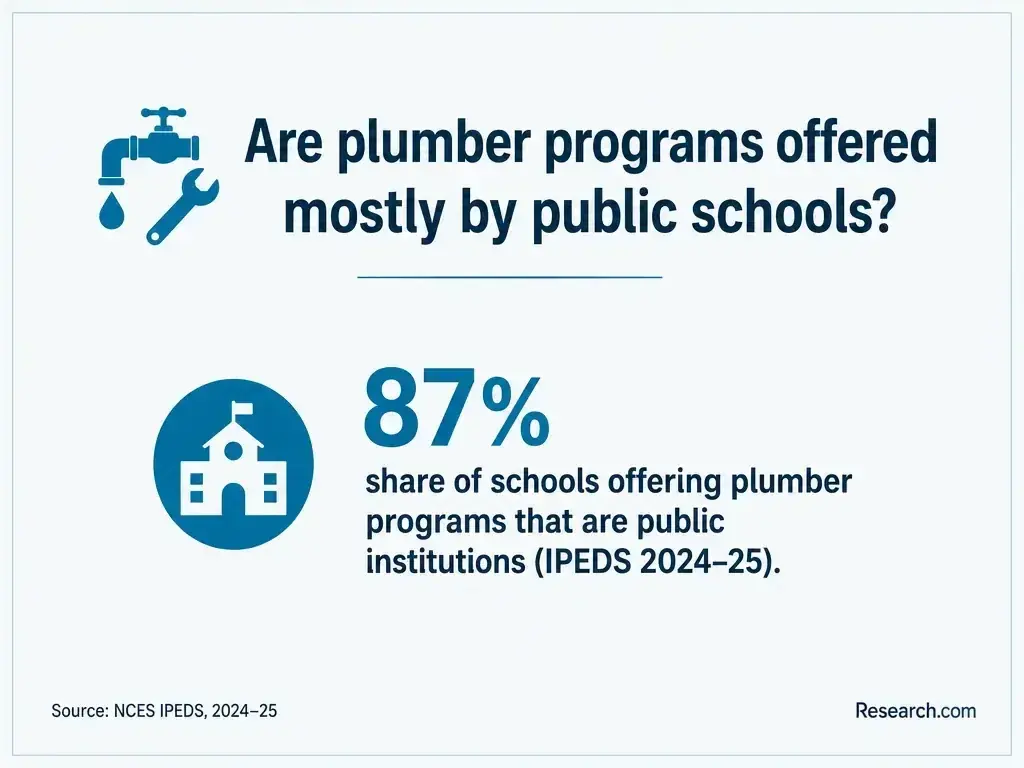
There is no single dependable statewide price for "plumber trade school": a college credential, a short course, and a paid apprenticeship charge and compensate students differently. Published tuition alone omits required fees, books, tools, safety gear, materials, travel to labs or worksites, and any applicable examination or application costs. Time away from paid work is also a real cost.
Get a written, itemized estimate from each provider, including resident tuition where applicable, then subtract grants or employer-paid expenses rather than assuming aid is available. Ask a registered apprenticeship sponsor about wages during training and who pays for instruction and tools (U.S. Department of Labor). Check federal-aid eligibility for the specific school and program through Federal Student Aid, and ask Nebraska Department of Labor workforce staff whether you qualify for training assistance. The lowest sticker price is not necessarily the lowest cost to become job-ready.
The award depends on the route: a school may award a certificate, diploma, or, for an academic program, an associate degree; a registered apprenticeship leads to an apprenticeship completion credential. An industry training credential may document particular skills. These are distinct from a local occupational license or registration (U.S. Department of Labor; applicable local building department).
Ask for the award's exact name and whether employers or apprenticeship sponsors recognize it for entry or advanced standing. An easiest associate's degree comparison cannot tell you whether a plumbing credential includes the hands-on work your intended employer expects.
Schools set their own admission rules, while apprenticeship sponsors and employers set separate hiring or selection standards. Check each provider's current requirements for prior education, math readiness, age, application deadlines, and any screening. Worksites may also have safety and physical demands; do not assume that admission to a classroom program secures an apprenticeship position (U.S. Bureau of Labor Statistics; U.S. Department of Labor).
If you need paid work immediately, apply to sponsors and employers while comparing school options. If you need foundational instruction first, ask Northeast Community College or Southeast Community College Area whether their current offerings include plumbing-specific practical training and whether entry requirements differ by credential. Verify availability in the current catalog rather than relying on a program name in an older listing.
Relevant instruction covers measuring and laying out pipe runs; selecting materials and fittings; installing water-supply, drainage, and vent systems; reading plans; testing work; troubleshooting; and applying safety practices and the code used where work occurs (U.S. Bureau of Labor Statistics). Effective practical training lets students perform and correct these tasks, not merely watch demonstrations.
Ask to see the lab equipment and course outline. A program centered on residential fixtures may fit a service-job goal better than one emphasizing other piping work, while an employer focused on commercial installations may value different field practice. Because local code enforcement matters, check whether instruction addresses the jurisdiction in which you expect to work.
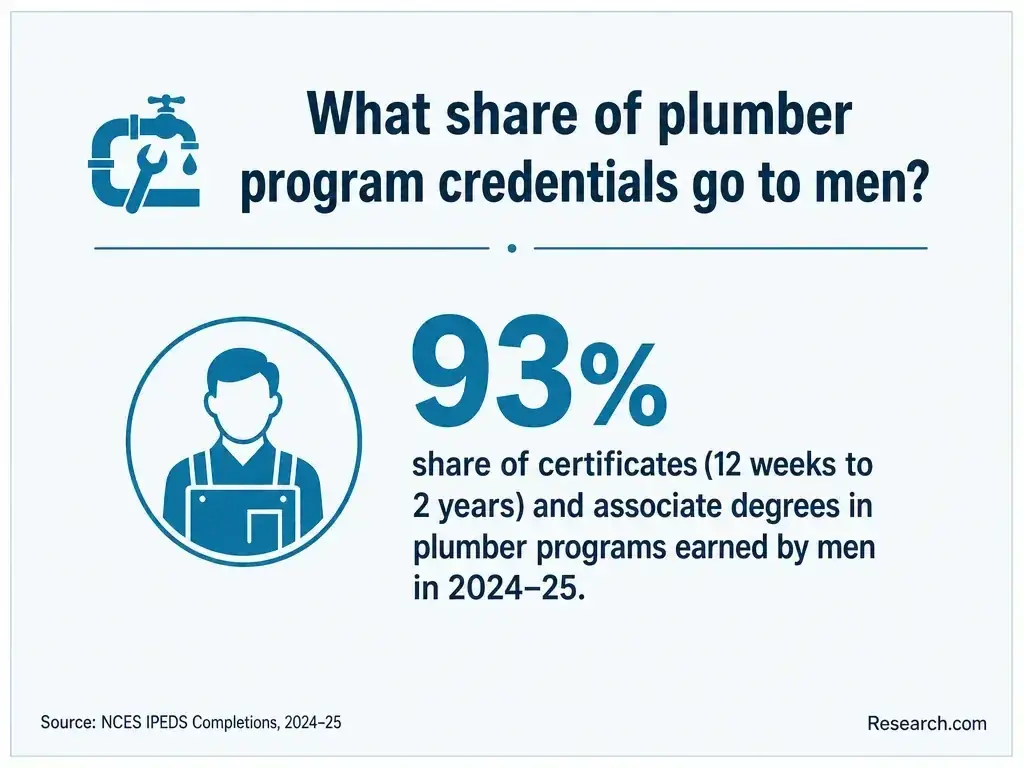
Do not assume a single statewide plumbing license governs every Nebraska job. Plumbing requirements are administered locally, so rules for registration, supervision, examinations, and independent or contractor work must be checked with the building or licensing office where you will perform the work (Nebraska Department of Labor; applicable local building department). That distinction matters before paying for training intended to qualify you for a particular role.
Institutional accreditation concerns the school; state school authorization concerns permission to operate; apprenticeship registration concerns the work-based program. An optional industry credential documents training, while an occupational license or local registration governs work where required. None automatically substitutes for another. Ask the relevant local office which experience and examinations apply to your intended role, and ask the school or sponsor how it documents qualifying work.
Start with the job and jurisdiction you want, then compare each program's route to supervised work - not just its position in a ranking. A school can be worthwhile if its labs, employer connections, and schedule solve a problem a direct apprenticeship application cannot. If you already have a suitable paid sponsor offer, paying for a separate course may add little unless it earns recognized credit.
Use these checks before committing money or leaving a job:
Verify institutional accreditation and any claimed industry recognition with the named organization, and verify school authorization with the relevant state authority. A warning sign is a promise of "licensed plumber" status from classroom-only study without identifying the jurisdiction and its requirements. A one year phd programs search illustrates why an appealing program-length label is the wrong test here: documented practical experience and the route to lawful work matter more than speed alone.
A realistic progression begins with supervised helper or apprentice work, followed by more independent installation or service responsibilities as experience and applicable local requirements permit. Later options include specializing in repair or construction work, supervising crews, or pursuing contractor work subject to local rules (U.S. Bureau of Labor Statistics; applicable local building department).
Training can also build skills relevant to related piping trades, but those jobs may involve different systems and employer expectations. If you are comparing easy trades to learn that pay well, compare the actual training period and work conditions rather than treating the combined plumber, pipefitter, and steamfitter wage as a promise for every path.
The U.S. Bureau of Labor Statistics projects 6.8% national growth from 2025 to 2035 for plumbers, pipefitters, and steamfitters combined. This supports looking into the trade, but it is not a Nebraska hiring forecast or a guarantee of an opening when you finish. Construction activity, service demand, employer location, and available apprenticeship places will shape your immediate options.
For a local decision, review current Nebraska Department of Labor job postings and ask sponsors when they recruit. Compare openings within a practical commute of both your home and required instruction site. That check is particularly important if moving or frequent travel would make an otherwise attractive program difficult to finish.
Investing in plumbing training is a consequential decision. Research.com created its ranking to help readers compare programs against other programs in the same occupation and location, rather than against unrelated schools. The team evaluates reported outcomes, costs, and quality indicators; only programs with completions reported to IPEDS are eligible. That boundary matters: a registered apprenticeship or employer program may be a strong option even when it does not appear in a college-based ranking.
Best-program rankings assess student completion and full-time and part-time retention; median earnings one year after completion and earnings relative to annual attendance cost; in-state and out-of-state tuition, attendance cost, median debt - including debt held by students who withdrew - and federal loan default rates; and institutional accreditation, occupation-relevant programmatic recognition, and student support. Occupation-relevant recognition receives 20% of the score, institutional accreditation 10%, and support services 10%. The remaining 60% covers outcomes, earnings, and costs, with weights distributed through an entropy-based method that gives more weight to indicators that vary more across programs. Most-affordable-program rankings use only cost and debt indicators, weighted by that method; accreditation and other quality indicators are not scored.
The ranking draws on the following sources. Some recognition bodies serve other trades or healthcare occupations; their inclusion in the broader source set does not mean they accredit plumbing programs.
Use the ranking to narrow your search, then confirm current program details and the requirements where you intend to work. Learn more about the scoring approach on Research.com's methodology page.
# 1 position
# 2 position
Plumbing Technology/Plumber
Delivery mode: On Campus (May Include Online Courses)
16.28
/ 100
Final score
Accreditation
Institutional accreditation from Higher Learning Commission.
Southeast Community College Area received a Research.com Trade Program Score of 16.28/100.
# 3 position

Not necessarily. A paid apprenticeship or employer entry route may be available. Check the requirements of the local jurisdiction where you intend to work and whether your chosen route provides acceptable supervised experience.
Online lessons can cover theory, but plumbing also requires practical tool, installation, and troubleshooting skills. Verify where a program provides hands-on training and whether a local employer or jurisdiction recognizes it.
A certificate can build skills before you apply for work. An apprenticeship combines paid work with instruction. Compare entry availability, total costs, wages, practical experience, and any credit the sponsor will grant for prior training.
No automatic qualification should be assumed. Ask the building or licensing office for your intended work location about applicable experience, examination, registration, and licensing rules.
Request the full cost, credential name, lab schedule, completion information, employer connections, and written evidence of any claimed apprenticeship credit. Check the location of practical training against your commute.