
Most Affordable Personal Trainer Schools & Training - Budget-Friendly Personal Trainer Trade Programs in Georgia for 2026

Co-Founder and Chief Data Scientist
Choosing the right physical fitness technician trade school in Georgia can be challenging, but we’re here to help. This article features a carefully crafted ranking of programs created by the Research.com team of data scientists to guide you toward the best options available in 2026.
By exploring these affordable programs, you’ll discover pathways to gain valuable skills and certifications that can boost your career in the fitness industry. Whether you’re starting fresh or advancing your expertise, this guide supports your journey to success with confidence and clarity.
Key benefits of finishing physical fitness technician trade school in Georgia
- Graduates can expect starting wages between $12 and $23 per hour, with roles like Fitness Equipment Service Technician earning around $18.87 and Fitness Specialist up to $19.51 per hour, offering solid income potential early on.
- Career paths include positions such as Physical Therapy Technician, Fitness Specialist, or Fitness Equipment Service Technician, providing diverse opportunities to find a role that fits your skills and interests.
- Completing a physical fitness technician trade school online offers flexibility and convenience, allowing students to balance learning with personal commitments while gaining practical skills valued by employers.
What can I expect from physical fitness technician trade schools in Georgia?
Enrolling in a physical fitness technician trade school program in Georgia means immersing yourself in a dynamic blend of classroom learning and hands-on practice. Graduates often recall the balance between understanding exercise science theories and applying them during internships at local gyms or recreation centers, making the training feel both relevant and empowering.
Students at schools like South Georgia Technical College experience a comprehensive curriculum covering anatomy, program planning, and facility management, often totaling around 53 semester credit hours. This prepares them not only for fitness roles but also for supervisory positions, fostering confidence in managing real-world fitness environments.
Many find the opportunity to earn industry-recognized certifications, such as the American Council on Exercise (ACE), particularly rewarding. Programs at institutions like Georgia State University's Perimeter College offer concentrations in personal training or health coaching, which graduates say helped them feel prepared and valued by employers.
Expect flexible learning options, including in-person and online courses, though some specialized classes may require campus attendance. Most programs welcome students with a high school diploma or equivalent, making this a practical, achievable step toward a fulfilling career in Georgia's health and fitness industry.
Where can I work after finishing physical fitness technician trade schools in Georgia?
Graduates of physical fitness technician trade school programs in Georgia find themselves welcomed into a variety of vibrant workplaces. Many step confidently into roles at commercial gyms, health clubs, and community recreation centers where their hands-on training shines. Some recall how their time at popular trade schools in Atlanta or Savannah equipped them with the skills employers like X3 Sports and Max Fitness actively seek. This real-world readiness opens doors to jobs as personal trainers, fitness instructors, or athletic trainers, where they guide clients toward healthier lives.
Others discover rewarding paths as fitness equipment technicians, maintaining and repairing essential gym machines in hospitals or rehab centers across Georgia. The satisfaction of keeping fitness facilities running smoothly is a common theme among these graduates. Corporate wellness programs and university recreation departments also provide fulfilling roles, letting graduates apply their expertise in new, dynamic environments. Many find joy in independent contracting, offering personalized coaching that transforms lives one session at a time.
How much can I make after finishing physical fitness technician trade schools in Georgia?
After finishing a physical fitness technician trade school program in Georgia, many graduates find themselves stepping into roles where their earnings reflect both their training and location. For example, those who become fitness equipment technicians typically earn around $18.87 per hour, with Atlanta-based graduates often seeing wages near $21.05 per hour. This higher pay in metropolitan areas like Atlanta highlights the advantage of urban job markets.
Graduates who pursue careers as fitness trainers or aerobics instructors share stories of starting at a median salary of about $42,730 annually statewide, with some thriving in places like Albany where salaries can reach $55,460. Physical therapy technician roles tend to offer more modest wages near $12.18 per hour, yet many appreciate the hands-on experience gained during training at well-known Georgia trade schools.
Athletic trainers, often requiring additional certification, report average salaries of about $54,610 per year, reflecting their specialized skillset. Graduates often express confidence in their earning potential, especially when working in larger cities or specialized facilities, where their training truly pays off.
Most Affordable Personal Trainer Schools & Training - Budget-Friendly Personal Trainer Trade Programs in Georgia for 2026
# 1 position
Columbus Technical College - Physical Fitness Technician.
certificate or diplomaColumbus Technical College offers a Physical Fitness Technician program with a hybrid format, including some distance education options. The program prepares students for roles in health and fitness clubs, wellness centers, hospitals, and corporate fitness programs. Coursework covers human anatomy, physiology, fitness techniques, exercise science, personal training, nutrition, and customer service. Annual in-state tuition is $3,042. The program is accredited by the Southern Association of Colleges and Schools Commission on Colleges.
# 2 position
Augusta Technical College - Physical Fitness Technician.
certificate or diplomaAugusta Technical College offers a Physical Fitness Technician program designed to prepare students for careers in health clubs, wellness centers, hospitals, and corporate fitness programs. The hybrid program includes instruction in human anatomy, exercise science, personal training, nutrition, and customer service. Annual in-state tuition is $4,022. The program is accredited by the Southern Association of Colleges and Schools Commission on Colleges.
Key Findings
- Most physical fitness technician programs in Georgia require a high school diploma or GED and students must be at least 16 years old to enroll.
- Programs are usually accredited by SACSCOC and offer certificates or associate degrees, such as a two-year Associate of Science in Kinesiology and Health with a Personal Training pathway.
- Graduates often earn industry certifications like the American Council on Exercise (ACE) certification, which is widely recognized by employers.
- The average cost for completing a program at a public technical college ranges from $3,500 to $5,000 for in-state students, excluding fees and books.
- Entry-level salaries for physical fitness technicians in Georgia start around $32,000 to $36,000 annually, with experienced trainers earning $50,000 to $60,000 or more.
How long does it take to complete physical fitness technician trade schools in Georgia?
Completing a physical fitness technician trade school program in Georgia typically takes about six to twelve months, depending on the school and the specific curriculum chosen. Many graduates from well-known Georgia trade schools share how this timeframe allowed them to balance hands-on training with classroom learning effectively, making the experience both intensive and rewarding.
For example, some students recall starting their journey with foundational courses and swiftly moving into practical sessions that built their confidence in real-world fitness settings. The compact duration encourages focus and dedication, often fostering a strong sense of accomplishment as graduates quickly transition into the workforce.
Many find that the structured pace of these programs keeps motivation high, as they witness their skills develop week by week. Trade schools in Georgia are known for offering flexible schedules, which helps learners handle personal commitments while advancing toward certification. This balance often leads to feelings of empowerment and readiness to contribute professionally upon graduation.
What's the difference between online and on-campus physical fitness technician trade school programs?
The difference between online and on-campus physical fitness technician trade school programs in Georgia mainly revolves around how and where students engage with their studies. Online programs, like those offered by Georgia State University's Perimeter College, provide the freedom to study anywhere with internet access. Graduates often appreciate the flexibility to balance coursework with jobs or family, enjoying virtual lectures and discussions on their own schedule. Yet, some practical courses still require attending in person, which keeps hands-on skills from slipping away.
On the other hand, on-campus programs at schools such as Savannah Technical College immerse students in face-to-face learning. Graduates recall the energy of twice-weekly in-person classes, working directly with instructors and peers at campus fitness centers. This environment fosters immediate feedback and camaraderie, which many find motivating and essential for mastering physical techniques.
Both paths prepare students for certification and careers, but the choice hinges on personal learning style and life demands, making each experience uniquely rewarding.
What is the average cost of physical fitness technician trade schools in Georgia?
The average cost of a physical fitness technician trade school program in Georgia generally falls around $11,746, aligning with the national average for vocational programs in this field. Several graduates recall balancing tuition with daily life expenses while appreciating the practical training that trade schools offer. For instance, Savannah Technical College's personal trainer certification program, in partnership with the World Instructor Training School (W.I.T.S.), charges about $745 for the course, though additional fees for textbooks and materials apply. This accessibility allows many students to pursue their passion without the burden of overwhelming debt.
Meanwhile, institutions like Lanier Technical College provide programs priced at $107 per credit hour for in-state students, plus additional fees averaging $355 each semester. Graduates here often emphasize how this modular tuition approach helped them manage costs effectively while advancing through their curriculum. On the other hand, Georgia Career Institute's program, aimed at training aestheticians and skin care specialists, sums tuition and fees to around $15,400 for 1,000 contact hours, typically completed within 10 months. Many students find this intense, immersive experience to be a motivating factor in their career readiness.
Understanding the financial investment required can sometimes feel daunting, yet it's part of a rewarding journey. When considering programs, it's valuable to explore careers with kinesiology degree options or specialized certificates to better envision future opportunities and returns on your investment. Those committed to excelling in the fitness field often share that the knowledge and hands-on skills gained more than justify the costs, shaping fulfilling careers ahead.
What financial aid is available for physical fitness technician trade schools in Georgia?
Physical fitness technician students in Georgia often find financial aid crucial in turning their career goals into reality. Graduates from popular trade schools in Atlanta and Savannah frequently share how the Federal Pell Grant eased their tuition burden, allowing them to focus more on hands-on training than worrying about costs. Applying through FAFSA is the first step, unlocking access to these vital funds.
Many also benefit from state programs like the HOPE Grant, which covers tuition for diploma and certificate programs, commonly offered at Georgia's well-known trade schools. After completing 30 semester hours, transitioning to the merit-based HOPE Scholarship can support students pursuing associate degrees, providing an ongoing financial boost as they advance their education.
For those balancing school with work, the Federal Work-Study Program offers part-time jobs on campus, enabling physical fitness technician students to earn while they learn. Additionally, scholarships targeting fitness and healthcare fields often reward early applicants with much-needed funds.
Specialized aid like the State of Georgia Post-Secondary Tuition Waiver and Vocational Rehabilitation provide hope and support for students overcoming personal challenges, ensuring education remains accessible. Nearing graduation, some find relief in the Georgia College Completion Grant, which helps cover final expenses, turning dedication into achievement.
What are the prerequisites for enrolling in physical fitness technician trade schools in Georgia?
To enroll in a physical fitness technician trade school program in Georgia, there are some common prerequisites that help ensure students are prepared and ready to thrive. Most programs expect applicants to have a high school diploma or GED, which serves as the foundational step before diving into specialized training.
Graduates from well-known trade schools in Georgia often recall the importance of demonstrating basic communication skills and a genuine passion for health and fitness during the application process. These qualities are sometimes assessed through an interview or a simple written statement explaining why the student wants to pursue this career.
Typically, prerequisites include:
- Proof of high school completion or equivalent
- Basic understanding of anatomy and physiology (sometimes through prerequisite courses)
- Clear background checks for programs involving client interaction
- Health clearance or physical fitness assessments
Many students reflect on how meeting these requirements felt empowering, opening doors to hands-on experiences in gyms or rehabilitation centers affiliated with Georgia trade schools. This foundation helps them confidently transition into their roles as physical fitness technicians, ready to support clients' wellness journeys.
What are the typical courses in physical fitness technician trade schools in Georgia?
Physical fitness technician trade school programs in Georgia typically begin with core academic courses that build essential skills. Graduates often recall how courses like "Fundamentals of English I" and "Foundations of Mathematics" at South Georgia Technical College sharpened their communication and problem-solving abilities, which proved invaluable in client interactions.
The heart of these programs lies in occupational courses focused on fitness industry demands. Students engage deeply with subjects such as:
- Introduction to Sports and Fitness Management
- Recreation Leadership and Supervision
- Sports and Fitness Facility Management and Design
- Program Planning in Sports and Fitness
- Internship in Sports and Fitness Management
Many graduates describe the internship component as transformative, providing real-world experience that bridges classroom learning with hands-on coaching and facility operations. Additionally, sport electives like weight training, tennis, or volleyball offer students the chance to develop specialized skills, enhancing confidence when instructing diverse client groups.
Trade schools like Savannah Technical College also incorporate hybrid learning, blending online theory with in-person labs. This format helps students master both conceptual knowledge and physical techniques, making training both flexible and effective.
What are the available specializations in physical fitness technician trade schools in Georgia?
Physical fitness technician specializations in Georgia often reflect the diverse opportunities within the fitness and wellness industry. Graduates from popular trade schools in the state share how focusing on areas like the Personal Trainer concentration truly prepared them for certification exams from bodies such as ACE and NASM. These programs blend hands-on client assessment and exercise programming, providing confidence to those entering gyms or independent training careers.
The exercise science programs at Georgia trade schools emphasize a scientific understanding of biomechanics, exercise physiology, and human movement. Students at institutions like Georgia State University's Perimeter College appreciate starting with foundational coursework that opens doors to more advanced degrees or roles as strength and conditioning specialists.
Other valuable options include Health Coach and Sports and Fitness Management tracks, where students gain skills in nutrition, stress management, or fitness facility operations. Many find these pathways enable them to thrive in leadership or corporate wellness settings. For those interested in broadening career prospects, exploring an affordable online bachelor's in sports management can be a sensible next step.
How do you choose the best physical fitness technician trade school program in Georgia?
Choosing the best physical fitness technician trade school program in Georgia means looking beyond just the name of the institution. Graduates often share how programs with robust accreditation, like those recognized by the Southern Association of Colleges and Schools Commission on Colleges, gave them confidence that their education met high standards. Hands-on experience is equally vital; for example, students at Georgia College & State University praise the extensive lab work that made classroom theories come alive.
Cost matters, especially when seeking affordable physical fitness technician schools in Georgia. Many find that public institutions offer lower tuition and financial aid, easing the burden while maintaining strong quality. Flexibility in scheduling also plays a role-for those balancing work, evening or online options can make a significant difference. Some even advance their studies by pursuing a kinesiology bachelor's degree online later on.

What career paths are available for physical fitness technician trade school graduates in Georgia?
Physical fitness technician trade school graduates in Georgia find themselves entering a dynamic job market ripe with career opportunities. Many secure roles as personal trainers, fitness instructors, or exercise technicians, thriving in gyms and wellness centers across the state. Graduates often share how hands-on training at popular Georgia trade schools prepared them to confidently support clients and manage group fitness classes, reflecting the practical focus these programs offer.
Beyond those entry points, the spectrum of career opportunities for fitness technicians in Georgia extends to specialized roles such as athletic trainers or fitness program managers. These positions carry promising growth prospects and rewarding responsibilities, allowing graduates to contribute meaningfully to athletes' performance or oversee wellness initiatives.
Other paths include working as fitness equipment technicians or physical therapy aides, especially in metro areas like Atlanta where healthcare demands are high. Many graduates appreciate that their trade education opens doors to diverse physical fitness technician jobs in Georgia, enabling them to build a career aligned with their passion for health and rehabilitation.
Students considering further advancement can explore avenues like a cheap master's in physical education online to deepen expertise and increase impact.
What is the job market for physical fitness technician trade school graduates in Georgia?
The physical fitness technician job outlook in Georgia is notably strong, with a growing demand fueled by a statewide emphasis on health and wellness. Graduates from well-known trade schools in Georgia often share positive experiences about securing roles quickly, thanks to the 23% growth rate for athletic trainers and 14% for fitness instructors and aerobics trainers projected in the coming decade. Employers in gyms, community centers, and boutique studios eagerly seek skilled technicians who can adapt to diverse environments.
Graduates highlight several encouraging trends:
- Competitive fitness technician salary and employment trends Georgia show annual wages averaging $45,540, with personal trainers sometimes reaching $65,000 depending on specialization and experience.
- Real job openings, often exceeding 360 listings statewide, reflect broad opportunities across wellness and fitness sectors.
- While certification is optional, many find credentials from NASM or ACE critical in boosting employability and salary prospects.
Those considering physical fitness training in Georgia can benefit by exploring what jobs can i get with an exercise science degree as part of understanding their career path and potential growth areas in this evolving field.
Frequently Asked Questions about physical fitness technician
After completing a physical fitness technician trade school in Georgia, preparing for the job market requires focused steps. First, obtaining relevant certifications such as CPR and First Aid is crucial, as many employers require them. The Georgia Department of Labor reports a growing demand for fitness technicians, with a 7% employment increase expected through 2030. Networking is also important; joining local fitness organizations or attending industry events can connect graduates to potential employers. Additionally, creating a professional resume highlighting hands-on training and any internships completed during school can improve job prospects. Continuing education and staying updated on fitness trends further enhance employability.
Employers in Georgia seek physical fitness technician graduates with a strong foundation in anatomy, physiology, and exercise science. Knowledge of fitness assessment techniques and the ability to design personalized workout plans are essential skills. Communication skills are equally important, as technicians must effectively motivate and instruct clients.
Proficiency in using fitness equipment and technology is increasingly valued, reflecting trends in the industry. According to the Georgia Department of Labor, employers also prioritize certifications such as CPR and first aid, which ensure client safety during training sessions.
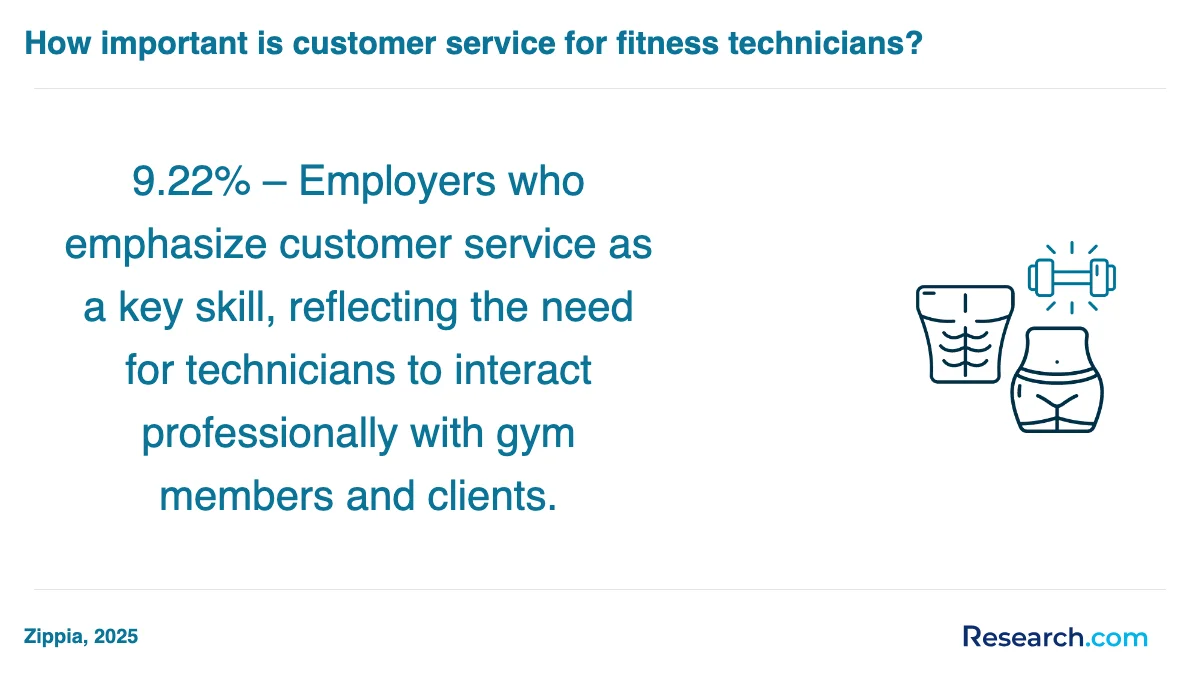
Additionally, teamwork and customer service skills are critical for success in fitness centers across the state, supporting positive client experiences and retention.
Finding internships relevant to physical fitness technician trade school programs in Georgia involves several key steps. Start by contacting your trade school's career services office, as many maintain partnerships with local gyms, rehabilitation centers, and wellness facilities. These connections often provide exclusive internship opportunities.
Additionally, explore listings through the Georgia Department of Labor's job portal, which includes internships and entry-level positions in the fitness sector. According to Georgia's Workforce Division, physical fitness internships have grown by 8% over the past three years, reflecting rising industry demand.
Networking at local professional events hosted by organizations such as the Georgia Athletic Trainers' Association can also lead to valuable internship placements. Finally, consider reaching out directly to fitness centers in metropolitan areas like Atlanta, where most internships are concentrated due to higher industry presence.
Obtaining a physical fitness technician diploma from a trade school in Georgia can significantly enhance career mobility within the state's growing health and wellness sector. According to the Georgia Department of Labor, employment for fitness trainers and instructors is projected to grow by 16% from 2022 to 2032, faster than the average for all occupations.
A diploma certifies foundational skills in exercise techniques, client assessment, and safety protocols, making graduates more competitive for entry-level positions at gyms, rehabilitation centers, and wellness programs.
Trade school credentials often serve as stepping stones to advanced certifications, which can lead to higher pay and supervisory roles.
Data from the U.S. Bureau of Labor Statistics shows that Georgia fitness professionals with formal training earn a median hourly wage above the national average, reflecting the diploma's positive impact on earning potential.
Students enrolled in physical fitness technician trade schools in Georgia can benefit from various part-time job opportunities that enhance their practical skills and industry knowledge. Positions such as gym assistants, fitness aides, and personal trainer interns are common and provide hands-on experience with client interaction and exercise program implementation.
According to the U.S. Bureau of Labor Statistics, Georgia's fitness industry is growing steadily, with an estimated 5% increase in fitness-related jobs between 2022 and 2032. Part-time roles at community centers, local gyms, or wellness facilities offer flexible hours suitable for students' schedules.
Additionally, jobs in rehabilitation centers and sports clubs can complement technical training by exposing students to diverse fitness techniques and client needs.
If you are looking for affordable Physical Fitness Technician degree programs near Georgia, you'll find several community colleges and technical schools offering relevant courses. Many institutions provide these programs, allowing you to search for options "near me" to find the best local fit. Research.com can guide you in identifying these educational opportunities by providing comprehensive lists of programs and universities in the region.
Related Physical Fitness Technician Rankings for Nearby States
- Most Affordable Personal Trainer Schools & Training - Budget-Friendly Personal Trainer Trade Programs in South Carolina for 2026
- Most Affordable Personal Trainer Schools & Training - Budget-Friendly Personal Trainer Trade Programs in Florida for 2026
- Most Affordable Personal Trainer Schools & Training - Budget-Friendly Personal Trainer Trade Programs in Indiana for 2026
- Most Affordable Personal Trainer Schools & Training - Budget-Friendly Personal Trainer Trade Programs in Ohio for 2026
- Most Affordable Personal Trainer Schools & Training - Budget-Friendly Personal Trainer Trade Programs in Maryland for 2026
- Most Affordable Personal Trainer Schools & Training - Budget-Friendly Personal Trainer Trade Programs in Texas for 2026
- Most Affordable Personal Trainer Schools & Training - Budget-Friendly Personal Trainer Trade Programs in Wisconsin for 2026
- Most Affordable Personal Trainer Schools & Training - Budget-Friendly Personal Trainer Trade Programs in Iowa for 2026
- Most Affordable Personal Trainer Schools & Training - Budget-Friendly Personal Trainer Trade Programs in Michigan for 2026
- Most Affordable Personal Trainer Schools & Training - Budget-Friendly Personal Trainer Trade Programs in Minnesota for 2026
Top Trending Rankings
References
- Kinesiology and Health -- Personal Training Pathway, A.S. | Georgia State University https://perimeter.gsu.edu/pathway/kinesiology-personal-training-as/
- Career Training and Trade School in East Point, GA https://www.lincolntech.edu/campus/east-point-ga
- How to Become a Physical Therapy Technician in Georgia | Dreambound https://dreambound.com/blog/how-to-become-a-physical-therapy-technician-in-georgia
- How To Become A Personal Trainer In Georgia https://insurefitness.com/personal-trainer/become/georgia/
- Apprenticeship Programs – TCSG | Technical College System of Georgia https://www.tcsg.edu/for-students/apprenticeship-programs/
- Trade School Program in Georgia | Fortis https://www.fortis.edu/campuses/georgia.html
- Exercise Science | Georgia Gwinnett College https://www.ggc.edu/academics/school-of-science-and-technology/exercise-science
- Online ACE Personal Trainer from Georgia Piedmont Technical College https://careertraining.gptc.edu/training-programs/ace-personal-trainer/
- Personal Trainer Certification Program - Savannah Technical College https://www.savannahtech.edu/business-industry/personal-trainer-certification-program/
- Georgia Trade & Vocational Schools | United Education Institute https://www.uei.edu/trade-school/georgia/


