
Best Personal Trainer Training Programs & Trade Schools - Top Personal Trainer Schools in Maryland for 2026

Co-Founder and Chief Data Scientist
Considering a career as a physical fitness technician in Maryland? Choosing the right trade school is a key step towards reaching your goals. This article presents a carefully crafted ranking of physical fitness technician trade school programs, developed by the Research.com team of data scientists.
By exploring this ranking, you’ll gain valuable insights to help you find programs that match your aspirations and needs. Earning a diploma or certification in this field opens doors to rewarding opportunities and personal growth.
Let this guide support your journey to a fulfilling career in physical fitness.
Key benefits of finishing physical fitness technician trade school in Maryland
- Graduates can expect an average hourly wage around $21.69, translating to about $45,000 annually, with potential to earn more as they gain experience and certifications.
- Career paths include roles like Exercise Technician or Physical Therapy Technician, offering diverse opportunities in fitness centers, rehabilitation clinics, and wellness programs.
- Completing the program online provides flexibility and convenience, allowing students to balance work and study while gaining practical skills just like traditional graduates.
What can I expect from physical fitness technician trade schools in Maryland?
Enrolling in a physical fitness technician trade school program in Maryland means engaging in a hands-on curriculum that balances science and practical skills. Graduates often recall the blend of anatomy, physiology, and nutrition lessons paired with real-world fitness assessments and program design exercises. For example, students at Anne Arundel Community College appreciate the affordable 17-credit Personal Trainer Certificate, which includes direct experience in creating exercise routines and conducting client evaluations.
Expect to develop competencies in strength training, flexibility, health screening, and body composition analysis-skills that graduates describe as immediately applicable in fitness settings. Many also value learning behavior change techniques and injury prevention, which help them build trust and safety with clients.
The programs emphasize preparing you for national certifications like NASM or ACE, making career advancement more attainable. Practical training often involves supervised sessions where students simulate client interactions, fostering confidence and communication skills, essential for future fitness professionals.
Most programs welcome diverse applicants and offer credit transfers to four-year institutions, providing flexibility for continuing education. Graduates frequently mention the supportive environment and how it equips them with both technical expertise and business know-how to thrive independently or in leadership roles.
Where can I work after finishing physical fitness technician trade schools in Maryland?
Graduates of physical fitness technician trade schools in Maryland find diverse employment opportunities across the state. Many secure positions in over 270 gyms and fitness centers in cities like Baltimore, Columbia, and Germantown. These roles often include personal trainers or group fitness instructors, with some earning around $55,000 annually as full-time fitness specialists. Such outcomes reflect the hands-on training and industry connections common to Maryland's well-regarded trade programs.
Others leverage their skills in physical therapy clinics, assisting licensed therapists with rehabilitation programs. With more than 360 physical therapy technician jobs advertised statewide, graduates often appreciate the stable demand and meaningful patient interaction this path offers, reinforcing their passion for health and recovery.
Some graduates choose fitness equipment maintenance, starting at about $18 per hour, which suits those who enjoy technical challenges and on-site problem-solving. Additionally, community centers, senior living facilities, corporate wellness programs, and schools provide varied venues where graduates lead group activities or wellness initiatives, creating fulfilling careers aligned with their training.
Finally, a number of graduates pursue entrepreneurship or independent contracting, offering personalized fitness coaching tailored to clients' lifestyles-an exciting venture for those eager to apply their skills flexibly and creatively.
How much can I make after finishing physical fitness technician trade schools in Maryland?
Graduates from physical fitness technician trade schools in Maryland often find themselves entering the workforce with competitive wages that reflect their specialized training. For example, many who complete programs at well-known Maryland trade schools report starting as Exercise Technicians earning around $21.69 per hour, translating to about $45,000 annually if working full-time. This is a solid foundation for new professionals eager to apply their skills in gyms or wellness centers.
Some graduates pursue roles as Fitness Equipment Technicians, earning similar hourly wages near $21.60, especially in urban areas like Baltimore. These positions offer hands-on work with equipment, which many find rewarding and stable.
Others who seek additional certifications or gain experience advance to Personal Trainer roles, where salaries jump significantly. Personal Trainers in Maryland can make an average of $70,530 per year, with many earning between $50,000 and $86,000. Graduates often describe this career path as fulfilling, both financially and personally, as they help clients achieve health goals.
Meanwhile, those entering more clinical roles as Physical Therapy Technicians typically start lower, around $14.00 per hour, but appreciate the valuable healthcare experience gained.
Overall, Maryland trade school graduates find that their earnings depend on chosen career paths, with clear opportunities for growth and satisfaction in the fitness industry.
Best Personal Trainer Training Programs & Trade Schools - Top Personal Trainer Schools in Maryland for 2026
# 1 position
Frederick Community College - Physical Fitness Technician.
certificate or diplomaFrederick Community College offers a Physical Fitness Technician program with a hybrid format, including some distance-education options. The program prepares students for roles in health and fitness clubs, wellness centers, and corporate fitness programs through instruction in anatomy, exercise science, personal training, nutrition, and customer service. The annual in-state tuition is $3,772. The program is accredited by the Middle States Commission on Higher Education.
# 2 position
Cecil College - Physical Fitness Technician.
certificate or diplomaCecil College offers an on-campus Physical Fitness Technician program that prepares students for roles in health clubs, wellness centers, hospitals, and corporate fitness programs. The curriculum covers human anatomy, physiology, fitness techniques, exercise science, personal training, nutrition, and customer service. The program’s annual in-state tuition is $5,370. It is accredited by the Middle States Commission on Higher Education.
Key Findings
- Programs in Maryland range from short three-month certificates to two-year associate degrees, covering anatomy, exercise, and client communication.
- Students typically need a high school diploma and may require CPR/AED certification to enroll.
- Certificate programs for personal fitness trainers cost about $900 to $1,500, excluding exam fees; longer programs can be more expensive.
- Entry-level salaries usually range from $30,000 to $40,000 annually, with experienced technicians earning $55,000 or more.
- Graduates can work in gyms, hospitals, or rehab centers and often take national certification exams like ACE CPT or NPTE.
How long does it take to complete physical fitness technician trade schools in Maryland?
Completing a physical fitness technician trade school program in Maryland typically takes about six months to one year, depending on the school and the intensity of the curriculum. Many popular trade schools in Maryland offer flexible schedules, allowing students to balance hands-on training with classroom instruction efficiently. Graduates often share that this timeframe feels just right-long enough to gain essential skills but short enough to maintain motivation and momentum.
For example, students enrolled in Maryland trade schools frequently describe their experiences as immersive and rewarding, with real-world practice that prepares them well for entry-level positions. One common sentiment is the excitement of applying learned techniques in practical settings shortly after starting the program, which reinforces knowledge retention and builds confidence.
Choosing a program that aligns with your pace and learning style is crucial. In Maryland, the structured yet adaptable nature of these trade schools means you can expect thorough preparation within a year or less, making the journey to becoming a physical fitness technician both manageable and fulfilling.
What's the difference between online and on-campus physical fitness technician trade school programs?
The core difference between online and on-campus physical fitness technician trade school programs in Maryland lies in how students engage with the material and develop practical skills. Online programs deliver lectures and assignments digitally, allowing students to study at their own pace, which is ideal for those juggling work or family. However, graduates often mention the challenge of gaining hands-on experience solely through remote learning, as real-world practice usually requires separate internships or supervised sessions.
On-campus programs, such as those at Montgomery College, immerse students in a physical learning environment where they can directly interact with instructors and peers. Graduates frequently describe the confidence they build through hands-on practice with gym equipment and real-time feedback during fitness assessments. This face-to-face approach is valued by Maryland fitness employers who prioritize trainers with practical experience.
Ultimately, students seeking flexibility may prefer online options, but those aiming for comprehensive skill development often find on-campus programs more rewarding in preparing them for Maryland's fitness industry demands.
What is the average cost of physical fitness technician trade schools in Maryland?
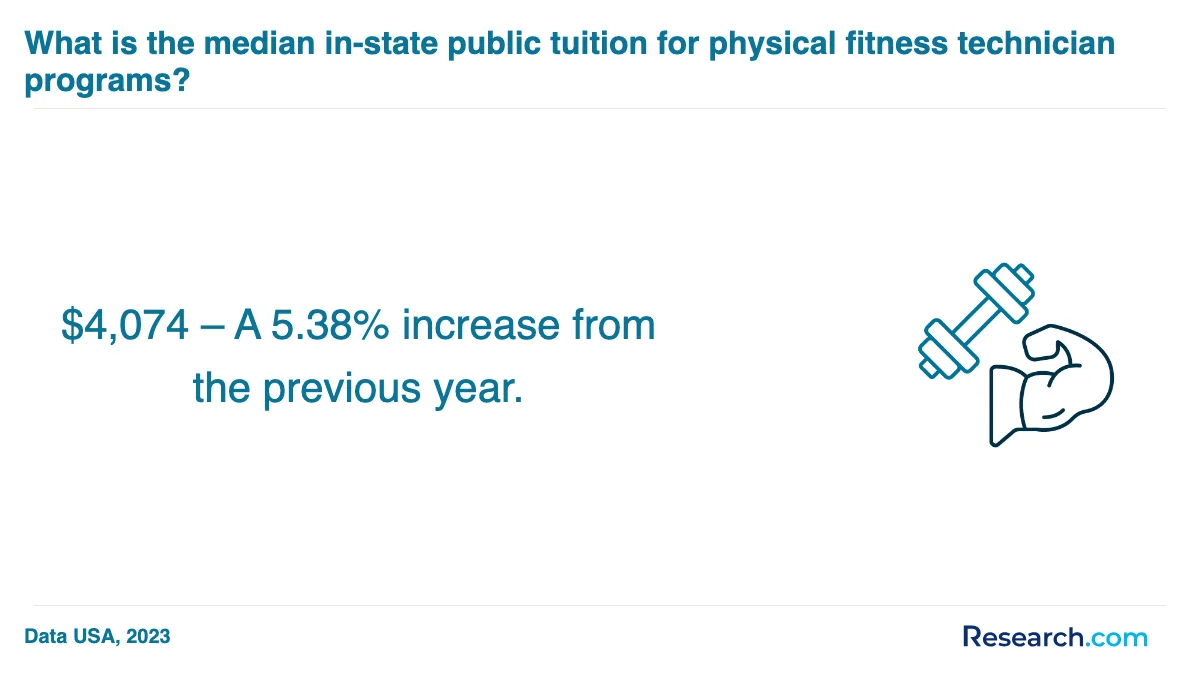
The average tuition fees for physical fitness technician programs in Maryland generally range around $11,746 per year, depending on the institution. Public community colleges often provide the most affordable options. For example, Chesapeake College offers a Personal Fitness Trainer certificate program for about $800, combining both online and in-person instruction. Graduates from such programs often appreciate the affordability and hands-on experience that prepares them well for entering the workforce without excessive debt.
In contrast, private trade schools in Maryland usually charge significantly higher tuition. North American Trade Schools, for instance, lists tuition for some vocational programs at nearly $19,525, which can feel daunting for many students. However, graduates from these schools often highlight the intensive training and comprehensive resources available that justify the cost for them. When calculating the cost of physical fitness technician trade school programs in Maryland, it's important to factor in additional expenses like books and equipment, typically adding $500 to $1,000 to the overall price.
Many students benefit from financial aid programs like the Community College Promise Scholarship, which helps offset tuition costs for eligible residents. Those who want to pursue further education beyond trade schools might consider an online degree in kinesiology and exercise science, which can offer flexible options to build on their skills. Exploring the varied cost structures and aid possibilities helps students make well-informed decisions about where to train as physical fitness technicians in Maryland.
What financial aid is available for physical fitness technician trade schools in Maryland?
Students pursuing physical fitness technician programs in Maryland often find financial aid that significantly eases the burden of tuition and related costs. Federal grants like the Pell Grant and FSEOG stand out as crucial, especially for those attending well-known trade schools such as Harford Community College. Graduates frequently recall how these grants, which do not require repayment, allowed them to focus fully on mastering their skills without constant financial stress.
State-funded scholarships, particularly the Maryland Community College Promise Scholarship, provide up to $5,000 annually, directly benefiting residents enrolled in approved workforce programs. Many students at community colleges appreciate that this aid doesn't require FAFSA completion, streamlining their application process and giving immediate support to cover tuition and fees.
Veterans taking advantage of GI Bill® benefits report relief in managing both tuition and living expenses, which encourages a smooth transition into physical fitness careers. Local scholarships in counties like Worcester and Somerset further expand opportunities, with some funds targeting individuals with disabilities, offering up to $3,000 in assistance.
These diverse aid sources create a realistic pathway for Maryland residents to pursue physical fitness technician careers confidently and with less financial worry.
What are the prerequisites for enrolling in physical fitness technician trade schools in Maryland?
Enrolling in a physical fitness technician trade school program in Maryland typically requires a high school diploma or GED, reflecting a foundational level of education necessary to understand core fitness concepts. Many programs also expect applicants to demonstrate a genuine passion for health and wellness, often assessed through a personal statement or interview.
Graduates from popular Maryland trade schools recall how meeting these prerequisites helped them feel prepared and confident from day one. For example, completing CPR certification before starting the program is a common requirement that provides practical safety skills essential in real-world fitness environments.
Other typical prerequisites include:
- Proof of residency or citizenship, ensuring access to in-state tuition benefits
- Basic physical fitness assessments to confirm the ability to perform technical tasks
- Completion of a background check, which is crucial when working closely with clients
These requirements create a supportive framework that encourages students to enter the program ready to thrive. Graduates often reflect on how meeting them fostered a strong sense of achievement and motivation early in their training, making the Maryland trade school experience both rewarding and accessible.
What are the typical courses in physical fitness technician trade schools in Maryland?
Physical fitness technician trade school programs in Maryland typically include a core set of courses that blend scientific knowledge with practical skills. Graduates from programs like Montgomery College often highlight their hands-on experience in exercise science, human anatomy and physiology, and nutrition, which are essential for understanding how the body responds to exercise.
Students describe learning about the cardiovascular and musculoskeletal systems, which empowers them to assess client fitness safely. They also gain valuable expertise in conducting fitness assessments, such as measuring strength, flexibility, and body composition, and then using those results to create tailored workout plans.
- Exercise science fundamentals
- Human anatomy and physiology
- Nutrition principles
- Fitness assessment and program design
- Behavioral change and exercise leadership
For example, graduates from Cecil College appreciate coursework in business practices and fitness program management, which prepares them to confidently navigate the industry beyond training clients. Many recall learning communication strategies to motivate diverse clients, turning knowledge into real-life impact. This comprehensive curriculum ensures Maryland students leave trade schools ready to excel in dynamic, client-focused fitness careers.
What are the available specializations in physical fitness technician trade schools in Maryland?
Physical fitness technician programs Maryland offer targeted specializations that prepare students for diverse roles within the fitness and wellness sectors. Graduates from schools like Harford Technical High School often highlight practical experiences gained through internships at athletic clubs and rehabilitation centers, which deepen their understanding of sports medicine and customized conditioning program design. Key areas of focus in these programs include:
- Exercise science, providing a foundation in human physiology and wellness assessment
- Personal training, emphasizing hands-on skills to tailor fitness plans
- Health fitness leadership, which equips students to lead group activities and wellness initiatives
Montgomery College's curriculum further reinforces theoretical knowledge alongside practical training, enabling graduates to confidently enter career paths as personal trainers or fitness instructors. Meanwhile, Frederick Community College's program builds essential skills for physical fitness technicians seeking entry-level positions. Many students pursuing these pathways find that combining coursework with applied experiences fosters a real-world readiness that aligns well with industry expectations.
For those aiming to deepen their expertise beyond trade programs, pursuing a bachelor of science in kinesiology offers a natural progression into advanced fitness studies, enhancing career flexibility and growth.
How do you choose the best physical fitness technician trade school program in Maryland?
Choosing the best physical fitness technician programs in Maryland means focusing on curriculum quality and real-world application. Graduates from popular schools like Montgomery College praise courses that combine exercise science, nutrition, and hands-on training, which build confidence for both certifications and careers. Look for programs that prepare you for recognized certifications such as ACE or ISSA, ensuring employers in Maryland recognize your qualifications.
Flexibility is another key factor. Many students value programs offering both in-person and online options, allowing them to juggle work and study effectively. Additionally, strong connections with local gyms and health clubs can ease job placement after graduation, something alumni often highlight as a major advantage.
When you compare Maryland fitness trade school costs, consider accreditation and graduate success rates as much as tuition. This ensures your investment leads to a respected credential. For those also exploring related fields, reviewing the easiest kinesiology degree programs can provide helpful context for your decision.
What career paths are available for physical fitness technician trade school graduates in Maryland?
Graduates of physical fitness technician trade school programs in Maryland encounter a spectrum of career opportunities that leverage hands-on skills and industry knowledge gained during their studies. Many find rewarding roles as exercise technicians or personal trainers, where client interaction and exercise program design are central. These positions often serve as gateways to the growing fitness industry, offering fulfilling personal trainer jobs in Maryland that blend passion with professional growth.
Others pursue roles as physical therapy aides, supporting licensed therapists in clinical settings. This path offers a balance of meaningful patient care and technical application, often with starting wages ranging from $13 to $52 per hour. Fitness equipment service technician roles also appeal to graduates with mechanical skills, providing steady employment maintaining and repairing gym equipment across the state.
Maryland-based trade schools equip students to confidently enter these diverse roles by emphasizing practical experience. Graduates frequently highlight how hands-on internships and real-world scenarios helped them navigate the job market effectively. Whether it's managing group fitness classes or coordinating wellness programs, Maryland's market supports a variety of career opportunities for fitness technicians in Maryland, reflecting the state's vibrant health and wellness industry.
For students exploring financial prospects after graduation, investigating the best paying exercise science careers can provide valuable insights as well.
What is the job market for physical fitness technician trade school graduates in Maryland?
The physical fitness technician job market Maryland offers a strong outlook for recent trade school graduates. Many find rewarding positions in gyms, rehabilitation clinics, and fitness equipment service companies throughout the state. Graduates from popular Maryland trade schools often share their positive experiences securing jobs that allow them to apply both technical skills and fitness knowledge. Typical roles include fitness equipment service technician and exercise aide, where hands-on work is valued.
Job seekers benefit from several key factors:
- Competitive salaries, with personal trainers earning about $68,633 annually on average.
- High demand shown by over 100 open equipment technician positions and nearly 400 physical therapy technician jobs recently listed.
- Opportunities spread across healthcare and fitness industries, reflecting Maryland's growing wellness focus.
Understanding the exercise technician employment outlook Maryland reveals a diverse job environment supported by a strong health sector and state economy. Graduates often feel encouraged by steady opening rates and ample chances for career growth. For those considering the next step, exploring what can you do with a sports management degree may help expand their career possibilities within this field.
Frequently Asked Questions about physical fitness technician
After completing a physical fitness technician trade school in Maryland, preparing for the job market involves several key steps. First, obtaining relevant certifications, such as CPR and AED, can improve employability, as many employers require these credentials. According to the Maryland Department of Labor, the fitness industry in the state is expected to grow by 10% through 2030, creating more job opportunities.
Networking within local fitness centers and attending job fairs can help graduates connect with employers. Maryland also offers workforce development programs that assist with resume building and interview skills specifically for trade school graduates.
Gaining hands-on experience through internships or part-time roles is highly recommended to build practical skills and improve job prospects.
Employers in Maryland seek physical fitness technician graduates who possess strong practical skills and a solid understanding of exercise science. Critical skills include knowledge of anatomy, physiology, and nutrition, which help technicians design effective fitness programs tailored to client needs.
Communication and interpersonal skills are highly valued, as technicians must motivate and guide diverse clients. According to the Maryland Department of Labor, employers also prioritize certifications such as CPR and first aid, reflecting safety awareness.
Technical proficiency with fitness equipment and the ability to monitor client progress using digital tools are increasingly important, aligning with industry trends toward data-driven training approaches.
Problem-solving skills and adaptability are essential for managing varied client goals and health conditions, ensuring personalized fitness support.
Finding internships relevant to physical fitness technician trade school programs in Maryland involves several practical steps. Start by contacting your trade school's career services, as many schools partner with local gyms, rehab centers, and wellness clinics to offer internships. The Maryland Department of Labor and local workforce development boards also list internship opportunities in health and fitness sectors.
Networking is crucial; professional organizations like the Maryland Recreation and Parks Association often advertise internships. Additionally, online job portals such as Indeed and Handshake frequently feature fitness technician internships in Maryland. According to the U.S. Bureau of Labor Statistics, Maryland's fitness industry is growing steadily, creating more internship openings each year.
Obtaining a physical fitness technician diploma from a trade school in Maryland can significantly enhance career mobility and advancement opportunities. According to the Maryland Higher Education Commission, graduates with such diplomas often qualify for entry-level positions in gyms, rehabilitation centers, and wellness programs, which can serve as stepping stones to more advanced roles.
Maryland's growing health and fitness sector shows an employment increase of approximately 8% over the past five years, indicating strong demand for trained technicians. This diploma provides practical skills valued by employers, making graduates more competitive compared to those without formal credentials.
Additionally, trade school diplomas are typically more affordable and faster to complete than traditional degrees, allowing quicker entry into the workforce and potential for salary growth. Data from the U.S. Bureau of Labor Statistics highlights that physical fitness technicians with formal certifications earn on average 15% higher wages in the Mid-Atlantic region.
In summary, a physical fitness technician diploma in Maryland plays a crucial role in facilitating upward career movement within the state's fitness industry.
Students enrolled in physical fitness technician trade schools in Maryland can enhance their education by taking part-time jobs related to fitness and wellness. Popular roles include gym assistants, personal trainer aides, and group fitness instructors, which provide hands-on experience with clients and equipment. According to the U.S. Bureau of Labor Statistics, Maryland's fitness trainer and instructor jobs are projected to grow by 11% from 2022 to 2032, indicating a strong local demand. Additionally, working as a front desk associate at fitness centers helps develop customer service skills vital for career advancement. These positions often offer flexible hours compatible with school schedules.
To find the best Physical Fitness Technician degree program near me in Maryland, you can start by researching local community colleges and universities offering health and fitness-related degrees. Consider utilizing resources like Research.com, which can provide helpful information on program quality and rankings near Maryland. Additionally, reaching out to academic advisors at institutions in your area may offer personalized advice on the best programs available near you.
Related Physical Fitness Technician Rankings for Nearby States
- Best Personal Trainer Training Programs & Trade Schools - Top Personal Trainer Schools in New York for 2026
- Best Personal Trainer Training Programs & Trade Schools - Top Personal Trainer Schools in Ohio for 2026
- Best Personal Trainer Training Programs & Trade Schools - Top Personal Trainer Schools in South Carolina for 2026
- Best Personal Trainer Training Programs & Trade Schools - Top Personal Trainer Schools in Massachusetts for 2026
- Best Personal Trainer Training Programs & Trade Schools - Top Personal Trainer Schools in Indiana for 2026
- Best Personal Trainer Training Programs & Trade Schools - Top Personal Trainer Schools in Georgia for 2026
- Best Personal Trainer Training Programs & Trade Schools - Top Personal Trainer Schools in Michigan for 2026
- Best Personal Trainer Training Programs & Trade Schools - Top Personal Trainer Schools in Florida for 2026
- Best Personal Trainer Training Programs & Trade Schools - Top Personal Trainer Schools in Wisconsin for 2026
- Best Personal Trainer Training Programs & Trade Schools - Top Personal Trainer Schools in Minnesota for 2026
Top Trending Rankings
References
- Fitness Technician Program | SLCC https://www.slcc.edu/fitnesstech/index.aspx
- The Best Physical Fitness Technician Colleges 2026 https://www.collegeraptor.com/Majors/Details/31.0507/Level/Award-of-at-least-1-but-less-than-2-academic-years/State/All/Physical-Fitness-Technician/
- Health/Fitness Technician https://sfcc.spokane.edu/What-to-Study/Pathway-Search/Pathway-Course-Map
- Fitness Specialist Program https://www.sdcity.edu/academics/schools-programs/health-exercise-science/fitnessspecialist.aspx
- Find a Personal Trainer School | Program Options https://www.trade-schools.net/health-care/personal-trainer
- Personal Trainer Certification | Best Personal Training Certification | Become A Personal Trainer | National Personal Training Institute https://nationalpti.org/
- Physical Fitness Specialist - CMCC https://www.cmcc.edu/academics/programs/programs-of-study/physical-fitness-specialist/
- How to Become a Physical Therapy Technician in Maryland | Dreambound https://dreambound.com/blog/how-to-become-a-physical-therapy-technician-in-maryland
- Advanced Personal Trainer | Montgomery College, Maryland https://www.montgomerycollege.edu/academics/programs/health-enhancement-exercise-science-and-physical-education/advanced-personal-trainer-certificate.html
- Degrees & Certificates in Exercise Science, North East, MD | Cecil College https://www.cecil.edu/programs-courses/academics/degrees-certificates/exercise-science


