
Most Affordable Phlebotomy Technician Schools & Training - Budget-Friendly Phlebotomy Tech Trade Programs in Alaska for 2026

Co-Founder and Chief Data Scientist
Are you considering a career as a phlebotomy technician in Alaska? Finding the right trade school program is a key step toward achieving your goals. This article introduces a phlebotomy technician trade school programs ranking created by the Research.com team of data scientists to help you make an informed choice.
By exploring affordable and quality options, you can confidently select a program that fits your needs. Earning a diploma or certification opens doors to rewarding job opportunities and personal growth. Let this guide support your journey toward a fulfilling healthcare career.
Key benefits of finishing phlebotomy technician trade school in Alaska
- Graduates of phlebotomy technician trade schools in Alaska can expect a competitive starting salary around $20.53 per hour, with certified technicians earning up to $23.49 per hour, reflecting strong local demand and growth potential.
- Career paths include working in hospitals, clinics, and diagnostic labs like Quest Diagnostics, where many graduates find rewarding roles that offer both stability and opportunities for advancement.
- Completing a phlebotomy technician program online offers flexibility and convenience, allowing students to balance work and study while gaining the skills needed to enter the workforce faster than traditional degrees.
What can I expect from phlebotomy technician trade schools in Alaska?
Jumping into a phlebotomy technician trade school program in Alaska means diving into a hands-on adventure where classroom lessons meet real-world practice. Graduates from programs like the Occupational Endorsement Certificate at University of Alaska Anchorage share how they quickly mastered blood draws and specimen processing through supervised practicums, gaining confidence with each patient encounter.
Expect to explore techniques beyond venipuncture, including capillary draws and even non-blood specimen collection, all while learning vital safety and infection control protocols. Many students appreciate the blend of online and in-person classes that Alaska Career College offers, allowing for flexible schedules and extra practice sessions when needed.
Imagine yourself navigating legal and ethical standards, developing essential computer skills for lab documentation, and understanding cultural diversity in healthcare-skills that graduates say prepared them well for Alaska's healthcare environment. The journey culminates in eligibility to take national certification exams, a key milestone that opens doors to jobs in hospitals, blood banks, and medical offices across the state.
Where can I work after finishing phlebotomy technician trade schools in Alaska?
After finishing a phlebotomy technician trade school program in Alaska, graduates dive into a world of exciting healthcare opportunities all across the state. Many find themselves working in bustling hospitals in Anchorage, Fairbanks, or Juneau, where every day brings new challenges-whether drawing blood in specialized units or supporting lab teams behind the scenes. These roles offer a dynamic pace, with pay rates ranging from $20 to $24 per hour, rewarding both skill and dedication.
Others choose the rhythm of clinical laboratories, where careful labeling and processing of specimens are crucial for accurate diagnoses. Graduates often share stories of traveling to remote clinics, embracing Alaska's vast landscapes while serving communities that rely on their expertise.
Outpatient clinics and medical offices provide yet another path, from family practices to urgent care centers, blending patient interaction with technical skill. Some graduates also thrive working with tribal health organizations, discovering the fulfillment of serving close-knit populations and making a real difference locally.
Trade schools across Alaska prepare students well for these varied roles, ensuring graduates feel confident and ready to embark on their rewarding healthcare journeys.
How much can I make after finishing phlebotomy technician trade schools in Alaska?
After completing a phlebotomy technician trade school program in Alaska, many graduates find themselves stepping into a rewarding role with an average annual salary ranging from $38,000 to $44,000. Imagine finishing your hands-on training at a popular Alaskan trade school and landing your first job, earning around $44,000 a year-enough to start planning local adventures or cozying up in your favorite Anchorage café. Some entry-level technicians begin closer to $36,780, while those who gain experience or certifications can boost their earnings up to $53,358.
Hourly wages also paint an exciting picture. Certified phlebotomists in Alaska typically earn about $23.49 per hour, with hospital jobs offering slightly less at $20.53 per hour. Graduates often share how this steady pay lets them explore the stunning wilderness or save for future goals. Working in smaller clinics or rural areas sometimes means even higher pay, rewarding those adventurous enough to serve Alaska's remote communities.
Most Affordable Phlebotomy Technician Schools & Training - Budget-Friendly Phlebotomy Tech Trade Programs in Alaska for 2026
# 1 position
Alaska Career College - Phlebotomy Technician/Phlebotomist.
certificate or diplomaAlaska Career College offers a Phlebotomy Technician/Phlebotomist program in a hybrid format, combining distance education with hands-on training. The curriculum covers vascular anatomy, blood physiology, venipuncture, skin puncture techniques, specimen handling, safety, sanitation, and related regulations. The program prepares students to draw blood samples under professional supervision. It is accredited by the Accrediting Commission of Career Schools and Colleges.
# 2 position
University of Alaska Anchorage - Phlebotomy Technician/Phlebotomist.
certificate or diplomaThe University of Alaska Anchorage offers a hybrid Phlebotomy Technician/Phlebotomist program that prepares students to draw blood samples under professional supervision. The curriculum covers vascular anatomy, blood physiology, venipuncture, specimen handling, and safety procedures. Annual in-state tuition is $7,566. The program is accredited by the Northwest Commission on Colleges and Universities, providing recognized quality education in this healthcare field.
# 3 position
Charter College - Phlebotomy Technician/Phlebotomist.
certificate or diplomaThe Phlebotomy Technician/Phlebotomist program at Charter College prepares students to draw blood samples under medical supervision. The curriculum covers vascular anatomy, physiology, skin puncture, venipuncture, specimen handling, safety, and regulatory standards. Annual in-state tuition is $18,678. The program is accredited by the Accrediting Bureau of Health Education Schools.
Key Findings
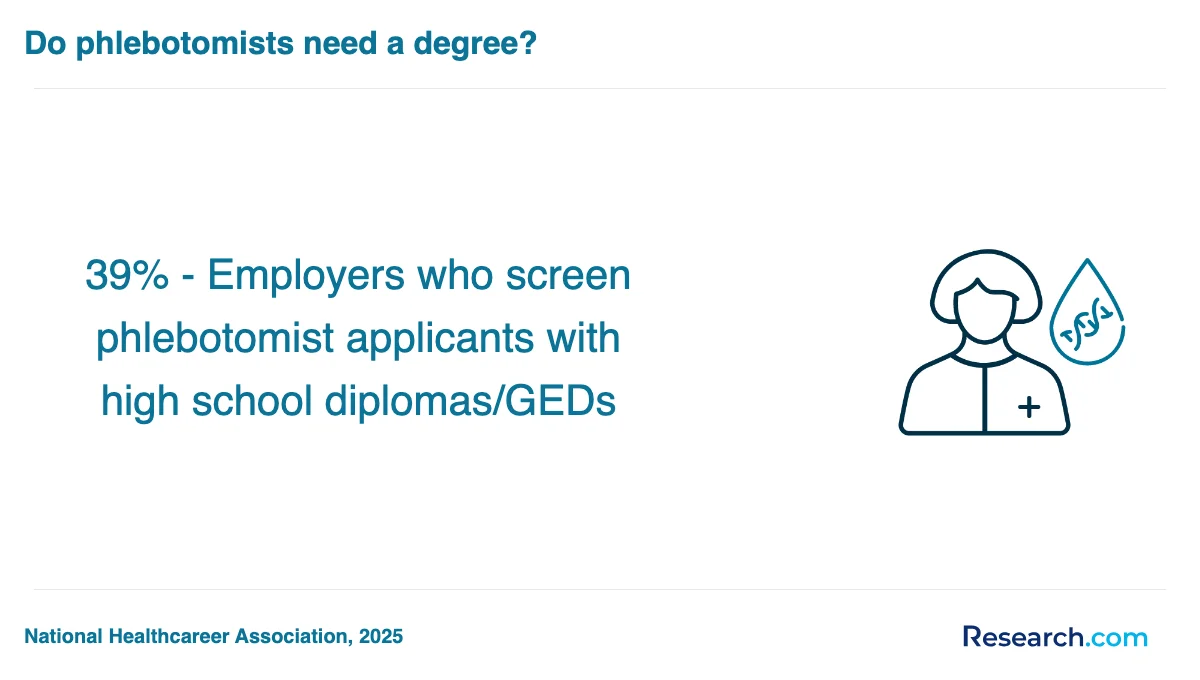
- Applicants must have a high school diploma or GED, be at least 18 years old, and pass a clean background check with no felonies.
- Training programs last 4 to 8 weeks and require about 9 credits, combining classroom instruction and hands-on clinical practice.
- Programs can be on campus or online, but remote students need to arrange local clinical training and supervision.
- Tuition typically ranges from $1,500 to $3,000, excluding textbooks, supplies, and additional certification fees.
- Graduates can take national certification exams, which are recommended but not required in Alaska.
- Starting salaries average between $34,000 and $38,000 annually, with experienced technicians earning up to $50,000 per year.
How long does it take to complete phlebotomy technician trade schools in Alaska?
Completing a phlebotomy technician trade school program in Alaska typically takes about 4 to 8 weeks, depending on the school and course format. Many graduates from popular Alaskan trade schools share how the intensive, hands-on training fits perfectly into their busy lives, allowing them to jump into the workforce quickly. Imagine starting your mornings practicing blood draws in a well-equipped lab, then spending afternoons in clinical rotations at local clinics or hospitals-this immersive experience makes learning exciting and practical.
One graduate described the program as a whirlwind of discovery and confidence-building, where you gain real skills in record time without sacrificing quality. Trade schools in Anchorage and Fairbanks often offer flexible schedules, including evening and weekend classes, making it easier for students juggling other responsibilities. The sense of accomplishment from finishing the program swiftly and stepping into a healthcare role is a powerful motivator for many Alaskan students eager to serve their communities.
What's the difference between online and on-campus phlebotomy technician trade school programs?
Choosing between online and on-campus phlebotomy technician trade school programs in Alaska is like picking your own adventure in learning. On-campus students at places like Alaska Career College dive headfirst into hands-on labs, practicing blood draws right alongside instructors who offer instant guidance. Imagine the buzz of a classroom filled with peers mastering the art of specimen processing together-graduates often recall how this direct interaction boosted their confidence and skills faster than they expected.
Meanwhile, online learners at the University of Alaska Anchorage enjoy the flexibility of studying theory from anywhere in the state, perfect for those juggling work or family. Yet, these students still arrange real-world clinical experiences at local approved sites, often sharing stories of meaningful moments working one-on-one with medical professionals. This blend of digital lessons and in-person practice creates a unique rhythm that suits many Alaskan lifestyles.
Both paths demand hands-on training to meet national certification standards, but the choice depends on whether you thrive in a bustling classroom or prefer the freedom to learn at your own pace while gaining local clinical experience.
What is the average cost of phlebotomy technician trade schools in Alaska?
When exploring the average cost phlebotomy technician program Alaska offers, it's intriguing to see how pricing varies across different schools. For example, students at the University of Alaska Anchorage, many of whom felt energized by the hands-on learning experience, pay about $1,727 in tuition if they're Alaska residents. This fee covers the core 9-credit course but adds extra costs like $120 for lab fees, $81 for course fees, and roughly $233-$311 for textbooks. Meanwhile, non-resident students notice a jump, paying approximately $7,101 just for tuition. The positive takeaway? This university's program prepares students well to sit for the ASCP exam, costing another $135, enhancing graduates' confidence as they step into their careers.
At Anchorage's Alaska Career College, graduates often reflect fondly on their 7-month journey through the Phlebotomy Technician Specialist program, with total tuition and supplies costing $10,287. This all-inclusive price lets students embrace their studies without worrying about hidden fees, fueling their excitement about taking the National Phlebotomy Association certification exam right after.
Another vibrant option is Phlebotomy USA, where enthusiastic students enjoy flexible class schedules and a comprehensive course for only $995. This fee covers tuition, books, supplies, and even the national exam, perfectly matching those eager to jump-start their phlebotomy career without breaking the bank.
Overall, comparing phlebotomy technician program tuition fees Alaska reveals a wide spectrum depending on the school and program length. For students ready to dive into this field, it's smart to explore financial aid options and connect with schools directly. Curious learners might also want to check out medical assistant diploma programs to broaden their horizons in healthcare education.

What financial aid is available for phlebotomy technician trade schools in Alaska?
Phlebotomy technician students in Alaska often find financial aid to be a game-changer in their journey. Many graduates from popular trade schools like the University of Alaska Anchorage share how the Federal Pell Grant-offering up to $5,730 annually-helped them cover tuition without the stress of repayment. Imagine starting your clinical rotations knowing some of your expenses are already handled!
State support also plays a big role. The AlaskAdvantage Education Grant provides $500 to $4,000 for students showing financial need. Graduates often recall submitting their FAFSA by April 15 and feeling hopeful as funds were awarded based on their situation-perfect for those balancing school and life in Alaska's unique environment.
For hands-on training phases, the University of Alaska system's Clinical Health Placement Financial Aid Funding Award can ease the strain during clinical rotations when work opportunities shrink. Many students appreciate this timely help, especially when juggling the cost of tuition, lab fees, and books-like the $1,727 tuition for nine credits at UAA plus additional course costs.
Scholarships also brighten the path, giving merit- or need-based awards that many students tap into through platforms like Fastweb. These layered financial supports make pursuing phlebotomy training in the Last Frontier feel not only possible but exciting.
What are the prerequisites for enrolling in phlebotomy technician trade schools in Alaska?
To dive into a phlebotomy technician trade school program in Alaska, you'll need to meet a few straightforward prerequisites that set you on the path to success. Most popular Alaskan trade schools, like those in Anchorage or Fairbanks, expect you to have a high school diploma or GED. This baseline ensures you're ready to tackle the technical skills ahead.
Graduates often share how having a clean background check and up-to-date immunizations helped smooth their enrollment process. Imagine arriving at your first clinical session in a bustling Anchorage hospital, confident that all your paperwork is in order-this peace of mind lets you focus fully on learning.
Typically, schools ask for:
- A high school diploma or GED
- Proof of immunizations such as Hepatitis B and TB tests
- Clear criminal background check
- Basic CPR certification (sometimes required before clinicals)
Some students find it thrilling that these requirements aren't just bureaucratic hurdles-they're key to ensuring a safe, professional learning environment. Picture stepping into your hands-on training with fellow students, all prepared and eager to master blood draws and patient care in Alaska's unique healthcare settings.

What are the typical courses in phlebotomy technician trade schools in Alaska?
Diving into phlebotomy technician trade school programs in Alaska means immersing yourself in courses designed to blend hands-on skills with essential healthcare knowledge. Graduates from programs like the University of Alaska Anchorage rave about the thrilling mix of theory and practice, especially the core courses that bring the lab to life:
- Medical terminology, anatomy, and physiology to understand the human body and its secrets
- Phlebotomy and specimen processing techniques, where students sharpen their blood draw skills
- Phlebotomy practicum, offering real clinical placements to build confidence with supervised blood collection in hospitals or clinics
- Cultural diversity in health care, preparing students to connect compassionately with Alaska's diverse communities
At Alaska Career College, students also dive into medical office software and electronic health records, empowering them to navigate the fast-paced medical world seamlessly. Imagine mastering both the delicate art of drawing blood and the tech-savvy skills to manage patient info efficiently-graduates describe this as a game-changer for their careers.
Whether it's a quick, intense 48-hour course or a more immersive 7-month journey, the focus stays on practical experience with tools like VeinViewer, ensuring every student steps into the workforce eager and ready. It's a hands-on adventure that transforms curious learners into confident professionals.
What are the available specializations in phlebotomy technician trade schools in Alaska?
In Alaska, phlebotomy technician trade school programs come alive with exciting specializations designed to jumpstart your healthcare journey. Two popular paths you'll find are the Phlebotomy Laboratory & ECG Technician Specialist and the Phlebotomy Technician Specialist. Graduates from Alaska Career College often share how the Laboratory & ECG program wrapped them in a rich mix of medical terminology, anatomy, first aid, electronic health records, and medical office software applications - all essential skills that build confidence for the real-world challenges ahead.
Meanwhile, those who choose the Phlebotomy Technician Specialist route frequently praise programs like the one at University of Alaska Fairbanks Community and Technical College, where hands-on externships in local medical labs turn textbook knowledge into tangible experience. Imagine wrapping up a semester not just knowing the theory but having drawn blood in a clinical setting, ready for national certification exams.
This training ensures you're well-prepared to excel both technically and professionally, boosting your chances for better positions and the sought-after phlebotomist salary highest opportunities in Alaska's healthcare industry.
How do you choose the best phlebotomy technician trade school program in Alaska?
Choosing from the best phlebotomy schools in Alaska means looking beyond just course titles-think about real student experiences at places like the University of Alaska Anchorage or Alaska Career College. Graduates often share how hands-on clinical training, including supervised blood draws, boosted their confidence before stepping into a real lab. Imagine balancing your studies with life; programs offering blended learning, like Charter College's mix of online and in-person classes, can make this possible without missing a beat.
It's crucial to select accredited phlebotomy technician programs Alaska employers trust, ensuring your certificate qualifies you for national exams. Students appreciate programs that dive deep into infection control, patient care, and legal standards, making them ready for the challenges ahead. Plus, understanding if can medical assistants draw blood might affect your scope of practice can be eye-opening when choosing a school.
What career paths are available for phlebotomy technician trade school graduates in Alaska?
Graduates of phlebotomy technician trade school programs in Alaska step into a world rich with vibrant career opportunities. Many find themselves working as phlebotomists in bustling hospitals or cozy clinics in Anchorage and Fairbanks, performing essential specimen collections that keep healthcare running smoothly. Others discover exciting roles as Donor Service Technicians, especially at places like the Blood Bank of Alaska, where they engage directly with blood donors and gain specialized skills that broaden their expertise and pay.
These phlebotomy technician jobs in Alaska often serve as a launchpad to related fields. Graduates from popular trade schools in the state share stories of moving into laboratory assistant or patient care technician roles, where digging deeper into anatomy and patient interaction becomes the norm. The flexible scheduling and paid training offered by Alaska employers make these paths not only achievable but rewarding.
With professional certification encouraged throughout the state, those curious about the next step in their journey can explore what degree do i need to be a phlebotomist to enhance their qualifications and open doors to leadership positions.
For graduates eager to explore, career opportunities for Alaska phlebotomy graduates truly reflect the diversity of healthcare settings across urban and remote communities alike, offering an adventurous beginning to a meaningful profession.
What is the job market for phlebotomy technician trade school graduates in Alaska?
Graduates from phlebotomy technician trade schools in Alaska find themselves stepping into a lively job market, especially in bustling hubs like Anchorage. The phlebotomy technician job outlook in Alaska is promising, with wages hovering around $20.64 per hour in Anchorage-equating to an annual paycheck close to $43,000 for full-time work. Many recent grads from popular trade schools share stories of quick placements in hospitals and clinics where their hands-on skills are highly valued.
In smaller towns, competition can slow down, but some adventurous technicians take on traveling roles, earning between $1,000 and $1,400 weekly, often with housing included. This demand hints at exciting employment opportunities for those willing to explore Alaska's diverse healthcare settings.
Phlebotomist employment opportunities Alaska-wide reflect a steady need, particularly for certified technicians able to support busy urban medical centers. Graduates often highlight their confidence gained through practical training and point to additional certifications as pathways to higher salaries.
Students looking to enhance their career prospects complement their hands-on training with online medical courses for more comprehensive healthcare skills.
Frequently Asked Questions about phlebotomy technician
After completing a phlebotomy technician trade school in Alaska, preparing for the job market involves several key steps. First, obtaining certification is crucial; most employers prefer candidates certified by organizations like the National Phlebotomy Association or American Society for Clinical Pathology. In Alaska, certification can enhance job prospects, given the state's competitive healthcare sector.
Next, gaining practical experience through internships or externships provided by the school helps build skills and professional connections. Networking with local healthcare facilities, such as hospitals and clinics in Anchorage or Fairbanks, can lead to job opportunities.
Finally, tailoring your resume to highlight relevant skills and certifications, and preparing for interviews by understanding the specific demands of Alaskan healthcare settings, will improve your chances of employment. The Alaska Department of Labor projects steady demand for phlebotomy technicians, making these preparations important for success.
Employers in Alaska seeking phlebotomy technician graduates prioritize technical skills and professionalism. Accurate venipuncture technique is essential, as it directly affects patient safety and sample quality. According to the Alaska Department of Labor, attention to detail and adherence to safety protocols reduce errors and improve laboratory efficiency.
Strong communication skills are also vital. Phlebotomy technicians must clearly explain procedures to patients, many of whom may be anxious or have limited English proficiency. Cultural sensitivity is important in Alaska's diverse population.
Additionally, employers value graduates familiar with electronic health records (EHR) systems, a growing requirement in healthcare settings statewide. Time management and reliability complete the core skill set expected from trade school graduates.
Finding internships in Alaska relevant to phlebotomy technician trade school programs involves several practical steps. Start by contacting local healthcare facilities such as hospitals, clinics, and laboratories in major cities like Anchorage and Fairbanks. Many of these institutions partner with trade schools to offer clinical internships.
The Alaska Department of Labor and Workforce Development provides resources and listings for healthcare internships, including phlebotomy. Utilizing their job centers can help locate opportunities nearby.
Additionally, trade schools often have established relationships with employers who provide hands-on training. Students should inquire directly with their school's career services for internship placements.
According to the U.S. Bureau of Labor Statistics, healthcare internships in Alaska have grown slightly in recent years, reflecting a steady demand for trained phlebotomy technicians throughout the state.
Obtaining a phlebotomy technician trade school diploma in Alaska significantly enhances career mobility and advancement opportunities. The diploma prepares students with essential skills, meeting state certification requirements that employers prioritize. According to the Alaska Department of Labor and Workforce Development, certified phlebotomists in Alaska earn a median wage of about $45,000 annually, with higher earnings linked to formal training and certification.
Trade school graduates often qualify for entry-level positions in hospitals, clinics, and laboratories, providing a clear pathway to specialized roles or supervisory positions. Additionally, Alaska's healthcare sector values hands-on experience gained during diploma programs, further boosting employability.
Completion of an accredited phlebotomy program also supports eligibility for nationally recognized certifications, such as those from the American Society for Clinical Pathology (ASCP), which can enhance job prospects both within Alaska and nationwide.
Students enrolled in phlebotomy technician trade schools in Alaska can benefit from part-time jobs that offer practical experience and income. Common opportunities include working as medical assistants, patient care technicians, or laboratory aides in clinics, hospitals, and blood donation centers. According to the Alaska Department of Labor and Workforce Development, healthcare support roles are projected to grow by 12% through 2030, reflecting steady demand.
Part-time positions in these settings help students develop skills in patient interaction and specimen handling, complementing their classroom learning. Additionally, some employers offer flexible shifts suitable for students balancing education and work. Gaining hands-on experience while studying enhances employability after graduation.
To choose the most affordable Phlebotomy Technician degree program near you in Alaska, start by researching programs available near Alaska to compare tuition rates, fees, and associated costs. Consider community colleges and technical schools as they often offer lower-cost programs and check if there are any financial aid options or scholarships specific to the region. Additionally, using resources such as Research.com can provide insights into program rankings and reviews to ensure quality education while finding an affordable path.
Related Phlebotomy Technician Rankings for Nearby States
- Most Affordable Phlebotomy Technician Schools & Training - Budget-Friendly Phlebotomy Tech Trade Programs in California for 2026
- Most Affordable Phlebotomy Technician Schools & Training - Budget-Friendly Phlebotomy Tech Trade Programs in Nevada for 2026
- Most Affordable Phlebotomy Technician Schools & Training - Budget-Friendly Phlebotomy Tech Trade Programs in Arizona for 2026
- Most Affordable Phlebotomy Technician Schools & Training - Budget-Friendly Phlebotomy Tech Trade Programs in Colorado for 2026
- Most Affordable Phlebotomy Technician Schools & Training - Budget-Friendly Phlebotomy Tech Trade Programs in New Mexico for 2026
- Most Affordable Phlebotomy Technician Schools & Training - Budget-Friendly Phlebotomy Tech Trade Programs in Kansas for 2026
- Most Affordable Phlebotomy Technician Schools & Training - Budget-Friendly Phlebotomy Tech Trade Programs in Minnesota for 2026
- Most Affordable Phlebotomy Technician Schools & Training - Budget-Friendly Phlebotomy Tech Trade Programs in Arkansas for 2026
- Most Affordable Phlebotomy Technician Schools & Training - Budget-Friendly Phlebotomy Tech Trade Programs in Louisiana for 2026
- Most Affordable Phlebotomy Technician Schools & Training - Budget-Friendly Phlebotomy Tech Trade Programs in Illinois for 2026
Top Trending Rankings
References
- Phlebotomy Technician Technical Diploma | Northcentral Technical College https://www.ntc.edu/academics-training/programs/all/technical-diploma/phlebotomy-technician
- Phlebotomy Courses Near Me | Phlebotomy School Near Me https://phlebotomycareertraining.com/
- Approved Phlebotomy Training School List https://www.cdph.ca.gov/Programs/OSPHLD/LFS/Pages/Approved-Phlebotomy-Training-Schools.aspx
- Accelerated Phlebotomy Technician Program | CALRegional https://calregional.com/program-category/phlebotomy-technician-program/
- Online Phlebotomy Technician Certification Classes https://www.uscareerinstitute.edu/online-phlebotomy-school
- Enroll in CHCP’s New Phlebotomy Technician Certification https://www.chcp.edu/degrees-certificates/on-campus/phlebotomy-technician-certificate-program/
- Phlebotomy | Kaiser Permanente School of Allied Health Sciences https://kpsahs.edu/phlebotomy
- Online Phlebotomy Technician Program | Penn Foster https://www.pennfoster.edu/programs/healthcare/phlebotomy-technician-career-diploma
- Phlebotomy Technician Certificate Program https://pmi.edu/on-campus-programs/certificate/phlebotomy-technician/
- Phlebotomy Technician | Education for professionals at PCC https://www.pcc.edu/professional/health/entry/phlebotomy/


