
Most Affordable Phlebotomy Technician Schools & Training - Budget-Friendly Phlebotomy Tech Trade Programs in California for 2026

Co-Founder and Chief Data Scientist
Choosing the right phlebotomy technician trade school in California can be overwhelming. To help, this article presents a carefully crafted ranking of top programs created by the Research.com team of data scientists. It’s designed to guide you toward schools that offer quality education without breaking the bank.
Whether you’re starting a new career or seeking certification, earning a diploma in phlebotomy opens doors to rewarding healthcare opportunities. Reading this article will give you clear, reliable insights to make an informed choice and take confident steps toward your future.
Key benefits of finishing phlebotomy technician trade school in California
- Graduates of phlebotomy technician trade schools in California can expect entry-level salaries starting around $41,925 per year, with experienced technicians earning up to nearly $59,800 annually, offering a strong financial foundation early in their careers.
- Career paths include working in hospitals, labs, or clinics, with opportunities to advance into supervisory roles or specialized phlebotomy positions, as seen in graduates from popular California trade schools who quickly find rewarding healthcare jobs.
- Completing a phlebotomy technician trade school online offers flexibility and faster completion times, allowing graduates from well-known California online programs to balance work and study while entering the workforce sooner than traditional degree paths.
What can I expect from phlebotomy technician trade schools in California?
Enrolling in a phlebotomy technician trade school program in California means stepping into a carefully designed journey that balances classroom learning with hands-on experience. Graduates often recall the intense but rewarding 40 to 70 hours of didactic instruction, where they absorbed vital knowledge about anatomy, infection control, and safety procedures. At institutions like Sanger Adult School, students find the extended classroom time especially helpful to build a strong foundation before moving into clinical practice.
One of the most memorable parts for many is the clinical externship, where you spend at least 40 hours drawing blood from real patients under supervision. This phase transforms textbook skills into real confidence, as students experience the nuances of venipuncture and specimen handling firsthand. Stories from alumni often highlight how this practical training helped ease their nerves and prepared them for professional settings.
Students also prepare for state certification exams, knowing that completing the program makes them eligible to apply for the Certified Phlebotomy Technician 1 license-a key step toward meaningful employment in California's healthcare field.
Financial considerations are part of the reality, with tuition around $2,995 plus additional fees, but many graduates feel the investment is worthwhile for the career opportunities that follow.
Where can I work after finishing phlebotomy technician trade schools in California?
Graduates of phlebotomy technician trade school programs in California often find themselves welcomed into a broad spectrum of healthcare settings. Many begin their careers in bustling hospitals or clinical laboratories, where they quickly learn the importance of precision and calm under pressure. Others step into roles at outpatient care centers or physicians' offices, environments that allow for meaningful patient interaction and steady schedules. Popular trade schools in California prepare students well for these realities, blending hands-on practice with real-world scenarios that build confidence.
Some graduates share how working at blood donation centers or mobile blood collection units sparked a sense of purpose, knowing their skills contribute directly to life-saving medical efforts. The flexibility of travel phlebotomist positions also appeals to those eager to explore different parts of the state while earning competitive wages. Whether stationed in a major city like Los Angeles or serving smaller communities, alumni report feeling proud to be part of healthcare teams that value their expertise and dedication.
How much can I make after finishing phlebotomy technician trade schools in California?
Graduates of phlebotomy technician trade school programs in California often find themselves stepping into roles with competitive pay that reflects their specialized skills. Many who completed their training at well-known California trade schools report starting hourly wages around $20 to $23, which quickly feels rewarding after months of focused study and hands-on practice.
With dedication and gaining experience, these wages can rise to about $26.25 per hour, translating to an annual salary near $54,600 for full-time work. Imagine working in bustling cities like Los Angeles or San Francisco, where demand for certified phlebotomists pushes wages above $27 per hour. Graduates often share how this financial uplift supports their goals, whether it's paying off student loans or saving for future training.
Many reflect on how completing an accredited program not only boosts their confidence to enter healthcare but also opens doors to steady, well-paying jobs. The consistency of California's higher salaries compared to other states encourages students to choose local trade schools, knowing their investment in education leads to tangible, uplifting rewards.
Most Affordable Phlebotomy Technician Schools & Training - Budget-Friendly Phlebotomy Tech Trade Programs in California for 2026
# 1 position
MTI College - Phlebotomy Technician/Phlebotomist.
certificate or diplomaMTI College offers a Phlebotomy Technician/Phlebotomist program in a hybrid format, combining distance education with in-person training. The program prepares students to draw blood samples under medical supervision, covering vascular anatomy, blood physiology, venipuncture techniques, specimen handling, and safety procedures. Graduates earn a median income of $36,215 one year after completion. The program is accredited by the Western Association of Schools and Colleges Accrediting Commission for Community and Junior Colleges.
# 2 position
Institute for Business and Technology - Phlebotomy Technician/Phlebotomist.
certificate or diplomaThe Phlebotomy Technician/Phlebotomist program at the Institute for Business and Technology offers hybrid learning with some distance-education options. It prepares students to draw blood samples using various techniques under professional supervision. Instruction covers vascular anatomy, blood physiology, venipuncture, specimen handling, safety, sanitation, and regulatory standards. The program is accredited by the Accrediting Commission of Career Schools and Colleges.
# 3 position
National Career Education - Phlebotomy Technician/Phlebotomist.
certificate or diplomaThe Phlebotomy Technician/Phlebotomist program at National Career Education is a hybrid course designed to prepare students to draw blood samples under professional supervision. Instruction covers vascular anatomy, blood physiology, skin puncture, venipuncture, specimen handling, safety, and regulatory standards. The program is accredited by the Accrediting Commission of Career Schools and Colleges, ensuring recognized quality and standards in training.
# 4 position
Pima Medical Institute-San Marcos - Phlebotomy Technician/Phlebotomist.
certificate or diplomaThe Phlebotomy Technician/Phlebotomist program at Pima Medical Institute-San Marcos offers a hybrid format with some distance-education options. It prepares students to draw blood samples under medical supervision, covering vascular anatomy, blood physiology, venipuncture, specimen handling, safety, and regulations. Graduates have median earnings of $31,071 one year after completion. The program is accredited by the Accrediting Bureau of Health Education Schools.
# 5 position
Saddleback College - Phlebotomy Technician/Phlebotomist.
certificate or diplomaThe Phlebotomy Technician/Phlebotomist program at Saddleback College offers a hybrid format with some distance-education options. It trains students to draw blood samples using various techniques under medical supervision. The curriculum covers vascular anatomy, physiology, venipuncture, specimen handling, safety, and relevant regulations. Annual in-state tuition is $1,432. The program is accredited by the Western Association of Schools and Colleges Accrediting Commission for Community and Junior Colleges.
# 6 position
De Anza College - Phlebotomy Technician/Phlebotomist.
certificate or diplomaDe Anza College offers a hybrid Phlebotomy Technician/Phlebotomist program that prepares students to draw blood samples under medical supervision. The curriculum covers vascular anatomy, blood physiology, venipuncture, specimen handling, safety, and regulations. The program’s annual in-state tuition is $1,562. It is accredited by the Western Association of Schools and Colleges Accrediting Commission for Community and Junior Colleges.
# 7 position
Bakersfield College - Phlebotomy Technician/Phlebotomist.
certificate or diplomaBakersfield College offers a Phlebotomy Technician/Phlebotomist program in a hybrid format, combining in-person and distance education. The curriculum covers blood sample collection techniques, vascular anatomy, blood physiology, safety procedures, and relevant standards. The program is accredited by the Western Association of Schools and Colleges Accrediting Commission for Community and Junior Colleges. Annual in-state tuition is $1,430.
# 8 position
Cabrillo College - Phlebotomy Technician/Phlebotomist.
certificate or diplomaThe Phlebotomy Technician/Phlebotomist program at Cabrillo College is a hybrid course that prepares students to draw blood samples using various techniques under healthcare supervision. It includes instruction on vascular anatomy, blood physiology, venipuncture, specimen handling, and safety procedures. The program's annual in-state tuition is $1,270 and is accredited by the Western Association of Schools and Colleges Accrediting Commission for Community and Junior Colleges.
# 9 position
City College of San Francisco - Phlebotomy Technician/Phlebotomist.
certificate or diplomaThe Phlebotomy Technician/Phlebotomist program at City College of San Francisco prepares students to draw blood samples using various techniques under healthcare supervision. The curriculum covers vascular anatomy, blood physiology, skin puncture, venipuncture, specimen handling, and safety protocols. The program’s annual in-state tuition is $1,696. It is accredited by the Western Association of Schools and Colleges Accrediting Commission for Community and Junior Colleges.
Key Findings
- Applicants must be at least 18 years old and have a high school diploma or GED; foreign diplomas need evaluation for U.S. equivalency.
- Programs typically include about 70 hours of classroom instruction and 40 hours of clinical externship, with a minimum of 40 hours each for didactic and clinical training required for licensure.
- Students must complete at least 50 venipunctures and 10 skin punctures during clinical practice to qualify for state licensure.
- The average cost of a phlebotomy technician program in California is around $2,995, plus approximately $370 for books, scrubs, background checks, and licensing fees.
- Graduates can apply for California state licensure as Certified Phlebotomy Technician 1 (CPT1) and expect starting salaries between $38,000 and $48,000 annually.
- Experienced phlebotomy technicians often earn between $50,000 and $60,000 per year, with strong job demand in hospitals, labs, and public health settings.
How long does it take to complete phlebotomy technician trade schools in California?
Completing a phlebotomy technician trade school program in California typically takes between 4 to 8 weeks. Many graduates from well-known California trade schools recall how the compact schedule allowed them to quickly transition from students to confident professionals. One graduate described the experience as intense but rewarding, with hands-on practice sessions that felt like real-world shifts at local clinics. The short duration does not mean a lack of depth; instead, it reflects the focused nature of these programs designed to equip students efficiently with essential skills.
Students often appreciate how the condensed timeline fits well with their busy lives, enabling them to start working sooner and begin earning. Trade schools in California emphasize practical training alongside classroom instruction, which helps students feel prepared and enthusiastic about their careers. This quick yet thorough approach resonates with many aspiring phlebotomists, who value the balance of expert guidance and real-life application during their brief but impactful training period.
What's the difference between online and on-campus phlebotomy technician trade school programs?
The core difference between online and on-campus phlebotomy technician trade school programs in California lies in how students engage with the hands-on nature of their training. Graduates from well-known programs, such as those affiliated with Kaiser Permanente School of Allied Health Sciences, often reflect on the immersive experience of practicing blood draws in campus labs, appreciating the immediate feedback from instructors and peers. This face-to-face interaction builds confidence and skill in a way that purely virtual lessons cannot fully replicate.
Online programs, meanwhile, appeal to students juggling work or family commitments by offering flexible access to lectures and quizzes. However, these students still share the challenge of completing clinical hours in approved medical settings to meet California's licensure requirements. Many find that balancing at-home simulations with real-world clinical rotations creates a unique blend of convenience and essential practical experience.
For those seeking a structured environment with direct support, the on-campus route often feels more reassuring, while others value the adaptability that online components provide without sacrificing the critical in-person training California mandates.
What is the average cost of phlebotomy technician trade schools in California?
The average cost of phlebotomy programs in California generally ranges from $1,000 to $3,000, depending on the specific trade school and program features. Graduates often share that while some programs, such as those at the BAMA Institute, can cost upwards of $3,500, others like Phlebotomy Training Specialists offer tuition around $2,595, giving students options based on their budget and time constraints. This spectrum of phlebotomy technician program tuition fees in California reflects the diverse opportunities available across the state.
Students at popular trade schools find that program lengths and included services significantly affect pricing. A two-month course might be priced slightly higher than a 10-week program due to additional hands-on training or comprehensive study materials. Graduates describe the experience as worthwhile, noting the balance between cost and the quality of education received. Beyond tuition, it's important to factor in extra expenses such as textbooks, lab supplies, and certification exam fees, which can add to the overall investment.
Financial aid and flexible payment plans help many students manage costs effectively. It's wise for prospective students to reach out to each school to ask about these options. For those exploring related healthcare education pathways, exploring medical assisting trade schools can also provide insights into pricing and program structure within the broader medical training landscape in California.
What financial aid is available for phlebotomy technician trade schools in California?
Phlebotomy technician students in California often find relief through a variety of financial aid options tailored to ease the burden of tuition and certification costs. Many graduates recall how completing the FAFSA opened doors to federal aid like Pell Grants, which felt like a true blessing since these funds don't require repayment. Schools accredited for federal funding also offer work-study programs, allowing students to earn while they learn, providing both income and valuable experience.
State programs such as the Workforce Innovation & Opportunity Act (WIOA) have made a significant difference for those attending programs like the College of the Desert, where eligibility for WIOA funds has helped cover a large portion of tuition. Graduates often describe the peace of mind gained from knowing these funds are dedicated to high-demand fields like phlebotomy.
Many trade schools and community colleges in California offer institutional scholarships and need-based tuition assistance, which students appreciate as a personalized support system. Flexible payment plans, including interest-free options from schools like CALRegional and PhlebotomyUSA, provide practical budgeting solutions, making education feel accessible and manageable.
Additionally, some private schools accept third-party vouchers from local healthcare organizations, which has proven invaluable for students balancing work, family, and school commitments. These combined resources create a supportive financial environment that encourages students to focus on their training without constant financial stress.
What are the prerequisites for enrolling in phlebotomy technician trade schools in California?
Enrolling in a phlebotomy technician trade school in California often requires meeting clear, straightforward prerequisites that set the foundation for your success. Most graduates from well-known California trade schools share how these initial requirements helped them feel confident and prepared stepping into the program.
Typical prerequisites include:
- Being at least 18 years old, ensuring a mature approach to patient care.
- Possessing a high school diploma or GED, which demonstrates basic academic readiness.
- Passing a background check and sometimes a drug screening, reflecting the trustworthiness needed in healthcare settings.
- Providing proof of immunizations like Hepatitis B and TB tests, vital for safety in clinical environments.
Many students recall how fulfilling these requirements felt like the first step toward a meaningful career. For example, graduates from popular schools in Los Angeles or San Diego often emphasize that meeting these prerequisites not only ensured their eligibility but also made them eager to engage with hands-on training confidently. These steps are designed to protect both the student and future patients, fostering a positive and professional learning atmosphere.

What are the typical courses in phlebotomy technician trade schools in California?
Phlebotomy technician programs in California immerse students in essential courses designed to build both knowledge and confidence. Graduates often reflect on how foundational classes, such as medical terminology and anatomy, helped them quickly grasp the language and structure of the human body, a crucial step before handling real patients. For example, those attending Loma Linda University appreciated detailed lessons on medicolegal issues and infection control, which made them feel prepared for the ethical responsibilities of the role.
Hands-on laboratory sessions are a highlight, where students practice venipuncture and specimen handling. Many recall how schools like CALRegional and Kaiser Permanente balance time with nearly half their training dedicated to labs, allowing them to develop steady hands and calm nerves.
Clinical externships offer invaluable real-world exposure. Graduates from Kaiser's program often mention the confidence gained during their 160-hour rotations, drawing blood from diverse patients under supervision. This blend of theory, practice, and real experience creates a rewarding journey toward becoming a skilled phlebotomy technician in California.
What are the available specializations in phlebotomy technician trade schools in California?
Phlebotomy technician trade school programs in California offer clear pathways through specialized certification levels that shape student careers. Graduates often describe their experience navigating California phlebotomy trade school certification levels, which include the Limited Phlebotomy Technician (LPT), Certified Phlebotomy Technician I (CPT I), and Certified Phlebotomy Technician II (CPT II). Each level opens distinct hands-on opportunities, such as performing simple skin punctures or mastering venipuncture procedures in hospitals.
Many find that focusing on phlebotomy technician specializations in California enriches their training with practical skills that match real clinical demands. For example, students at popular trade schools often train through rigorous clinical externships that simulate busy outpatient clinics, enhancing both confidence and competence.
- Limited Phlebotomy Technician (LPT): Focuses on skin punctures like fingersticks, often in outpatient or clinic settings.
- Certified Phlebotomy Technician I (CPT I): Broad certification covering venipuncture and skin puncture on patients of all ages, preparing students for most California medical workplaces.
- Certified Phlebotomy Technician II (CPT II): Advanced level including arterial puncture, suited for acute care environments and requiring additional experience.
Students looking to accelerate their career path may consider an accelerated phlebotomy technician certificate training program, often available through California trade schools. These programs balance theory and clinical practice, making real-world readiness both achievable and rewarding.
How do you choose the best phlebotomy technician trade school program in California?
Choosing the best phlebotomy technician trade school program in California means focusing on programs that balance quality with affordability. Graduates from well-known institutions often highlight the significance of attending schools approved by the California Department of Public Health, ensuring curriculum standards include both sufficient classroom hours and hands-on clinical training. Affordable phlebotomy technician programs in California, like those at Downey Adult School, provide not only comprehensive instruction but also include materials in their tuition, easing the financial burden for many students.
Flexibility plays a crucial role, as many students managing work or family commitments benefit from evening or weekend classes offered by the best phlebotomy technician schools in California. Alumni frequently praise programs that also prepare them well for state and national certification exams, which is vital for employment success. Additionally, job placement assistance at some schools adds confidence when transitioning into the workforce.
Understanding the difference in career paths, such as between a phlebotomist and a medical assistant, is important for commitment and expectations; resources comparing phlebotomist salary vs medical assistant can clarify these choices before enrolling.

What career paths are available for phlebotomy technician trade school graduates in California?
Graduates of phlebotomy technician trade school programs in California find a wealth of phlebotomy technician job opportunities in California that extend beyond traditional hospital roles. Many start as Certified Phlebotomy Technicians (CPT 1), gaining hands-on experience drawing blood in hospitals, clinics, and laboratories. Others find rewarding positions as mobile phlebotomy technicians, visiting patients at home or supporting community health events, which brings a unique personal fulfillment from connecting directly with people.
Many graduates from popular California trade schools share how the foundation they built in phlebotomy opens doors to broader healthcare roles. Key career paths include:
- EKG technician
- Medical assistant
- Laboratory technician
- Nurse or physician's assistant with further education
This versatility reflects the real-life potential for career advancement for phlebotomy graduates in California. The training instills vital skills in patient care and lab safety, valued throughout healthcare. Additionally, some graduates move into research roles or clinical trial support within academic centers, further broadening their scope.
Those curious about expanding their healthcare credentials often explore short healthcare certifications that pay well alongside phlebotomy to enhance their career trajectory.
What is the job market for phlebotomy technician trade school graduates in California?
The phlebotomy technician job outlook in California remains highly favorable, especially for trade school graduates ready to enter the workforce quickly. Graduates from popular programs report finding steady employment within weeks, thanks to the state's high demand for healthcare professionals in facilities ranging from major hospitals to outpatient centers. Many find that certification through recognized state agencies significantly boosts their hiring prospects and wage potential.
Hourly wages in urban hubs like Los Angeles and San Francisco often exceed the state average, with some specialized roles paying up to $31 per hour. Entry-level salaries typically start around $41,925 annually, while experienced technicians can earn up to $59,801. This range makes phlebotomy an accessible career option with solid financial rewards early on.
Students appreciate that most programs take just 3 to 12 weeks, allowing them to quickly transition into paid roles. Successful graduates often highlight career stability and fulfilling real-life impacts, such as contributing to essential diagnostic testing and preventive health screenings in their communities.
For those exploring options, the most affordable online phlebotomy technician certification program can offer flexible pathways aligned with California's healthcare demands.
Frequently Asked Questions about phlebotomy technician
After completing a phlebotomy technician trade school in California, preparing for the job market involves several key steps. First, obtaining certification from recognized bodies such as the National Phlebotomy Association or the American Society for Clinical Pathology can enhance employability. California requires phlebotomists to be certified or registered, so verifying state-specific credentialing is essential.
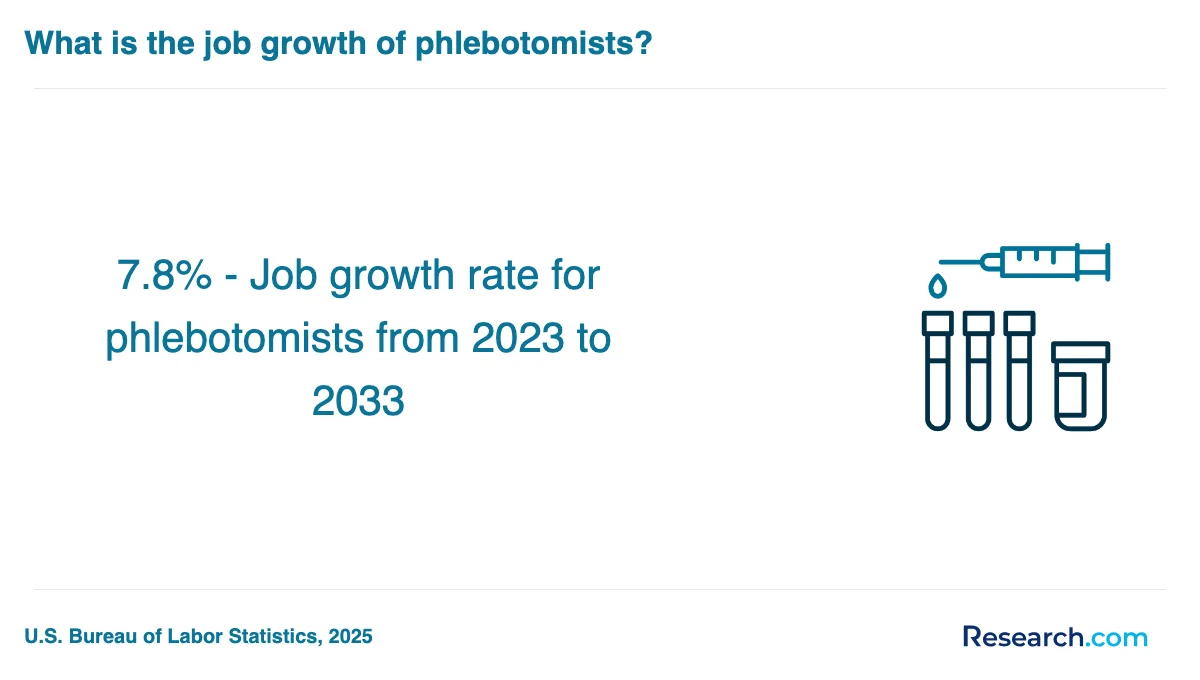
Next, gaining practical experience through internships or externships offered by many trade schools provides valuable hands-on skills. Networking with healthcare employers in hospitals, clinics, or laboratories can improve job prospects. According to the California Employment Development Department, the demand for phlebotomy technicians is expected to grow 15% from 2022 to 2032, indicating a favorable job market.
Finally, preparing a professional resume and practicing interview skills tailored to healthcare employers will help graduates stand out in a competitive field.
Employers in California prioritize several key skills when hiring phlebotomy technician trade school graduates. Technical proficiency in venipuncture and capillary puncture is essential, as these are core job functions. According to the California Department of Public Health, accuracy and adherence to safety protocols reduce patient risk and improve sample quality.
Strong communication skills are also critical. Phlebotomists must clearly explain procedures to patients and collaborate with healthcare teams. The Bureau of Labor Statistics highlights that employers value candidates who demonstrate empathy and professionalism, which improve patient experience and trust.
Additionally, attention to detail and the ability to manage multiple tasks efficiently are important due to the fast-paced medical settings common in California clinics and hospitals.
Finding internships in California for phlebotomy technician students typically involves leveraging connections through accredited trade schools. Many California phlebotomy programs partner with local hospitals, clinics, and laboratories to provide clinical internship opportunities as part of their curriculum. According to the California Department of Public Health, hands-on training is a required component, making internships essential for certification eligibility.
Students should also explore resources such as the California Employment Development Department, which lists healthcare internship openings statewide. Networking through professional organizations like the American Society for Clinical Pathology can help uncover additional placements. Early application and communication with program advisors greatly enhance the chances of securing a relevant internship.
Obtaining a phlebotomy technician diploma from a California trade school significantly enhances career mobility and advancement opportunities. Graduates become eligible to take certification exams such as the National Phlebotomy Association (NPA) or American Society for Clinical Pathology (ASCP), credentials often required by employers in California's healthcare sector. According to the California Employment Development Department, employment for phlebotomy technicians is projected to grow by 18% from 2022 to 2032, faster than average.
A formal diploma demonstrates practical skills and compliance with state regulations, making candidates more competitive for entry-level jobs and promotions in hospitals, clinics, and laboratories. Certified technicians may earn higher wages and have access to specialized roles, facilitating upward career progression.
Part-time job opportunities in California that complement phlebotomy technician trade school education include roles such as medical assistant, laboratory aide, and patient service representative. These positions provide hands-on experience with clinical procedures and patient interaction, essential for developing phlebotomy skills. According to the California Employment Development Department, healthcare support occupations are projected to grow by 16% from 2022 to 2032, reflecting strong demand. Working in outpatient clinics, hospitals, or blood donation centers also helps students gain familiarity with medical equipment and safety protocols. These jobs can enhance resumes and improve job prospects after certification.
Yes, there are affordable Phlebotomy Technician degree programs near California, including community colleges and vocational schools offering various options. To find a program near me, you can explore local listings or consult Research.com to compare costs and benefits of different institutions. Many programs offer flexible schedules to cater to local students seeking affordable education in this field.
Related Phlebotomy Technician Rankings for Nearby States
- Most Affordable Phlebotomy Technician Schools & Training - Budget-Friendly Phlebotomy Tech Trade Programs in Nevada for 2026
- Most Affordable Phlebotomy Technician Schools & Training - Budget-Friendly Phlebotomy Tech Trade Programs in Arizona for 2026
- Most Affordable Phlebotomy Technician Schools & Training - Budget-Friendly Phlebotomy Tech Trade Programs in New Mexico for 2026
- Most Affordable Phlebotomy Technician Schools & Training - Budget-Friendly Phlebotomy Tech Trade Programs in Colorado for 2026
- Most Affordable Phlebotomy Technician Schools & Training - Budget-Friendly Phlebotomy Tech Trade Programs in Kansas for 2026
- Most Affordable Phlebotomy Technician Schools & Training - Budget-Friendly Phlebotomy Tech Trade Programs in Minnesota for 2026
- Most Affordable Phlebotomy Technician Schools & Training - Budget-Friendly Phlebotomy Tech Trade Programs in Arkansas for 2026
- Most Affordable Phlebotomy Technician Schools & Training - Budget-Friendly Phlebotomy Tech Trade Programs in Louisiana for 2026
- Most Affordable Phlebotomy Technician Schools & Training - Budget-Friendly Phlebotomy Tech Trade Programs in Illinois for 2026
- Most Affordable Phlebotomy Technician Schools & Training - Budget-Friendly Phlebotomy Tech Trade Programs in Michigan for 2026
Top Trending Rankings
References
- What To Look For In a Phlebotomy Training Program - PhlebotomyU https://phlebotomyu.com/what-to-look-for-in-a-phlebotomy-training-program/
- Students & early career | Quest Diagnostics https://careers.questdiagnostics.com/students-and-early-career
- Phlebotomy Experience: Tips to Boost Your Career https://www.fhcaorlando.com/blog/how-to-get-phlebotomy-experience
- Phlebotomy Internship | What Is It and What to Expect In 2024? https://www.onlinedegree.com/article/phlebotomy-internship/
- Mayo Clinic Careers | Internships https://jobs.mayoclinic.org/trainingprogramsandinternships
- Phlebotomy Internships in CT | Goodwin College https://www.goodwin.edu/enews/phlebotomy-internships/
- Phlebotomy Technician Program - Continuing Education | UTRGV https://www.utrgv.edu/ce/programs/healthcare-and-fitness/phlebotomy-technician-program/index.htm
- Approved Phlebotomy Training School List https://www.cdph.ca.gov/Programs/OSPHLD/LFS/Pages/Approved-Phlebotomy-Training-Schools.aspx
- How to Become a Phlebotomist in California | CALRegional https://calregional.com/blog/how-to-become-a-phlebotomist-in-california/
- Phlebotomy Schools in California to Support Career Growth - BAMA Institute https://bama-institute.com/2023/08/24/phlebotomy-schools-in-california-to-support-career-growth-bma/


