
Best Phlebotomy Technician Training Programs & Trade Schools - Top Phlebotomy Tech Schools in Florida for 2026

Co-Founder and Chief Data Scientist
Are you considering a career as a phlebotomy technician in Florida? Choosing the right trade school is an important step toward achieving your goals.
This article features a phlebotomy technician trade school programs ranking created by the Research.com team of data scientists. It’s designed to help you make an informed choice about which programs truly stand out.
By exploring these top programs, you’ll discover valuable opportunities to earn your diploma or certification, opening doors to a rewarding healthcare career.
Take this step with confidence and excitement for your future.
Key benefits of finishing phlebotomy technician trade school in Florida
- Graduates can expect an average salary between $18.17 and $18.36 per hour, translating to about $38,476 annually in Florida, offering a solid income soon after completing the program.
- Many graduates from popular Florida trade schools find rewarding roles in hospitals, clinics, or labs, with opportunities to advance into specialized or supervisory positions.
- Completing a phlebotomy technician program online provides flexibility and faster completion times, as experienced by online graduates who balance work and study while earning their certification efficiently.
What can I expect from phlebotomy technician trade schools in Florida?
Enrolling in a phlebotomy technician trade school program in Florida means committing to an intensive, eight-week course with about 165 contact hours combining classroom learning and hands-on practice. Graduates from popular Florida trade schools often share how small class sizes-usually capped at 12 students-allowed them to receive personalized guidance, making the clinical internship at local healthcare facilities more effective and confidence-building.
Students can expect to master venipuncture, capillary puncture, infection control, specimen handling, and patient communication, all aligned with CDC blood-borne pathogen guidelines. Many describe the experience as both challenging and rewarding, highlighting how practicing on real patients during internships helped them develop professional skills quickly.
Before starting, most programs require a high school diploma or GED, background checks, immunization records, and sometimes a basic healthcare worker course. Graduates appreciate that the curriculum prepares them thoroughly to sit for the NHA Certified Phlebotomy Technician exam, often with an included exam voucher, which sets them on a clear path to employment in Florida's healthcare settings.
Where can I work after finishing phlebotomy technician trade schools in Florida?
After completing a phlebotomy technician trade school program in Florida, graduates find diverse employment opportunities across the healthcare sector. Many secure positions in hospitals, where they draw blood and prepare samples in fast-paced environments like emergency rooms or outpatient labs. Graduates from popular Florida trade schools often share how rewarding it feels to support patient care directly in these settings.
Medical clinics and physicians' offices are common workplaces, offering roles focused on routine blood collection for wellness screenings and diagnostics. Some graduates enjoy the flexibility of mobile phlebotomist positions, visiting patients at home or corporate wellness events, which provides variety and a sense of independence.
Diagnostic laboratories, blood banks, and plasma donation centers also hire program completers, allowing them to engage in specimen processing and donor care. Many graduates appreciate how their training from Florida's trade schools prepares them for these roles, opening doors to career advancement as instructors or supervisors with experience.
How much can I make after finishing phlebotomy technician trade schools in Florida?
After completing a phlebotomy technician trade school program in Florida, graduates typically start earning between $18.17 and $18.36 per hour. For many who trained at popular Florida trade schools, this entry-level wage reflects the satisfaction of quickly turning their education into steady income. Some graduates share that starting at around $16.33 to $18.36 per hour felt encouraging, especially knowing this is just the beginning of their career.
Annual salaries for phlebotomists in Florida range widely, from approximately $31,186 to $46,653. Those with less than a year of experience often begin near $31,744 per year, while more experienced technicians, after six to ten years, can earn upwards of $41,498 annually. Graduates from well-known Florida trade schools often find that gaining certification and hands-on experience leads to faster wage growth and opportunities in higher-paying outpatient centers.
The Florida job market may pay slightly less than the national average, but many graduates appreciate the tangible career progress and increased earning potential after completing their training locally.
Best Phlebotomy Technician Training Programs & Trade Schools - Top Phlebotomy Tech Schools in Florida for 2026
# 1 position
Marion Technical College - Phlebotomy Technician/Phlebotomist.
certificate or diplomaMarion Technical College offers a Phlebotomy Technician/Phlebotomist program in a hybrid format, combining distance education with hands-on learning. The program prepares students to draw blood samples using various techniques, covering vascular anatomy, blood physiology, and safety procedures. Graduates earn a median salary of $25,302.80 one year after completion. The program is accredited by the Council on Occupational Education.
# 2 position
Ana G. Mendez University - Phlebotomy Technician/Phlebotomist.
certificate or diplomaAna G. Mendez University offers a Phlebotomy Technician/Phlebotomist program that trains individuals to draw blood samples under the supervision of healthcare professionals. The curriculum covers vascular anatomy, blood physiology, venipuncture, skin puncture techniques, specimen handling, safety, and regulatory standards. The annual in-state tuition is $13,575. The program is accredited by the Middle States Commission on Higher Education.
# 3 position
Ultimate Medical Academy - Phlebotomy Technician/Phlebotomist.
certificate or diplomaThe Phlebotomy Technician/Phlebotomist program at Ultimate Medical Academy is fully online, offering 100% distance learning. It prepares individuals to draw blood samples under medical supervision using various techniques, including venipuncture and skin puncture. The curriculum covers vascular anatomy, blood physiology, specimen handling, safety, sanitation, and relevant standards. The program is accredited by the Accrediting Bureau of Health Education Schools.
# 4 position
Lively Technical College - Phlebotomy Technician/Phlebotomist.
certificate or diplomaLively Technical College offers a Phlebotomy Technician/Phlebotomist program delivered in a hybrid format with some distance-education options. The program prepares students to draw blood samples using various techniques under healthcare supervision. Instruction covers vascular anatomy, blood physiology, skin puncture, venipuncture, specimen handling, safety, sanitation, and applicable standards. The program is accredited by the Council on Occupational Education.
# 5 position
Riveroak Technical College - Phlebotomy Technician/Phlebotomist.
certificate or diplomaRiveroak Technical College offers a Phlebotomy Technician/Phlebotomist program with a hybrid format that includes some distance education. The program trains students to draw blood samples using various techniques and covers vascular anatomy, blood physiology, specimen collection, safety, and regulations. It is accredited by the Council on Occupational Education.
# 6 position
Emerald Coast Technical College - Phlebotomy Technician/Phlebotomist.
certificate or diplomaEmerald Coast Technical College offers a Phlebotomy Technician/Phlebotomist program in a hybrid format, combining distance education with on-site training. This program prepares students to draw blood samples using various techniques under medical supervision. Coursework covers vascular anatomy, blood physiology, skin puncture, venipuncture, specimen handling, and safety standards. The program is accredited by the Council on Occupational Education.
Key Findings
- Most phlebotomy technician programs in Florida require a high school diploma or GED, with some also asking for healthcare experience or entrance tests.
- Program lengths vary from about 8 weeks to a few months, often including clinical internships and small class sizes for personalized training.
- Certification is not legally required but is highly recommended; common certifications include NHA, ASCP, and AMT credentials.
- Program costs typically range between $1,000 and $2,500, covering materials, background checks, and exam fees.
- Starting salaries usually fall between $32,000 and $38,000 per year, with experienced technicians earning up to $45,000 or more.
How long does it take to complete phlebotomy technician trade schools in Florida?
Completing a phlebotomy technician trade school program in Florida typically takes between 4 to 12 weeks, depending on the school's schedule and course intensity. Many trade schools in Florida offer flexible options that allow students to balance their studies with work or family commitments. Graduates from popular Florida trade schools often share how quickly they were able to finish their programs, feeling motivated and confident as they mastered both theory and hands-on practice.
For example, students at a well-known Florida trade school described their experience of moving through the program in just a few months, appreciating the focused curriculum that emphasized real-world skills like venipuncture and patient interaction. This swift completion time means graduates can enter the workforce rapidly, which is encouraging for those eager to start a new career path.
Hands-on labs and clinical externships integrated into these programs provide students with immediate practical experience, making the learning process engaging and rewarding. This combination of fast-paced instruction and direct application helps many Florida students feel prepared and energized as they embark on their phlebotomy careers.
What's the difference between online and on-campus phlebotomy technician trade school programs?
Online phlebotomy technician programs in Florida offer a flexible, self-paced approach that appeals to students balancing work or family commitments. Graduates from programs like the University of Central Florida appreciate receiving lab kits with IV practice arms, enabling them to develop skills at home through guided videos. However, these students often describe the challenge of independently securing clinical externships, which are essential for hands-on experience and certification. This requires initiative and proactive planning to meet Florida's certification standards.
On the other hand, on-campus programs at institutions such as Ultimate Medical Academy provide structured, supervised clinical training integrated into the curriculum. Students benefit from weekly lab sessions and direct interaction with instructors and patients, which many graduates find boosts their confidence and readiness for real-world work. The in-person externship, typically around 80 hours, ensures practical experience is gained before graduation, making the transition into employment smoother and more reassuring for those who prefer guided learning environments.
What is the average cost of phlebotomy technician trade schools in Florida?
The average cost phlebotomy technician program Florida students can expect typically ranges between $622 and $1,466, depending on the institution and program length. For example, graduates from Lindsey Hopkins Technical College in Miami completed a comprehensive 7-week program for around $622, finding the costs manageable alongside living expenses. Meanwhile, South Dade Technical College's 7-week curriculum, which includes tuition, insurance, and fees, averages about $787.40, offering students a clear, all-in pricing structure that eases financial planning.
Students who choose Florida Health Care Academy in Orlando benefit from a $950 program fee that covers essentials like textbooks, uniforms, and lab supplies, providing a seamless experience with fewer hidden costs. Many graduates appreciate the availability of flexible payment plans that make accessing education more affordable. These phlebotomy technician program tuition fees Florida schools present reflect both value and accessibility, giving hopefuls realistic budget expectations when pursuing this rewarding career path.
Additional expenses such as certification exam fees can range from $90 to $200 based on the certifying organization, an important factor often shared by recent graduates who emphasize budgeting for these crucial steps. Financial aid, scholarships, and grants are often available, helping students manage expenses effectively. Prospective trainees are encouraged to connect with schools directly to explore these opportunities. For those considering future career benefits, it's helpful to research what is the highest paid phlebotomist role after training.

What financial aid is available for phlebotomy technician trade schools in Florida?
Phlebotomy technician students in Florida have access to multiple financial aid options that significantly ease the burden of tuition costs. The most common form is federal student aid, available through the FAFSA application. This includes need-based Pell Grants that do not require repayment, as well as federal student loans with flexible repayment terms. For instance, graduates from Marion Technical College benefit from federal aid, helping them afford the program's $1,402 cost without overwhelming debt.
Institutional aid is another key resource. Many Florida trade schools, including Lindsey Hopkins Technical College, offer scholarships, grants, and tuition waivers tailored to phlebotomy students. Graduates often share how these awards, combined with flexible payment plans, allowed them to focus on their studies without financial stress. Lindsey Hopkins graduates frequently complete their training with zero debt, highlighting the effectiveness of these options.
Additionally, state funding and partnerships with local healthcare employers can provide scholarships or tuition reimbursement for eligible students. Prospective students are encouraged to contact their school's financial aid office to explore all available support tailored specifically to Florida's phlebotomy programs.
What are the prerequisites for enrolling in phlebotomy technician trade schools in Florida?
Enrolling in a phlebotomy technician trade school program in Florida typically requires meeting several key prerequisites that ensure students are prepared for the hands-on and rigorous nature of the training. Most Florida trade schools expect applicants to have a high school diploma or GED, which serves as the foundational educational requirement.
Beyond formal education, schools often require:
- Proof of age-usually at least 18 years old, reflecting the maturity needed for clinical environments.
- Completion of a background check and drug screening, given the sensitive healthcare setting.
- Basic health requirements, such as up-to-date immunizations and a physical exam, to protect both students and patients.
Graduates from programs at well-known Florida trade schools frequently share how these prerequisites helped them feel confident and ready on their first day in clinical rotations. One graduate recalls how meeting these standards made a smooth transition from classroom learning to real-world patient interaction possible, fostering a positive and encouraging atmosphere.
Additionally, strong communication skills and a genuine interest in patient care are often emphasized during admissions interviews or orientation sessions, highlighting the personal dedication Florida schools expect from their candidates.

What are the typical courses in phlebotomy technician trade schools in Florida?
Phlebotomy technician trade school programs in Florida, such as those at Miami Dade College and Southern Technical Institute, include essential courses designed to prepare students for real-world clinical settings. Graduates often describe their experience mastering phlebotomy fundamentals, learning how to perform both venipuncture and capillary punctures accurately and confidently. This hands-on training focuses on proper specimen collection, labeling, and transportation, vital for patient safety and error reduction.
Key courses also cover basic anatomy and physiology, where students study the circulatory system to understand the relationship between blood collection sites and overall health. Florida programs emphasize safety and infection control, aligning with CDC guidelines to protect both patients and technicians from bloodborne pathogens like HIV and Hepatitis B.
Students frequently highlight training in medical ethics, patient communication, and professionalism, which enhances their ability to interact compassionately with diverse patients. Practical experience through labs and clinical externships at local healthcare facilities helps build confidence and competence.
- Phlebotomy fundamentals: venipuncture and capillary puncture techniques
- Basic anatomy and physiology of the circulatory system
- Safety and infection control per CDC standards
- Medical ethics, patient communication, and professional behavior
- Hands-on lab training and clinical externships
What are the available specializations in phlebotomy technician trade schools in Florida?
Phlebotomy technician specializations in Florida trade school programs typically include essential and advanced training designed to prepare students for various clinical roles. Graduates often highlight the value of basic phlebotomy training, which covers venipuncture techniques, patient safety under HIPAA regulations, and blood specimen handling. Florida schools, such as the Florida School of Phlebotomy, provide hands-on experience that helps build confidence in real-world scenarios like drawing blood from diverse patient populations.
Specializations often expand to Electrocardiogram (EKG) Technician Training, where students learn cardiac anatomy and EKG administration, boosting their versatility in medical settings. Programs also offer advanced phlebotomy techniques, teaching management of difficult blood draws and specialized procedures, equipping students to handle complex cases with professionalism.
Many Florida phlebotomy training program specializations incorporate clinical externships, allowing students to practice skills in healthcare facilities, an experience praised by many graduates for fostering practical learning and professional growth.
Finally, certification preparation is a key feature, enabling students to successfully pass national exams and enhance employability. For those exploring related healthcare fields, reviewing the best medical assistant trade schools may also be beneficial.
How do you choose the best phlebotomy technician trade school program in Florida?
Choosing the best phlebotomy technician programs in Florida requires focusing on accreditation and certification readiness. Graduates from well-known Florida colleges often praise programs accredited by agencies like NAACLS, which ensure rigorous training and smooth paths to certification exams such as the CPT through the NHA. A graduate from a Miami-area trade school shared how the comprehensive curriculum, blending theory with hands-on venipuncture practice, boosted their confidence before entering clinical internships.
When evaluating how to choose a phlebotomy school in Florida, consider class size and delivery format. Smaller, in-person classes in Tampa or Orlando provide more individual attention and access to equipment, which students find invaluable for mastering techniques and understanding safety protocols. Online or hybrid options may suit those balancing work or family commitments.
Admission requirements often include a high school diploma and background checks, but students appreciate clear communication on these steps. Costs and duration vary widely; some programs include externship placement and exam fees, reducing unexpected expenses. Understanding what are the clinical duties of a medical assistant during training also helps students relate to real-world responsibilities and career expectations.
What career paths are available for phlebotomy technician trade school graduates in Florida?
Graduates from phlebotomy technician trade school programs in Florida find diverse career paths across the state's vibrant healthcare sector. Many begin as phlebotomy technicians in hospitals, gaining firsthand experience with patients of all ages in fast-paced environments. Others choose clinics or outpatient centers, where the work is steadier and allows more patient interaction. Diagnostic laboratories offer a precise, behind-the-scenes role involving sample handling, while blood donation centers provide opportunities to support community health through donor care.
Popular trade schools in Florida report that graduates appreciate how these career opportunities cultivate both confidence and skill. For example, working in a hospital setting often leads to exposure that can inspire transitions into related fields such as medical assisting or laboratory technology. These healthcare jobs for phlebotomy graduates in Florida include:
- Phlebotomy technician in hospitals or clinics
- Technician roles in diagnostic laboratories
- Positions in blood donation centers
- Medical assistant or laboratory technologist opportunities
Many graduates enhance their prospects by pursuing additional certifications, which open doors to specialties in pediatric or geriatric phlebotomy. While Florida does not mandate state licensure, national certifications from organizations like the NHA or ASCP are preferred by employers. For those eager to advance their careers, the field serves as a gateway to nursing or other clinical roles. Students interested in expanding their credentials may explore health care certification programs online to complement their phlebotomy skills and increase earning potential in the growing Florida healthcare industry.
What is the job market for phlebotomy technician trade school graduates in Florida?
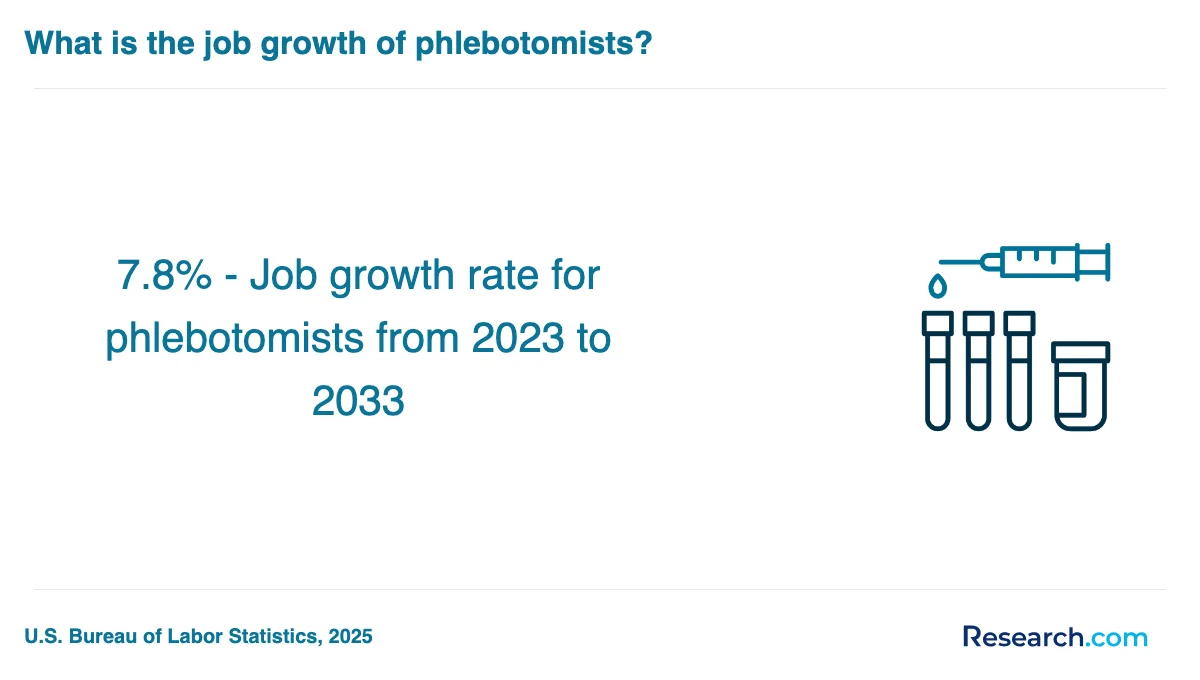
The phlebotomy technician job outlook in Florida shows steady demand, especially for graduates from well-known trade schools who enter hospitals, outpatient clinics, and diagnostic labs across the state. Many graduates describe their first positions as rewarding, with competitive hourly wages averaging $18.36 and annual salaries ranging from $31,186 to $46,653. Entry-level technicians typically start near $31,744, while experienced personnel can earn over $41,000 annually. Some find advanced roles in federal sectors or specialized medical centers, with salaries exceeding $55,000.
Demand for phlebotomy technicians in Florida varies by region, with urban hubs offering more openings and higher pay than rural areas. Graduates from popular Florida trade schools often highlight the practical skills gained, which support smooth transitions into roles like medical laboratory technician or clinical support, enhancing job security and career growth.
For those exploring career options, understanding the requirements to be a phlebotomist is essential before committing to training.
- Competitive salaries aligned with healthcare assistants and veterinary technicians
- Job availability concentrated in metropolitan regions
- Opportunities for advancement with experience and certifications
Frequently Asked Questions about phlebotomy technician
After completing a phlebotomy technician trade school in Florida, preparing for the job market involves several key steps. First, obtaining certification is crucial; many employers prefer candidates certified by nationally recognized bodies like the National Phlebotomy Association or the American Society for Clinical Pathology. Florida does not require state licensure for phlebotomists, but certification increases job prospects.
Next, gaining practical experience through internships or externships offered by schools can enhance skills and improve employability. Networking with healthcare facilities and attending local job fairs can also open opportunities. According to the Florida Department of Economic Opportunity, the demand for phlebotomy technicians is expected to grow by 12% through 2030, signaling a strong job market for qualified graduates.
Employers in Florida seek phlebotomy technician graduates with strong technical skills and professional qualities. Mastery of venipuncture and capillary puncture techniques is essential, as accurate and safe blood collection is critical to patient care. According to the Florida Department of Health, attention to detail and adherence to safety protocols help reduce infection risks and improve test reliability.
Communication skills are also highly valued. Technicians must effectively explain procedures to patients, many of whom may be anxious or unfamiliar with phlebotomy. Additionally, employers expect graduates to demonstrate reliability, punctuality, and the ability to work under pressure in fast-paced clinical settings.
Knowledge of medical terminology and electronic health record systems supports efficient workflow, a skill increasingly important in Florida's growing healthcare industry, as reported by the U.S. Bureau of Labor Statistics.
Finding internships in Florida relevant to phlebotomy technician trade school programs involves several practical steps. First, students should contact their school's career services or internship coordinator, as many Florida trade schools have established partnerships with local hospitals, clinics, and laboratories. These partnerships can provide direct access to clinical internship placements required for certification.
Additionally, students can explore opportunities through Florida's Agency for Health Care Administration and local health departments, which sometimes offer internship listings for healthcare roles including phlebotomy. According to the Florida Department of Education, healthcare internships in the state have increased by 8% over the past three years, reflecting growing demand.
Networking with professionals via healthcare job fairs and online platforms specific to Florida healthcare is also valuable. Finally, verifying that internships meet the state's certification requirements, such as a minimum number of supervised blood draws, ensures the experience counts toward licensure.
Obtaining a phlebotomy technician diploma from a trade school in Florida significantly enhances career mobility and advancement opportunities within the healthcare sector. The Florida Department of Education recognizes these diplomas as proof of specialized training, which is often required for entry-level phlebotomy positions. According to the U.S. Bureau of Labor Statistics, Florida's healthcare industry is projected to grow by 18% from 2022 to 2032, increasing demand for certified phlebotomists.
Graduates with diplomas are more competitive for jobs in hospitals, clinics, and laboratories, where certification and formal training are preferred or mandatory. Additionally, completion of an accredited program facilitates eligibility for the Certified Phlebotomy Technician (CPT) exam, improving prospects for higher pay and promotions. Data from the Florida Department of Economic Opportunity shows that certified phlebotomists earn a median wage approximately 15% higher than those without formal credentials.
Moreover, a diploma provides foundational skills useful for further healthcare education, enabling upward mobility into specialized nursing or medical technician roles. Trade schools also often connect students with local healthcare employers, enhancing networking and job placement chances statewide.
In Florida, part-time job opportunities that complement phlebotomy technician trade school education include roles such as medical assistant, patient care technician, and laboratory aide. These positions provide hands-on experience with patient interaction, specimen collection, and basic lab procedures, which align well with phlebotomy training.
The Florida Department of Economic Opportunity reports that healthcare support occupations, including phlebotomists, are expected to grow by 20% from 2022 to 2032, indicating strong demand for related part-time positions. Working in such roles helps students build practical skills and professional networks within healthcare settings.
Additionally, some students find part-time work in urgent care centers or blood donation clinics, environments that offer real-world exposure to blood collection and patient care. These roles can improve both technical proficiency and communication skills, essential for future phlebotomy certification and employment.
To find the best Phlebotomy Technician degree program near you in Florida, you can start by researching accredited programs and universities that offer phlebotomy courses in your area. Utilizing resources like Research.com can help you compare programs based on factors such as curriculum, faculty, and success rates of graduates to find an option that suits your needs near Florida. Additionally, consider reaching out to local hospitals or medical centers for recommendations on recognized training programs near me that they value or collaborate with.
Related Phlebotomy Technician Rankings for Nearby States
- Best Phlebotomy Technician Training Programs & Trade Schools - Top Phlebotomy Tech Schools in Georgia for 2026
- Best Phlebotomy Technician Training Programs & Trade Schools - Top Phlebotomy Tech Schools in South Carolina for 2026
- Best Phlebotomy Technician Training Programs & Trade Schools - Top Phlebotomy Tech Schools in North Carolina for 2026
- Best Phlebotomy Technician Training Programs & Trade Schools - Top Phlebotomy Tech Schools in Arkansas for 2026
- Best Phlebotomy Technician Training Programs & Trade Schools - Top Phlebotomy Tech Schools in West Virginia for 2026
- Best Phlebotomy Technician Training Programs & Trade Schools - Top Phlebotomy Tech Schools in Ohio for 2026
- Best Phlebotomy Technician Training Programs & Trade Schools - Top Phlebotomy Tech Schools in Illinois for 2026
- Best Phlebotomy Technician Training Programs & Trade Schools - Top Phlebotomy Tech Schools in Pennsylvania for 2026
- Best Phlebotomy Technician Training Programs & Trade Schools - Top Phlebotomy Tech Schools in Texas for 2026
- Best Phlebotomy Technician Training Programs & Trade Schools - Top Phlebotomy Tech Schools in Oklahoma for 2026
Top Trending Rankings
References
- Phlebotomy Technician Technical Diploma | Northcentral Technical College https://www.ntc.edu/academics-training/programs/all/technical-diploma/phlebotomy-technician
- Phlebotomy Courses Near Me | Phlebotomy School Near Me https://phlebotomycareertraining.com/
- Approved Phlebotomy Training School List https://www.cdph.ca.gov/Programs/OSPHLD/LFS/Pages/Approved-Phlebotomy-Training-Schools.aspx
- Online Phlebotomy Technician Certification Classes https://www.uscareerinstitute.edu/online-phlebotomy-school
- Accelerated Phlebotomy Technician Program | CALRegional https://calregional.com/program-category/phlebotomy-technician-program/
- Enroll in CHCP’s New Phlebotomy Technician Certification https://www.chcp.edu/degrees-certificates/on-campus/phlebotomy-technician-certificate-program/
- Phlebotomy | Kaiser Permanente School of Allied Health Sciences https://kpsahs.edu/phlebotomy
- Online Phlebotomy Technician Program | Penn Foster https://www.pennfoster.edu/programs/healthcare/phlebotomy-technician-career-diploma
- Phlebotomy Technician | Education for professionals at PCC https://www.pcc.edu/professional/health/entry/phlebotomy/
- Phlebotomy Technician Certificate Program https://pmi.edu/on-campus-programs/certificate/phlebotomy-technician/


