# 1 position
Most Affordable Pharmacy Technician Schools & Training in Wenatchee for 2027
Audited and Verified:
Our Editorial and Data Verification Process
Research.com uses government datasets, official education statistics and primary institutional information to support its career and degree guides. Our review process checks factual accuracy, occupational definitions, source dates and the requirements associated with the credentials discussed.
How This Article Was Fact-Checked
Our editorial team verifies salary estimates, employment projections, education requirements and program information against original data providers and official organizations. Salary figures are checked against the relevant occupational definitions and reporting periods. Information about licensure, accreditation and required in-person training is reviewed separately.
Fact-checked and verified on:

Co-Founder and Chief Data Scientist

Reviewed by Karolina Broda
Fact-Checker and Data Verification
Finding an affordable pharmacy technician program in Wenatchee means looking beyond tuition: the training must also fit Washington's credentialing requirements and your schedule. The U.S. Bureau of Labor Statistics reports a $45,750 national median annual wage for pharmacy technicians in May 2025, but that is not a starting-pay estimate. This guide explains costs, training routes, and career prospects. It will also feature the Most Affordable Pharmacy Technician Trade Schools in Wenatchee for 2027 ranking, created by the Research.com team of data scientists to help students identify programs worth considering.
Key findings about pharmacy technician degrees in Wenatchee
- The lowest advertised tuition is not necessarily the lowest cost to qualify: compare fees, exam and application charges, travel to practical training, and earnings forgone while studying.
- Washington credential eligibility is the decisive check. Ask a provider to document how its training meets current Washington State Pharmacy Quality Assurance Commission requirements; an online certificate or school accreditation alone is not enough.
- The U.S. Bureau of Labor Statistics reports a $45,750 national median annual wage in May 2025 and projects 6.4% national employment growth from 2025 to 2035. Neither figure predicts entry-level pay or openings in Wenatchee.
Table of Contents
- Most Affordable Pharmacy Technician Schools & Training in Wenatchee for 2027
- What can I expect from a pharmacy technician trade school program in Wenatchee?
- Where can I work with a pharmacy technician trade school training in Wenatchee?
What can I expect from a pharmacy technician trade school program in Wenatchee?
A pharmacy technician training program teaches students to assist pharmacists with prescription processing, medication inventory, calculations, safety procedures, and patient-service tasks. Technicians work under pharmacist supervision; they do not replace the pharmacist's clinical judgment. In Washington, the useful question is not simply whether a school awards a certificate, but whether its curriculum and supervised practice support the state credential you intend to seek.
A public-college certificate, a career-school program, and employer-based training can differ substantially in classroom instruction, supervised work, scheduling, and out-of-pocket cost. Wenatchee Valley College is a local institution to investigate, but confirm directly whether it offers a current pharmacy technician pathway and how that pathway aligns with state requirements. A paid workplace route may better suit someone who needs income during training; a structured school program may better suit someone who wants scheduled instruction before entering a pharmacy.
Where can I work with a pharmacy technician trade school training in Wenatchee?
Pharmacy technicians may work in community pharmacies, hospital pharmacies, and other medication-dispensing settings, according to the U.S. Bureau of Labor Statistics. The setting matters: retail work typically emphasizes customer interaction and prescription volume, while hospital work may involve medication distribution and more specialized preparation under supervision.
Wenatchee's smaller local labor market makes placement logistics worth checking before enrollment. Ask whether practical experience can be completed locally, which employers have accepted trainees, and whether a desired hospital role requires skills beyond the program's core curriculum. A school's training site or employer relationship is more useful evidence than an unsupported job-placement promise.
The U.S. Bureau of Labor Statistics reports a $45,750 national median annual wage for pharmacy technicians in May 2025. That figure describes workers across experience levels and locations; it is neither a Wenatchee wage nor a likely first offer. Compare actual local postings by setting, shift, certification expectations, and benefits before estimating what training could earn you.
For a personal return-on-investment estimate, compare likely pay after training with what you could earn without it. Include the chance of completing the program, aid and debt, time out of work, and how long you expect to work in the field. A shorter, cheaper route is not a bargain if it leaves you unable to qualify for the jobs you want.
Duration depends on the provider, attendance pace, and time needed to arrange supervised practical training. A classroom end date is not necessarily the date you can begin work as a credentialed technician: exam preparation, an exam appointment, and Washington's application process may follow. Request a written timeline that separates coursework, labs, worksite training, examination, and credential processing.
Do not assume that every certificate has the same number of clock or contact hours. Have the provider identify its current hours and explain how they satisfy the applicable Washington State Pharmacy Quality Assurance Commission training standards. For working students, also ask whether part-time attendance delays placement in a practical training site.
Online coursework can make subjects such as terminology, calculations, and pharmacy law easier to fit around work. It does not, by itself, demonstrate competence in dispensing workflows or supervised pharmacy practice. A hybrid option is useful only if its in-person labs or worksite experience are accessible from Wenatchee and accepted under the applicable Washington training requirements.
Before paying for an online program, obtain the location of its practical site, who arranges it, any associated travel cost, and written confirmation of how the full program supports Washington credential eligibility. General low cost online college comparisons may help frame online education costs, but they cannot verify pharmacy-specific practical training or state approval.
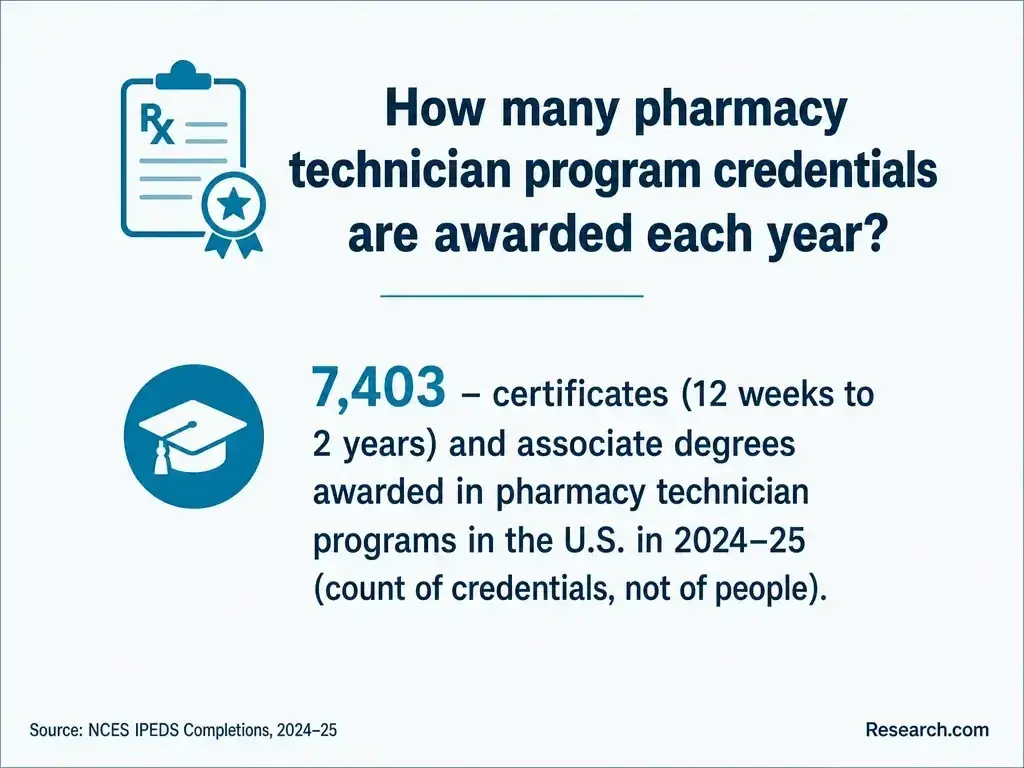
A reliable Wenatchee-wide average is not available here, and publishing one without comparable current program prices would be misleading. Instead, request each provider's total cost to become job-ready: tuition, mandatory fees, books or software, supplies, any uniform or screening requirements, practical-training travel, certification exam charges, and Washington application fees. Ask which charges are included in the advertised price and which are paid separately.
Federal or state aid may reduce a student's cost if both the program and student qualify; Federal Student Aid eligibility is not automatic for every short training course. Employer-sponsored training may reduce tuition and provide wages, but compare its schedule and any employment conditions. Broader lists of most affordable online colleges for working adults can offer cost context, not a substitute for a pharmacy technician program quote.
A school may award a certificate or diploma for completing its training. That school-issued credential is distinct from a national certification earned through an examination and from the Washington credential required to practice in a regulated role. Ask the provider to name each credential separately, identify the exam it prepares students for, and explain the steps still required after graduation.
A longer academic pathway is not automatically better for pharmacy technician entry; its added time and cost should buy skills or options you actually need. General guides to a fast track undergraduate degree address a different educational goal and should not be mistaken for evidence of Washington pharmacy technician eligibility.
Providers set their own entry rules, which may include prior schooling, placement assessment, and documentation needed for a worksite. Pharmacy employers or practical sites may also impose screening requirements. Ask admissions staff for the current written requirements before paying an enrollment deposit, particularly if a background check or site placement could delay participation.
Program admission and Washington occupational eligibility are separate decisions. Confirm the state's current age, education, training, examination, and application requirements with the Washington State Department of Health and Pharmacy Quality Assurance Commission; do not rely on an admission offer as proof that you can later obtain a credential.
Relevant instruction includes medication names and dosage forms, pharmacy calculations, prescription entry, inventory control, privacy, error prevention, and Washington pharmacy law. Practical training should show how a student applies those skills in a supervised dispensing workflow. Ask how performance is assessed - not just how many lessons are offered - and whether the training covers the setting in which you hope to work.
Pharmacy software and automated dispensing tools can change daily tasks, but they do not remove the need for accurate calculations, careful documentation, and clear communication with pharmacists and patients. A program that teaches only exam recall, without meaningful practice or a workable route to supervised experience, deserves closer scrutiny.
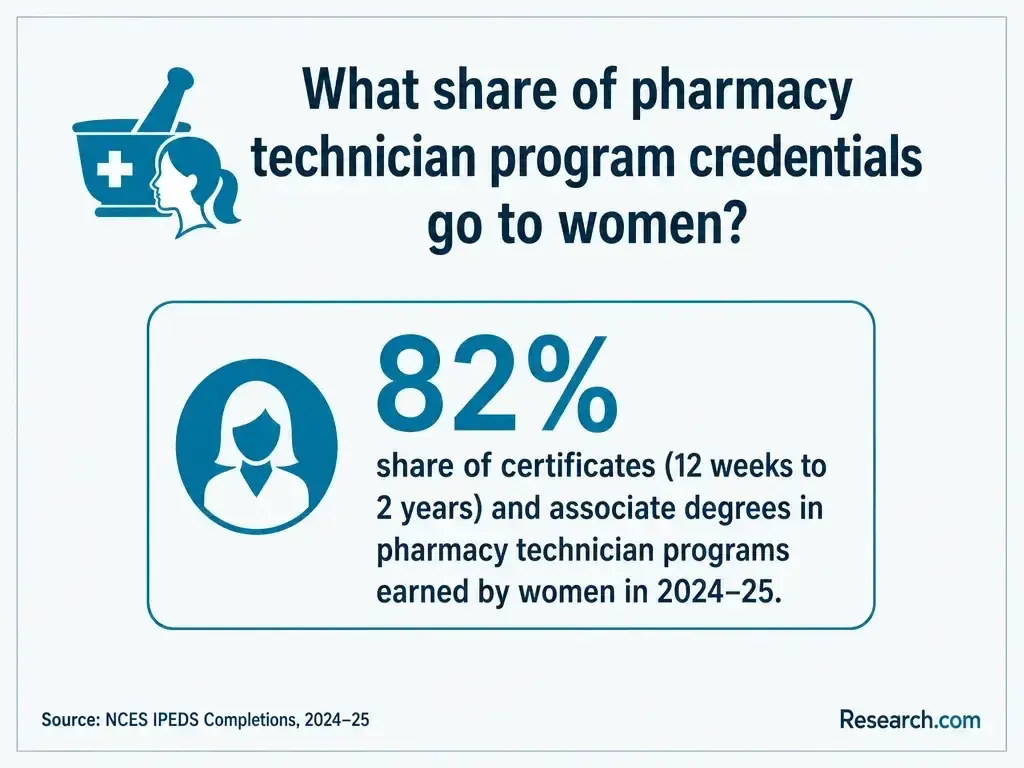
Yes: pharmacy technician practice in Wenatchee is governed by Washington, not by a city-issued training certificate. The Washington State Department of Health and Pharmacy Quality Assurance Commission set the applicable credential, training, examination, and application rules. National certification, where required for a particular route, is separate from the state credential; passing an exam or finishing school does not automatically authorize practice.
Verify the current rules for the exact role you plan to enter before enrollment, including whether a trainee or pharmacy assistant role is available while you complete requirements. Institutional accreditation, programmatic accreditation, state school authorization, approval of training, national certification, and occupational licensure answer different questions. Get the provider's explanation of each in writing rather than treating "accredited" as a blanket assurance.
Start with eligibility, then compare cost and fit. A low-price program is worth considering only if it offers the training and practical access needed for your intended Washington credential. Use the affordability ranking to build a shortlist, not to replace verification.
These checks separate a viable route from a cheap-looking but potentially costly mistake:
- Ask each provider to identify the current Washington training requirements its curriculum meets and to document any relevant approval.
- Confirm total classroom, lab, and supervised worksite training; find out who secures the practical placement and where it occurs.
- Request an itemized total price, aid eligibility, refund terms, and a realistic completion-to-credential timeline.
- Compare recent completion and employment information where available, asking how each figure was defined and whether it covers your specific program.
If you mainly need flexible study, cost guides such as cheap masters degrees online address a different decision; they do not establish that an online pharmacy technician course meets Washington requirements. The key red flags remain unclear worksite arrangements, vague approval claims, and prices that omit mandatory charges.
An entry route may lead to community-pharmacy work; experience and employer-specific training can open opportunities in hospital medication distribution, inventory, or more specialized pharmacy workflows. Advancement depends on available local positions and the skills an employer requires, not simply on the name of a certificate. Someone seeking immediate paid experience may prefer an employer-based route if a suitable opportunity is available; someone targeting a particular setting should first check its hiring requirements.
Keep future education separate from the credential needed to start this occupation. Resources about easiest online phd programs, for example, do not describe a pharmacy technician entry pathway. For this decision, prioritize qualifying training, supervised experience, and a realistic local job search.
The U.S. Bureau of Labor Statistics projects 6.4% national employment growth for pharmacy technicians from 2025 to 2035. That is a national occupational projection, not a forecast of Wenatchee vacancies. It supports considering the occupation, but a student choosing where to train still needs to check nearby postings, employer requirements, worksite access, and willingness to commute.
In a smaller market, the difference between retail and hospital openings can matter more than the national growth rate. Ask a provider which types of pharmacies have taken its trainees and compare those settings with your schedule and career goal. Avoid treating projected growth as a promise of placement after completion.
Most Affordable Pharmacy Technician Schools & Training in Wenatchee for 2027
Education is a significant investment, so Research.com designed this ranking to help readers compare affordable options against their real local alternatives. Programs are compared with others in the same occupation and location. Only programs with completions reported to the Integrated Postsecondary Education Data System (IPEDS) are eligible; absence from the ranking does not mean another training route is unavailable or unsuitable.
The most affordable ranking scores tuition, cost of attendance, median student debt, and federal loan default rate. Indicator weights are assigned through an entropy-based method, which gives more weight to measures that vary more across eligible programs. Accreditation and other quality indicators are not part of this affordability score. For context, Research.com's separate best-program rankings consider outcomes, earnings, costs, accreditation or industry recognition, and student support. Readers should therefore use the affordability ranking as a shortlist, then verify training quality and Washington credential eligibility independently.
The Research.com team used the following data sources in its ranking work and quality checks. Some cover other trades or health occupations; their inclusion does not mean they accredit pharmacy technician programs.
- IPEDS database - reported completions and institutional data used to identify eligible programs.
- National Center for Education Statistics - federal education-data definitions and context.
- College Scorecard database - available cost, debt, and outcome measures.
- Peterson's database - supplementary institutional and program information.
- Commission on Accreditation of Allied Health Education Programs (CAAHEP) - occupation-specific accreditation checks where relevant.
- Accrediting Bureau of Health Education Schools (ABHES) - health-education accreditation checks where relevant.
- Commission on Dental Accreditation (CODA) - accreditation checks for dental occupations, not pharmacy technician approval.
- Dental Assisting National Board (DANB) - credential information for dental occupations, not pharmacy technician certification.
- National Center for Construction Education and Research (NCCER) - construction-training recognition checks, not pharmacy technician approval.
- Apprenticeship.gov Partner Finder - information about potential work-based training alternatives.
Using multiple sources and a stated scoring approach helps readers see what an affordability ranking can - and cannot - establish. Details on the ranking approach appear on the Research.com methodology page. Before enrolling, confirm current prices, program availability, practical training, and Washington requirements directly with the provider and the state pharmacy regulator.
# 2 position
Wenatchee Valley College - Pharmacy Technician/Assistant.
certificate or diplomaFrequently asked questions about pharmacy technician programs in Wenatchee
Is the cheapest pharmacy technician program the best choice?
Not necessarily. Compare the full cost and confirm that the training, practical experience, and credential pathway fit Washington requirements before choosing on price.
Can I complete pharmacy technician training entirely online?
Some coursework may be online. Confirm how the provider delivers and documents any required in-person practical training; an online course alone should not be assumed to qualify you for a Washington credential.
Does a school certificate let me work as a pharmacy technician?
No. A completion certificate is separate from national certification and Washington's occupational credential. Check the current state requirements for the role you want.
Should I choose school or employer-sponsored training?
Choose the route that meets Washington requirements and fits your finances and schedule. School may offer structured instruction; employer training may offer paid experience, if an appropriate opportunity is available.
What should I ask before enrolling?
Request written confirmation of credential alignment, practical-training location and supervision, total charges, aid eligibility, and the steps remaining between completion and authorization to work.
- U.S. Bureau of Labor Statistics - Pharmacy Technicians
Used to verify salary, employment outlook, and typical education requirements.
https://www.bls.gov/ooh/healthcare/pharmacy-technicians.htm - NCES College Navigator (IPEDS)
Used to verify programs offered and institutional accreditation.
https://nces.ed.gov/collegenavigator/ - NHA - ExCPT Pharmacy Technician
Professional certification reference for graduates of this occupation.
https://www.nhanow.com/certifications/pharmacy-technician - Wenatchee Valley College - official website
Official school website (programs, tuition, admissions).
https://www.wvc.edu/