# 1 position
Best Pharmacy Technician Training Programs & Trade Schools in Anchorage for 2027
Audited and Verified:
Our Editorial and Data Verification Process
Research.com uses government datasets, official education statistics and primary institutional information to support its career and degree guides. Our review process checks factual accuracy, occupational definitions, source dates and the requirements associated with the credentials discussed.
How This Article Was Fact-Checked
Our editorial team verifies salary estimates, employment projections, education requirements and program information against original data providers and official organizations. Salary figures are checked against the relevant occupational definitions and reporting periods. Information about licensure, accreditation and required in-person training is reviewed separately.
Fact-checked and verified on:

Co-Founder and Chief Data Scientist

Reviewed by Karolina Broda
Fact-Checker and Data Verification
Choosing pharmacy technician training in Anchorage means weighing a short program against learning on the job - and checking whether either route meets Alaska's entry requirements. The U.S. Bureau of Labor Statistics projects 6.4% national growth for pharmacy technician jobs from 2025 to 2035, making training quality worth examining. This guide is for new entrants and career changers. It explains credentials, costs, practical training, licensing, and employment so you can judge your options. It also features a Best Pharmacy Technician Trade Schools in Anchorage for 2027 ranking created by the Research.com team of data scientists to help students make an informed choice about programs worth considering.
Key findings about pharmacy technician degrees in Anchorage
- Alaska requires a pharmacy technician license to work in the role; a school certificate or national certification does not replace authorization from the Alaska Board of Pharmacy.
- Compare a structured program with employer-sponsored training: the latter may reduce upfront cost, while a program may offer more predictable coursework and supervised practice.
- The national pharmacy technician median was $45,750 in May 2025, with 6.4% projected job growth from 2025 to 2035; neither figure predicts an Anchorage graduate's starting pay or hiring prospects (U.S. Bureau of Labor Statistics).
Table of Contents
- Best Pharmacy Technician Training Programs & Trade Schools in Anchorage for 2027
- What can I expect from a pharmacy technician trade school program in Anchorage?
- Where can I work with a pharmacy technician trade school training in Anchorage?
What can I expect from a pharmacy technician trade school program in Anchorage?
Expect training in prescription processing, medication calculations, inventory, safety, and pharmacy law, followed by opportunities to apply those skills under supervision. A technician assists a pharmacist; training does not authorize independent clinical decisions or dispensing. The most useful program for an Anchorage applicant is one that clearly identifies its credential, practice setting, and steps toward Alaska licensure.
Compare three distinct routes before committing. A career-school certificate typically emphasizes occupational preparation; a community-college certificate may offer a different schedule or credit structure; employer-sponsored training pairs work with instruction and may pay wages while you learn. Ask Charter College and the University of Alaska Anchorage directly which pharmacy technician credentials, if any, they currently offer, when they admit students, and where practical experience takes place. Do not infer that a school offers a current program from its general healthcare catalog.
Where can I work with a pharmacy technician trade school training in Anchorage?
Pharmacy technicians work in community and hospital pharmacies and may support mail-order or other medication-distribution operations (U.S. Bureau of Labor Statistics). In Anchorage, compare retail openings with hospital and health-system roles: hospital work may involve different inventory systems, sterile-compounding procedures, and shifts. An outpatient-focused placement is useful, but it is not the same preparation as supervised practice in an inpatient pharmacy.
Before choosing a placement, ask whether the employer accepts trainees, whether a licensed technician may perform the proposed duties under Alaska's rules, and whether the schedule and commute are workable. A school's employer contacts can help, but a placement opportunity is not a job offer.
The national median annual wage for pharmacy technicians was $45,750 in May 2025 (U.S. Bureau of Labor Statistics). That is the midpoint for employed technicians nationwide - not an Anchorage starting wage. Experience, setting, shifts, and the local employer affect an offer, so request current wage ranges from Anchorage employers and compare them with the latest available BLS metropolitan-area wage estimate for the same occupation.
For an investment decision, compare a realistic entry-level offer with what you could earn during the training period, not just with the national median. A longer program can cost more through forgone wages even when its stated tuition looks manageable.
Program length depends on the credential and whether study is full-time or part-time; employer training depends on the workplace's instruction and supervised-practice schedule. Do not assume that a "six-month" label describes the time until you can start licensed work. Ask for the calendar duration, instructional and hands-on hours, placement timeline, and time needed for the Alaska license application separately.
For comparison, top paying 6 month certificate programs can illustrate why a short timeline attracts career changers. In pharmacy technology, however, the deciding question is whether the actual schedule leaves enough time to learn medication safety and complete any promised practical training.
Online coursework can cover terminology, calculations, law, and prescription-processing concepts. Campus labs or an employer site are better suited to demonstrating workflow, equipment use, inventory handling, and supervised patient-facing tasks. A hybrid program can reduce travel for classroom work, but it does not eliminate the need to arrange any required in-person practice.
Ask where the hands-on component occurs and who secures the site. This matters particularly when comparing an Anchorage-based program with a remote provider that may leave students to find a local pharmacy placement themselves. For adults comparing study formats, top programs for older adults online offers a broader look at online study; pharmacy technician applicants must still verify occupation-specific practical and Alaska licensing requirements.
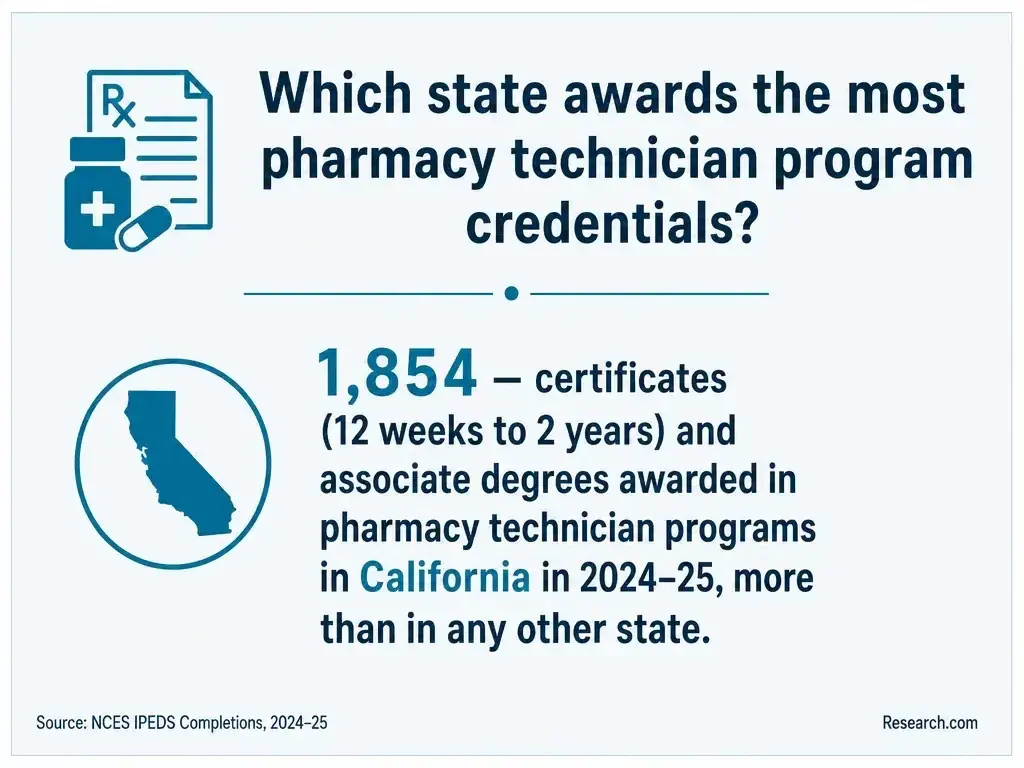
There is no defensible single Anchorage average that covers career-school programs, college credentials, and paid employer training on the same basis. Request a written, current cost of attendance for each option. Tuition alone omits fees, books or software, uniforms, background checks if required by a placement, transportation, certification testing, the Alaska license application, and earnings lost while attending classes.
Compare the net cost to become job-ready: subtract confirmed grants, eligible aid, or wages from paid training, but keep loans as a cost you must repay. Federal aid eligibility depends on the school and specific program (Federal Student Aid). Ask about payment timing and refund rules before signing; an accelerated program is not cheaper if its schedule forces you to leave paid work. Broader comparisons of easiest online degrees that pay well should not substitute for a pharmacy-specific cost and licensing check.
A training provider may award a certificate or another school credential. That award is different from an Alaska pharmacy technician license, which the Alaska Board of Pharmacy issues, and from national certification, which a certifying organization awards after its own eligibility and examination requirements are met. Ask the provider for the exact name of its award and whether its graduates meet the current eligibility rules for the certification exam they plan to take.
Accreditation is another separate question. Institutional accreditation concerns the school; pharmacy technician programmatic accreditation concerns the training program. Neither is itself a state license. The American Society of Health-System Pharmacists and Accreditation Council for Pharmacy Education administer pharmacy technician program accreditation; verify a claimed status with them rather than relying on a brochure (ASHP/ACPE).
School admission rules and permission to work as a technician are separate. Providers may set their own education, assessment, or placement-screening requirements; employers may also screen applicants for access to medication-handling settings. Request the current admissions checklist, then confirm licensing eligibility directly with the Alaska Board of Pharmacy before paying a deposit.
Ask whether an employer-training route requires you to obtain a license before performing technician duties and whether previous coursework or documented pharmacy experience can shorten training. Credit for prior learning is provider-specific, not automatic. If an admissions representative says graduation alone permits immediate work, request the applicable board requirement in writing.
Strong training connects drug names and dosage forms to accurate calculations, prescription entry, insurance and billing workflow, inventory control, confidentiality, and error prevention. The work requires attention to detail and communication as well as speed: technicians prepare and process medications under pharmacist supervision, while pharmacists retain professional responsibility for activities reserved to them (U.S. Bureau of Labor Statistics).
Compare syllabi and supervised tasks, not just course titles. Ask how students practice catching a wrong quantity or identifying a prescription that must be referred to a pharmacist. If your goal is hospital work, ask specifically whether training includes the relevant inpatient workflow or compounding practice; do not assume every certificate covers it.
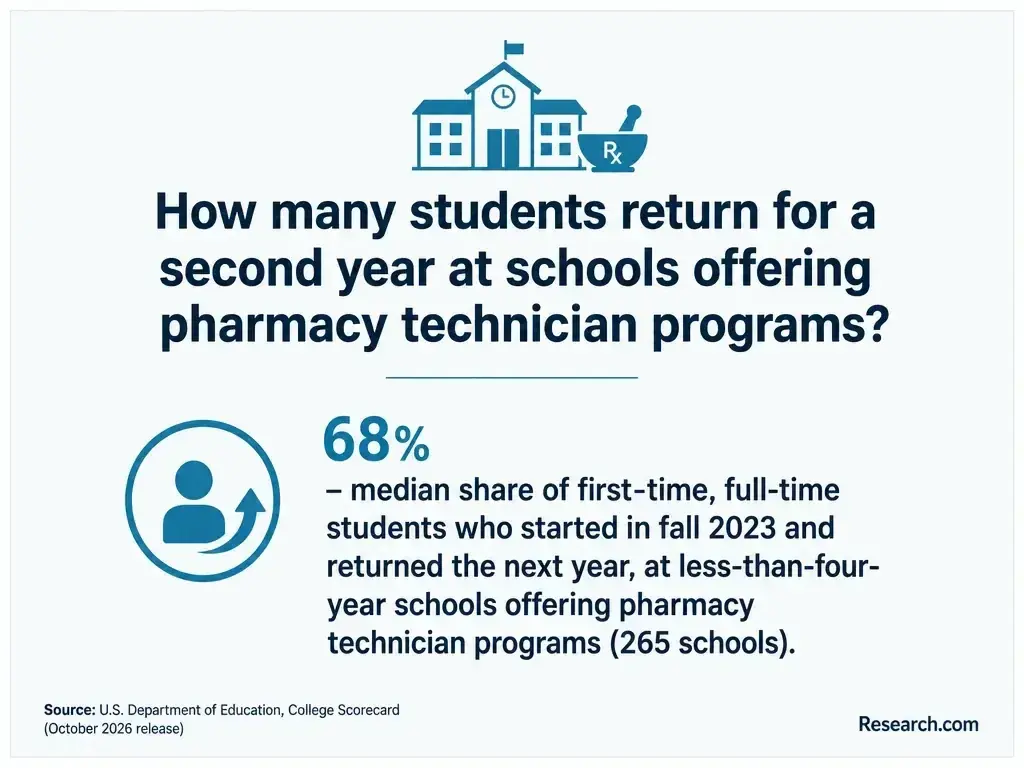
Yes, Alaska requires a pharmacy technician license for work in that role; apply through the Alaska Board of Pharmacy and follow its current eligibility, application, and supervision rules (Alaska Board of Pharmacy). National certification is a different credential and should not be presented as a substitute for the state license. Employer preferences for certification may vary by setting.
For example, the Pharmacy Technician Certification Board offers a certification route through a recognized education or training program or qualifying work experience, followed by its examination (Pharmacy Technician Certification Board). Before enrolling, verify both the board's current rules and the certifier's current eligibility criteria. A school's claim that it "prepares you for certification" does not establish that it satisfies either requirement.
Start with the job you want and work backward to its required license, preferred credentials, and practical skills. A structured program may be worth its cost if it offers training and placement you cannot readily obtain through an employer. Paid workplace training may be the better investment if you can secure a suitable position and learn effectively on that schedule.
Use these checks with every provider before enrolling:
- Confirm the current credential, schedule, total cost, refund terms, and whether the program is accepting Anchorage-area students.
- Verify institutional and any claimed programmatic accreditation with the relevant accreditor; separately confirm Alaska licensing requirements with the Board of Pharmacy.
- Ask who arranges supervised practice, where it occurs, what students may do, and whether the site matches your intended workplace.
- Request program-specific completion, placement, and debt information, including the period measured and whether small cohorts limit interpretation.
- Compare net cost, likely time out of work, completion likelihood, and realistic entry pay across school and employer-training options.
A ranking is a useful shortlist, not proof of personal fit. Avoid a provider that will not explain practical training or that treats school accreditation as a replacement for a license. Broader resources on comparing earnings across education paths cannot answer those pharmacy-specific questions.
Entry-level work commonly begins in a community or hospital pharmacy under pharmacist supervision. With experience and employer-specific training, technicians may take on more complex inventory, billing, medication-distribution, or team-lead responsibilities. Some roles call for additional certification or demonstrated competency; advancement is not an automatic result of completing a certificate (U.S. Bureau of Labor Statistics).
If you want a particular setting, ask employers what they require beyond Alaska licensure before choosing a program. A prospective hospital technician, for example, should assess whether a retail-only training experience will provide enough relevant practice. Longer education-path comparisons are less useful here than evidence that a pharmacy technician credential leads toward your intended first role.
National employment of pharmacy technicians is projected to grow 6.4% from 2025 to 2035 (U.S. Bureau of Labor Statistics, Employment Projections). That indicates an expanding national occupation, not a forecast of Anchorage vacancies or a guarantee of placement. Local hiring depends on pharmacies' staffing needs, work schedules, and the qualifications employers seek.
Before committing to training, review current Anchorage postings for the settings you prefer. Note which require Alaska licensure at application, which prefer national certification, and whether they offer training. That check can reveal whether paying for a program would improve your access to the jobs you actually want.
Best Pharmacy Technician Training Programs & Trade Schools in Anchorage for 2027
Education is a significant investment. Research.com created this ranking to help readers compare pharmacy technician programs with other programs serving the same occupation and location, rather than with unrelated schools. Its team evaluates reported outcomes, cost, debt, recognition, and student support, while checking data quality and comparability. Only programs with completions reported to IPEDS are eligible; an employer training route or other provider absent from the ranking is not necessarily unavailable or inferior.
For the best-programs ranking, programmatic accreditation or relevant industry recognition carries 20% of the score, institutional accreditation 10%, and student support 10%. Student outcomes, earnings, and costs account for the remaining 60%, allocated through an entropy-based method that gives more weight to indicators that vary more across programs. Measures include completion and full- and part-time retention; earnings one year after completion and relative to annual attendance cost; tuition, attendance cost, debt - including debt held by students who withdrew - and federal loan default rates. Most-affordable-program rankings instead score only tuition, attendance cost, debt, and default rates using entropy-based weights; accreditation and other quality indicators are not scored there. See the Research.com methodology for further detail.
The ranking draws on the following sources. Some are relevant to other trade occupations covered by the broader ranking process, not pharmacy technician accreditation; their inclusion here should not be read as an endorsement of a pharmacy program.
- IPEDS database - reported program completions and institutional measures.
- National Center for Education Statistics - federal education data and definitions.
- College Scorecard database - available cost, debt, and earnings measures.
- Peterson's database - supplemental institutional information.
- Commission on Accreditation of Allied Health Education Programs (CAAHEP) - recognition information relevant to other allied-health programs.
- Accrediting Bureau of Health Education Schools (ABHES) - institutional or program recognition where applicable.
- Commission on Dental Accreditation (CODA) - dental-program accreditation information, not pharmacy technician approval.
- Dental Assisting National Board (DANB) - dental credential information, not pharmacy technician certification.
- National Center for Construction Education and Research (NCCER) - construction-training recognition, not pharmacy technician recognition.
- Apprenticeship.gov Partner Finder - information about registered apprenticeship sponsors where applicable.
Use the ranking as a shortlist, then verify a program's current availability, total price, practical training, and fit with Alaska's pharmacy technician rules before enrolling. College-oriented datasets do not capture every employer-trained technician or other noncollege pathway.
# 2 position
University of Alaska Anchorage - Pharmacy Technician/Assistant.
certificate or diplomaFrequently asked questions about pharmacy technician programs in Anchorage
Can I become a pharmacy technician without attending trade school?
Potentially. Employer-sponsored training is an alternative, but you must meet Alaska's current licensing rules and the employer's requirements. Ask what instruction and supervised practice the employer provides before choosing that route.
Does a pharmacy technician certificate give me an Alaska license?
No. The school awards its credential; the Alaska Board of Pharmacy handles state licensing. Confirm the board's current application requirements independently.
Can I complete pharmacy technician training entirely online?
You may be able to complete academic coursework online. Confirm how the provider delivers any practical training and whether its route fits Alaska licensing requirements before enrolling.
Is national certification required to work in Anchorage?
Do not confuse national certification with the required Alaska license. Check the Board of Pharmacy's current rules and individual job postings; an employer may prefer certification even when evaluating applicants who already meet state requirements.
Is a pharmacy technician program worth paying for?
It may be if its structured instruction, practical experience, and credential improve your route into the job you want. Compare its full net cost and time commitment with paid employer training, then verify licensing eligibility before you commit.
- U.S. Bureau of Labor Statistics - Pharmacy Technicians
Used to verify salary, employment outlook, and typical education requirements.
https://www.bls.gov/ooh/healthcare/pharmacy-technicians.htm - NCES College Navigator (IPEDS)
Used to verify programs offered and institutional accreditation.
https://nces.ed.gov/collegenavigator/ - NHA - ExCPT Pharmacy Technician
Professional certification reference for graduates of this occupation.
https://www.nhanow.com/certifications/pharmacy-technician - Charter College - official website
Official school website (programs, tuition, admissions).
https://chartercollege.edu/ - University of Alaska Anchorage - official website
Official school website (programs, tuition, admissions).
https://www.uaa.alaska.edu/