# 1 position
Best Pharmacy Technician Training Programs & Trade Schools in Albany for 2027
Audited and Verified:
Our Editorial and Data Verification Process
Research.com uses government datasets, official education statistics and primary institutional information to support its career and degree guides. Our review process checks factual accuracy, occupational definitions, source dates and the requirements associated with the credentials discussed.
How This Article Was Fact-Checked
Our editorial team verifies salary estimates, employment projections, education requirements and program information against original data providers and official organizations. Salary figures are checked against the relevant occupational definitions and reporting periods. Information about licensure, accreditation and required in-person training is reviewed separately.
Fact-checked and verified on:

Co-Founder and Chief Data Scientist

Reviewed by Karolina Broda
Fact-Checker and Data Verification
Choosing pharmacy technician training in Albany, Georgia, means comparing more than class schedules: the right option must fit your budget, provide practical experience, and support entry under Georgia's registration rules. The U.S. Bureau of Labor Statistics projects pharmacy technician employment to grow 6.4% nationally from 2025 to 2035, making training choices worth examining carefully. This guide explains local options, costs, credentials, and career prospects. It will also feature a Best Pharmacy Technician Trade Schools in Albany for 2027 ranking created by the Research.com team of data scientists to help students identify programs worth considering.
Key findings about pharmacy technician degrees in Albany
- Georgia pharmacy technician registration is a separate step from finishing school or earning national certification; confirm your intended job duties and registration pathway with the Georgia State Board of Pharmacy.
- The U.S. median annual wage for pharmacy technicians was $45,750 in May 2025, according to the U.S. Bureau of Labor Statistics. That national figure is not a starting-pay quote for an Albany graduate.
- PTCB offers an examination-eligibility route based on a recognized education or training program or at least 500 hours of pharmacy technician work experience, making employer training a potential alternative to paying for school.
Table of Contents
- Best Pharmacy Technician Training Programs & Trade Schools in Albany for 2027
- What can I expect from a pharmacy technician trade school program in Albany?
- Where can I work with a pharmacy technician trade school training in Albany?
What can I expect from a pharmacy technician trade school program in Albany?
Expect instruction in medication names, dosage calculations, prescription processing, inventory, safety, and pharmacy law, alongside practice using pharmacy workflows. A pharmacy technician works under a pharmacist's supervision; completing training does not authorize a technician to perform a pharmacist's duties (U.S. Bureau of Labor Statistics).
Albany Technical College is a local provider to investigate for current pharmacy technician training. Ask which credential its current offering awards, whether it includes a lab or an employer-site experience, and how its schedule fits Georgia registration and national certification preparation. A classroom certificate, a longer diploma, and supervised employer training may teach similar subjects but differ substantially in practical experience and cost.
Where can I work with a pharmacy technician trade school training in Albany?
Potential workplaces include community pharmacies, hospitals, and other healthcare facilities that employ pharmacy technicians. Retail work commonly emphasizes prescription intake, insurance claims, and customer service; hospital work may place more emphasis on medication distribution, sterile-product workflows, and coordination with clinical staff (U.S. Bureau of Labor Statistics). Ask a prospective training provider whether its practical experience matches the setting you want.
Albany's local healthcare market makes commuting and placement arrangements consequential. An employer-site rotation that requires travel or daytime availability may change the real cost of an otherwise convenient program. Confirm the site and schedule before enrolling rather than assuming all hands-on work occurs on campus.
The U.S. Bureau of Labor Statistics reports a May 2025 national median annual wage of $45,750 for pharmacy technicians. A median divides employed workers into two equal groups; it is not an Albany wage estimate or an expected offer for someone just completing training.
For a local decision, compare actual Albany-area postings by setting, shift, experience requirements, and certification preference. Hospital shifts or specialized duties may differ from entry-level retail positions, but a higher advertised rate is useful only if you meet the employer's requirements and can work the schedule.
Length depends on the credential and schedule. A focused certificate may be shorter than a diploma with additional coursework or a worksite component; part-time study extends calendar time. The U.S. Bureau of Labor Statistics notes that pharmacy technicians commonly learn through postsecondary programs or on-the-job training rather than one universal course length.
Ask Albany Technical College for its current term-by-term plan, total instructional hours, lab hours, and any employer-site hours. If you need to earn while learning, compare that timetable with a pharmacy employer's paid training route. A faster class is not necessarily the faster path to work if registration, practical experience, or certification preparation remains unfinished. Guides to best accelerated online degrees for working adults address a different kind of credential, not a shortcut through pharmacy technician work-entry steps.
Online delivery can make terminology, law, and calculations easier to study around work. Campus instruction can make it easier to practice dispensing workflows, equipment use, and supervised problem-solving. Neither format should be judged by its label alone: verify where practical competencies are taught and whether a promised employer placement is actually arranged.
The comparison below separates coursework delivery from hands-on access. It can help you screen programs before committing to a schedule.
| Format | Potential advantage | Point to verify |
| Online | Flexible theory coursework | Where practical experience occurs and whether it is included |
| On-campus | Scheduled access to instruction and labs | Travel, attendance times, and worksite requirements |
| Hybrid | Remote coursework paired with in-person practice | Exact dates and locations of required attendance |
A list of best online trade colleges can help identify formats to investigate, but an online listing does not establish Georgia registration eligibility or guarantee an in-person training site.
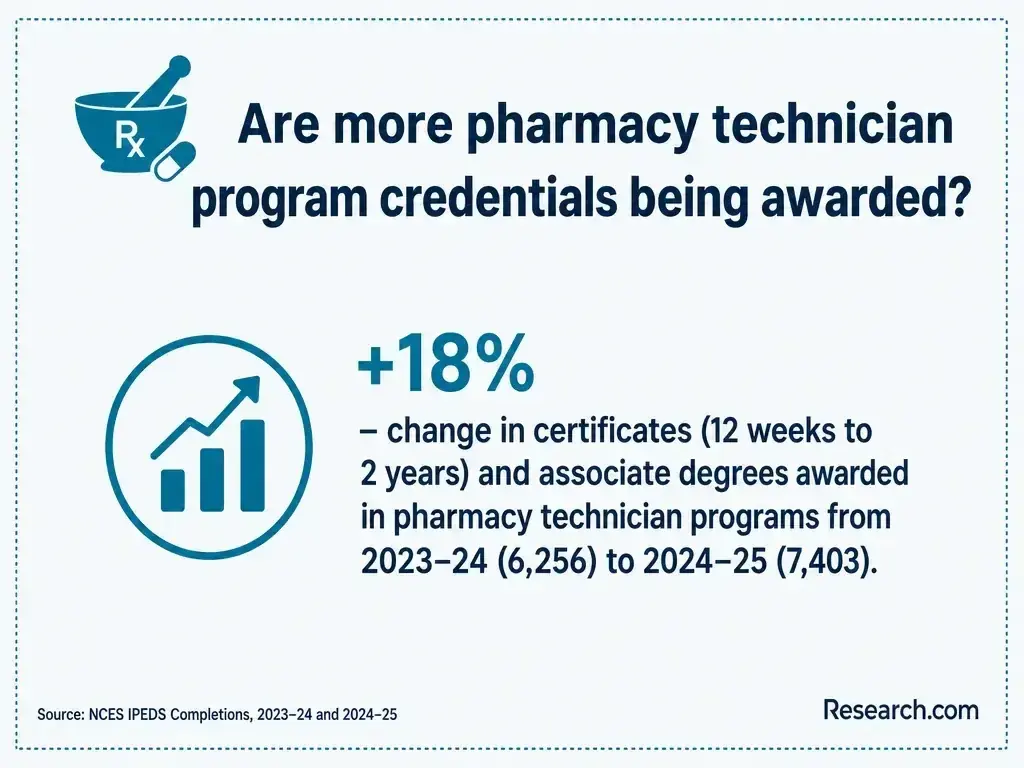
There is no single reliable Albany-wide program price to use as a quote: credentials, attendance intensity, aid eligibility, and included supplies vary. Request a current itemized estimate from Albany Technical College and compare it with any employer-paid option. Do not treat advertised tuition as the total amount needed to become job-ready.
Your comparison should cover tuition, mandatory fees, books or software, a uniform or other required supplies, background checks if required, certification examination and Georgia registration application fees, and travel to classes or worksite training. Add wages you would forgo while studying, then subtract aid or paid-training earnings you can reasonably expect. Eligible Georgia residents should check Georgia Student Finance Commission rules for HOPE Grant support for qualifying certificate or diploma study; eligibility and covered costs require individual verification.
An easiest degree to get comparison measures a different decision. For this occupation, the more useful cost question is whether a specific training route supplies the skills and entry eligibility you need without unnecessary debt.
The school-awarded credential may be a certificate or diploma, depending on the offering. Confirm the exact award with Albany Technical College rather than assuming a course title identifies it. An employer training route may instead document completed training without awarding a school credential.
Keep three separate records in mind: the school credential shows program completion; national certification, such as PTCB's CPhT credential, follows that organization's eligibility and examination rules; and Georgia registration is the state work-entry matter administered by the Georgia State Board of Pharmacy. Institutional accreditation or school authorization does not replace either certification or registration (PTCB; Georgia State Board of Pharmacy).
School admission, entry into a particular training program, eligibility for an employer-site placement, and permission to work in a pharmacy are different checkpoints. Ask Albany Technical College for its current academic entry requirements and whether placement requires additional screening, immunization records, or scheduling availability. Do not pay a deposit on the assumption that admission automatically secures a worksite.
For paid training, ask the employer when Georgia registration must be obtained and who handles the application. Check the Georgia State Board of Pharmacy's current requirements directly before relying on a school or employer's summary; state work rules can affect how soon you can begin practical duties.
Core competencies include reading and entering prescriptions, medication terminology, dosage calculations, inventory handling, insurance processing, privacy, and recognizing when to refer a question to the pharmacist. Accuracy matters as much as speed: technicians must follow procedures for checking information and escalating discrepancies rather than making clinical decisions independently (U.S. Bureau of Labor Statistics).
Compare how programs assess these skills, not just whether they appear in a course description. Ask to see the lab activities, calculation assessments, and worksite supervision plan. If your target is a hospital role, ask specifically about preparation for that setting rather than assuming retail-focused practice transfers without additional training.
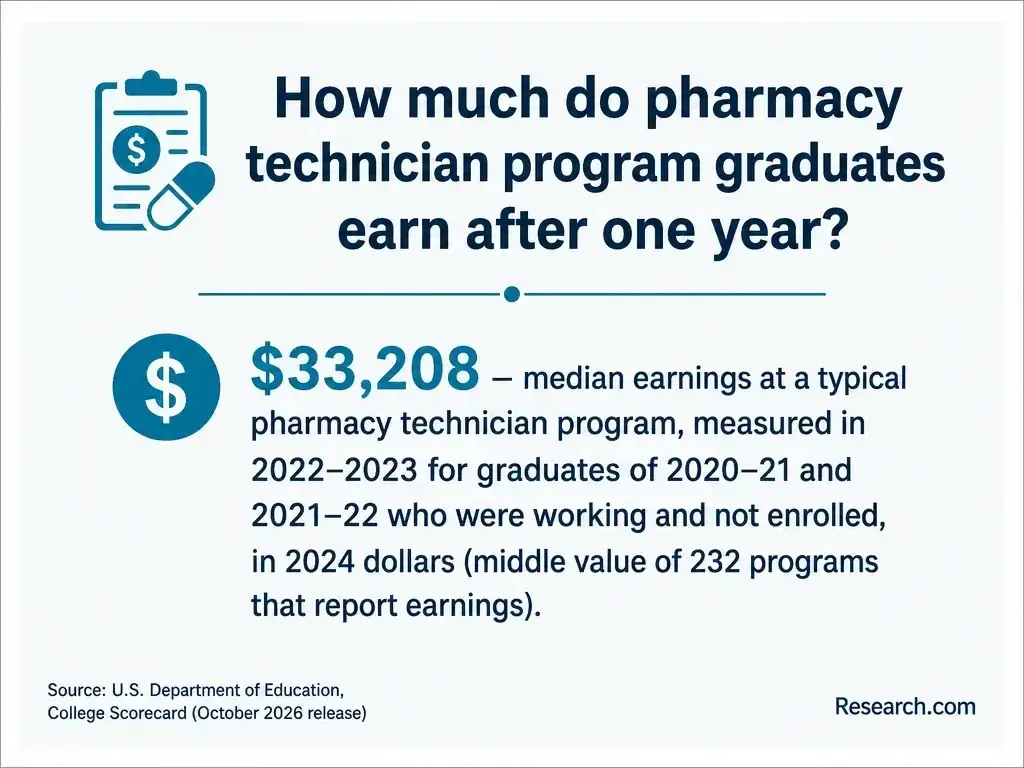
Georgia regulates pharmacy technician work through the Georgia State Board of Pharmacy's registration requirements. Registration is not the same as national certification. Review the board's current application and eligibility rules for the position you want; finishing a course alone does not complete the state process (Georgia State Board of Pharmacy).
National certification can be valuable when an employer prefers or requires it for a particular role. For PTCB's CPhT examination, candidates can qualify through a PTCB-recognized education or training program or through at least 500 hours of pharmacy technician work experience, subject to PTCB's other eligibility rules. Check a school's claimed certification alignment with PTCB and confirm which, if any, certification your intended employer expects (PTCB).
Start with the job you want, then compare the routes that can get you there. A structured school program may suit someone seeking guided practice and a documented credential. Paid employer training may fit someone who can secure a position and wants to limit upfront cost. Neither route is automatically better: completion likelihood, wages forgone, aid, debt, and the time it takes to become employable all affect value.
Use these checks when speaking with admissions staff or a prospective employer; they expose gaps a ranking or tuition figure cannot show:
- Ask for the exact credential, current curriculum, schedule, and total lab and employer-site hours.
- Confirm institutional accreditation or school authorization separately from any claimed pharmacy technician program recognition.
- Ask how training supports Georgia registration and which PTCB examination-eligibility route it satisfies, if any.
- Request the full cost estimate, available aid, placement arrangements, and recent program-level completion information.
- Compare the resulting cost and time commitment with a paid pharmacy training opportunity you can realistically obtain.
A list of best online colleges may help you explore remote delivery, but it should not replace the pharmacy-specific checks above. A red flag is a promise that "online completion" alone guarantees certification, registration, placement, or a particular salary.
Training can support entry into community or hospital pharmacy work, depending on the employer's requirements and the experience available to you. With additional supervised experience, a technician may pursue specialized workflows or greater responsibility within technician roles. Ask employers what training they require before paying for a specialization; an optional advancement credential should not be confused with Georgia's entry requirements.
If your goal is pharmacy technician work, keep the training investment tied to that goal. A resource on short online master's programs concerns a different education path and does not substitute for practical pharmacy training, certification eligibility, or state registration.
The U.S. Bureau of Labor Statistics projects 6.4% national employment growth from 2025 to 2035 for pharmacy technicians. This indicates continuing demand nationally, not a forecast of Albany openings or a guarantee of employment after training. Technology may change how prescriptions and inventory are processed, making accuracy, software familiarity, and communication useful skills to assess in a curriculum.
For an Albany decision, review current local postings before enrolling. Note how many accept trainees, require certification, offer paid training, or demand hospital-specific experience. If suitable openings are scarce at the time you search, a program with employer-site connections - or willingness to commute - may matter more than a shorter completion date.
Best Pharmacy Technician Training Programs & Trade Schools in Albany for 2027
Education is a substantial investment, so Research.com's team designed the ranking to compare programs against other pharmacy technician programs in the same location - not against unrelated trades. The team reviews outcomes, costs, and quality indicators to help readers assess options with greater confidence. Only programs reporting completions to IPEDS can enter the ranking; an unlisted employer-training route should not be assumed to be unavailable or poor quality.
Best-program scores consider completion and full- and part-time retention; earnings one year after completion and earnings relative to annual attendance cost; tuition, attendance cost, debt, and federal loan default rates; and accreditation, occupation-relevant recognition, and student support. Occupation-relevant programmatic accreditation or industry recognition carries 20%, institutional accreditation 10%, and student support 10%. Outcomes, earnings, and costs share the remaining 60% through an entropy-based method that gives more weight to indicators that differ more across programs. Most-affordable rankings use only costs and debt, with entropy-based weights; accreditation and other quality indicators do not enter that score.
The ranking draws on the following sources. Some cover multiple occupations, so their inclusion does not mean that every listed accreditor accredits pharmacy technician programs:
- IPEDS database: reported completions and institutional data.
- National Center for Education Statistics: federal education data and definitions.
- College Scorecard database: available cost, debt, and earnings measures.
- Peterson's database: supplemental institutional information.
- Commission on Accreditation of Allied Health Education Programs: accreditation information for applicable allied-health programs.
- Accrediting Bureau of Health Education Schools: applicable institutional and health-education accreditation information.
- Commission on Dental Accreditation: accreditation information for applicable dental programs.
- Dental Assisting National Board: applicable dental-assisting credential information.
- National Center for Construction Education and Research: applicable construction-training recognition information.
- Apprenticeship.gov Partner Finder: information on potential work-based training alternatives.
Use the ranking as a shortlist, then verify current program details and Georgia work-entry requirements yourself. Research.com explains the broader approach on its methodology page.
# 2 position
Albany Technical College - Pharmacy Technician/Assistant.
certificate or diplomaFrequently asked questions about pharmacy technician programs in Albany
Is trade school required to become a pharmacy technician in Georgia?
Not necessarily. Employer training can be an alternative, but you still need to meet Georgia's applicable registration requirements and the hiring employer's standards (Georgia State Board of Pharmacy).
Can I become certified without completing a school program?
PTCB offers a CPhT examination-eligibility route based on at least 500 hours of pharmacy technician work experience, as well as a recognized education or training route. Its other eligibility and examination requirements still apply (PTCB).
Can I complete pharmacy technician training entirely online?
You may be able to take theory coursework online. Verify how you will gain practical experience and meet employer and Georgia requirements before enrolling in a program advertised as fully online.
Is a certificate or diploma the better choice?
Choose based on curriculum, practical training, cost, and the jobs you intend to seek - not the credential name alone. Request each option's current course plan and employer-site arrangements.
What should I ask about financial aid?
Ask for the full attendance cost and which charges aid covers. If considering a qualifying Georgia certificate or diploma, verify your individual HOPE Grant eligibility with the school and Georgia Student Finance Commission.
- U.S. Bureau of Labor Statistics - Pharmacy Technicians
Used to verify salary, employment outlook, and typical education requirements.
https://www.bls.gov/ooh/healthcare/pharmacy-technicians.htm - NCES College Navigator (IPEDS)
Used to verify programs offered and institutional accreditation.
https://nces.ed.gov/collegenavigator/ - NHA - ExCPT Pharmacy Technician
Professional certification reference for graduates of this occupation.
https://www.nhanow.com/certifications/pharmacy-technician - Albany Technical College - official website
Official school website (programs, tuition, admissions).
https://www.albanytech.edu/