# 1 position


Audited and Verified:
Our Editorial and Data Verification Process
Research.com uses government datasets, official education statistics and primary institutional information to support its career and degree guides. Our review process checks factual accuracy, occupational definitions, source dates and the requirements associated with the credentials discussed.
How This Article Was Fact-Checked
Our editorial team verifies salary estimates, employment projections, education requirements and program information against original data providers and official organizations. Salary figures are checked against the relevant occupational definitions and reporting periods. Information about licensure, accreditation and required in-person training is reviewed separately.
Fact-checked and verified on:

Co-Founder and Chief Data Scientist

Reviewed by Karolina Broda
Fact-Checker and Data Verification
Choosing an affordable interior design program in Walnut means looking beyond tuition: the right training must also help you build a portfolio and qualify for the work you want. The U.S. Bureau of Labor Statistics reports a $67,190 national median annual wage for interior designers in May 2025, but that is not a starting-pay estimate. This guide compares training paths, costs, practical skills, and California credential rules. It also accompanies the Most Affordable Interior Design Trade Schools in Walnut for 2027 ranking, created by the Research.com team of data scientists to help students make informed program choices.
Expect applied training in space planning, drawings, materials, lighting, computer-aided drafting, and presentations - not just choosing furnishings. A useful program should produce portfolio pieces that show both design decisions and technical communication. At Mt San Antonio College, check the current catalog for the exact credential, course sequence, and studio requirements; similarly named programs elsewhere may provide very different amounts of practice.
The pathways below differ most in how much technical preparation and supervised feedback they offer. Match that difference to the work you hope to do.
| Pathway | Typical emphasis | Best fit |
| Short certificate or focused training | Selected design and drafting skills | Someone testing the field or adding a specific skill; verify whether the portfolio is sufficient for target jobs |
| Community-college certificate or associate degree | Broader studio, technical, and general coursework, depending on the credential | Someone seeking sustained feedback and a larger entry-level portfolio |
| Employer-based training | Workplace-specific products, software, and client processes | Someone able to enter through a showroom or design-support role and learn while earning |
A formal registered apprenticeship is not the standard entry route for interior designers. If a provider advertises one, verify its sponsor, paid-work arrangement, and credential rather than assuming it operates like an apprenticeship in a licensed construction trade.
Possible settings include design firms, furniture and kitchen showrooms, home-improvement businesses, and firms serving commercial interiors. Walnut's location within the Los Angeles-area labor market widens the search beyond the city, but commuting to studios, client sites, or showrooms can materially change the value of an entry-level offer.
A certificate may be enough to compete for some showroom, drafting-support, or design-assistant work; it does not establish eligibility for every role titled "interior designer." Compare local job postings for software, portfolio, experience, and credential requirements, then ask a program to show work samples students can produce by completion.
The U.S. Bureau of Labor Statistics reports a $67,190 national median annual wage for interior designers for May 2025. That figure includes experienced workers and does not predict a new Walnut graduate's pay. For a local comparison, use the latest BLS Occupational Employment and Wage Statistics estimate for the Los Angeles-Long Beach-Anaheim area, checking its reference year and occupation before comparing it with offers.
Job title matters: showroom sales, drafting support, and interior designer positions can have different compensation structures. Ask whether an advertised role pays wages, commission, or both, and account for commuting costs. Lists of bachelor's degrees that make the most money are not an appropriate earnings benchmark for a trade-school interior design decision.
Duration depends on the credential and course schedule. A focused certificate can take fewer terms than an associate degree, while an associate pathway commonly takes about two years of full-time study; prerequisite courses, part-time attendance, and course availability can extend either route. Check Mt San Antonio College's current catalog and schedule rather than treating a published minimum as your likely finish date.
Interior design does not have one universal entry-level clock-hour requirement comparable to some licensed trades. What matters is whether you have enough studio time to develop drawings and a portfolio. An fast-track associate's degree online may sound attractive, but an accelerated timeline is useful only if its studio work, feedback, and credential suit your target position.
Software demonstrations, design history, and some drafting assignments can work online. On-campus studios make it easier to get immediate critique, inspect materials, and collaborate on presentations. Hybrid training can combine the two, but its value depends on how often students receive substantive feedback on actual plans and portfolio work.
When comparing trade colleges online with a local option, ask to see the required project sequence, feedback format, software specifications, and any in-person meetings. An online credential alone does not establish eligibility for California's optional Certified Interior Designer designation; verify that separately with the California Council for Interior Design Certification.
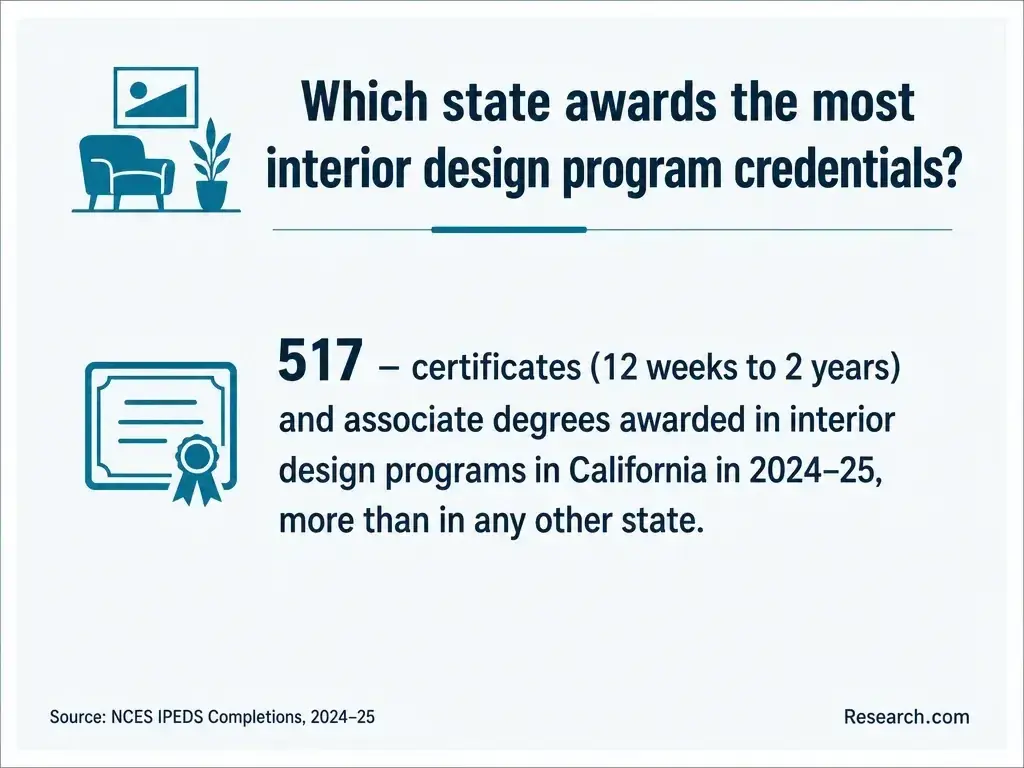
There is no reliable single average that describes every Walnut student's cost: a short certificate, an associate pathway, and employer training have different price structures, and residency, course load, and aid can change the amount paid. Request a current, credential-specific estimate from Mt San Antonio College rather than using tuition alone as the price of becoming job-ready.
Build your comparison from tuition and mandatory fees plus books, drawing supplies, software or computer access, model-making materials, travel, and earnings forgone while attending classes. Then subtract grants or other aid you are eligible to receive - not aid you merely hope to receive. Federal Student Aid eligibility depends on both the student and program; confirm each before relying on it. A low cost online college is only a cheaper option if its full costs and practical training fit your goal.
The award depends on the specific program: options may include a certificate or an associate degree. Confirm the exact title in the current catalog, whether required courses lead to that award, and whether credits can apply to another credential. A course-completion document, an academic award, and a professional certification are not interchangeable.
Institutional accreditation concerns the school; specialized program recognition concerns a particular curriculum; California's Certified Interior Designer designation has separate eligibility rules. None automatically substitutes for another. Keep the comparison focused on the credential needed for your intended work rather than unrelated searches such as easy phds.
Community-college admission and admission to a particular course sequence are distinct questions. Ask Mt San Antonio College whether its current interior design pathway requires placement, prerequisites, a portfolio, or a separate application, and whether studio courses have limited seats. Do not assume that admission to the college guarantees a place in every course needed to finish on schedule.
Before enrolling, check the computer and software requirements and ask whether previous coursework can satisfy any prerequisites. For an employer-entry route, review job postings instead: a strong sample portfolio and software proficiency may matter more than a named school credential for some support roles.
Useful training connects concepts to deliverables: measured plans, furniture layouts, material selections, lighting proposals, digital drawings, specifications, and client presentations. Students interested in commercial interiors should also look for instruction on accessibility, building-code awareness, and coordination with licensed professionals. The U.S. Bureau of Labor Statistics describes these technical and client-facing tasks as part of interior designers' work.
Ask to see the required projects and how instructors assess them. A program centered on attractive images but thin on accurate plans or revision after critique may be a poor fit for a technical design-assistant role. Conversely, someone aiming for showroom sales may benefit more immediately from product knowledge and customer communication.
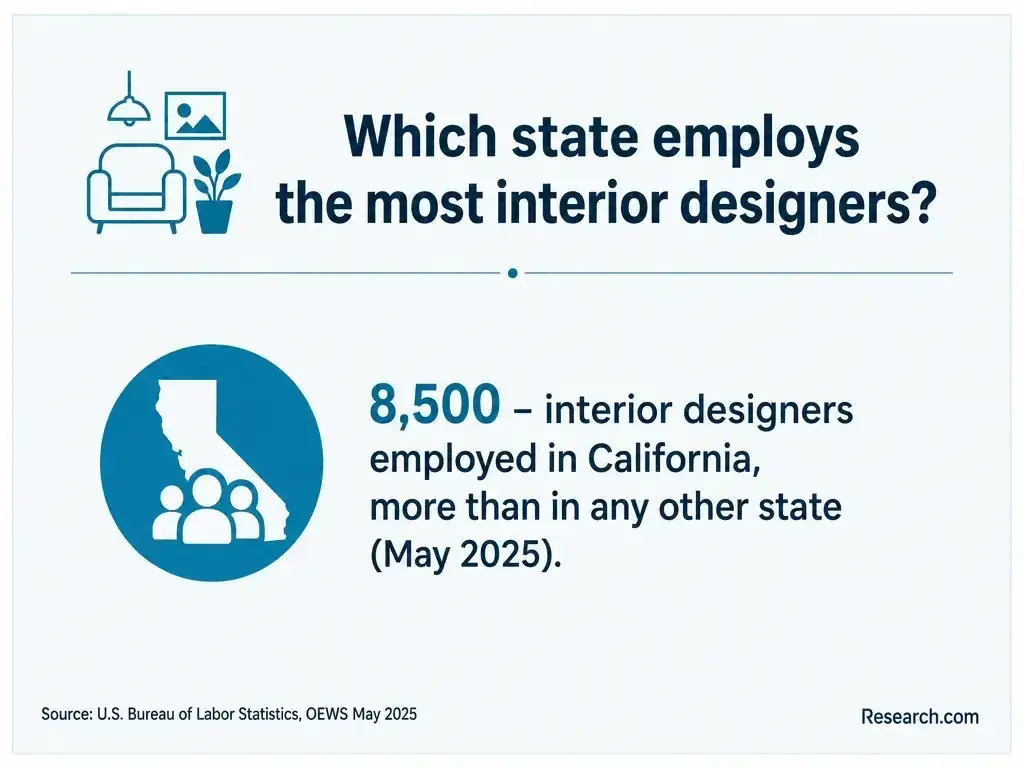
California does not require a general state occupational license to work as an interior designer. Certified Interior Designer is a distinct designation administered by the California Council for Interior Design Certification, with eligibility and examination requirements; completing a school program alone does not confer it. Check the council's current rules if using that designation is important to your plans.
Certification also does not authorize work reserved for licensed architects or other regulated professionals. Before paying for a program advertised as "certification-ready," ask which specific requirements its coursework satisfies and which experience or examinations remain. For many entry-level support jobs, a credible portfolio and relevant technical skills are the more immediate hiring considerations.
Start with a job target - such as showroom consultant, design assistant, or technical drafting support - then compare the training against that target. The cheapest listed option is not necessarily the least expensive route to employment if its schedule delays completion or its projects leave major portfolio gaps.
Use these checks to make a like-for-like comparison before committing:
Finally, compare the expected benefit with your current earnings, realistic entry-level offers, completion probability, debt payments, and time required. A ranking can narrow the search; it cannot answer those personal return-on-investment questions for you.
An initial role may involve showroom consultations, materials research, drafting, or supporting a designer's client presentations. With stronger technical work and experience, someone may pursue more independent residential or commercial projects, specialize in areas such as kitchens or workplace interiors, or manage client accounts. Advancement depends on demonstrated work and employer requirements, not simply time since completing a credential.
For someone already employed in a related showroom, employer training plus a targeted class may be more economical than a broad program. For someone changing fields without a portfolio or contacts, a structured certificate or associate pathway may provide more useful practice and feedback. Neither route guarantees independent design work immediately.
The U.S. Bureau of Labor Statistics projects 2.7% national employment growth for interior designers from 2025 to 2035. That is a national projection, not a forecast for Walnut or a promise of openings for new entrants. It makes the quality of a portfolio and access to relevant experience important when evaluating training.
To test local demand, compare current postings across the Los Angeles-area commute you would accept, separating designer roles from sales and drafting positions. Note recurring software and experience requirements, then choose a program whose required projects address those gaps. Check California Employment Development Department projections for a state or regional outlook, keeping their reference period separate from the national BLS projection.
Investing in training is a significant decision. Research.com created this ranking to help readers compare affordable interior design programs with other programs in the same occupation and location, rather than with unrelated schools elsewhere. The team uses multiple education and outcomes sources and checks the relevance of available measures; readers should still verify current program costs and offerings directly before enrolling.
Most-affordable rankings score costs and debt only: tuition, cost of attendance, median student debt, and federal loan default rate. An entropy-based method assigns more weight to indicators that differ more across programs. Accreditation and other quality indicators are not part of this affordability score. Only programs with completions reported to IPEDS are included, so an omitted training provider is not necessarily unavailable or unsuitable.
The ranking draws on the following data sources. Some cover fields other than interior design; their inclusion in the broader source set does not make a health or construction credential relevant to this occupation.
The resulting ranking is a starting point for comparing financial exposure, not a verdict on teaching quality or job placement. For more detail on Research.com's approach, see its methodology.
# 1 position
# 2 position
No. It is a local option to investigate, but an employer training route or a program farther along your feasible commute may fit better. Compare credentials, studio work, schedule, and total cost.
It may help with some entry-level roles, but employers set different portfolio, software, and experience expectations. Check postings for the exact work you want before enrolling.
Some coursework can be remote. Ask how the program provides drawing practice, material evaluation, and detailed critique, and verify any separate professional-certification requirements.
No general state occupational license is required to work as an interior designer. The Certified Interior Designer designation is separate; consult the California Council for Interior Design Certification if you intend to pursue it.
Request the full required-course plan and an estimate that includes mandatory fees, supplies, software, and expected attendance time. Confirm aid eligibility and whether courses are offered on a schedule you can complete.