# 1 position


Audited and Verified:
Our Editorial and Data Verification Process
Research.com uses government datasets, official education statistics and primary institutional information to support its career and degree guides. Our review process checks factual accuracy, occupational definitions, source dates and the requirements associated with the credentials discussed.
How This Article Was Fact-Checked
Our editorial team verifies salary estimates, employment projections, education requirements and program information against original data providers and official organizations. Salary figures are checked against the relevant occupational definitions and reporting periods. Information about licensure, accreditation and required in-person training is reviewed separately.
Fact-checked and verified on:

Co-Founder and Chief Data Scientist

Reviewed by Karolina Broda
Fact-Checker and Data Verification
Choosing affordable electrician training in Dothan means comparing more than tuition: you need practical skills, a route to supervised work, and a credential that fits Alabama's licensing rules. The U.S. Bureau of Labor Statistics projects 9.2% national employment growth for electricians from 2025 to 2035, making the decision timely. This guide accompanies the Most Affordable Electrician Trade Schools in Dothan for 2027 ranking, created by the Research.com team of data scientists to help students identify programs worth considering. It explains costs, training routes, earnings, and what to verify before enrolling.
Expect instruction in electrical theory alongside supervised practice: reading plans, using test instruments, installing wiring and devices, and working safely around energized systems. A short certificate can prepare you to seek entry-level supervised work; it is not equivalent to the extensive jobsite experience gained in an apprenticeship.
For a local college option, ask George C Wallace Community College-Dothan which electrician-related credentials and courses are currently offered, where labs meet, and whether any coursework can count toward an apprenticeship. Compare the actual curriculum - not just the credential name - with a registered apprenticeship, which combines classroom instruction and paid, supervised work under standards set through its sponsor and registration agency (U.S. Department of Labor, Apprenticeship.gov).
An online trade-school listing may help you discover theory courses, but even a most popular online school for trade skills should be judged on where you will practice electrical work and how that practice is documented.
Potential workplaces include residential and commercial electrical contractors, industrial maintenance operations, construction sites, and facilities teams in the Dothan area. These settings teach different skills: residential crews may emphasize service panels and home wiring, while industrial roles may require motor controls and troubleshooting. Electricians install, maintain, and repair electrical systems across such settings (U.S. Bureau of Labor Statistics, Occupational Outlook Handbook).
A school credential can strengthen an application for supervised entry-level work, but it does not qualify someone to perform every task independently. Ask prospective employers whether they hire trainees, provide documented supervised hours, and support the licensing path you want. If a local opening is scarce, compare the cost of commuting to training or jobs elsewhere in the Wiregrass area before committing to a program.
The national median annual wage for electricians was $63,190 in May 2025 (U.S. Bureau of Labor Statistics, Occupational Outlook Handbook). It describes workers across experience levels and locations - not Dothan pay or a likely first-year wage. A trainee comparing offers should ask about the starting rate, scheduled raises, overtime, benefits, and whether classroom time is paid.
For a local decision, compare current Dothan-area job postings and apprenticeship wage schedules for the same experience level. Treat a higher experienced-electrician wage as a potential long-term outcome only after accounting for the supervised work, examinations, and licensing steps needed to reach it.
There is no single duration: a focused certificate, a longer diploma or associate-degree program, and a registered apprenticeship involve different amounts of classroom and practical training. An apprenticeship generally extends over several years because it includes substantial paid jobsite experience; its sponsor can provide its exact schedule and required hours (U.S. Department of Labor, Apprenticeship.gov). Ask any school for its published clock or credit hours, lab hours, course sequence, and part-time timetable rather than assuming the credential title tells you when you can work.
Speed is valuable only if it meets your goal. Unlike best accelerated degree programs, an accelerated electrician course cannot compress the supervised experience or practical competence needed for later responsibility. If you need income while learning, a paid apprenticeship may be preferable to finishing a school program sooner and then looking for an entry-level position.
Online instruction can cover electrical theory, calculations, code concepts, and plan reading. In-person labs and jobsites are where trainees handle tools, make connections, test circuits, and demonstrate safe work under supervision. A hybrid option can reduce classroom trips around Dothan, but ask for the required lab schedule and location before enrolling.
A best online college degrees for seniors comparison addresses a different kind of study; it cannot establish that remote electrical coursework supplies jobsite experience or meets Alabama licensing requirements. For electrician training, choose online theory only when you also have a credible plan for hands-on instruction and supervised work.
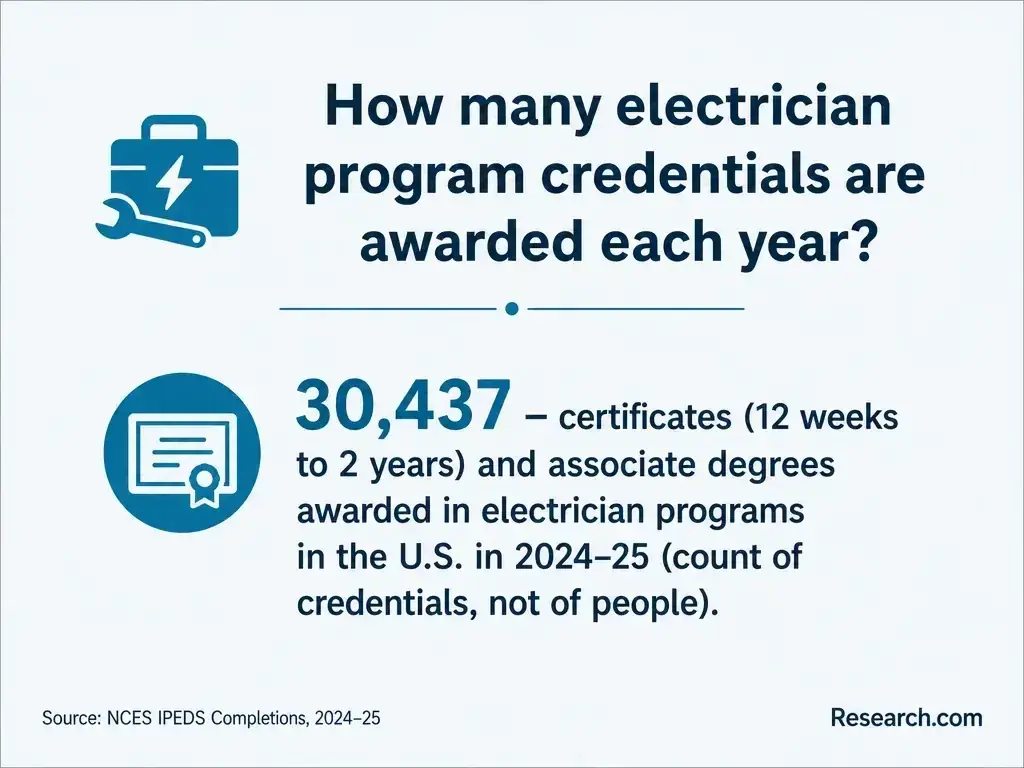
A reliable Dothan-wide average for electrician training is not established here, and a single figure would obscure the difference between paying school tuition and earning wages in an apprenticeship. Request George C Wallace Community College-Dothan's current program-specific charges and an itemized estimate from any apprenticeship sponsor you are considering. Do not apply an institution-wide tuition figure to a particular credential without checking its required courses and fees.
Use the same cost categories for each route: tuition and mandatory fees; books and materials; tools, work boots, and other safety gear; transportation to labs or jobsites; and any examination or licensing expenses. Then subtract grants, eligible aid, or employer support and account for earnings while training. Federal student aid depends on both student and program eligibility (Federal Student Aid, U.S. Department of Education). Comparisons with cheap online doctoral programs are not useful here: the electrician decision turns on practical training, time to paid work, and licensing progress.
For return on investment, compare each option over the same time horizon. Consider your current earnings, completion likelihood, expected trainee pay, debt, and the time needed to qualify for higher-paid work - not tuition alone.
The award depends on the pathway. A college may offer a certificate, diploma, or associate degree; a registered apprenticeship has its own completion credential and documented work-based training. An employer may also provide training without awarding an academic credential. Obtain the exact award name in writing and ask employers or apprenticeship sponsors whether they recognize it or grant any advanced standing.
Keep three distinctions clear: institutional accreditation concerns the school; an industry credential such as NCCER recognition concerns particular training or skills; and occupational licensure is governed by Alabama's licensing authority (National Center for Construction Education and Research; Alabama Board of Electrical Contractors). None automatically substitutes for the others.
Requirements vary by provider and route. A college may specify an application, placement or prerequisite rules, and documentation for admission; an apprenticeship sponsor may additionally assess applicants for work readiness and require them to meet its employment-entry criteria. Request the current requirements directly from George C Wallace Community College-Dothan or the apprenticeship sponsor rather than assuming admission to one route transfers to another.
Before applying, check whether you can attend the required labs or jobsites, reliably travel to changing worksites, and meet the provider's safety expectations. Ask when training starts and whether admission to a school program includes - or merely helps you apply for - an apprenticeship position.
A useful curriculum connects electrical fundamentals to the work employers need: interpreting diagrams, measuring and calculating circuits, selecting materials, installing components, troubleshooting faults, and applying electrical-code and safety practices. Electricians also need communication and diagnostic skills when coordinating with other trades or explaining repairs (U.S. Bureau of Labor Statistics, Occupational Outlook Handbook).
Ask to see the syllabus and lab outline. A program that teaches code vocabulary but offers little opportunity to wire, test, and troubleshoot under supervision may suit someone seeking introductory knowledge, but it is a weaker stand-alone preparation for hands-on entry work. For industrial maintenance goals, look specifically for relevant controls and equipment practice rather than assuming a residential-wiring course covers it.
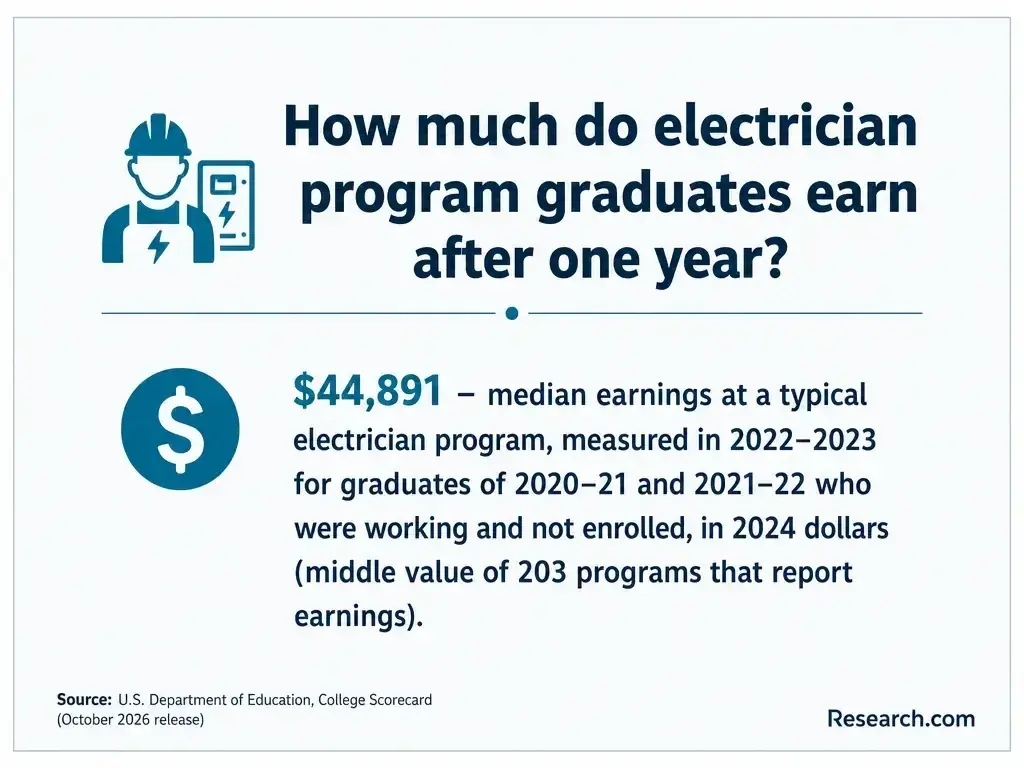
Alabama regulates electrical contracting and journeyman electrician licensing through the Alabama Board of Electrical Contractors. School completion alone is not a license: the appropriate route can involve documented experience and an examination, depending on the credential sought (Alabama Board of Electrical Contractors). Someone beginning in supervised work should distinguish the conditions of that work from the requirements for later independent or licensed practice.
Before choosing a course, ask the board which education, supervised experience, records, and examinations apply to your intended role, and ask the provider what documentation it supplies. Check local permitting rules with the relevant authority before taking on work independently. Optional industry training recognition may help demonstrate skills, but it does not replace a required Alabama license.
Start with the job you want, then compare the least-cost credible route to its training and licensing requirements. An affordability ranking can identify candidates, but a list of top online schools cannot tell you whether electrical labs, supervised hours, and local employment access fit your situation.
Use these questions when speaking with a school and an apprenticeship sponsor; written answers make competing offers easier to compare:
A red flag is a promise that a short course alone makes you a licensed electrician. Another is a low advertised tuition figure without a tool, fee, and travel estimate. Choose the route whose documented practical training and total cost fit your goal, not simply the shortest or highest-ranked option.
Initial training can lead to supervised work with an electrical contractor or facilities team. With documented experience and the applicable licensing steps, a worker may progress toward journeyman responsibilities; further experience can support supervisory, specialized, or contracting goals, subject to Alabama's rules (Alabama Board of Electrical Contractors). The path is progressive, not an outcome awarded at graduation.
Match training to the setting you want. Construction-oriented instruction is useful for installation work, while troubleshooting and controls practice may better fit industrial or facilities maintenance. Ask local employers what they expect of new hires and whether they support the experience records needed for advancement.
U.S. electrician employment is projected to grow 9.2% from 2025 to 2035 (U.S. Bureau of Labor Statistics, Employment Projections). That national projection indicates continued demand for the occupation, but it is not a forecast of openings in Dothan or a guarantee that a particular graduate will be hired.
For a local read on opportunity, check current trainee vacancies, the worksites served by apprenticeship sponsors, and whether employers seek construction installation or maintenance skills. A paid opening with structured supervision may be more valuable than an additional classroom credential if it lets you build the documented experience your intended role requires.
Education is a substantial investment, so Research.com designed its most-affordable ranking to help readers compare electrician programs with eligible options in the same location and occupation. The team checks multiple education and training sources to improve the ranking's credibility and accuracy. Only programs with completions reported to IPEDS can appear; an apprenticeship or other provider absent from the ranking may still be a valid option.
Most-affordable rankings score tuition, cost of attendance, median student debt, and federal loan default rate. An entropy-based method gives more weight to measures that distinguish programs. Accreditation and other quality indicators are not part of the affordability score. Readers should therefore use the ranking to narrow their cost comparison, then independently check hands-on training, completion prospects, and licensing alignment. More detail appears in the Research.com methodology.
The ranking draws on the following data sources. Some cover the wider trade-school ranking framework rather than electrician-specific approval or licensing, so their inclusion should not be read as an endorsement of an individual program:
# 1 position
# 2 position
Not necessarily. A registered apprenticeship or employer-supported supervised training may offer another route. Check the Alabama Board of Electrical Contractors' requirements for the role you ultimately want before selecting a pathway.
Not always. A certificate may require tuition and time away from paid work; an apprenticeship can pay wages while you train. Compare tools, fees, transportation, aid, and earnings over the full training period.
Do not assume so. Online theory does not replace practical electrical work or documented supervised experience. Confirm how any online program supplies hands-on training and how it fits Alabama's requirements.
No. A school credential and an Alabama occupational license are separate. Verify the applicable experience, examination, and application requirements with the Alabama Board of Electrical Contractors.