# 1 position


Audited and Verified:
Our Editorial and Data Verification Process
Research.com uses government datasets, official education statistics and primary institutional information to support its career and degree guides. Our review process checks factual accuracy, occupational definitions, source dates and the requirements associated with the credentials discussed.
How This Article Was Fact-Checked
Our editorial team verifies salary estimates, employment projections, education requirements and program information against original data providers and official organizations. Salary figures are checked against the relevant occupational definitions and reporting periods. Information about licensure, accreditation and required in-person training is reviewed separately.
Fact-checked and verified on:

Co-Founder and Chief Data Scientist

Reviewed by Karolina Broda
Fact-Checker and Data Verification
Choosing electrician training in Summit, Mississippi, means deciding whether to pay for classroom preparation, pursue a paid apprenticeship, or combine the two. The choice matters: the U.S. Bureau of Labor Statistics projects electrician employment to grow 9.2% nationally from 2025 to 2035, but training does not automatically confer a license. The Research.com team of data scientists created the Best Electrician Trade Schools in Summit for 2027 ranking to help students identify programs worth considering. This guide explains costs, practical training, credentials, and the questions to ask before enrolling.
Expect instruction in electrical theory alongside supervised practice: reading plans, measuring circuits, installing conduit and wiring, testing faults, and working safely around energized systems. A useful program makes students perform these tasks in a lab or on a worksite rather than only recognize them on a screen. The U.S. Bureau of Labor Statistics describes apprenticeship as the usual route to becoming an electrician; a school program can prepare someone to enter that route, but it is not necessarily a substitute for it.
Summit applicants should compare the training structures below before treating similarly named credentials as equivalent. Availability, schedules, and employer partnerships must be confirmed with each provider.
| Pathway | What it typically provides | Best fit and key limitation |
| Certificate or diploma | Focused classroom and lab training; a school credential | Useful for building entry skills before applying for work; ask whether any training counts toward an apprenticeship. |
| Electrical associate program | Trade coursework, labs, and an academic credential | May suit someone seeking broader technical study; check whether its additional time and cost improve access to the intended job. |
| Registered apprenticeship | Paid, supervised work plus related technical instruction; a completion credential | Strong fit for earning while learning; entry depends on sponsor openings and selection requirements. |
| Employer-sponsored entry | Job-specific training under an employer's supervision | Can reduce upfront school cost; confirm how instruction and work experience are recorded and whether a registered apprenticeship is available. |
Institutional accreditation concerns the school; state school authorization concerns permission to operate; industry credentials document particular skills; and apprenticeship registration concerns a structured work-training program. None alone grants an occupational license. Ask Southwest Mississippi Community College, if considering it, for its current electrical-program catalog, lab hours, credential, and employer or apprenticeship arrangements rather than assuming a particular offering is available.
Electrical training can support applications to residential and commercial contractors, industrial maintenance employers, utilities and their contractors, and facilities teams. These settings require different practice: a residential crew emphasizes building wiring and service calls, while an industrial site may emphasize motors, controls, and troubleshooting. The U.S. Bureau of Labor Statistics identifies electrical contractors as a major employer of electricians nationally; that does not establish how many openings exist in Summit.
A student willing to travel to work and training sites beyond Summit may have more apprenticeship and job options than someone who needs a short local commute. Before choosing a specialty, ask prospective employers which entry roles they hire for, where crews report, and whether travel time is paid. For a broader comparison of trade occupations - not a prediction of local earnings - see what is the highest paying trade in trade school?
The U.S. Bureau of Labor Statistics reports a $63,190 national median annual wage for electricians in May 2025. That figure combines workers at different experience levels and locations; it is neither a Summit wage estimate nor a likely first-year offer. Apprentices generally earn less than experienced electricians but receive wages while training, which can materially change the comparison with full-time school.
For a local estimate, request current apprentice pay scales and progression rules from sponsors, then compare nearby electrician job postings by experience requirement and work location. Separate base pay from overtime, travel allowances, benefits, and the cost of commuting. A higher advertised wage may be a worse financial fit if it requires substantial unpaid travel or experience you do not yet have.
Length depends on the credential and schedule. A short pre-apprenticeship or certificate can prepare someone for entry-level applications sooner than an associate program, but quicker completion does not mean quicker qualification for independent electrical work. Ask each school for its published clock or credit hours, the portion spent in labs, and whether evening or part-time attendance changes the completion date.
Electrician apprenticeships commonly run four or five years and combine paid on-the-job learning with technical instruction, according to the U.S. Bureau of Labor Statistics. When comparing a school-first route with direct apprenticeship entry, count the time until you can earn wages - not just the time until a classroom credential is awarded. A resource on fast track online degrees is not a substitute for checking an electrical program's required lab and supervised-work time.
Online delivery can work for electrical theory, calculations, code study, and some assessments. Conduit bending, tool use, circuit testing, safe installation, and supervised fieldwork require physical equipment and in-person evaluation. A hybrid program is worthwhile only if its lab location, attendance schedule, and work-based component are feasible from Summit.
Before enrolling, ask where practical instruction occurs, who assesses it, and whether the provider helps arrange an apprenticeship or employer placement. Do not assume an entirely online certificate supplies supervised experience or satisfies licensing requirements. Lists of quick degrees online that pay well do not answer those electrician-specific questions.
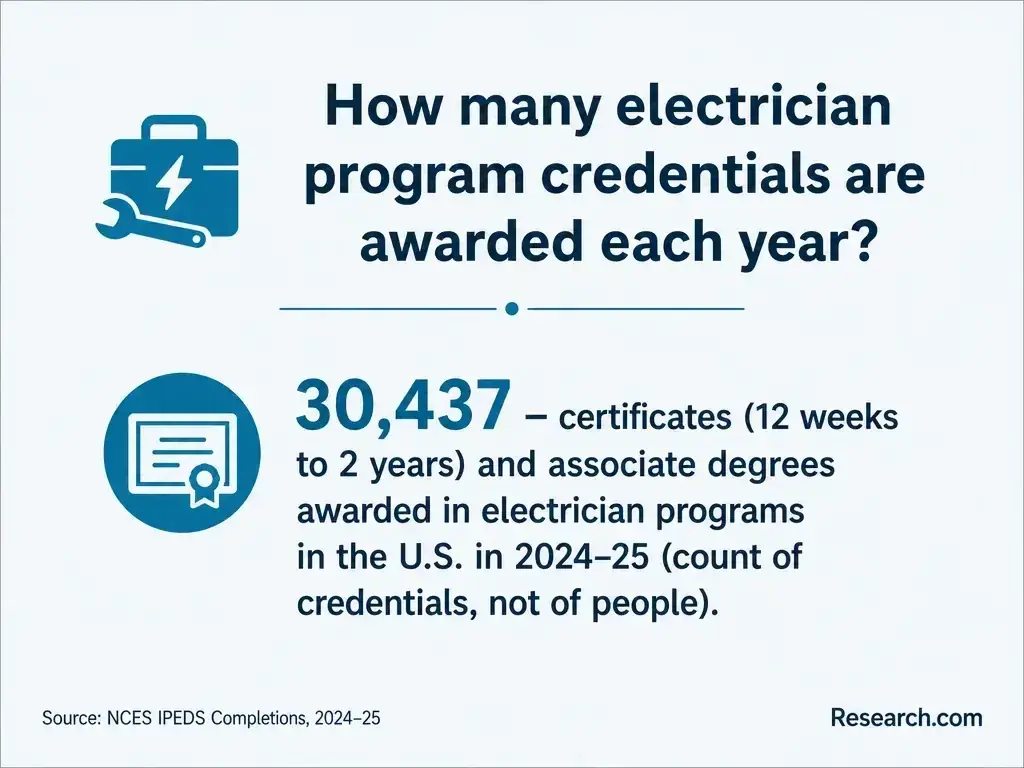
A reliable Summit-wide average is not available from the information presented here. Prices differ by provider, residency status, credential, and whether training is school-based or paid by an apprenticeship sponsor. Request a written, program-specific cost of attendance instead of using a single advertised tuition figure.
The useful comparison is total cost to become job-ready: tuition and required fees; books, software, tools, consumables, and protective equipment; any exam or application fees; and transportation to labs or worksites. Add earnings forgone during unpaid training, then account for grants, eligible federal or state aid, employer contributions, and apprenticeship wages. Federal Student Aid eligibility depends on the school and program, not simply on its trade-school label. Comparing electrical training with cheapest online masters prices would obscure the tools, travel, and paid-work considerations that drive this decision.
A lower-priced course is not automatically a better investment if it lacks usable labs or job connections. Conversely, paying more is difficult to justify without evidence of stronger practical training or a clearer route into work. Compare likely debt and completion probability alongside your current earnings, expected pay progression, and the time needed to recover your costs.
The answer depends on the provider: it may award a completion certificate, diploma, or electrical associate degree. A registered apprenticeship has its own completion credential and documented work-based training. NCCER credentials, where offered, document specified construction skills; ask exactly which modules and assessments are included rather than assuming a school certificate carries an industry credential.
If an associate program appeals to you, compare its electrical labs and employment pathway - not merely its credential length - with easy associate degrees to get. Also ask whether prior work or training can earn credit and whether classroom hours can be recognized by an apprenticeship sponsor. Get any advanced-standing decision in writing from the receiving program; a school's promise alone does not bind a sponsor or licensing authority.
School admission and apprenticeship selection are separate decisions. A school may ask for an application, proof of prior schooling, and placement or advising steps; a sponsor may also assess math readiness, availability, driving requirements, and ability to reach jobsites. Requirements differ, so check the current written criteria before paying an application fee. The U.S. Bureau of Labor Statistics notes that electricians need skills in algebra and other math used to measure and calculate electrical values.
Ask whether the provider supplies tools for labs, whether you must buy them before the first day, and whether an employer has additional safety or screening requirements. If you are changing careers, compare the start date of a school program with the next apprenticeship intake: the route you can enter and sustain may matter more than the route with the shortest advertised duration.
Core instruction should connect electrical theory to safe installation and diagnosis: circuits and measurements, wiring methods, blueprint reading, electrical-code use, grounding, motors or controls where applicable, and tool and jobsite safety. The U.S. Bureau of Labor Statistics describes electricians as installing, maintaining, and repairing electrical power, communications, lighting, and control systems. A program focused chiefly on videos or exam questions may leave a beginner underprepared for those physical tasks.
Ask to see a lab syllabus and the equipment students actually use. For industrial goals, look for supervised practice with motors and controls; for construction work, prioritize installation, drawings, and code application. Code knowledge matters, but so do troubleshooting habits, clear communication with a crew, and knowing when to stop and escalate an unsafe condition.
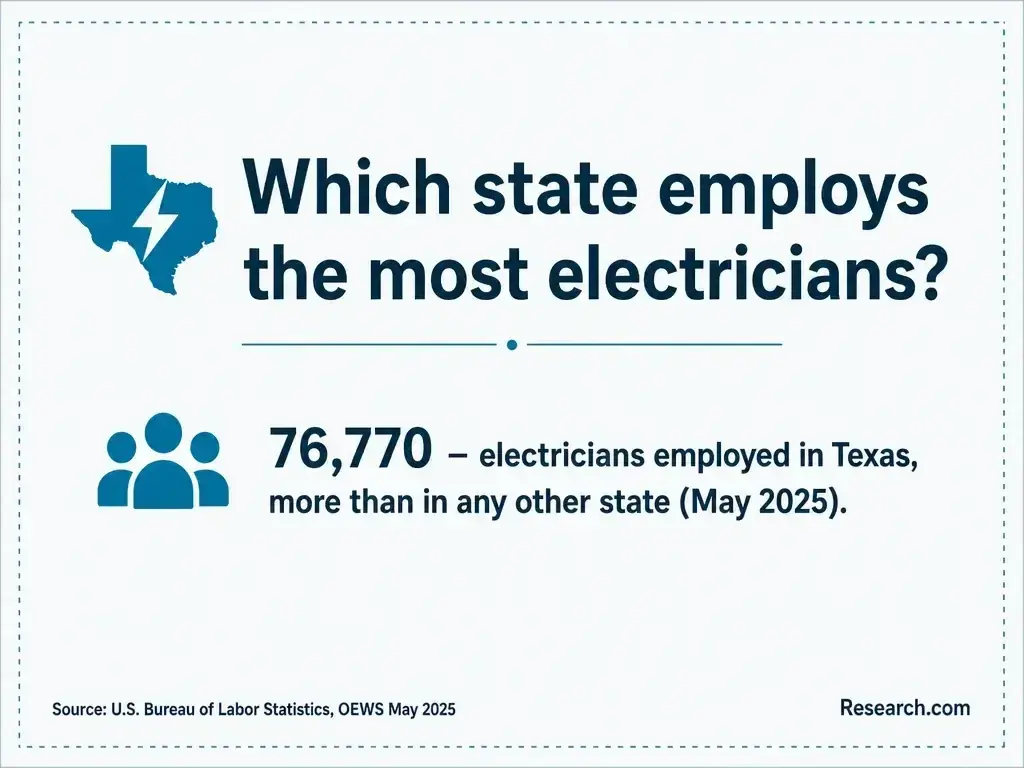
Do not assume one statewide credential covers every electrical role. Mississippi regulates covered contractor work through the Mississippi State Board of Contractors, while requirements for individual electricians can depend on the locality and the work performed. A worker entering under an employer's supervision is in a different position from someone bidding and performing contractor work independently. Confirm the rules for the municipality, project type, and role you intend to pursue with the relevant local authority and the Mississippi State Board of Contractors before choosing training.
A school credential, optional industry certification, and registered-apprenticeship completion are distinct from contractor licensing. Ask the provider which examinations or applications its curriculum prepares you for, what supervised experience remains necessary, and whether its claims apply to Summit. If you might later work across state lines, check the destination jurisdiction separately rather than assuming Mississippi experience transfers automatically.
Start with the job you want, then compare programs on evidence that affects entry into that job. A ranking can help form a shortlist; the deciding questions concern practical training, employer recognition, affordability, and the rules where you will work.
A red flag is a promise that a short credential automatically makes you a licensed electrician or guarantees a particular salary. Another is an "online electrician" offer with no clear hands-on assessment. If a paid apprenticeship is accessible and matches your schedule, compare it directly with school-first training before borrowing; neither route is universally better.
A realistic starting point is supervised electrical work or an apprenticeship, not independent contracting immediately after a classroom course. With documented experience, a worker may move toward more complex installation, service troubleshooting, industrial maintenance, crew leadership, or contractor work where applicable requirements are met. The U.S. Bureau of Labor Statistics notes that experienced electricians may become supervisors or self-employed; those are progression possibilities, not automatic outcomes of training.
Choose a first program for the work you can access. Someone targeting industrial controls should ask about motors and diagnostics, while someone interested in residential service should ask about building-wiring practice and customer-facing work. Additional employer training or optional credentials can support specialization, but the need for licensing must be checked independently.
The U.S. Bureau of Labor Statistics projects 9.2% national growth in electrician employment from 2025 to 2035. That supports considering the trade, but it does not predict openings in Summit or guarantee an apprenticeship placement. Local demand depends on contractors' projects, maintenance hiring, and whether an applicant can travel to the available work.
For a practical outlook, compare current openings with apprenticeship intake dates and ask sponsors where apprentices are assigned. If nearby opportunities are limited, the cost and feasibility of commuting may determine whether a promising training program is worthwhile. Use the national projection as context; use actual employer and sponsor requirements to plan your first job.
Education is a substantial investment, so Research.com evaluates programs against other programs in the same occupation and location rather than treating every trade-school option as interchangeable. The ranking includes only programs with completions reported to the Integrated Postsecondary Education Data System (IPEDS). That boundary supports consistent comparisons, but it also means a registered apprenticeship or employer training program may be a worthwhile option without appearing in the ranking.
For best-program rankings, Research.com evaluates student outcomes, earnings and return on investment, costs and debt, and quality and recognition. Programmatic accreditation or occupation-relevant industry recognition receives 20% of the score, institutional accreditation 10%, and student support services 10%. The remaining 60% covers completion and retention, earnings one year after completion, earnings relative to annual attendance cost, tuition, attendance cost, debt - including for students who withdrew - and federal loan default rates. An entropy-based method gives more weight to indicators that differ more across programs. Most-affordable rankings instead use only cost and debt indicators, weighted by that method; accreditation and other quality indicators are not scored. Readers can find further details on Research.com's methodology.
The team draws on the following data sources to check outcomes, costs, recognition, and training context. Some occupation-specific recognition sources cover other trades and are not electrician licensing authorities; their inclusion in the broader ranking methodology should not be read as an electrician-program endorsement.
Use the ranking to narrow a shortlist, then verify each program's current electrical curriculum, hands-on instruction, full price, and connection to paid work. College-oriented datasets do not capture every union, employer, or apprenticeship route, and a ranking cannot establish licensing eligibility by itself.
# 1 position
# 2 position
Not necessarily. An apprenticeship can provide technical instruction and paid supervised work. School may help you prepare to apply, but ask the sponsor whether it gives applicants credit or advanced standing for prior coursework.
Online lessons can cover theory and code study, but installation, testing, safety practice, and supervised work require in-person participation. Verify the practical-training plan before enrolling.
No certificate alone establishes that right. Check the intended work and location with the relevant local authority and, for covered contractor work, the Mississippi State Board of Contractors.
It may be better if you need wages while training and can secure a place. A school program may be useful for building entry skills or fitting a different schedule. Compare admission timing, costs, lab quality, and documented work experience.
Request an itemized total covering required fees, tools, protective gear, materials, and travel. Ask what aid is available and whether any paid work or employer support offsets the cost.