# 1 position
Imperial Valley College - Electrician.
associate

Audited and Verified:
Our Editorial and Data Verification Process
Research.com uses government datasets, official education statistics and primary institutional information to support its career and degree guides. Our review process checks factual accuracy, occupational definitions, source dates and the requirements associated with the credentials discussed.
How This Article Was Fact-Checked
Our editorial team verifies salary estimates, employment projections, education requirements and program information against original data providers and official organizations. Salary figures are checked against the relevant occupational definitions and reporting periods. Information about licensure, accreditation and required in-person training is reviewed separately.
Fact-checked and verified on:

Co-Founder and Chief Data Scientist

Reviewed by Karolina Broda
Fact-Checker and Data Verification
Choosing electrician training in Imperial means looking beyond a school's name: you need a path to supervised work and California certification. The U.S. Bureau of Labor Statistics projects 9.2% national growth for electricians from 2025 to 2035, making the training decision timely. This guide compares costs, credentials, apprenticeships, and local access. It also accompanies the Best Electrician Trade Schools in Imperial for 2027 ranking, created by the Research.com team of data scientists to help students make an informed choice about programs worth considering.
Expect instruction in electrical theory, code use, safety, and installation, with practical work on circuits, wiring methods, and testing. A useful program lets you handle tools and troubleshoot faults under supervision - not merely watch demonstrations. Ask Imperial Valley College whether its current electrical coursework includes labs, what credential it awards, and how its courses connect to California-approved trainee education.
A school certificate, a registered apprenticeship, and California electrician certification serve different purposes. School can build entry-level skills; an apprenticeship adds structured, paid jobsite training; state certification follows separate experience and examination requirements. If you can enter a registered apprenticeship directly, compare its wages and classroom schedule with paying for school first. Neither route should be judged by credential title alone.
Electrical trainees may seek supervised work with contractors maintaining or installing wiring in homes, commercial buildings, agricultural facilities, and other Imperial Valley worksites. Construction and maintenance work call for different strengths: installation emphasizes plans, conduit, and wiring, while maintenance emphasizes diagnosis and safe repair. BLS describes both as electrician work, but a particular employer's openings and supervision capacity determine whether a trainee can enter.
Imperial's location makes travel a practical selection issue. Ask a prospective employer or apprenticeship sponsor where classroom sessions and jobsites are located before committing; a paid position can lose some of its financial advantage if travel is substantial. A school credential by itself is not permission to take unsupervised electrical jobs.
The BLS reports a $63,190 national median annual wage for electricians in May 2025. That figure covers experienced workers as well as newer ones; it is not an Imperial starting wage or an apprentice pay quote. For a local decision, request current wage scales from apprenticeship sponsors and written pay ranges from employers, then compare them with commuting costs and the hours you can expect to work.
When assessing a school's earnings claim, ask whether it describes electricians, apprentices, or all graduates, and when earnings were measured. A higher eventual wage may justify training expense, but the investment also depends on completion, debt, time out of paid work, and the experience still needed after school.
School-based certificates vary by course load and schedule; ask for the published sequence rather than assuming a short program makes you job-ready. Apprenticeships take longer because they combine classroom study with extensive supervised work while participants earn wages. Under California DIR rules, general electrician examination eligibility ordinarily requires 8,000 hours of qualifying on-the-job experience; confirm how a proposed position documents those hours.
Accelerated classes may help you start applying for trainee jobs sooner, but they do not replace required field experience. Searches for 1 year master's programs reflect a different kind of timeline: for this trade, compare time to paid supervised work and time to certification separately.
Online delivery can make code reading, calculations, and some theory easier to fit around a job. In-person labs and supervised jobsites are needed to practice installation, safe tool use, testing, and troubleshooting. A hybrid program can work well if its practical sessions are accessible from Imperial and its coursework meets the applicable California trainee-school requirements; an online-only certificate should not be assumed to do so.
Before choosing a format, ask where labs occur, who supervises practical work, and whether you must arrange your own placement. A list of top online universities cannot answer those trade-specific questions; verify the actual electrical program and its hands-on access.
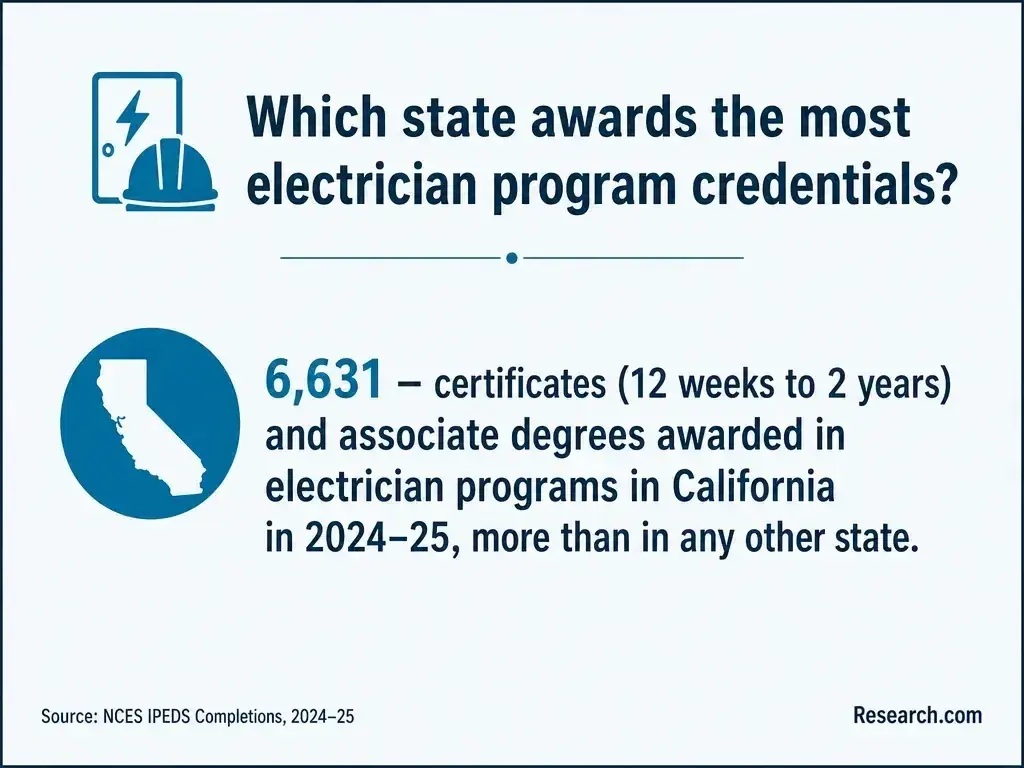
There is no reliable single average that captures Imperial-area school programs and paid apprenticeships together. Request a written, program-specific total rather than using tuition alone. The items below can change which route is more affordable:
Federal aid eligibility depends on the student and program, according to Federal Student Aid; do not assume every short course qualifies. Comparing how much does it cost to get associates degree can help frame questions about attendance costs, but request electrician-specific figures before budgeting. Include lost earnings if a full-time schedule prevents you from working.
The award depends on the provider: it may be a course-completion document, certificate, diploma, or associate degree. A registered apprenticeship has its own completion credential. None is interchangeable with California electrician certification, which is administered through the state's separate requirements, according to California DIR.
Ask for the exact credential name and whether courses can count toward a later credential or receive apprenticeship credit; obtain any advanced-standing agreement in writing from the receiving program or sponsor. An academic credential may be valuable, but do not select one solely because you also found easiest masters degree online comparisons: the relevant test here is whether training supports supervised entry and certification.
Schools and apprenticeship sponsors set their own entry criteria. Ask about prerequisite math, placement assessments, age or education documentation, application dates, and any employer-required screening. Meeting school admission rules does not settle whether you may work as a trainee.
California DIR requires electrical trainees to register with the state and enroll in a state-approved school while performing electrical work under required supervision; registered apprentices follow their apprenticeship route instead. Verify the current rules and the school's approved status directly with DIR before accepting a job or paying for training. Ask the sponsor separately how it selects apprentices and when paid openings may become available.
Relevant training covers electrical principles, calculations, diagrams, code application, grounding, overcurrent protection, wiring methods, test instruments, and jobsite safety. BLS identifies reading technical diagrams, diagnosing problems, and following safety requirements as core electrician duties. A practical curriculum should make you demonstrate those skills in a lab or under qualified jobsite supervision.
Ask to see the lab tasks and assessment methods, not just the course names. Someone seeking agricultural or industrial maintenance work should also ask whether motor controls and troubleshooting receive meaningful practice; someone targeting building construction should examine the installation and code content. The best curriculum is the one that matches the work you intend to pursue.
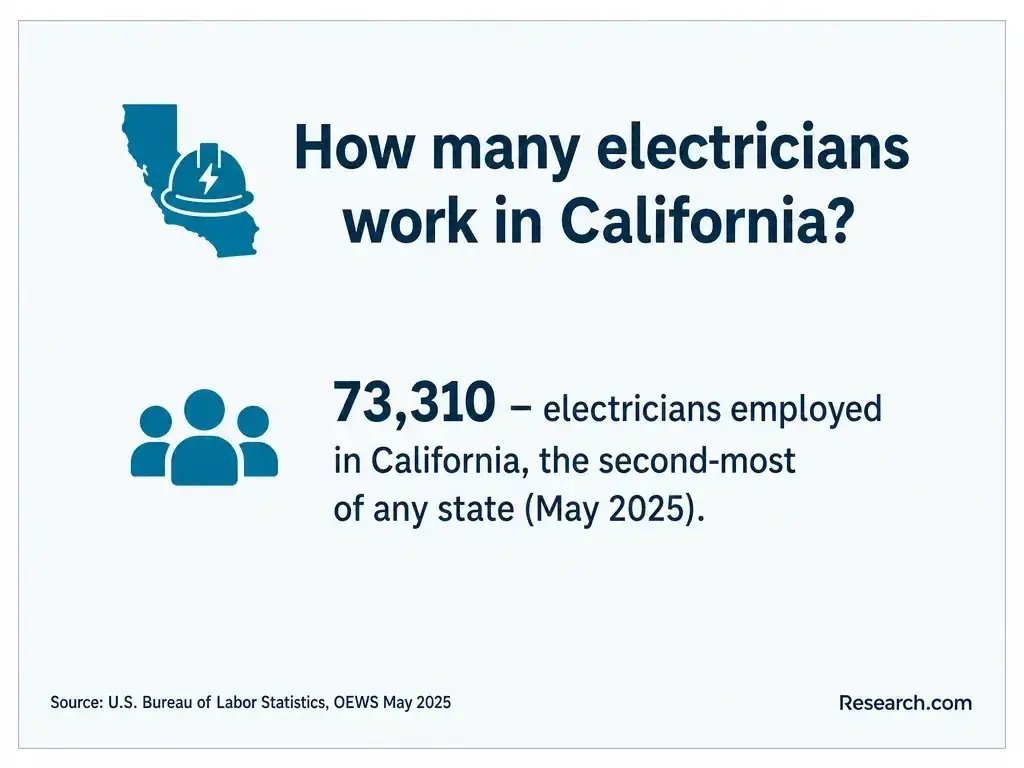
California distinguishes trainees, registered apprentices, certified electricians, and licensed contractors. Trainees work under the state's registration, education, and supervision rules; registered apprentices work through their registered programs. General electrician certification requires qualifying experience and passing the state examination, according to California DIR. A school certificate or institutional accreditation does not substitute for any of these requirements.
If your goal is to operate an electrical contracting business, California's Contractors State License Board has separate C-10 contractor licensing requirements. That is a later business decision, not a credential automatically awarded by trade school. Check DIR's current certification categories before enrolling, since the work you intend to perform affects which experience and examination path is relevant.
Start with the job you want - construction, maintenance, or an eventual contracting career - then compare routes to supervised employment. A school program can suit someone who needs foundational instruction before applying; a registered apprenticeship may suit someone ready to compete for a paid opening. Use a ranking as a shortlist, not as proof of California approval or a guaranteed job.
Before paying a deposit, get direct answers to these questions:
Check institutional accreditation separately if you need aid or transferable credit; check apprenticeship registration and state trainee approval separately because they answer different questions. General guides to low cost online universities for working students may help you think about scheduling and expenses, but they cannot verify an electrician program's lab access or regulatory fit.
A common progression is supervised trainee or apprentice work, qualifying experience and examination, then certified electrician work. With experience, electricians may focus on construction installation, maintenance troubleshooting, controls, or supervision. Contractor ownership is a separate path with California licensing requirements, according to DIR and the Contractors State License Board.
Choose an entry program for its first workable step, not its most advanced advertised outcome. Ask employers which tasks newcomers actually perform and whether a sponsor supports continued classroom instruction and experience documentation. Optional specialty training can be added when a specific role calls for it.
BLS projects 9.2% national electrician employment growth from 2025 to 2035. That points to continued demand across the occupation, but it is not an Imperial forecast or a promise of a local opening. Construction schedules, maintenance hiring, and the number of employers able to supervise trainees will shape an individual's prospects.
For a decision grounded in this area, compare current trainee vacancies with apprenticeship intake dates before selecting a start date. If nearby supervised openings are limited, ask whether the credential and your circumstances allow a wider jobsite search; the ability to reach work may matter as much as the classroom location.
Investing in training is a consequential decision, so Research.com evaluates programs against others in the same occupation and location rather than against unrelated schools. Its best-program rankings consider student outcomes, earnings and return on investment, costs and debt, and quality and recognition. Only programs with completions reported to IPEDS are eligible; a registered apprenticeship or employer program absent from the ranking may still be a strong option.
Programmatic accreditation or relevant industry recognition accounts for 20% of the best-program score, institutional accreditation for 10%, and student support for 10%. Outcomes, earnings, and costs account for the remaining 60%, with weights distributed through an entropy-based method that gives more weight to indicators that vary more across programs. Most-affordable rankings instead score only tuition, attendance cost, debt, and federal loan default rate; they do not include accreditation or other quality indicators. Research.com draws on the following sources, checking their relevance to the occupation rather than treating every source as an electrician-specific approval authority:
This approach helps readers compare measurable school outcomes while recognizing the limits of college-oriented datasets. Check current program details and California's electrical-trainee rules before enrolling. More information about the ranking process appears in Research.com's methodology.
# 1 position
# 2 position
# 3 position
No. School can provide instruction, but California's electrical-trainee and electrician-certification rules also address supervised work, qualifying experience, and examination, according to California DIR.
It depends on access and timing. An apprenticeship offers paid, structured work and instruction; school may help you develop skills before securing a supervised position. Compare openings, costs, and the work experience each route provides.
Online theory may be useful, but electrical installation and troubleshooting require practical training and supervised work. Confirm where a hybrid program delivers those components and whether its coursework meets applicable California rules.
No school credential automatically does so. Confirm the current program, its state-approved trainee-course status where applicable, and the separate experience and examination requirements with California DIR.
Request the total cost, exact credential, lab schedule, California trainee-school status, and evidence of connections to supervised work. Get answers in writing before committing.