Most Affordable Cybersecurity Associate Degree Programs in Oklahoma for 2027
Audited and Verified:
Our Editorial and Data Verification Process
Research.com uses government datasets, official education statistics and primary institutional information to support its career and degree guides. Our review process checks factual accuracy, occupational definitions, source dates and the requirements associated with the credentials discussed.
How This Article Was Fact-Checked
Our editorial team verifies salary estimates, employment projections, education requirements and program information against original data providers and official organizations. Salary figures are checked against the relevant occupational definitions and reporting periods. Information about licensure, accreditation and required in-person training is reviewed separately.
Fact-checked and verified on:

Co-Founder and Chief Data Scientist

Reviewed by Karolina Broda
Fact-Checker and Data Verification
A low tuition quote does not tell you whether a cybersecurity associate degree will fit your budget, teach practical skills, or lead toward the work you want. The Research.com team of data scientists created its Most Affordable Cybersecurity Associate Degree Programs in Oklahoma for 2027 ranking to help students identify programs worth considering. The U.S. Bureau of Labor Statistics projects 21% national growth for information security analysts from 2025 to 2035 - but that is not an entry-level placement forecast. This guide helps you compare degree types, full costs, and realistic first jobs before enrolling.
Key findings about associate cybersecurity degrees in Oklahoma
- Compare the complete price, not the tuition line: Oklahoma residency and, where applicable, district status can change the rate; fees, software, transportation, and lost work hours can change the better-value choice.
- Match the degree to the goal: An AAS generally emphasizes workplace skills, while an AA or AS generally places more emphasis on transferable coursework. Confirm the actual cybersecurity curriculum and transfer treatment rather than relying on the degree abbreviation.
- Plan for a first IT role: The U.S. Bureau of Labor Statistics projects 21% national growth for information security analysts in 2025-2035, but that occupation's outlook is not a promise that an associate graduate will enter an analyst job immediately.
Table of Contents
- Most Affordable Cybersecurity Associate Degree Programs in Oklahoma for 2027
- What can I expect from an associate cybersecurity degree in Oklahoma?
- Where can I work with an associate cybersecurity degree in Oklahoma?
What can I expect from an associate cybersecurity degree in Oklahoma?
Expect a mix of general education, computing fundamentals, and applied security work. A useful program teaches students to configure and troubleshoot systems, understand networks, document vulnerabilities, control access, and respond appropriately to incidents. Those skills can support an initial IT job while building toward security-focused responsibilities.
The letters on the diploma indicate a broad pathway, not a guaranteed set of courses. This comparison helps you check whether a program's design matches your immediate employment plans.
| Associate degree | Typical emphasis | Best fit and key check |
| Associate of Applied Science (AAS) | Applied technical coursework and job preparation | Consider it for earlier workforce entry; check how much of its coursework another institution would accept if your plans change. |
| Associate of Science (AS) | Science, mathematics, and computing coursework alongside general education | Consider it if you want a stronger academic foundation; verify that it includes substantial security labs rather than just a cybersecurity label. |
| Associate of Arts (AA) | Broader general education with available technology electives | Consider it when flexibility matters; verify that enough technical courses are available to build practical skills. |
For any degree, ask to see a current course sequence and examples of lab assignments. A program with virtual machines, network configuration, log analysis, and a documented incident-response exercise provides different preparation from one that mainly surveys security concepts. Do not assume similarly named degrees provide equivalent hands-on experience.
Where can I work with an associate cybersecurity degree in Oklahoma?
Potential workplaces include healthcare systems, financial institutions, manufacturers, managed IT providers, and public agencies. In the Tulsa and Oklahoma City areas, a broader mix of employers may make it easier to find an IT support or network role that leads toward security work. For a rural student, an online degree may reduce campus travel, but local work-based opportunities can still be limited; check where internships or employer partnerships actually operate.
Search for duties as well as titles. An IT support position that includes account administration, device management, and security ticket escalation may offer more relevant experience than a job whose title contains "security" but offers little technical access. Some government-related positions impose separate background or clearance requirements; a degree does not satisfy those requirements by itself.
The U.S. Bureau of Labor Statistics reports a $129,180 national median annual wage for information security analysts in May 2025. That median describes employed workers across experience levels and locations - not expected pay for a new associate-degree graduate in Oklahoma. Use it as context for a possible longer-term occupation, not as the starting salary in a return-on-investment calculation.
For an initial earnings estimate, compare current Oklahoma postings for the specific jobs you qualify for, such as IT support or junior network operations. Check required experience, shift schedules, and location before comparing posted pay with your present earnings. A degree is easier to justify financially if it helps you move into a relevant first role without taking on debt that depends on immediately reaching an experienced analyst's wage.
A full-time associate pathway is commonly planned around two academic years, but the catalog - not the advertised duration - sets the required credits and course order. Part-time enrollment, prerequisite computing courses, and classes offered only in certain terms can extend the schedule. Ask whether security courses must be taken in sequence and whether a required capstone or internship is available when you expect to finish.
An accelerated schedule can reduce time away from full-time work, yet it may leave less room to practice troubleshooting or manage a job alongside labs. Compare a term-by-term plan at your intended enrollment pace. Search results for 1 year phd programs describe a different educational path and are not a useful benchmark for an associate degree's completion time.
Online coursework can be a practical fit for working adults and students far from campus. Cybersecurity labs may use remotely accessible virtual machines, allowing students to configure systems and examine logs from home. But "online" does not tell you whether exams, hardware labs, internships, or other activities require travel.
On-campus study can provide direct access to equipment and instructors; a hybrid schedule may preserve that access while reducing commutes. Before choosing, request the delivery format of every required course, lab access hours, equipment requirements, and any in-person capstone or worksite expectations. Compare those obligations with your commute and schedule, not just the format shown on a program listing.
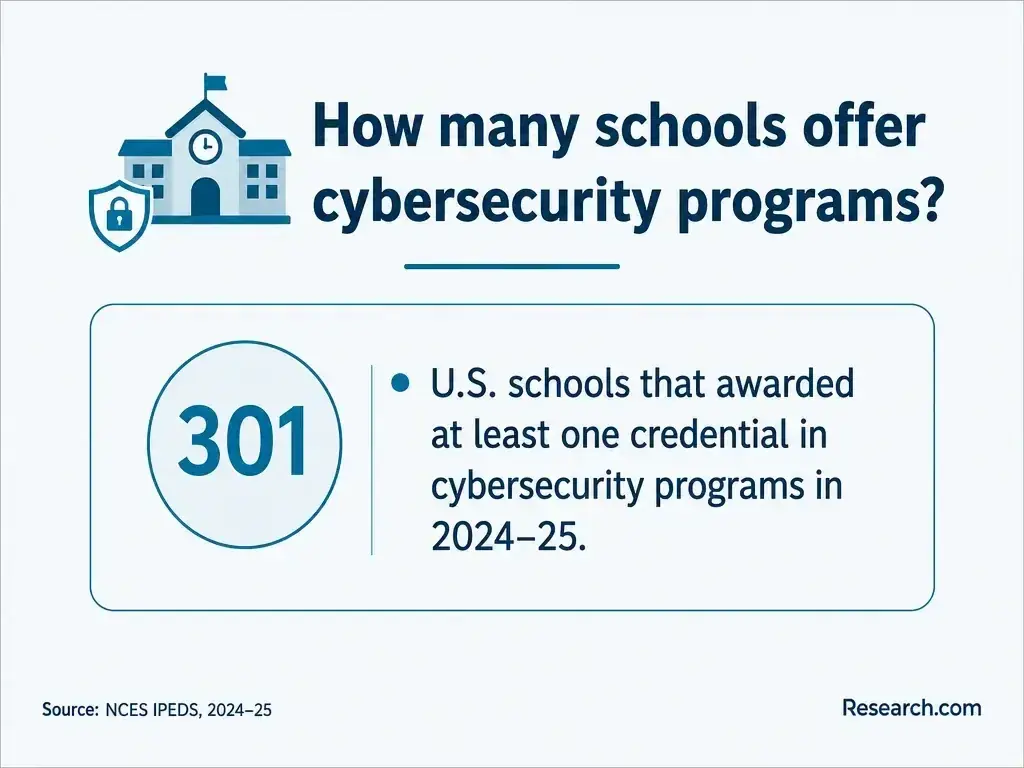
There is no single reliable statewide price for the degree: schools publish different resident rates, fees, and attendance budgets, while each student's enrollment pace and living arrangements differ. A published annual tuition figure is particularly easy to misuse when comparing a part-time online student with a full-time commuter. Request a written estimate for all credits needed to graduate, using your actual residency and, if relevant, district classification.
Build a total-cost estimate that includes mandatory fees, textbooks, a computer and required software, internet access, possible exam fees, travel to campus or worksites, living costs, and earnings you would forgo while studying. Then subtract aid you are likely to receive - not aid merely advertised as available. Ask whether transferred credits reduce both tuition and time or only replace electives.
Keep comparisons within the same degree level. A low cost online bachelor's degree listing does not establish the price of an Oklahoma cybersecurity associate degree.
At an eligible institution and for an eligible degree, students may be considered for federal grants, loans, and work-study after submitting the Free Application for Federal Student Aid (FAFSA), according to Federal Student Aid. Oklahoma students should also ask the financial aid office about state-administered aid, including the Oklahoma Tuition Aid Grant, and confirm current residency, enrollment, and deadline rules with the Oklahoma State Regents for Higher Education. School scholarships and employer tuition assistance may further reduce what a student pays.
Compare net cost after grants separately from borrowing: a loan makes attendance possible but does not lower the degree's price. Ask whether aid continues at your planned part-time pace, whether a summer course is covered, and what happens to your bill and aid if you withdraw from a course.
Requirements vary by institution and degree. Ask for the current admissions checklist, placement or prerequisite rules for mathematics and computing, and any minimum technology specifications before applying. Prior IT experience can help, but do not assume it replaces required courses; request a formal review of transfer and prior-learning credit if you have documented relevant work.
Separate college admission from progression into required courses. A student may be admitted yet need a preparatory course before starting networking or security classes. At Tulsa Community College or Mid-America Christian University, verify the current catalog and the exact associate-degree award before assuming a particular cybersecurity sequence is available.
Common subjects include operating systems, networking, scripting, security principles, access management, and incident response, alongside required general education. The strongest comparison is not a course-title count: inspect what students actually do. A networking class that requires configuration and troubleshooting builds a different foundation from one assessed only through written quizzes.
Ask a program representative to identify which required courses include supervised or remotely accessible labs, how students obtain feedback on their work, and whether a capstone uses realistic documentation and team communication. Those details matter for Oklahoma students seeking an initial IT role, where explaining a fix clearly can be as important as finding it.
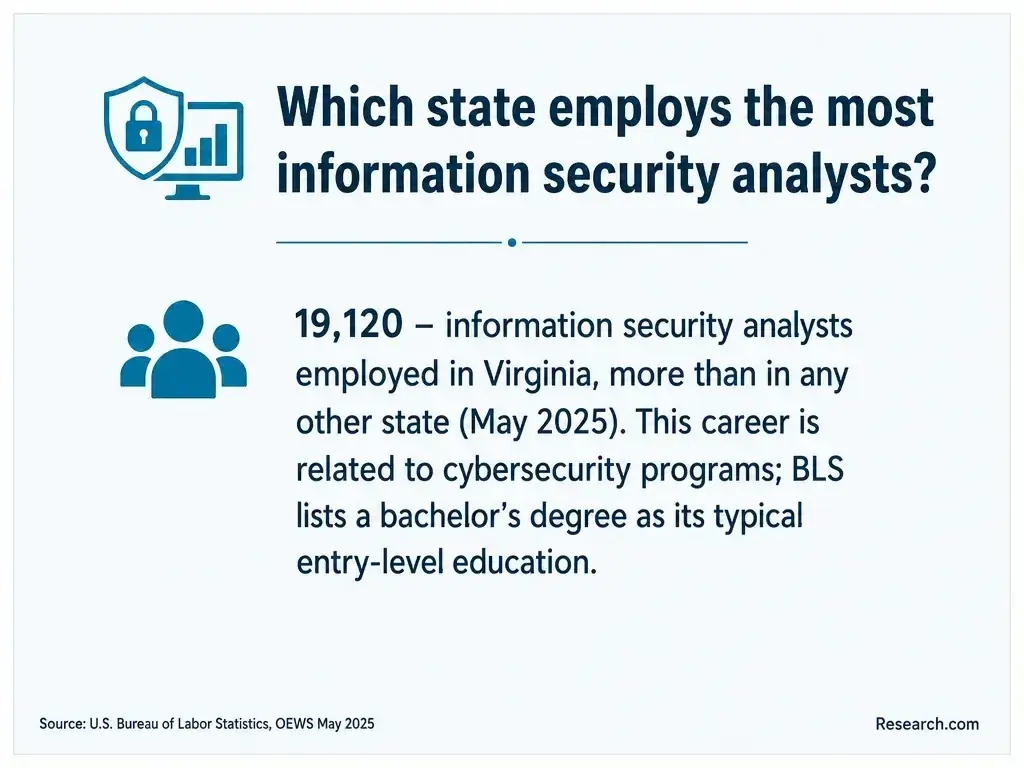
An associate program may offer electives or a concentration in network defense, digital forensics, cloud security, or systems administration. Availability depends on the catalog and course schedule; a listed elective is less useful if it will not run before you graduate. Choose a focus that reinforces foundational networking and operating-system skills rather than replacing them.
For a prospective network technician, network defense and hands-on administration may be more useful immediately than a narrow forensics elective. For someone interested in investigations, ask whether forensics courses teach evidence handling and documentation through actual lab assignments. Certification exam preparation may be included, but an associate degree does not automatically award a professional certification; check the certifying organization's current requirements separately.
Start with your intended first job and the maximum amount you can spend, then use the affordability ranking as a shortlist rather than a final verdict. The ranking's cost-and-debt score does not measure cybersecurity lab quality or whether a particular course will meet your goals.
Take these checks to admissions, financial aid, and the program lead; the answers should be specific enough to compare schools side by side:
- Confirm the exact degree awarded, required courses, graduation credits, and a realistic schedule at your enrollment pace.
- Verify the institution's current accreditation through a recognized accreditor and check its authorization to serve you; neither establishes that every course will transfer or that employers will accept the degree.
- Request lab examples, information about internships or employer projects, and any required in-person attendance.
- Get an itemized total-cost estimate under your residency classification, then compare grants, likely debt, commute costs, and lost work time.
- Ask how the school documents job outcomes and whether its reported results concern this degree rather than all students.
Estimate value over a realistic time horizon: weigh your current earnings against plausible pay after completion, the chance you will finish, the time spent studying, aid, debt, and when any earnings gain might occur. Discounting later gains prevents a distant potential salary from making a high immediate cost look harmless. Unrelated results such as most affordable online phd programs should not enter this associate-degree comparison.
IT support, systems support, and junior network operations can be realistic first targets when a graduate can demonstrate troubleshooting and lab work. Security-focused tasks may follow through access administration, monitoring, patch coordination, or incident documentation. Information security analyst is a possible later goal, but the U.S. Bureau of Labor Statistics describes it as an occupation that commonly calls for more preparation than an associate degree alone.
Ask employers which duties entry-level staff actually perform and build a portfolio that shows permitted, ethical lab work rather than claims of access to real systems. If you already have substantial IT experience, the degree may help document and broaden your skills; if you are new to computing, prioritize a program with foundational labs and support for finding a first role. A page about easiest phd degree programs addresses neither of those associate-level career decisions.
The national outlook is strong for the occupation many students eventually target: the U.S. Bureau of Labor Statistics projects 21% growth for information security analysts from 2025 to 2035. It is not an Oklahoma-specific forecast, nor does it show how many openings will accept an applicant with only an associate degree. Treat it as a reason to investigate the field, not as proof of local placement.
For a better local test, review current postings within commuting distance and separate genuine entry-level IT jobs from analyst roles requiring prior experience. Note recurring software, networking skills, schedules, and background requirements. Then ask each program which required assignments help students demonstrate those skills. Search results for highest paying 6 month online certifications may suggest other career searches, but they do not measure demand for graduates of an Oklahoma associate degree.
Most Affordable Cybersecurity Associate Degree Programs in Oklahoma for 2027
Education is a significant investment, so Research.com designed this ranking to help readers compare affordable programs against other options in the same occupation and location. Only programs with completions reported to the Integrated Postsecondary Education Data System (IPEDS) are eligible. That boundary matters: an omitted program is not necessarily unapproved or poor quality.
The most affordable ranking scores costs and debt - not educational quality - using tuition, cost of attendance, median student debt, and federal loan default rates. Indicator weights are assigned through an entropy-based method that gives more weight to measures that vary more across programs. Institutional accreditation, program recognition, student support, completion, and earnings are important checks for readers, but they are not included in this affordability score. Readers should use the ranking to narrow their cost comparison, then verify program fit independently.
The Research.com team draws on the following sources when assembling and checking its program-ranking data. Several cover other occupations and do not establish that a cybersecurity program holds a discipline-specific approval:
- IPEDS database - reported completions, enrollment, and institutional cost data.
- National Center for Education Statistics - federal education data and institutional context.
- College Scorecard database - institution-level cost, debt, and outcome measures where available.
- Peterson's database - supplemental institutional and program information.
- Commission on Accreditation of Allied Health Education Programs (CAAHEP) - accreditation reference for relevant health programs, not cybersecurity approval.
- Accrediting Bureau of Health Education Schools (ABHES) - accreditation reference for relevant health programs, not cybersecurity approval.
- Commission on Dental Accreditation (CODA) - accreditation reference for dental programs, not cybersecurity approval.
- Dental Assisting National Board (DANB) - occupation-specific reference for dental assisting, not cybersecurity certification.
- National Center for Construction Education and Research (NCCER) - construction-industry reference, not cybersecurity recognition.
- Apprenticeship.gov Partner Finder - reference for work-based pathways; it does not determine associate-degree eligibility.
For more detail on Research.com's approach, see its ranking methodology. Because published prices and eligibility can change, confirm current costs and program status directly with each school before deciding.


Frequently asked questions about cybersecurity programs in Oklahoma
What is the cheapest cybersecurity associate degree in Oklahoma?
The cheapest option depends on your residency classification, aid, required fees, and how many credits you need to complete. Compare written, degree-wide net-cost estimates - not tuition rates alone - and use the affordability ranking to identify programs to investigate.
Is an AAS or an AS better for cybersecurity?
An AAS may suit someone prioritizing applied coursework and earlier workforce entry; an AS may suit someone who wants a broader academic foundation. Compare required labs and the actual treatment of credits rather than assuming the abbreviation determines quality.
Can I complete the degree entirely online?
Possibly, but confirm the format of every required course and whether exams, labs, a capstone, or an internship require in-person attendance. "Online" in a listing does not settle those details.
Do I need an Oklahoma cybersecurity license?
Cybersecurity work does not generally require a statewide occupational license in Oklahoma. An employer may still require particular experience, a background check, clearance eligibility, or a professional certification; the degree does not provide those automatically.
Will the degree qualify me immediately for an information security analyst job?
Not necessarily. That occupation often calls for experience, so many new graduates should also consider IT support or network roles that offer relevant security responsibilities.
- U.S. Bureau of Labor Statistics - Information Security Analysts
Used to verify salary, employment outlook, and typical education requirements.
https://www.bls.gov/ooh/computer-and-information-technology/information-security-analysts.htm - NCES College Navigator (IPEDS)
Used to verify programs offered and institutional accreditation.
https://nces.ed.gov/collegenavigator/ - CompTIA Security+
Professional certification reference for graduates of this occupation.
https://www.comptia.org/certifications/security - Tulsa Community College - official website
Official school website (programs, tuition, admissions).
https://www.tulsacc.edu/ - Mid-America Christian University - official website
Official school website (programs, tuition, admissions).
https://www.macu.edu/