# 1 position


Audited and Verified:
Our Editorial and Data Verification Process
Research.com uses government datasets, official education statistics and primary institutional information to support its career and degree guides. Our review process checks factual accuracy, occupational definitions, source dates and the requirements associated with the credentials discussed.
How This Article Was Fact-Checked
Our editorial team verifies salary estimates, employment projections, education requirements and program information against original data providers and official organizations. Salary figures are checked against the relevant occupational definitions and reporting periods. Information about licensure, accreditation and required in-person training is reviewed separately.
Fact-checked and verified on:

Co-Founder and Chief Data Scientist

Reviewed by Karolina Broda
Fact-Checker and Data Verification
The cheapest criminal justice associate degree is not necessarily the best value if its courses do not fit your career goal or its fees and travel costs erase the savings. This guide helps prospective students and working adults compare Vermont programs by total cost, format, practical experience, and career fit. The Research.com team of data scientists created the Most Affordable Criminal Justice Associate Degree Programs in Vermont for 2027 ranking to help students make an informed choice about programs worth considering. For context, the national median pay for police and sheriff's patrol officers was $76,210 in May 2025, according to the U.S. Bureau of Labor Statistics (BLS) - not a promised starting salary.
Expect a mix of general education and study of policing, courts, corrections, and the law. An associate degree can build writing, research, ethical reasoning, and communication skills useful across justice-related workplaces. It does not, by itself, train someone for every agency's hiring process or authorize them to work as a police officer.
The degree title matters less than the actual course plan. An Associate of Arts (AA) or Associate of Science (AS) may give more room to preserve transferable academic credits, while an Associate of Applied Science (AAS), where offered, may emphasize immediate workplace preparation. These are tendencies, not guarantees: compare course requirements and ask the receiving institution to evaluate transfer credits in writing. For Vermont options, check the current catalogs of Community College of Vermont and Vermont State University rather than assuming similarly named programs have identical requirements.
Possible settings include local police departments, county sheriff's offices, state agencies, courts, correctional facilities, and private security employers. Job titles within those settings have different hiring rules. A court support position may place more weight on records and communication skills; a sworn officer position involves a separate selection and training process.
Vermont's rural geography makes the location of opportunities important. A program with convenient classes may still require a long commute to an internship or a prospective employer. Before committing, compare where you could realistically complete fieldwork and apply for jobs, especially if relocating is not an option.
Pay depends on the job, employer, experience, and work location - not simply on holding a criminal justice associate degree. The latest national BLS Occupational Outlook Handbook figure supplied for police and sheriff's patrol officers is a May 2025 median annual wage of $76,210. That median covers workers across experience levels and locations; it is not an estimate of what a new Vermont graduate will earn.
For a realistic decision, look up current pay ranges on the specific Vermont employers' job postings you would pursue and compare them with the cost of completing the degree. Do not use the patrol-officer median to estimate earnings from court support, corrections, or security work; those are different occupations.
A full-time student should generally plan around two academic years, but the actual timeline depends on the program's required credits, course rotation, transfer credits, and any field placement. Ask for a term-by-term plan showing which required courses are offered when. That is especially important if you will study part time: a course offered infrequently can delay completion even when your remaining credit total looks small.
Prior college work may shorten the path only after the school evaluates it against degree requirements. Ask whether previously completed general education courses count toward graduation and whether any required criminal justice courses must be taken at the awarding institution.
Online coursework can make reading, writing, and discussion easier to fit around shifts and a rural commute. Campus classes may offer more scheduled interaction and easier access to local contacts. Hybrid programs combine the two. None of these labels tells you whether an internship, observation, or other practical component can be completed remotely.
Ask the program which requirements involve travel, fixed meeting times, or an approved field site. If policing is your goal, do not assume that an online degree replaces Vermont's separate officer training and certification requirements. If you are considering a remote provider, check its institutional accreditation and permission to serve Vermont students, then compare its total price with local options. A directory of accredited non profit colleges may help generate questions, but neither nonprofit status nor a directory listing establishes career eligibility.
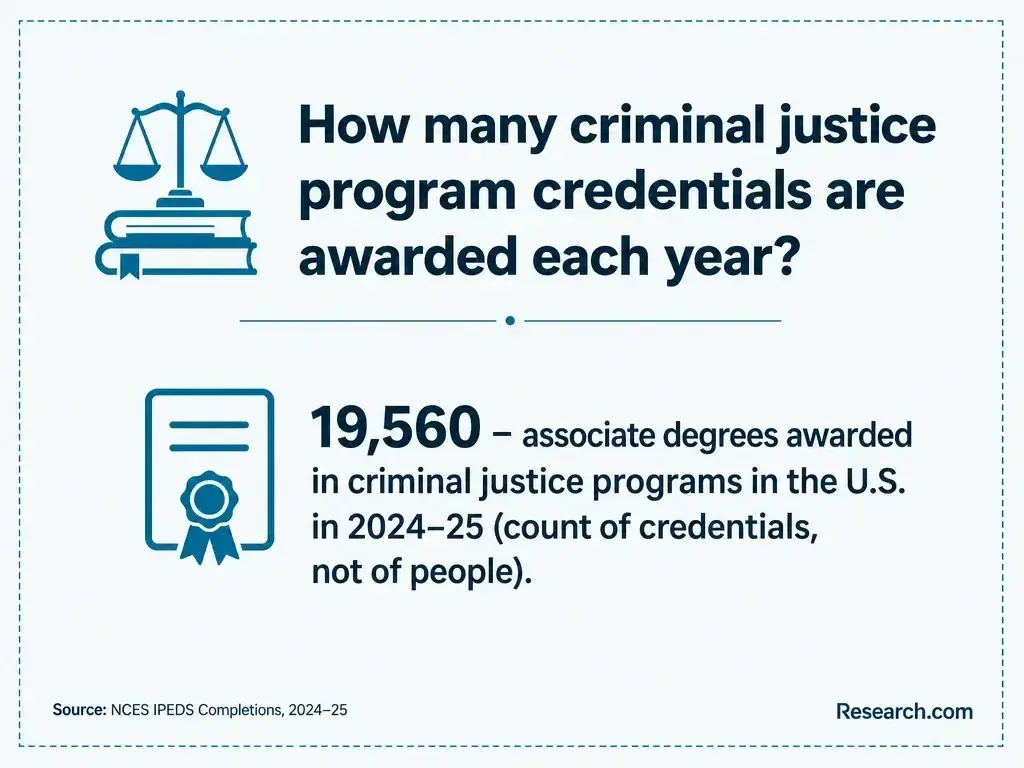
There is no single reliable price for every Vermont student: residency classification, course load, format, aid, and time to completion change the bill. Rather than treating an advertised annual tuition figure as the degree cost, request a program-specific estimate through graduation. The comparison below separates charges you can usually confirm with a school from expenses that depend on your circumstances.
| Cost component | What to compare | Why it matters |
| Tuition and mandatory fees | Charges for the credits needed to graduate, including resident or nonresident rates | The lowest per-credit tuition may not produce the lowest degree bill. |
| Books and technology | Required materials, software, and online-course charges | These can differ between campus and remote schedules. |
| Fieldwork and career-entry costs | Travel, any required checks or equipment, and costs of later employer-required steps | A distant placement or intended occupation can change the overall investment. |
| Living and opportunity costs | Housing, commuting, and earnings reduced while studying | A faster full-time plan may cost more in forgone work than a part-time plan. |
If a school quotes an "average cost," check whether it is an annual cost of attendance or the projected cost to finish your particular degree. Also ask whether quoted fieldwork and career-entry expenses are required for graduation or only for your intended job.
Eligible students can seek federal grants and loans by completing the Free Application for Federal Student Aid (FAFSA), according to Federal Student Aid. Vermont residents should also check current grant and scholarship eligibility and deadlines with the Vermont Student Assistance Corporation (VSAC). School aid and employer tuition assistance may further reduce what a working student pays. Eligibility and award amounts depend on the student and program; no listed award is automatic.
Compare net cost to finish, not the size of an initial aid offer. Ask each financial aid office to show how its estimate changes if you take fewer credits or need an additional term. If you are exploring open enrollment colleges, confirm that admission, enrollment in an aid-eligible degree, and qualification for aid are three separate questions.
Start with the institution's published admission requirements and placement process; requirements may differ by school and by course. Ask whether you need a high school diploma or equivalent, transcripts, placement information, or prerequisites before taking particular classes. A program may also set separate conditions for a field placement, such as a background check. Confirm those conditions before choosing a degree around an internship.
College admission should not be confused with employer screening. Vermont law enforcement employers and the Vermont Criminal Justice Council govern distinct steps toward officer service, according to the Council; acceptance into an associate degree program does not establish eligibility to be hired or certified.
A useful course plan combines general education - especially writing and quantitative reasoning - with subjects such as criminal law, the court process, policing, corrections, criminology, and ethics. The exact courses vary by catalog. Look beyond course titles: a student interested in evidence and investigations should check what practical exercises are included, while someone interested in court work should look for sustained legal writing and records-related work.
Ask whether an internship or supervised project is required, optional, or unavailable, and how placements are arranged. An optional internship has value only if you can fit it into your schedule and reach an approved site.
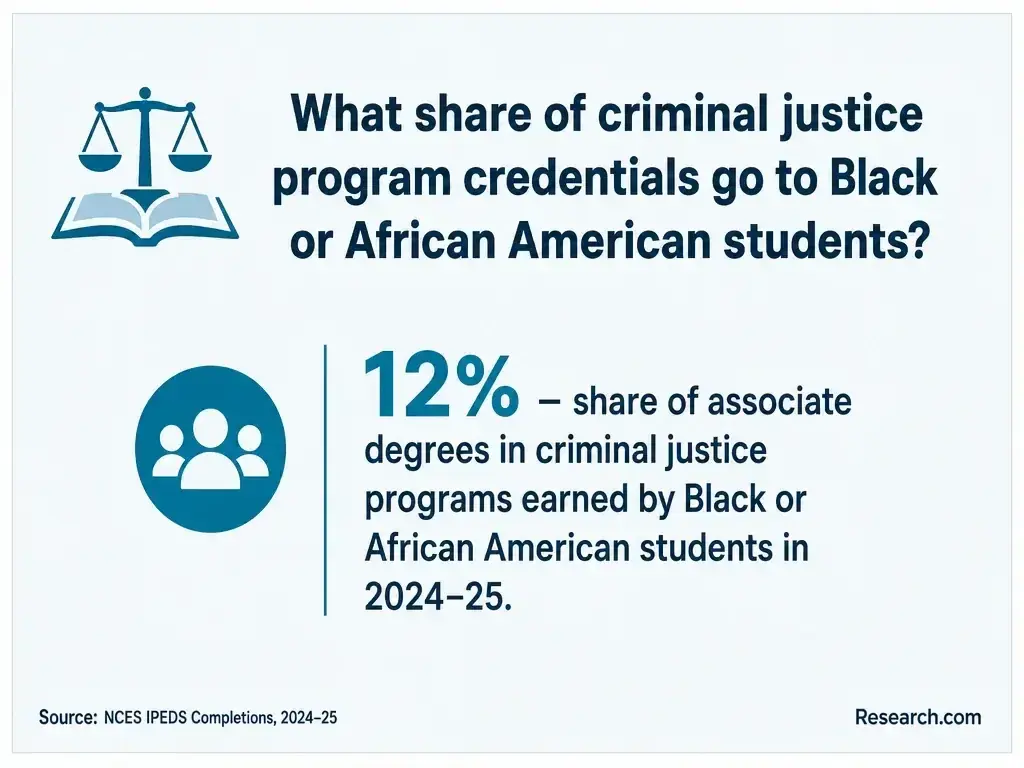
At the associate level, a Vermont program may offer electives rather than a formally named specialization. Common areas to investigate are policing, courts, corrections, and security. Do not pay extra or change schools for a concentration name alone: compare the courses, applied work, and employer relevance behind it.
If you already know the occupation you want, work backward from its requirements. An employer may prioritize hiring eligibility, relevant experience, or its own training over a particular elective sequence. A broad program can be the better choice when you are still deciding among justice-related jobs.
Use the affordability ranking to identify candidates, then test each against your own goal. The following checks address mistakes that a low advertised tuition figure cannot reveal.
A degree is most likely to be worth the investment when its achievable completion plan and affordable net cost align with a job you can realistically pursue. For return-on-investment comparisons, consider completion probability, current earnings, possible post-degree earnings, debt, and the time needed to recover your costs - not institution type or a national wage median alone. A search for a highest paying job in trade school answers a different question from whether this associate degree advances your particular criminal justice goal.
An associate degree may support applications for justice-related support work or help a candidate demonstrate relevant academic preparation for an agency hiring process. It is not a universal entry requirement or a substitute for role-specific qualifications. The comparison below distinguishes possible directions without implying that every graduate qualifies for every role.
| Career direction | How the degree may help | What else to check |
| Law enforcement | Provides a foundation in law, communication, and ethics | Agency hiring standards and Vermont officer training and certification steps |
| Courts and administrative support | Builds familiarity with legal processes, records, and written communication | The employer's specific education, software, and experience requirements |
| Corrections and security | Introduces justice systems and professional decision-making | Employer screening, required training, schedules, and advancement rules |
If a desired job accepts applicants without an associate degree and provides its own preparation, compare the cost of starting work sooner with the value of earning college credit. Conversely, if you want a broader academic foundation or more than one career option, the degree may offer value beyond the first job. Unrelated searches such as can you get a phd without a dissertation should not distract from checking the requirements of the entry-level role you actually want.
The BLS projects 3.5% national employment growth for police and sheriff's patrol officers from 2025 to 2035. That projection concerns one occupation nationwide, not all criminal justice jobs or the number of openings available to new associate degree graduates in Vermont. It supports a measured approach: investigate actual local vacancies and hiring cycles rather than treating projected growth as a job offer.
Vermont applicants should compare opportunities in places they can commute to with those that would require relocation. Agency size, shift requirements, and the availability of openings can matter more to an individual applicant than a national growth rate. Review current employer postings before choosing electives or committing to a placement location.
Investing in an associate degree is a consequential financial decision. Research.com developed this ranking to help readers compare affordable programs against other programs available in the same location and occupation, rather than against unrelated fields. Only programs with completions reported to the Integrated Postsecondary Education Data System (IPEDS) are eligible; a program's absence does not establish that it is unavailable or low quality.
The most affordable ranking scores tuition, cost of attendance, median student debt, and federal loan default rate. An entropy-based method assigns more weight to cost and debt indicators that vary more across eligible programs. Unlike Research.com's separate best-program rankings, this affordability score does not include accreditation, student support, or other quality indicators. Readers should check those factors independently before enrolling.
Research.com uses the following data sources in creating its rankings. Some cover fields or provider types other than criminal justice; their inclusion in the ranking's broader source set does not mean they accredit a Vermont criminal justice program.
The ranking is a starting point for a shortlist, not a substitute for a current program quote or a check of career-entry requirements. Research.com explains its approach further on its methodology page.
# 1 position
# 2 position
Criminal Justice/Safety Studies
Delivery mode: Online
79.25
/ 100
Final score
Accreditation
Institutional accreditation from New England Commission on Higher Education.
Vermont State University earned a Research.com Affordability Score of 79.25/100, with 6% federal loan default rate among the verified supporting factors.
The answer depends on your residency, aid, fees, schedule, and travel costs. Use the affordability ranking to make a shortlist, then request a current cost-to-completion estimate from each school.
No. Graduation and officer hiring, training, and certification are separate processes. Check current requirements with the Vermont Criminal Justice Council and the agency where you hope to work.
Some academic coursework may be available online. Confirm the current program format and whether any required internship, fieldwork, or scheduled activity must be completed in person.
Choose based on required courses and your intended use of the degree, not the abbreviation alone. Ask for written confirmation of how credits would apply to any future academic plan and compare the practical preparation relevant to your intended job.
It may be if the courses, experience, and broader career options justify the net cost and time away from work. Compare that value with entering the employer's hiring process directly; do not assume the degree raises starting pay.