# 1 position


Audited and Verified:
Our Editorial and Data Verification Process
Research.com uses government datasets, official education statistics and primary institutional information to support its career and degree guides. Our review process checks factual accuracy, occupational definitions, source dates and the requirements associated with the credentials discussed.
How This Article Was Fact-Checked
Our editorial team verifies salary estimates, employment projections, education requirements and program information against original data providers and official organizations. Salary figures are checked against the relevant occupational definitions and reporting periods. Information about licensure, accreditation and required in-person training is reviewed separately.
Fact-checked and verified on:

Co-Founder and Chief Data Scientist

Reviewed by Karolina Broda
Fact-Checker and Data Verification
Choosing an affordable criminal justice associate degree in Carson City means looking beyond tuition: the degree must also fit your career goal, schedule, and any hiring requirements. The U.S. Bureau of Labor Statistics projects 3.5% national growth for police and sheriff's patrol officers from 2025 to 2035, but an associate degree alone does not qualify someone for every role. This guide explains costs, pathways, and local opportunities. It also features the Most Affordable Criminal Justice Associate Degree Programs in Carson City for 2027 ranking, created by the Research.com team of data scientists to help students identify programs worth considering.
Expect a mix of general education and criminal justice coursework covering how courts, policing, and corrections operate. The key distinction is the degree awarded: an Associate of Arts (AA) or Associate of Science (AS) generally emphasizes transferable academic coursework, while an Associate of Applied Science (AAS) generally emphasizes occupational preparation. Labels alone do not establish transferability or hiring eligibility; compare actual courses and written agreements.
These pathways serve different goals. Confirm which, if any, Western Nevada College currently offers in criminal justice before building a plan around a particular award.
| Associate pathway | Usually fits best | Check before enrolling |
| AA or AS | Students who want broad coursework and may continue their studies | Whether required criminal justice and general education courses transfer as intended |
| AAS | Students prioritizing career-focused coursework | Whether the course mix matches target jobs and how individual credits transfer |
For readers planning to continue after an associate degree, even a resource on an easy bachelor's degree online cannot replace a course-by-course transfer review. Ask an adviser to map the associate degree to the receiving institution's current requirements.
Carson City's role as Nevada's capital makes state agencies and courts relevant alongside the Carson City Sheriff's Office, corrections employers, and private security organizations. The location matters because an office-based court position, a sworn patrol job, and a correctional role have different hiring processes and daily work, even when applicants studied criminal justice.
Look at actual vacancies before selecting courses. A court-support opening may value records, writing, and office technology; a sworn position may require agency selection, background screening, physical standards, and academy training. An associate degree can strengthen preparation, but it does not replace those steps (Nevada Commission on Peace Officer Standards and Training; U.S. Bureau of Labor Statistics).
Pay depends on the occupation and employer, not simply on holding the degree. Police and sheriff's patrol officers earned a $76,210 national median annual wage in May 2025, according to the U.S. Bureau of Labor Statistics. A median describes the midpoint for employed officers at all experience levels; it is neither a Carson City wage estimate nor a likely starting offer.
For a useful personal comparison, check current Carson City and Nevada agency postings for entry pay, benefits, shift differentials, and academy pay. Compare those figures with the earnings you would give up while studying and the borrowing you would need. Court, security, and corrections pay should be evaluated separately rather than inferred from patrol-officer wages.
Plan on roughly two academic years of full-time study for a typical associate degree, but verify the current catalog's credit requirement and course rotation. Part-time enrollment, developmental coursework, or a required course offered infrequently can extend the timeline. Transferred credits may shorten it only if the college accepts them toward the specific degree.
Speed is valuable if it reduces lost earnings, but an accelerated schedule is a poor bargain if it crowds out work or causes you to miss a needed course. Compare any claim about the quickest associates degree with a written term-by-term plan for the criminal justice courses you actually need.
Online coursework may make reading, writing, and discussion-based classes easier to fit around shifts. Campus courses offer scheduled contact with instructors and classmates; hybrid study combines both. If a program includes an internship, field observation, or other employer-based component, ask where and when it must be completed. Do not assume a remotely delivered degree satisfies a police agency's training or hiring rules (Nevada Commission on Peace Officer Standards and Training).
For working students, the cheapest advertised online tuition may not produce the lowest total cost. Compare fees, technology needs, available course sections, and travel for any required in-person activities; lists of low cost online schools for working students are a starting point, not a substitute for a Carson City-specific cost and schedule comparison.
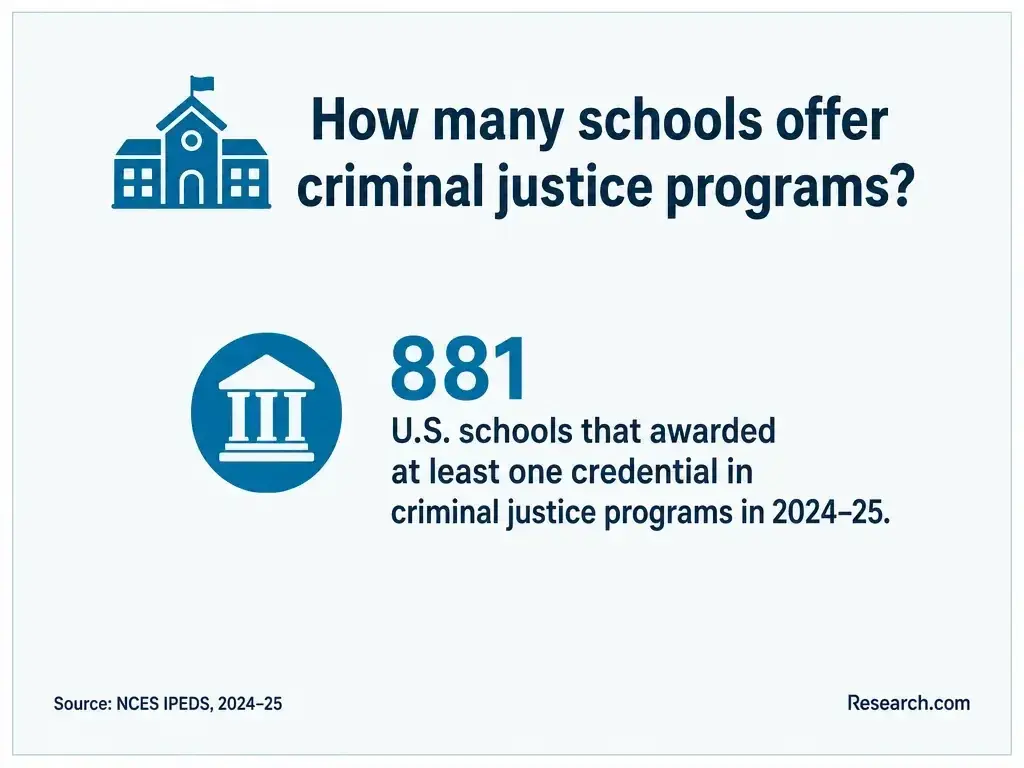
There is no reliable single Carson City average that describes every student's bill. Start with Western Nevada College's published charges for your residency status, enrollment load, and delivery format, then request an estimate for the entire planned degree. Nevada residency classification can change the price a student pays; confirm your classification with the college under Nevada System of Higher Education rules rather than assuming that a Carson City address settles it (Western Nevada College; Nevada System of Higher Education).
A meaningful total includes tuition, mandatory fees, books or access codes, a computer and internet service if needed, transportation, and living costs. Add any program-specific fieldwork, background-check, or uniform expense only if the college or intended employer actually requires it. Subtract grants and scholarships from the bill, and account separately for wages you may forgo. This is more informative than comparing tuition figures alone.
Eligible students can seek federal grants and loans through the Free Application for Federal Student Aid (FAFSA), along with institutional and Nevada aid. Western Nevada College's financial aid office can explain current scholarship availability and whether the chosen associate degree and enrollment pattern qualify. Eligibility is individual; filing a FAFSA or choosing a public college does not guarantee an award (Federal Student Aid; Western Nevada College).
Ask an employer about tuition assistance before borrowing, and compare aid offers using net cost and expected debt, not the largest award total. Check renewal conditions and whether attending part time changes eligibility. A low-priced program can become expensive if its course schedule delays completion.
Check Western Nevada College's current admissions and placement instructions for documentation, course prerequisites, and any requirements specific to the associate degree you select. Admission to a college, placement into a course, and eligibility for a later criminal justice job are separate decisions. An employer may impose background, driving, physical, or other standards that the college does not use for admission.
Before enrolling, ask which introductory courses are open in your first term and whether prior college work will satisfy general education requirements. If a sworn role is your goal, review that employer's published hiring standards early; completing an associate degree will not erase a disqualifying employment requirement (Western Nevada College; Nevada Commission on Peace Officer Standards and Training).
Associate degree plans commonly combine writing, mathematics or quantitative reasoning, and other general education with introductory criminal justice, criminal law, courts, policing, corrections, and ethics. Exact course titles and requirements must come from the current college catalog. Writing and evidence-based reasoning matter in particular because reports, records, and clear explanations are central to many justice-system roles (Western Nevada College; U.S. Bureau of Labor Statistics).
Compare course descriptions, not just program names. If you want court-support work, look closely at legal processes and records-related skills; if you want policing, assess communication, law, and scenario-based work. Ask whether an internship or field experience is offered, required, and available at times compatible with your schedule.
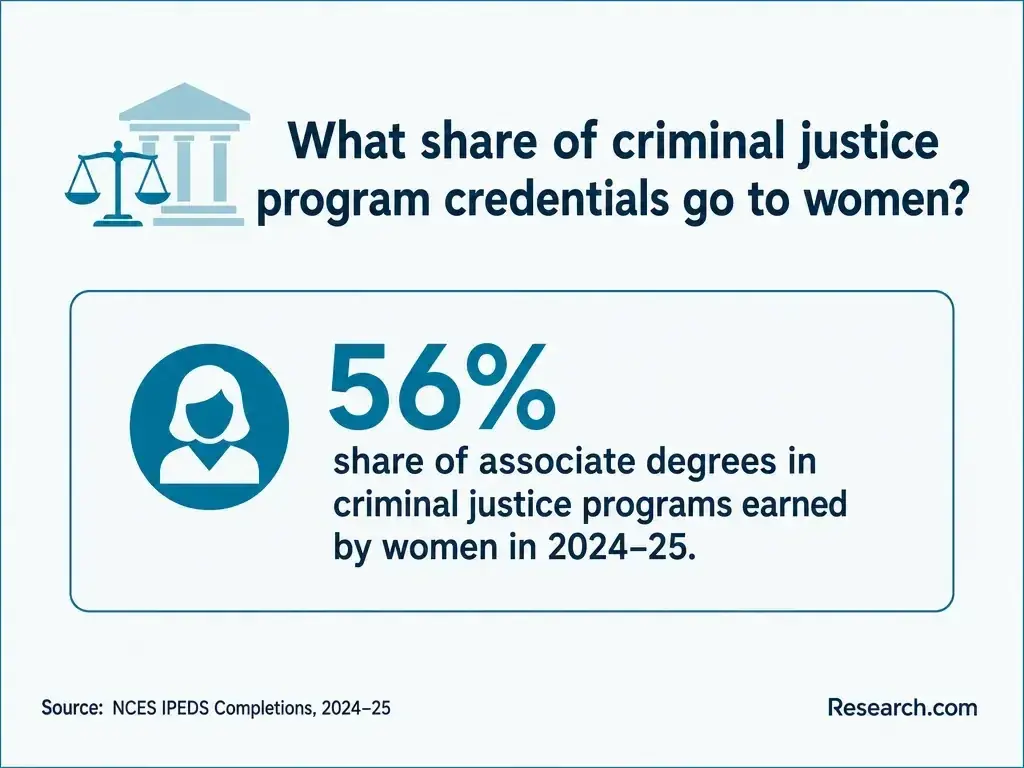
Policing, courts, and corrections are useful areas of emphasis, but do not assume each is a formally named specialization at Western Nevada College. A student may instead shape an associate degree through electives and field experience, subject to catalog rules and course availability. Ask an adviser whether the courses you want count toward graduation and, if transfer matters, whether they satisfy the receiving institution's requirements.
Choose an emphasis based on the work you want to test: public-facing conflict resolution differs from court records work or a correctional environment. A narrow elective choice is less valuable if it delays graduation or displaces a required course.
Start with a specific outcome - such as applying to a sheriff's office, pursuing court-support work, or continuing your education - and ask the college to show how its current degree plan supports it. Institutional accreditation, state authorization, course transfer, and occupational hiring requirements answer different questions; none automatically proves the others. Verify accreditation through the institution and its recognized accreditor, and verify transfer and agency requirements with the organizations that control them.
Use this short sequence to compare an affordable option with one that appears faster or more flexible:
A list of quick degrees for high paying jobs can prompt useful questions about time and pay, but the best investment here is the associate degree that matches your actual next step. Red flags include unclear total fees, vague transfer assurances, and claims that an online degree alone makes graduates eligible for sworn employment.
Possible paths include applying for entry-level court or agency support positions, competing for corrections or law-enforcement openings, or continuing academic study. An associate degree may help build relevant knowledge and demonstrate persistence, but employers decide which positions require a degree, experience, academy completion, or other qualifications. Nevada peace officer certification follows applicable agency and Nevada Commission on Peace Officer Standards and Training requirements; the college award is not that certification.
For advancement, workplace performance, experience, and additional study may matter more than the associate degree alone. If continuing education is part of your plan, a guide to what are the highest paying bachelor degrees should be read alongside the receiving institution's transfer rules - not treated as evidence that a particular criminal justice associate degree leads to a particular salary.
The U.S. Bureau of Labor Statistics projects 3.5% growth nationwide for police and sheriff's patrol officers from 2025 to 2035. That is an occupation-level forecast, not a forecast of openings for associate degree holders in Carson City. Local hiring may be uneven because agencies recruit for specific vacancies and screening requirements.
Treat the capital's mix of state and local employers as a reason to search across distinct job titles, not as proof of abundant openings in any one role. Review current postings, note recurring requirements, and ask whether your proposed course plan helps meet them. If you need immediate income, compare the time needed to finish the degree with the requirements of positions you can apply for now; the associate pathway is worthwhile when its cost and coursework improve your realistic options.
Education is a significant investment, so the Research.com team built this ranking to help readers compare affordable options using consistent, verifiable measures. For the most affordable programs ranking, the score considers tuition, cost of attendance, median student debt, and federal loan default rate; weights are assigned through an entropy-based method. Accreditation and other quality indicators are not part of the affordability score. Only programs with completions reported to IPEDS are eligible, which means an unlisted option is not necessarily unavailable or unsuitable.
The team uses the following sources across its rankings and verification work. Occupation-specific sources are relevant when applicable; an allied health or construction organization listed here should not be mistaken for a criminal justice accreditor.
This approach gives readers a cost-focused starting point, not a substitute for checking a current catalog, aid offer, transfer agreement, and employer requirements. Research.com explains its broader ranking process on its methodology page.
# 1 position
# 2 position
Criminal Justice/Safety Studies
Delivery mode: On Campus (May Include Online Courses)
87.98
/ 100
Final score
Accreditation
Institutional accreditation from Northwest Commission on Colleges and Universities.
Western Nevada College earned a Research.com Affordability Score of 87.98/100, with $4,445 annual in-state tuition among the verified supporting factors.
# 3 position
Criminal Justice/Police Science
Delivery mode: On Campus (May Include Online Courses)
87.98
/ 100
Final score
Accreditation
Institutional accreditation from Northwest Commission on Colleges and Universities.
Western Nevada College earned a Research.com Affordability Score of 87.98/100, with $4,445 annual in-state tuition among the verified supporting factors.
Use the ranking as a shortlist, then request a current, personalized total-cost estimate from Western Nevada College. Residency status, fees, aid, and completion time can change which option costs you least.
No. Agency hiring and applicable Nevada peace officer training and certification requirements are separate from completing an associate degree (Nevada Commission on Peace Officer Standards and Training).
Choose by curriculum and goal, not initials alone. AA and AS pathways commonly prioritize transferable coursework; an AAS commonly emphasizes career-focused courses. Verify the current degree and transfer rules before enrolling.
That depends on current course offerings. Ask which required courses are available online and whether any field experience or other activity requires in-person attendance.
It depends on the credits you can take each term and when required courses are offered. Ask an adviser for a term-by-term, part-time completion plan before committing.