2026 Sustainability Degree Earnings by Sector Report: Which Industries Reward Graduates the Most

Co-Founder and Chief Data Scientist
Sustainability graduates face a practical question: which industry will turn climate, ESG, policy, and resource-management skills into the strongest career return? The answer matters because sustainability work now spans finance, energy, consulting, technology, manufacturing, real estate, government, and nonprofits.
The U. S. Bureau of Labor Statistics reports a May 2024 median wage of $80,060 for environmental scientists and specialists, but earnings rise sharply in analytics, engineering, finance, and management roles. This guide helps students, career changers, and graduate applicants compare sectors by pay, hiring demand, advancement, credentials, and long-term fit.
Key Things You Should Know
- The highest earning paths for sustainability graduates are usually in climate technology, ESG finance, energy infrastructure, consulting, and corporate strategy; BLS May 2024 salary anchors for related roles include $112,590 for data scientists, $104,170 for environmental engineers, and $101,190 for management analysts.
- The largest volume of sustainability hiring is not limited to "green" employers; manufacturing, utilities, construction, real estate, healthcare, government, and professional services all hire graduates for compliance, reporting, energy management, supply chain, risk, and project roles.
- Salary should be weighed against job stability, benefits, advancement, and cost of living; a lower nominal salary in government, utilities, or a regional employer can outperform a higher private-sector salary if retirement benefits, loan burden, location, and career mobility are stronger.
- Key Things You Should Know
- Which Industries Pay Sustainability Graduates the Highest Salaries?
- How Do Salary Levels Compare Across Industries for Sustainability Graduates?
- Which Industries Hire the Most Sustainability Graduates?
- How Do Industry, Location, and Cost of Living Affect Sustainability Salaries?
- Which Skills Lead to Higher Earnings Across Sustainability Industries?
- Which Certifications and Credentials Increase Earnings in Different Industries?
- How Do Company Size and Organization Type Affect Sustainability Earnings?
- Which Emerging Industries Offer the Best Future Earnings for Sustainability Graduates?
- How Should Students Choose an Industry Based on Earnings and Career Goals?
- Top Trending Sustainability Rankings
Which Industries Pay Sustainability Graduates the Highest Salaries?
The industries that pay sustainability graduates the most tend to be the ones where sustainability work is tied directly to revenue, regulation, capital investment, risk reduction, or operational savings. A sustainability degree can lead to very different earnings depending on whether the graduate becomes an analyst, engineer, consultant, compliance specialist, program manager, or corporate strategist.
The table below uses national BLS May 2024 wage data for closely related occupations as salary anchors. These are not guaranteed sustainability-degree salaries, but they are useful benchmarks for comparing the kinds of roles each industry rewards.
| Industry sector | Common sustainability roles | Relevant BLS May 2024 salary anchor | Why the sector can pay well |
| Climate technology and data | Climate data analyst, carbon accounting analyst, product sustainability analyst, environmental data scientist | Data scientists: $112,590 median annual wage | Employers pay for technical talent that can turn emissions, energy, supply chain, and risk data into decisions. |
| Energy, utilities, and infrastructure | Renewable energy project analyst, environmental engineer, grid planning associate, energy efficiency manager | Environmental engineers: $104,170 median annual wage | Large capital projects, permitting, compliance, and reliability needs create demand for specialized expertise. |
| ESG finance, banking, and investment | ESG analyst, climate risk analyst, sustainable investment associate, green finance analyst | Financial analysts: $101,350 median annual wage | Sustainability knowledge becomes more valuable when paired with financial modeling, risk analysis, and investor reporting. |
| Consulting and professional services | Sustainability consultant, decarbonization consultant, ESG reporting consultant, supply chain analyst | Management analysts: $101,190 median annual wage | Consulting firms reward client-facing problem solving, industry specialization, and project delivery skills. |
| Manufacturing and supply chain | Sustainable operations analyst, circular economy coordinator, supplier responsibility analyst, EHS specialist | Industrial engineers: $101,140 median annual wage | Cost savings, waste reduction, compliance, and supplier performance make sustainability financially measurable. |
| Government, planning, and public policy | Climate resilience planner, sustainability coordinator, environmental program specialist, policy analyst | Urban and regional planners: $83,720 median annual wage | Pay may be lower than private-sector roles, but benefits, pension value, and job stability can be strong. |
| Environmental science and compliance | Environmental scientist, compliance specialist, conservation analyst, remediation project coordinator | Environmental scientists and specialists: $80,060 median annual wage | Demand is supported by environmental regulation, remediation, water quality, land use, and corporate compliance needs. |
For pure salary potential, climate analytics, ESG finance, energy infrastructure, and consulting usually stand out. For students who prefer fieldwork, ecology, conservation, or public service, environmental science and government roles may be a better fit even when the salary ceiling is lower.
How Do Salary Levels Compare Across Industries for Sustainability Graduates?
Salary levels across sustainability industries differ because employers pay for different kinds of value. A graduate who documents emissions may earn less than a professional who designs energy systems, advises executives, manages regulatory risk, or builds climate analytics products.
This comparison shows how sectors typically stack up by earnings profile and career trade-off. Use it to identify whether a sector fits your preferred balance of pay, specialization, stability, and advancement.
| Salary tier | Industries commonly in this tier | Best fit for | Main trade-off |
| Highest earning potential | Climate tech, ESG finance, energy infrastructure, management consulting | Graduates with strong quantitative, business, engineering, or analytics skills | Competition, longer hours, client pressure, or rapid skill changes may be higher. |
| Strong middle-to-high potential | Manufacturing, utilities, real estate, construction, healthcare systems, corporate sustainability teams | Graduates who want operational impact, compliance responsibility, and advancement into management | Pay varies widely by company size and whether sustainability is central to business strategy. |
| Stable but often lower cash compensation | Federal, state, and local government; public universities; nonprofits | Graduates who value mission alignment, benefits, job security, and public impact | Salary growth may be slower, and promotion paths can depend on budgets and civil service structures. |
| Field-focused and specialized | Conservation, remediation, environmental testing, water resources, natural resources | Graduates who prefer science, fieldwork, compliance, and technical environmental problem solving | Entry-level roles may pay less unless paired with engineering, GIS, permitting, or project management skills. |
A common mistake is comparing only average salary without asking what the job actually requires. Higher-paying sustainability roles often demand stronger finance, data, engineering, client management, or regulatory expertise than entry-level environmental roles.
Which Industries Hire the Most Sustainability Graduates?
The industries that hire the most sustainability graduates are not always the highest-paying ones. Hiring volume is strongest where environmental regulation, customer expectations, energy costs, infrastructure upgrades, and reporting requirements create recurring work.
The table below summarizes where sustainability graduates most often find openings and why demand exists. It includes BLS growth indicators where a related occupation provides a useful signal.
| Hiring sector | Typical entry points | Demand signal | What this means for graduates |
| Professional services and consulting | Associate consultant, ESG reporting analyst, sustainability analyst | BLS projects management analyst employment to grow faster than average over the 2024-2034 period. | Good for graduates who want broad exposure across industries and faster skill-building. |
| Energy and renewables | Energy analyst, project coordinator, permitting analyst, environmental engineer-in-training | BLS projects very rapid growth for wind turbine service technicians and solar photovoltaic installers over the 2024-2034 period, signaling continued clean-energy expansion. | Good for students interested in infrastructure, permitting, power markets, and project development. |
| Government and public agencies | Environmental program specialist, climate planner, sustainability coordinator | Demand is tied to resilience planning, public infrastructure funding, environmental permitting, and climate adaptation. | Good for graduates who want stability, public impact, and benefits over maximum cash salary. |
| Manufacturing and supply chain | EHS coordinator, supplier sustainability analyst, waste reduction specialist | Hiring is driven by compliance, cost reduction, procurement standards, and customer reporting requests. | Good for graduates who can connect sustainability to operations, quality, safety, and logistics. |
| Corporate sustainability departments | Sustainability analyst, emissions reporting coordinator, program associate | Companies need staff who can coordinate data, reporting, audits, and decarbonization projects. | Good for graduates who want cross-functional business experience and a path into management. |
New graduates often do best by targeting sectors with many entry-level analyst, coordinator, and associate roles. Highly specialized finance, engineering, and strategy jobs may pay more, but they often require internships, technical coursework, a graduate degree, or prior industry experience.
Which Industries Offer the Best Long-Term Career Growth for Sustainability Graduates?
The best long-term career growth usually comes from sectors where sustainability is moving from a reporting function to a strategic function. In those settings, professionals can advance from data collection and compliance into project ownership, budget authority, risk management, and executive advising.
For long-term earnings, prioritize sectors that offer a clear ladder from entry-level work to management. The strongest paths usually share several traits:
- They connect sustainability to money. Roles in energy management, supply chain efficiency, climate risk, and operational improvement can show measurable savings or reduced exposure.
- They require cross-functional influence. Professionals who work with finance, legal, operations, procurement, engineering, and communications build promotion-ready experience.
- They reward specialization. Carbon accounting, life cycle assessment, environmental permitting, renewable project finance, and climate data analytics can make a graduate more competitive.
- They offer management progression. Sectors with senior analyst, manager, director, and vice president roles provide stronger earnings ceilings than flat organizations.
Consulting can accelerate growth because it exposes graduates to multiple industries quickly, but it may involve travel, deadlines, and client pressure. Government can offer steadier progression and strong benefits, but salary increases may be slower. Corporate roles can provide the best balance when sustainability has executive support and a dedicated budget.
Students who are comparing sustainability with other mission-driven career paths should also look at whether a field has a formal licensure ladder, supervised practice requirement, or protected professional title. For example, someone weighing environmental justice, community resilience, and behavioral health interests may compare sustainability options with an LMFT program online to understand how different service-oriented careers translate education into earnings and credentials.
How Do Industry, Location, and Cost of Living Affect Sustainability Salaries?
Industry choice matters, but location can change the real value of a sustainability salary. A sustainability analyst earning more in a high-cost metro area may have less disposable income than a lower-paid employee in a lower-cost region, especially when housing, commuting, taxes, and student loan payments are considered.
The most important salary adjustment is not just "urban versus rural." It is whether the local economy has employers that actually buy sustainability talent: utilities, state agencies, engineering firms, corporate headquarters, ports, logistics hubs, universities, hospitals, manufacturers, and real estate developers.
Use this sequence when comparing offers across locations:
- Compare the salary to local housing costs, not just to national averages.
- Estimate commuting costs, hybrid-work flexibility, and whether the job requires field travel.
- Evaluate benefits such as health insurance, retirement match, tuition support, paid leave, and public-sector pension value.
- Check whether the region has multiple sustainability employers so you are not dependent on one organization for future promotions.
- Look at state and local policy activity, because resilience planning, infrastructure investment, clean-energy projects, and environmental permitting can influence hiring.
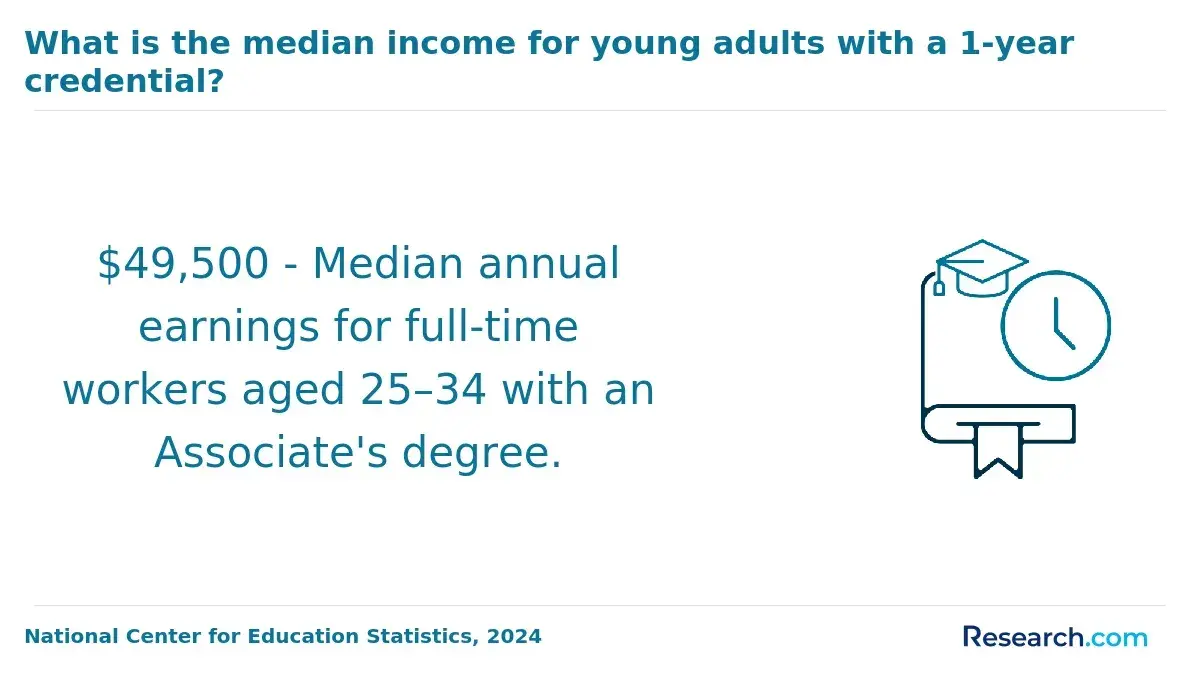
Career changers and older learners should also consider time-to-completion and opportunity cost, not only tuition. A flexible program may make sense if it lets you keep working while building sustainability credentials; learners comparing shorter online options can use resources on one year degrees for seniors as a starting point for evaluating speed, format, and affordability.
A red flag is accepting a higher salary in a location where the sustainability labor market is thin. If the employer downsizes or the role changes, you may have fewer nearby alternatives and less bargaining power.
Which Skills Lead to Higher Earnings Across Sustainability Industries?
The skills that raise earnings across sustainability industries are the ones that help employers measure risk, reduce cost, meet requirements, and make better decisions. Soft commitment to sustainability is not enough; higher-paying roles usually require proof that you can analyze data, manage projects, and influence business outcomes.
These skill clusters are especially valuable because they transfer across sectors and help graduates move from coordinator-level work into analyst, manager, and strategy roles:
- Data analysis and visualization: Excel, SQL, Python, dashboarding, emissions data management, and data quality controls help graduates compete for climate analytics and reporting roles.
- Carbon accounting and ESG reporting: Understanding Scope 1, Scope 2, Scope 3, supplier data, audit trails, and disclosure workflows is increasingly useful in corporate and consulting roles.
- Finance and business case development: Net present value, payback periods, capital budgeting, and risk analysis help sustainability professionals justify energy, waste, and infrastructure investments.
- Project management: Scheduling, budgeting, vendor coordination, stakeholder communication, and implementation tracking are essential for advancement.
- Regulatory and compliance literacy: Environmental permitting, EHS requirements, procurement standards, and state-level climate rules can raise value in manufacturing, utilities, construction, and government.
- Communication and change management: Sustainability work often fails when teams cannot translate technical goals into behavior change, executive buy-in, and operational adoption.
Human capital skills matter more than many students expect. Sustainability teams often sit between leadership and employees, so graduates interested in workforce engagement, culture, training, and organizational change may benefit from comparing sustainability coursework with a masters human resources pathway, especially for ESG roles tied to labor practices, inclusion, safety, and employee well-being.
AI is also changing the skill premium. Employers are adopting tools for carbon data collection, supplier screening, document review, and scenario analysis, but they still need people who can validate assumptions, explain limitations, and make defensible recommendations.
Which Certifications and Credentials Increase Earnings in Different Industries?
Certifications can increase earnings when they match the industry and role. They are most useful when they prove a specific capability that employers already value, such as energy auditing, green building, project management, safety, carbon accounting, or environmental compliance.
The best credential depends on your target sector. Use certifications to fill a skills gap, not to replace experience, internships, technical coursework, or a strong portfolio.
| Credential area | Best-fit sectors | How it can support earnings | Important limitation |
| LEED and green building credentials | Real estate, architecture, construction, facilities, higher education | Signals knowledge of sustainable building standards and can support roles in facilities and development. | Most valuable when paired with construction, engineering, architecture, or facilities experience. |
| Energy management credentials | Utilities, manufacturing, campuses, hospitals, commercial real estate | Helps professionals connect sustainability to measurable energy savings and capital projects. | May require technical experience to qualify for advanced credentials. |
| Project management credentials | Consulting, corporate sustainability, renewables, infrastructure, government | Supports advancement into manager roles where budgets, timelines, and cross-functional teams matter. | Does not replace industry knowledge or technical credibility. |
| Carbon accounting and ESG reporting training | Consulting, finance, public companies, supply chain, corporate sustainability | Builds credibility for emissions inventories, disclosure support, and audit-ready reporting. | Employer expectations vary because the credential market is still evolving. |
| EHS and environmental compliance credentials | Manufacturing, energy, construction, logistics, environmental services | Can support higher responsibility in safety, compliance, permitting, and risk management roles. | Some roles require experience, state-specific knowledge, or employer-specific training. |
Advanced degrees can also matter, especially for policy leadership, research, university roles, environmental law-adjacent work, and executive positions. If you are considering doctoral study primarily for career acceleration, compare time-to-completion carefully; guides to the shortest doctoral programs can help you think through opportunity cost, although program quality, accreditation, and research fit should matter more than speed alone.
A common mistake is collecting credentials without a target job. Before paying for a certification, review job postings in your preferred industry and confirm that employers request it for roles you actually want.
How Do Company Size and Organization Type Affect Sustainability Earnings?
Company size and organization type can have as much influence on sustainability earnings as the industry itself. Large employers often have bigger budgets, specialized teams, formal salary bands, and clearer promotion levels, while small organizations may offer broader responsibility earlier but less compensation structure.
The table below compares common employer types so you can evaluate total career value, not just base salary.
| Employer type | Earnings profile | Best advantage | Main caution |
| Large corporations | Often higher salary ceilings, bonuses, and manager-level tracks | Specialized roles, formal advancement, access to data and cross-functional teams | Entry-level work may be narrow, and sustainability can be vulnerable if leadership priorities change. |
| Consulting firms | Strong earning potential, especially with promotion and specialization | Rapid exposure to multiple industries and high-value client problems | Workload, travel, and utilization pressure can be significant. |
| Utilities and infrastructure employers | Competitive pay with strong stability in many markets | Long-term projects, technical specialization, and essential-service demand | Hiring may favor engineering, regulatory, or energy-market experience. |
| Government agencies | Moderate salaries with strong benefits and stability | Public impact, predictable ladders, pension or retirement value in some roles | Promotion speed may depend on budgets, exams, or civil service rules. |
| Nonprofits and mission-driven organizations | Often lower cash pay, with high mission alignment | Broad responsibility, community impact, and policy or advocacy experience | Funding cycles can affect job security and raises. |
| Startups and climate tech firms | Potentially strong upside, but variable compensation | Fast learning, innovation, equity potential, and product experience | Risk is higher, and equity is not the same as guaranteed compensation. |
For new graduates, a large employer can provide training and credibility. For entrepreneurial graduates, a startup may offer faster responsibility. For risk-averse graduates, government, utilities, and universities may provide better overall value even if base salary is not the highest.
Which Emerging Industries Offer the Best Future Earnings for Sustainability Graduates?
Emerging industries can offer strong future earnings when they combine sustainability demand with technical scarcity. The best opportunities are not always labeled "sustainability"; they may appear under data, finance, engineering, risk, compliance, operations, or product roles.
Several emerging areas deserve attention because they are tied to business-critical decisions rather than public relations alone:
- Climate risk analytics: Banks, insurers, investors, and real estate owners need professionals who can evaluate physical climate risk, transition risk, and asset exposure.
- Carbon accounting software and climate data platforms: Employers need people who understand both sustainability standards and how data flows through software products.
- Grid modernization and energy storage: Utilities, developers, and manufacturers need talent for planning, permitting, community engagement, and project coordination.
- Sustainable supply chain and procurement: Companies are under pressure to track supplier emissions, labor practices, materials, and resilience risks.
- Circular economy and materials innovation: Packaging, apparel, electronics, construction, and manufacturing employers need staff who can reduce waste and redesign product lifecycles.
- Water resilience and infrastructure adaptation: Drought, flooding, stormwater, and aging infrastructure create demand for technical, planning, and policy talent.
BLS May 2024 data shows why technical adjacency matters: the median annual wage for data scientists was $112,590, higher than the median for many traditional environmental roles. For sustainability graduates, this means climate-related data skills can raise earning potential even if the job title does not include the word "sustainability."
Do not chase every emerging trend. Choose one or two areas where you can build evidence of skill through internships, capstone projects, public datasets, software tools, certifications, or portfolio work.
How Should Students Choose an Industry Based on Earnings and Career Goals?
Students should choose a sustainability industry by comparing earning potential, job availability, daily work, advancement path, and personal fit. The best industry is not always the highest-paying one; it is the one where your strengths can compound over time.
A practical decision process can keep you from choosing based on salary headlines alone:
- Start with your preferred work type. Decide whether you want analytics, field science, policy, engineering, consulting, operations, finance, communications, or community-based work.
- Match the sector to your strongest skills. Finance and climate tech reward quantitative skills; government rewards policy and process knowledge; manufacturing rewards operational problem solving; consulting rewards communication and structured analysis.
- Compare salary with advancement. A sector with a slightly lower starting salary may be better if it has clear manager, director, or specialist tracks.
- Check current job postings. Look for repeated requirements such as SQL, GIS, LEED, energy modeling, life cycle assessment, carbon accounting, EHS, or project management.
- Estimate education ROI. Include tuition, living costs, lost work time, loan interest, scholarships, employer tuition benefits, and the salary level needed to make the degree worthwhile.
- Talk to people in the sector. Ask about workload, promotion speed, travel, stress, remote work, and whether sustainability work has real budget authority.
Cost should be part of the decision. College Board's 2024 pricing data shows published tuition and fees vary widely by institution type, with public in-state colleges far below private nonprofit colleges on average. That gap matters because sustainability salaries vary by sector, so borrowing heavily for a lower-paying path can reduce career flexibility.
Also compare sustainability with adjacent degrees if your interests overlap with people, policy, business, or community services. A student drawn to climate anxiety, family resilience, or community well-being may evaluate sustainability programs alongside an LMFT program online, while a student focused on workforce transformation may compare sustainability management with HR, public administration, or business analytics.
The biggest mistake is treating "sustainability" as one career. It is a labor market made of many industries. Your earnings will depend less on the degree title alone and more on the sector you enter, the problems you can solve, and the evidence you build before graduation.
Other Things You Should Know About Sustainability
Climate technology, ESG finance, energy infrastructure, and consulting often offer the strongest earning potential because they reward data, finance, engineering, strategy, and risk-management skills. Exact pay depends on role, location, employer size, and experience.
It can be, especially when paired with marketable skills such as data analysis, carbon accounting, energy management, project management, finance, GIS, or compliance. ROI is weaker when students choose expensive programs without checking target salaries, job postings, and employer demand.
Not always. Many entry-level analyst, coordinator, and compliance roles accept a bachelor's degree with internships or technical skills. A master's degree can help for policy, management, consulting, research, or career-switching roles, but it should match a clear industry goal.
Common entry points include sustainability analyst, ESG reporting associate, environmental compliance coordinator, energy analyst, EHS coordinator, climate program assistant, and consulting analyst. The best first job is one that builds transferable skills and exposes you to real projects, data, and stakeholders.
Top Trending Sustainability Rankings
References
- Do graduate outcomes reflect universities’ work on sustainability? https://eua.eu/our-work/expert-voices/do-graduate-outcomes-reflect-universities-work-on-sustainability.html
- ESG jobs and salaries | [the ultimate guide] https://www.thecorporategovernanceinstitute.com/insights/guides/esg-jobs-salaries-pay/
- Emerging Green Careers: Job Options, Salaries, & Resources https://www.learnhowtobecome.org/career-resource-center/green-careers/
- Labour market value of higher and further education qualifications: a summary report https://www.gov.uk/government/publications/labour-market-value-of-higher-and-further-education-qualifications-a-summary-report/labour-market-value-of-higher-and-further-education-qualifications-a-summary-report
- Agriculture and Environmental Science Degree Careers and Salary in Europe - StudyinEurope.eu https://www.studyineurope.eu/agriculture-environment/agriculture-environment-degree-careers-salary-europe/
- The Future of Green Jobs: Non-Traditional Roles in Sustainability and Social Impact - Green Career Centre https://www.greencareer.ca/whats-new/the-future-of-green-jobs-non-traditional-roles-in-sustainability-and-social-impact/
- 10 green jobs with strong growth potential | U.S. Green Building Council https://www.usgbc.org/articles/10-green-jobs-strong-growth-potential
- Top Fastest-Growing Green Jobs & Beyond https://zety.com/blog/top-future-green-jobs
- The 11 Highest-Paying Careers in Sustainability https://www.sustainabilitydegrees.com/blog/highest-paying-careers-in-sustainability/
- Careers in Sustainability: A 2026 Guide to Sectors, Roles, Salaries and How to Start https://sumas.ch/blog/careers-in-sustainability/