Choosing a Florida speech pathology program means weighing clinical preparation, licensure fit, cost, and the time required to reach practice. This guide explains the options for aspiring speech-language pathologists and career changers, including admissions, outcomes, and return-on-investment factors. It will feature a 2027 Most Valuable Speech Pathology Degree Programs Ranking in Florida, created by the Research.com team of data scientist to help students make an informed choice about which programs are worth considering.
Key findings about speech pathology degrees in Florida
Florida licensure generally requires a qualifying graduate degree, supervised professional experience, and passage of the national Praxis examination; a bachelor's degree alone is not the standard route to independent SLP practice (Florida Board of Speech-Language Pathology and Audiology).
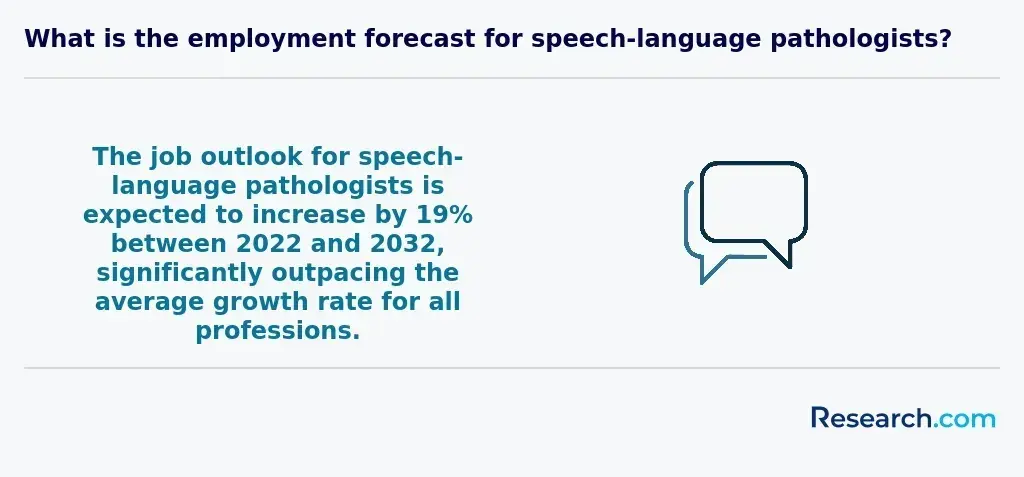
Speech-language pathologists had a $97,870 national median annual wage in May 2025, while employment is projected to grow 17% from 2025 to 2035 (U.S. Bureau of Labor Statistics).
The strongest Florida program choice is usually the one that combines CAA accreditation, manageable net cost, clinical-placement support, and a timeline that fits your prerequisite status - not simply the lowest advertised tuition.
What can I expect from a speech pathology degree in Florida?
"Speech pathology" usually refers to the education path toward becoming a speech-language pathologist (SLP). SLPs assess and treat communication, swallowing, voice, language, fluency, and cognitive-communication disorders across the lifespan. In Florida, the typical professional route is a bachelor's degree in communication sciences and disorders or a related field, followed by a master's degree in speech-language pathology or communication sciences and disorders.
A master's program combines advanced coursework with supervised clinical education. Expect clinical simulations, diagnostic writing, treatment planning, work with children and adults, and placements in settings such as schools, hospitals, rehabilitation facilities, and outpatient clinics. Programs differ substantially in prerequisite flexibility: career changers may need post-baccalaureate coursework before, or alongside, graduate study.
For independent practice in Florida, graduation is only one part of the pathway. Applicants should confirm that a program's accreditation and clinical sequence support Florida Board requirements, ASHA certification goals, and any future state where they may wish to work. Students seeking a faster format can compare best accelerated slp programs online, but should verify whether required clinical experiences can be arranged where they live.
Where can I work with a speech pathology degree in Florida?
Florida's large population of school-age children, older adults, and seasonal residents creates demand across education and healthcare, but the work environment changes the day-to-day role. School positions commonly follow an academic calendar and emphasize language, literacy, speech sound disorders, and special-education collaboration. Medical roles may involve swallowing evaluations, stroke recovery, traumatic brain injury, voice, and complex discharge planning.
The table shows common settings and the practical fit each may offer. Actual hiring requirements can vary by employer, payer, setting, and whether the role requires Florida licensure, educator credentials, or ASHA certification.
Work setting
Typical focus
Decision consideration
Public and private schools
Pediatric speech, language, literacy, and IEP services
Often attractive to students seeking predictable school-year schedules.
Hospitals and rehabilitation
Swallowing, neurological communication, acute and post-acute care
May suit students who want medically complex adult care.
Skilled nursing and home health
Adult rehabilitation and functional communication
Travel, productivity expectations, and caseload patterns should be reviewed closely.
Outpatient clinics and private practice
Specialized pediatric or adult therapy
Schedules and compensation models vary widely by employer.
University clinics and research programs
Clinical teaching, research, and specialty services
Often better aligned with doctoral study or academic career interests.
Miami, Orlando, Tampa Bay, Jacksonville, and South Florida generally provide more potential placement sites and employer variety than smaller markets. That can matter before enrollment: ask each program whether it secures placements, how far students may travel, and whether placement schedules can require daytime availability.
The latest national benchmark is a median annual wage of $97,870, or $47.05 per hour, for speech-language pathologists in May 2025 (U.S. Bureau of Labor Statistics). A national median is not a promised starting salary and should not be treated as a Florida pay estimate. Local wages vary with setting, experience, productivity expectations, bilingual skills, employer type, and metropolitan labor conditions.
For an investment decision, compare expected local pay with the full cost of becoming eligible to practice: prerequisite coursework, graduate tuition and fees, clinical travel, lost earnings while enrolled, insurance, examination expenses, and debt repayment. A school-based role may offer a different schedule and benefits profile than a medical or contract role, even when headline pay appears lower.
Use salary guides as a starting point, then request Florida-specific compensation ranges from employers and alumni. This overview of how much do SLPs make can help distinguish higher-paying specialty and setting-based paths from the overall occupation benchmark.
Strong programs are not interchangeable: their clinical networks, degree pathways, research environments, and delivery expectations can affect both completion logistics and professional preparation. Students should verify current accreditation status, prerequisite rules, tuition, and placement policies directly with each school because program details can change by cohort.
These institutions are most usefully differentiated by the concrete program emphasis visible through their communication sciences and disorders departments rather than by broad institutional reputation:
University of Central Florida: UCF's Communication Sciences and Disorders unit is housed in the College of Health Professions and Sciences, which can be relevant for students seeking a clinically oriented, health-professions academic setting in Central Florida. Its Orlando location may also be practical for applicants comparing access to a large regional healthcare and school-placement market.
University of South Florida: USF places communication sciences and disorders in the College of Behavioral and Community Sciences, emphasizing the field's connections to human services, behavior, and community practice. This structure may appeal to students who want to consider communication disorders through both clinical and community-facing perspectives.
Florida State University: FSU's School of Communication Science and Disorders is part of the College of Communication and Information, an especially relevant institutional home for applicants drawn to language, communication, and information-focused scholarship. Tallahassee may be a better geographic fit for students planning to build professional connections in North Florida.
University of Florida: UF situates speech, language, and hearing sciences within the College of Public Health and Health Professions, creating a health-professions context for students interested in interdisciplinary clinical and research work. This may fit applicants who want training connected to rehabilitation and broader health-science collaboration.
Florida International University: FIU's Communication Sciences and Disorders program offers a South Florida option in a highly multilingual region, a meaningful context for students interested in culturally and linguistically responsive clinical preparation. Applicants should ask how bilingual assessment and service-delivery experiences are incorporated into the current curriculum and placements.
Jacksonville University: Jacksonville University offers a private-university option for students who may prefer a smaller institutional environment and Northeast Florida access. Because private-program net price can differ sharply from sticker price, applicants should compare financial-aid offers, cohort scheduling, and clinical-placement support rather than assuming either public or private status determines value.
None of these features replaces the essential checks: confirm Council on Academic Accreditation in Audiology and Speech-Language Pathology (CAA) status, ask for the current clinical-placement process, and determine whether the program supports the license pathway you intend to pursue.
For students who already hold the required communication sciences and disorders background, a full-time master's degree commonly takes about two academic years. The total journey is longer for applicants without foundational coursework, who may need a post-baccalaureate sequence before graduate admission. Part-time and distance formats can make enrollment more manageable, but may extend completion and clinical-placement timing.
After the degree, candidates pursuing professional credentials typically complete a supervised clinical fellowship before full certification. Florida applicants should plan the education, supervised experience, examination, and state application steps as one timeline rather than assuming the master's graduation date is the date they can independently practice.
Accelerated programs can reduce calendar time, but they are not automatically the better value. A compressed schedule may limit paid-work capacity and leave less flexibility if a clinical placement changes. It is most sensible for students with strong prerequisite preparation, reliable finances, and availability for intensive daytime clinical work.
Online SLP master's programs generally deliver academic coursework remotely, but they are not fully remote professional degrees. Students still need supervised clinical experiences, and those placements may require travel, daytime attendance, and adherence to the program's site-approval process. On-campus programs make in-person faculty and clinic access easier, while online programs may reduce relocation needs.
This comparison focuses on the operational differences that matter when selecting a Florida-eligible pathway.
Factor
Online or hybrid format
On-campus format
Course access
May allow students to remain in their community for lectures and seminars.
Requires regular campus attendance and may strengthen in-person cohort contact.
Clinical education
Still requires approved local or regional placements; availability is not automatic.
May provide closer access to university clinics and established local networks.
Best fit
Working adults or students unable to relocate, if clinical logistics are workable.
Students seeking a traditional cohort experience and predictable local supervision.
Main risk
Assuming "online" eliminates travel, daytime obligations, or licensure research.
Underestimating relocation, commuting, and lost-work costs.
Before choosing either format, obtain written confirmation about accreditation, state authorization, clinical placement responsibility, travel expectations, synchronous class times, and Florida licensure alignment. Students primarily motivated by price should also review the Most Affordable Online Master's in Speech Pathology options, then compare net cost and clinical logistics rather than tuition alone.
A single Florida average can be misleading because published tuition depends on residency, credit load, institution type, program length, and whether prerequisite coursework is needed. Public universities commonly differentiate in-state and out-of-state rates, while private nonprofit universities may publish one tuition schedule but offer institution-specific scholarships. Net price - not sticker price - is the more useful comparison after grants and scholarships.
Build a personal cost estimate using the same categories for every school. The comparison below helps prevent a low tuition figure from hiding meaningful non-tuition costs.
Cost category
Why it changes the decision
Tuition and mandatory fees
Usually varies by residency, credits, and institutional pricing model.
Prerequisite courses
Can add time and cost for applicants changing fields.
Clinical travel and housing
May rise when placements are distant, especially in rural or high-cost areas.
Lost earnings
Intensive clinical schedules may reduce the ability to work while enrolled.
Licensure and certification expenses
Exams, applications, background checks, and professional requirements belong in the plan.
Compare awards in writing and calculate the cost through graduation, not merely one term. For a Florida-focused starting point, review the cheapest speech pathology graduate programs in florida, then check whether their program structure meets your clinical and licensure needs.
Graduate speech pathology students may combine federal aid, institutional scholarships, state or employer support, and part-time employment where scheduling permits. Complete the FAFSA early because school aid deadlines can precede the academic term. Federal Direct Unsubsidized Loans may be available to eligible graduate students, subject to federal limits and requirements.
Eligible graduate and professional students may also apply for a federal Direct Graduate PLUS Loan after completing the FAFSA, subject to a credit check and federal eligibility rules (Federal Student Aid). Graduate PLUS borrowing should be a last-stage financing tool rather than an automatic choice because borrowing capacity does not establish affordability.
Prioritize aid that does not need to be repaid, then compare the remaining borrowing need across offers. Useful questions for financial-aid offices include:
Is the scholarship renewable for every year of the clinical program?
Does the award require full-time enrollment or a minimum GPA?
Are clinical fees, health insurance, and travel covered by the cost-of-attendance budget?
Can a graduate assistantship realistically coexist with required clinical hours?
What happens to aid if a placement delays graduation?
Florida residents should also check the current eligibility and funding status of state-administered assistance through official state channels. Do not assume undergraduate awards continue into graduate study; eligibility rules and annual appropriations can differ.
View the chart data as a table
SLP annual wage spread - Florida (May 2025) (Source: U.S. Bureau of Labor Statistics (OEWS May 2025))
Category
Value
10th percentile
$69,970
25th percentile
$83,120
Median
$99,990
75th percentile
$105,460
90th percentile
$122,050
Most master's programs expect foundational coursework in communication sciences and disorders. Common requirements include anatomy and physiology of speech and hearing, phonetics, language development, speech science, hearing science, audiology, statistics, and biological, physical, and social/behavioral science coursework. Exact course titles and acceptable equivalents vary by institution.
Applicants from psychology, education, linguistics, nursing, biology, or other fields can still be viable candidates, but should expect additional preparation. The most common mistake is applying based on a general graduate-school checklist without matching every prerequisite to the department's requirements.
Before applying, take these steps:
Request an official transcript review or prerequisite checklist from each program.
Confirm whether missing courses may be completed before enrollment, concurrently, or only through a separate post-baccalaureate plan.
Check required GPA, observation hours, recommendations, personal statement, interview, and any standardized-test policy for the intended entry term.
Ask whether admitted out-of-field students follow a longer clinical sequence and how that affects tuition and aid eligibility.
Applicants should not confuse a program described as accessible with one that waives professional standards. Guides to the easiest speech pathology programs to get into can broaden a shortlist, but accreditation, prerequisite fit, and clinical capacity remain more important than perceived admissions difficulty.
Graduate curricula develop the evidence-based clinical judgment needed to assess and treat communication and swallowing disorders. Courses typically progress from foundations and diagnosis to intervention planning, clinical practicum, and professional ethics. The exact sequence varies, especially for students entering with prerequisite deficiencies.
Students should expect coursework in areas such as language disorders across the lifespan, articulation and phonological disorders, fluency, voice, motor speech disorders, dysphagia, neurogenic communication disorders, augmentative and alternative communication, audiology-related foundations, research methods, and clinical practice. Clinical seminars often require students to connect research evidence with real client decisions.
When comparing curricula, look beyond the course catalog. Ask how many placements are required, whether pediatric and adult experiences are both available, how supervisors evaluate competency, and whether elective choices support your intended population. A program with more relevant clinical variety can be worth a higher net cost if it reduces the need to seek specialized training immediately after graduation.
Most entry-level SLP master's programs prepare graduates as broad generalists because Florida licensure and ASHA certification pathways require competence across the profession. "Specialization" is therefore often built through elective courses, practicum placements, faculty research, and post-graduate continuing education rather than through a formally separate graduate degree concentration.
Common areas students may pursue include pediatric language and literacy, autism and developmental disabilities, bilingual and multilingual service delivery, voice, fluency, dysphagia, neurogenic communication disorders, augmentative and alternative communication, and hearing-related rehabilitation. South Florida may be particularly relevant for students seeking experience with multilingual communities, while large medical centers in major metros can broaden exposure to adult neurological and swallowing care.
Choose a program based on its ability to provide supervised experience in your interest area without sacrificing broad clinical preparation. A narrow specialty focus too early can be limiting if your first available job is in schools, acute care, or rehabilitation. Ask whether specialty placements are guaranteed, competitive, or dependent on site availability.
The best choice is the program that makes you eligible for your intended professional path at a cost and pace you can sustain. Rankings are useful for identifying options, but they cannot determine whether a program accepts your prerequisites, can support your placement needs, or produces an affordable personal aid package.
Use this sequence to compare a realistic shortlist:
Verify current CAA accreditation and ask how the program supports Florida licensure and ASHA certification requirements.
Match your transcript to prerequisites before paying application fees.
Compare total estimated cost through graduation, including lost earnings and clinical travel, after grants and scholarships.
Ask who arranges placements, where recent placements occurred, and whether students must travel or relocate.
Review program pacing, daytime obligations, graduation policies, and support available if a clinical placement is delayed.
Talk with current students or alumni about workload, supervision quality, and whether the program's setting matches your career goal.
Red flags include unclear accreditation information, vague answers about clinical placement responsibility, pressure to borrow without a net-cost breakdown, and claims that graduation alone guarantees licensure or employment. Also avoid choosing solely by tuition: a lower-cost program can become more expensive if its timeline, placement travel, or prerequisite requirements do not fit your circumstances.
A qualifying master's degree and Florida licensure pathway most directly lead to speech-language pathology practice, but the field supports several work patterns. Your clinical placements and early fellowship experience often influence the first role more than a program's general title.
The following paths illustrate how professional interests can translate into different practice environments:
Pediatric school-based SLP: Works with students on communication access, educational participation, and IEP-related services.
Medical SLP: Assesses and treats swallowing and communication disorders in hospitals, rehabilitation, or outpatient care.
Early-intervention clinician: Supports infants, toddlers, and families, often through interdisciplinary developmental services.
Private-practice or clinic SLP: May develop a focused caseload in speech sound disorders, language, fluency, voice, or feeding-related services.
Clinical supervisor, researcher, or faculty member: Usually requires additional experience and, for many academic roles, doctoral education.
Students who do not want direct clinical practice should consider whether a communication sciences degree, education degree, public health program, audiology route, or applied behavior-related credential better fits their goal. A master's SLP pathway is intensive and professionally regulated; it is most valuable when you want the clinical scope associated with licensure.
View the chart data as a table
Median SLP wage by work setting (United States, May 2025) (Source: U.S. Bureau of Labor Statistics (OEWS May 2025, by industry))
Category
Value
Schools (educational services)
$83,120
Offices of PT/OT/speech therapists
$98,910
Hospitals
$103,690
Nursing & residential care
$109,660
The national outlook is favorable: the U.S. Bureau of Labor Statistics projects 17% employment growth for speech-language pathologists from 2025 to 2035 and about 12,500 openings annually over the decade. This projection reflects national demand, not a guarantee of a position in a particular Florida city or specialty.
Florida's mix of public schools, healthcare systems, rehabilitation providers, and an older population can create varied opportunities, particularly in larger metropolitan areas. However, job availability may differ between school-year hiring cycles, medical settings, and rural communities. Students should search postings in the counties where they are willing to live before selecting a specialty or borrowing heavily for a program.
Technology is changing documentation, telepractice, and communication-support tools, but it does not eliminate the need for licensed clinical judgment, direct assessment, caregiver education, and supervised intervention. Graduates who can work effectively with diverse populations, use evidence-based digital tools responsibly, and adapt to in-person or telepractice workflows may have broader options.
2027 Most Valuable Speech Pathology Degree Programs Ranking in Florida
Research.com recognizes that investing in graduate education is a major financial and career decision. The ranking is designed to help prospective students compare programs using consistent evidence rather than relying solely on reputation, marketing language, or tuition stickers. Research.com evaluates academic and research strength, cost, graduate outcomes, student profile, and institutional quality, then ranks programs according to the dimension named in the ranking.
For on-campus programs, ranking weights are determined through a data-driven, entropy-based approach for each ranking. Online programs use an adapted distance-learning methodology: campus-related indicators are excluded, while program structure and student support receive greater emphasis. Fixed online weights are graduation rate (30%), research (25%), institutional profile (15%), and students, cost, and course measures (10% each).
The ranking draws on these established education datasets:
IPEDS database: institutional enrollment, completion, finance, and program reporting data.
Peterson's database: program and admissions information that helps contextualize available academic options.
Readers can use the ranking to create a focused shortlist, compare value beyond published tuition, and identify programs whose format and academic profile align with their goals. For a fuller explanation of the evaluation framework, review Research.com's methodology.
Council on Academic Accreditation in Audiology and Speech-Language Pathology (CAA) of ASHA
Status AccreditedID c4462928-2616-4352-a5c5-f46d0c2b007cValid 2024-2032
Last known review scheduled for August 2031
Verify accreditation
University of Central Florida earned a Research.com Value Score of 73.16/100, supported by $24,766 total tuition + mandatory fees and 98% Praxis pass rate. Its Master of Arts in Communication Sciences and Disorders is listed by ASHA EdFind as CAA-accredited through 2032, with the most recently listed accreditation review scheduled for 2031.
Admissions data from
ASHA EdFind
(updated 10/29/2025)
Undergraduate prerequisites required: Yes; prerequisite courses offered; available online
Additional requirements
Comprehensive exam
Accreditation
Council on Academic Accreditation in Audiology and Speech-Language Pathology (CAA) of ASHA
Status AccreditedID c239bf01-cfd8-4f09-b6b5-635b38df324bValid 2021-2029
Last known review scheduled for August 2028
Verify accreditation
University of South Florida earned a Research.com Value Score of 72.42/100, supported by $26,970 total tuition + mandatory fees and 100% Praxis pass rate. Its M.S. in Speech-Language Pathology is listed by ASHA EdFind as CAA-accredited through 2029, with the most recently listed accreditation review scheduled for 2028.
Admissions data from
ASHA EdFind
(updated 10/16/2025)
Master's in Communication Science & Disorders (Tallahassee / Residential Campus)
69.72
/ 100
Final score
Program length
6 semesters
Required credits
61
Acceptance rate
25% (100 of 405 applications)
GPA range
2.95 - 4.00
Offers with funding
~8% (8 of 100 offers)
Application deadline
Fall admission: January 15
Class size
64
Degrees granted
69
Application process
University online application
Prerequisites
Undergraduate prerequisites required: Yes; prerequisite courses offered; available online
Additional requirements
Comprehensive exam
Accreditation
Council on Academic Accreditation in Audiology and Speech-Language Pathology (CAA) of ASHA
Status AccreditedID 46a191d6-e555-4e52-84ae-d801ab24c7a5Valid 2025-2033
Last known review scheduled for August 2032
Verify accreditation
Florida State University earned a Research.com Value Score of 69.72/100, supported by $28,759 total tuition + mandatory fees and 98% Praxis pass rate. Its Master's in Communication Science & Disorders (Tallahassee / Residential Campus) is listed by ASHA EdFind as CAA-accredited through 2033, with the most recently listed accreditation review scheduled for 2032.
Admissions data from
ASHA EdFind
(updated 10/14/2024)
Master of Arts in Communication Sciences and Disorders
67.13
/ 100
Final score
Program length
5 semesters (full-time, residential)
Acceptance rate
20% (60 of 300 applications)
GPA range
3.50 - 4.00
Application deadline
Fall admission: January 15
Class size
30
Degrees granted
32
Application process
CSDCAS University online application
Prerequisites
Undergraduate prerequisites required: Yes; prerequisite courses offered; available online
Additional requirements
Comprehensive exam
Accreditation
Council on Academic Accreditation in Audiology and Speech-Language Pathology (CAA) of ASHA
Status AccreditedID 11216134-3216-4e86-b748-72710dbc8d5cValid 2024-2032
Last known review scheduled for 2032
Verify accreditation
University of Florida earned a Research.com Value Score of 67.13/100, supported by $28,756 total tuition + mandatory fees and 100% Praxis pass rate. Its Master of Arts in Communication Sciences and Disorders is listed by ASHA EdFind as CAA-accredited through 2032, with the most recently listed accreditation review scheduled for 2032.
Admissions data from
ASHA EdFind
(updated 10/31/2024)
Council on Academic Accreditation in Audiology and Speech-Language Pathology (CAA) of ASHA
Status AccreditedID b04f4346-f046-409d-8a7d-4d26dd4c3d5aValid 2024-2032
Last known review scheduled for February 2032
Verify accreditation
Florida International University earned a Research.com Value Score of 54.85/100, supported by $43,691 total tuition + mandatory fees and 97% Praxis pass rate. Its Master of Science in Speech-Language Pathology is listed by ASHA EdFind as CAA-accredited through 2032, with the most recently listed accreditation review scheduled for 2032.
Admissions data from
ASHA EdFind
(updated 09/04/2026)
Undergraduate prerequisites required: Yes; prerequisite courses offered; available online
Additional requirements
Capstone
Accreditation
Council on Academic Accreditation in Audiology and Speech-Language Pathology (CAA) of ASHA
Status AccreditedID ca2851fa-54ae-4ef8-8a92-675419fa6d73Valid 2023-2031
Last known review scheduled for February 2030
Verify accreditation
Jacksonville University earned a Research.com Value Score of 48.09/100, supported by $66,800 total tuition + mandatory fees and 98% Praxis pass rate. Its Master of Science in Speech-Language Pathology is listed by ASHA EdFind as CAA-accredited through 2031, with the most recently listed accreditation review scheduled for 2030.
Admissions data from
ASHA EdFind
(updated 10/30/2025)
Frequently asked questions about speech pathology degree in Florida
Do I need a master's degree to become an SLP in Florida?
Generally, yes. Independent SLP practice requires a qualifying graduate degree plus other state requirements, including supervised experience and examination requirements. Confirm the current rules with the Florida Board of Speech-Language Pathology and Audiology.
Is CAA accreditation important?
Yes. CAA accreditation is a critical check because it is closely tied to professional certification and licensure planning. Verify a program's current status directly with the accreditor and school before enrolling.
Can I enter an SLP master's program with a non-CSD bachelor's degree?
Often, yes, but you may need prerequisite courses. Each program decides which prior coursework it accepts and whether deficiencies can be completed before or during enrollment.
Are online speech pathology degrees fully online?
No. Coursework may be online, but supervised clinical education remains an in-person requirement. Ask how placements are arranged and whether travel is required.
How long will the complete Florida licensure path take?
Students with prerequisites commonly spend about two years in a full-time master's program, followed by supervised post-graduate experience and required examination and application steps. Out-of-field students may need additional preparation first.
Is a speech pathology degree worth the cost?
It can be worthwhile for students committed to clinical SLP practice, especially when net cost, completion probability, and local job plans are realistic. Compare debt against your likely timeline, financial aid, lost earnings during study, and the type of Florida role you expect to pursue.
See What Experts Have To Say About Studying Speech Pathology
ASHA EdFind - Accredited Speech-Language Pathology Programs Used to verify CAA accreditation or candidacy status for graduate SLP programs. https://find.asha.org/ed/
O*NET OnLine - Speech-Language Pathologists Used to verify common responsibilities, professional skills, work settings, and education expectations for SLPs. https://www.onetonline.org/link/summary/29-1127.00