2027 Software Engineering Degree Underemployment Report: Which Graduates Are Most Likely to Work Below Their Education Level

Co-Founder and Chief Data Scientist
Software engineering graduates face a sharper entry-level filter than many students expect: a degree helps, but employers increasingly screen for internships, production-ready projects, cloud exposure, and proof of coding ability.
The Federal Reserve Bank of New York's 2024 college outcomes data shows computer science majors have a relatively low underemployment rate compared with many fields, yet early-career unemployment remains elevated when hiring slows. This guide is for students, recent graduates, and career changers who want to understand underemployment risk, compare outcomes, and build a practical plan to avoid low-credential work.
Key Things to Know About Underemployment in Software Engineering Industry
- Software engineering majors are less exposed to underemployment than many nontechnical majors, but graduates without internships, portfolio depth, or in-demand stack experience are most likely to start in jobs that do not require a bachelor's degree.
- The BLS projects 15% employment growth for software developers, quality assurance analysts, and testers from 2024 to 2034, which is strong, but competition remains intense for junior roles because employers often want job-ready experience.
- The biggest wage penalty comes from staying in low-credential work too long: May 2024 BLS data places the median annual wage for software developers at $133,080, far above common fallback jobs such as general office, retail, or basic support roles.
- Key Things to Know About Underemployment in Software Engineering Industry
- How likely is it for Software Engineering graduates to become underemployed?
- Is the college curricula for Software Engineering keeping up with employer expectations?
- How does underemployment for Software Engineering graduates compare with other majors?
- Does taking on low-credential roles affect the career growth of Software Engineering professionals?
- What is the salary gap between underemployed Software Engineering graduates and those in degree-level jobs?
- What barriers force Software Engineering graduates into low-credential roles?
- How can Software Engineering graduates position their resumes for degree-level positions?
- Are there certifications that Software Engineering graduates can secure to qualify for degree-level roles?
- What steps can Software Engineering students take to improve their chances of securing degree-level roles?
- Top Trending Software Engineering Rankings
How likely is it for Software Engineering graduates to become underemployed?
Underemployment means working in a role that does not typically require the education level a graduate has earned. For software engineering graduates, this can include jobs such as retail supervisor, general administrative assistant, sales associate, basic help desk technician, manual QA clerk, or nontechnical operations coordinator when the work does not use software design, programming, testing, systems, or data skills at a degree-level standard.
The risk is real but uneven. The Federal Reserve Bank of New York's 2024 labor market outcomes data places computer science among the majors with lower underemployment than many fields, with an underemployment rate around the mid-teens for recent graduates.
That is a favorable benchmark, but it does not mean every software engineering graduate is protected; it means the degree has stronger labor-market alignment when the graduate can show applied technical capability.
This table summarizes the practical risk profile for different software engineering graduates. It is not a prediction of individual outcomes; it shows which signals tend to move a candidate closer to or farther from degree-level work:
| Graduate profile | Underemployment risk | Why it matters | Typical early job outcome |
| Completed software internship or co-op | Lower | Employers can verify workplace coding, collaboration, and delivery skills | Junior software engineer, QA automation analyst, DevOps associate |
| Strong portfolio but no internship | Moderate | Projects can offset limited experience if they are deployed, documented, and relevant | Entry-level developer, contract developer, technical support engineer |
| Coursework only, limited GitHub activity | Higher | The degree may not prove readiness for production systems or team workflows | Help desk, manual QA, operations, general business role |
| Weak local market and no relocation or remote strategy | Higher | Hiring volume varies widely by region and industry cluster | Nontechnical role while continuing the search |
The most useful way to interpret software engineering underemployment is not "Is the degree worth it?" but "Does my profile look like a hireable junior engineer profile?" A graduate with a well-scoped portfolio, internship experience, and interview preparation is in a very different position from a graduate who only has classroom assignments and a generic resume.
Is the college curricula for Software Engineering keeping up with employer expectations?
Software engineering curricula are improving, but many programs still move more slowly than employer requirements. A solid curriculum usually teaches programming, algorithms, databases, operating systems, software design, testing, and project management.
Employers, however, often expect graduates to apply those foundations in modern workflows: version control, cloud deployment, CI/CD pipelines, security-aware coding, APIs, automated testing, and collaborative agile development.
The curriculum-employer gap is especially important because entry-level tasks are changing. AI coding assistants can speed up boilerplate code, test generation, and debugging, so employers have less patience for graduates who can only complete isolated classroom exercises. The stronger signal is whether a candidate can reason through requirements, review generated code, test it, secure it, and ship maintainable software.
The table below shows common curriculum strengths and gaps. Use it as a checklist when reviewing a program, planning electives, or deciding what to learn outside class:
| Area | What many programs teach | What employers often expect | Underemployment risk if missing |
| Programming fundamentals | Java, Python, C++, or similar languages | Ability to build, test, debug, and maintain real applications | Moderate |
| Software design | Object-oriented design, requirements, UML, capstone projects | Readable architecture, API design, code reviews, maintainability | Moderate |
| DevOps and cloud | Often elective or lightly covered | Git, CI/CD, containers, cloud basics, deployment experience | High |
| Testing | Unit testing concepts or QA overview | Automated testing, integration testing, test coverage, QA automation | High for QA and platform roles |
| Security | Introductory cybersecurity concepts | Secure coding, authentication, secrets management, vulnerability awareness | Moderate to high |
| Team workflow | Group projects | Agile boards, pull requests, documentation, stakeholder communication | High |
Students should not assume a program is weak just because it does not cover every tool in current job postings. Tools change quickly. The better question is whether the program gives students enough applied practice to learn new tools, produce evidence of skill, and explain technical decisions in interviews.
How does underemployment for Software Engineering graduates compare with other majors?
Software engineering generally compares well with many majors because the degree maps directly to high-demand occupations. However, "low underemployment compared with other majors" is not the same as "low risk for every graduate." The risk depends on specialization, experience, geography, job-search timing, and whether the graduate targets roles that actually require software training.
National data helps put the risk in perspective. The Federal Reserve Bank of New York's 2024 outcomes data shows that majors with clear occupational pipelines, such as engineering and computer-related fields, tend to have lower underemployment than broad majors where the first job can be less credential-specific.
By contrast, some career-specific fields outside technology have licensing or credential pathways; for example, students comparing technology with counseling careers may evaluate structured options such as LMFT programs, where the education-to-occupation route is shaped by state licensure requirements.
This comparison shows how software engineering differs from other broad academic paths. The purpose is to help readers understand labor-market alignment, not to rank personal interests:
| Major category | Degree-to-job alignment | Typical underemployment pressure | Main protection against low-credential work |
| Software engineering and computer science | Strong when paired with applied projects | Junior-role competition and experience screens | Internships, portfolio, coding interviews, cloud and testing skills |
| Traditional engineering | Strong in licensed or industry-specific roles | Location and industry cycles | Co-ops, FE exam where relevant, industry tools |
| Business administration | Moderate and broad | Many roles accept multiple majors | Internships, analytics, finance, operations, or sales specialization |
| Humanities and social sciences | Variable | Degree-level role may require additional specialization | Writing, data, research, policy, teaching, or graduate pathway alignment |
| Health and licensed fields | Strong when credential requirements are met | Program accreditation and licensure constraints | Clinical hours, licensure eligibility, exam preparation |
The practical takeaway is that software engineering students should think less like general college graduates and more like early professionals building a technical proof record. The major has strong upside, but weak execution during college can still lead to a first job below the graduate's education level.
Do Software Engineering graduates typically stay long in low-credential roles?
Some software engineering graduates use low-credential roles briefly while they continue interviewing, but staying too long can make the transition harder. The issue is not moral or personal; it is signaling. After several months in a nontechnical job, employers may wonder whether the graduate's coding skills are current, whether they can work in a software team, and why they have not built relevant experience.
Strada's 2024 analysis of college graduate outcomes found that graduates who begin underemployed are much more likely to remain underemployed years later. For software engineering graduates, this means the first post-college role should be chosen strategically, especially if it is not a true developer job.
Not every non-developer job is equally risky. The table below separates fallback roles that can still lead toward software work from roles that usually require a more deliberate exit plan:
| Role type | Can it be a gateway? | Why | Exit timeline to monitor |
| Technical support engineer | Yes, if troubleshooting is technical | Builds product knowledge, logs, APIs, customer debugging, and escalation experience | 6 to 18 months |
| QA tester with automation exposure | Yes | Can lead to QA automation, SDET, or developer roles | 6 to 18 months |
| IT help desk | Sometimes | Useful if paired with scripting, cloud, networking, or internal tools work | 6 to 12 months |
| General sales or retail | Usually no | Does not normally build software engineering evidence | Immediate upskilling plan needed |
| Administrative operations | Usually no | May build business knowledge but not technical credibility | Immediate upskilling plan needed |
A low-credential job is less damaging when the graduate treats it as a temporary bridge and continues building software evidence. It becomes more damaging when it consumes the graduate's time without adding technical artifacts, referrals, certifications, or internal transfer opportunities.
Does taking on low-credential roles affect the career growth of Software Engineering professionals?
Taking a low-credential role can affect career growth if it delays skill accumulation, weakens professional networks, or lowers the salary base for future offers. Early software careers compound quickly: the first role often determines the tools, codebase, industry, mentors, and interview stories a graduate can use for the next role.
The BLS 2024 to 2034 projection of 15% growth for software developers, quality assurance analysts, and testers indicates that the occupation remains strong over the long term. However, that growth does not remove the need to enter the right lane; graduates outside software work may not benefit from that demand until they can demonstrate current technical capability.
Graduates sometimes respond to underemployment by considering graduate school. That can make sense for research-heavy, AI, systems, cybersecurity, or leadership goals, but it is not always the fastest fix for weak entry-level employability.
Before enrolling in an advanced program, compare the opportunity cost with targeted portfolio work, internships, certifications, and employer-sponsored learning; students researching accelerated advanced degrees may also come across options marketed as the easiest doctorate to get, but software engineering hiring still depends heavily on demonstrable technical skill.
Here is a practical way to evaluate whether a fallback job is helping or hurting your software career:
- Check whether the role gives you technical stories you can discuss in interviews, such as debugging, automation, scripting, data handling, deployment, or user-facing product work.
- Set a deadline for transition, usually within 6 to 12 months if the role is not directly technical.
- Protect weekly time for coding practice, portfolio updates, applications, and networking even if the job is full time.
- Ask about internal transfer paths into engineering, QA automation, data, product, or IT systems roles before accepting the offer.
- Track whether your resume is becoming more aligned with software job descriptions each month; if not, revise the plan quickly.
The core trade-off is income now versus career fit later. Taking a temporary job can be financially necessary, especially with student loans, but it should not become an unplanned detour with no technical progression:
What is the salary gap between underemployed Software Engineering graduates and those in degree-level jobs?
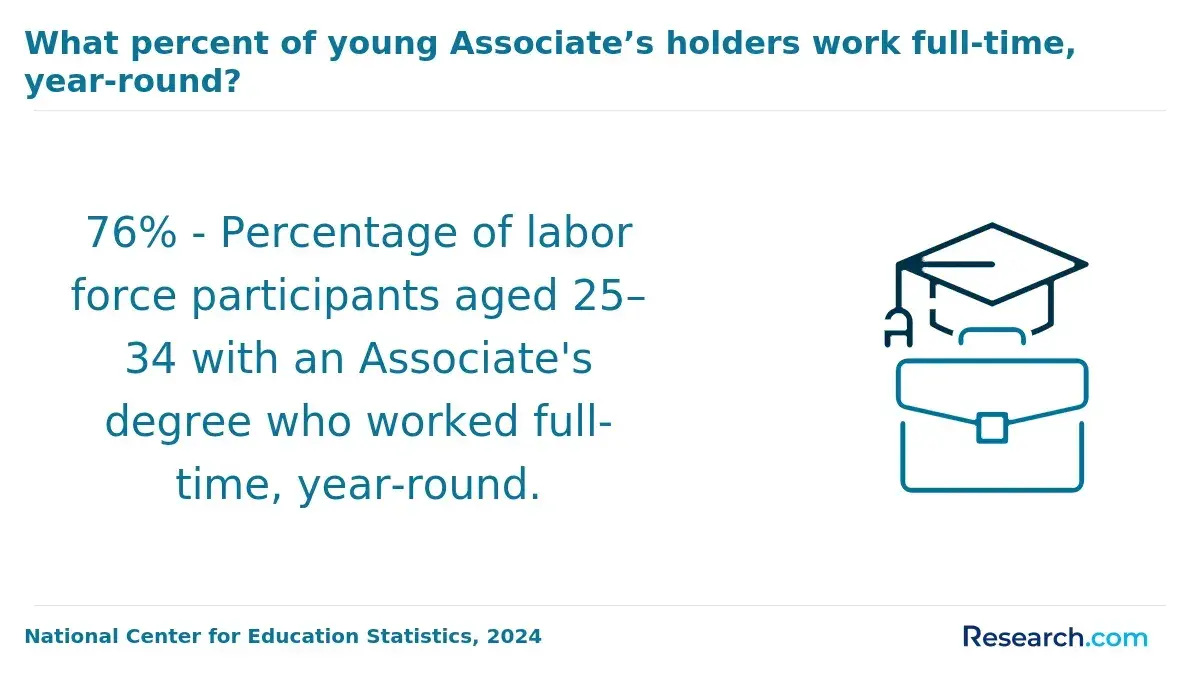
The salary gap between degree-level software roles and low-credential jobs is one of the clearest financial risks of underemployment. May 2024 BLS wage data lists the median annual wage for software developers at $133,080.
That figure reflects experienced workers as well as newer workers, so it should not be treated as an entry-level promise, but it shows the economic ceiling associated with degree-level software work.
By comparison, many fallback roles have much lower median wages and weaker long-term wage growth. The table below compares software-aligned roles with common low-credential alternatives using national BLS wage categories. These are occupational medians, not guaranteed outcomes for new graduates:
| Role category | Degree alignment for software engineering graduates | May 2024 median annual wage | Career implication |
| Software developer | High | $133,080 | Best aligned with software design, coding, testing, and product work |
| Software quality assurance analyst or tester | High to moderate | $102,610 | Strong pathway if automation, scripting, and test engineering are involved |
| Computer support specialist | Moderate to low | $61,550 | Can be a bridge if it includes technical troubleshooting and internal mobility |
| Customer service representative | Low | $39,680 | Usually does not build software engineering credentials |
| Retail salesperson | Low | $34,730 | Creates a large opportunity cost if it becomes long term |
The financial impact is not limited to take-home pay. Lower earnings can make student loan repayment harder, delay relocation to stronger tech markets, reduce the ability to pay for certifications or interview preparation, and make it harder to accept unpaid or low-paid technical opportunities later.
For graduates with debt, the safest approach is to combine income stability with a documented transition plan into a software-aligned role.
What barriers force Software Engineering graduates into low-credential roles?
Software engineering underemployment usually results from a combination of market timing and candidate readiness. A graduate may be capable, but if the resume does not show practical experience, the portfolio is thin, or the search is limited to a weak local market, the degree may not convert into a degree-level role quickly.
The most common barriers are specific enough to fix. Students and recent graduates should diagnose the issue before applying to hundreds of jobs with the same materials.
- No internship or co-op experience: Employers use internships as evidence that a graduate can work in a team, handle feedback, and deliver code in a professional environment.
- Generic projects: Calculator apps, class assignments, and copied tutorials rarely stand out unless they are expanded into deployed, documented, user-focused products.
- Weak interview preparation: Many candidates fail not because they cannot code, but because they have not practiced data structures, system-design basics, debugging explanations, and behavioral stories.
- Tool mismatch: A transcript may list programming courses, while job postings ask for Git, React, Node.js, Python, SQL, AWS, Docker, Kubernetes, or automated testing.
- Limited search geography: Some regions have fewer entry-level software openings, and remote junior roles often attract national competition.
- Overreliance on quick-apply platforms: Applicants who do not use referrals, alumni networks, GitHub visibility, meetups, or recruiter outreach may be filtered out before a human review.
- Unclear job targeting: Applying simultaneously to frontend, backend, cybersecurity, data, QA, IT, and product roles with one resume can make the candidate look unfocused.
A useful red flag is repeated silence after applications. If a graduate submits 50 targeted applications and receives no screening calls, the problem is likely resume alignment, project evidence, or role selection. If screenings happen but offers do not, the problem is more likely interviewing, technical assessment performance, or communication.
How can Software Engineering graduates position their resumes for degree-level positions?
A software engineering resume should prove job readiness quickly. Recruiters and applicant tracking systems often scan for role-specific tools, project outcomes, internships, and measurable technical contributions. A resume that reads like a course catalog usually performs worse than one that shows what the candidate built, improved, tested, deployed, or automated.
Use the following sequence to reposition a resume for degree-level software roles. This process works best when each application is targeted to one role family, such as backend developer, frontend developer, QA automation, DevOps associate, data engineer, or technical support engineer:
- Choose one target role family and collect 10 to 15 current US job postings for that role.
- Highlight repeated technical requirements, such as SQL, REST APIs, Git, cloud services, unit testing, Python, Java, JavaScript, or Docker.
- Rewrite the skills section so it matches tools you can actually discuss and demonstrate.
- Move internships, capstones, open-source work, and deployed projects above unrelated work experience when they are more relevant.
- Use achievement bullets that explain the technical action and result, such as building an API, reducing load time, automating tests, or improving data validation.
- Add GitHub, portfolio, and live demo links only when the repositories are clean, documented, and appropriate for employer review.
- Prepare a short explanation for every major project: problem, users, architecture, trade-offs, testing, deployment, and what you would improve next.
Career pivots can also matter. Some software engineering graduates move toward technical product management, analytics, startup operations, or technology consulting. If a graduate is considering business leadership rather than hands-on engineering, an AACSB online MBA may be relevant later, but it should be evaluated against immediate software employability goals, cost, and work experience requirements.
Common resume mistakes include listing every language ever touched, hiding projects at the bottom, using vague bullets such as "worked on app," and submitting the same resume to every role. The better alternative is a narrow, evidence-heavy resume that makes the hiring manager's decision easier.
Are there certifications that Software Engineering graduates can secure to qualify for degree-level roles?
Certifications can help software engineering graduates when they validate a skill that employers already request. They are not substitutes for coding ability, internships, or projects, but they can reduce underemployment risk when used strategically, especially for cloud, security, data, and IT-adjacent software roles.
The table below summarizes certifications that may support degree-level or software-adjacent roles. The best choice depends on the target role, existing skill level, and whether the graduate can build projects that use the certified skill.
| Certification | Best fit | How it may help | Limitations |
| AWS Certified Cloud Practitioner | Cloud-aware entry-level candidates | Shows basic cloud literacy for developer, support, or DevOps-adjacent roles | Too introductory by itself for most engineering roles |
| AWS Certified Developer Associate | Backend, cloud, and platform roles | Signals ability to work with cloud services in application development | Needs projects using deployment, APIs, storage, and monitoring |
| Microsoft Azure Fundamentals | Students targeting Microsoft-heavy employers | Demonstrates familiarity with cloud concepts and Azure services | Introductory and not a replacement for programming evidence |
| CompTIA Security+ | Security-aware developers and junior cybersecurity paths | Useful for secure coding, compliance-heavy employers, and security-adjacent roles | Does not prove software development ability |
| Google Data Analytics or similar analytics credential | Analytics or data-adjacent pivots | Can support SQL, dashboards, and data workflow credibility | Less relevant for core software engineer roles |
| Certified Kubernetes Application Developer | Containerized application and DevOps paths | Can strengthen platform and deployment credibility | Better after Docker, Linux, and cloud fundamentals are already solid |
The best certification strategy is narrow. Pick one credential that appears repeatedly in target job postings, complete it, and pair it with a project that proves the skill in practice. For example, an AWS Developer Associate credential is stronger when accompanied by a deployed API, automated tests, infrastructure documentation, and monitoring notes.
Graduates considering management credentials should be careful not to use them as a substitute for technical readiness. If the long-term goal is product leadership or startup management, researching the easiest MBA program to get into may be useful later, but early-career software underemployment is usually better addressed first through technical evidence, referrals, and targeted experience.
What steps can Software Engineering students take to improve their chances of securing degree-level roles?
The strongest protection against underemployment starts before graduation. Software engineering students should build a job-search system that turns coursework into evidence, evidence into interviews, and interviews into degree-level offers.
Use this step-by-step plan beginning as early as sophomore year. If graduation is near, compress the same steps into a focused 90-day campaign:
- Audit the curriculum against job postings: Compare required courses with current entry-level postings in your target role and identify missing tools, frameworks, and workflows.
- Secure applied experience early: Prioritize internships, co-ops, research assistantships, campus IT development work, startup projects, or nonprofit software projects before senior year.
- Build one portfolio per target role: A backend candidate should show APIs, databases, authentication, testing, and deployment; a frontend candidate should show usability, state management, performance, and accessibility.
- Practice technical interviews weekly: Include coding problems, debugging walkthroughs, behavioral answers, and explanations of trade-offs from your own projects.
- Use networking before mass applications: Contact alumni, former interns, faculty industry partners, meetup organizers, and recruiters with a concise message and a relevant portfolio link.
- Apply by role family, not randomly: Create separate resumes for software development, QA automation, cloud, data, or technical support pathways instead of using one broad resume.
- Evaluate fallback offers carefully: Accept a low-credential role only if it solves an immediate financial need or offers a credible path to technical experience, and set a specific exit deadline.
- Keep skills current after graduation: Continue shipping projects, contributing to open source, completing certifications, or freelancing in small scopes while searching.
Internships generally carry more weight than academic projects because they show workplace reliability, but strong projects can still help when they are original, deployed, documented, and relevant to a real user or business problem. The ideal profile has both: workplace experience and visible technical artifacts.
Students should also evaluate programs before enrolling. Look for career services with software-specific employer relationships, required capstones, co-op options, active alumni networks, modern electives, cloud or security exposure, and transparent placement support. A lower-cost program with strong internships may produce a better practical return than a more expensive program with weak employer connections.
Other Things You Should Know About Software Engineering
Usually, unpaid post-graduation work should be approached cautiously. It may help only if it provides substantial software experience, mentorship, portfolio material, and a short timeline. Paid internships, apprenticeships, contract projects, or junior technical roles are generally safer options.
A bootcamp may help if the graduate's degree lacked practical projects in a specific stack, but it is not always necessary. Many graduates get better value from targeted projects, interview practice, cloud or testing certifications, and networking.
It can, but only if the graduate intentionally adds technical work such as scripting, automation, internal tools, API troubleshooting, or cloud support. A help desk role with no coding or transfer path can become a detour.
Quality matters more than quantity. Two or three complete, documented, deployed projects that match the target role are usually more persuasive than many unfinished tutorials or classroom assignments.
Top Trending Software Engineering Rankings
References
- “Everyone is so panicked”: Entry-level tech workers describe the AI-fueled jobpocalypse https://restofworld.org/2025/engineering-graduates-ai-job-losses/
- The rise—and fall—of the software developer https://www.adpresearch.com/research/the-rise-and-fall-of-the-software-developer
- Software Engineers Face Hiring Challenges https://www.pennyforward.com/software-engineers-face-hiring-challenges/
- Entry-Level Software Engineer Job Guide | Career Advice & Interview Tips | WayUp Guide https://www.wayup.com/guide/entry-level-software-engineer-job-guide/
- The Labor Market for Recent College Graduates https://www.newyorkfed.org/research/college-labor-market
- Computer science graduates struggle to secure their first jobs https://www.bbc.com/news/articles/cm21dvg8l1go
- Software Engineer Unemployment Stats 2026 https://rockstardeveloperuniversity.com/software-engineer-unemployment-statistics/
- Manifestly Checklists | Types of Software Engineering Roles Exploring Key Positions and Responsibilities https://www.manifest.ly/blog/types-of-software-engineering-roles-exploring-key-positions-and-responsibilities/
- The Labor Market for Recent College Graduates — Part 2: Labor Market Tradeoffs https://encoura.org/resources/wake-up-call/the-labor-market-for-recent-college-graduates-part-2-labor-market-tradeoffs/