2027 Most Valuable Online Public Health Degree Programs Ranking in Massachusetts

Co-Founder and Chief Data Scientist
Choosing the right public health degree program can shape your future and open doors to meaningful career opportunities. This article presents the 2027 Most Valuable Online Public Health Degree Programs Ranking in Massachusetts, created by the Research.com team of data scientists to guide you toward the best options available.
By exploring this ranking, you'll discover programs that balance quality, flexibility, and value, helping you make a confident decision from home. Pursuing a public health degree offers the chance to impact communities positively while advancing your own goals.
Start your journey toward a rewarding career with trusted insights tailored for Massachusetts students.
Key benefits of getting online public health degree in Massachusetts
- Graduates with a public health degree in Massachusetts can earn competitive salaries, such as $86,710 annually for Environmental Health Specialists and $52,610 for Community Health Workers, reflecting strong job market demand.
- Public health graduates from institutions like Boston University find diverse career paths in community health, safety, and education, allowing for meaningful work that impacts local and global well-being.
- Completing a public health degree online at schools like UMass Amherst offers flexibility, enabling students to balance work and studies while gaining valuable skills without relocating or disrupting their routine.
- 2027 Most Valuable Online Public Health Degree Programs Ranking in Massachusetts
- What can I expect from online public health degree in Massachusetts?
- Where can I work with online public health degree in Massachusetts?
What can I expect from online public health degree in Massachusetts?
The average cost of an online public health degree in Massachusetts usually falls somewhere between $20,000 and $50,000 for the entire program, depending on the school and degree level. Many students at well-known state schools find this price reasonable, especially when considering the flexibility they get to study while working or managing family life.
Graduates from popular universities in Massachusetts often share how balancing part-time work with online coursework made the investment feel totally worth it. They appreciate that the programs often include real-world projects and virtual internships, which really help bring public health concepts to life without the need for expensive residencies or travel.
What's really encouraging is that several programs are accredited and offer scholarships or payment plans, making it easier for students to manage costs. Plus, knowing you're studying in a state with strong healthcare systems and public health resources adds a sense of confidence that your education is solid and valuable.
Where can I work with online public health degree in Massachusetts?
With an online public health degree from Massachusetts, you're stepping into a bustling job market full of exciting options. Graduates from places like Harvard T.H. Chan School of Public Health and Boston University find themselves working in government agencies such as the Massachusetts Department of Public Health, helping to shape policies or coordinate disease prevention programs. Imagine being part of a team that's managing important health initiatives right in your community.
Others jump into roles at top hospitals like Massachusetts General Hospital, where they might focus on community outreach or improving patient care. The feeling of making a real impact daily keeps many grads motivated and proud.
If nonprofit work sparks your interest, Massachusetts is packed with organizations promoting wellness and fighting health disparities-perfect for those who love hands-on project work like grant writing and health education.
Plus, many private companies in biotech and health tech are eager to hire, offering dynamic roles in data-driven health solutions and wellness programs. It's a mix of meaningful work and growth that graduates from local schools rave about.
If you're earning an online public health degree in Massachusetts, you can expect some pretty solid pay once you graduate. For instance, community health workers-one of the common roles graduates land-make about $52,610 a year on average here. Health educators do even better, bringing in close to $69,790 annually, which is great news if you're aiming to work for local organizations or public health departments.
Graduates from schools like Boston University or Northeastern often mention how these salaries are quite competitive, especially when paired with internships or part-time roles during their studies. If you're leaning toward more specialized positions, environmental health specialists earn around $86,710 yearly, which reflects the advanced technical skills you pick up in those programs.
Other popular career paths include occupational health and safety specialists, who take home about $85,570 per year. Many grads find working in Massachusetts rewarding because the healthcare sector is vibrant here, and the pay matches the cost of living, especially around Boston.
- Massachusetts offers accredited online public health programs covering key areas like epidemiology, biostatistics, health policy, and environmental health.
- Tuition for a master's degree ranges from about $15,000 to $35,000, with public universities often providing lower in-state rates but sometimes uniform online costs.
- The state has a strong job market for public health graduates with expected employment growth near 10% over the next decade.
- Early-career salaries average $60,000 to $70,000, with experienced professionals earning over $90,000, especially in specialized roles.
- Most programs accommodate working students through flexible, asynchronous courses and hold accreditation from recognized organizations like CEPH.
If you're diving into an online public health degree in Massachusetts, the timeline really depends on what level you're aiming for and how much time you can commit. For example, if you're going for a bachelor's degree, like many students at UMass Amherst or Boston University, full-time usually means about four years. But if you're juggling a job or family, part-time options can stretch that to six years or more - giving you the flexibility to keep everything balanced without feeling rushed.
Now, if a master's is on your mind, say an MPH from schools like Harvard T.H. Chan or Northeastern, full-time study typically runs around two years. Some grads have even wrapped up in just 12 to 18 months by tapping into accelerated tracks, which is perfect if you're eager to jump into your career faster.
These programs often include internships or practicum experiences, so the length can shift a bit depending on how you schedule those. Graduates often share how this flexibility helped them fit school into busy lives while still gaining valuable hands-on experience.
Ensuring that your online public health degree is accredited is crucial for guaranteeing academic quality, eligibility for federal financial aid, and seamless credit transfer. In Massachusetts, look for programs accredited by the Council on Education for Public Health (CEPH) as well as regionally accredited institutions recognized by the U.S. Department of Education. CEPH accreditation confirms that a program meets rigorous standards for curriculum, faculty expertise, and student outcomes, which can directly impact your eligibility for certain fellowships, certification exams, and employment opportunities. To verify accreditation: • Visit the CEPH website to confirm a program’s status. • Check the U.S. Department of Education’s Database of Accredited Postsecondary Institutions and Programs for institutional accreditation. • Review each school’s admissions or accreditation page for up-to-date information and official accreditation documents. Accreditation also influences program reputation and graduate ROI. When comparing costs and accreditation in other regions, you may find value in exploring affordable yet reputable programs via our Most Affordable Public Health Degree Programs Ranking in Houston, TX, which highlights CEPH-accredited options that balance cost with quality.
If you're thinking about a public health degree in Massachusetts, the big difference between online and on-campus programs often comes down to how and where you learn. On-campus students at places like Harvard T.H. Chan School or Boston University get that classic college vibe-face-to-face chats with professors, hands-on workshops, and easy access to local public health internships. Many grads love the buzz of being right there in Boston, soaking up the community and networking in person.
But if you're juggling work, family, or the hassle of commuting through Boston traffic, online programs at UMass Amherst or Northeastern might feel like a lifesaver. These programs let you access lectures and join discussions on your schedule, which is a game changer for busy folks. Online grads often appreciate the flexibility to study from anywhere in Massachusetts without dropping a dime on transportation or housing.
Both routes are solid, but it's really about what fits your lifestyle and learning style best.
One vital element often overlooked is the robust support system and networking opportunities that can make a significant difference in your educational and professional journey. In online public health programs, dedicated student services-such as academic advising, career counseling, and technical support-are key to ensuring that learners stay engaged and succeed. Equally important is the online community aspect, where interactive platforms, virtual workshops, and alumni mentorship programs help build lasting professional relationships and foster peer-to-peer learning. These networks not only provide valuable insights into the industry trends and career pathways but also create a supportive environment to exchange ideas and experiences. For instance, many programs now schedule live discussion panels and online networking events where you can connect with industry experts and successful alumni. To further explore programs that combine academic excellence with strong student support, check out the most affordable public health schools in massachusetts and learn how they empower their students to excel both during and after graduation.
If you're wondering about the average cost of an online public health degree in Massachusetts, expect to budget around $49,000 for the total program. This figure sits right in the middle of what students typically pay, with some paying less if they're in-state, and others paying more if they come from out of state. Graduates from popular schools like the University of Massachusetts often share how tuition varies but tends to be more affordable than private alternatives while still offering top-notch learning experiences.
Most online public health students in Massachusetts find that the total expenses for online public health program MA usually include additional fees besides tuition, such as tech and course materials costs, but many programs keep these low to help ease financial pressure. Many students appreciate finding ways to manage these costs through scholarships or employer tuition reimbursement, which makes the investment feel more manageable and worthwhile.
For those curious about affordable options, checking out the most affordable public health schools in massachusetts can be a smart move before enrolling. It's always encouraging to hear from people who've successfully navigated costs and still enjoyed vibrant academic and social lives, making their education feel like a solid step toward rewarding careers in public health.

If you're thinking about getting an online public health degree in Massachusetts, there are some solid financial help options to keep in mind. Federal aid is a biggie-lots of students use FAFSA to tap into grants like the Pell Grant, which can cover up to $7,395 a year. That's a huge relief when you're looking at tuition costs at schools like the University of Massachusetts or Boston University.
State grants like MassGrant also come into play, especially if you're attending public universities here. Some grads from Massachusetts State Universities have shared how these grants made a real difference, easing the financial stress while juggling work and studies.
Scholarships might not be everywhere, but they're definitely worth hunting for. Many Massachusetts schools and health orgs offer scholarships based on your merit or experience in public health. And if you're working full-time, ask your employer if they provide tuition reimbursement-lots of hospital networks and health employers in Mass do this, which is a huge boost for adult learners.
One more thing: graduates who stick with public health roles in underserved areas can sometimes qualify for federal loan forgiveness programs like PSLF, which really pays off in the long run.
If you're thinking about jumping into an online public health degree in Massachusetts, the first thing you'll need is a solid academic foundation. For undergrads, that usually means having your high school diploma or GED in hand. Many programs at popular schools like UMass Amherst look for folks who've taken some solid science and math courses-think biology, chemistry, and a bit of stats-because it really helps when you dive into public health topics.
For those eyeing a master's, say an MPH, you'll need a bachelor's degree from an accredited college or university. It doesn't have to be public health specifically, but some programs at places like Boston University might ask that you've already tackled some relevant courses like epidemiology or biology. Also, most grads mention that keeping a GPA around 3.0 or above makes your application shine.
Beyond grades, programs often want to see you've got some real-world experience or a genuine passion for public health. Graduates from these Massachusetts programs often share how their healthcare volunteering or community work gave them an edge when applying. Oh, and don't forget-some schools might want letters of recommendation or a personal statement that shows your enthusiasm and commitment.
While the GRE is becoming less common, a few programs still ask for it, so it's smart to check the details on specific university sites. It can feel overwhelming, but graduates say preparing these pieces helped them feel confident and ready to jump into this rewarding field.
Ensuring your online public health degree in Massachusetts meets the highest standards of quality begins with CEPH accreditation and a distinguished faculty roster. The Council on Education for Public Health (CEPH) is the gold standard for public health program accreditation, confirming that curricula align with core competencies in epidemiology, biostatistics, environmental health, and health policy. When evaluating programs, look for clear statements of CEPH accreditation on institutional websites and course catalogs-this safeguards your investment and streamlines professional certification or licensure down the line. Equally important is faculty expertise. Top-ranked programs in Massachusetts feature full-time professors and adjunct instructors who hold doctoral degrees (PhD, DrPH, ScD) in their respective fields and maintain active research portfolios. For example: • Epidemiology courses are often taught by faculty publishing in peer-reviewed journals such as the American Journal of Public Health, ensuring you learn the latest methodologies for outbreak investigation and population health surveillance. • Health policy modules leverage instructors with policy-making experience at the Massachusetts Department of Public Health, offering real-world insights into legislative processes and program evaluation. • Environmental health tracks boast faculty partnerships with the EPA’s New England Regional Office, providing opportunities for applied fieldwork and case studies on air and water quality. In addition to core instruction, many programs offer co-curricular workshops led by industry leaders in health informatics, emergency preparedness, and global health. These sessions not only reinforce theoretical knowledge but also foster professional networks essential for career advancement. For students seeking to expand their credentials, consider pairing your degree with quick healthcare certifications-an efficient way to differentiate yourself in an increasingly competitive job market. By prioritizing CEPH accreditation and faculty excellence, you can be confident that your online public health program in Massachusetts will deliver rigorous training, mentorship, and recognition within the public health community.
When you're diving into an online public health degree in Massachusetts, expect courses that really show you the nuts and bolts of the field. Graduates from well-known schools like Boston University and UMass often mention how courses like Introduction to Public Health give a solid grounding in how health systems work in the U.S., which feels super relevant here in Massachusetts with its unique healthcare scene.
Classes like Epidemiology and Biostatistics are game-changers because they teach you how to make sense of health data-something that really hits home in a state that's big on data-driven health policies. Students often share how Environmental Health classes made them think differently about how local urban and coastal factors impact communities around Boston or Cape Cod.
And don't overlook Health Policy and Management! It often references Massachusetts' groundbreaking 2006 health care law, giving you a peek into real-world policy impacts. Many grads find these courses help them feel ready to tackle public health challenges right here at home.
If you're exploring an online public health degree in Massachusetts, you'll find some popular specializations that really stand out. Graduates from well-known schools often mention focusing on Epidemiology, where you dive into studying patterns of diseases-that's super relevant here with our state health department keeping tabs on everything from flu outbreaks to chronic illnesses. Another big one is Health Policy and Management, perfect for those wanting to shape healthcare systems, especially since Massachusetts has been a leader in health reform for years.
Environmental Health is also a favorite, particularly with local concerns like urban pollution and climate impacts. Plus, many students choose Global Health to connect what they learn here with worldwide health efforts. Community Health and Education is great if you're passionate about working directly with populations to improve health literacy and tackle disparities.
These public health concentration options Massachusetts online programs offer really let you tailor your degree to what excites you most. And if you're looking for ways to boost your career quickly, don't miss out on exploring quick healthcare certifications alongside your degree.
When picking the best online public health degree in Massachusetts, start by checking if the program is CEPH-accredited-graduates from places like the University of Massachusetts Amherst can vouch for how this boosts job confidence. It's super helpful to pick a school that offers specializations that fit your passions, whether that's environmental health or health policy. Many students find that programs focused on community health work well given Massachusetts' urban challenges.
Cost does matter, especially here where tuition tends to be on the higher side. But several grads say it's worth it for the strong career services and connections they got. Also, if you're juggling work, look for programs with flexible schedules and solid tech support-you'll thank yourself later.
For a clear idea on expenses, check out the Most Affordable Public Health Degree Programs Ranking in Houston, TX to compare costs, even if it's outside Massachusetts. Many students aim for programs with good internships in the state, which really helped them land local jobs. If you want affordable public health degrees Massachusetts offers, focusing on these points will guide your choice.
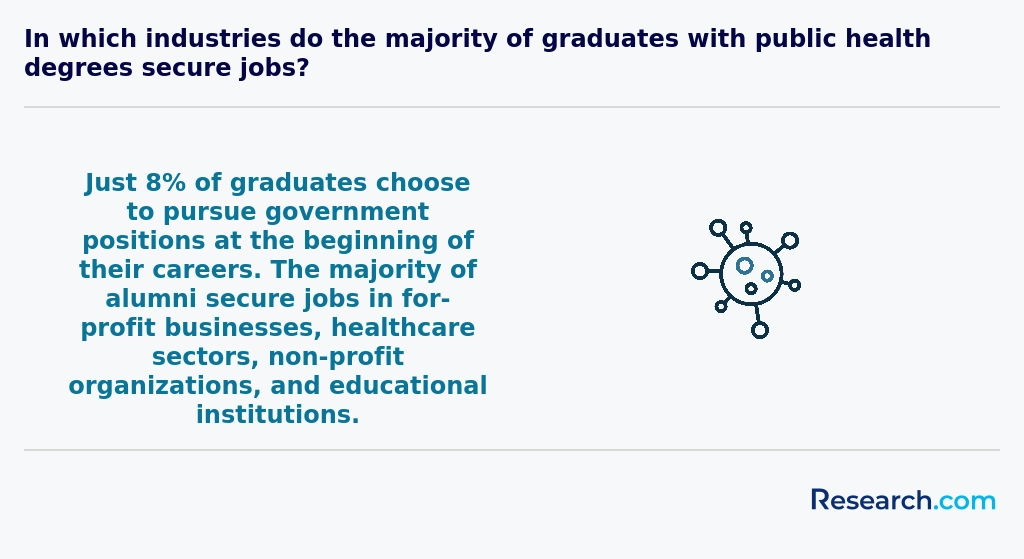
If you're checking out what career paths an online public health degree in Massachusetts can open up, you're in luck! Graduates from places like Boston University or UMass have walked away ready to dive into roles like epidemiology, where they help track down disease outbreaks and figure out how to stop them. It's pretty rewarding work, especially since Massachusetts values this expertise so much.
Others find themselves shaping health education programs that empower local communities to stay healthy-whether that's fighting substance abuse or tackling chronic illnesses. These jobs really connect you to the community, making your work feel meaningful every day. Plus, healthcare administration is booming here, with top hospitals constantly on the lookout for pros who can keep things running smoothly.
Environmental health is another cool field for grads, especially since Massachusetts cares a lot about pollution and workplace safety. And if you're thinking bigger picture, many jump into policy roles, working with government or advocacy groups. If you want to explore options faster, many students explore fast paced online degrees to boost their careers quickly.
With so many choices, public health career opportunities Massachusetts really offers something for everyone interested in making a difference.
The job market for online public health degree jobs Massachusetts is looking pretty bright right now. Graduates from popular schools around Boston often land roles in government health departments, hospitals, or nonprofits focusing on community wellness. Many find the flexibility of online programs a huge plus since they can juggle work and study without moving away from home. For example, grads from well-known Massachusetts universities share how connections to local health agencies helped them secure meaningful jobs right after finishing their degrees.
Salary-wise, things are solid. Health educators and community workers in Massachusetts earn a median of about $62,000 annually-better than the national average-which makes the investment in an online degree feel totally worth it. If you're diving deep into specializations like health policy or biostatistics, you could unlock even higher pay.
With so many options locally, thanks to the state's strong network of healthcare institutions, your career opportunities in Massachusetts look promising. If you want to explore which fields earn the most, checking out the highest paid master's degrees might show where you can maximize your return on investment.
2027 Most Valuable Online Public Health Degree Programs Ranking in Massachusetts
Investing in your education is a significant decision that can shape your future, and the Research.com team understands the importance of making informed choices. To assist prospective students in Massachusetts, we have meticulously crafted the "2027 Most Valuable Online Public Health Degree Programs Ranking in Massachusetts." Our commitment to quality, credibility, and accuracy is reflected in the extensive research and analysis conducted to compile this ranking.
We utilized the following reputable data sources to ensure a comprehensive evaluation of public health programs:
By exploring this ranking, readers will gain valuable insights into the most valuable online public health degree programs available in Massachusetts, helping them make confident, informed decisions about their educational paths. For more details on our methodology, please visit our Research.com methodology page.


# 3 position
UMassOnline
Master of Public Health Practice
Frequently Asked Questions About public health
Online public health degree students in Massachusetts can maximize their learning by actively engaging with their coursework and utilizing available digital resources. Participating in virtual discussions helps deepen understanding and build professional networks. Massachusetts boasts a robust public health system, with a 9.7% projected job growth for public health professionals by 2030 according to the U.S. Bureau of Labor Statistics, making practical application of knowledge essential.
Students should seek internships and remote practicums offered by local health departments or nonprofits, which enhance real-world experience. Leveraging Massachusetts' extensive public health data, such as reports from the Massachusetts Department of Public Health, can enrich research and projects. Consistent time management and communication with instructors also play key roles in successful online learning.
Emerging niches within the public health field reflect evolving health challenges and technological advances. One significant area is epidemiology with a focus on infectious diseases, particularly after the COVID-19 pandemic underscored the need for skilled disease trackers and data analysts.
Another growing niche is health informatics, where professionals use technology to manage health data and improve healthcare delivery systems. Massachusetts, with its robust healthcare sector, presents strong opportunities in this area.
Environmental health is also gaining attention, addressing pollution and climate change impacts on communities. According to the Massachusetts Department of Public Health, these concerns increasingly influence policy and public programs.
Lastly, maternal and child health remains crucial, as Massachusetts tracks disparities and works to improve equity in health outcomes for these populations.
After completing an online public health degree in Massachusetts, effective job market preparation involves a combination of strategic networking and skill development. Massachusetts has a growing public health sector, with employment in related fields expected to rise by 17% through 2030, according to the Massachusetts Executive Office of Labor and Workforce Development.
Graduates should seek internships or part-time roles in local health departments and nonprofits during or after their studies. These experiences provide valuable industry connections and practical skills.
Professional certification, such as the Certified Health Education Specialist (CHES), can enhance credentials and employability.
Joining state-based public health organizations like the Massachusetts Public Health Association offers access to career resources and events.
Employers in Massachusetts seek public health degree graduates with a strong foundation in data analysis and epidemiology. The ability to interpret health data and develop strategies is critical in addressing local health challenges. According to the Massachusetts Department of Public Health, analytical skills are essential for tracking disease outbreaks and health disparities.
Communication skills are equally valued, as public health professionals must effectively convey health information to diverse communities and policymakers. Leadership and project management abilities also stand out, given the collaborative nature of health initiatives in Massachusetts.
Additionally, knowledge of health policy and law is important because many public health efforts involve regulatory compliance and community advocacy.
Finding internships in Massachusetts relevant to a public health degree involves leveraging both academic resources and local health organizations. Many Massachusetts universities offering online public health programs maintain partnerships with area health departments, hospitals, and nonprofits to facilitate internships. According to the Massachusetts Department of Public Health, over 1,000 internships and volunteer placements are available annually across the state, especially in Boston, Worcester, and Springfield.
Students should also explore opportunities through the Massachusetts Public Health Association, which often lists internships focused on community health and policy advocacy. Additionally, using platforms like Handshake and LinkedIn tailored to Massachusetts employers can connect students with local public health agencies.
An online public health degree can significantly enhance career mobility and advancement opportunities in Massachusetts. The state's healthcare sector is one of the fastest-growing industries, fueled by aging populations and expanding public health initiatives. According to the Massachusetts Department of Public Health, there is an increasing demand for qualified public health professionals, particularly in epidemiology, health policy, and community health roles.
Graduates of accredited online programs gain essential skills valued by employers, such as data analysis and program management. This education often leads to higher earning potential and eligibility for leadership positions within local health departments, hospitals, and nonprofit organizations statewide.
Flexible online degrees also allow working professionals in Massachusetts to upgrade credentials without interrupting their careers, further supporting upward mobility.
Studying for an online public health degree in Massachusetts offers a strong foundation for interdisciplinary roles due to the state's diverse healthcare landscape and emphasis on collaborative education. Massachusetts hosts leading institutions that integrate public health with fields like policy, epidemiology, and healthcare management. This interdisciplinary approach is reflected in curricula that combine quantitative skills with social determinants of health.
According to the Massachusetts Department of Public Health, the state invests heavily in workforce training to address complex health challenges, including chronic disease and health disparities. Online programs emphasize real-world application, preparing students to work across sectors.
Graduates are equipped to contribute in areas such as health policy, data analysis, community outreach, and healthcare administration. This versatility aligns with the demand for public health professionals skilled in multiple disciplines to improve population health outcomes statewide.
Choosing between a thesis and a non-thesis public health degree program in Massachusetts depends largely on your career goals and learning preferences. Thesis programs typically cater to students interested in research or pursuing doctoral studies, requiring original research and writing. Non-thesis options focus more on practical skills and applied knowledge, often including internships or capstone projects.
Massachusetts is home to leading public health institutions, and students benefit from strong connections to local health departments, offering diverse practical experiences. The Massachusetts Department of Public Health reports growing demand for practitioners skilled in policy and community health, often served well by non-thesis tracks.
Consider your time commitment as thesis programs usually take longer due to research requirements. Check specific university offerings for program length, faculty expertise, and career support to make an informed decision.
Students based in Massachusetts seeking to study public health abroad through online programs have several viable options. Many US universities offer global or international public health specializations within their online MPH degrees, allowing students to gain worldwide perspectives without relocating. Additionally, partnerships between Massachusetts institutions and foreign universities sometimes facilitate exchange or dual-degree programs with overseas components.
The Massachusetts Department of Public Health emphasizes the importance of worldwide health challenges, encouraging students to explore global health coursework. According to the Association of Schools and Programs of Public Health (ASPPH), about 40% of accredited public health programs incorporate international health in their curricula, accessible remotely. This flexibility allows Massachusetts residents to access diverse global public health expertise while remaining enrolled locally.
While direct enrollment in international universities might pose visa and residency challenges, online joint and dual degrees remain an effective alternative. These programs equip students with a comprehensive understanding of global health dynamics, crucial for careers in agencies like the CDC or WHO, especially post-pandemic.
Part-time job opportunities in Massachusetts that complement public health degree education are diverse and practical. Many students find roles as community health workers, helping bridge gaps between healthcare providers and residents. According to the Massachusetts Department of Public Health, community health roles are growing as the state prioritizes preventive care and health education.
Another common option is working as a research assistant at universities or hospitals. Massachusetts hosts numerous public health research centers, including those affiliated with Harvard and Boston University, offering students hands-on experience in data collection and analysis.
Additionally, positions in health promotion, such as assisting in vaccination clinics or wellness programs, help students apply their knowledge. The U.S. Bureau of Labor Statistics projects a 13% job growth for health educators through 2031, reflecting demand in Massachusetts and nationwide.
Online public health students in Massachusetts benefit from numerous networking opportunities despite their remote status. Many universities offer virtual events, webinars, and online discussion groups where students can connect with faculty, alumni, and peers. For example, institutions like Boston University and the University of Massachusetts facilitate access to professional organizations such as the Massachusetts Public Health Association (MPHA).
Additionally, Massachusetts hosts one of the highest concentrations of public health professionals in the U.S., with over 120,000 workers in healthcare-related fields (Mass.gov, 2023). This density provides students with potential internship and mentorship connections through online platforms.
Students can also engage in local public health conferences and workshops, many of which offer virtual attendance options. Such events remain important for building relationships with leaders in healthcare, government, and non-profits active in the Commonwealth.
Alumni networks offer vital support for online public health degree students in Massachusetts by fostering professional connections across the state's health sector. These networks provide access to job opportunities, mentorship, and collaborations with experienced public health practitioners. According to the Massachusetts Department of Public Health, strong professional ties can improve career outcomes in the state's growing public health workforce.
Students benefit from alumni events, webinars, and online forums that encourage knowledge sharing and skill development. Additionally, these networks often connect graduates to influential organizations such as Massachusetts General Hospital and the Boston Public Health Commission.
Active alumni involvement enhances practical learning and helps bridge academic study with real-world public health challenges in Massachusetts.
Customizing an online public health degree in Massachusetts allows students to align their education with specific career goals. Many programs offer concentration areas such as epidemiology, health policy, environmental health, or community health promotion.
Students can select electives tailored to their interests, enabling preparation for roles in government agencies, nonprofits, or healthcare organizations.
Massachusetts is home to numerous public health organizations, providing opportunities for virtual internships and networking that complement academic learning.
Some programs also allow flexible scheduling and part-time study, supporting working professionals balancing education with employment.
According to the Massachusetts Department of Public Health, focusing on relevant public health challenges in the state enhances job readiness in a competitive market.
Online public health students in Massachusetts often face challenges related to balancing coursework with professional and personal responsibilities. Given that many candidates are working adults, managing time effectively can be difficult. Additionally, some students report limited access to in-person networking and hands-on practicum experiences, which are crucial in public health training.
Technical issues, such as unreliable internet connections or unfamiliarity with online learning platforms, also present obstacles. According to the Massachusetts Department of Higher Education, around 20% of remote learners encounter connectivity challenges that impact their studies.
Furthermore, navigating licensure requirements when pursuing certain public health careers in Massachusetts can be complex for online students, especially if they study from out-of-state institutions.
With an online public health degree, graduates in Massachusetts can pursue several respected professional certifications to advance their careers. The Certified in Public Health (CPH) credential, offered by the National Board of Public Health Examiners, is widely recognized and suitable for those aiming to demonstrate mastery of core public health knowledge.
Many professionals also obtain certifications in specialized areas such as Certified Health Education Specialist (CHES) or Certified Healthcare Safety Professional (CHSP). These credentials enhance expertise and job prospects in Massachusetts, where public health roles are expanding.
Data from the Massachusetts Department of Public Health highlights growing demand for certified public health practitioners. Pursuing these certifications can help graduates meet qualifications preferred by employers across the state's healthcare and community health sectors.
To write a winning application for an online public health program in Massachusetts, begin by clearly highlighting your commitment to improving community health. Admissions committees value applicants who demonstrate understanding of local public health challenges, such as those documented by the Massachusetts Department of Public Health.
Showcase relevant work experience or volunteer efforts, emphasizing skills like data analysis or health education. Massachusetts has a strong focus on addressing chronic diseases and health disparities, so aligning your goals with these priorities is beneficial.
Craft a concise, well-structured personal statement explaining why an online program suits your learning style and career plans.
Lastly, secure strong letters of recommendation from professionals familiar with your dedication to public health.
Public health careers in Massachusetts reflect broader global trends emphasizing disease prevention, health equity, and emergency preparedness. Globally, public health professionals focus on managing outbreaks, improving access to care, and addressing social determinants of health. According to the Massachusetts Department of Public Health, the state's workforce aligns with these goals, with growing demand particularly in epidemiology and community health roles.
International organizations like WHO highlight the importance of cross-border cooperation, a perspective echoed in Massachusetts' diverse population needs. Online public health degrees here often integrate global health topics, preparing students to address challenges locally and worldwide.
Job growth in public health is expected to increase by 16% nationally through 2031, driven by both global health crises and local public policy initiatives.
Students pursuing an online public health degree in Massachusetts can gain practical experience through internships and fieldwork opportunities with local health departments and nonprofits. The Massachusetts Department of Public Health offers placements that expose students to real-world challenges, such as managing chronic disease prevention programs. Many online programs also partner with community organizations in Boston and Worcester to facilitate hands-on learning.
Besides internships, students may engage in research projects addressing Massachusetts-specific health issues, like opioid addiction or COVID-19 outreach efforts. According to the Massachusetts Public Health Association, nearly 70% of public health jobs require some practical experience, making these opportunities essential for employability.
Volunteering with agencies like the Boston Public Health Commission or hospitals is another way to build skills while studying online. These experiences help students apply theoretical knowledge and develop professional networks within the Massachusetts public health sector.
Choosing the right concentration within an online public health degree program in Massachusetts begins with assessing your career goals and interests. Common concentrations include epidemiology, health policy, community health, and biostatistics. Each area prepares students for specific roles in public health agencies or healthcare organizations.
Consider the state's health challenges and workforce needs. For example, Massachusetts faces a growing demand for professionals skilled in chronic disease prevention and health equity, according to the Massachusetts Department of Public Health.
Review program curricula and faculty expertise to ensure alignment with your goals. Also, check if the program offers practicum opportunities in Massachusetts to gain local experience.
Finally, investigate job placement rates and connections with regional employers to enhance your post-graduation prospects.
- 2027 Most Valuable Online Public Health Degree Programs Ranking in New York
- 2027 Most Valuable Online Public Health Degree Programs Ranking in Pennsylvania
- 2027 Most Valuable Online Public Health Degree Programs Ranking in Maryland
- 2027 Most Valuable Online Public Health Degree Programs Ranking in Virginia
- 2027 Most Valuable Online Public Health Degree Programs Ranking in Ohio
- 2027 Most Valuable Online Public Health Degree Programs Ranking in North Carolina
- 2027 Most Valuable Online Public Health Degree Programs Ranking in South Carolina
- 2027 Most Valuable Online Public Health Degree Programs Ranking in Michigan
- 2027 Most Valuable Online Public Health Degree Programs Ranking in Illinois
- 2027 Most Valuable Online Public Health Degree Programs Ranking in Florida
- Internships for MPH Students https://www.publichealthdegrees.org/careers/internships/
- Dive deeper into public health topics. https://www.apha.org/topics-and-issues
- Public Health Online | Online Public Health Degrees https://www.publichealthonline.org/
- Public Health Jobs | Public Health Jobs in the UK | Publichealthjobs.co.uk https://publichealthjobs.co.uk/
- What do you learn in a bachelor's in public health? | edX https://www.edx.org/resources/what-do-you-learn-in-a-bachelors-in-public-health
- Choosing Your Path: A Comprehensive Guide to MPH Programs in Massachusetts https://masterspublichealth.com/mph-programs-in-massachusetts/
- Public Health Degrees & Careers | How To Work In Public Health https://www.learnhowtobecome.org/medical-health-careers/public-health/
- Young WFPHA Initiative – Empowering Young Public Health Professionals https://www.wfpha.org/young-wfpha/
- The Interdisciplinary Nature of Public Health https://www.cune.edu/news/interdisciplinary-nature-public-health
- Public Health and Community Health Education Degree (PHCH) https://mcla.edu/academics/academic-departments/phch/