
2027 Most Affordable Public Health Degree Programs Ranking in Maryland

Co-Founder and Chief Data Scientist
If you're thinking about pursuing a public health degree in Maryland, this article is here to guide you. The 2027 Most Affordable Public Health Degree Programs Ranking in Maryland was created by the Research.com team of data scientists to help students make informed decisions.
Choosing the right program can shape your future career and impact your community. This ranking highlights affordable options, making it easier to find quality education without overspending.
Getting a public health degree opens doors to meaningful work that benefits society. Reading this article will help you take confident steps toward that goal.
Key benefits of getting public health degree in Maryland
- Salary for public health degree graduates: Graduates in Maryland can expect rewarding salaries, such as $52,610 annually for Community Health Workers and up to $86,710 for Environmental Health Specialists, offering financial stability in meaningful careers.
- Career paths in Maryland: Public health graduates from universities like the University of Maryland find diverse roles in health education, environmental health, and occupational safety, opening many doors to impactful and fulfilling jobs.
- Benefits of online degrees: Earning a public health degree online from institutions such as Johns Hopkins offers flexibility, allowing you to balance work and study while gaining the same respected credentials as traditional programs.
- 2027 Most Affordable Public Health Degree Programs Ranking in Maryland
- What can I expect from public health degree in Maryland?
- Where can I work with public health degree in Maryland?
What can I expect from public health degree in Maryland?
The average cost of a public health degree in Maryland varies depending on the institution and program level. For example, graduates from the University of Maryland, Baltimore, often mention that tuition for a bachelor's degree ranges between $10,000 and $15,000 per year for in-state students. Many appreciate that these costs are balanced by strong internship opportunities with local agencies such as the Maryland Department of Health, which add real-world value beyond the classroom.
At Johns Hopkins University, a leading name in public health education, tuition is higher, typically exceeding $50,000 annually, but students highlight access to cutting-edge research and networking prospects that justify the investment. Many graduates recall that financial planning, combined with scholarships and assistantships, made the experience manageable.
Students recommend researching each Maryland program's specific costs and available financial aid early. Combining this with the practical experience offered through local public health agencies helps maximize career readiness, making the cost a worthwhile investment in a growing field.
Where can I work with public health degree in Maryland?
Graduates with a public health degree in Maryland find rewarding career paths across government, healthcare, nonprofits, and private sectors. Many secure positions within the Maryland Department of Health, where they contribute to disease prevention programs and emergency preparedness initiatives. Graduates from institutions like the University of Maryland often describe the satisfaction of shaping state health policies firsthand.
Healthcare organizations such as Johns Hopkins Medicine and the University of Maryland Medical System hire public health professionals for roles in epidemiology, health education, and program management. Working in these settings, graduates feel empowered by improving patient outcomes and leading community outreach efforts.
Nonprofit organizations dedicated to issues like substance abuse prevention and maternal health frequently seek public health graduates to expand their outreach, a path many from popular Maryland colleges report as personally fulfilling. Additionally, the booming biotech and pharmaceutical sectors offer exciting opportunities in health consulting and data analysis, leveraging Maryland's proximity to national health institutions.
Engaging with local public health challenges gives graduates a deep sense of purpose and connection to their communities, making Maryland a vibrant place to launch a public health career.
Graduates with a public health degree in Maryland, especially from well-regarded programs at institutions like the University of Maryland or Johns Hopkins, often start in roles such as community health workers or health educators. In these positions, you can expect to earn around $52,610 annually for community health workers and approximately $69,790 for health educators, based on U.S. Bureau of Labor Statistics data.
Those pursuing specialized fields like environmental health or occupational health can see even higher salaries. For instance, environmental health specialists in Maryland typically earn about $86,710 per year, while occupational health and safety specialists make close to $85,570. These roles reward advanced skills acquired through master's programs or certifications.
Many recent graduates share that landing a position within Maryland's thriving healthcare institutions or state health departments not only provides competitive pay but also valuable benefits such as comprehensive healthcare and retirement plans, uplifting their overall compensation package.
By building experience locally and leveraging networking opportunities available through Maryland's public health community, graduates often find rewarding, well-compensated roles that reflect their commitment to improving community well-being.
- Maryland hosts reputable public health programs, including Johns Hopkins University, known for its research and education.
- In-state tuition at public universities ranges from $10,000 to $15,000 per year, while private institutions can exceed $40,000 annually.
- Starting salaries for public health graduates in Maryland typically range from $55,000 to $62,000 per year.
- Mid-career professionals often earn more than $75,000 annually, with senior roles potentially reaching six figures.
- Employment in health-related social service jobs in Maryland is projected to grow by about 10% between 2022 and 2032.
- Proximity to Washington D.C. offers valuable internships and fellowships with federal agencies in public health policy and epidemiology.
Completing a public health degree in Maryland typically takes about four years for a Bachelor of Science in Public Health (BSPH) at institutions like the University of Maryland, College Park. Graduates often share how full-time study helped them stay on track while engaging with campus resources and internships that enriched their learning experience.
For those pursuing a Master of Public Health (MPH), the usual commitment is around two years full-time at schools such as Johns Hopkins Bloomberg School of Public Health. Many students balance work and study by opting for part-time or online formats, which may extend the program to three years but offer flexibility. Some accelerated MPH tracks can be completed in 12 to 18 months, providing a faster route to enter the workforce and start making an impact.
Doctoral degrees like the DrPH or PhD in Maryland can take four to six years depending on research demands and personal pace. Graduates from programs at Maryland universities often emphasize the importance of selecting a concentration early and maintaining steady progress to manage time effectively.
Choosing full-time enrollment and utilizing Maryland's online and accelerated options can speed up completion while managing tuition costs and personal commitments effectively.
Embarking on a Public Health degree journey is as much about academic rigor as it is about developing the right mindset and strategies for success. Prospective and current students can benefit immensely from a few expert tips that not only prepare them for their coursework but also enable them to maximize networking and practical experiences throughout their studies. Here are some actionable insights: • Embrace a proactive approach: Start early by familiarizing yourself with program expectations, course materials, and any emerging public health trends. Active participation in lectures, group projects, and discussions helps reinforce your understanding and builds lasting connections with peers and faculty. • Seek practical experiences: Look for internship opportunities, volunteer positions, and community engagement projects that put theory into practice. Hands-on experiences not only bolster your resume but also provide a real-world perspective on the challenges and rewards of the field. • Utilize academic and career support services: Many public health programs in Maryland offer robust career services, mentorship programs, and dedicated tutoring. Leverage these resources to refine your career goals and gain insights into industry expectations. • Focus on skill development: Beyond coursework, sharpen essential skills such as data analysis, critical thinking, and effective communication. These competencies are highly valued in the public health sector and can set you apart in the job market. • Balance flexibility and discipline: Whether you choose an online or on-campus program, maintaining a structured schedule and setting clear goals is key to staying on track. For those exploring online options, consider checking out most affordable online public health schools in maryland to find programs that offer both quality education and the convenience you need. By integrating these tips into your academic plan, you’ll not only excel in your studies but also build a foundation for a rewarding and impactful career in public health.
Choosing between online and on-campus public health degrees in Maryland comes down to your lifestyle and learning preferences. Graduates from the University of Maryland's online program often praise the flexibility, sharing how they managed coursework alongside full-time jobs without commuting stress. This format uses asynchronous classes, perfect for those juggling family or professional commitments. However, successful online students highlight the need for strong self-discipline and effective time management.
In contrast, on-campus programs at institutions like Johns Hopkins University offer immersive experiences through face-to-face interactions, hands-on labs, and community-based practicum opportunities. Students who thrive on direct faculty mentorship and networking find this environment motivating and engaging. These in-person connections can lead to meaningful internships and local public health partnerships.
Cost-wise, Maryland's public universities charge $10,000 to $14,000 annually for in-state students regardless of format, but online learners save on commuting and campus fees. Still, factor in tech expenses and any required on-site sessions when considering your budget and schedule.
The average cost of a public health degree in Maryland varies significantly depending on residency status and the type of institution. For in-state students attending public universities like the University of Maryland, the median total tuition fees for public health programs Maryland is roughly $11,728, which many graduates find manageable compared to out-of-state or private options. Out-of-state students, however, often face tuition costs around $47,040, reflecting the higher charges of attending as a non-resident.
Graduates from Maryland's public institutions often share that the relatively lower tuition allows them to focus more on their education and gain valuable experience without overwhelming financial stress. For example, students at the University of Maryland, Baltimore appreciate the balance between quality and cost, especially in graduate programs like the Master of Public Health. Conversely, private institutions such as Johns Hopkins University, while prestigious, typically have tuition fees close to $60,000 annually, which can be a significant investment but may come with extensive research opportunities and networking advantages.
Considering the average cost of public health degree Maryland, budgeting must also include fees, books, and living expenses. Fortunately, many students find relief through scholarships and assistantships, especially at research-intensive schools. You can explore options such as the most affordable online public health schools in maryland to find flexible and cost-effective alternatives tailored to your situation.

Accrediting bodies and professional credentials ensure your degree is recognized and qualifies you for top roles.
- Council on Education for Public Health (CEPH) accreditation validates program quality, curriculum rigor, and eligibility for federal funding.
- Certified in Public Health (CPH) credential, offered by the National Board of Public Health Examiners, demonstrates mastery of core competencies.
- State or specialty certifications (such as environmental health or health education) expand job prospects and signal expertise.
For those considering a nursing pathway, explore the easiest bsn program as an alternative route to healthcare leadership.
Students pursuing public health degrees in Maryland often rely on a mix of financial aid sources to offset costs, which typically range from $10,000 to $30,000 annually. Applying for the FAFSA is a crucial first step, unlocking access to federal grants like the Pell Grant, which offers up to $7,395 per year for qualifying undergraduates. Many graduates from the University of Maryland School of Public Health recall how this grant eased their financial stress during studies.
State aid through the Maryland Higher Education Commission also plays a key role. Scholarships like the Maryland Community College Promise help students attending community colleges with public health programs reduce tuition expenses significantly. For example, some graduates from Montgomery College report how this scholarship made their pathway to a bachelor's degree in public health much more affordable.
Universities frequently provide merit-based scholarships and assistantships, offering relief through tuition waivers or stipends. Graduate students at Johns Hopkins Bloomberg School of Public Health often benefit from teaching or research assistantships, which help cover living costs while gaining invaluable experience.
Additional support can come from external organizations, including scholarships from the American Public Health Association, and employer tuition reimbursement programs common in Maryland's healthcare and government sectors that help working students advance without overwhelming debt.
To enroll in a public health degree program in Maryland, applicants must typically have a high school diploma or equivalent, such as a GED, especially for undergraduate options. Graduates from institutions like the University of Maryland share that maintaining a competitive GPA-usually above 2.5-can be crucial for securing admission and scholarships.
Strong foundations in biology, chemistry, math, and social sciences during high school are highly recommended; these prepare students for the rigorous coursework in programs such as those at Towson University. For graduate-level programs like the Master of Public Health (MPH) offered by Johns Hopkins Bloomberg School of Public Health, candidates need a bachelor's degree, ideally related to health or social sciences.
Applicants with relevant work or volunteer experience in healthcare settings often feel more confident and competitive, which Maryland graduates emphasize as a career booster. Be aware that standardized test requirements like the GRE are often waived, so checking specific school policies pays off.

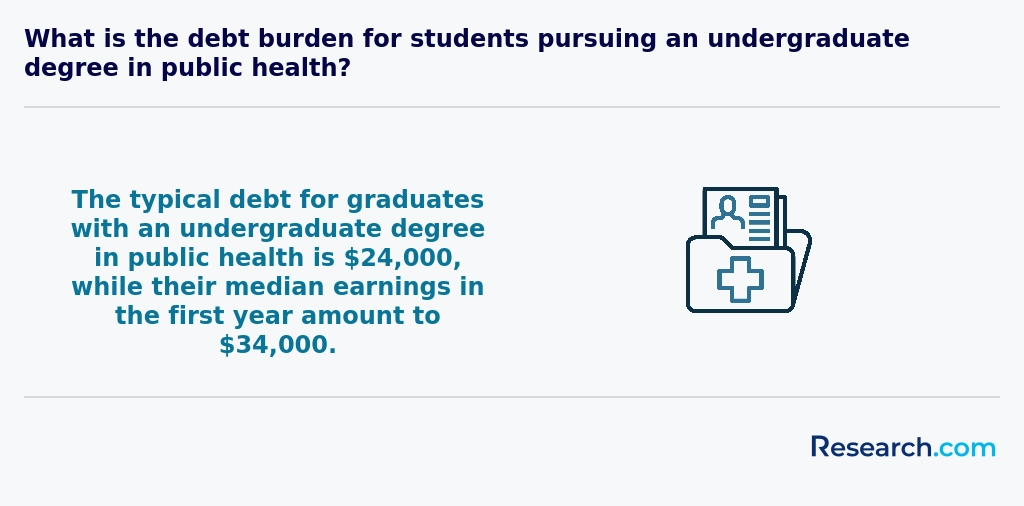
Understanding the return on investment (ROI) for a Public Health degree is crucial when evaluating program affordability. In Maryland, the average total tuition for an MPH ranges from $24,000 to $30,000, depending on residency and institutional fees. Graduates report median entry-level salaries between $49,900 (Community Health Worker) and $83,820 (Environmental Health Specialist), translating to an average first-year income of approximately $70,000. When comparing cumulative tuition and living expenses against starting salaries, most graduates recoup their investment within 3–4 years, significantly faster than many other fields. Breaking down the numbers, a typical graduate with $24,000 in debt and an average salary of $66,710 achieves a 1:2.8 debt-to-income ratio. This favorable balance underscores Maryland’s competitive affordability. For a broader regional perspective, consider our Affordable Online Master's in Public Health Degree Programs Ranking in the Northeast, which highlights comparable programs and their own ROI metrics, allowing prospective students to benchmark Maryland’s offerings against neighboring states. Beyond pure financial calculation, the ROI of a Public Health degree in Maryland includes long-term career growth, professional networking, and leadership opportunities within government, healthcare, and nonprofit sectors. Graduates frequently cite mentorship programs, alumni networks, and on-the-job training as key factors that multiply the value of their education, making an MPH in Maryland not only affordable but also an investment in sustained career advancement.
Students pursuing public health degrees in Maryland typically engage with courses that ground them in practical skills to address real community needs. For instance, graduates from well-known Maryland universities often highlight how Introduction to Public Health courses gave them a clear understanding of health systems' roles in local settings.
Courses like Epidemiology and Biostatistics are pivotal, teaching students to analyze data and track disease patterns, which they apply during fieldwork at Maryland health departments or urban clinics. This hands-on approach creates confidence in outbreak response and data-driven decision making.
Environmental Health classes resonate especially in Maryland, where students study pollution impacts near Chesapeake Bay communities, making lessons highly relevant. Others find Health Policy and Management classes invaluable for navigating the complexities of Maryland's healthcare regulations.
Electives such as Maternal and Child Health and Public Health Informatics help address specific state challenges, equipping students to actively contribute to lowering Maryland's infant mortality rates or improving epidemic tracking systems. Many graduates feel empowered by applying these skills locally, finding their coursework both inspiring and directly useful.
Maryland public health program concentrations offer specialized tracks tailored to the state's unique health landscape. Epidemiology is a notable choice, benefitting from proximity to federal agencies and rich local data resources, enabling graduates to engage directly in outbreak tracking and disease prevention. Students from popular Maryland universities often share how hands-on fieldwork shaped their practical skills and confidence in this specialization.
Health Policy and Management prepares students to lead in diverse healthcare settings, addressing both urban and rural challenges prevalent in Maryland. Graduates frequently highlight their roles in shaping impactful health programs, informed by real-world Maryland healthcare systems. Environmental Health specialization is vital here, considering Maryland's coastal environment and increasing climate-related risks, which graduates actively work to mitigate.
Other concentrations include Global Health, Community Health Education, and Biostatistics. These focus on international health strategies, health literacy campaigns, and data-driven public health decisions, respectively. Students looking for career paths involving technical expertise may find value exploring options related to health information technician salary.
Exploring these public health degree specializations Maryland students choose can significantly enhance your preparedness for a meaningful career in public health.
When choosing the best public health degree in Maryland, start by confirming the program's accreditation through CEPH to ensure quality education recognized by employers. Graduates from universities like Johns Hopkins often share how CEPH accreditation boosted their confidence in curriculum rigor and job readiness. Next, evaluate specializations carefully; whether you're drawn to environmental health at the University of Maryland or health policy at another Maryland institution, picking a focus that matches your passion makes a big difference in your career fulfillment.
Cost is a real concern for many students in Maryland. Public universities usually offer affordable public health programs Maryland with in-state tuition ranging from $8,000 to $15,000, making education more accessible without sacrificing quality. A number of students find that investigating financial aid and scholarships early helps them overcome budget worries. Also, look for flexible formats-online or hybrid models at some Maryland schools have allowed working professionals to successfully balance education with their careers.
Location matters; programs based in Baltimore and College Park give strong community ties and important internship opportunities, key for building practical skills and local networks. Many graduates attribute their successful job placements to these connections. To make informed decisions, also consider program outcomes like graduation rates and alumni support. For budget-conscious students, exploring the Affordable Online Master's in Public Health Degree Programs Ranking in the Northeast can provide valuable insights into cost-effective options.
Graduates with a public health degree in Maryland find diverse public health career opportunities in Maryland due to the region's proximity to federal agencies and renowned universities like the University of Maryland and Johns Hopkins. Many start their careers as epidemiologists, tracking disease outbreaks and supporting the Maryland Department of Health in real-world crisis responses. Others pursue jobs with a public health degree in Maryland by focusing on health education, designing community programs that improve wellness and disease prevention, often partnering with local schools and non-profits.
Environmental health is another thriving path, especially amid Maryland's initiatives to protect Chesapeake Bay. Graduates often work on water quality and pollution control projects, combining scientific research with public safety efforts. Those interested in policy and administration have opportunities managing health services or shaping regulations within state agencies. Many students find that these roles offer meaningful ways to impact community health directly while benefiting from higher wages typical in the area.
For students curious about the costs and potential returns, exploring the highest paying college majors can provide practical insights into aligning education choices with career goals.
The public health job outlook Maryland offers is strong, especially for graduates from well-known institutions like the University of Maryland and Johns Hopkins University. Graduates often find rewarding careers in government agencies or nonprofit organizations, where they feel they directly impact community health. Many share that their hands-on internship experiences within Maryland's public health departments gave them a competitive edge.
Maryland public health career opportunities are diverse, with many roles available in health program coordination, epidemiology, and policy advising. Salaries in Maryland typically range from $57,000 to $65,000 annually, which reflects both the demand and cost of living. Recent graduates highlight that being close to federal agencies like the CDC enhances networking and job prospects.
For students considering how to finance their studies, Maryland's public universities usually charge $12,000-$20,000 per year for in-state tuition, aligning with the national average. Graduates advise carefully evaluating program costs and considering courses that pay well to maximize return on investment in this rewarding field.
2027 Most Affordable Public Health Degree Programs Ranking in Maryland
Investing in your education is a significant decision that can shape your future, and the Research.com team understands the importance of making informed choices. To assist prospective students seeking affordable public health degrees in Maryland, we have meticulously developed the "2027 Most Affordable Public Health Degree Programs Ranking in Maryland." Our commitment to quality, credibility, and accuracy is reflected in the extensive research and analysis behind this ranking.
We utilized the following reputable data sources to ensure a comprehensive evaluation of public health programs:
By exploring this ranking, readers will gain valuable insights into the most affordable and high-quality public health degree options in Maryland, empowering them to make well-informed educational decisions. For a deeper understanding of how this ranking was created, please visit our Research.com methodology page.
# 1 position
University of Maryland Global Campus
Master of Public Health


Frequently Asked Questions About public health
Public health degree students in Maryland can maximize their learning experience by engaging actively with the state's diverse public health resources. Maryland is home to leading institutions like Johns Hopkins Bloomberg School of Public Health, offering extensive research opportunities and practical internships. Participating in Maryland's local health departments, such as the Maryland Department of Health, provides hands-on experience in addressing community health challenges.
Students should also utilize Maryland's strong network of public health professionals and attend local conferences to build connections. Data from the Bureau of Labor Statistics show Maryland's public health workforce is growing, highlighting ample job and volunteer opportunities that enhance learning.
Emerging niches in the public health field reflect evolving health challenges and technological advances. In Maryland, there is growing demand for expertise in health informatics, which combines data analysis and digital tools to improve patient outcomes. According to the Maryland Department of Health, public health data specialists are crucial for managing disease surveillance and health equity initiatives.
Another expanding area is environmental health, focused on reducing pollution-related illnesses in urban and rural communities. Maryland's Chesapeake Bay restoration efforts highlight this need.
Additionally, global health and preparedness for pandemics continue to gain attention, driven by lessons from COVID-19 and the presence of federal agencies in the state, like the NIH.
After earning a public health degree in Maryland, preparing for the job market involves strategic steps to enhance employability. Networking is essential; joining local organizations like the Maryland Public Health Association can connect graduates with employers and professionals. Maryland's public health sector is projected to grow by 13% through 2030, according to the U.S. Bureau of Labor Statistics, emphasizing the need for well-prepared candidates.
Internships and practical experience gained during studies greatly improve job prospects. Maryland universities often provide connections to state agencies and nonprofits focused on health policy and community health. Additionally, obtaining certifications such as Certified Health Education Specialist (CHES) can boost credibility.
Staying informed on regional public health challenges, such as Baltimore's opioid crisis and environmental health issues in Chesapeake Bay, equips graduates to meet employer needs effectively.
Employers in Maryland seek public health graduates who demonstrate strong analytical skills. The ability to interpret data and assess community health trends is crucial, especially as Maryland faces diverse urban and rural health challenges. According to the Maryland Department of Health, skills in epidemiology and biostatistics are highly valued for tracking disease outbreaks and evaluating interventions.
Communication expertise is equally important. Graduates must convey complex health information clearly to varied audiences, including policymakers and the public.
Additionally, employers prioritize cultural competency and knowledge of health equity, reflecting Maryland's commitment to reducing disparities in populations such as Baltimore City and Prince George's County.
Project management and policy development skills also improve employability in sectors like government and nonprofit organizations.
Finding internships in Maryland relevant to a public health degree involves exploring opportunities offered by universities, government agencies, and local organizations. Many Maryland institutions, such as the University of Maryland School of Public Health, support students with internship placements connected to healthcare, epidemiology, and community health programs.
The Maryland Department of Health provides internships in public health research and policy, often posted on their official website. Additionally, nonprofit organizations and hospitals in Baltimore and surrounding areas offer practical experiences that enhance skills in data analysis, health education, and program management.
Students should also utilize statewide platforms like the Maryland Higher Education Commission's internship database for updated listings. Networking through public health conferences and local chapters of the American Public Health Association can increase connections to internship openings. This proactive approach is essential to gain relevant experience in Maryland's growing public health sector.
Obtaining a public health degree in Maryland significantly enhances career mobility and advancement opportunities. The state's robust public health infrastructure, including agencies like the Maryland Department of Health, offers numerous roles for graduates. According to the U.S. Bureau of Labor Statistics, Maryland has a higher-than-average employment level for public health professionals compared to the national average.
Degrees such as the Bachelor of Science in Public Health or Master of Public Health (MPH) provide essential skills in data analysis, policy, and health promotion, valued by employers across government, healthcare, and nonprofit sectors. Maryland's central location and diverse population also enable graduates to gain experience in varied public health challenges, aiding career growth.
Studying for a public health degree in Maryland equips students with skills essential for interdisciplinary roles by integrating coursework from fields such as epidemiology, biostatistics, health policy, and environmental health. Maryland's universities leverage their proximity to federal agencies like the Centers for Disease Control and Prevention (CDC), providing students with practical experiences that connect theory to diverse public health challenges.
Programs emphasize collaboration across disciplines, preparing graduates to work with professionals in medicine, social sciences, and data analysis. According to the Maryland Department of Health, public health efforts increasingly rely on this multidisciplinary approach to address complex health disparities statewide.
Hands-on internships and research opportunities further bridge academic knowledge with real-world applications, enabling graduates to navigate various roles in health departments, community organizations, and research institutions.
Choosing between a thesis and a non-thesis public health degree program in Maryland depends on career goals and learning preferences. Thesis programs typically involve original research and are recommended for students aiming for doctoral studies or research careers. According to the Association of Schools and Programs of Public Health (ASPPH), thesis options often provide deeper research experience.
Non-thesis programs focus more on coursework and practical skills, making them suitable for those planning to enter the workforce quickly or pursue professional roles. Maryland's public health workforce demand is expected to grow 16% by 2028, per the Maryland Department of Labor.
Consider program structure, time commitment, and financial factors when making your choice.
Students based in Maryland who wish to study public health abroad have several pathways available. Many Maryland universities with public health programs, such as the University of Maryland, College Park, offer study abroad opportunities through established partnerships with international institutions. These programs often include semesters overseas, internships, or research projects focusing on global health issues.
Additionally, students can explore exchange programs facilitated by organizations like the Council on Education for Public Health (CEPH), which accredits schools worldwide, ensuring quality education experiences. According to Maryland's Department of Health, global health perspectives are increasingly vital, aligning with the rise in international public health collaborations.
Financial aid and scholarship options may be available specifically for study abroad in public health, helping to offset costs. Overall, Maryland students benefit from institutional support and established global networks to enhance their education through international exposure.
Maryland offers various part-time job opportunities that complement public health degree education, leveraging its strong healthcare infrastructure. Students can seek positions as community health workers, often employed by local health departments or nonprofits, helping deliver health education and resources. These roles provide practical experience aligned with public health principles and emerge as strategic choices; Maryland's Department of Health reports ongoing demand for community-based support.
Internships or part-time roles in hospitals such as Johns Hopkins or the University of Maryland Medical System expose students to epidemiology, health promotion, and data collection efforts. Additionally, Maryland's robust biotech and public health research sectors offer assistantships that develop analytical and communication skills crucial for future careers.
Nonprofit organizations focused on substance abuse and chronic disease prevention also hire part-time aides, reinforcing knowledge in program management and public outreach. Combining work and study in these roles enhances both resumes and practical competence within the local context.
Public health students in Maryland benefit from various networking opportunities that connect them with professionals, peers, and organizations in the field. Universities like the University of Maryland and Johns Hopkins provide access to strong alumni networks and host regular events, such as seminars and career fairs, specifically tailored to public health.
The Maryland Public Health Association (MdPHA) plays an active role, offering conferences and workshops that encourage student involvement and professional engagement across the state. Such events frequently feature Maryland's Department of Health officials, expanding students' direct connections to policymakers and practitioners.
Additionally, Baltimore and surrounding areas have numerous nonprofits and health agencies, creating internships and volunteer roles that serve as practical networking platforms for students.
Alumni networks play a crucial role for public health degree students in Maryland by offering valuable professional connections. Graduates from Maryland institutions like the University of Maryland School of Public Health often remain active in these networks, helping current students access internships and job opportunities within the state's healthcare sector.
These networks foster mentorship, allowing students to gain insights into Maryland-specific public health challenges, such as addressing rural healthcare disparities documented by the Maryland Department of Health. They also provide guidance on navigating licensure requirements and certifications.
Participation in alumni events and online platforms increases students' visibility among Maryland employers, enhancing career prospects. According to a 2023 report from the Maryland Public Health Association, 60% of public health graduates found their first job through alumni referrals.
Customizing a public health degree program in Maryland allows students to align their education with specific career goals. Many Maryland institutions offer concentrations such as epidemiology, health policy, environmental health, and community health. This flexibility helps students focus on areas in demand locally, like chronic disease prevention or healthcare administration.
Students can also choose between practicum opportunities and research projects to gain relevant experience. Maryland's diverse public health needs, tracked by sources like the Maryland Department of Health, highlight emerging fields like opioid addiction treatment and health equity. Tailoring coursework and internships to these trends improves job readiness.
Additionally, some programs support part-time or online options, aiding professionals balancing work and study.
Public health students in Maryland often face challenges related to balancing rigorous coursework with practical experience. Many programs emphasize fieldwork and internships, which require significant time alongside academic responsibilities. Access to diverse clinical placements can be competitive, especially in urban centers like Baltimore.
Financial barriers also affect students, as tuition and living costs in Maryland are relatively high compared to national averages, with the Maryland Higher Education Commission reporting an average annual in-state tuition of around $10,300 for public universities in 2023.
Additionally, students must navigate evolving public health concerns such as infectious diseases and environmental health, requiring continuous adaptation to new information and policies.
With a public health degree in Maryland, graduates can pursue several professional certifications to enhance their career opportunities. One of the most recognized credentials is the Certified in Public Health (CPH) certification offered by the National Board of Public Health Examiners. This certification demonstrates mastery in public health knowledge and skills.
Other relevant certifications include Certified Health Education Specialist (CHES), which focuses on health promotion and education, and Certified Public Health Administrator (CPHA) for those interested in leadership roles. Maryland's public health workforce benefits from these credentials to meet growing community health demands, according to the Maryland Department of Health.
Many employers in Maryland prefer or require such certifications, which can improve job prospects and salaries in local health departments and nonprofit organizations.
To write a winning application for a public health program in Maryland, start by clearly demonstrating your commitment to improving community health. Highlight relevant experience, such as internships, volunteer work, or employment in healthcare or related fields. Maryland hosts strong public health institutions like the University of Maryland, whose applications often emphasize leadership and practical impact.
Focus on crafting a compelling personal statement that connects your goals with Maryland's specific public health challenges, such as addressing disparities in Baltimore or rising chronic diseases statewide. Use current data from sources like the Maryland Department of Health to show your awareness of local public health issues.
Strong letters of recommendation are essential, ideally from professionals familiar with your academic or community work. Finally, ensure your academic records reflect readiness for rigorous graduate study, including relevant coursework in biology, statistics, or social sciences.
Public health careers offer a global outlook, reflecting growing interconnected health challenges such as pandemics, climate change, and health disparities. Professionals trained in the US, including Maryland, often collaborate internationally to address these issues.
Maryland is home to significant global health research organizations, including the Johns Hopkins Bloomberg School of Public Health, which ranks among the top institutions worldwide. This highlights Maryland's role in advancing public health knowledge with a global impact.
According to the Maryland Department of Health, the state's focus on infectious disease control aligns with broader global health priorities. Graduates with public health degrees can pursue careers in international agencies, NGOs, and policy-making bodies, offering diverse opportunities beyond US borders.
Gaining practical experience while studying for a public health degree in Maryland is crucial for building professional skills. Many universities in Maryland offer internship opportunities that connect students with local health departments, nonprofit organizations, and hospitals. For example, the Maryland Department of Health partners with colleges to provide internships focused on community health initiatives.
Students can also participate in service-learning projects or research assistant positions, which are common in Maryland's universities offering public health programs. These experiences allow students to apply classroom knowledge to real-world challenges.
Additionally, attending conferences and joining public health student associations in Maryland can expand professional networks and open doors to practical engagements.
When choosing a concentration within a public health degree in Maryland, consider your career goals and local health needs. Maryland faces unique public health challenges, including high rates of asthma and opioid addiction, as reported by the Maryland Department of Health. Concentrations like epidemiology, community health, or environmental health may align with these issues.
Research each concentration's curriculum and understand the skills you will gain. Also, review faculty expertise and partnership opportunities with Maryland health agencies to enhance practical experience.
Additionally, explore job market trends in Maryland. The Bureau of Labor Statistics notes a steady demand for public health professionals, with specialties in health policy and management trending upward in this region.
- 2027 Most Affordable Public Health Degree Programs Ranking in New Jersey
- 2027 Most Affordable Public Health Degree Programs Ranking in Connecticut
- 2027 Most Affordable Public Health Degree Programs Ranking in New Hampshire
- 2027 Most Affordable Public Health Degree Programs Ranking in Michigan
- 2027 Most Affordable Public Health Degree Programs Ranking in Alabama
- 2027 Most Affordable Public Health Degree Programs Ranking in Arkansas
- 2027 Most Affordable Public Health Degree Programs Ranking in Minnesota
- 2027 Most Affordable Public Health Degree Programs Ranking in Nebraska
- 2027 Most Affordable Public Health Degree Programs Ranking in New Mexico
- 2027 Most Affordable Public Health Degree Programs Ranking in Arizona
- Public Health: A Global Perspective https://www.routledge.com/Public-Health-A-Global-Perspective/Singh/p/book/9781032644226
- Financing Your Degree https://aspph.org/student-journey/financing-your-degree/
- Dive deeper into public health topics. https://www.apha.org/topics-and-issues
- Maryland https://www.publichealthdegrees.org/st/maryland/
- Jobs in Public Health https://www.publichealthcareers.org/jobs/us-md/
- Know more about thesis vs non- thesis: what is the difference? https://studyfans.com/en/blogs/816
- Why Public Health is the Ideal Career Path for Gen Z - Reach Out https://we-reachout.org/why-public-health-is-the-ideal-career-path-for-gen-z/
- Work Experience Opportunities - Everyone Health Careers https://careerseveryonehealth.co.uk/work-experience/
- Public Health - SUM Admission https://admission.sum.edu.pl/public-health/
- Students and Alumni associations - Europubhealth https://www.europubhealth.org/students-alumni-associations/











