2027 Best Online Bachelor's in Finance Degree Programs Ranking in Pennsylvania

Co-Founder and Chief Data Scientist
Exploring finance degree programs online can feel overwhelming, especially when choosing the right fit in Pennsylvania. This article introduces the 2027 Best Online Bachelor's in Finance Degree Programs Ranking in Pennsylvania, crafted by the Research.com team of data scientists to simplify your decision-making process.
By reading this ranking, you'll discover programs that balance quality education, flexibility, and career potential. Whether you're starting fresh or advancing your skills, a finance degree opens doors to exciting opportunities and financial growth. Take this step with confidence toward a brighter future.
Key benefits of getting online finance degree in Pennsylvania
- Finance degree graduates in Pennsylvania can earn attractive salaries, with roles like Financial Advisor averaging $150,670 annually and Financial Analysts earning around $112,950.
- Graduates from Pennsylvania universities often pursue careers as Credit Analysts, Investment Banking Analysts, or Insurance Underwriters, offering diverse opportunities in finance sectors.
- Online finance degrees provide flexible learning schedules, allowing Pennsylvania students to balance work and study effectively while gaining the same valuable skills as traditional programs.
- Key benefits of getting online finance degree in Pennsylvania
- What can I expect from online finance degree in Pennsylvania?
- Where can I work with online finance degree in Pennsylvania?
- How much can I make with online finance degree in Pennsylvania?
- 2027 Best Online Bachelor's in Finance Degree Programs Ranking in Pennsylvania
- Key Findings
- How long does it take to complete online finance degree in Pennsylvania?
- What's the difference between online and on-campus finance degree?
- What is the average cost of online finance degree in Pennsylvania?
- Pros and Cons of Online Finance Degrees in Pennsylvania
- What financial aid is available to online finance degree students in Pennsylvania?
- What are the prerequisites for enrolling in online finance degree program in Pennsylvania?
- Return on Investment (ROI) and Payback Period
- What courses are typically in online finance degree programs in Pennsylvania?
- What types of specializations are available in online finance degree programs in Pennsylvania?
- How do you choose the best online finance degree in Pennsylvania?
- What career paths are available for online finance degree students in Pennsylvania?
- What is the job market for online finance degree in Pennsylvania?
- Related Finance Rankings for Nearby States
- Top Trending Finance Rankings
- See What Experts Have To Say About Studying Finance
What can I expect from online finance degree in Pennsylvania?
The average cost of an online finance degree in Pennsylvania typically ranges between $15,000 and $35,000 for the entire program, depending on the institution and residency status. Graduates from well-known Pennsylvania schools report that this investment reflects the value of flexible learning coupled with access to robust digital resources and career services. For example, students from popular colleges like Temple University or Drexel University often highlight how affordable tuition paired with financial aid options made completing a 120-credit program achievable without excessive debt.
Many learners balance coursework with work or family commitments, expressing satisfaction with tailored academic advising and practical applications that translate directly into real-world finance roles. The opportunity to utilize financial software and participate in simulations without on-campus attendance is frequently appreciated, especially by working professionals.
Moreover, scholarships, state grants, and federal funding can significantly reduce net costs, making an online finance degree in Philadelphia or Pittsburgh economically accessible. Graduates often emphasize their degree's role in securing stable jobs within Pennsylvania's $270,000-strong finance sector.
Where can I work with online finance degree in Pennsylvania?
Graduates with an online finance degree from Pennsylvania universities often secure roles across diverse financial sectors shaped by the state's dynamic economy. Many find rewarding careers in banking hubs like Philadelphia and Pittsburgh, working for institutions such as PNC Financial Services in positions like loan officers, financial advisors, and credit analysts. These roles leverage analytical skills developed during their studies, creating tangible impact in everyday banking operations.
Insurance companies like Erie Insurance also actively hire graduates for underwriting, actuarial analysis, and claims adjustment, roles requiring strong data interpretation and risk assessment capabilities. Public sector finance careers are another common path, with graduates contributing to state and local government budgets, including Pennsylvania's Office of the Budget, applying their financial planning and fiscal analysis expertise.
Corporate finance opportunities abound in Pennsylvania's manufacturing and energy industries, where finance professionals manage budgeting and compliance. Graduates from institutions such as Penn State World Campus and Temple University emphasize how certifications like CFA and CPA complement their degree, elevating their employability in this competitive market.
How much can I make with online finance degree in Pennsylvania?
Graduates from well-known finance programs in Pennsylvania, such as those attending Penn State or Temple University, often find rewarding salary opportunities shortly after completing their online degrees. Entry-level roles like financial analysts or credit analysts generally start with salaries in the range of $82,500 to $94,750 annually in Pennsylvania, based on state-specific data combined with national averages.
Mid-career professionals who advanced through positions such as senior financial analysts or financial advisors typically see substantial increases. Financial advisors in particular have a mean annual wage of $150,670 nationwide, a compelling figure that resonates with graduates aiming for roles beyond entry level.
Many graduates share positive experiences of leveraging certifications like the CFA alongside their degree to access higher-paying roles. Investment banking analysts and financial analysts both report mean salaries around $112,950 annually, highlighting the strong financial sector presence in metropolitan hubs like Philadelphia and Pittsburgh.
Insurance underwriters with a finance background also benefit, earning around $85,610 yearly. For many Pennsylvania graduates, these earnings reflect not just the value of their education but a promising pathway toward financial stability and career growth in the region.
2027 Best Online Bachelor's in Finance Degree Programs Ranking in Pennsylvania
How do we rank schools?
Investing in your education is a significant decision that can shape your future, and the Research.com team understands the importance of making informed choices. To assist prospective students in Pennsylvania, we have meticulously crafted the "2027 Best Online Bachelor's in Finance Degree Programs Ranking in Pennsylvania." Our commitment to quality, credibility, and accuracy is reflected in the extensive research and analysis conducted to compile this ranking.
We utilized the following reputable data sources to ensure a comprehensive evaluation of finance programs:
By exploring this ranking, readers will gain valuable insights into the best online finance degree programs available in Pennsylvania, supporting informed educational decisions that align with their career goals. For more information on how this ranking was created, please visit our Research.com methodology page.
# 1 position
Penn State University Park
Bachelor of Finance


Key Findings
- In-state tuition for online bachelor's in finance in Pennsylvania ranges from $10,000 to $15,000 per year, while private schools can exceed $30,000 annually.
- Early-career finance graduates earn about $57,000 per year, with mid-career salaries rising to $85,000 or more.
- Finance job openings in Pennsylvania are expected to grow by 5% to 7% over the next decade.
- Online finance programs often offer part-time and asynchronous options and are accredited by organizations like AACSB.
- Popular finance sectors in Pennsylvania include banking, insurance, investment management, and corporate finance, mainly in Philadelphia and Pittsburgh.
- Students can access financial aid and benefit from professional networking through virtual fairs, internships, and alumni groups.
How long does it take to complete online finance degree in Pennsylvania?
Completing an online finance degree in Pennsylvania typically takes about four years for full-time students, mirroring traditional on-campus programs. Universities like West Chester University and Pennsylvania State University World Campus report that students usually finish after completing 120 to 130 credit hours. However, timing varies based on individual circumstances.
Many graduates share that flexible scheduling options make balancing work and study feasible, especially when taking courses part-time, which can extend completion to five or six years. Conversely, motivated students often accelerate their pace by enrolling in summer sessions or extra classes per term, finishing in as little as three years.
Transfer credits also help reduce time to graduate, rewarding prior learning and experience. Public university tuition rates averaging $10,000 to $15,000 per year encourage some to pace themselves economically while completing requirements.
Overall, Pennsylvania online finance students feel encouraged by the adaptable timelines, allowing them to progress confidently whether they juggle full-time jobs or seek a swift academic finish.
What's the difference between online and on-campus finance degree?
Online finance degree programs in Pennsylvania offer students flexibility that suits busy professionals or those with family commitments. For example, graduates from Penn State World Campus appreciate the ability to attend lectures and submit coursework on their own schedules, using digital platforms that foster interaction through video calls and discussion boards. Around 14% of undergraduates nationwide take courses exclusively online, reflecting a growing trend toward remote education.
In contrast, on-campus finance degrees at universities like the University of Pennsylvania provide in-person access to campus resources such as finance clubs, career centers, and networking events. Graduates often highlight the value of face-to-face engagement with peers and professors, along with local internship opportunities in financial hubs like Philadelphia and Pittsburgh. However, these programs typically require commuting or relocating, which can increase overall costs beyond tuition.
Tuition tends to be slightly higher for on-campus students, averaging about $15,000 per year at Pennsylvania public institutions, while online degrees may reduce expenses related to housing and commuting, though sometimes add technology fees. Choosing between these options depends largely on personal needs, balancing cost, flexibility, and the desire for direct interaction.
What is the average cost of online finance degree in Pennsylvania?
The average cost of an online finance degree in Pennsylvania is approximately $75,840, reflecting a comprehensive estimation for full program completion. This figure encompasses tuition fees and additional costs typical for students enrolling in popular institutions like Pennsylvania State University World Campus, where graduates often remark on the balance of quality education and expense. In-state students at such public universities benefit from more affordable tuition, usually ranging from $18,000 to $20,000 annually, making the total cost manageable when spread across the duration of a standard 120 to 130 credit-hour program.
Students frequently note that the tuition and fees for finance degree Pennsylvania programs align closely with state-wide averages, with public schools offering competitive pricing compared to private counterparts, which often exceed $30,000 per year. Such pricing dynamics are critical for those planning their educational investments and seeking financial aid options. Moreover, graduates appreciate that online formats can reduce living expenses, a common concern for many prospective students balancing cost and convenience.
One advantage Pennsylvania students find is that many online programs charge uniform tuition rates for both in-state and out-of-state learners, simplifying financial planning and sometimes providing a cost benefit depending on residency. For detailed guidance on affordable options and financing, prospective students may explore the best affordable online master's in finance, which highlights accessible pathways to finance degrees.

Pros and Cons of Online Finance Degrees in Pennsylvania
When weighing an online Finance degree in Pennsylvania, it’s important to consider both the advantages and potential challenges to make a fully informed decision. Pros: • Flexibility and Convenience: Online programs let you study around work and family commitments, with asynchronous lectures and digital discussion forums that fit any schedule. • Cost Savings: Eliminating the need for campus housing or commuting can reduce overall expenses. For insights on cost-effective graduate pathways, see are online mba in finance degree programs affordable. • Diverse Learning Tools: Virtual trading platforms, case-study simulations, and interactive workshops mirror real-world finance environments and enhance practical skills. • Broad Networking Opportunities: Many Pennsylvania institutions host virtual alumni events, mentorship programs, and guest lectures from industry leaders, expanding your professional circle beyond campus. Cons: • Self-Discipline Required: Without set class times, staying on track demands strong time-management skills; falling behind can be easier if you lack an accountability framework. • Limited Face-to-Face Interaction: While digital classrooms are interactive, some students miss in-person networking and spontaneous campus events. • Technology Barriers: Reliable high-speed internet and up-to-date hardware are essential; technical glitches can interrupt learning and require backup plans. • Perception Gaps: Certain employers may still favor traditional degrees, so it’s crucial to choose accredited programs with strong reputation and documented outcomes. By carefully reviewing these pros and cons, prospective students can better assess whether an online Finance degree in Pennsylvania aligns with their learning style, career ambitions, and lifestyle needs.
What financial aid is available to online finance degree students in Pennsylvania?
Students pursuing an online finance degree in Pennsylvania can access multiple forms of financial aid to ease the burden of tuition, which averages $14,340 annually at in-state public colleges. Federal aid plays a crucial role, with Pell Grants offering up to $7,395 based on financial need, significantly helping many students at institutions like Pennsylvania State University.
State support through the Pennsylvania Higher Education Assistance Agency (PHEAA) provides additional relief. For example, the Pennsylvania State Grant can offer up to $5,750, depending on factors such as enrollment and tuition costs. Graduates from schools like Temple University often recall how this grant made a tangible difference in managing expenses.
Many online finance programs in Pennsylvania also provide institutional scholarships, rewarding academic achievement or unique backgrounds like veteran status. Working adults at universities such as Drexel University have benefited from tuition assistance linked to employer partnerships, making continuing education financially viable.
Federal student loans remain an option, offering fixed interest rates and flexible repayments, though graduates advise careful consideration to avoid excess debt. Private scholarships through nonprofits and local organizations add further opportunities, with resources like Fastweb commonly used by students targeting finance.
What are the prerequisites for enrolling in online finance degree program in Pennsylvania?
Enrolling in an online finance degree program in Pennsylvania typically requires a high school diploma or GED with strong academic performance in math and English. Graduates from colleges like Penn State or Temple University recall how foundational skills in these subjects eased their transition into finance coursework. Many programs also look for a minimum GPA around 2.5 to 3.0, ensuring students are prepared for the quantitative demands ahead.
While SAT or ACT scores were once critical, Pennsylvania institutions increasingly embrace test-optional policies, especially for online learners, expanding access without sacrificing standards. Applicants often provide letters of recommendation or personal statements to demonstrate motivation and readiness for independent study, reflecting real-life experiences shared by several graduates who valued this holistic approach.
Some universities offer conditional admission or preparatory courses in algebra or economics, helping students bridge knowledge gaps. Financially, students should anticipate average annual costs around $15,000 for public universities in-state, reinforcing the importance of securing tuition funding or aid before enrolling. Reliable internet and suitable technology also remain essential for fully engaging with digital coursework.

Return on Investment (ROI) and Payback Period
Investing in an online Finance degree in Pennsylvania typically involves an average total cost of around USD 41,640. When you weigh this against median starting salaries-such as Credit Analysts at USD 92,180 or Insurance Underwriters at USD 82,990-you’ll find that many graduates achieve a full payback on tuition within two to three years of entering the workforce. Factoring in bonuses, commission structures, and annual raises common in finance roles, this ROI can accelerate: Financial Advisors earning USD 137,740 annually often recoup educational expenses in as little as 18–24 months. Beyond direct salary comparisons, consider the long-term career trajectory: graduates from Temple University and Penn State report average five-year salary growth of 25%–30%, driven by promotions into senior analyst or managerial positions. When modeling your own payback period, include hidden benefits like employer-sponsored certifications and access to alumni mentorship networks that further reduce skill-acquisition costs. For those exploring cost-efficient pathways in neighboring states, our Cheapest Finance Degree Programs Ranking in Iowa offers a useful benchmark. Comparing tuition and post-graduation salaries across regions can sharpen your ROI analysis and highlight hidden savings, such as in-state tuition advantages or lower living expenses. To maximize ROI: • Select programs with strong career-services support to secure internships and job placements quickly. • Leverage stackable credentials (e.g., CFA exam prep courses included in tuition) to boost your market value without extra fees. • Negotiate employer tuition reimbursement early-many Pennsylvania firms cover 50%–100% of online program costs. By proactively calculating your payback period and tapping into ancillary resources, you’ll transform your online Finance degree into both a career catalyst and a sound financial investment.
What courses are typically in online finance degree programs in Pennsylvania?
Online finance degree programs in Pennsylvania typically include courses that build deep expertise in financial accounting, corporate finance, and investment management. Graduates from well-known Pennsylvania universities often highlight how mastering financial statement analysis enabled them to confidently evaluate company performance in real-world consulting projects. Core subjects like financial markets and institutions give students practical insight into the workings of banks and economic systems, which is crucial given Pennsylvania's robust financial services industry.
Students also engage with business statistics and quantitative methods, cementing data skills needed to assess market trends and risks. Those focusing on risk management and insurance gain direct knowledge applicable to Pennsylvania's significant insurance sector, which several alumni found helpful when pursuing careers in that field.
Many programs integrate electives covering fintech innovations and regulatory policies, preparing learners for current industry challenges. At popular state institutions, students appreciate how the curriculum's practical and analytical balance builds confidence to navigate complex financial environments locally and beyond.
What types of specializations are available in online finance degree programs in Pennsylvania?
Online finance degree specializations Pennsylvania students frequently encounter include Corporate Finance, Financial Planning and Wealth Management, Investment Analysis and Portfolio Management, Risk Management and Insurance, Banking and Financial Services, and Quantitative Finance. For example, graduates from popular colleges in Pennsylvania illustrate how a Corporate Finance track helps build skills in budgeting and investment decisions, preparing them for senior roles such as CFOs or financial analysts. Many students pursuing Financial Planning and Wealth Management appreciate learning client advisory for retirement and estate planning, often leading to certifications like CFP.
These specialization options reflect industry demands as Pennsylvania's finance sector supports roughly 400,000 jobs, making targeted skills highly valuable. Graduates from institutions known for comprehensive finance programs express satisfaction in applying quantitative finance techniques to real-world investment and algorithmic trading scenarios. Highlighting the distinction between a finance degree and other paths can clarify career goals; prospective students often seek additional guidance through resources such as the finance vs accounting degree description. This tailored approach improves employability within Pennsylvania's robust financial services market.
How do you choose the best online finance degree in Pennsylvania?
Choosing the best online finance degree in Pennsylvania hinges on accreditation, curriculum, and local market relevance. Graduates from institutions like Temple University or Penn State consistently emphasize the value of regionally accredited programs that prepare students with both theoretical knowledge and practical financial tools. The curriculum should include core areas such as investment management and corporate finance while integrating software applications widely used in Philadelphia's and Pittsburgh's financial sectors.
Cost is a major factor for many. Affordable online finance bachelor's degrees Pennsylvania-wide typically range from $10,000 to $20,000 annually, aligning with national averages near $12,000 for in-state students. Graduates highlight the benefit of financial aid options that control expenses without sacrificing quality. Flexibility is another common theme; asynchronous courses allow working professionals to balance studies with careers effectively.
For those exploring advanced credentials, some students compare options via resources offering affordable online MBA Texas programs to evaluate value beyond undergraduate degrees. Additionally, strong faculty with finance expertise and robust student support services are key indicators of program success, contributing to graduate confidence and strong employment outcomes with median wages around $72,000 in the state.
What career paths are available for online finance degree students in Pennsylvania?
Graduates holding an online finance degree in Pennsylvania commonly pursue roles as financial analysts, investment advisors, corporate finance officers, and risk managers. In cities such as Philadelphia and Pittsburgh, where universities offering online finance degrees are well-regarded, graduates often find opportunities evaluating investments and guiding decisions for businesses and individuals. These professionals benefit from Pennsylvania's strong finance sector, with a median financial analyst wage near $85,000 as of 2023.
Many students from popular Pennsylvania colleges report engaging internships that lead to positions in corporate finance, such as budget analysts or financial managers, where they oversee company finances and strategize profitability improvements. These careers align with a projected 6% statewide growth rate through 2030, supporting positive career outlooks. Banking and insurance sectors also offer abundant opportunities due to their significant economic contribution. Graduates frequently enhance their employability by pursuing certifications, further boosting their potential within the finance job salary range.
Such varied career paths illustrate the tangible benefits of earning an online finance degree in Pennsylvania, where solid job growth and competitive salaries attract ambitious professionals.
What is the job market for online finance degree in Pennsylvania?
The job market for holders of an online finance degree in Pennsylvania remains robust, driven by steady demand in sectors such as financial services, manufacturing, and energy. Graduates from well-regarded institutions across the state often find roles in Philadelphia and Pittsburgh's major corporations, with financial analyst opportunities showing an 8% projected increase through 2032. This data-driven growth underlines the strength of finance career opportunities Pennsylvania 2027 offers to motivated individuals.
Entry-level salaries in the state typically begin between $50,000 and $65,000, improving significantly with experience, certifications, or management responsibilities. Graduates frequently highlight how technical skills like financial modeling and software proficiency learned from Pennsylvania universities enhance their employability and fit for roles involving real-time data analysis.
Many students pursuing an online finance degree appreciate the flexibility to work while studying, helping manage costs effectively. Those weighing financial commitments often explore whether are online mba in finance degree programs affordable, emphasizing the balance between quality education and financial investment.
Frequently Asked Questions About finance
Online finance degree students in Pennsylvania can maximize their learning experience by actively engaging with course materials and participating in virtual discussions. Many programs offer access to financial databases and simulation tools, which are crucial for understanding real-world finance concepts. Students should also take advantage of networking opportunities through online platforms and local Pennsylvania finance organizations to build professional connections.
Balancing studies with professional internships in Pennsylvania's robust financial sector-home to over 30,000 finance-related jobs according to the Bureau of Labor Statistics-can enhance practical skills. Utilizing academic resources like online tutoring and career services also supports success. Staying current with state-specific financial regulations and market trends is essential to remain competitive.
Emerging niches within the finance field reflect shifts in technology, regulation, and economic trends. In Pennsylvania, areas like fintech, sustainable finance, and data analytics are growing rapidly. Fintech combines finance and technology, creating innovative payment systems, blockchain applications, and digital banking solutions. Sustainable finance focuses on investments that support environmental and social governance (ESG), a priority for many Pennsylvania firms following national trends.
Data analytics is becoming essential in finance for risk management and decision-making. According to the Pennsylvania Department of Labor, jobs requiring financial data skills have increased by 12% over the last five years. These niches offer new opportunities for students pursuing online finance degrees in the state.
After completing an online finance degree in Pennsylvania, preparing for the job market involves several strategic steps. First, gaining relevant experience through internships or part-time roles is crucial. According to the Pennsylvania Department of Labor, finance sector jobs are expected to grow by 5% through 2030, creating promising opportunities.
Networking plays a vital role; joining local chapters of organizations like the CFA Institute or Pennsylvania Society of CPAs can provide valuable connections. Additionally, earning certifications such as CPA or CFA can enhance job prospects significantly.
Job seekers should also tailor resumes to highlight analytical and technological skills, as employers increasingly seek candidates familiar with financial software and data analysis.
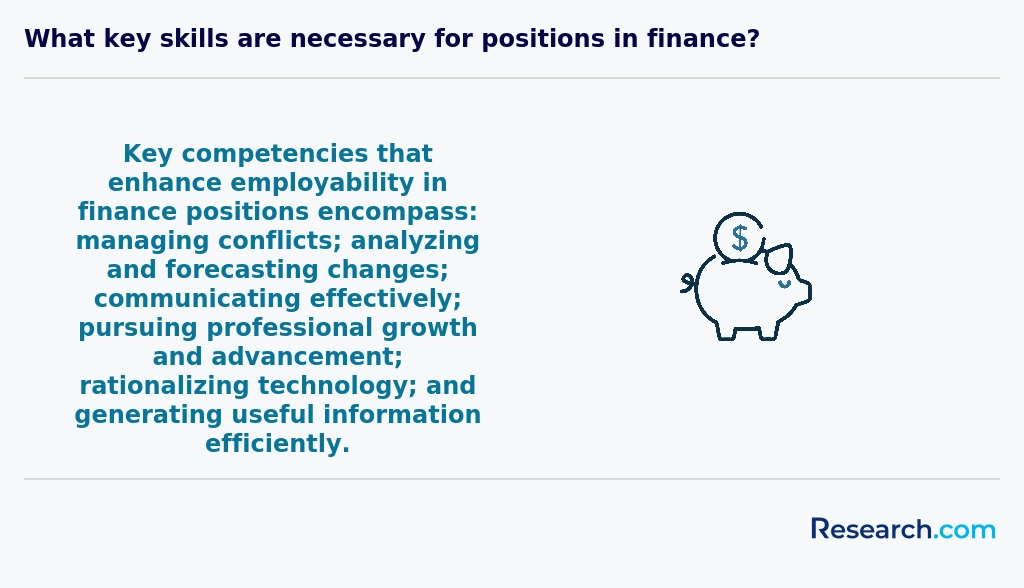
Employers hiring finance degree graduates in Pennsylvania prioritize a blend of technical and interpersonal skills. Strong analytical abilities are essential, as graduates must interpret complex financial data and trends. Proficiency with financial software, including Excel and industry-specific tools like Bloomberg Terminal, is highly valued according to the Pennsylvania Department of Labor & Industry.
Communication skills also rank prominently; employers expect graduates to explain financial concepts clearly to clients and colleagues. Additionally, critical thinking and problem-solving capabilities are crucial for making informed investment and budgeting decisions.
Understanding regulatory compliance and risk management is particularly important within Pennsylvania's robust banking and insurance sectors, supported by data from the U.S. Bureau of Labor Statistics. These skills help grads navigate industry-specific challenges effectively.
Finding internships in Pennsylvania related to a finance degree involves a mix of networking, research, and leveraging local resources. Start by exploring career services offered by your online university, as many have partnerships with Pennsylvania-based employers. According to the Pennsylvania Department of Labor & Industry, top finance sectors include banking, insurance, and accounting firms primarily in Philadelphia and Pittsburgh.
Utilize online job portals such as Handshake and Indeed, filtering for finance internships in Pennsylvania. Additionally, joining finance associations like the Pennsylvania Finance Association can provide networking opportunities and access to exclusive listings.
Local community colleges and universities also organize job fairs and internship programs, which online students may attend remotely or when possible, in person. Staying proactive and connecting with alumni from your program can reveal hidden internship opportunities.
Obtaining an online finance degree in Pennsylvania can significantly impact career mobility and advancement. The state's growing financial sector, including hubs like Philadelphia and Pittsburgh, offers numerous opportunities for graduates. According to the U.S. Bureau of Labor Statistics (BLS), Pennsylvania's financial analyst roles are projected to grow by 6% from 2022 to 2032, slightly above the national average. This growth indicates a positive outlook for those with formal finance education.
Online programs provide flexible learning, allowing working professionals to upskill without interrupting their careers. Employers increasingly value credentials from recognized online programs, which often include practical coursework relevant to Pennsylvania's market. Additionally, many online degrees align with certifications such as the CFA or CPA, further enhancing advancement prospects.
Networking opportunities and access to local internships through Pennsylvania-based online programs also foster professional growth and job placement.
Studying for a finance degree in Pennsylvania equips students with skills that reach beyond traditional finance roles. Pennsylvania's online programs emphasize interdisciplinary learning by integrating courses in economics, data analysis, and business law. This approach prepares graduates to tackle complex challenges in areas like risk management, corporate strategy, and financial technology.
Many programs align with the Pennsylvania Department of Labor & Industry data, highlighting finance professionals' need for cross-functional expertise. For example, proficiency in data analytics tools is increasingly vital, as 15% of finance roles in the state require strong quantitative skills.
Moreover, Pennsylvania's financial sector, including banking hubs in Philadelphia and Pittsburgh, demands professionals able to collaborate across departments, making interdisciplinary training essential.
When choosing between a thesis and a non-thesis finance degree program in Pennsylvania, consider your career goals first. Thesis programs typically involve original research and a written dissertation, preparing students for roles in research or graduate study. Non-thesis options focus more on practical skills and coursework, which suit those aiming for immediate employment.
Pennsylvania's finance sector, with over 350,000 employees as reported by the Bureau of Labor Statistics in 2023, demands both analytical and practical skills. Thesis programs can enhance critical thinking, while non-thesis programs offer flexibility and faster completion. Accreditation and program format are also important factors.
Students based in Pennsylvania seeking to study finance abroad have several online options through US institutions offering global partnerships. Many Pennsylvania universities collaborate with international schools, allowing students to complete part of their finance degree via online courses from partner universities worldwide.
Programs accredited by bodies like AACSB ensure global recognition of finance degrees earned online. According to the National Center for Education Statistics, about 35% of Pennsylvania undergraduates enrolled in online courses in 2022, indicating growing acceptance of remote study models that support international exposure.
Several Pennsylvania colleges offer study abroad virtual internships and online global finance modules, providing practical international experience without leaving home. These are especially valuable given ongoing travel restrictions and cost considerations.
While direct enrollment in foreign universities often requires physical relocation, Pennsylvania students can leverage online exchanges or dual-degree programs to gain insights into international finance markets.
Students pursuing online finance degrees in Pennsylvania can benefit from various part-time jobs that build relevant skills. Positions such as accounting clerks, bank tellers, and financial assistants not only provide practical experience but also expose students to Pennsylvania's financial industry standards. According to the U.S. Bureau of Labor Statistics, Pennsylvania had over 15,000 bookkeeping, accounting, and auditing clerks employed in 2023, many of whom work part-time.
Internships in local credit unions or financial advisory firms are also valuable, often offering flexible hours. These roles help students apply classroom knowledge to real-world financial scenarios, improving both analytical and customer service skills.
Additionally, roles in data entry or administrative support within finance departments can enhance attention to detail and familiarity with financial software commonly used in Pennsylvania businesses.
Online finance students in Pennsylvania have several networking opportunities that can enhance their educational and professional experiences. Many universities in Pennsylvania offer access to virtual career fairs and alumni networks, connecting students with finance professionals statewide. For example, the Philadelphia Financial Planning Association and the Pennsylvania CFA Society frequently host events open to students, providing avenues to meet industry experts.
Additionally, online programs often encourage participation in internships at financial firms in cities like Philadelphia and Pittsburgh, hubs for banking and investment services. According to the Pennsylvania Department of Labor & Industry, the finance sector in the state employs over 250,000 people, highlighting rich opportunities for connections.
Students can also join online forums and LinkedIn groups specific to Pennsylvania finance professionals to grow their networks remotely, a critical advantage for online learners aiming to enter the state's competitive job market.
Alumni networks offer significant advantages to students pursuing online finance degrees in Pennsylvania. These networks connect current students with graduates working in various sectors of Pennsylvania's robust financial industry, including banking and investment firms centered in Philadelphia and Pittsburgh.
Through alumni networks, students can access mentorship opportunities, gaining insights into local job markets and career pathways specific to Pennsylvania's economy. According to the Pennsylvania Department of Labor, finance-related employment in the state grew by 3.2% over the past five years, highlighting expanding opportunities.
Moreover, many alumni share exclusive internship and job openings, giving online students a competitive edge despite geographic distance. Networking events and online forums sponsored by Pennsylvania universities also facilitate professional growth and industry connections, crucial for career advancement in finance.
Customizing an online finance degree in Pennsylvania allows students to align their education with specific career goals. Many state universities offer concentration options such as financial analysis, investment management, or risk assessment. These specializations help deepen expertise in targeted fields.
Students can often choose electives related to Pennsylvania's strong banking and insurance sectors, which employ over 150,000 residents combined, according to the Pennsylvania Department of Labor and Industry. This elective flexibility supports practical skill development tailored to local job markets.
Additionally, some programs include capstone projects or internships with Pennsylvania-based firms, giving real-world experience and networking opportunities. Advisors encourage students to select courses that enhance both technical skills and regulatory knowledge relevant to Pennsylvania's finance industry.
Online finance students in Pennsylvania often face challenges related to balancing coursework with personal and professional responsibilities. Many learners juggle jobs and family, which can make synchronous class sessions and deadlines difficult to meet.
Access to state-specific financial data and internship opportunities is another concern. Pennsylvania's finance sector, including banking hubs like Philadelphia and Pittsburgh, demands practical experience, which is sometimes harder to obtain remotely.
Technical issues and the need for digital literacy are common hurdles. Reliable internet and familiarity with online platforms are essential but not always guaranteed for all students.
According to the Pennsylvania Department of Education, retention rates for online programs are lower than traditional formats, highlighting engagement challenges.
With an online finance degree from Pennsylvania, graduates can pursue several respected professional certifications to enhance their careers. Popular options include the Chartered Financial Analyst (CFA) designation, which requires passing a series of exams focused on investment management and financial analysis.
Another valuable certification is the Certified Financial Planner (CFP), designed for those interested in personal financial planning and wealth management.
The Financial Risk Manager (FRM) credential is well-regarded for professionals aiming to specialize in risk assessment and control.
These certifications are nationally recognized and can open opportunities in Pennsylvania's strong finance and banking sectors, including Philadelphia and Pittsburgh, where financial services are significant employers (U.S. Bureau of Labor Statistics, 2023).
Writing a winning application for an online finance program in Pennsylvania begins with a clear demonstration of your career goals in finance and how the program aligns with them. Highlight experiences relevant to finance, such as internships, jobs, or volunteer work, to show practical knowledge beyond academics.
Ensure your personal statement addresses why you chose Pennsylvania schools, noting the state's growing finance sector, which employed over 380,000 people in 2023 according to the Pennsylvania Department of Labor & Industry. This connects your ambitions to local economic trends.
Submit strong academic records and standardized test scores if required. Letters of recommendation from finance professionals or professors further strengthen your profile, demonstrating your commitment and potential.
The global finance career landscape values professionals who understand international markets, risk management, and financial regulations. For students in Pennsylvania pursuing an online finance degree, this means gaining skills applicable both locally and globally. According to the U.S. Bureau of Labor Statistics, finance-related roles are expected to grow 17% nationally from 2022 to 2032, reflecting strong demand worldwide.
Many Pennsylvania graduates find opportunities in multinational corporations and financial hubs like Philadelphia and Pittsburgh. Knowledge of global economic trends and compliance with international standards enhances employability.
Understanding global finance helps graduates navigate cross-border investments and currency fluctuations, critical for success in today's interconnected economy.
Students pursuing an online finance degree in Pennsylvania can gain practical experience through internships offered by local financial institutions. Many Pennsylvania universities maintain partnerships with banks and investment firms in cities like Philadelphia and Pittsburgh, providing virtual or in-person opportunities. According to the Pennsylvania Department of Labor & Industry, finance and insurance jobs grew by 6.2% statewide from 2018 to 2023, increasing internship availability.
Additionally, universities often encourage involvement in finance-related student organizations and case competitions. These activities simulate real-world financial problem solving and networking, essential skills employers seek. Students can also use Pennsylvania's robust online resources, such as access to Bloomberg terminals through university licenses, to practice financial analysis.
Choosing the right concentration within an online finance degree program in Pennsylvania requires evaluating your career goals and local market trends. Popular concentrations include corporate finance, investment analysis, and financial planning. Pennsylvania's strong banking and insurance sectors suggest these areas offer growing job opportunities, as reflected by the Bureau of Labor Statistics, which reports finance-related jobs growing by 5% statewide through 2031.
Consider programs' curriculum alignment with industry certifications such as CFA or CFP, which enhance employability in Pennsylvania's competitive finance job market. Investigate faculty expertise and alumni outcomes to ensure quality education tailored to regional economic demands.
Related Finance Rankings for Nearby States
Top Trending Finance Rankings
See What Experts Have To Say About Studying Finance
Read our interview with Finance experts

Jason James Sandvik
Finance Expert
Assistant Professor of Finance
University of Arizona

Ekaterina Potemkina
Finance Expert
Assistant Professor of Finance
Indiana University

H. Kent Baker
Finance Expert
Professor at Department of Finance and Real Estate
American University

References
- Finance https://www.commonwealthu.edu/academics/programs/finance-concentration
- Finance https://www.stvincent.edu/academics/undergraduate-programs/programs/finance.html
- Upgrade to Global Finance Major: What It Is & Why It Matters https://pages.riley-eyewear.com/riley-eyewear/global-finance-major-what-it-is-and-why-it-matters-1767646948
- How to write a cover letter for a finance job | Standard Chartered https://www.sc.com/en/news/careers-about-standard-chartered/cover-letter-for-a-finance-job/
- London: J.P. Morgan, Finance and Technology Work Experience Day - Event on Fri, December 2, 2022 https://uptree.co/events/jp-morgan/3511313523/
- Top 10 Accounting and Finance Skills Employers Want | Tamarack Recruiting | Tamarack Recruiting https://tamarackrecruiting.com/top-10-accounting-and-finance-skills-employers-want-tamarack-recruiting/
- Online Bachelor's Degree: Finance https://www.umgc.edu/online-degrees/bachelors/finance
- Top Accounting Skills to Land Finance and Accounting Jobs https://www.kbwfinancial.com/top-skills-for-accounting-and-finance/
- Online bachelor's in finance degrees | edX https://www.edx.org/bachelors/online-bachelors-degree-finance
- Best Finance Degrees Online | Accounting.com https://www.accounting.com/degrees/finance/bachelors/best-online-programs/