2027 Easiest Online Bachelor's in Emergency Management Degree Programs Ranking in the South

Co-Founder and Chief Data Scientist
Finding the right online emergency management degree program can feel overwhelming, especially with so many choices available in the South. This article introduces the 2027 Easiest Online Bachelor's in Emergency Management Degree Programs Ranking in the South, created by the Research.com team of data scientists. It's designed to help you make an informed decision about which programs offer great opportunities without unnecessary hurdles.
By exploring this ranking, you'll discover programs that fit your lifestyle and goals, making it easier to start or advance your career in a vital and rewarding field. Pursuing a degree in emergency management can open doors to meaningful work that truly impacts communities.
Key benefits of getting online emergency management degree in the South
- Emergency management graduates in the South can pursue careers such as Emergency Management Directors, with a mean annual wage around $76,000, offering a rewarding and stable income.
- Career paths include roles in public safety, disaster response, and homeland security, exemplified by graduates from popular Southern universities like the University of Georgia, opening diverse opportunities to serve communities.
- Online degrees from institutions like Texas A&M provide flexible schedules, allowing students to balance work and studies while gaining the same valued credentials as traditional programs.
- Key benefits of getting online emergency management degree in the South
- What can I expect from online emergency management degree in the South?
- Where can I work with online emergency management degree in the South?
- How much can I make with online emergency management degree in the South?
- 2027 Easiest Online Bachelor's in Emergency Management Degree Programs Ranking in the South
- Key Findings
- How long does it take to complete online emergency management degree in the South?
- What's the difference between online and on-campus emergency management degree?
- What is the average cost of online emergency management degree in the South?
- What financial aid is available to online emergency management degree students in the South?
- What are the prerequisites for enrolling in online emergency management degree program in the South?
- What courses are typically in online emergency management degree programs in the South?
- What types of specializations are available in online emergency management degree programs in the South?
- How do you choose the best online emergency management degree in the South?
- What career paths are available for online emergency management degree students in the South?
- What is the job market for online emergency management degree in the South?
- Top Trending Emergency Management Rankings
What can I expect from online emergency management degree in the South?
The average cost of an online emergency management degree in the South typically ranges from $10,000 to $25,000 per year for in-state students, based on tuition rates from prominent universities such as the University of South Carolina and Texas A&M. Graduates frequently highlight the value received, noting flexible schedules that allow them to balance work, family, and academics while gaining practical skills relevant to the South's unique disaster profile.
Many programs are accredited by the Southern Association of Colleges and Schools Commission on Colleges (SACSCOC), ensuring that tuition invested translates to quality education and career-ready credentials. Students often appreciate the integration of case studies and simulations reflecting hurricanes and flooding, providing tangible contexts that make learning immediately applicable to regional emergencies.
Graduates report that despite tuition costs, the program's alignment with local agencies-often via internships or practicum placements-enhances employability and professional networking in an expanding job market with a 5% annual growth rate reported by the Bureau of Labor Statistics for Southeastern states.
Where can I work with online emergency management degree in the South?
Graduates from online emergency management programs at Southern institutions-such as the University of South Florida and Texas A&M University-find diverse career paths across public, private, and nonprofit sectors. Local and state governments frequently hire these graduates as emergency management coordinators or directors, especially in hurricane-prone states like Florida and Louisiana. In these roles, they develop disaster response plans, manage emergency resources, and lead community preparedness initiatives, directly impacting the safety of millions.
Federal agencies, including FEMA regional offices in the South, employ graduates in disaster response and grant management positions, offering meaningful opportunities to contribute to large-scale emergency operations. Other state entities-like health and fire departments-also seek individuals with specialized training to strengthen response capabilities.
On the private side, companies in insurance, risk assessment, and energy sectors across Texas and Georgia rely on emergency management professionals to protect infrastructure and maintain business continuity amid natural disasters. Nonprofits such as the American Red Cross provide roles focused on volunteer coordination and disaster relief logistics, enabling graduates to make immediate community impacts.
How much can I make with online emergency management degree in the South?
Graduates earning an online emergency management degree in the South often find salaries near or above the national average, reflecting strong regional demand. For example, emergency management directors in Texas earn around $82,000 annually, while those in Florida make close to $80,000. These figures illustrate the rewarding opportunities available to professionals who studied programs at popular Southern institutions, such as the University of Alabama or Texas A&M, where practical disaster response training aligns with regional needs.
Entry-level graduates typically start between $45,000 and $55,000, gaining valuable experience through internships or local government placements common at schools like the University of South Carolina. With certifications like the Certified Emergency Manager (CEM), professionals often see their earnings rise above $90,000, especially when working in larger city governments or federal agencies.
Related roles such as emergency management specialists earn median salaries around $66,000, with Southern states offering between $60,000 and $70,000 depending on local funding. Graduates appreciate this reliable earning potential, matching their passion for community resilience and disaster preparedness.
2027 Easiest Online Bachelor's in Emergency Management Degree Programs Ranking in the South
How do we rank schools?
Investing in your education is a significant decision that can shape your future, and the Research.com team understands the importance of making informed choices. To assist prospective students in the South, we have meticulously developed the "2027 Easiest Online Bachelor's in Emergency Management Degree Programs Ranking in the South." Our commitment to quality, credibility, and accuracy is reflected in the thorough research and analysis conducted to compile this ranking.
We utilized the following reputable data sources to ensure a comprehensive evaluation of emergency management programs:
By exploring this ranking, readers will gain valuable insights into the easiest online bachelor's programs in emergency management in the South, empowering them to make well-informed decisions about their education and career paths. For more information on our rigorous process, please visit our Research.com methodology page.
# 1 position
Anderson University
Bachelor of Homeland Security and Emergency Services: Emergency Services Management


# 4 position
Columbia Southern University
Bachelor of Emergency Management/Emergency medical Services


Key Findings
- Online emergency management bachelor's programs in the South usually require about 120 credit hours and can be completed in four years, with options for faster completion through credit transfers or year-round study.
- Tuition costs range from $15,000 to $30,000 per year, with public universities being more affordable for in-state students compared to private institutions.
- Entry-level salaries for graduates average $45,000 annually, with potential growth to $75,000 or more in senior or specialized emergency management roles.
- States like Texas, Florida, North Carolina, and Georgia offer strong job opportunities due to high regional risks and increasing demand for emergency management professionals.
- Programs include practical training such as virtual simulations and local internships to meet certification standards like the Certified Emergency Manager (CEM) credential.
How long does it take to complete online emergency management degree in the South?
Completing an online emergency management degree in the Southern United States generally takes about four years for full-time students, mirroring the typical timeframe for bachelor's degrees nationally. Graduates from institutions like Liberty University and Texas A&M often share that maintaining a steady course load makes this timeline achievable and rewarding. Part-time students or working professionals may see their studies extend to six years or more, balancing coursework with personal and job commitments.
Online programs in the South offer flexibility, allowing many students to accelerate their progress by enrolling in extra courses during summer terms or taking advantage of hybrid options. For example, some students in the University of North Carolina system report completing their degrees in as little as three years due to prior credits or intensive study.
Factors such as transfer credits, program electives, and internship participation influence completion time. Practical experiences with local emergency agencies, while enriching, may require scheduling adjustments but generally do not increase the overall duration significantly.
What's the difference between online and on-campus emergency management degree?
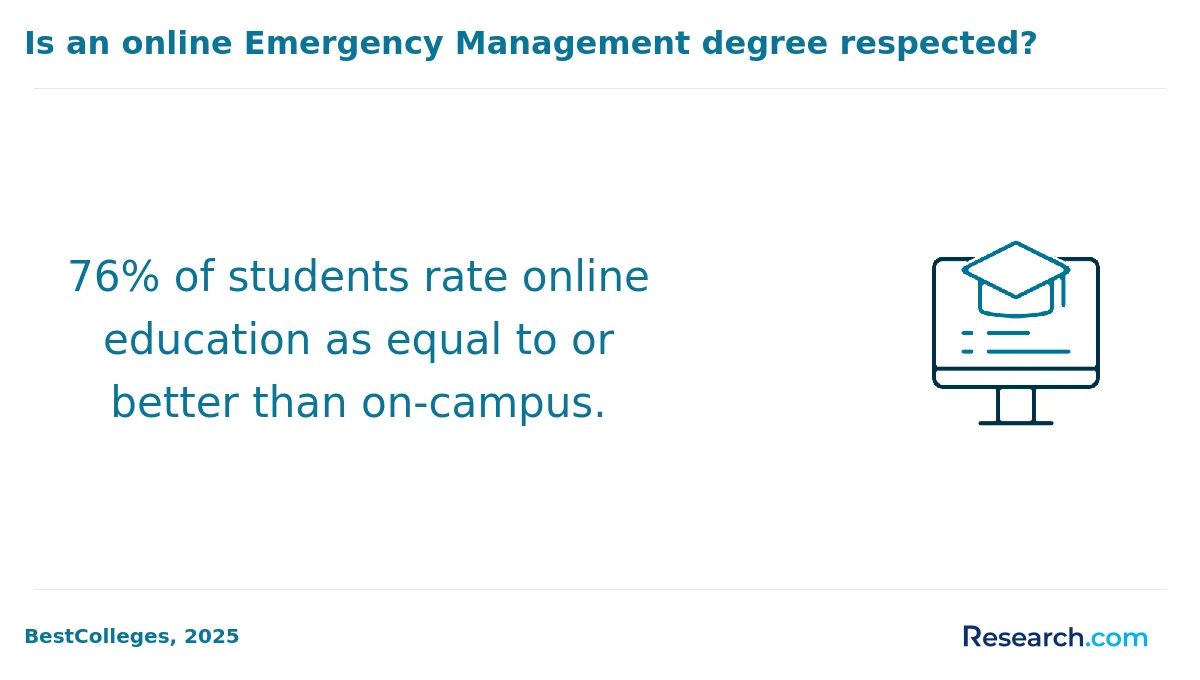
Online emergency management degrees in the South offer flexibility that suits busy professionals and those in rural areas, allowing students to manage coursework around their daily commitments. Enrollment in such programs has grown steadily, reflecting the increased acceptance of distance education. Graduates from online programs appreciate the ability to balance work and study without relocating or commuting.
On-campus programs, like those at Georgia Southern University and the University of North Carolina, provide hands-on experiences with simulation exercises and collaborative projects. Students benefit from direct faculty interaction and access to specialized emergency management labs, which enhance practical skills. Many on-campus graduates highlight the value of networking opportunities with peers and instructors, which can be pivotal for career advancement.
Cost differences also matter. Public in-state tuition in the South generally ranges between $7,000 and $10,000 annually, but online students might save on housing and transport. However, some online programs charge comparable tuition, so prospective students should verify costs carefully. Both formats emphasize key skills in disaster response and crisis communication, but the delivery method shapes the learning experience distinctly.
What is the average cost of online emergency management degree in the South?
The average cost of an online emergency management degree in the South typically falls between $28,000 and $60,000, influenced heavily by whether a student qualifies for in-state tuition or pays out-of-state rates. For many Southern students attending public universities such as the University of North Texas or Middle Tennessee State University, the affordability of these programs makes pursuing an emergency management degree a realistic and positive investment. Graduates often emphasize how the manageable tuition combined with flexible online scheduling enabled them to balance work, family, and studies effectively.
Private colleges in the region generally command higher tuition-ranging from $20,000 to $35,000 annually-with total costs reflecting program length and additional resources. Since most online emergency management programs last around four years, students should anticipate median total expenses near $56,580. Some in the South may find unique pricing structures or flat rates that mitigate costs for non-resident online learners, a noteworthy advantage for those seeking affordable online emergency management programs Southern US.
Out-of-state students often face a significant increase in tuition, sometimes doubling the in-state rate and pushing total costs closer to $98,400. However, financial aid, scholarships, and employer tuition reimbursement programs frequently ease this burden. Many who pursue emergency management degrees online appreciate these support options, citing personal experiences of reduced financial stress. Prospective students can explore accelerated paths or part-time enrollment to better tailor expenses and schedules to their needs.
For those interested in expedited degree options, consider programs like the fastest online master's in emergency management, which may offer additional cost efficiencies while advancing careers in emergency management.

What financial aid is available to online emergency management degree students in the South?
Students pursuing online emergency management degrees in the South often rely on federal financial aid as their primary resource. Completing the FAFSA enables access to grants like the Pell Grant, which for 2023-2024 offers up to $7,395 in non-repayable aid-substantially easing tuition costs typically ranging from $7,000 to $12,000 per year at Southern public universities.
State programs also play a crucial role. For instance, undergraduates at the University of North Texas or Georgia Southern University benefit from state-specific aid such as the Texas Grant Program or Georgia's HOPE Scholarship. These assist with either need-based or merit-based funding, reducing financial barriers for many local students.
Graduates recall how professional scholarships from organizations like the International Association of Emergency Managers provided vital support when balancing work and study. Additionally, employer tuition reimbursement programs help working emergency service professionals manage costs, allowing them to advance their careers without excessive debt.
While private loans remain an option, graduates caution evaluating terms carefully due to varying interest rates.
What are the prerequisites for enrolling in online emergency management degree program in the South?
Enrollment in online emergency management degree programs in the Southern United States typically requires a high school diploma or GED, aligning with general U.S. education standards. Graduates from popular Southern universities highlight how meeting these basic qualifications provided a solid entry point for advancing their careers in disaster response and public safety.
Many programs also expect a minimum GPA around 2.5 on a 4.0 scale, with official transcripts from high school or previous colleges necessary to assess academic readiness. Transfer students must often demonstrate transferable credits, ensuring prior coursework supports the emergency management curriculum.
While standardized tests like the SAT or ACT are less commonly required due to recent trends, some universities in the South may still request them from first-time freshmen. Graduates appreciate how these flexible admission policies reduce barriers while maintaining quality in remote learning.
Relevant experience in public safety or criminal justice can strengthen applications, reflecting the practical nature of emergency management education. Reliable internet access and basic computer skills are critical for success in fully online formats, a reality noted by many students balancing work and study in the region.
What courses are typically in online emergency management degree programs in the South?
Online emergency management degree programs in the South typically include foundational courses such as an introduction to emergency management, covering history, risk assessment, and incident command system (ICS) protocols. Graduates from well-known Southern universities often recount how these classes prepared them to manage complex disaster response scenarios involving hurricanes or floods, common in the region.
Students also engage with disaster preparedness and response planning courses, learning to develop emergency operation plans and coordinate with government agencies. This coursework deeply resonates with those who have experienced severe weather events firsthand, making the training highly relevant and practical.
Many programs emphasize public safety and crisis communication, teaching students to effectively disseminate vital information during emergencies. Leadership and organizational management tailored to high-pressure situations equip learners to lead teams efficiently in real disasters.
Additionally, GIS and data analysis training enhance spatial decision-making skills, which were praised by graduates from Southern colleges for improving their ability to map hazards and plan recovery efforts thoughtfully.
Specialized courses in hurricane preparedness and coastal zone management address Southern states' unique vulnerabilities, inspiring students to build resilience in their communities.
What types of specializations are available in online emergency management degree programs in the South?
Online emergency management degrees in the South typically include specializations tailored to the region's distinct risks and workforce demands. Graduates often choose tracks like Disaster Preparedness and Response, focusing on hurricane evacuation plans and recovery efforts relevant to states such as Florida and Texas. Others concentrate on Homeland Security, addressing urban terrorism threats and cyber attacks prevalent in southern metropolitan areas. These South regional emergency management degree concentrations also include Environmental and Public Health Emergency Management, designed to equip students with skills for handling industrial chemical spills and disease outbreaks common in this heavily industrialized region.
Additionally, Critical Infrastructure Protection is a key specialization, essential for safeguarding energy, transportation, and water systems vulnerable to interruption. Graduates from well-known Southern universities report gaining practical expertise that builds confidence facing real crises. For students seeking affordability without compromising relevance, programs from several institutions in the South offer competitive pricing and in-state tuition discounts. Those interested can explore options for the cheapest online bachelors emergency management, ensuring accessibility along with specialization choices.
How do you choose the best online emergency management degree in the South?
Choosing the best online emergency management degree in the South requires focusing on accredited programs that combine theoretical frameworks with practical applications such as disaster response and crisis communication. Graduates from prominent institutions like the University of South Carolina highlight the value of region-specific training addressing hurricane preparedness and flood mitigation, which enhances their readiness to manage local emergencies effectively.
Cost-efficiency is another key factor; affordable emergency management bachelor programs Southern US typically range between $7,000 to $10,000 annually for in-state students, while out-of-state or online fees may increase significantly. Comparing tuition alongside financial aid opportunities ensures a sustainable investment in education. Flexibility is paramount for adult learners balancing work and family, making asynchronous courses and virtual internships highly desirable features.
Finally, employment trends indicate an 8% growth in emergency management jobs through 2031, amplifying the importance of selecting programs with strong alumni networks connected to local agencies. Prospective students interested in career pathways can explore what can you do with homeland security degree to understand diverse options after graduation.
What career paths are available for online emergency management degree students in the South?
Graduates holding an online emergency management degree in the South often find diverse career paths in government agencies, healthcare, nonprofits, and private sectors. Many secure roles as emergency management directors or coordinators in states like Texas, Florida, and North Carolina, where natural disasters demand skilled leadership. With a median annual wage near $80,000 nationally, these positions offer both financial stability and an opportunity to meaningfully protect communities.
Graduates from popular programs at universities known for practical training frequently report rewarding experiences integrating emergency plans with local law enforcement and fire departments, contributing directly to regional safety. Others work as disaster recovery specialists or risk analysts, helping organizations to rebuild and prepare for future crises. Nonprofit and healthcare sectors also seek these professionals to develop safety protocols and conduct risk assessments.
For students exploring emergency management job opportunities Southern US offers, the affordability and flexibility of regional online programs are significant benefits. Some pursue further specialization through a fastest online homeland security masters to increase their impact and career options.
What is the job market for online emergency management degree in the South?
Graduates holding online emergency management degrees in the South find a robust job market driven by the region's vulnerability to hurricanes, floods, and wildfires. Many Southern universities and colleges offering these programs equip students with practical skills that align with local needs, such as crisis communication and risk assessment. For example, graduates often share positive experiences about how their training prepared them for real-world emergency response roles in Texas and Florida, where natural disasters frequently demand skilled professionals.
The Southern US emergency management career outlook benefits from ongoing investments in disaster preparedness, especially in state and local government agencies, healthcare organizations, and nonprofits. The demand for qualified professionals has translated into steady job opportunities, with salaries in metropolitan areas ranging between $80,000 and $90,000 annually. This promising market is further supported by programs recognized by bodies like the International Association of Emergency Managers, enhancing graduate employability.
The accessibility and affordability of online programs in the South make this career path attractive and achievable. Many students leverage credits from popular institutions while considering options like an online master's in homeland security to expand their skills and increase job prospects. The result is a career pathway grounded in a growing sector with substantial future potential for those pursuing online emergency management jobs in the South.
Frequently Asked Questions About emergency management
Online emergency management degree students in the South can maximize their learning by actively engaging with regional hazard contexts, such as hurricanes and flooding, that are prevalent in states like Florida, Louisiana, and Texas. Understanding local emergency scenarios enhances practical knowledge, which is crucial for future responders. Students should seek programs with internship or practicum opportunities partnering with Southern emergency agencies to gain hands-on experience.
Effective time management and self-discipline are essential for remote learning success. Joining online study groups and discussion forums can improve comprehension and networking. According to FEMA, the South faces unique disaster risks, so connecting with local professionals strengthens career readiness.
The emergency management field is rapidly evolving, with several emerging niches gaining traction, especially in the Southern United States. One significant area is climate resilience planning, driven by the region's increased exposure to hurricanes, flooding, and extreme weather events. According to the National Oceanic and Atmospheric Administration, the South experiences nearly 90% of U.S. tropical storms, making expertise in climate-related disaster preparedness highly valuable.
Another growing niche is cybersecurity in emergency management. As critical infrastructure systems become more connected, protecting these networks from cyber attacks is essential. Agencies in southern states such as Texas and Florida are investing heavily in these skills.
Additionally, public health emergency management has expanded since the COVID-19 pandemic, with many programs emphasizing coordination between health services and disaster response. This combination is crucial in populous Southern metro areas with diverse communities.
Graduates with an online emergency management degree in the South should start by gaining relevant experience through internships or volunteer work with local agencies.
Networking is essential; joining professional organizations like the International Association of Emergency Managers (IAEM) offers access to job listings and regional events. Since the South experiences frequent natural disasters such as hurricanes and floods, familiarity with FEMA procedures and state emergency plans can be a significant advantage.
Many employers value certifications like the Certified Emergency Manager (CEM), which can enhance job prospects and earning potential. Additionally, monitoring labor market trends from the U.S. Bureau of Labor Statistics helps identify high-demand roles in southern states.
Employers in the South seek emergency management graduates who demonstrate strong problem-solving and critical-thinking abilities. These skills are vital as natural disasters such as hurricanes, flooding, and tornadoes frequently impact the region. According to the Southern Regional Education Board, graduates should also possess excellent communication skills to coordinate effectively with diverse agencies and communities.
Technical proficiency with Geographic Information Systems (GIS) and disaster response software ranks high on employer priority lists. Knowledge of federal and state emergency management policies, especially FEMA guidelines, is essential. Additionally, leadership and teamwork skills are crucial, as roles often require managing disaster response teams under pressure.
Understanding cultural competency is particularly important in the South, where communities may have diverse socioeconomic backgrounds. Employers value graduates who can apply inclusive strategies during crises to ensure equitable resource distribution and aid delivery.
Finding internships in the South relevant to an emergency management degree involves targeting local government agencies, nonprofits, and private companies specializing in disaster preparedness and response. Many Southern states, including Texas and Florida, have state emergency management offices offering internship programs for students and recent graduates.
Universities themselves can be useful resources, as they often maintain partnerships with local emergency management departments. Additionally, organizations like the Southern Emergency Management Association provide networking opportunities where students may find internship postings.
According to FEMA, the Southern U.S. sees significant increases in natural disasters, making internships in this region particularly valuable for hands-on experience and professional growth.
Obtaining an online emergency management degree significantly boosts career mobility and advancement opportunities in the Southern United States. The region faces frequent natural disasters, increasing demand for qualified emergency professionals. According to the U.S. Bureau of Labor Statistics, employment for emergency management directors in Southern states is projected to grow faster than the national average through 2030.
Online degrees offer flexible access to accredited programs, enabling students to balance work and study while developing critical skills in crisis response and disaster preparedness. Many Southern employers prioritize candidates with specialized education, often linking higher degrees to managerial roles and salary increases.
This degree can open paths not only in government agencies but also in private sectors like healthcare and infrastructure, which are expanding their emergency preparedness teams.
Studying for an emergency management degree online in the South equips students with skills that span multiple disciplines. Programs typically include training in public safety, environmental science, and communication, reflecting the complex nature of disaster response. This interdisciplinary approach is crucial given the frequency of hurricanes, floods, and wildfires in Southern states, which demands collaboration across government agencies, healthcare, and community organizations.
Students learn to analyze risk from social, scientific, and economic perspectives. According to the U.S. Bureau of Labor Statistics, emergency management roles in the South often require coordination with various sectors, including urban planning and public health. Thus, degree programs emphasize leadership and teamwork, essential for managing diverse stakeholder needs during crises.
Choosing between a thesis and a non-thesis online emergency management degree program in the South depends on your career goals and learning preferences. A thesis program focuses on research and requires students to create an original study, which is ideal if you aim to pursue advanced degrees or roles in policy development. Non-thesis options typically emphasize practical skills and coursework, better suited for professionals seeking immediate application in emergency response and management positions.
In the Southern U.S., where natural disasters like hurricanes are prevalent, programs often tailor content to regional needs. According to FEMA and Southern regional universities, non-thesis degrees tend to be shorter and more applied, supporting quicker workforce entry.
Consider your timeline, interest in research, and long-term plans when deciding between the two formats.
Students in the South interested in studying emergency management abroad face limited direct options for fully online international degrees. Most U.S.-based programs, including those in Southern universities, offer accredited online degrees focused on domestic emergency management principles. However, some students opt for study abroad experiences or international certificate programs to supplement their education. Institutions like FEMA and the Emergency Management Institute provide specialized training recognized nationally, yet these are not abroad per se.
According to the Southern Association of Colleges and Schools Commission on Colleges (SACSCOC), credit transfer and accreditation remain crucial for students considering foreign institutions. Partnerships between Southern schools and foreign universities are rare in this field, making direct international online study less common.
Part-time job opportunities that complement an emergency management degree in the South often include roles in public safety, healthcare, and disaster response organizations. Many local governments in southern states, such as Texas and Florida, hire emergency preparedness assistants or community outreach coordinators. These positions offer valuable experience coordinating resources and supporting crisis communication efforts.
Healthcare facilities also seek part-time emergency planning aides to help develop response protocols, especially following the rise of public health emergencies. According to FEMA, the South experiences nearly 60% of the nation's natural disasters, increasing demand for skilled workers in recovery and mitigation.
Nonprofits and volunteer agencies, including the American Red Cross, often provide flexible opportunities for students to gain practical insights into disaster relief and emergency logistics while continuing their studies.
Online emergency management students in the South benefit from several targeted networking opportunities designed to connect them with regional professionals. Many Southern universities offering these programs maintain partnerships with local emergency agencies and professional organizations, such as the Southern Emergency Management Association. These connections often provide virtual events, job boards, and mentorship programs.
Students also gain access to conferences like the Annual Southeast Emergency Preparedness Summit, which attracts hundreds of practitioners from the region. According to FEMA data, the South experiences frequent disaster events, increasing demand for well-networked graduates. Such networking platforms help students build relationships critical for internships and employment after graduation.
Alumni networks play a significant role in supporting online emergency management degree students in the South. They provide valuable connections to professionals who understand the unique challenges faced in this region, such as hurricane response and flood management.
Many Southern universities maintain active alumni groups that offer mentorship, job opportunities, and local networking events. According to the Southern Association of Colleges and Schools, these networks help improve graduate employability by up to 30% through referrals and industry insights.
Students benefit from access to emergency management professionals who work in Gulf Coast agencies, FEMA regional offices, and nonprofit organizations focused on disaster resilience in the South.
This connection between alumni and students enhances practical learning beyond virtual classrooms and fosters career growth tailored to regional needs.
Customizing your online emergency management degree in the South often begins with selecting electives that align with your career goals, such as disaster response, homeland security, or risk analysis. Many Southern universities offer flexible curricula that let you tailor courses to regional challenges like hurricanes or industrial accidents, relevant to states such as Texas and Florida. Accredited programs may also provide internship opportunities with local agencies, giving practical experience. According to FEMA, emergency management jobs in the South are expected to grow by over 8% through 2030, making specialized training valuable. Always check each program's options to ensure the content fits your future career path.
Online emergency management students in the South often face connectivity challenges due to limited broadband access in rural areas. According to the Federal Communications Commission, nearly 19% of Southern households lack high-speed internet, which can hinder participation in live lectures and timely submissions.
Another common issue is balancing coursework with work and family obligations. Emergency management professionals frequently work irregular hours, complicating class attendance and study time.
Additionally, limited local networking opportunities can affect students' ability to engage with peers and mentors, which is critical in this field. Data from the Southern Regional Education Board highlights this social aspect as a notable barrier.
Finally, variations in state certification requirements for emergency management can create complexity for students planning careers across multiple Southern states.
Graduates with an online emergency management degree in the South can pursue several professional certifications that enhance career prospects. The Certified Emergency Manager (CEM) credential, offered by the International Association of Emergency Managers, is widely recognized and often sought by employers. This certification requires relevant education and work experience, aligning well with an online degree.
Another key credential is the Associate Emergency Manager (AEM), which serves as an entry-level certification. Additionally, the Federal Emergency Management Agency (FEMA) provides Independent Study courses and certificates valuable for understanding federal disaster protocols.
These certifications are especially relevant in Southern states prone to hurricanes and flooding, where expertise in emergency management is critical.
Writing a winning application for an online emergency management program in the South requires clear focus and preparation. Start by highlighting your understanding of local challenges, such as hurricanes or flooding, which frequently impact Southern states. According to FEMA, the Southeast faces 40% of all U.S. disaster declarations, demonstrating the need for skilled professionals.
Include relevant work or volunteer experience in emergency services or public safety. Emphasize any leadership roles and your commitment to community resilience. Academic records should reflect strong performance in related fields like public administration or environmental science.
Finally, craft a compelling personal statement. Explain why you chose online learning and how you plan to contribute to emergency preparedness in the South, referencing regional priorities from sources like the Council of State Governments.
Emergency management careers are increasingly valued worldwide, with a strong focus in the United States on preparedness, response, and recovery from natural disasters. In the South, higher education institutions are expanding online programs to meet growing demand as the region faces hurricanes, floods, and wildfires regularly, according to the National Oceanic and Atmospheric Administration (NOAA).
Globally, emergency management integrates diverse strategies influenced by local risks and resources, but U.S. frameworks often serve as a model for effective coordination. The Federal Emergency Management Agency (FEMA) emphasizes nationwide standards that shape many degree programs, including those offered online in southern states.
Students pursuing online emergency management degrees in the South benefit from curricula aligned with industry certifications and federal guidelines. This prepares them for careers not only regionally but also internationally, responding to complex crises.
Gaining practical experience while studying for an online emergency management degree in the South is essential for career readiness. Many Southern universities collaborate with local emergency services, government agencies, and nonprofits to offer internships that students can complete remotely or in person. This hands-on work allows students to apply theoretical knowledge to real-world scenarios.
The Federal Emergency Management Agency (FEMA) offers training programs and exercises online and locally, helping students build skills relevant to Southern states that frequently face hurricanes and flooding. Additionally, participation in virtual simulations and local community response drills can strengthen practical understanding.
Networking with Southern emergency management professionals through webinars and regional conferences also enhances experiential learning. Such opportunities prepare students effectively for dynamic emergency situations common to the South.
When choosing a concentration within an online emergency management degree in the South, consider your career goals and regional risks. The South faces unique challenges such as hurricanes, floods, and wildfires, making concentrations in disaster preparedness and mitigation highly relevant. According to the Federal Emergency Management Agency (FEMA), states like Texas and Florida receive substantial federal funding for disaster response, highlighting the importance of specialized training in these areas.
Review the curriculum closely to ensure courses align with your interests, such as public health emergencies, homeland security, or crisis communication. Also, verify if the program offers fieldwork or practicum experiences tailored to Southern emergency contexts. Finally, check accreditation to ensure your qualification is recognized by employers and agencies in the region.
Top Trending Emergency Management Rankings
References
- Online Bachelor's in Emergency and Disaster Management https://www.monroeu.edu/academics/undergraduate-programs/school-criminal-justice/online-bachelors-emergency-and-disaster
- Eye-Catching Emergency Management Resume Objective Examples (2025 Guide) https://www.visualcv.com/emergency-management-resume-objectives/
- Alumni Network — Emerging Public Leaders | Building Tomorrow's Decision Makers Today in Africa https://emergingpublicleaders.org/alumni-network
- Disaster Management https://enstitu.gedik.edu.tr/en/non-thesis/disaster-management
- Short Study-Abroad Programs for Emergency and Disaster Management Curricula: Strategies for Implementation https://jsire.org/short-study-abroad-programs-for-emergency-and-disaster-management-curricula-strategies-for-implementation/
- Search icon https://waldorf.edu/degree-programs/bachelors/ba-emergency-management/
- Internship Opportunities with Department of Emergency Management https://sonomacounty.gov/administrative-support-and-fiscal-services/emergency-management/internships
- How to Maximize the Impact of Alumni Networks https://www.careeros.com/resources/how-to-maximize-the-impact-of-alumni-networks
- Emergency Management Degree Online | Training Programs & Information https://www.firescience.org/emergency-management-degree-programs-online/
- Study Emergency & Disaster Management Abroad https://www.emonovo.com/en/fields-type/business-management/emergency-disaster-management