Choosing a Portland counseling master's means choosing a career path, not just a school: the degree that prepares you for school counseling may not meet your goals in mental health practice. This guide compares training, Oregon licensure considerations, costs, and career prospects so you can narrow your options before applying. It also features the 2027 Best Master's in Counseling Degree Programs Ranking in Portland, created by the Research.com team of data scientists to help students make an informed choice about which counseling programs are worth considering.
Key findings about Counseling degrees in Portland
Match the degree to the credential first: Oregon clinical counseling and marriage and family therapy fall under a different licensing board than school counseling. A counseling master's does not automatically qualify a graduate for either license.
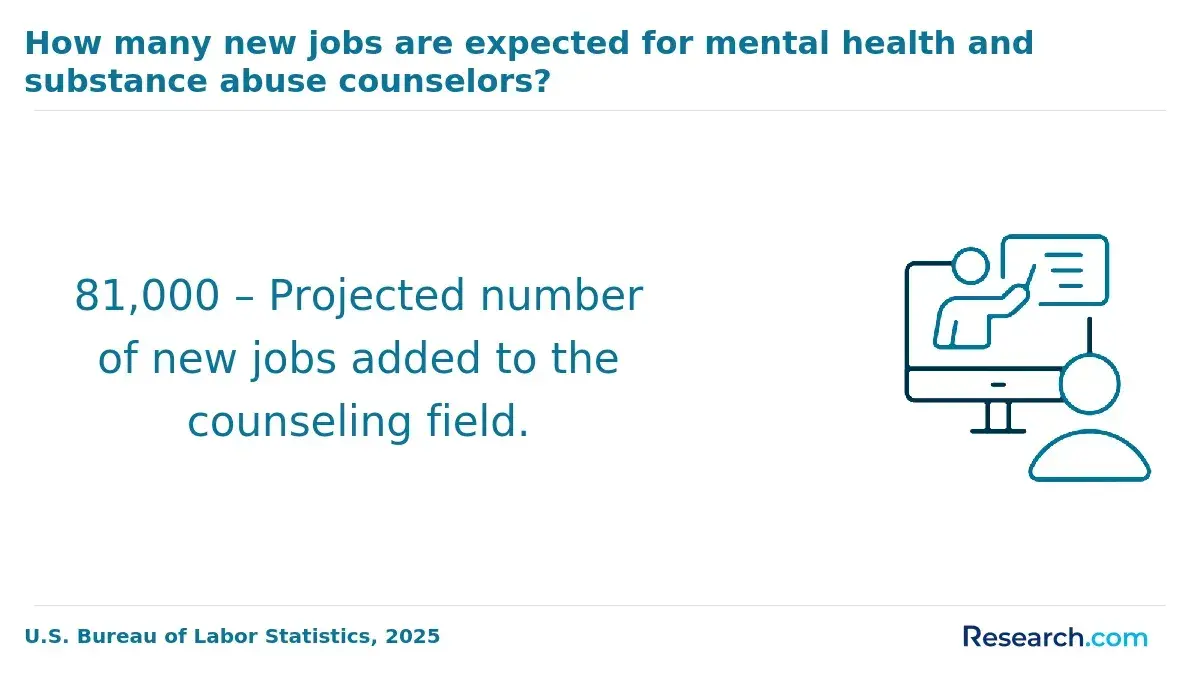
The U.S. median annual wage for substance abuse, behavioral disorder, and mental health counselors was $59,350 in May 2025; national employment in that occupation is projected to grow 18% from 2025 to 2035 (U.S. Bureau of Labor Statistics). These are occupation-wide figures, not Portland graduate outcomes.
Plan for roughly two to three years of master's study, plus any postdegree supervised experience required for licensure. Compare total tuition, fieldwork schedules, and financing - not tuition per term alone.
What can I expect from a Counseling degree in Portland?
A counseling master's combines coursework in assessment, ethics, human development, and counseling methods with supervised practice. Its purpose depends on the track. Clinical mental health counseling prepares students for behavioral health settings; marriage, couple, and family counseling emphasizes relationships and family systems; school counseling centers on students' academic, social, and emotional development; and clinical rehabilitation counseling addresses disability and participation in work and community life.
That distinction has practical consequences in Portland. Portland State University lists separate graduate pathways in clinical mental health, clinical rehabilitation, marriage, couple and family, and school counseling, while Lewis & Clark College and Western Seminary offer other counseling options (institutional program descriptions). Compare the actual curriculum and field placement for your intended role rather than assuming programs with "counseling" in their titles are interchangeable.
Where can I work with a Counseling degree in Portland?
Clinical counselors may seek roles in community behavioral health, health systems, outpatient practices, or substance-use treatment. School counselors work in educational settings; marriage and family therapists may work in clinics or practices serving couples and families. Rehabilitation-focused graduates may work with disability services or vocational programs. Employers and job titles can differ in whether they accept a graduate still working toward independent licensure.
Portland's location also makes a state-line decision important. If a field placement or future job is in Vancouver, Washington, confirm Washington's credential requirements separately rather than assuming an Oregon-focused degree or license transfers automatically (Oregon Board of Licensed Professional Counselors and Therapists; Washington State Department of Health).
National occupation medians provide a benchmark, not a Portland starting salary or a forecast for graduates. The table shows May 2025 U.S. median annual wages for roles related to different counseling tracks; experience, setting, license status, and local employers can change an individual offer (U.S. Bureau of Labor Statistics, Occupational Outlook Handbook).
Career direction
U.S. median annual wage, May 2025
Use when comparing programs
Mental health or addiction counseling
$59,350
Check whether the curriculum fits the clinical role you want.
School counseling
$64,330
Confirm the school-counselor credential pathway, not just the wage.
Marriage and family therapy
$66,940
Compare family-systems training and applicable licensing requirements.
For a personal return-on-investment estimate, compare likely earnings after the degree with what you could earn without it. Include tuition, aid, borrowing, time out of work, completion probability, and the supervised postdegree period before treating a salary benchmark as financially attainable.
The most useful differences among these Portland-area options are their intended practice settings and training approaches - not a claim that one curriculum fits every counseling career. The following distinctions come from the schools' program descriptions; confirm current credits, placement arrangements, accreditation status, and credential eligibility directly before applying.
Portland State University - clinical rehabilitation counseling: Its disability- and rehabilitation-focused pathway is a more targeted fit than a general mental health track for students interested in access, adjustment, and vocational participation. Ask how its field placements connect to the rehabilitation roles you want (Portland State University).
Portland State University - marriage, couple, and family counseling: The program's relationship and family-systems focus distinguishes it from the university's individual clinical counseling pathway. Choose it when couples and families are central to your intended practice, and check Oregon marriage and family therapist requirements separately (Portland State University).
Portland State University - school counseling: This pathway is oriented toward counseling in schools rather than independent clinical practice. It is the relevant comparison for applicants seeking an Oregon school-counselor credential; verify the current educator-licensure route with the program and the Oregon Teacher Standards and Practices Commission (Portland State University).
Lewis & Clark College - mental health master's degrees: The college presents mental health counseling options within its graduate counseling psychology department, including an addiction-focused option. That distinction matters if substance-use work is a priority; compare the specific degree title and supervised training attached to each option (Lewis & Clark College).
Portland State University - clinical mental health counseling: This is the university's pathway directed at clinical mental health practice, rather than rehabilitation, school, or family counseling. It offers a clearer starting point for applicants targeting mental health services who do not want to choose a narrower practice setting at admission (Portland State University).
Western Seminary - M.A. in Counseling: Its program explicitly combines counseling preparation with a seminary setting and identifies CACREP accreditation. That combination may suit students who want faith-integrated study, but applicants should assess whether its approach and current degree requirements fit their intended employers and licensing jurisdiction (Western Seminary; Council for Accreditation of Counseling and Related Educational Programs).
Program popularity answers a different question from professional fit. Use the most popular counseling programs comparison as additional context, not as a substitute for checking a track's credential requirements.
A counseling master's commonly takes about two to three years, depending on enrollment pace and when supervised fieldwork is offered. Part-time study can extend that timeline. Ask for a term-by-term plan: a program that looks shorter by credit count may still require a placement sequence that cannot be compressed.
Graduation is not the end of every licensing timeline. Oregon applicants for professional counselor or marriage and family therapist licensure must meet applicable supervised-experience and examination requirements established by the Oregon Board of Licensed Professional Counselors and Therapists. School-counselor credentialing follows Oregon Teacher Standards and Practices Commission rules instead. Build those steps into your career and earnings plan.
Online study can reduce commuting and make coursework easier to fit around work, but it does not remove in-person counseling practice or supervised fieldwork. An on-campus option may make scheduled classes and interaction with a local cohort simpler. Neither format is inherently more suitable for licensure: curriculum, placement support, and the rules of the state where you plan to practice matter more (Oregon Board of Licensed Professional Counselors and Therapists).
For a Portland applicant considering an out-of-state online program, the crucial question is where and under whose supervision required practice can occur. Get written confirmation that the school can support placements in your intended area and explain how its coursework maps to Oregon requirements. If you may work across the Columbia River, check Washington requirements as a separate step.
There is no single reliable Portland-wide price for these distinct master's tracks. Published tuition may be quoted per credit, term, or academic year, and does not necessarily include fees, books, commuting, or fieldwork-related costs. Public-university residency classification may also change the price you are quoted. For a comparable estimate, request each school's current total required credits and tuition schedule, then include fees and the earnings you may forgo during placements.
A lower sticker price does not always produce the lowest net cost: aid, program length, and whether you can keep working all matter. The most affordable counseling programs comparison can narrow your search, but obtain a program-specific cost estimate before making a deposit.
Start with each institution's graduate scholarships, assistantships, and placement-related support, then compare its offer with federal aid eligibility. Graduate students may qualify for Direct Unsubsidized Loans subject to federal rules; completing the FAFSA is the starting point for an individual determination (Federal Student Aid). Ask whether an award continues throughout the placement-heavy portion of the program, when paid work may be harder to schedule.
Graduate PLUS availability has changed for new borrowers beginning July 1, 2026; limited transitional eligibility may apply to qualifying existing borrowers. Do not build a 2027 enrollment budget around Graduate PLUS without checking your own eligibility and current federal guidance (Federal Student Aid). Borrow only after comparing the remaining funding gap with realistic postdegree earnings and repayment obligations.
View the chart data as a table
Programs by specialization (Source: Research.com)
Category
Value
Clinical Mental Health Counseling
3
Clinical Rehabilitation Counseling
1
Marriage, Couple, and Family Counseling
1
School Counseling
1
Expect programs to require a completed bachelor's degree and an application that may include transcripts, recommendations, a statement of purpose, and an interview. Specific prerequisite courses and selection criteria differ by school; a psychology bachelor's is not a universal requirement. Placement sites may impose additional screening before clinical work begins (institutional admissions and program requirements).
Before applying, ask admissions staff to review your transcript against the specific track, not just the graduate school's general entry rules. If you have prior graduate coursework, request a written transfer-credit evaluation. Accepted credits may reduce coursework without replacing required supervised training or satisfying a licensing board's separate review.
Core study generally covers counseling techniques, ethics, assessment, human development, cultural responsiveness, and research or evaluation. Track-specific coursework does more to distinguish options: school counseling addresses work in educational systems; marriage and family counseling studies relationships and family systems; clinical rehabilitation counseling emphasizes disability-related practice; and clinical mental health counseling focuses on assessment and treatment in behavioral health settings (Portland State University program descriptions).
Read the course sequence alongside practicum and internship requirements. A course title alone cannot show whether the program supplies the supervised experience, placement access, and documented training your intended Oregon credential requires.
Portland-area choices include clinical mental health, school, marriage and family, and clinical rehabilitation counseling; Lewis & Clark also presents an addiction-focused mental health option (Portland State University; Lewis & Clark College). These are not merely elective themes. Selecting one can change your coursework, field placement, and the credential for which you prepare.
If you are undecided between clinical and school settings, speak with both programs before applying rather than assuming you can switch late in the degree. If you know you want substance-use treatment or disability-focused work, compare the relevant specialized curriculum with a broader clinical mental health route and ask whether changing roles later would require additional education.
The best choice is the program that fits your intended credential and practice setting at a cost and pace you can sustain. A ranking is a shortlist tool; the following checks should determine which offer you accept.
Name the job and state. Decide whether your target is Oregon clinical practice, an Oregon school credential, or work in Washington; identify the responsible board before comparing curricula.
Verify the pathway. Ask the program how its current degree, accreditation, coursework, and fieldwork relate to that board's requirements. Keep the answer in writing.
Price completion, not admission. Compare total required tuition and fees, aid, placement-related work limits, likely borrowing, and time until you can pursue your intended credential.
Test the placement plan. Ask where students can complete supervised work, who arranges sites, and what happens if a placement is delayed.
For an additional outcomes-and-cost perspective, review the most valuable counseling programs. Avoid the common mistake of treating a favorable ranking - or CACREP status alone - as proof of individual licensure eligibility; confirm current requirements with the relevant Oregon board.
View the chart data as a table
Best score distribution across ranked programs (Source: Research.com)
Category
Value
88-88
1
89-89
0
90-90
0
91-91
2
92-92
1
93-93
1
94-94
1
The path depends on your specialization and credential stage. A clinical mental health graduate might seek supervised behavioral health work before qualifying for independent practice; an addiction-focused graduate might pursue treatment roles; a school-counseling graduate would focus on education settings. Marriage and family therapy and clinical rehabilitation counseling point toward different client needs and workplaces (Portland State University; Lewis & Clark College; Oregon licensing authorities).
A master's may also support related program-coordination or student-support work, but those jobs may not require a counseling license or pay the same as licensed practice. If your primary goal is a school role, compare school-counselor preparation with other education credentials. If you do not want client-facing supervised practice, a counseling master's may be a less direct investment than a degree designed for the nonclinical role you want.
View the chart data as a table
Projected job growth 2025-2035 by counseling career path (U.S., BLS) (Source: BLS)
Category
Value
Mental Health Counselors
18
Marriage & Family Therapists
14
Postsecondary Teachers
7
Psychologists
6
School & Career Counselors
3
Rehabilitation Counselors
2
All occupations
3
National employment for substance abuse, behavioral disorder, and mental health counselors is projected to grow 18% from 2025 to 2035 (U.S. Bureau of Labor Statistics, Employment Projections). That indicates broader demand for the occupation, but it does not measure Portland vacancies or guarantee a job to a new graduate. School counseling and marriage and family therapy have different occupational outlooks, so use the projection tied to your intended role.
To assess the market you would actually enter, read current Portland-area postings for required license status, specialty, schedule, and experience. Separate positions open to graduates under supervision from those requiring independent licensure. This is especially important if you need to earn while completing postdegree hours - or expect to apply on both sides of the Oregon-Washington border.
2027 Best Master's in Counseling Degree Programs Ranking in Portland
Investing in graduate education is a consequential decision. Research.com created this ranking to help readers compare counseling programs using outcomes, credentials, and cost rather than reputation alone. Its team evaluates the quality and comparability of the underlying data, while recognizing that a ranking cannot determine whether a program meets an individual student's licensing or financial needs.
The Best ranking first scores graduate outcomes and accreditation: program completion accounts for 40%, employment or doctoral admission for 20%, applicable licensure-exam pass rates for 20%, CACREP programmatic accreditation for 16%, and institutional eligibility for federal Title IV aid for 4%. Weights are renormalized when a criterion does not apply. Program cost contributes a smaller component - about 7% of the final score. The same approach applies to online and on-campus programs; rankings named for affordability, popularity, or value order programs by the dimension indicated in their names.
Use the ranking to build a shortlist, then verify current program requirements and your intended licensing pathway with each school. More detail on the ranking approach is available in Research.com's methodology.
# 1 position
Portland State University
Master
Counseling: Clinical Rehabilitation
Delivery mode: campus
94.39
/ 100
Final score
Program length
3 years minimum
Specialization
Clinical Rehabilitation Counseling
Required credits
90 quarter credits
Program completion rate
100% (2024-25)
Employment or doctoral admission
100% (2024-25)
Licensure exam pass rate
100% (2024-25)
Application deadline
January 4, 2027 (final application deadline; materials due February 1, 2027)
Class size
15
Application process
direct
Prerequisites
Bachelor's degree; one upper-division intro to counseling course and one psychopathology course (C or better, within 7 years); may be completed at graduate level after admission.
Additional requirements
Unofficial transcripts, English proficiency, résumé, statement of purpose (three prompts), two recommendations, in-person group interview.
Accreditation
Accredited by the Council for Accreditation of Counseling and Related Educational Programs (CACREP), with institutional accreditation from the Northwest Commission on Colleges and Universities (NWCCU).
Portland State University earned a Research.com Counseling Program Score of 94.39/100, supported by 100% licensure exam pass rate and 100% program completion rate. The program is CACREP-accredited, valid through 2033-10-31.
# 2 position
Portland State University
Master
Counseling: Marriage, Couple, and Family Counseling
Delivery mode: campus
93.43
/ 100
Final score
Program length
3-year minimum
Specialization
Marriage, Couple, and Family Counseling
Required credits
90 quarter credits
Program completion rate
94% (2024-25)
Employment or doctoral admission
100% (2024-25)
Licensure exam pass rate
100% (2024-25)
Application deadline
January 4, 2027
Class size
15
Application process
direct
Prerequisites
Upper-division or graduate introduction to counseling (e.g., COUN 441) and psychopathology (e.g., COUN 430) courses, completed within 7 years with a C or better; otherwise completed at the graduate level early in the program.
Additional requirements
Unofficial transcripts, English language proficiency (if applicable), resume, statement of purpose (three prompts), two letters of recommendation, and an in-person or remote group interview; criminal background check required prior to starting.
Accreditation
Accredited by the Council for Accreditation of Counseling and Related Educational Programs (CACREP), with institutional accreditation from the Northwest Commission on Colleges and Universities (NWCCU).
Portland State University earned a Research.com Counseling Program Score of 93.43/100, supported by 100% licensure exam pass rate and 94% program completion rate. The program is CACREP-accredited, valid through 2033-10-31.
# 3 position
Portland State University
Master
Counseling: School Counseling (M.S.)
Delivery mode: campus
92.32
/ 100
Final score
Program length
3 years
Specialization
School Counseling
Required credits
90 quarter credits
Program completion rate
87% (2024-25)
Employment or doctoral admission
100% (2024-25)
Licensure exam pass rate
100% (2024-25)
Application deadline
January 4, 2027
Class size
15
Application process
direct
GRE
no
Prerequisites
Bachelor's degree; upper-division or graduate intro to counseling and psychopathology courses (within 7 years, grade C or better; may be completed at 500 level in year one); criminal background check before starting.
Additional requirements
Unofficial transcripts, English language proficiency (if applicable), resume, statement of purpose (responses to three prompts), two letters of recommendation, and an in-person/remote group interview (about 1/3 of applicants invited).
Accreditation
Accredited by the Council for Accreditation of Counseling and Related Educational Programs (CACREP), with institutional accreditation from the Northwest Commission on Colleges and Universities (NWCCU).
Portland State University earned a Research.com Counseling Program Score of 92.32/100, supported by 100% licensure exam pass rate and 87% program completion rate. The program is CACREP-accredited, valid through 2033-10-31.
# 4 position
Lewis & Clark College
Master
Master of Arts in Professional Mental Health Counseling
Delivery mode: campus
91.80
/ 100
Final score
Specialization
Clinical Mental Health Counseling
GPA range
3.00 - 4.00
Program completion rate
92%
Employment or doctoral admission
94% (2024-25)
Application process
direct
GRE
no
Prerequisites
Undergraduate degree. Recommended background in psychology and society/culture: psychology major plus a sociology, anthropology, women's or ethnic studies course; a social science major plus intro psychology; or faculty assessment.
Additional requirements
Online application; $50 fee; resume; official transcripts; three short essays (1,250 characters each); three recommendation letters; 3.0 GPA (explanatory statement if below); faculty interview by invitation. GRE not required.
Accreditation
Accredited by the Council for Accreditation of Counseling and Related Educational Programs (CACREP), with institutional accreditation from the Northwest Commission on Colleges and Universities (NWCCU).
Lewis & Clark College earned a Research.com Counseling Program Score of 91.8/100, supported by 92% program completion rate and 94% employment or doctoral admission rate. The program is CACREP-accredited, valid through 2027-03-31.
# 5 position
Portland State University
Master
M.S. in Counseling: Clinical Mental Health
Delivery mode: campus
91.53
/ 100
Final score
Program length
3 years
Specialization
Clinical Mental Health Counseling
Required credits
90 quarter credits
Program completion rate
82% (2024-25)
Employment or doctoral admission
100% (2024-25)
Licensure exam pass rate
100% (2024-25)
Application deadline
January 4, 2027
Class size
15
Application process
direct
Prerequisites
Upper-division or graduate introduction to counseling (e.g., COUN 441) and psychopathology (e.g., COUN 430) courses, completed within 7 years with a C or better, or taken at the graduate level during the first year.
Additional requirements
Unofficial transcripts, English proficiency if applicable, resume showing counseling-related work/volunteer experience, statement of purpose (three prompts), two recommendation letters, and a group interview for about 1/3 of applicants.
Accreditation
Accredited by the Council for Accreditation of Counseling and Related Educational Programs (CACREP), with institutional accreditation from the Northwest Commission on Colleges and Universities (NWCCU).
Portland State University earned a Research.com Counseling Program Score of 91.53/100, supported by 100% licensure exam pass rate and 82% program completion rate. The program is CACREP-accredited, valid through 2033-10-31.
# 6 position
Western Seminary
Master
MA in Counseling – Clinical Mental Health Counseling (Portland Campus)
Delivery mode: campus
88.53
/ 100
Final score
Program length
Graduate in as few as three years (Monday courses, Portland)
Specialization
Clinical Mental Health Counseling
Required credits
68 semester credits
GPA range
3.00 - 4.00
Program completion rate
70.6% (2024-25)
Employment or doctoral admission
95% (2024-25)
Licensure exam pass rate
98%
Application deadline
rolling
Application process
direct
GRE
no
Prerequisites
A Bachelor's degree from an accredited undergraduate institution with a cumulative GPA of 3.0 or higher.
Additional requirements
Completed application and admissions materials, four letters of recommendation, and a virtual interview.
Accreditation
Accredited by the Council for Accreditation of Counseling and Related Educational Programs (CACREP), with institutional accreditation from the Northwest Commission on Colleges and Universities (NWCCU) and the Commission on Accrediting of the Association of Theological Schools (ATS).
Western Seminary earned a Research.com Counseling Program Score of 88.53/100, supported by 98% licensure exam pass rate and 70.6% program completion rate. The program is CACREP-accredited, valid through 2031-03-31.
Frequently asked questions about Counseling degree in Portland
Does a counseling master's automatically qualify me for an Oregon license?
No. Oregon's relevant licensing authority reviews education and other requirements; clinical and marriage and family therapy credentials also involve requirements beyond graduation. School counseling follows a separate educator-credential pathway (Oregon Board of Licensed Professional Counselors and Therapists; Oregon Teacher Standards and Practices Commission).
How long should I budget for a Portland counseling master's?
Plan on roughly two to three years for the degree, with possible additional time for postdegree supervised experience if your goal is independent clinical licensure. Ask each program for a schedule based on your intended enrollment pace.
Can I complete a counseling master's entirely online?
Coursework may be online, but supervised counseling practice still requires an approved placement. Confirm where you can complete it and whether the degree fits the rules of the state where you plan to work.
Is CACREP accreditation required for every counseling job?
No. Its relevance depends on the credential, employer, and jurisdiction. Check the specific program's current accreditation status and ask the applicable licensing authority how it evaluates that degree (Council for Accreditation of Counseling and Related Educational Programs; Oregon licensing authorities).
Should I choose clinical mental health or school counseling?
Choose based on the setting and credential you want. Clinical mental health counseling targets behavioral health practice; school counseling prepares for work within educational systems. Compare placement settings before applying.
Is a counseling master's worth the cost?
It may be if it is the appropriate route to your target role and you can manage the total cost through graduation and any required supervision. Compare your aid-adjusted cost, borrowing, lost earnings, completion prospects, and likely career options - not a national median salary alone.
See What Experts Have To Say About Studying Counseling