2027 Most Affordable Accounting Degree Programs Ranking in Baltimore

Co-Founder and Chief Data Scientist
If you're considering an accounting degree in Baltimore, this article offers valuable guidance to help you navigate your options. The 2027 Most Affordable Accounting Degree Programs Ranking in Baltimore, created by the Research.com team of data scientists, highlights programs that balance quality and cost effectively.
Choosing the right accounting program can open doors to a stable and rewarding career. By exploring this ranking, you'll find affordable paths that fit your goals and budget, making your educational journey both smart and achievable.
Start your future with confidence and clarity through informed choices.
Key benefits of getting accounting degree in Baltimore
- Salary for accounting degree graduates: Graduates in Baltimore can expect competitive salaries, such as a Staff Accountant earning a mean annual wage of $90,780 and a Bookkeeper earning around $49,580. These figures reflect strong earning potential in stable, in-demand roles.
- Career paths: An accounting degree from a Baltimore university opens doors to diverse careers like tax preparation, auditing, and accounts payable, providing flexibility and growth. Graduates often find rewarding opportunities in both public and private sectors.
- Benefits of online degrees: Earning an accounting degree online from a Baltimore-based school offers great flexibility, allowing students to balance work and study. Online graduates often enjoy the same career prospects and salaries as traditional students, making it an empowering choice.
- 2027 Most Affordable Accounting Degree Programs Ranking in Baltimore
- What can I expect from accounting degree in Baltimore?
- Where can I work with accounting degree in Baltimore?
What can I expect from accounting degree in Baltimore?
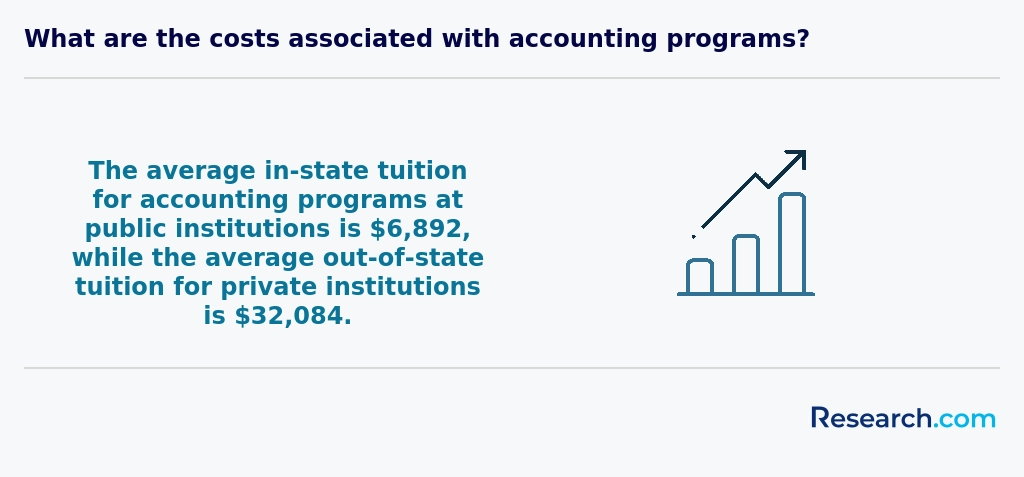
The average cost of an accounting degree in Baltimore dances between affordability and value, especially when you plant your roots in local public universities or community colleges. Graduates from these institutions often reminisce about balancing tight budgets with scholarship aid that softened the financial blow. Imagine studying accounting fundamentals at a well-known Baltimore university, where tuition leans closer to $8,000-$12,000 per year for in-state students, blending quality instruction with manageable costs.
Some graduates recall that private colleges added a premium, sometimes doubling expenses, yet promised rich networking opportunities tethered to Baltimore's bustling financial scene. Those internships tucked into academic programs transform theory into action, giving students access to corporate finance hubs or healthcare firm accounting teams right in the city's heart.
For many Baltimore accounting students, the journey isn't just numbers but a strategic investment-where financial aid becomes their ally, transforming a potentially daunting cost into an achievable stepping stone for a vibrant career.
Where can I work with accounting degree in Baltimore?
Graduates from Baltimore's accounting programs often find themselves immersed in a vibrant professional panorama where opportunity meets ambition. Imagine walking the halls of a leading public accounting firm downtown, where fellow graduates from Loyola University Maryland and University of Maryland, Baltimore County (UMBC) shape their futures as auditors or tax consultants, expertly navigating client challenges while setting the city's financial rhythm.
Others dive into corporate giants like Under Armour or CareFirst BlueCross BlueShield, where they transform raw data into strategic decisions, blending number-crunching with creative problem-solving. These roles aren't just jobs-they're dynamic career canvases painting stories of budget mastery and financial foresight.
Some embrace the rewarding pulse of government accounting, collaborating on public budgets and compliance with a deep sense of civic pride. Nonprofit roles, too, attract graduates driven by purpose, managing grants that fuel community change.
Close enough to Washington, D.C., Baltimore's accounting graduates often leap into federal agency roles, turning complex regulations into pathways for innovation while enjoying competitive wages and growth potential.
Graduates diving into Baltimore's bustling accounting scene can anticipate earnings that echo the city's vibrant economic pulse. Take a fresh alumnus from a well-known Baltimore university who lands a Staff Accountant role, enjoying a mean annual wage near $90,780-enough to celebrate milestones with a little financial swagger in a city that balances affordability with opportunity.
Starting out, many new accounting professionals find themselves earning between $50,000 and $60,000, aligning with roles such as Bookkeepers, Tax Preparers, or Associate Auditors where mean salaries hover around $49,580. For those who've earned certifications like the CPA, the story shines even brighter: bonuses and salary jumps often follow, pushing income well past familiar thresholds.
Imagine a graduate navigating their first year at Johns Hopkins' campus or University of Baltimore, soaking up knowledge while already eyeing a future where the top 10% pull in $120,000 or more. This isn't just numbers-it's real-world validation that accounting degrees here unlock doorways to well-compensated careers amid Baltimore's finance, healthcare, and government sectors.
- Annual tuition for in-state students at Baltimore public universities ranges from $8,000 to $15,000, while private colleges can cost over $30,000 per year.
- Entry-level accountants in Baltimore earn between $55,000 and $60,000 annually, with experienced professionals making $75,000 to $90,000 or more.
- The Baltimore job market for accountants is strong, with an expected growth rate of nearly 10% nationally over the next decade.
- Key industries hiring accountants include finance, healthcare, government, and education.
- Several accredited Baltimore institutions offer accounting programs with internships that provide practical experience.
In Baltimore, chasing an accounting degree feels like embarking on a tailored journey through time. Picture a community college campus bustling with eager minds where an associate degree unfurls over two vibrant years-enough time to build a sturdy foundation and land that first entry-level role. Meanwhile, at Towson University or Coppin State University, the four-year bachelor's voyage reflects a mix of late-night study sessions and dynamic internships, molding future accountants ready to ace corporate or public finance roles.
But what if life's rhythms tug you toward part-time study? Here, the timeline extends into five years or more, a flexible dance between work, family, and campus life. Graduates often share how this pacing fuels a deeper grasp of accounting, blending real-world challenges with classroom theory.
For the ambitious souls eyeing the CPA license, Baltimore's programs often layer on that extra year or two-sometimes through a master's degree-turning study into a rich, comprehensive experience. It's not just about credits but carving a confident path toward professional dreams.
When considering an accounting degree in Baltimore, MD, one crucial aspect to explore is the variety of programs available, each with its unique strengths and specializations. Prospective students should research institutions that offer not only affordable tuition but also a comprehensive curriculum, practical experience through internships, and strong career support. For those looking for most affordable accounting schools in maryland, it's essential to weigh factors such as accreditation, curriculum quality, and CPA exam preparation. By doing so, students can ensure they find a program that aligns with their financial and career goals, setting them up for success in the dynamic field of accounting. Whether one prefers the flexibility of online learning or the structured environment of on-campus programs, Baltimore offers a range of options that cater to different learning styles and preferences. Ultimately, choosing the right accounting program is about finding the best fit for one's educational, professional, and personal aspirations.
Choosing between online and on-campus accounting degrees in Baltimore feels like picking your own adventure. Imagine a day at Towson University: a graduate recalls the buzz of in-person lectures, spontaneous conversations after class, and the warm buzz of networking events that unlock doors to local financial firms. The campus became a second home, rich with resources like accounting labs and career workshops that fueled their ambition.
Flip the scene to an online learner juggling a job and family while earning a degree from UMBC's digital classroom. Their world revolves around recorded lectures watched at midnight, discussion boards buzzing with diverse peers, and the sweet relief of skipping the daily commute. The freedom to tailor study hours around life's chaos creates a rhythm that feels less like a grind and more like a puzzle falling into place.
Baltimore's cost scene echoes these differences too: in-person tuition hovers around $8,000-$12,000 with extra expenses like housing, while online options trim costs with no relocation overhead. Both paths forge the same accreditation, making your freshly minted CPA dream just as valid, whether earned under campus lights or through a home office glow.
As the accounting field evolves rapidly with technology advancements and global economic shifts, it is essential for prospective students to understand how emerging trends are shaping the industry. Today’s accounting landscape is increasingly influenced by innovations like artificial intelligence, data analytics, and cloud computing. These developments are not only transforming traditional accounting practices but are also creating opportunities for specialized skill sets that command a higher overall accounting salary. Professionals who embrace these trends are better positioned to drive efficiency and provide strategic insights in a competitive market. In addition, regulatory changes and a growing emphasis on sustainability reporting are redefining the role of accountants, urging institutions to integrate these topics into their curricula. Students can expect a deeper focus on technology integration, critical thinking, and strategic decision-making in modern accounting programs. Networking with industry professionals, attending specialized workshops, and pursuing relevant certifications can further enhance career prospects. For more insights into maximizing your career growth and exploring opportunities, check out our accounting salary guide, which offers valuable data and advice on navigating this transformed landscape. Staying current with these emerging trends not only boosts employability but also ensures that graduates are well-equipped to meet future demands. By understanding the evolving dynamics of the accounting profession, you can make strategic decisions that will benefit your long-term career trajectory.
The average cost of an accounting degree in Baltimore hovers around $51,864, a figure that sparks excitement and strategy in equal measure among aspiring accountants. Imagine a graduate from a local institution like the University of Maryland, Baltimore County navigating tuition fees that reflect this median total cost-balancing textbooks, living expenses, and campus life. These students often find the investment rewarding, especially when they consider Baltimore's unique blend of public universities and private colleges that color their academic experience.
Students chasing affordable accounting programs Baltimore tuition fees might gravitate toward UMBC, where in-state tuition can soften the financial climb to roughly $32,689 total. Picture peers at private universities basking in the prestige of their educations while leveraging scholarships to ease the $50,000-plus tuition sticker shock. These realities weave a narrative of opportunity and resourcefulness, as many graduates look back with pride on how they managed costs without sacrificing quality.
Living in Baltimore adds vibrant layers to student life, with expenses around $12,000 to $15,000 yearly, offering a lively city backdrop for study breaks and networking strolls. It's no surprise that many refer future accountants to the most affordable accounting schools in maryland, where financial aid and state programs transform the daunting price tag into an attainable goal, blending aspiration with smart financial planning.
Landing an accounting degree in Baltimore often feels like unlocking a treasure chest of financial aid options uniquely crafted for your journey. Imagine a graduate from Loyola University Maryland, who leaned heavily on the Pell Grant-up to $7,395 for the 2023-2024 year-helping them breeze through tuition without drowning in debt. This federal magic carpet ride extends with Direct Subsidized and Unsubsidized Loans offering low interest rates and flexible repayment, easing the stress for those eyeing a master's after their bachelor's.
Maryland's own Higher Education Commission shines a light through state scholarships tailored for local stars studying at colleges like Johns Hopkins or Towson University. Many Baltimore campuses sprinkle their own institutional grants and merit awards like golden confetti, paving a smoother road for business and accounting majors.
Work-study gigs are more than pocket change; they're chances to dip your toes in Baltimore's buzzing accounting firms and local businesses, earning experience and cash simultaneously, turning your classroom theories into real-world wins.
Private scholarships from organizations such as the Maryland Association of CPAs add another layer of support, rewarding dedication with financial boosts that make your accounting dreams tangible and thrilling.
In selecting an affordable accounting degree program in Baltimore, verifying proper accreditation is essential to ensure academic rigor, employer recognition, and eligibility for professional licensure. The most respected accrediting bodies for business and accounting programs include the Association to Advance Collegiate Schools of Business (AACSB), the Accreditation Council for Business Schools and Programs (ACBSP), and the Middle States Commission on Higher Education (MSCHE). • AACSB accreditation signifies excellence through a rigorous peer-review process that assesses curriculum quality, faculty qualifications, and continuous improvement. Many top employers actively recruit graduates from AACSB-accredited institutions, recognizing the high standards and industry relevance of their training. • ACBSP accreditation emphasizes teaching excellence and student learning outcomes, making it a strong indicator of programs committed to hands-on instruction and measurable achievements. • MSCHE accreditation ensures that an institution meets broad regional standards for governance, financial stability, and student support services-critical factors for overall educational quality. Accreditation also directly impacts professional pathways: Maryland CPA licensure requires graduation from an accredited institution and completion of 150 semester hours. Before applying, confirm each program’s accreditation status via the U.S. Department of Education’s Accreditation Database and the school’s official website. Students seeking flexibility without sacrificing quality can compare on-campus offerings with online alternatives. For example, exploring the cheapest online accounting degree options can reveal accredited pathways that balance affordability with recognized standards. By prioritizing accreditation in your decision-making process, you safeguard your investment, enhance career prospects, and ensure your credential meets rigorous industry benchmarks.
Diving into an accounting degree in Baltimore means first stepping through a gateway of foundational academic expectations. Imagine a hopeful candidate at a popular Baltimore university, clutching their high school diploma like a key to a future ledger of opportunities. They've mastered algebra and stats-not just numbers on a page but the secret language of accounting's baseline. Strong reading and writing skills become tools for decoding complex financial narratives, essential for success in Baltimore's rigorous programs.
Some graduates recall submitting official transcripts filled with proof of prior victories in education, alongside application forms that felt like their personal introduction to a new academic family. Essays and recommendation letters? They felt like storytelling exercises, painting who they were beyond test scores. Speaking of tests, many local schools now ease the pressure with test-optional policies, sparking relief and optimism among applicants.
- Completed high school diploma or equivalent (like a GED)
- Foundational coursework in math and English
- Official transcripts and personalized applications
- Sometimes essays and letters of recommendation
Transfer students often bring more than credits-they arrive with groundwork in accounting principles and business law, ready to embrace advanced challenges. One graduate from a Baltimore community college noted how this preparation aligned perfectly with their goal to conquer the CPA exam, a milestone fueled by 150 semester hours. Baltimore's blend of accessible cost and solid prerequisites creates an inviting path for eager minds ready to tally their success.

Picture yourself navigating the vibrant halls of a Baltimore university, notebooks filled with the language of numbers and strategy. Core classes like Introduction to Financial Accounting don't just teach you debits and credits-they transform you into a storyteller who deciphers the financial pulse of a business. Graduates from Johns Hopkins or University of Baltimore often recall the thrill of cracking the mysteries behind Managerial Accounting, where budgets become tools for real-world decisions, not mere classroom exercises.
Federal Income Taxation courses feel like unlocking a complex puzzle, where knowing the nuances impacts everything from personal finance to corporate success. Auditing and Assurance Services challenge you to become a financial detective, ensuring businesses stay honest, a role graduates embrace with pride amid Baltimore's bustling economic sectors.
Imagine weaving through Business Law and Ethics lectures, grounding your skills in principles that resonate deep in Baltimore's regulatory environment. Add Accounting Information Systems to your toolkit, mastering software that powers modern accounting-essential knowledge that grads praise for making theory tangible in today's tech-driven workplaces.
- Introduction to Financial Accounting
- Managerial Accounting
- Federal Income Taxation
- Auditing and Assurance Services
- Business Law and Ethics
- Accounting Information Systems
- Cost Accounting
- Intermediate and Advanced Accounting
- Economics (Micro and Macro)
Electives in forensic accounting or international perspectives often excite Baltimore students who dream of careers beyond borders, especially in finance and government, where diversity and precision go hand in hand. These courses infuse each academic year with challenge, inspiration, and the promise of stepping confidently into Maryland's dynamic professional world.
Imagine diving into accounting degree specializations in Baltimore like choosing a unique path through a bustling city. Graduates from Baltimore's well-known universities often speak of how Financial Accounting gave them the power to decode business stories hidden in numbers, a skill as crucial as understanding the pulse of Baltimore's vibrant markets. Meanwhile, others found Managerial Accounting's behind-the-scenes focus on budgeting and strategy felt like steering a ship through the city's harbor-complex but deeply rewarding.
Baltimore's proximity to federal agencies provides fertile ground for Forensic Accounting students eager to chase financial mysteries, making local internships feel like real-life detective work. Tax Accounting thrives here too; graduates appreciate the deep dive into Maryland's tax codes, a specialty closely tied to Baltimore's business ecosystem. Those drawn to tech admire Accounting Information Systems, synchronizing finance with the city's growing tech vibe. Auditing students study the legal rhythm of records, ensuring trust within local companies.
Choosing from Baltimore accounting degree concentration options means tailoring your journey to what sparks passion, with each path lit by experiences shared by alumni. For those curious about future earnings, exploring accounting salary data helps map career aspirations beyond the classroom.
Choosing the best accounting degree in Baltimore often feels like navigating a bustling harbor-full of opportunities but requiring a keen eye for the right vessel. Graduates from universities like UMBC share how accreditation, especially from AACSB, steered their path, giving them confidence their education holds weight in the local finance world. It's not just about prestige; cost plays a starring role, too. Those seeking affordable accounting degrees Baltimore residents rave about often find public institutions offering solid programs for around $11,000 a year in tuition, a lifeline when balancing ambition and budget.
Local flavor matters. Hands-on internships with Baltimore's financial firms turned theoretical ledgers into real-world triumphs for many accounting students. Flexibility-think evening and online classes-empowers those juggling work or family, the kind of options that unlock doors without locking down lives. If CPA exam readiness fuels your fire, targeting schools aligned with Maryland's 150 credit hours rule is critical.
For a smart financial twist, some turn to the cheapest online accounting degree offerings to combine savings with quality. Balancing these elements is the true art of finding the best accounting programs in Baltimore.

Baltimore's accounting graduates often dive into a mosaic of career paths, painting their futures with strokes of public accounting, corporate roles, and government gigs. Imagine a graduate from one of Baltimore's renowned colleges, stepping into bustling CPA firms, navigating audits and tax puzzles that ripple through the city's financial heart. This dynamic career landscape offers buoyant opportunities, making jobs with accounting degree Baltimore particularly promising.
Others find their rhythm within the corridors of corporations-healthcare centers, tech startups, and manufacturing plants where financial reports become storytelling tools and budget mastery drives innovation. Graduates describe the thrill of transforming numbers into impactful decisions in Baltimore's vibrant business scene.
Government and nonprofit accounting call to a different kind of passion, attracting graduates who cherish stability and purpose. Managing public funds among Baltimore's federal agencies sparks pride and offers competitive wages. Specialized niches like forensic accounting and internal auditing add adventurous twists, molding careers that explore financial mysteries.
For students curious about turning this dream into reality, costs are a key puzzle piece. The Cheapest Accounting Degree Programs Ranking in Alabama might offer useful insights for frugal planning, helping Baltimore's hopefuls balance ambition with affordability.
Graduates holding an accounting degree in Baltimore find themselves stepping into a vibrant job market fueled by the city's dynamic blend of financial institutions, government agencies, and growing corporate hubs. Imagine starting your career right after graduating from a well-regarded Baltimore university, where your classmates often share stories of landing roles in tax preparation or financial analysis within weeks. This is the reality thanks to strong Baltimore accounting degree employment outlooks, with local demand steadily rising alongside regulatory and transparency needs.
For many accounting students, affordability is another winning factor; in-state tuition averages around $10,000 annually, easing the financial load. Graduates from the city's top programs cheer this as a smart investment, especially as certification pursuits like CPA accelerate their career paths. These credentials unlock higher earning potential and open doors to nonprofit sectors or government budgeting roles, all deeply woven into Baltimore's economy.
As you explore college majors, it's worth considering how accounting aligns with your ambitions. Many students have found that pairing their degree with certifications in Baltimore turns opportunities into rewarding realities, a sentiment echoed by those who seek out college majors that are worth it. The landscape here encourages bold steps toward professional growth and financial success.
The palpable buzz around accounting job opportunities in Baltimore stems not only from current numbers-like over 8,000 professionals employed locally-but from the city's ongoing evolution. Graduates often mention the excitement of engaging with diverse sectors, from corporate finance to public agencies, reflecting a job market alive with possibility and ripe for ambitious accounting talent.
2027 Most Affordable Accounting Degree Programs Ranking in Baltimore
Investing in your education is a significant decision that can shape your future, and the Research.com team understands the importance of making informed choices. To assist prospective students in Baltimore, we have meticulously crafted the "2027 Most Affordable Accounting Degree Programs Ranking in Baltimore." Our commitment to quality, credibility, and accuracy is reflected in the extensive research and analysis conducted to compile this ranking.
We utilized the following reputable data sources to ensure a comprehensive evaluation of accounting programs:
By exploring this ranking, readers will gain valuable insights into the most affordable accounting degree programs available in Baltimore, empowering them to make well-informed decisions about their educational investments. For more details on our methodology, please visit our Research.com methodology page.


Frequently Asked Questions About accounting
Accounting degree students in Baltimore can maximize their learning experience by combining formal education with practical opportunities. Baltimore hosts several accredited institutions such as the University of Baltimore and Towson University, known for their comprehensive accounting programs aligned with CPA exam requirements. Engaging with local professional organizations like the Maryland Association of CPAs offers valuable networking and internship possibilities.
Students should take advantage of Baltimore's proximity to major financial hubs, gaining real-world experience through internships at accounting firms or government agencies. Utilizing resources like university career centers and attending local finance workshops can also enhance skills and employability.
Emerging niches within the accounting field reflect changes driven by technology and regulatory shifts. In Baltimore, professionals with expertise in forensic accounting are increasingly in demand, as businesses and government agencies seek specialists to detect fraud and financial misconduct. According to the Bureau of Labor Statistics, the demand for forensic accountants is expected to grow faster than the average for all occupations over the next decade.
Another growing niche is environmental accounting, which focuses on sustainability and corporate social responsibility reporting. With Maryland's strong emphasis on clean energy and environmental regulation, companies in Baltimore often require accountants who understand specialized compliance frameworks.
Additionally, accounting professionals who specialize in data analytics are sought after for improving decision-making through financial data interpretation. This skill set aligns with the increasing adoption of artificial intelligence tools in financial management.
After earning an accounting degree in Baltimore, preparing for the job market requires focused steps to increase employability. Gaining professional certifications like the CPA (Certified Public Accountant) significantly improves job prospects and is often expected by local employers. According to the Maryland Society of Accountants, Maryland's CPA pass rate hovers around 56%, highlighting the challenge but also the advantage of certification.
Internships and networking opportunities within Baltimore's financial and corporate sectors provide practical experience and valuable local contacts. The Baltimore metro area features firms ranging from small businesses to large corporations, including T. Rowe Price and Legg Mason, which regularly hire accounting graduates. Developing skills in accounting software such as QuickBooks and Excel is essential to meet market demands.
Finally, staying informed about Maryland state tax laws and regulations enhances a graduate's appeal since many local accounting roles require state-specific expertise. Career centers at Baltimore universities often facilitate job fairs and workshops tailored for accounting seniors, aiding in effective job search strategies.
Employers in Baltimore seeking accounting degree graduates prioritize a strong foundation in technical skills, including proficiency in Generally Accepted Accounting Principles (GAAP) and familiarity with accounting software like QuickBooks and Microsoft Excel. According to the Maryland Department of Labor, candidates with expertise in data analysis and financial reporting have a competitive edge.
Communication skills also rank highly, as accountants often collaborate across departments and present financial information clearly to non-experts. Problem-solving abilities are essential for navigating regulatory compliance and tax issues frequently encountered in Baltimore's diverse business environment.
Moreover, attention to detail and ethical judgment are critical, reflecting nationwide standards upheld by bodies such as the AICPA. Continuous learning, including CPA certification preparedness, further distinguishes graduates in the local job market.
Finding internships in Baltimore relevant to an accounting degree involves a strategic approach leveraging local resources. Baltimore is home to numerous accounting firms, including national and regional players, providing diverse internship opportunities. Students should start by exploring career services at Baltimore-area colleges such as the University of Baltimore and Loyola University Maryland, which often have partnerships with local employers.
Professional organizations like the Maryland Association of CPAs (MACPA) offer job boards and networking events that connect students with employers seeking accounting interns. According to MACPA, internships significantly improve job placement rates in the accounting field.
Online platforms such as Handshake and LinkedIn also list Baltimore-based accounting internships, with many posted by firms in the city's financial district. Early application and personalized outreach to firms are recommended to secure positions.
An accounting degree significantly enhances career mobility and advancement in Baltimore's competitive job market. According to the U.S. Bureau of Labor Statistics, Baltimore's metropolitan area employs over 10,000 accountants and auditors, indicating strong local demand. Graduates with accounting degrees often qualify for roles including auditor, tax advisor, and financial analyst, which offer clear paths to senior positions.
The Maryland Department of Labor reports that professionals holding accounting credentials, such as the CPA license, typically see salary increases of 15-20% within five years. This credential is highly valued by Baltimore employers due to the city's many financial service firms and government agencies.
Furthermore, the concentration of accounting firms and corporate headquarters in Baltimore provides frequent networking and professional development opportunities, facilitating upward career movement. Overall, earning an accounting degree in Baltimore supports both geographic and vertical career growth.
Studying for an accounting degree in Baltimore offers unique opportunities to prepare for interdisciplinary roles. Many local programs emphasize not only core accounting skills but also integrate coursework in finance, information systems, and business law. This approach helps students develop versatile skills applicable across industries.
Baltimore's proximity to financial hubs and government agencies provides practical exposure to real-world challenges, enhancing students' analytical and communication abilities. According to the Maryland Higher Education Commission, over 60% of accounting graduates in the area find employment in diverse sectors such as healthcare, government, and technology within six months of graduation.
This interdisciplinary focus equips graduates to collaborate effectively with professionals from different fields, making them valuable assets in complex business environments.
When choosing between a thesis and a non-thesis accounting degree program in Baltimore, consider your career goals and learning preferences. Thesis programs focus on research, requiring students to write and defend a substantial paper. This path suits those planning to pursue a PhD or careers in academia or specialized research roles. Non-thesis programs emphasize coursework and practical skills, ideal for students aiming to enter the workforce quickly, including positions in public accounting firms or corporate finance.
In Baltimore, where accounting roles are growing by 6% annually according to the Bureau of Labor Statistics, practical skills are highly valued. Additionally, many local universities tailor non-thesis options to CPA exam preparation, a key credential for many accounting jobs.
Cost and time commitments also differ. Thesis programs may take longer, often 2-3 years, while non-thesis degrees typically complete within 18-24 months. Prospective students should review specific program curricula and consult advisors to align choices with long-term objectives.
Students based in Baltimore who wish to study accounting abroad have several structured options. Many universities in Baltimore, such as Towson University and the University of Maryland, Baltimore County, offer study abroad programs specifically designed for accounting students. These programs often include partnerships with institutions in countries like the United Kingdom, Australia, and Spain, enabling students to earn credits transferable to their degree in Baltimore.
According to the Institute of Management Accountants, students participating in international study gain valuable global business perspectives that enhance their career readiness. Additionally, Baltimore-based students can explore exchange programs or semester-long studies through organizations like Education Abroad Baltimore, which coordinate opportunities abroad with a focus on accounting and finance disciplines.
Students pursuing accounting degrees in Baltimore can benefit from several part-time job opportunities that enhance their practical skills. Common roles include bookkeeping assistant positions at small businesses, providing exposure to financial record-keeping and software like QuickBooks. Internships at local accounting firms are also popular, offering real-world experience with tax preparation, auditing, and client communication. According to the Maryland Department of Labor, Baltimore's finance sector continues to grow, increasing demand for entry-level accounting support roles. Additionally, university career centers in Baltimore often connect students with part-time roles in payroll management and accounts payable, allowing them to apply classroom knowledge directly to business operations.
Accounting students in Baltimore benefit from a variety of networking opportunities that connect them with industry professionals and peers. Organizations such as the Baltimore Chapter of the Maryland Association of CPAs regularly host events, providing students a chance to meet certified public accountants and accounting firms.
Local universities often collaborate with businesses for internships and career fairs, which are valuable for practical experience and building professional relationships. According to the Greater Baltimore Committee, participation in accounting-related meetups and seminars in the metro area is increasing, reflecting growing industry engagement.
Additionally, Baltimore's proximity to major financial hubs like Washington D.C. expands networking possibilities beyond the city.
Alumni networks provide valuable support for accounting degree students in Baltimore by offering access to a broad community of professionals. Graduates often share job leads, internship opportunities, and career advice, helping students navigate the competitive accounting job market.
In Baltimore, a city with a growing finance sector, robust alumni connections can significantly enhance employment prospects. According to the Maryland Higher Education Commission, schools with active alumni chapters report a 20% increase in job placements within the first year after graduation.
These networks also allow for mentorship opportunities, where experienced accountants guide current students on licensing requirements like the CPA exam, which is essential for career advancement in accounting.
Furthermore, alumni events and workshops provide practical learning experiences beyond the classroom, strengthening both technical skills and professional relationships.
Customizing an accounting degree program in Baltimore allows students to align their education with specific career objectives. Many local institutions offer electives in areas such as forensic accounting, taxation, and auditing, enabling focused skill development.
Internships with Baltimore-based firms provide practical experience and networking opportunities, often essential for job placement. Additionally, students can pursue certification preparation courses, like Certified Public Accountant (CPA), which is highly valued in Maryland's competitive accounting market.
Advisors at Baltimore colleges help tailor course selections, balancing foundational knowledge with specialized topics reflecting industry trends. This approach helps graduates meet the demands of roles in financial management, compliance, or consulting.
Accounting students in Baltimore often face several common challenges during their studies. One significant difficulty is balancing rigorous coursework with part-time jobs, as many local students work to support themselves. According to the National Center for Education Statistics, about 43% of undergraduate students nationwide work while enrolled, a figure reflected in Baltimore's student population as well.
Additionally, mastering the complex principles of accounting standards such as GAAP and staying updated with changes from bodies like the FASB can be daunting. Many students also report struggling with the time-intensive nature of studying for the CPA exam, a key step for career advancement in the field.
Financial strain is another hurdle; while in-state tuition at Baltimore-area public institutions is relatively affordable, textbook and exam preparation costs can add up. Finally, COVID-19's impact on remote learning introduced challenges in engagement and practical experience, particularly in internships essential for accounting careers. These challenges require effective time management and support systems for success.
With an accounting degree in Baltimore, several professional certifications become attainable, enhancing career prospects and earning potential. The most recognized certification is the Certified Public Accountant (CPA), requiring candidates to meet education, examination, and experience criteria. Maryland's Board of Public Accountancy sets specific rules for CPA licensure, ensuring standards align with national requirements.
Other valuable certifications include the Certified Management Accountant (CMA) and the Certified Internal Auditor (CIA). Both validate specialized skills in management accounting and internal auditing respectively. According to the Maryland Association of Certified Public Accountants, holding such credentials can increase job opportunities in Baltimore's competitive accounting market.
For students eyeing finance roles, the Chartered Financial Analyst (CFA) designation, though broader than accounting, complements the degree well. Each certification demands passing rigorous exams and continuous professional development, emphasizing the need for commitment and ongoing learning.
To write a winning application for an accounting program in Baltimore, start by thoroughly researching each school's specific admission requirements. Many local institutions, such as the University of Baltimore and Loyola University Maryland, value strong academic records, especially in math and business courses. Highlight your relevant experience and skills, including internships or part-time roles in finance or bookkeeping.
Ensure your personal statement clearly explains your interest in accounting and your career goals. According to data from the Maryland Higher Education Commission, applicants with a GPA above 3.0 have a competitive edge in Baltimore programs. Also, strong letters of recommendation from professors or employers can significantly enhance your application.
The accounting profession offers extensive global opportunities as financial standards and regulations increasingly align worldwide. In Baltimore, students pursuing accounting degrees benefit from training that meets U.S. Generally Accepted Accounting Principles (GAAP), which remain relevant internationally due to the influence of U.S. markets.
Moreover, many accounting roles today require knowledge of the International Financial Reporting Standards (IFRS), especially for firms with global business ties. According to the U.S. Bureau of Labor Statistics, the demand for accountants in Maryland is expected to grow by 7% from 2022 to 2032, reflecting national trends.
Baltimore's proximity to major international ports and corporate headquarters offers graduates unique insights into cross-border financial practices and compliance. This exposure helps accounting professionals adapt to global financial systems and supports career mobility beyond U.S. borders.
Students pursuing an accounting degree in Baltimore can gain practical experience through several structured opportunities. Many local colleges partner with accounting firms in the city, such as Merritt & Company and CliftonLarsonAllen, offering internships that provide hands-on exposure to tax preparation, auditing, and financial analysis.
Additionally, Baltimore's proximity to major financial centers allows access to cooperative education programs, blending academic study with paid work placements. Experiential learning is often a component of degree programs accredited by AACSB or ACBSP, ensuring curriculum alignment with industry standards.
Volunteering with nonprofits or participating in university-run accounting clinics also equips students to apply classroom concepts in real-world situations while building professional networks.
Choosing the right concentration within an accounting degree program in Baltimore depends on your career goals and interests. Common concentrations include auditing, taxation, forensic accounting, and managerial accounting. Baltimore's strong business sector, including finance and healthcare industries, may influence your choice.
Consider job demand in the Baltimore metropolitan area. For example, tax accounting remains prominent due to many local businesses and regulatory requirements, according to the Maryland Department of Labor. Research local employers frequently hiring accounting graduates to align your concentration with market needs.
Additionally, evaluate available coursework and faculty expertise at Baltimore institutions. Some programs may offer certifications like CPA prep, which can guide your concentration choice if you aim for professional licensing.
Finally, internships or networking opportunities in Baltimore's business community are valuable for experiential learning related to your concentration.
- 2027 Most Affordable Accounting Degree Programs Ranking in Washington
- 2027 Most Affordable Accounting Degree Programs Ranking in Philadelphia
- 2027 Most Affordable Accounting Degree Programs Ranking in New York
- 2027 Most Affordable Accounting Degree Programs Ranking in Brooklyn
- 2027 Most Affordable Accounting Degree Programs Ranking in Bronx
- 2027 Most Affordable Accounting Degree Programs Ranking in Pittsburgh
- 2027 Most Affordable Accounting Degree Programs Ranking in Fairfield
- 2027 Most Affordable Accounting Degree Programs Ranking in West Hartford
- 2027 Most Affordable Accounting Degree Programs Ranking in Buffalo
- 2027 Most Affordable Accounting Degree Programs Ranking in Albany
See What Experts Have To Say About Studying Accounting
Read our interview with Accounting experts

Yaw M. Mensah
Accounting Expert
Professor and Interim Vice Dean for Strategic Partnerships
Rutgers Business School

John Wermert, Ph.D., CPA
Accounting Expert
Associate Professor of Accounting
Middle Tennessee State University

- Accounting (B.S.) https://www.ubalt.edu/schools-and-colleges/merrick-school-of-business/academics/explore-all-programs/bs-in-accounting/index.cfm
- Everything About Bachelor’s in Accounting https://www.allbusinessschools.com/accounting/bachelor-degree-in-accounting/
- What High-Schoolers Can Do Right Now to Prepare for an Accounting Career https://www.bentley.edu/news/what-high-schoolers-can-do-right-now-prepare-accounting-career
- College Readiness: Connecting with the Alumni Network - Community Foundation https://southcoastcf.org/college-readiness-connecting-with-the-alumni-network/
- Accounting Major Jobs & Career Resources https://www.towson.edu/careercenter/planning-resources/major/accounting.html
- How to Meet Accounting Degree Requirements for Career Success - ICMS https://www.icms.edu.au/degree-discovery/how-to-meet-accounting-degree-requirements/
- Harnessing the Power of an Alumni Network | Friend & Grant Accountants https://www.friendandgrant.co.uk/blog/how-to-harness-the-power-of-alumni-networks/
- Know more about thesis vs non- thesis: what is the difference? https://studyfans.com/en/blogs/816
- Best Accounting Degree Programs in Maryland | Accounting.com https://www.accounting.com/states/maryland/
- Top Accounting Options at Community College of Baltimore https://afbf.in/best-colleges-for/accounting-community-college-of-baltimore-county/