2027 Online PharmD Programs That Help Build Interprofessional Collaboration Skills

Co-Founder and Chief Data Scientist
Choosing an online PharmD is really a licensure, cost, and career-fit decision-not just a delivery-format choice. Pharmacists increasingly work inside care teams, and the U. S. Bureau of Labor Statistics projects pharmacist employment to grow 5% from 2024 to 2034. This guide is for prospective PharmD students comparing online or hybrid options that build interprofessional collaboration skills. You will learn how these programs teach teamwork, what accreditation to verify, what costs to expect, and how to choose a program that supports your pharmacy career goals.
Key Things You Should Know
- Online PharmD programs are usually hybrid: didactic coursework may be online, but ACPE-accredited programs still require in-person labs, skills assessments, introductory pharmacy practice experiences, and advanced clinical rotations.
- Team-based training matters because current ACPE Standards 2025 emphasize patient-centered care, communication, professionalism, and interprofessional education across the PharmD curriculum.
- The BLS reported a 2024 median pharmacist salary of $137,480 and projected 5% employment growth from 2024 to 2034, but outcomes vary by setting, location, residency training, and licensure status.
What are online PharmD programs that emphasize interprofessional collaboration skills?
Online PharmD programs that emphasize interprofessional collaboration are Doctor of Pharmacy programs designed to prepare students for pharmacist licensure while teaching them how to work with physicians, nurses, physician assistants, social workers, public health professionals, and other members of the care team. The "online" label usually refers to lectures, discussions, case work, and some assessments being delivered remotely; it does not mean the entire degree can be completed from home.
Interprofessional collaboration means students learn to contribute medication expertise in shared clinical decisions. In practice, that can include identifying drug interactions during rounds, counseling a patient after discharge, recommending dose adjustments to a prescriber, coordinating adherence support with a nurse, or explaining formulary options to a care manager.
Prospective students should understand the difference between PharmD pathways because "online PharmD" can describe several formats. The table below summarizes the main options and the type of learner each one tends to fit.
| Program format | Typical structure | Best fit | Collaboration considerations |
| Hybrid entry-level PharmD | Online coursework plus required campus immersions, labs, and clinical rotations | Students seeking initial pharmacist licensure with more location flexibility | Look for structured team simulations, virtual case conferences, and diverse clinical placement sites |
| Campus-based PharmD with online components | Primarily in person, with selected online lectures or activities | Students who want frequent face-to-face labs and peer interaction | May offer easier access to interprofessional events with nearby health professions schools |
| Post-professional PharmD or bridge pathway | Designed for practicing pharmacists with prior pharmacy credentials | Licensed or internationally trained pharmacists, depending on program rules | Collaboration may focus on advanced patient care, leadership, and systems-based practice |
| Non-licensure pharmacy-related graduate degree | Master's or doctoral study in pharmaceutical sciences, administration, or health systems | Students not seeking pharmacist licensure | May build research or management skills but does not replace a PharmD for pharmacist licensure |
If your goal is health systems research, executive leadership, or academic scholarship rather than pharmacist licensure, compare PharmD programs with PhD healthcare options before committing to a professional pharmacy degree.
How do online PharmD programs build interprofessional collaboration competencies in their curriculum?
Strong online PharmD programs do not treat collaboration as a single course. They build it through repeated practice: students learn clinical knowledge, apply it in cases, receive feedback, and then demonstrate teamwork in labs and rotations. The best programs make collaboration measurable rather than assuming students will "pick it up" during clinical placements.
Most programs develop interprofessional competencies through a sequence like this:
- Foundation courses teach pharmacology, therapeutics, health assessment, ethics, communication, and patient safety so students can participate credibly in team decisions.
- Case-based online sessions place students in realistic patient scenarios where they must explain medication recommendations, negotiate priorities, and document care plans.
- Synchronous small-group activities help students practice real-time communication, handoffs, conflict management, and shared decision-making.
- Simulation labs and campus intensives test skills such as medication reconciliation, patient counseling, sterile compounding, and emergency-response teamwork.
- Introductory and advanced pharmacy practice experiences require students to apply collaboration skills in community, hospital, ambulatory care, and other healthcare settings.
Current trends make this training more important. Telehealth, remote patient monitoring, pharmacogenomics, specialty medications, and AI-assisted clinical decision support all increase the need for pharmacists who can interpret data and explain recommendations clearly to both patients and clinicians. Technology may flag a risk, but a pharmacist still needs to judge clinical context and communicate the next step.
When evaluating a curriculum, look for explicit language about interprofessional education rather than vague promises about "teamwork." Useful signs include shared learning activities with nursing or medical students, Objective Structured Clinical Examinations, standardized patients, collaborative practice agreement exposure, and documented feedback from preceptors in team-based settings.
What accreditation and quality standards should online PharmD programs meet?
Accreditation is the first quality checkpoint for any PharmD program. In the U.S., the Accreditation Council for Pharmacy Education is the specialized accreditor for professional Doctor of Pharmacy programs. Graduating from an ACPE-accredited PharmD program is a core requirement for pharmacist licensure in most U.S. jurisdictions, along with passing required exams and meeting state-specific rules.
ACPE Standards 2025 are especially relevant for students researching collaboration-focused programs because they reinforce educational outcomes tied to patient care, communication, professionalism, population health, and interprofessional practice. For applicants, this means collaboration should appear in outcomes, assessments, experiential education, and continuous quality improvement-not only in marketing copy.
Use the table below to separate true quality signals from less meaningful claims when comparing online and hybrid PharmD programs.
| Quality factor | Why it matters | What to verify |
| ACPE accreditation status | Supports licensure eligibility and indicates the program meets professional education standards | Confirm whether the program is accredited, candidate, or pre-candidate and what that means for your entry term |
| State authorization | Online programs may not be authorized to enroll students in every state | Ask whether your state of residence is approved for enrollment and experiential placements |
| Experiential education network | Clinical rotations are where collaboration skills become professional habits | Review the availability of hospitals, ambulatory clinics, community pharmacies, and interprofessional practice sites |
| NAPLEX and MPJE support | Licensure exam preparation affects the transition from student to pharmacist | Ask for recent pass-rate data and how the school supports students who are at risk academically |
| Faculty and preceptor qualifications | Team-based training depends on instructors with current practice experience | Look for board-certified pharmacists, residency-trained faculty, clinical specialists, and active practice partnerships |
A common mistake is assuming that "online" programs are less regulated. In reality, a reputable online PharmD must still meet professional pharmacy education standards, document student competency, and provide supervised experiential learning. The delivery format may change, but the licensure expectations do not disappear.
How do online PharmD programs compare with campus-based options for team-based training?
Online and campus-based PharmD programs can both build strong interprofessional collaboration skills, but they do it differently. The key question is not whether online learning is "better" or "worse"; it is whether the program's design gives you enough structured practice, feedback, and supervised clinical exposure to become comfortable working on healthcare teams.
The table below compares the practical trade-offs that matter most when collaboration training is a priority.
| Decision factor | Online or hybrid PharmD | Campus-based PharmD |
| Flexibility | Often better for students who need to manage location, family, or work constraints | Less flexible but may offer a more predictable weekly schedule |
| Peer interaction | Depends heavily on synchronous sessions, group projects, and campus intensives | More frequent informal interaction with classmates and faculty |
| Interprofessional access | Can be strong if the school has virtual simulations and diverse rotation partnerships | Can be strong if the campus is connected to medicine, nursing, public health, or allied health programs |
| Skills labs | Usually concentrated into required in-person sessions | Typically distributed more regularly across the semester |
| Clinical rotations | Must still occur in approved practice settings, sometimes near the student's region | Often arranged through established local or regional partnerships |
An online or hybrid format may make sense if you are self-directed, comfortable with technology, and willing to travel for required labs or rotations. A campus-based format may be better if you learn best through frequent in-person practice, want daily access to faculty, or prefer a highly structured environment.
Students comparing healthcare professions should also think about the type of patient relationship they want. Pharmacy focuses on medication therapy, safety, access, and outcomes, while nursing pathways emphasize direct nursing care; career changers weighing these options may want to compare PharmD programs with MSN direct entry programs online before choosing a direction.
What courses, labs, and experiential learning develop collaboration skills in PharmD programs?
Collaboration skills in PharmD programs develop through a mix of science courses, communication practice, applied labs, and experiential education. A strong program connects these pieces so students can move from knowing medications to influencing real patient-care decisions responsibly.
The table below shows common learning experiences and how each one contributes to team-based pharmacy practice.
| Curriculum component | What students typically learn | How it supports collaboration |
| Pharmacotherapy | Medication selection, dosing, monitoring, contraindications, and treatment guidelines | Builds the clinical reasoning needed to make recommendations to prescribers |
| Health assessment | Basic clinical findings, patient history, vital signs, and interpretation of relevant data | Helps pharmacists understand the clinical context behind medication decisions |
| Medication safety and informatics | Error prevention, electronic health records, decision support tools, and reporting systems | Prepares students to communicate risk and improve systems with other professionals |
| Patient counseling and communication | Motivational interviewing, health literacy, cultural humility, and adherence support | Improves patient-centered communication and coordination with the care team |
| Interprofessional education activities | Shared cases, simulations, role clarification, and team debriefings | Gives students practice explaining the pharmacist's role and working across disciplines |
| IPPE and APPE rotations | Supervised practice in community, institutional, ambulatory, and elective settings | Turns classroom skills into workplace behaviors under preceptor feedback |
Applicants should ask how often collaboration is assessed, not just whether it appears in the curriculum. Better programs use rubrics, recorded counseling exercises, team debriefs, reflective assignments, preceptor evaluations, and performance exams to show whether students can communicate effectively under realistic pressure.
Pay particular attention to experiential learning. Introductory Pharmacy Practice Experiences introduce students to real practice environments earlier in the program, while Advanced Pharmacy Practice Experiences typically occur near the end and require more responsibility. If a program cannot explain where students complete rotations and how preceptors evaluate interprofessional communication, that is a red flag.
What are typical admission requirements for online PharmD programs focused on collaboration?
Admission requirements vary by school, but online and hybrid PharmD programs usually expect applicants to show academic readiness, communication maturity, and a clear understanding of the pharmacy profession. Collaboration-focused programs may also value evidence that the applicant can work well with patients and healthcare teams.
Most applicants should be prepared to submit several types of materials. The list below explains what schools commonly request and why each item matters.
- Prerequisite coursework: Programs commonly require biology, general chemistry, organic chemistry, anatomy or physiology, microbiology, calculus or statistics, and humanities or social science courses.
- College transcripts: Schools review grades for both overall performance and strength in science prerequisites because PharmD coursework is academically demanding.
- PharmCAS application materials: Many programs use the centralized pharmacy application service for transcripts, essays, references, and school-specific questions.
- Letters of recommendation: Strong letters often come from science faculty, pharmacists, supervisors, or healthcare professionals who can speak to reliability and teamwork.
- Personal statement or essays: Applicants may be asked to explain their interest in pharmacy, patient care, health equity, leadership, or interprofessional collaboration.
- Interview: Many schools use individual, group, or multiple mini-interview formats to evaluate communication, judgment, professionalism, and ethical reasoning.
- Experience exposure: Paid or volunteer pharmacy experience is not always mandatory, but it can help applicants show they understand real pharmacy practice.
The PCAT has become less common as an admission requirement, so applicants should check each school's current policy rather than assuming the exam is required. Some schools are test-optional, while others may use additional assessments or interviews to evaluate readiness.
A common admissions mistake is focusing only on GPA. Academic strength matters, but PharmD programs also need students who can communicate clearly, receive feedback, manage stress, and behave professionally in patient-care environments. Applicants can strengthen their profile by shadowing pharmacists, working as pharmacy technicians, volunteering in healthcare settings, and reflecting on examples of teamwork before interviews.
How long do online PharmD programs take, and what do they cost?
Most entry-level PharmD programs take about four professional years after prerequisite coursework, although some accelerated pathways compress the professional phase and some students complete prerequisites through a pre-pharmacy track. Online or hybrid delivery may improve flexibility, but it usually does not remove the time needed for labs, assessments, and supervised practice experiences.
Cost varies widely by institution, residency status, program length, fees, travel requirements, and living expenses. One practical financing benchmark is the federal Direct Unsubsidized Loan annual limit for graduate and professional students, which is $20,500; PharmD students whose annual cost of attendance exceeds that amount may need scholarships, savings, employer support, payment plans, or Grad PLUS loans to fill the gap.
When comparing costs, build a full cost-of-attendance estimate rather than looking only at tuition. The following items are especially important for online and hybrid students because remote delivery can hide required expenses.
- Tuition and mandatory university fees for each professional year
- Professional fees, lab fees, simulation fees, technology fees, and assessment fees
- Travel and lodging for campus immersions, skills labs, orientation, or exams
- Background checks, drug screening, immunizations, CPR certification, and health insurance requirements
- Rotation-related costs such as transportation, temporary housing, parking, uniforms, and onboarding requirements
- Licensure preparation costs, including NAPLEX review materials, state law exam preparation, and exam application fees
- Lost income if the program requires full-time study or limits work during rotations
Online formats are not automatically cheaper. They may reduce relocation or commuting costs, but required travel, clinical placement logistics, and technology expenses can offset those savings. The best financial decision is usually the program that combines accreditation, manageable total cost, strong experiential placements, and realistic licensure support-not simply the lowest tuition line.
What pharmacy and healthcare career paths benefit from strong collaboration skills?
Strong collaboration skills are useful across nearly every pharmacy career path because pharmacists rarely work in isolation. Even community pharmacists coordinate with prescribers and insurers, while hospital and ambulatory care pharmacists may participate directly in rounds, transitions of care, chronic disease management, and medication safety initiatives.
The table below connects common career paths with the collaboration skills that are especially valuable in each setting.
| Career path | Typical responsibilities | Collaboration skills that matter |
| Community pharmacist | Dispensing, immunizations, counseling, medication synchronization, adherence support, and access problem-solving | Patient education, prescriber communication, insurance coordination, and conflict resolution |
| Hospital pharmacist | Medication order verification, rounds, antimicrobial stewardship, anticoagulation, critical care support, and discharge planning | Clinical recommendations, rapid communication, documentation, and participation in multidisciplinary care |
| Ambulatory care pharmacist | Chronic disease management, medication therapy management, collaborative practice services, and follow-up visits | Shared decision-making, motivational interviewing, and longitudinal coordination with care teams |
| Managed care pharmacist | Formulary management, utilization review, prior authorization, population health, and outcomes evaluation | Evidence communication, negotiation, policy explanation, and cross-functional teamwork |
| Industry or medical affairs pharmacist | Drug information, medical strategy, pharmacovigilance, regulatory support, and clinician education | Scientific communication, stakeholder management, and ethical collaboration with healthcare professionals |
| Pharmacy leader or clinical manager | Workflow design, staff development, quality improvement, compliance, and service expansion | Team leadership, change management, data-informed decision-making, and interdepartmental communication |
Students interested in industry-facing roles should distinguish pharmacist positions from pharmaceutical sales roles. If you are comparing patient-care pharmacy with commercial life sciences careers, it may help to review how much do pharmaceutical reps make and what that career path actually requires.
Residency training can be valuable for graduates who want competitive clinical roles, especially in hospitals, ambulatory care, oncology, infectious diseases, critical care, or academia. A residency is not required for every pharmacist job, but it can provide deeper supervised practice and stronger team-based clinical experience.
What salary expectations and job outlook exist for PharmD graduates with collaboration training?
Salary expectations for PharmD graduates should be grounded in role, setting, geography, licensure, residency training, and experience. The BLS reported a 2024 median annual wage of $137,480 for pharmacists. That figure is useful as a national benchmark, but it should not be treated as a guaranteed outcome for any individual graduate or program.
The job outlook is stable but not uniform across settings. The BLS projected 5% employment growth for pharmacists from 2024 to 2034, with demand influenced by healthcare access needs, medication complexity, chronic disease management, and the evolving role of pharmacists in patient care. At the same time, some traditional retail roles face pressure from automation, central-fill operations, changing reimbursement models, and store consolidation.
Collaboration training can improve a graduate's readiness for roles where pharmacists are expected to participate in patient-care decisions, not simply process prescriptions. Employers may value candidates who can document interventions, communicate with providers, counsel diverse patients, work through medication access problems, and contribute to quality metrics.
Use the table below to interpret salary and outlook by career setting rather than relying on a single national number.
| Setting | Salary context | Outlook considerations | Why collaboration matters |
| Retail and community pharmacy | Compensation varies by chain, independent pharmacy, region, and workload | Automation and business model changes may reshape staffing and responsibilities | Pharmacists often coordinate with prescribers, patients, insurers, and technicians under time pressure |
| Hospitals and health systems | Clinical roles may prefer or require residency training depending on specialty and market | Medication safety, transitions of care, and specialty services support continued demand | Pharmacists must communicate recommendations clearly within multidisciplinary teams |
| Ambulatory care and clinics | Pay varies by health system, funding model, and scope of practice | Chronic disease management and value-based care can expand pharmacist involvement | Longitudinal teamwork with physicians, nurses, and patients is central to the role |
| Managed care and industry | Compensation may differ substantially from direct patient-care settings | Opportunities depend on payer trends, drug pipelines, regulation, and business needs | Roles require translating medication evidence for clinical, operational, and business stakeholders |
The smartest ROI question is not "Will a PharmD pay off?" but "Does this specific program position me for the setting I want at a cost I can manage?" A lower-cost program with weaker rotations may not serve a clinical goal, while a higher-cost program may be difficult to justify if it requires debt that limits future flexibility.
How can prospective students evaluate and choose reputable online PharmD programs?
Choosing a reputable online PharmD program requires more than comparing tuition, rankings, or convenience. Because pharmacist licensure is regulated and clinical training is essential, applicants should verify accreditation, state eligibility, experiential education quality, student support, and total cost before enrolling.
Use the following steps to evaluate programs in a practical order. This sequence helps you eliminate poor-fit options before spending time on applications or deposits.
- Confirm ACPE status directly and understand whether the program is accredited, candidate, or pre-candidate for your intended enrollment year.
- Check state authorization and ask whether the school can enroll students from your state and arrange required experiential placements there.
- Map required campus visits, lab intensives, exams, and rotation travel so you can estimate real time and cost commitments.
- Ask how interprofessional collaboration is taught and assessed, including simulations, shared cases, standardized patients, and preceptor evaluations.
- Review recent licensure exam preparation support and ask how the school helps students who struggle academically or clinically.
- Compare total cost of attendance, not just tuition, and request a sample budget that includes fees, travel, rotation expenses, and estimated living costs.
- Speak with current students or recent graduates about workload, faculty access, clinical placements, technology quality, and responsiveness from the experiential education office.
- Match the program's rotation network and elective options to your intended career path, such as community practice, hospital pharmacy, ambulatory care, managed care, or industry.
Watch for red flags that can lead to expensive mistakes. These include unclear accreditation status, vague rotation placement promises, limited faculty access, poor explanation of licensure eligibility, pressure to enroll quickly, missing cost information, and marketing language that implies online study removes clinical requirements.
If your long-term goal is healthcare administration rather than pharmacist licensure, compare PharmD pathways with online MBA programs healthcare management. A management degree may be more direct for leadership roles that do not require pharmacist credentials.
Other Things You Should Know About PharmD
Some students work part time during didactic coursework, but PharmD programs are demanding. Full-time work is often difficult, especially during labs, exams, and advanced clinical rotations. Ask each school for typical weekly time commitments before assuming you can maintain your current schedule.
Yes, students from accredited PharmD programs can pursue residencies if they meet application and licensure requirements. Residency competitiveness depends on grades, clinical performance, recommendations, leadership, research or service experience, and interview strength-not simply whether coursework was online.
Usually, yes. Hybrid PharmD programs commonly require travel for orientations, skills labs, simulations, assessments, or campus intensives. Students also complete in-person pharmacy practice experiences at approved sites, which may require commuting or temporary relocation.
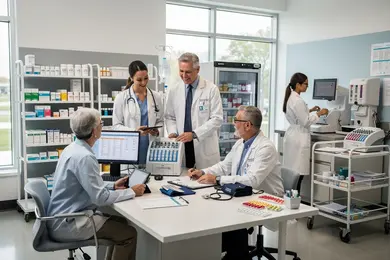
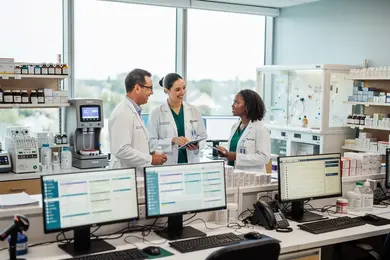
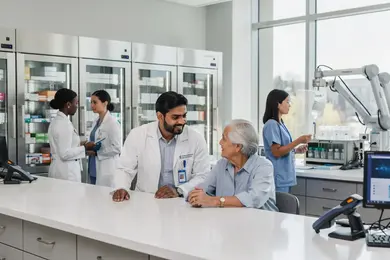
2027 Online PharmD Programs use interactive platforms and virtual simulations to promote interprofessional collaboration skills. Students engage with peers from various healthcare fields through case studies and team-based projects, fostering communication and problem-solving abilities needed for effective collaboration in clinical settings.
References
- Distance Doctor of Pharmacy Program https://pharmdonline.findlay.edu/programs/online-pharm-d
- Do All Pharmacy Programs Offer Experiential Education? https://www.belmont.edu/stories/articles/2024/pharmacy-program-experiential-education.html
- Best Online PharmD Programs https://pharmddegree.com/choosing/best-online-pharmd-programs
- Earn Your PharmD with Flexibility: Explore the Hybrid Program at West Coast University | West Coast University https://westcoastuniversity.edu/blog/earn-your-pharmd-with-flexibility-explore-the-hybrid-program-at-west-coast-university
- Pharmacy (PharmD) https://www.creighton.edu/academics/programs/pharmacy
- Pharmacist Opportunities That Leverage Transferable Skills https://helenysak.com/articles/f/how-pharmacists-can-leverage-transferable-skills
- Unlocking the Perfect Fit: Your Ultimate Guide to Selecting the Ideal Pharmacy School https://pharmacyforme.org/2024/02/29/unlocking-the-perfect-fit-your-ultimate-guide-to-selecting-the-ideal-pharmacy-school
- Four-Year Entry Level PharmD Program https://pharmacy.howard.edu/academic-programs/four-year-entry-level-pharm-d-program
- Accreditation Standards for Pharmacy Programs https://www.pharmacycouncil.org.au/resources/pharmacy-program-standards/
- Pharmacy Doctorate (PharmD) Salary and Career Outlook https://teach.com/online-ed/healthcare-degrees/online-pharm-d-programs/pharmacy-doctorate-salary-career-outlook/