2027 Best Online Master's in Data Analytics for Marketing Analytics Leadership

Co-Founder and Chief Data Scientist
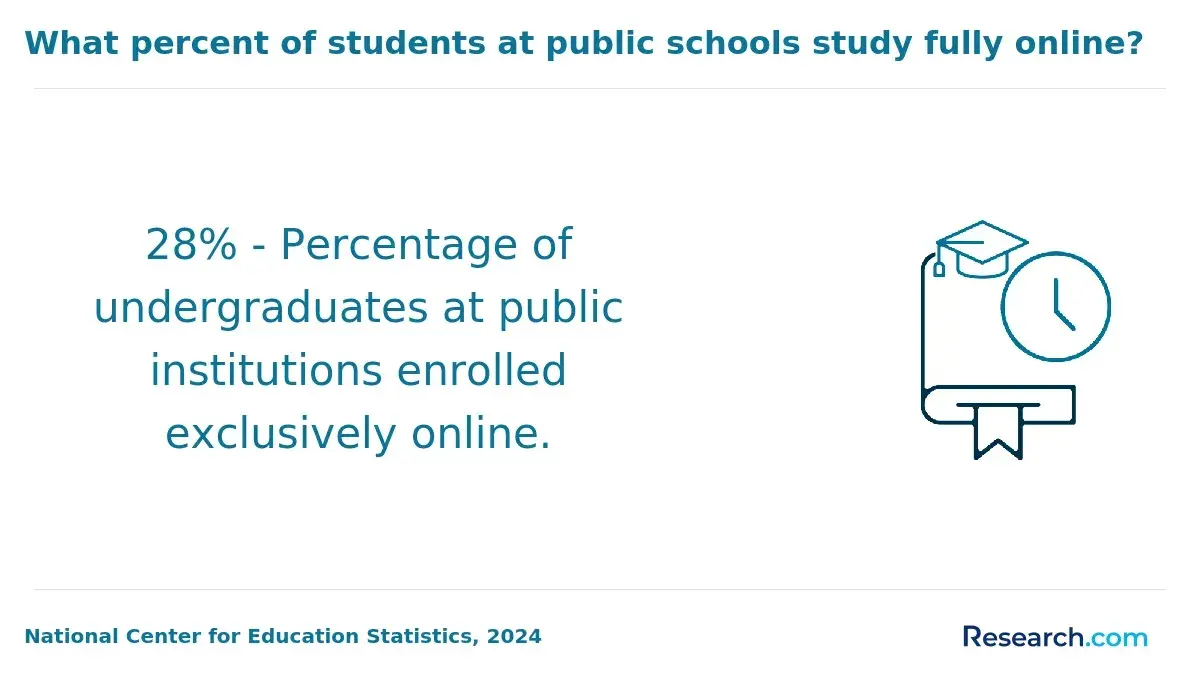
Landing a leadership role in marketing analytics demands not only advanced technical skills but also the ability to synthesize complex data into strategic business insights under tight deadlines. However, many professionals face the difficult choice between enrolling in a rigid on-campus program and putting their careers on hold. According to the National Center for Education Statistics, over 40% of graduate students enrolled in online programs in 2024, signaling a clear shift toward flexible education models. This trend matters because accessibility and schedule adaptability often determine whether working professionals can upgrade skills in real-time without sacrificing income or job stability. This article outlines top online master's programs tailored for current and aspiring marketing analytics leaders, focusing on program flexibility, curriculum relevance, and career impact to help readers make informed enrollment decisions aligned with their professional goals.
Key Things You Should Know
- The scarcity of marketing analytics leadership candidates with combined technical and strategic training narrows competitive pools, forcing organizations to prioritize graduates with demonstrable cross-functional decision-making experience.
- Employers report 45% higher retention when new hires complete master's programs incorporating applied marketing data sets, highlighting the premium on real-world project integration over theoretical knowledge.
- Median online master's tuition rose 9% since 2023 per the National Center for Education Statistics, intensifying candidate cost-benefit tensions amid uncertain ROI timelines in marketing analytics leadership roles.
What is an online master's in data analytics for marketing analytics leadership?
Leadership roles in marketing increasingly demand professionals who integrate technical expertise with strategic management, making an online master's in data analytics focused on marketing leadership a distinct pathway. This degree combines statistical modeling, machine learning, and business intelligence with leadership skills aimed at managing analytics teams and shaping marketing strategy. Graduates gain the ability to translate complex consumer data into targeted actions that improve campaign performance and resource allocation.
For example, in e-commerce, the application of an advanced marketing analytics and data strategy degree online equips professionals to identify nuanced buying patterns and implement personalized marketing initiatives that boost conversion rates while optimizing analytics operations. In financial services marketing, these skills enable segmentation by client risk profiles and the delivery of precisely tailored messaging to reduce acquisition costs and enhance retention.
The demand for marketing analysts with these hybrid skills is evident in a 46.7% year-over-year surge from 2023 to 2024, reflecting a competitive job market where leadership in analytics is increasingly valued. However, pursuing such degrees involves balancing rigorous technical training with leadership coursework, often within accelerated or part-time online formats that accommodate working professionals. Students must critically evaluate program flexibility, the quality of cohort collaboration, and the availability of applied projects to ensure alignment with employer expectations and industry relevance. For more on optimal educational pathways, consider this master in data analytics.
How does an online marketing analytics master's compare to a traditional on-campus program?
The choice between an online marketing analytics master's degree versus traditional program hinges on balancing flexibility with experiential depth. While both formats deliver comparable curriculum rigor and technical skill development, working professionals benefit from the asynchronous structure of online programs that enable immediate application of marketing analytics tools in fields like retail and healthcare without pausing employment.
On-campus marketing analytics master's programs typically provide enhanced opportunities for in-person networking, faculty mentorship, and internships, critical for candidates targeting specialized roles such as consumer behavior modeling in large agencies. However, employers prioritize demonstrated project experience and technical proficiency-often assessed through portfolios-over whether the degree was earned online or on campus. This makes an online degree equally valid if paired with practical, industry-relevant work.
Job market data highlights parity in outcomes: U.S. marketing analytics managers earn a median annual salary of $119,920, with top performers exceeding $150,000, underscoring that mastery of analytics frameworks underpins leadership roles independent of educational delivery.
Those pursuing an online marketing analytics master's degree versus traditional program should proactively secure virtual internships and seek capstone projects mirroring real challenges to bolster employability. The practicality of online learning aligns well with advancing professionals who need strategic marketing analytics case studies integrated into their curricula.
For those also considering adjacent tech-based fields, the ms in applied artificial intelligence offers a complementary skill set relevant to evolving marketing data strategies, providing a broader analytical toolkit.
Which accredited schools offer the best online master's in marketing analytics leadership?
Top accredited online master's in marketing analytics leadership programs forge a crucial bridge between advanced technical skills and strategic business influence. Employers increasingly expect graduates to not only master complex quantitative tools but also translate these insights into actionable marketing decisions. Institutions like Northeastern University and University of Southern California encapsulate this balance, yet choosing a program involves recognizing real operational tradeoffs. Shorter curricula offer faster entry but may limit mastery of emerging analytics software, whereas longer programs enable deeper expertise at the cost of extended time and investment.
Compared to general marketing degrees, online master's degrees in data analytics for marketing leadership report a median 58% salary increase after graduation, a significant 15-point boost over typical marketing master's outcomes. This demonstrates the premium employers place on integrated data and leadership capabilities. For professionals targeting roles such as marketing analytics director or chief data officer, programs with strong asynchronous options and industry collaboration ease career pivots and fast-tracked advancement.
Decision makers should weigh factors including accreditation, faculty expertise in both marketing and advanced analytics, and alumni networks. Real-world projects embedded within coursework enhance job readiness in sectors like retail and healthcare, where interpreting large datasets is a baseline expectation. For those exploring adjacent roles, understanding how to become an AI trainer with no experience offers alternative angles in data-driven leadership pathways.
What are the typical admission requirements for online marketing analytics master's programs?
Admission to online marketing analytics master's programs in the United States demands more than basic academic credentials; it reflects an intersection of technical preparation, practical experience, and leadership potential. Employers increasingly prioritize candidates who demonstrate quantitative proficiency alongside strategic marketing insight. Typical admission criteria for online marketing analytics master's programs United States often include a bachelor's degree in marketing, business, or related fields, with a minimum GPA around 3.0, although some flexibility exists for career switchers lacking formal technical backgrounds.
The graduate program requirements for marketing analytics leadership degrees online emphasize documented skill with tools such as SQL, Python, R, or Tableau to prevent early course bottlenecks. Around half of these programs waive GRE or GMAT scores for candidates with substantial work experience or advanced degrees, reflecting shifting employer priorities toward practical skill sets rather than standardized test metrics.
Admissions committees also weigh personal statements targeting career objectives and leadership capacity, plus letters of recommendation attesting to soft skills and adaptability. This balance matters because marketing analytics leadership roles rely on communication and decision-making under ambiguity, not just technical output.
Students evaluating educational pathways should note that programs serving nontraditional candidates may require prerequisite courses or portfolio submissions, which can extend time and cost. Comparing options alongside alternatives-like certificates or self-directed learning-can clarify tradeoffs between speed, access, and credential value.
For those assessing fit within broader degree landscapes, resources such as the best exercise science degree online listings illustrate how evolving admissions policies align with workforce skill demands across disciplines.
What core courses and specializations are included in these marketing analytics programs?
Online master's programs in marketing analytics leadership require a rigorous blend of advanced quantitative methods and applied marketing insights, reflecting employer demand for specialists who can convert complex data into actionable strategy. Core coursework covers statistical modeling, machine learning techniques tailored to marketing contexts, and customer behavior analysis. These skills are essential for sectors where precision impacts revenue and loyalty-retail uses them for fine-tuned product recommendations, while finance firms focus on customer lifetime value prediction.
A significant practical consideration is the program's relevance to industry tools such as Python, R, CRM analytics, and social media data interpretation. Mastery of these technologies enables graduates to address real-world challenges, including compliance in healthcare marketing analytics and regulatory constraints.
Leadership development within these degrees centers on translating data insights into strategic decisions, fostering communication between technical teams and business executives. This cross-functional competence is often undervalued by students but crucial for progressing into management roles.
Tuition from Hakias 2026 data ranges widely between $12,000 to $67,000 annually, reflecting tradeoffs between curriculum depth, faculty expertise, and networking access. Prospective students should assess whether program flexibility aligns with their work commitments-and whether the investment demonstrably improves leadership opportunities in marketing analytics.
How long do online data analytics programs for marketing leaders take and what do they cost?
Choosing the duration and cost of an online data analytics program requires balancing immediate work availability with long-term career positioning. Accelerated programs, often demanding 15 to 20 hours weekly, can be completed in about one year, appealing to those needing rapid skill acquisition, such as marketing professionals focused on campaign strategy. However, these condensed schedules may limit depth of study or result in less institutional prestige compared to longer options.
Part-time tracks extend to 24 months or more, accommodating employed students but delaying workforce reentry or promotion eligibility. Industries with stringent regulatory demands-finance and healthcare, for instance-often justify longer programs to ensure comprehensive analytics expertise essential for compliance and risk management.
Cost differences can be stark. Online master's degrees in business analytics start under $20,000 in tuition, significantly less than $40,000 to $80,000 for equivalent on-campus programs at the same universities. The savings can finance supplementary certifications or practical learning tools, although prospective students must evaluate whether reduced expenses compensate for differences in program rigor or employer perception.
- Program length directly impacts income continuity and career pivot timelines.
- Employer preferences often weigh rigor and applicability over mere program brevity or cost.
- Strategic alignment with one's industry requirements and workload capacity ensures sustainable progress without undue sacrifice.
What careers can graduates pursue with an online master's in marketing analytics?
An online master's in marketing analytics equips graduates for roles that demand blending quantitative rigor with business insight, notably in environments where data-driven decisions influence revenue directly. For example, a marketing data analyst in retail integrates sales figures and web behavior to forecast demand and adjust promotions, impacting inventory and profitability dynamically rather than relying on intuition alone. This intersection of skills reduces operational friction but requires mastery beyond basic analytics tools.
Leadership positions in marketing analytics increasingly call for competence in advanced programming languages like Python and SQL, machine learning platforms, and strategic alignment of analytics with corporate goals. These roles are concentrated in sectors with sizable marketing budgets, such as technology, finance, healthcare, and consumer goods. According to AnalyticsDegrees.org, over 90% of marketing leaders report heightened investment in analytics capabilities since 2020, which signals rising employer expectations for graduates to fill these positions.
Beyond technical skills, advancing professionals must navigate organizational challenges including cross-functional communication, compliance with data privacy laws, and managing imperfect data sets. Demonstrable impact on marketing ROI and successful project leadership are often prerequisites for mid-career transitions toward analytics leadership. Given the rapid evolution of AI-driven tools in marketing, continuous skill development is essential to sustain relevance.
Key career paths include:
- Marketing data analyst focusing on campaign analytics and reporting
- Customer insights manager generating actionable segmentation models
- Marketing operations analyst streamlining internal data workflows
- Digital marketing strategist integrating analytics with creative planning
- Analytics leader overseeing data initiatives and cross-team collaboration
What salary ranges and earning potential exist for marketing analytics managers and leaders?
Salary outcomes for marketing analytics managers in the U.S. reflect real-world distinctions shaped by industry, company size, and location. Entry-level roles often start below $90,000 but can reach six figures quickly when moving into sectors like consumer goods or tech, where salaries commonly range from $120,000 to $150,000, reaching beyond $180,000 for senior leaders in top firms. This variation is not solely about titles; it directly correlates to specific skill sets and market demands.
Employers actively seek advanced data analytics capabilities including predictive modeling, customer segmentation, and multi-channel attribution. These proficiencies drive a distinct compensation premium, especially as 73% of hiring managers prioritize such expertise-an increase from 54% five years ago, according to GMAC's 2024 employer survey.
Tradeoffs become clear when considering industry priorities: retail firms highly value real-time data fluency and scenario planning, while financial services emphasize regulatory compliance analytics. Candidates with narrower or outdated skills face slower wage growth and limited upward mobility.
Master's degrees emphasizing applied analytics align closely with employer expectations for integrated, cross-functional insights and measurable ROI contributions. For professionals targeting lasting impact and meaningful salary gains, educational choices must focus on these practical competencies rather than generalized credentials.
What is the job outlook and industry demand for marketing analytics and data professionals?
Job growth for marketing analytics and data professionals hinges on those who bridge analytical skills with strategic business insight. Roles that integrate marketing and analytics, such as marketing analytics manager or customer insights lead, are expanding faster than purely technical positions. Over 60% of graduates from data analytics-focused marketing analytics master's programs move into these hybrid roles rather than narrow technical jobs, reflecting employer demand for cross-functional expertise.
This shift requires educational paths that balance proficiency in tools like SQL and Tableau with applied knowledge in market segmentation, consumer behavior, and ROI measurement. For example, a growth analyst at an e-commerce firm must design tests and analyze customer data to optimize advertising spend, demonstrating both statistical fluency and marketing acumen.
Employers prioritize candidates who translate complex data into actionable business strategies and communicate findings effectively to non-technical stakeholders. Lack of business context often relegates candidates to specialized technical roles with limited advancement, highlighting the need for programs that blend advanced analytics with practical business applications.
Job seekers should therefore evaluate programs on how well they prepare graduates for these intertwined competencies and real-world challenges. Emphasizing both technical depth and communication skills is essential for securing and thriving in the evolving marketing analytics job market.
How can students evaluate and choose a reputable online marketing analytics program?
Program accreditation and curriculum rigor remain the most reliable indicators of tangible value in marketing analytics education. Regional or national accreditation verifies baseline quality, but specialized coursework in predictive modeling, customer segmentation, and marketing visualization differentiates programs with direct relevance to market demands. For instance, a professional aiming for retail marketing leadership benefits most from applied studies in consumer behavior analytics paired with real-time campaign tracking skills.
Employer preferences increasingly favor candidates with targeted credentials: data from the Graduate Management Admission Council shows applicants holding specialized analytics master's degrees have 2.1 times higher chances of being shortlisted for data-driven marketing roles compared to general business degree holders. This reflects a market shift toward niche expertise rather than broad-based analytics fluency.
Assessing graduate employment rates alongside salary benchmarks helps gauge return on investment. Practical factors such as partnerships enabling internships or real-world projects often determine how effectively students bridge gaps-especially relevant for those switching disciplines, like finance to marketing analytics.
Flexibility and technology platforms impact accessibility for working professionals; programs balancing asynchronous learning with cohort interaction create better environments for collaboration and networking, essential for advancement. Total cost should be weighed against these outcomes, favoring transparent pricing structures aligned with clear post-graduation employment metrics.
Other Things You Should Know About Data Analytics
Most programs require a final capstone in the last term, often 3 to 6 credits. Students usually complete a business problem using real or simulated marketing data, build models in tools such as Python or Tableau, and present findings in a written report or executive presentation.
Online programs can effectively teach data analytics tools if they incorporate hands-on labs, real datasets, and interactive coding assignments. However, students should verify the availability of software access, such as Python, R, or advanced BI platforms, within the online environment. Programs relying heavily on passive lectures without practical components risk leaving graduates underprepared for real-world data challenges, which employers consistently flag as a gap.
Employers focus on skills and experience over delivery mode but value programs with proven rigor, accreditation, and practical project work. Candidates from online programs with integrated internships or industry partnerships are prioritized as their learning outcomes demonstrate workplace readiness. Students should choose programs that emphasize applied leadership and analytics projects to overcome any residual stigma linked to online credentials.
Specializing in marketing analytics leadership typically delivers a more direct career trajectory into management roles by combining technical and strategic competencies. Broader data analytics programs provide flexibility but may dilute exposure to marketing-specific challenges and leadership training. For professionals targeting marketing leadership, prioritizing specialized programs with case studies on marketing data applications improves both relevance and employability.
References
- The 5 best Digital Marketing Analytics courses https://xd-i.com/en/digital-marketing-en/digital-marketing-analytics/
- Top Marketing Management Roles and Salary Potential Guide | BSBI https://www.berlinsbi.com/blog/top-marketing-management-roles-and-their-salary-potential
- Marketing Manager Salary in 2026: Complete Breakdown by Experience, Location, and Industry | South https://www.hireinsouth.com/post/marketing-manager-salary
- Is Market Research a Good Career? Salary, Skills & Future Outlook https://nexusexpertresearch.co/blog/is-market-research-a-good-career/
- How to Choose the Right Online Marketing Degree for the AI Era | IWU https://www.indwes.edu/articles/2026/06/how-choose-right-online-marketing-degree-for-ai-era
- Master’s in marketing online | Top Programs on edX https://www.edx.org/masters/marketing
- Digital marketing analytics: The beginner’s guide to data-driven marketing success https://piwik.pro/blog/digital-marketing-analytics-beginners-guide/
- Assess for Success: Marketing Analytics and Measurement | Grow with Google https://grow.google/certificates/digital-marketing-ecommerce/c5-assess-for-success-marketing-analytics-and-measurement
- MSc in Digital Marketing and Data Analytics - GEM https://www.grenoble-em.com/en/programs/msc-digital-marketing-and-data-analytics/
- What kind of job can you do with a master's degree in marketing and sales? - INSEEC https://www.inseec.com/en/guides/career-path-guide/what-kind-of-job-can-you-do-with-a-masters-degree-in-marketing-and-sales/