2027 Best Online Creative Writing Degrees for Students With a Communications Background

Co-Founder and Chief Data Scientist
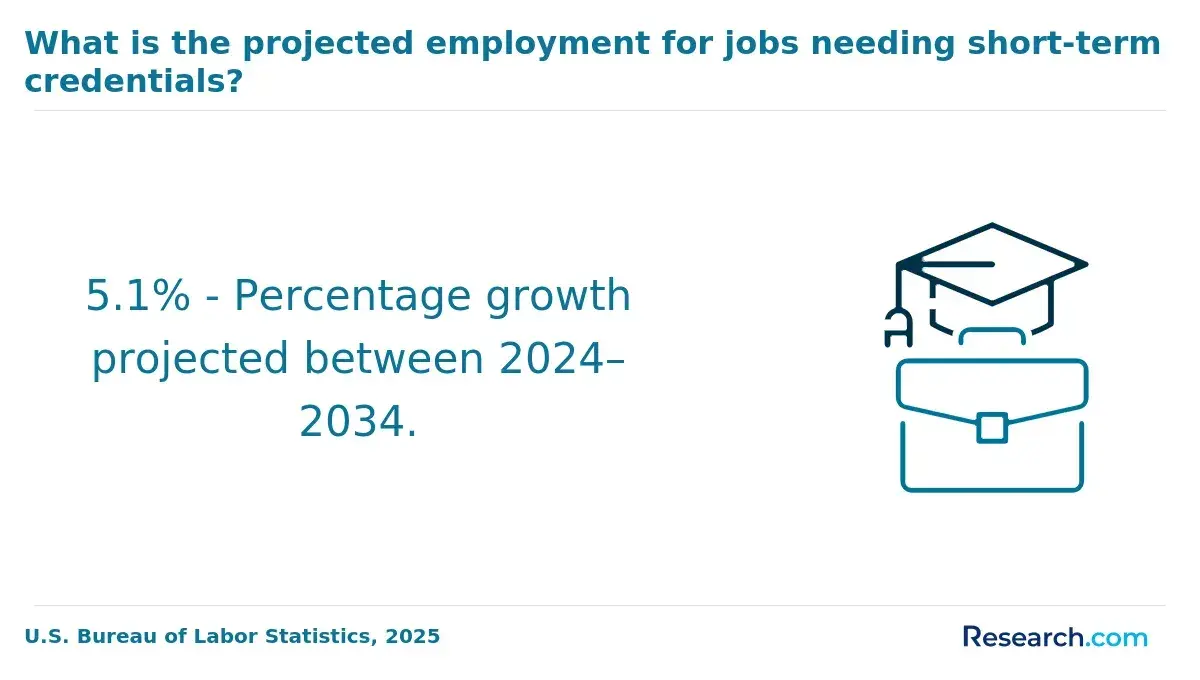
Communications majors often reach a point where strong messaging skills are not enough; they need a deeper portfolio, a sharper voice, and proof they can write across genres. The U.S. Bureau of Labor Statistics projects writers and authors to see 5% employment growth from 2024 to 2034, which keeps competition real but opportunity active.
This guide is for communications graduates and professionals comparing online creative writing degrees. You will learn how programs work, what they cost, which formats fit different goals, and how to choose a credible option.
Key Things You Should Know
- The best online creative writing degree for a communications major depends on career intent: an MFA fits literary, teaching, and advanced portfolio goals, while a bachelor's or certificate may be enough for content, publishing, or brand storytelling roles.
- Program quality should be verified through institutional accreditation, faculty publishing experience, workshop structure, portfolio outcomes, transfer policies, and transparent total cost rather than rankings alone.
- BLS data for 2024 places the median annual wage for writers and authors at $72,270, but outcomes vary widely by industry, location, portfolio strength, technical skill, and whether the graduate works in salaried, freelance, or hybrid roles.
What is an online creative writing degree and how does it benefit communications majors?
An online creative writing degree is a college program delivered partly or fully through distance learning that teaches fiction, nonfiction, poetry, screenwriting, publishing, editing, literary analysis, and professional writing craft. For communications majors, the degree builds on existing strengths in audience analysis, media strategy, persuasion, and message design while adding deeper practice in narrative, style, voice, revision, and manuscript development.
The biggest benefit is specialization. A communications background often prepares students to write for organizations, campaigns, brands, and public audiences. Creative writing adds the ability to create character-driven stories, essays, long-form narratives, scripts, and polished portfolios. This combination can be useful in publishing, content strategy, entertainment media, nonprofit storytelling, communications leadership, and graduate-level teaching paths.
The degree is usually worth considering if the student needs a structured writing community, faculty feedback, a publishable portfolio, or a credential for teaching or advanced editorial work. It may be less useful for someone whose main goal is general marketing, social media management, or corporate communications and who can reach that goal faster through a shorter certificate, targeted writing workshops, or employer-sponsored training.
For communications professionals, the practical value usually comes from three outcomes: stronger original work, more disciplined revision habits, and evidence of advanced writing ability. Employers rarely hire based on the words "creative writing" alone; they hire based on samples, publishing experience, audience fit, and the ability to produce reliable work under deadlines.
How do online creative writing programs compare with campus-based options for communications graduates?
Online and campus-based creative writing programs can lead to similar academic credentials, but the learning experience differs. Communications graduates should compare format based on schedule, desired peer interaction, access to literary networks, and how much structure they need to stay productive.
The table below summarizes the main trade-offs. Use it to decide whether online learning supports your writing process or whether an in-person environment would help you build stronger momentum.
| Factor | Online creative writing program | Campus-based creative writing program |
| Best fit | Working professionals, caregivers, military students, and students who need geographic flexibility | Students who want in-person workshops, campus literary events, and face-to-face mentoring |
| Workshop experience | Often asynchronous, using discussion boards, annotated submissions, video sessions, and peer critiques | Usually live and discussion-heavy, with immediate verbal feedback and studio-style critique |
| Networking | Can be strong if the program offers residencies, readings, alumni groups, and publishing events | Often easier for students who want local internships, campus journals, and informal faculty access |
| Cost considerations | May reduce relocation, commuting, and housing costs, but tuition varies widely by school | May provide stronger access to campus resources, but living costs can raise the total price |
| Risk to watch | Low interaction or weak feedback cycles can make the program feel like independent study | Rigid schedules can be difficult for students already working in communications roles |
Online programs make the most sense when students are self-directed and can protect weekly writing time. Campus programs may be better for students who produce their best work through live discussion, performance, readings, and spontaneous collaboration.
A strong online program should not feel isolated. Look for required workshops, one-on-one faculty mentorship, publishing or editing opportunities, and clear expectations for how often students receive detailed feedback. If an online program only offers lecture-based literature courses without serious portfolio development, it may not deliver the creative growth communications majors are seeking.
What types of online creative writing degrees are available to students with a communications background?
Students with a communications background can enter creative writing education at several levels. The right degree depends on previous credits, career stage, budget, and whether the student wants a credential for employment, portfolio development, graduate school, or teaching.
The table below compares common online creative writing degree options. It is most useful if you are deciding whether to start with a shorter credential or commit to a full undergraduate or graduate degree.
| Program type | Typical student profile | Primary value | Important limitation |
| Undergraduate certificate | Communications majors or professionals who want focused writing practice without a full degree | Fastest way to test interest and build samples | May not carry enough weight for teaching or advanced literary roles |
| Bachelor's in creative writing or English with a creative writing concentration | Students without a completed bachelor's degree or those changing fields early | Broad foundation in literature, writing craft, editing, and general education | May repeat coursework for students who already hold a communications degree |
| Post-baccalaureate certificate | Communications graduates who want graduate-level writing without committing to an MFA | Useful bridge for portfolio development and MFA preparation | Usually narrower than a full master's degree |
| Master of Arts in creative writing, English, or professional writing | Students who want advanced writing study with flexibility across literary and professional paths | Can combine craft, criticism, teaching preparation, and professional writing | May be less studio-focused than an MFA depending on curriculum |
| Master of Fine Arts in creative writing | Writers seeking intensive workshop training, a thesis manuscript, and advanced portfolio development | Often considered the terminal creative writing degree for college-level creative writing instruction | Time- and feedback-intensive; not always necessary for communications or marketing roles |
An online MFA creative writing program is usually the best fit for communications graduates who already know they want a serious manuscript, advanced workshop critique, teaching preparation, or a stronger literary identity. Students who mainly want to improve workplace writing may get better value from a certificate, professional writing master's, or targeted editing coursework.
One common mistake is choosing the highest degree level because it sounds more prestigious. A communications graduate who wants to become a UX writer, brand strategist, or content lead may not need an MFA. Conversely, someone who wants to teach creative writing at the college level or complete a book-length manuscript may find a short certificate too limited.
What admission requirements do online creative writing programs set for communications professionals?
Admission requirements vary by school and degree level, but online creative writing programs usually evaluate both academic readiness and writing potential. Communications majors often have an advantage because they can show writing experience, media literacy, and audience awareness, but they still need creative samples that match the program's genre expectations.
Most applicants should prepare the following materials before contacting admissions. These items matter because creative writing programs often judge fit through evidence of revision ability and artistic direction, not just grades.
- Official transcripts showing completed college coursework and degree history, with minimum GPA requirements set by the institution.
- A writing sample or portfolio, often in fiction, poetry, creative nonfiction, screenwriting, or a mix of genres allowed by the program.
- A statement of purpose explaining writing goals, genre interests, relevant communications experience, and why the online format fits.
- Letters of recommendation from faculty, editors, supervisors, or professional contacts who can discuss writing discipline and readiness for critique.
- A resume or CV showing communications work, publications, internships, editing roles, media projects, or teaching experience when applicable.
Graduate programs may also ask for a bachelor's degree from an accredited institution. Some MFA programs prioritize the manuscript sample more than the undergraduate major, which can help communications graduates who have strong creative work but limited formal literature coursework.
Undergraduate applicants who are still deciding on a bachelor's path should compare workload carefully. A program marketed as an easiest bachelor degree option may be appealing, but creative writing is not automatically easy; the challenge is sustained drafting, critique, reading, and revision. A better question is whether the curriculum matches the student's strengths and career plan.
Red flags include programs that do not require any writing sample for advanced study, vague portfolio expectations, unclear transfer credit rules, or admissions staff who cannot explain how online workshops work. Before applying, ask whether the program reviews creative work by genre and how applicants are matched with faculty mentors.
How can students verify accreditation and program quality for online creative writing degrees?
Accreditation is the first quality check for any online degree. In the U.S., students should confirm that the institution is accredited by an agency recognized by the U.S. Department of Education or the Council for Higher Education Accreditation. Creative writing itself is not typically tied to a required professional license, so institutional accreditation matters more than programmatic licensure approval.
Verification should be a step-by-step process rather than a quick scan of a school's homepage. Follow these actions before applying or submitting a deposit.
- Search the institution in the U.S. Department of Education's Database of Accredited Postsecondary Institutions and Programs or the CHEA database.
- Confirm the exact school name, campus, and online division because some universities have multiple entities or delivery partners.
- Check whether the degree title on the school site matches the title listed in the catalog and student handbook.
- Review transfer credit policies, withdrawal rules, tuition refund policies, and whether online students receive the same academic transcript as campus students.
- Ask for recent examples of student publications, thesis projects, internships, literary journal work, or alumni outcomes without relying on testimonials alone.
Program quality goes beyond accreditation. Strong online creative writing degrees have experienced faculty, active workshops, genre-specific advising, transparent thesis or capstone expectations, and access to library databases, writing centers, and career support. A program with famous faculty but little direct mentoring may be less useful than a less publicized program with consistent, detailed feedback.
Common red flags include pressure to enroll immediately, unclear faculty assignments, no published course rotation, limited access to academic advising, and credits that may not transfer. Communications professionals should be especially cautious with programs that promise publishing success or career outcomes, because writing careers depend heavily on portfolio quality, market fit, persistence, and industry networks.
What core courses and specializations do online creative writing programs typically offer?
Online creative writing programs typically combine workshop courses, literature study, craft seminars, editing practice, and a final portfolio or thesis. Communications majors should look for programs that respect their professional writing background while pushing them into more ambitious creative work.
Core courses usually develop craft, critique, and genre knowledge. The most valuable programs help students connect creative technique with audience, publication context, and revision strategy.
- Fiction workshop, including character, plot, dialogue, point of view, scene structure, and revision.
- Creative nonfiction workshop, including memoir, personal essay, literary journalism, research-based narrative, and ethical representation.
- Poetry workshop, including form, imagery, lineation, voice, sound, and contemporary poetic practice.
- Screenwriting or writing for media, including visual storytelling, structure, character arcs, scripts, and adaptation.
- Literature and craft seminars that study published work as models for technique and genre innovation.
- Editing, publishing, or literary magazine courses that teach submission strategy, editorial judgment, and professional standards.
- Capstone, thesis, or final portfolio courses that require a polished body of original work.
Specializations matter because they shape the portfolio students graduate with. A communications professional who wants to move into brand storytelling may prefer creative nonfiction, digital storytelling, or screenwriting. A student aiming for a literary career may prioritize fiction, poetry, or hybrid forms.
AI is also changing the writing classroom. Many programs now expect students to understand ethical authorship, originality, editing workflows, and how generative tools affect publishing and content creation. A strong program should clearly state its policy on AI-assisted drafting and teach students how to use technology without replacing craft, voice, or critical judgment.
The best curriculum for a communications major usually blends creative depth with professional adaptability. Courses in publishing, pedagogy, editing, digital narrative, or grant writing can make the degree more versatile than a workshop-only sequence.
How long do online creative writing degrees take and what do they cost?
Program length and cost depend on degree level, enrollment pace, transfer credits, residency requirements, and whether the institution charges online students in-state, out-of-state, or flat-rate tuition. The College Board's 2024 pricing data reported average published tuition and fees of $11,610 for in-state students at public four-year colleges for 2024-25, which is a useful benchmark when comparing online undergraduate tuition to traditional public options.
For online creative writing degrees, students should compare total program cost rather than tuition per credit alone. Common cost ranges are best understood by credential type.
- Undergraduate certificate: often the lowest total cost because it requires fewer credits, but it may not qualify for the same financial aid as a degree program.
- Bachelor's degree: usually the highest total credit requirement, although transfer credits from a communications program can reduce both time and cost.
- Post-baccalaureate certificate: typically shorter than a master's and useful for portfolio development, but employer recognition varies.
- Master's degree or MFA: commonly requires two to three years of full-time study, with part-time online formats extending the timeline for working adults.
Students should also budget for fees that are easy to miss. These may include technology fees, online course fees, books, residency travel, graduation fees, transcript fees, thesis binding or archiving costs, and lost income if the program requires intensive residency periods.
To control cost, communications majors should take these practical steps before enrolling.
- Request a written total cost estimate for the full degree, including fees and any required residencies.
- Ask how many prior communications credits will transfer and whether transfer credits reduce upper-division or elective requirements.
- Compare part-time and full-time pacing because slower enrollment can preserve income but may increase fee exposure over time.
- Check whether employer tuition assistance applies to creative writing, professional writing, English, or communications-related degrees.
- Prioritize accredited public or nonprofit institutions with transparent tuition before considering higher-cost options with unclear outcomes.
The cheapest program is not always the best value. A slightly higher-cost program may be worth it if it offers stronger faculty feedback, better portfolio development, useful publishing opportunities, or a format that helps the student finish. The poor-value choice is a program that costs more without improving mentorship, flexibility, credibility, or career relevance.
What careers can communications majors pursue with an online creative writing degree?
Communications majors with online creative writing training can pursue careers that combine narrative skill, audience strategy, editing, and content development. The degree is especially useful when paired with a strong portfolio and experience in media, publishing, marketing, education, or nonprofit storytelling.
The table below outlines common career directions. It focuses on how creative writing adds value to a communications background rather than implying that the degree alone is enough for each role.
| Career path | Typical responsibilities | How creative writing helps |
| Writer or author | Create books, essays, scripts, articles, or long-form narrative projects | Develops voice, structure, revision discipline, and manuscript-level thinking |
| Content strategist | Plan editorial calendars, shape brand voice, guide content across channels, and measure audience response | Adds storytelling range and stronger narrative control |
| Editor | Revise copy, manage submissions, shape manuscripts, and coordinate publication workflows | Improves critique skills and genre awareness |
| Copywriter | Write persuasive campaign, product, email, social, and landing page copy | Strengthens voice, concision, imagery, and emotional appeal |
| Technical or UX writer | Translate complex information into clear instructions, interfaces, help content, or documentation | Supports clarity and audience empathy, though technical training may also be needed |
| Screenwriter or narrative designer | Write scripts, storylines, dialogue, interactive narratives, or media concepts | Builds plot, character, pacing, and scene structure |
| Teaching or workshop facilitation | Teach writing, lead workshops, mentor writers, or develop curriculum | MFA-level study may support college-level creative writing instruction, depending on employer requirements |
AI has made portfolio differentiation more important. Employers increasingly value writers who can generate original ideas, edit machine-assisted drafts, maintain a consistent voice, and make ethical decisions about authorship. Communications graduates who want a deeper technology angle may also compare writing-centered training with an applied artificial intelligence degree, especially if they are interested in content automation, AI product communication, or human-centered technology roles.
Students should also consider adjacent roles that do not require a creative writing degree but reward the skill set. These include grant writer, development communications specialist, publishing assistant, literary agent assistant, podcast writer, speechwriter, brand journalist, and communications manager. In many of these roles, internships, clips, editing experience, and industry knowledge matter as much as the degree title.
What salary ranges and job outlook can creative writing graduates with communications experience expect?
Salary and job outlook vary because creative writing graduates work across many industries. A novelist, salaried content strategist, freelance copywriter, university instructor, and technical writer may all use creative writing skills but face different pay structures and hiring markets.
The table below uses U.S. Bureau of Labor Statistics 2024 wage and 2024-2034 outlook categories for relevant occupations. These figures are national medians or projections, so they should be treated as labor-market context, not expected personal outcomes.
| Occupation | 2024 median annual wage | 2024-2034 outlook context | Decision note for communications majors |
| Writers and authors | $72,270 | Projected employment growth of 5% | Best aligned with original writing, publishing, scripts, essays, and long-form creative work |
| Editors | $75,260 | Projected decline in traditional editing roles | Portfolio, digital publishing skills, and subject expertise can matter more than the degree name |
| Technical writers | $91,670 | Projected growth as organizations need clear documentation for complex products | Creative writing helps clarity and audience focus, but technical or domain knowledge is often necessary |
| Public relations specialists | $69,780 | Projected growth as organizations manage public messaging across channels | Strong fit for communications majors who add storytelling and narrative campaign skills |
| Advertising, promotions, and marketing managers | $161,030 | Projected growth tied to digital marketing and audience analytics | Usually requires broader marketing experience, leadership, analytics, and business judgment |
The salary lesson is that creative writing can improve competitiveness, but it rarely operates alone. Higher-paying paths often combine writing with technical knowledge, analytics, management, marketing strategy, or specialized industry expertise. Lower-income variability is more common in freelance, literary, and early-career creative roles where income may depend on assignments, advances, royalties, or part-time work.
Job outlook should also be interpreted carefully. Growth in one writing-related occupation does not mean every graduate will find the same opportunity. Location, remote-work competition, AI adoption, portfolio quality, internships, and industry specialization all affect results. Communications majors can reduce risk by graduating with samples tailored to real roles, such as published essays, campaign copy, UX content, scripts, grant narratives, or edited manuscripts.
How should communications majors choose the best online creative writing program for their goals?
The best online creative writing program is the one that fits your writing goals, budget, schedule, and target career. Communications majors should avoid choosing solely by prestige, tuition, or a generic ranking because writing outcomes depend heavily on mentorship, workshop quality, and portfolio fit.
Use the following process to compare programs in a practical way. It is designed to help you narrow a long list of schools to a few credible options worth applying to.
- Define your target outcome first: manuscript development, publishing, teaching, content strategy, editing, screenwriting, or personal creative growth.
- Match the degree level to that outcome, choosing a certificate for focused skill-building, a bachelor's for foundational study, a master's for advanced professional or academic goals, or an MFA for intensive creative practice.
- Review faculty by genre and teaching involvement, not just reputation, because students need mentors who actively support their type of writing.
- Compare workshop design, including class size, critique frequency, synchronous requirements, residency options, and expectations for revision.
- Ask for total cost, transfer credit evaluation, financial aid eligibility, and a realistic completion timeline before applying.
- Evaluate career support, including internships, literary journals, publishing guidance, alumni networks, teaching opportunities, and portfolio review.
- Check student work samples, thesis requirements, and capstone expectations to see whether the program produces the kind of writing you want to create.
Students whose main goal is business communication, entrepreneurship, or marketing leadership may want to compare creative writing with the best online business degree options, especially if they need management, finance, analytics, or operations training. The smarter investment is the credential that closes the biggest gap between current skills and target roles.
Before enrolling, ask admissions or the program director direct questions. How are online students assigned to faculty? How many pages do students submit per workshop? Are residencies optional or required? What happens if a needed course is not offered? Can communications credits transfer? Are assistantships, scholarships, or employer reimbursement options available for online students?
A good final test is simple: if the program disappeared from your resume, would the portfolio, feedback, network, and discipline you gained still move your career forward? If the answer is yes, the program may be a strong fit. If the answer depends only on the credential name, compare alternatives before committing.
Other Things You Should Know About Creative Writing
Many programs accept applicants from varied majors. Graduate programs usually focus on transcripts, a writing sample, a statement of purpose, recommendations, and evidence that the applicant can handle critique and sustained writing.
Some programs are fully online, while others use low-residency formats that require short campus visits. Always confirm whether residencies are required, how often they occur, and whether travel costs are included in the school's cost estimate.
It depends on the goal. Creative writing is stronger for fiction, nonfiction, scripts, literary work, and narrative voice. Professional writing is often more direct for workplace documents, technical communication, grant writing, and corporate content.
In 2027, top online creative writing degrees for communications graduates include programs at the University of Iowa, Emerson College, and Southern New Hampshire University. These programs offer flexible schedules, industry-relevant coursework, and strong networks to support future careers in writing and communications.
References
- Charting your writing journey: Top creative writing courses in Canada, Ireland, UK https://www.oncreativewriting.com/post/charting-your-writing-journey-top-creative-writing-courses-in-canada-ireland-uk
- Creative Writing for Cross-media – ETIC https://etic.pt/en/course/creative-writing-for-crossmedia-en/
- How to choose the best online creative writing course step-by-step https://nationalcentreforwriting.org.uk/writing-hub/best-online-creative-writing-courses/
- What can you do with a Communication, Media or Writing degree? https://www.falmouth.ac.uk/study/undergraduate/what-can-you-do-communication-media-writing-degree
- BA Hons Creative Writing Enrolment Form https://www.oca.ac.uk/courses/ba-creative-writing/
- Choosing a Creative Writing Course https://www.nawe.co.uk/writing-in-education/writing-at-university/choosing-a-course.html
- Create Your Best 2025 with These Top MFA Creative Writing Programs https://www.onlinemastersdegrees.org/best-programs/fine-arts-mfa/creative-writing/
- What Can You Do With a Creative Writing Degree? 10 Careers That Pay You to Write | Extern https://www.extern.com/post/what-can-you-do-with-a-creative-writing-degree-career-guide
- Online Master’s in Creative Writing Degree Programs: MA vs MFA Programs https://www.mastersincommunications.com/related-degrees/masters-in-creative-writing