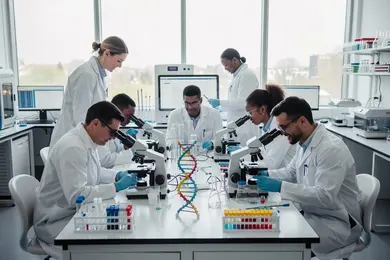
2027 Online Biology Degrees With Practice-Ready Science Curricula

Co-Founder and Chief Data Scientist
Professionals aiming to transition into biology careers face a significant obstacle: many programs lack curricula that translate directly into laboratory competency or fieldwork readiness. This disconnect complicates hiring decisions, especially when 62% of adult learners pursuing STEM credentials cite flexible scheduling as their primary concern, according to a 2024 National Center for Education Statistics report. Employers increasingly seek candidates with practice-ready skills rather than solely theoretical knowledge, creating pressure on students to find programs that integrate hands-on applications within online delivery.
This article evaluates online biology degree options emphasizing practical, science-centered training to help prospective students identify programs that align academic learning with workforce expectations.
Key Things You Should Know
- Online biology degrees emphasize remote lab simulations to meet accreditation standards, yet 45% of employers in 2024 cite reduced confidence in graduates' hands-on skills, complicating entry into lab-intensive roles.
- Data from the U.S. Bureau of Labor Statistics projects 8% growth in biology-related occupations by 2032, pressuring programs to integrate skill-based practicums, as workforce demand outpaces current graduate readiness.
- Average tuition for online biology programs increased 12% since 2022 per NCES, pushing students toward accelerated tracks despite documented retention declines linked to compressed practical curriculum delivery.
What is an online biology degree and how does it compare to a campus program?
Choosing an online biology degree demands a pragmatic assessment of how practical skills and network-building are integrated alongside theoretical coursework. While foundational topics like cell biology or genetics translate well online, the practical science curriculum in online biology education often hinges on hybrid or partnered lab experiences to meet industry standards. Without these, graduates may face challenges securing technical roles in biotechnology or clinical settings, where employers expect confirmed lab competencies.
Students balancing personal or professional commitments gain from online formats' flexibility and accelerated pacing, but must scrutinize whether programs offer accredited lab courses requiring on-site presence or validated virtual labs. Key decision factors include:
- Availability of hands-on lab work or credible simulations
- Opportunities for research involvement and mentorship essential for graduate programs or competitive positions
- Networking avenues through live sessions, internships, or local scientific communities
- Program reputation and industry recognition that influence hiring bias toward traditional experiences
For example, someone pivoting into clinical research coordination should prioritize programs guaranteeing lab rotations and employer ties, whereas those targeting regulatory roles in biotech might leverage fully online courses paired with industry certifications. Students actively weighing an online biology degree benefits compared to traditional campus programs should also consider gender representation trends, as biology ranks highly among female bachelor's earners, with 54% women graduates, supporting enhanced access to education for diverse demographics. Exploring careers with a bioinformatics degree can further inform practical outcomes tied to specific educational choices.
Are online biology degrees respected by employers and graduate schools?
Online biology degrees acceptance by employers hinges heavily on the program's integration of hands-on laboratory experience alongside theoretical coursework. Employers in sectors such as biotech and healthcare prioritize candidates demonstrating practical lab skills, often verified through internships or partnerships with local research facilities. For instance, medical research labs recruiting entry-level scientists typically require evidence of competency through project-based assessments, which fully remote programs may struggle to provide.
Graduate school admissions for online biology graduates similarly focus on program rigor, faculty research involvement, and documented lab experience. Candidates lacking formal practicums or internships face challenges, especially in competitive fields like biomedical sciences or ecology, where prior research exposure is critical.
The labor market outlook amplifies this expectation: the U.S. Bureau of Labor Statistics projects a 13.4% growth for medical scientists through 2032, with a median wage of $84,810, driving demand for biology-trained professionals ready to engage immediately on technical tasks.
Decision-makers should ensure online biology programs include:
- ABET or regional accreditation confirming academic standards
- Mandatory lab practicums or partnerships providing hands-on learning
- Faculty maintaining active research portfolios
- Support for securing internships within relevant industries
Graduates from programs lacking these elements often find themselves limited to entry-level roles requiring additional training. For students evaluating interdisciplinary options or considering a pivot, related pathways such as a data science doctorate online may offer distinct advantages depending on career goals and market positioning.
How can I verify that an online biology program is properly accredited?
Accreditation verification directly impacts your ability to gain employment, transfer credits, or pursue graduate study in biological sciences. Employers and graduate programs typically require degrees from regionally accredited institutions recognized by one of the U.S. Department of Education's six approved agencies, such as the Higher Learning Commission or the Middle States Commission on Higher Education. Online biology degrees with recognized accreditation ensure your coursework and credentials hold credible academic value rather than being dismissed by employers or transfer schools.
Some biology programs offer specialized accreditation from scientific organizations like the American Society for Biochemistry and Molecular Biology or ABET, signaling closer alignment with industry standards. This can matter less for entry-level roles but has long-term consequences for research positions and advanced certifications.
Working professionals pivoting to biology without accredited credentials risk limited access to legitimate certifications or lab jobs requiring transferrable credits. Confirm accreditation status using the U.S. Department of Education's Database of Accredited Postsecondary Institutions and Programs rather than relying on institutional claims. Cross-referencing is especially important, as unaccredited online programs may appear credible but lack recognized authority.
Steps to verify accreditation include:
- Searching the U.S. Department of Education's accreditation database for the institution and specific online biology program.
- Confirming whether the biology curriculum meets standards set by professional scientific societies.
- Reviewing if the institution's credits transfer to other accredited colleges, indicating recognized academic value.
For prospective students comparing pathways across disciplines, examining program accreditation in the context of other fields like exercise science can provide perspective on rigor and recognition-see online exercise science programs for a related example of program verification critical to workforce relevance.
What courses and lab experiences are included in a practice-ready online biology curriculum?
Online biology degree programs that claim to be practice-ready must balance theoretical coursework with sufficient hands-on experience, a challenging feat in fully virtual formats. While core subjects like molecular biology, genetics, and ecology lay essential groundwork, integrating biology lab and field experience curriculum is critical for developing practical skills employers demand, particularly in clinical research and environmental science roles. For example, proficiency in techniques like PCR and microscopy often requires access to physical lab equipment or supervised sessions.
Students face a tradeoff between flexibility and skill verification: fully online programs ease scheduling but may fall short in certifying technical competencies valued by hiring managers. Hybrid models that combine remote learning with local lab partnerships improve this balance, providing opportunities for skill demonstration and networking within the industry.
With 85,460 bachelor's degrees recently awarded in general biology-the second-largest STEM major nationally-competition for jobs is intense. Programs that incorporate quantitative methods, interdisciplinary case studies, and capstone projects simulate real-world challenges and differentiate candidates by showing applied understanding.
Prospective students evaluating pathways should consider whether curricula emphasize data analysis and authentic lab practicums, which underpin critical problem-solving abilities valued by pharmaceutical firms and environmental agencies. Comparing such options to related fields may reveal alternative routes; this is relevant alongside resources like the best online electrical engineering degree programs for veterans, where practical training challenges prompt similar tradeoffs.
How do online biology degrees handle labs, fieldwork, and hands-on training requirements?
Online biology degrees attempt to replicate critical hands-on training through a blend of hybrid models, local partnerships, and virtual simulations, but they inherently demand tradeoffs impacting student readiness and employability. Direct lab work remains essential, and these programs often require short on-campus residencies or collaborations with accredited local labs to provide this experience without necessitating full relocation. For instance, a student specializing in environmental biology might conduct experiments at a nearby university while completing project components remotely, balancing access and practical skill development.
Fieldwork, indispensable for ecology and organismal biology, generally involves supervised local assignments enabling data collection within a student's geographic constraints, paired with virtual evaluation by instructors. This arrangement suits working professionals but limits exposure to diverse field environments, which may affect competency in certain specialized roles.
Virtual labs reinforce conceptual understanding through interactive simulations but do not substitute for developing laboratory dexterity needed in research or biotech settings. Students should verify that any program they select transparently incorporates adequate in-person components, as employers, especially in pharma and clinical research sectors, prioritize verified hands-on experience.
Workforce data reflect growing participation from female and minoritized students accessing online pathways, yet this demographic shift intensifies the responsibility to ensure equitable practical training opportunities to maintain standards and career viability.
What admission requirements and prerequisites do online biology bachelor's programs usually have?
Selection criteria for online biology bachelor's programs vary significantly between institution types, shaping student pathways and workforce readiness. Two-year public colleges generally impose lighter admission conditions-usually a high school diploma and basic science prerequisites-making them accessible for those prioritizing affordability and speed. However, this can mean added hurdles later, including transfer complexities and extended time to degree completion.
In contrast, four-year institutions enforce more stringent prerequisites such as calculus and advanced chemistry, reflecting employer demands for quantitative proficiency and deeper foundational knowledge. This rigor better aligns with careers in biotech, environmental science, and clinical research where analytical skills and lab experience are indispensable.
Working professionals pivoting into biology must weigh these options pragmatically: choosing a 2-year route might expedite entry but rarely suffices alone for specialized roles requiring hands-on practice, which must be arranged locally or virtually. Direct admission to 4-year programs demands proven academic readiness upfront yet frequently results in smoother progression and stronger employability metrics.
- Minimum GPA thresholds typically fall between 2.5 and 3.0, emphasizing baseline academic readiness.
- Prerequisites often include high school biology, chemistry, and algebra, with some programs requiring college-level general education credits.
- Practicums or lab components are critical and must be confirmed as accessible given the online format.
How long does it take to complete an online biology degree and what does it cost?
Completing an online biology degree typically aligns with the traditional four-year full-time timeframe, though part-time enrollment can extend this period significantly, often to six years or more. Accelerated options-such as intensive summer courses or prior-learning credits-may shorten completion to around three years but demand rigorous time management and increased workload.
From a cost perspective, in-state tuition for online biology programs is frequently 30-40% less than on-campus equivalents, primarily due to savings on housing, commuting, and campus fees. For example, the University of Florida charges $15,504 for its in-state online biology bachelor's degree compared to $25,520 on-campus, illustrating how financial considerations weigh heavily in long-term investment decisions.
Employers in sectors like biotech and environmental science emphasize hands-on lab experience and fieldwork alongside academic credentials. Online students must proactively secure internships or practical placements; these are often prerequisites that can extend timelines and increase out-of-pocket expenses but are critical for actual workforce readiness.
Prospective students should realistically assess their ability to manage virtual lab practicums, maintain flexible schedules, and balance work commitments concurrently. Investigating institutional technology support, remote learner services, and accreditation is essential to ensure the degree's acceptance and rigor within competitive job markets.
- Typical completion time: 4 years full-time, 6+ years part-time, or about 3 years accelerated
- Cost advantage: up to $10,000 savings on tuition for in-state online versus on-campus biology degrees
- Workforce implication: securing internships or labs is crucial for employability despite added time and cost
- Student challenge: balancing virtual science practicums and work demands requires strong time management
What careers can I pursue with an online biology degree and what do they involve?
Online biology degrees demand careful scrutiny beyond curricular claims, especially regarding hands-on experience and industry standards. Careers such as biomedical research or clinical laboratory technology require advanced proficiency in molecular techniques, regulatory compliance, and accredited clinical hours that many online programs struggle to replicate fully. Students must actively seek supplemental internships or local lab access to meet these employer expectations.
Environmental consulting illustrates a typical tradeoff: virtual labs cannot substitute for fieldwork in ecosystem assessment, forcing students to identify region-specific opportunities for sampling and species identification outside the screen. Similarly, aspiring pharmaceutical sales professionals benefit less from lab focus and more from developing nuanced communication skills to translate biological data for healthcare providers.
Bioinformatics stands out as an interdisciplinary niche where proficiency in coding languages like Python and R merges with biology knowledge. Online programs increasingly integrate these technical skills, yet the gap remains in student access to computational tools and real-world data sets.
Demographic representation impacts networking dynamics; with White students forming roughly half of biology majors and underrepresented groups exceeding one-third, disparities in internship availability and job placement shape workforce patterns nationally.
Prospective students must rigorously evaluate program components for practical lab inclusion, certification alignment, and active pathways to internships-critical factors that determine real-world employability rather than degree possession alone.
What salary ranges and job outlook can graduates of online biology programs expect?
Entry-level salaries for online biology graduates typically range from $45,000 to $60,000 annually, with geographic location and specialization heavily influencing outcomes. Mid-career professionals can expect $70,000 to $90,000, though regional labor market variations require graduates to consider mobility to optimize earnings. For example, research assistant roles in academic or government labs start near $45,000 but offer steady growth through technical skill development and certifications.
In contrast, positions within the biotech industry-such as clinical research coordinators or quality control analysts-often command higher initial pay, due to demand for laboratory proficiency and regulatory expertise. Employers prioritize candidates with practical, hands-on experience, making online biology programs with integrated laboratory training more competitive in hiring pipelines.
Cost considerations are pivotal; some programs offer merit-based tuition discounts reducing costs from $275 to $150 per credit hour for high-achieving students, which substantially lessens debt load. Financial flexibility shapes career decision windows, especially when pursuing advanced credentials or transitioning into specialized fields like environmental consulting or medical technology.
Beyond biology fundamentals, graduates increasingly need data analysis, bioinformatics, or project management skills to remain competitive. Working professionals aiming for a career pivot benefit from portability and practice-focused curricula but must proactively build networks and pursue certifications to secure desirable roles and salary trajectories.
How do I choose a reputable online biology school that fits my goals and schedule?
Choosing an online biology program demands more than accreditation checks; it requires aligning educational delivery with tangible career outcomes. For example, professionals targeting biomedical research should prioritize programs offering hands-on lab simulations or partnerships with local labs to gain applicable skills. Meanwhile, working adults needing flexibility benefit from asynchronous courses with clear deadlines rather than synchronous formats that might conflict with work schedules.
Curriculum depth varies considerably. Prospective students must scrutinize offerings in genetics, ecology, and molecular biology while confirming availability of practicum or internships-components which significantly enhance employability in research or healthcare. Programs lacking applied experience may force graduates to bridge skill gaps independently, creating barriers in competitive job markets.
Time-to-degree and enrollment options influence financial and opportunity costs. Accelerated tracks may reduce tuition and fast-track entry into biology-related fields, but one should assess whether this intensity is feasible alongside work commitments. Conversely, extended part-time options accommodate schedules but extend total expense and delay workforce reentry.
Median annual wages for biology occupations hover around $65,000, higher than the U.S. median wage, yet this advantage depends on program quality and alignment with industry needs. Confirm if alumni outcomes and employer connections specifically target your intended field-be it environmental science, pharmaceuticals, or academic research-to avoid investing in credentials with limited practical return.
- Accreditation confirms credit recognition but doesn't guarantee career-readiness.
- Applied learning opportunities strongly impact job placement.
- Flexible scheduling can mitigate work-study conflicts but may affect pacing.
- Analyze alumni success to gauge real-world program value.
Other Things You Should Know About Biology
Online biology degrees often offer asynchronous coursework to accommodate different schedules, but the inclusion of mandatory labs and synchronous sessions may limit full flexibility. For working professionals, prioritizing programs with virtual labs or weekend/ evening options reduces conflict with full-time jobs. Programs that require in-person lab residencies should be carefully evaluated to ensure the time commitment fits one's current work and family obligations.
Online students miss frequent face-to-face interaction with faculty and peers, which reduces informal networking opportunities critical in biology fields. To compensate, students should choose programs with strong mentorship, active alumni networks, and career services focused on virtual engagement. Without proactive effort, online graduates may face disadvantages in referrals and research connections compared to on-campus cohorts.
Most online biology programs cover foundational knowledge but vary in research and lab intensity. Applicants targeting graduate research or medical school should prioritize programs with robust lab components, research opportunities, and faculty advising accessible remotely. Programs lacking on-site research experience may not fully meet prerequisites or demonstrate readiness for competitive graduate-level science careers.
References
- Online Biology Course: Complete Guide to Flexible Science Education [2025] - Prereqcourses https://www.prereqcourses.com/online-biology-course/
- Biological Sciences https://www.ualberta.ca/en/undergraduate-programs/bachelor-of-science-with-major-biological-sciences.html
- Is Your Online Degree Legitimate? How to Verify Private University Approval https://matchtocollege.com/blog/verify-private-university-online-degree-approval
- Lt | Biology Labs Online | Virtual Biology Labs & Lessons https://www.adinstruments.com/lt/biology
- Careers in Biology https://www.aibs.org/careers/
- What Is College Accreditation? How to Check If a School Is Legit https://abound.college/finishcollege/advice/accreditation-why-is-it-so-important/
- Are Online Degrees Accredited? How to Identify Quality Distance Learning Programs https://www.umassglobal.edu/blog-news/online-degrees-accredited-identify-quality-distance-learning-programs
- Online Bachelor's Degrees in Biology: Top Schools & Programs https://www.edumed.org/online-schools/biology-degrees/
- Top 15 Highest‑Paying Pharmacy Jobs in the UK 2025 (Including Salaries) https://apexlearning.org.uk/highest-paying-biology-degree-jobs-2025-2026/
- Training https://www.rsb.org.uk/training.html