2027 Online Biology Degrees for Students With Prior Chemistry Coursework

Co-Founder and Chief Data Scientist
Professionals with prior chemistry coursework often face a critical dilemma when seeking to pivot into biology-related careers: identifying online degree programs structured to acknowledge their existing credits without redundant class repetition. The National Center for Education Statistics reports a 35% increase in online degree enrollments among adult STEM learners since 2022, reflecting escalating demand for flexible, nontraditional pathways.
This surge highlights a practical challenge-how to efficiently leverage chemistry foundations within biology curricula to reduce time-to-degree and enhance immediate workforce applicability. This article evaluates online biology degree options tailored for students with chemistry backgrounds, focusing on credit transfer policies, curriculum design, and employer recognition to inform strategic enrollment decisions.
Key Things You Should Know
- Online biology degrees leveraging prior chemistry coursework reduce redundant STEM requirements by up to 25%, accelerating degree completion; however, limited lab substitution options often extend total program time versus in-person models.
- Employers in biotech and environmental sectors increasingly demand integrated interdisciplinary skills, with 68% favoring candidates who demonstrate applied chemistry-biology synthesis over isolated biology credentials, influencing hiring outcomes.
- Cost premiums averaging 12% for accredited online biology programs reflect sustained investment in digital lab simulations; yet delayed clinical internship placements, reported by 40% of enrollees, may frustrate immediate workforce entry.
What is an online biology degree and how does prior chemistry coursework help?
Online biology degree benefits for students with chemistry background are evident in both academic efficiency and workforce readiness. Prior chemistry coursework underpins critical understanding of molecular biology, enzymology, and biochemistry, reducing redundancy in learning and accelerating mastery of advanced topics. This foundational knowledge addresses employer expectations and graduate program standards that emphasize multitiered scientific literacy, especially crucial for professionals in biotechnology or pharmaceutical sectors who analyze complex biomolecular interactions daily.
Among the 19 fully online biology bachelor's degrees globally, with 10 U.S.-based programs, the competitive advantage gained from prior chemistry coursework aligns with market demands. Prospective students should weigh potential challenges such as synchronous lab requirements or coordinating local institutional partnerships for hands-on experiences, which can disrupt schedules for working professionals. Planning includes verifying transfer credits strategically to avoid delays.
How prior chemistry coursework supports online biology studies extends beyond curriculum alignment; it eases intensities in interdisciplinary content allowing focused study on specialized fields like environmental biology or bioinformatics. Given the frequent need for interpreting chemical data, this background improves employability and academic success.
Job seekers targeting high-paying jobs with environmental science degree benefit from this integration, where chemistry fluency translates into deeper analytical roles and clearer career pathways, reflecting real-world professional expectations.
Are online biology degrees as credible as campus programs for science-focused students?
Online biology degree credibility for science students hinges on matching the rigor and accreditation of campus-based programs. Employers weigh verified laboratory experience and practical skills above whether coursework was completed online or in person. For students with prior chemistry backgrounds, online pathways often offer accelerated degree completion by accepting substantial credit transfers. Louisiana State University Online exemplifies this approach, allowing biology majors to transfer up to 75% of credits and lowering costs from $42,360 to $10,590. This cost reduction and time saving impact workforce entry and career flexibility.
Students aiming for research-intensive or graduate-level roles face tradeoffs: online programs frequently lack direct access to research labs and faculty mentorship found on campus. Hybrid models or partnerships with local laboratories partially mitigate this but require proactive program selection to ensure meaningful hands-on experience aligned with employer expectations.
For professionals pivoting into biology, online degrees that recognize prior chemistry coursework reduce redundant foundational classes, optimizing education efficiency. However, such programs differ widely in experiential learning quality, affecting long-term employability and skill acquisition.
Key factors to evaluate include credit transfer policies, internship availability, and program alignment with specific career pathways rather than relying on broad credibility assumptions.
Those interested in STEM fields may also find value comparing options like the cheapest data science masters in USA as a parallel pathway to data-driven biology roles.
How can I verify accreditation for online biology programs in the United States?
Employers and licensing boards in biology-related fields prioritize degrees from regionally accredited programs because such accreditation signals rigorous academic standards and wider acceptance. National accreditation, while more prevalent among vocational or specialized fields, often restricts credit transferability and can limit professional mobility, a crucial factor in the United States online biology program accreditation process.
To verify accreditation for online biology programs in the United States, start with the U.S. Department of Education's Database of Accredited Postsecondary Institutions and Programs (DAPIP) to confirm recognized regional or national accreditation. Next, consult the Council for Higher Education Accreditation (CHEA) database to validate the accreditor's legitimacy. Hiring managers and licensing authorities often require degrees accredited by bodies listed in these databases, directly influencing a graduate's eligibility for positions or certifications in biology roles.
For example, environmental biology professionals need degrees from regionally accredited programs to meet state certification criteria. Biotechnology employers also expect degrees recognized by standard accreditors, making accreditation verification part of the accreditation verification for online biology degrees in the US an operational step, not merely procedural. This diligence avoids the risk of investing upwards of $35,400 (SUNY Empire State University's online biology program cost) in credits that may not be accepted by employers or graduate schools.
Essential practical steps include: confirming accreditation status using federal or CHEA sources; verifying program-specific licensure approvals; and cross-checking acceptance with targeted employers or graduate institutions. This approach sustains long-term career flexibility and protects against credential setbacks.
In parallel, students weighing costs should consider alternatives such as finding a cheapest online computer science degree if cost efficiency in STEM education across disciplines is a priority.
What biology degree options exist online for students with college-level chemistry?
Pursuing flexible biology degrees with prior chemistry coursework can streamline educational trajectories by recognizing existing chemistry proficiency, a practical advantage in accelerated degree completion. Programs tailored for students with a chemistry background often allow transfer credits, minimizing redundancy and redirecting focus toward specialized biochemical or molecular biology topics. This approach suits professionals aiming for roles in medical research, pharmacology, or environmental science, where interdisciplinary expertise is highly valued.
Online biology degree programs for students with chemistry background typically emphasize integrated chemical and biological principles, preparing graduates for competitive positions such as clinical laboratory scientists or pharmaceutical developers. These programs often balance synchronous virtual labs with local partnerships to satisfy necessary hands-on experience, critical for certification and graduate study eligibility. Prospective students should assess these components carefully to avoid gaps that could hinder licensure or advanced career options.
Labor market data reinforce the value of this combined skill set. For instance, the U.S. Bureau of Labor Statistics notes medical scientists earn a median salary of $133,260 with a projected 20% job growth from 2024 to 2034-classified as much faster than average-illustrating how chemistry fluency enhances employability in biology-focused research fields.
Key considerations include evaluating fully online versus hybrid delivery models, particularly where rigorous labs and research internships influence long-term employability. Some online degrees extend value by offering remote research access or employer-sponsored practica to bridge experiential gaps.
For additional insights on related flexible graduate education paths, see online library science masters.
How do online biology programs handle labs and hands-on coursework requirements?
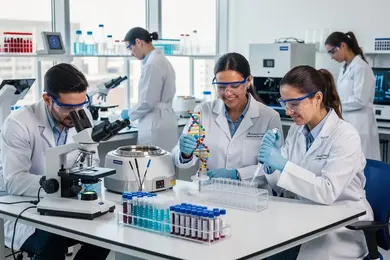
Online biology degrees face inherent tension between flexibility and essential hands-on training, shaping outcomes in specialized careers. Programs relying on hybrid residencies condense lab-intensive work into short, often mandatory, on-campus sessions lasting a weekend or a week. This format suits professionals balancing work and study but requires temporary relocation, impacting those with limited mobility or financial resources.
Alternatively, some accredited programs dispense at-home lab kits supervised remotely, covering core practical skills like microscopy and molecular techniques. While accommodating geographic constraints, these kits lack the immediacy of in-person troubleshooting experiences critical for mastery in fields like microbiology and biochemistry, where proficiency with chemical protocols directly influences employability and starting income.
For example, median salaries for microbiologists near $85,470 contrast with roughly $70,600 for zoology roles that demand fewer lab hours, illustrating the premium placed on complex lab competence. Candidates targeting these chemistry-heavy biology niches should prioritize programs with either strong face-to-face residencies or partnerships enabling local lab access.
When choosing, prospective students must weigh:
- Logistical demands of residencies, including travel and time away from work.
- The cost and scope of at-home lab kits.Access to supervised lab hours and specialized equipment.
- Alignment of practical training with targeted career expectations.
These tradeoffs directly affect both skill acquisition and market competitiveness, emphasizing that practical, hands-on experience remains a decisive factor for long-term outcomes in specialized biology pathways.
What admission requirements do online biology degrees have for students with chemistry credits?
Applicants to online biology degree programs must typically demonstrate competence in general and organic chemistry, verified by official transcripts showing at least a C grade or higher. This prerequisite is not merely academic formality; it directly ties to real-world applicability, as biology roles that intersect with medical fields demand solid chemistry foundational skills. For instance, biology majors with strong chemistry backgrounds are better positioned for medical professions like physicians or dentists, where employment growth is projected at 5% and 4% respectively according to Bureau of Labor Statistics projections for 2024-2034. These workforce trends illustrate why admissions committees prioritize chemistry lab experience-hands-on skills in chemistry correlate with success in advanced biological studies and clinical environments.
For students lacking formal chemistry sequences, bridging courses or prerequisite completion can extend time to degree and increase educational costs. Transfer equivalency rules vary widely, so prospective students should carefully evaluate articulation agreements and prerequisite policies before enrollment. Such due diligence is especially important for working professionals transitioning into biology-driven health careers, where balancing existing obligations with course demands shapes both time and financial investment.
Additionally, quantitative aptitude reflected in chemistry grades serves as a predictive marker of a student's ability to manage rigorous scientific coursework. Decision-makers must weigh accelerated admission availed by complete chemistry backgrounds against the extended path of fulfilling missing prerequisites, considering long-term career timelines. This tradeoff impacts readiness for both clinical roles and research positions in biology.
How much do online biology degrees cost, and what financial aid can students access?
Tuition for online biology degrees aimed at students with prior chemistry coursework typically ranges from $15,000 to $45,000, shaped by in-state versus out-of-state status, public versus private institutions, and program duration. Programs designed for students with chemistry backgrounds often offer lower costs through credit transfers, though upfront prices rarely include additional expenses like lab kits or software, which can add $500 to $1,000 yearly.
Federal financial aid via FAFSA remains a foundational funding option with Pell Grants and subsidized loans widely accessible. Employer tuition assistance also plays a significant role for working professionals, especially given the projected 20% employment growth for medical scientists over the next decade-nearly triple the national average-validating employer investment in candidates skilled in biology and chemistry.
State grants and scholarships can reduce out-of-pocket costs but require strict eligibility verification tied to residency or STEM focus. International students face limited federal aid but may find institutional scholarships. Candidates should inquire about loan repayment plans, income-share agreements, or sliding-scale fees to realistically budget education expenses while balancing employment.
For example, a lab technician advancing to a medical scientist role can optimize costs by leveraging employer tuition reimbursement up to $5,250 annually alongside targeted biotech scholarships, balancing debt against career advancement.
What careers can an online biology degree lead to for students with a chemistry background?
An online biology degree paired with prior chemistry coursework positions graduates more competitively in fields where interdisciplinary expertise is non-negotiable. Employers across biotechnology, pharmaceuticals, environmental science, and clinical research seek candidates capable of integrating chemical principles with biological systems, particularly for roles involving molecular analysis, drug development, and biochemical assay design.
For example, pharmaceutical firms require biologists with chemistry acumen to optimize compound synthesis and decipher metabolic pathways, directly impacting drug efficacy evaluations. Environmental agencies depend on professionals who can perform chemical testing while understanding biological pollutant interactions. In clinical research, proficiency in both specimen handling and chemical reagent preparation streamlines trial workflows.
Practical outcomes hinge on more than degree credentials; students should anticipate pursuing industry-specific certifications such as clinical lab technician credentials or mastering analytical tools like HPLC (High-Performance Liquid Chromatography). These qualifications substantially influence employability and career trajectory.
Notably, CBE-Life Sciences Education research highlights a rise in women's representation from 48% in campus biology programs to 60% online, reflecting a growing diversity that may enrich interdisciplinary workforce capacity.
Job seekers must differentiate themselves through technical project experience and applied laboratory competencies, as hiring increasingly prioritizes demonstrated skills over formal credentials alone.
What salaries and job outlook can biology graduates with chemistry experience expect?
The intersection of biology and chemistry coursework directly influences entry-level salary ranges, with graduates typically earning between $55,000 and $70,000 annually. Higher starting salaries-often over $65,000-are common in pharmaceutical and biotechnology sectors where multidisciplinary expertise meets strong demand for drug development skills. Conversely, positions in environmental science or education tend to start closer to the lower end of this spectrum, reflecting differing industry valuation of combined skills.
The U.S. Bureau of Labor Statistics projects a 9% growth rate for biological and life sciences jobs through 2032, outpacing overall job growth. However, competition intensifies for roles offering salaries above $80,000, where employers prioritize candidates with graduate-level credentials and substantive research exposure. The University of North Dakota's accelerated BS/MS pathway exemplifies this balance by mandating 30 graduate credits with a maximum of half dedicated to research and thesis work, aligning training to employer expectations for both applied and theoretical competencies.
Graduates without integrated coursework or research experience often encounter slower advancement, particularly in fields demanding independent lab work and complex data analysis. Navigating this landscape requires opting for programs that streamline graduate education while reinforcing applied skills, improving prospects in genetics, pharmacology, and bioinformatics.
Key workforce insights include:
- Certified roles in clinical labs and government agencies offer structured salary increments tied to credentialing.
- Employers value interdisciplinary analytical capabilities derived from biology-chemistry combinations, impacting salary and job security.
- Access to employer-sponsored education or research roles remains limited, necessitating strategic choices regarding graduate pathways.
How can I choose a reputable online biology program that maximizes prior chemistry credits?
Selecting an online biology program that strategically leverages prior chemistry credits requires more than just checking transfer policies; it demands a focus on programs with robust articulation agreements that accept advanced chemistry courses like organic and analytical chemistry. Students pursuing biotechnology research roles, for instance, benefit from programs offering upper-level molecular biology or biochemistry electives that directly build on existing chemistry knowledge, accelerating completion and enhancing employability.
Accreditation by recognized regional agencies validated by the U.S. Department of Education is essential to ensure academic rigor and market acceptance. With only 18-19 accredited online biology bachelor's options globally, according to Educations.com's 2025/2026 report, candidates should scrutinize career placement outcomes and employer connections indicating real labor market demand for biology graduates who possess a strong chemistry foundation.
Practical constraints arise given that many programs cap science credit transfers at 40-50%, potentially extending time and cost. Program format-hybrid versus fully asynchronous-also impacts access to hands-on lab experience, a non-negotiable requirement in laboratory-based biology careers within pharmaceuticals or environmental science sectors. Employers in these fields explicitly favor graduates from programs integrating advanced chemistry-aligned biology courses over those treating prior chemistry credits as general electives.
This context underscores the importance of consulting detailed transfer guides or academic advisors before committing, as misaligned credit acceptance can delay progress and reduce workforce readiness.
Other Things You Should Know About Biology
Prior chemistry coursework can shorten your online biology degree by fulfilling foundational science requirements, but it does not always lead to significant time savings. Many programs require specific biology courses or integrated lab work not covered by chemistry classes. When evaluating programs, prioritize those with flexible credit transfer policies explicitly accepting your prior chemistry credits toward core degree requirements to maximize efficiency.
For 2027 online biology degree programs, students with prior chemistry coursework often fulfill prerequisites in foundational courses. Common requirements include general biology, math (particularly statistics), and sometimes additional chemistry-related courses, offering students an advantage by potentially shortening their degree completion time.
While previous chemistry courses reduce overlap in foundational science content, biology degree workloads remain substantial due to the diversity of required topics such as genetics, ecology, and physiology. Students with chemistry credits should expect to invest similar hours in new subject matter and lab components specific to biology. Opt for programs that integrate prior knowledge into advanced courses rather than repeating basics, as this reduces redundant studying and optimizes focus on specialized biology areas.
This pathway can be effective if the online biology program offers coursework aligned with industry needs in biotech or environmental science sectors. Practical experience opportunities, internships, or project options connected to these fields are more critical than simply holding both credentials. Prioritize programs with strong ties to employers and hands-on learning frameworks to ensure your combined biology and chemistry background translates into tangible career advancement.
References
- Financial Aid For Online Colleges https://www.affordablecollegesonline.org/financial-aid/financial-aid-for-online-colleges/
- How to Verify a US Partner School's Accreditation Before Committing https://www.amerigoeducation.com/news/how-to-verify-a-us-partner-schools-accreditation-before-committing
- Find the Best Schools | Accredited Online Colleges https://www.accreditedonlinecolleges.org/
- Best Online Biology Degrees 2025 https://www.onlineu.com/degrees/biology
- CHEA - Find Accredited Higher Education Institutions & Programs https://www.chea.org/directories
- Undergraduate Online Financial Aid | Bushnell University https://www.bushnell.edu/financial-aid/undergraduate-online/
- Top 5 Online Colleges That Accept FAFSA 2025 https://bold.org/blog/online-colleges-that-accept-fafsa/
- Biology and Chemistry Majors: The Truth About Careers Beyond Medical School https://www.berry.edu/articles/blog/2025/biology-chemistry
- Online Science Courses with Lab that Transfer: A Helpful Guide - Prereqcourses https://www.prereqcourses.com/online-science-courses/
- Is Your Online Degree Legitimate? How to Verify Private University Approval https://matchtocollege.com/blog/verify-private-university-online-degree-approval