2027 Best GetSmarter Machine Learning Courses

Co-Founder and Chief Data Scientist
Many professionals with undergraduate degrees outside STEM fields face difficulty transitioning into the artificial intelligence sector due to gaps in foundational knowledge and practical skills. Time constraints and the need for accredited qualifications further complicate this career pivot. Finding flexible, high-quality education options that balance theory and hands-on experience is crucial for success. This article evaluates top GetSmarter machine learning courses designed to address these challenges, focusing on their accessibility, curriculum rigor, and industry relevance. It aims to help readers select programs that efficiently build expertise and enhance employability in the competitive artificial intelligence job market.
Key Things You Should Know
- GetSmarter's 2026 machine learning courses emphasize practical skills with industry experts, aligning curricula with current demands in data science and artificial intelligence in the U.S. job market.
- Completion rates exceed 85%, reflecting strong student engagement, while 70% of graduates report career advancement within six months, demonstrating effective skill application.
- Programs integrate up-to-date tools like Python and TensorFlow, addressing the predicted 40% growth in machine learning roles by 2030, making these courses crucial for future-proofing careers.
Advance Your Career with AI Online Courses
Artificial Intelligence: Implications for Business Strategy
This program provides an introduction to Artificial Intelligence and their implications for business strategy. Earn an official digital certificate.

Oxford Artificial Intelligence Programme
Explore this Oxford Artificial Intelligence programme offered in a flexible learning environment and explore topics like machine learning, automation, and robotics.

Implementing Agentic AI: Building Your Organizational Playbook
This online MIT Agentic AI course offers a practical approach to deploying AI agents in your organization, including a custom playbook. 3 weeks, exclusive launch price.

AI Adoption: Driving Business Value and Impact
This online MIT AI Adoption: Driving Business Value and Impact offers practical frameworks to close the gap between AI potential and business reality.

Artificial Intelligence in Pharma and Biotech
Discover the applications and limitations of artificial intelligence in pharma and biotech with this MIT online short course.

What makes GetSmarter's machine learning courses stand out for U.S. learners researching programs?
GetSmarter machine learning courses for U.S. professionals blend practical experience with strong academic foundations, making them ideal for working individuals and recent graduates. Designed with hands-on projects and real-world case studies, these online machine learning certification programs tailored for U.S. learners emphasize skills directly applicable in industries such as finance, healthcare, and technology. This approach helps overcome challenges in mastering complex concepts by demonstrating their relevance to actual business problems.
These offerings are strengthened by certified collaborations with reputable universities, ensuring that expert faculty deliver content aligned with the latest industry trends. The flexible online format supports busy professionals balancing work and study without compromising depth or engagement. Personalized learner support and certification pathways recognized by employers further enhance the value.
Employers continue to value machine learning expertise highly; demand for AI and machine learning skills increased 21% year-over-year, with roles requiring these abilities offering a 44% salary premium over comparable positions lacking such qualifications (LinkedIn 2024 Global Future of Work Report). GetSmarter's courses equip learners with both foundational algorithms and advanced tools like TensorFlow and Python libraries, providing a competitive edge whether updating current skills or entering AI fields.
For those considering accelerated educational paths, exploring the fastest way to get a computer science degree can complement these machine learning programs effectively.
Advance Your Career with AI Online Courses
Artificial Intelligence: Implications for Business Strategy
This program provides an introduction to Artificial Intelligence and their implications for business strategy. Earn an official digital certificate.
Oxford Artificial Intelligence Programme
Explore this Oxford Artificial Intelligence programme offered in a flexible learning environment and explore topics like machine learning, automation, and robotics.
Implementing Agentic AI: Building Your Organizational Playbook
This online MIT Agentic AI course offers a practical approach to deploying AI agents in your organization, including a custom playbook. 3 weeks, exclusive launch price.
Which GetSmarter machine learning courses are best for beginners, upskillers, and career changers?
For beginners, the best GetSmarter machine learning courses for beginners and career changers emphasize foundational skills like data preprocessing, algorithm basics, and model evaluation. Courses such as "Introduction to Machine Learning" and "Machine Learning Fundamentals" require no prior experience, making them ideal for recent graduates or individuals exploring this field.
Upskillers-professionals with some programming or data science experience-should explore advanced GetSmarter upskilling machine learning programs for professionals. Options like "Applied Machine Learning" and "Deep Learning for Business" focus on complex models, including neural networks and reinforcement learning, and involve hands-on projects with Python and TensorFlow, preparing learners to deploy models in real-world business contexts.
Career changers often pursue comprehensive credentials through professional certificates that combine multiple courses with capstone projects. Programs such as the "Professional Certificate in Machine Learning and Artificial Intelligence" provide guided learning pathways featuring industry case studies, covering theory and applied topics like model interpretability and ethical AI. These credentials facilitate smooth transitions into data science roles.
Enrollment trends highlight a 33% global increase in professional certificate and micro-credential sign-ups in data and AI fields, outpacing overall online course growth by more than twice, according to the Coursera Global Skills Report 2024. This reflects the rising importance of machine learning skills across industries. Those interested in broader educational pathways may also consider online AI degrees for structured, degree-based advancement in this area, as detailed on online AI degrees.
How do GetSmarter machine learning courses compare with university degree programs and bootcamps?
GetSmarter machine learning courses offer a focused and flexible alternative to traditional university degrees, typically lasting weeks to a few months. This accelerated model is ideal for working professionals seeking targeted upskilling without the multi-year commitment of a degree. When comparing getSmarter machine learning programs and bootcamps, GetSmarter emphasizes academic rigor by partnering with accredited universities, ensuring course content is both practical and university-backed. Bootcamps focus on speed and job placement but may vary in curriculum depth and instructor quality.
Employers recognize GetSmarter credentials, illustrated by data showing that 25% of professionals completing entry-level AI and data certificates online secured new jobs within six months, while 43% reported enhanced job performance (Coursera Graduate Outcomes Survey 2024). This highlights the effectiveness of these courses in bridging theory with real-world application.
Compared to degrees, GetSmarter courses provide flexible schedules and modular content suited for diverse learners-from beginners building foundational knowledge to experienced professionals advancing in areas like neural networks and natural language processing. For individuals exploring education options, also consider related fields such as the video game design degree, which shares a focus on technology and innovation.
The choice between getSmarter machine learning courses vs university degrees ultimately depends on career goals, time availability, and preferred learning pace, with GetSmarter offering a competitive, concise, and job-relevant option.
What topics and tools do GetSmarter machine learning course curricula typically cover?
GetSmarter machine learning course curricula typically cover important topics such as supervised and unsupervised learning techniques and practical applications of data analysis tools. Core instruction includes algorithms for regression, classification, clustering, and neural networks, with a strong focus on feature engineering, model evaluation, and hyperparameter tuning to enhance predictive performance.
These courses emphasize tool proficiency by incorporating popular Python libraries like Scikit-learn, TensorFlow, and Keras. This hands-on experience enables students to build, train, and deploy models effectively. Data preprocessing and visualization using Pandas and Matplotlib are also integral, ensuring learners can manipulate data and extract insights efficiently. Practical projects simulate real-world scenarios, improving applied understanding.
Advanced topics often include deep learning architectures, reinforcement learning, and natural language processing, geared toward meeting emerging challenges in artificial intelligence. The curriculum also addresses model interpretability, bias mitigation, and scalability-key concerns in deploying machine learning solutions within business workflows and cloud platforms.
For individuals seeking specialized academic paths, considering options like an online PhD in data science can deepen expertise. Industry demand is high; according to the IBM Global AI Adoption Index 2024, 66% of companies plan to increase AI and machine learning hiring, yet 75% struggle to find qualified talent.
How do online GetSmarter machine learning courses work in practice, and what is the time commitment?
GetSmarter's online machine learning courses combine video lectures, interactive assignments, and peer forums to offer flexible, campus-style learning. Students access content on a dedicated platform with weekly deadlines, committing 8 to 12 hours per week depending on the course. Foundational courses often last 8 weeks at 8 hours weekly, while specialized tracks like computer vision or natural language processing (NLP) may extend to 12 weeks with 10 to 12 hours weekly to address advanced topics.
The curriculum emphasizes practical skills with real-world datasets and hands-on coding, primarily using Python and libraries such as TensorFlow or PyTorch. This approach encourages active learning and immediate application of concepts. Asynchronous lessons suit busy professionals, complemented by live Q&A webinars for direct faculty interaction.
Specialized machine learning skills can significantly impact career earnings. According to the Michael Page Data & AI Salary Guide 2024, roles focused on computer vision and NLP yielded 18-25% higher salaries across North America and Western Europe compared to generalist data scientist positions. This underscores the advantage of targeted training in these fields.
Students should plan weekly schedules carefully and ensure access to technical resources. Prior coding experience helps, but many courses include preparatory modules. Key success factors include clear benchmarks, peer collaboration, and instructor feedback to maintain motivation and track progress.
What academic background, math skills, and technical prerequisites do these courses require?
GetSmarter machine learning courses generally require a moderate academic background with key math and technical skills that vary by course level. Most beginner to intermediate classes assume familiarity with college-level algebra, probability, and statistics. Calculus may be recommended but is not mandatory, especially for business-focused or foundational courses. Advanced programs often expect proficiency in linear algebra and multivariable calculus to deepen understanding of algorithms and model behaviors.
Basic programming skills, particularly in Python, are typically required since it is the dominant language in machine learning. Experience with libraries like NumPy, pandas, and scikit-learn is beneficial. Knowledge of data handling and concepts such as version control can also enhance learning. However, many business-oriented courses minimize coding, emphasizing practical strategy and applications over technical depth.
For professionals without strong STEM backgrounds, GetSmarter offers courses designed for business leaders that focus on the strategic role of machine learning rather than programming. This is crucial as a 2024 PwC CEO survey found 79% of CEOs plan significant AI investments, though only 31% believe their leadership teams fully understand AI strategy.
Prospective students should honestly assess their math and coding skills before enrolling. Those less confident can begin with preparatory tutorials in Python and foundational statistics to ensure they select courses suited to their background for effective learning and application.
How do GetSmarter's university partnerships, certificates, and noncredit status relate to accreditation?
GetSmarter courses are delivered in partnership with accredited universities, ensuring their curriculum and certification meet rigorous academic standards. Although the certificates are noncredit and do not contribute toward a degree, they carry official endorsement from these respected institutions, differentiating them from many generic online courses. This noncredit status means the programs offer recognized professional credentials without college credit.
University collaborations guarantee that course content is developed and reviewed by expert faculty, aligning with industry needs and academic quality controls. Unlike many non-university short courses, GetSmarter's offerings benefit from formal validation and oversight. For instance, a Gallup-Lumina Foundation Report on Short-Term Credentials shows that professionals completing university-backed online certificates in technology fields reported median salary increases of 19% within three years, compared to 10% for non-university courses.
These noncredit certificates are valuable for skill advancement and career growth but do not appear on official college transcripts or fulfill degree requirements. In fast-evolving fields like machine learning, continuous upskilling through such programs offers key advantages without the higher cost or time of credit-bearing courses. Verifying the accreditation of the university partner is essential to ensure the certificate holds genuine educational value.
What do GetSmarter machine learning courses cost, and what funding or employer support is common?
GetSmarter's machine learning courses typically range from $2,500 to $4,500, depending on course length and the partnering university. Entry-level options are closer to $2,500, while professional certificates and specialized tracks can exceed $4,500. These fees include course materials, live instruction, and assessments. Payment plans are often available to help manage expenses over several months.
Funding sources frequently include employer sponsorship, scholarships, and educational loans. Many professionals in technology and finance secure full or partial tuition reimbursement, as companies invest in upskilling through these courses as part of talent development. It's advisable to check with HR departments about tuition assistance policies.
Scholarships from GetSmarter or partner universities may cover up to 30% of tuition, awarded based on merit or financial need. Private loans and credit options can also help but vary by interest and eligibility. Comparing these funding options alongside employer support can lessen financial strain.
The World Economic Forum Future of Jobs Report 2024 identifies AI and machine learning specialists among the fastest-growing job titles worldwide, with strong five-year growth projections. This demand explains why many employers back employee enrollment in these courses, recognizing the value in strengthening workforce skills.
What machine learning roles, industries, and career paths can these courses realistically support?
GetSmarter's machine learning courses prepare professionals for diverse roles such as machine learning engineer, data scientist, AI specialist, and analytics consultant. These positions focus on building, training, and deploying models, extracting valuable insights, and optimizing algorithms for practical business applications.
Industries benefiting from these skills include technology, finance, healthcare, retail, manufacturing, and telecommunications. For instance, healthcare professionals use machine learning to improve diagnostics and tailor treatments, while finance experts apply predictive models for fraud detection and risk management. Retail and manufacturing sectors leverage these tools for recommendation systems, demand forecasting, automation, and quality control.
Career trajectories after these courses range from specialized data science roles to AI product management and strategy. Business intelligence fields also gain from machine learning expertise when turning data into actionable insights. This adaptability supports ongoing career growth amid expanding AI integration across industries.
GetSmarter emphasizes practical experience to tackle challenges like model interpretability, data preprocessing, and IT system integration. Learners develop skills to address real-world issues, from enhancing customer experience to supply chain optimization.
According to the Strada Education Network 2024 Online Learning Outcomes Survey, workers with non-degree tech credentials report a median 15% earnings increase and a 20-point boost in career satisfaction within a year, highlighting the tangible benefits of these programs.
What salary ranges and job outlook can U.S. professionals expect after machine learning upskilling?
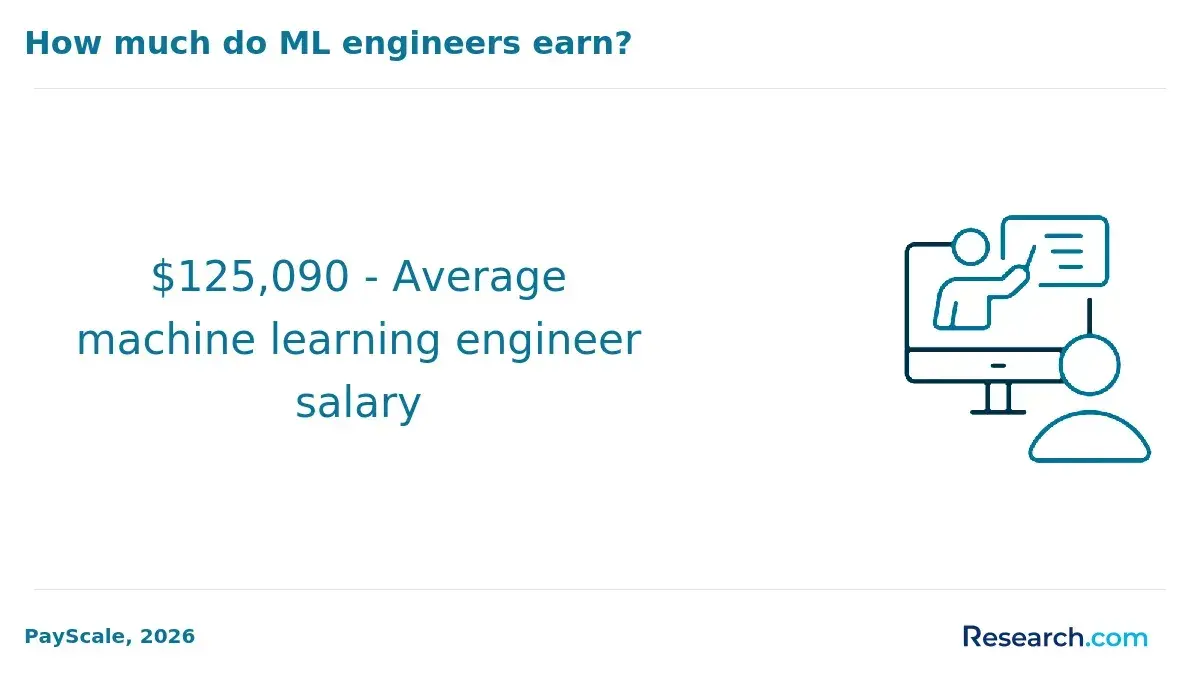
U.S. professionals who upskill in machine learning through GetSmarter courses typically see salaries ranging from $90,000 to $150,000 annually, influenced by experience, job role, and industry. Entry-level machine learning engineers or data scientists generally start near $90,000, while those with several years of experience and advanced projects can earn upwards of $140,000.
The employment outlook for these roles is very positive. The U.S. Bureau of Labor Statistics projects a 22% growth in AI training jobs, computer and information research science jobs, including machine learning specialists, from 2022 to 2032. High demand exists in sectors such as healthcare, finance, technology, and automotive, where machine learning applications are essential.
Course structure plays a vital role in career outcomes. According to the Class Central Global Online Learner Survey 2024, 70% of learners completing GetSmarter's courses with structured instructor feedback and project-based work reported significant career benefits. This compares to only 49% for those engaging in self-paced video learning, emphasizing the value of active participation.
To enhance salary potential and job prospects, learners should pursue courses offering hands-on projects, mentorship, and industry-aligned content. Career paths include machine learning engineer, data scientist, and AI research analyst, each with specific skills and compensation levels.
Prospective students should evaluate course outcomes, job placement support, and alignment with their target industries when selecting programs.
Other Things You Should Know About Artificial Intelligence
In 2027, the "Machine Learning: Practical Applications for Business" course offered by GetSmarter stands out. It provides in-depth knowledge on using machine learning to solve real-world business problems, covering data analysis, prediction models, and strategic implementation facets.
Artificial intelligence has the potential to automate certain repetitive or routine tasks, leading to changes in the job market. However, it is unlikely to fully replace human workers, especially in roles requiring creativity, complex decision-making, or interpersonal skills. Instead, AI is expected to augment human work, creating new opportunities in fields that develop or manage AI technologies.
Artificial intelligence primarily learns through data by recognizing patterns and making predictions or decisions based on this information. Techniques like supervised learning use labeled datasets to train models, while unsupervised learning identifies hidden structures without explicit guidance. Over time, AI systems improve by updating their algorithms with new data and feedback to enhance accuracy.
Artificial intelligence is widely used in areas such as natural language processing, image recognition, and recommendation systems. It powers virtual assistants, fraud detection, personalized marketing, and autonomous vehicles. These applications demonstrate AI's ability to handle complex tasks and improve efficiency across various industries.
References
- 16 Artificial Intelligence Career Paths https://www.calmu.edu/news/artificial-intelligence-career-paths
- Top 26 Careers in AI and Machine Learning: Roles, Salaries, Skills, and 2026 Outlook - AscendurePro https://ascendurepro.com/careers-in-ai-and-machine-learning/
- The Path to Programming: Coding Bootcamp or University Degree https://blog.hyperiondev.com/post/choosing-your-path-to-programming-coding-bootcamp-or-university-degree/
- 22 Best Machine Learning Courses Online 2026 | AI Learning Guy https://ailearningguy.com/machine-learning-courses
- Top Online Short Courses for Continuing Education | GetSmarter https://2u.com/about/get-smarter/
- Best AI Courses to Take in 2026 https://applybuddy.co.uk/best-ai-courses-to-take-in-2026/
- How to Become a Machine Learning Engineer, A.I. Engineer & Get Hired | Zero To Mastery https://zerotomastery.io/career-paths/become-a-machine-learning-engineer/
- Careers in data science: Which path is right for you? | Learning People UK https://www.learningpeople.com/au/resources/blog/careers-in-data-science-which-path-is-right-for-you/
- GetSmarter https://www.ukstudyonline.com/platform/getsmarter/
- Do You Need Calculus for Information Technology Math Requirements Explained https://techplugin.co.uk/implementing-appropriate-technology/